
This Nevada Museum Fills In The Gaps The History Books Skipped
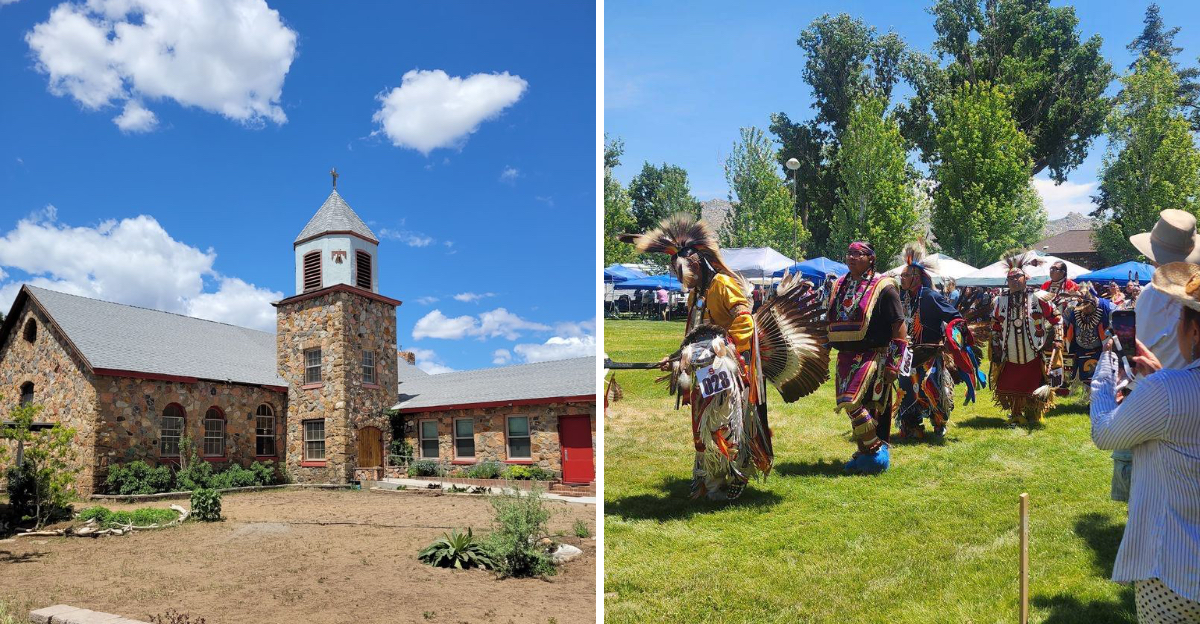
History books love clean stories, but this Nevada museum keeps the messy parts too. Ninety years of memories live inside stone walls built by the very students who once called this place home.
Photographs line the halls next to handmade baskets and quiet recordings of real voices. Every hallway hides a story most visitors never expect to hear.
One gallery alone could pull you in for a full hour. The audio trail keeps talking long after that, and it never feels like homework.
Another room lets you touch handmade crafts instead of only looking at them.
Nevada holds plenty of surprises, but few sit this close to the surface of forgotten history. Give yourself time to wander, because this kind of story deserves more than a quick glance.
Ninety Years Of A School That Changed Its Own Story
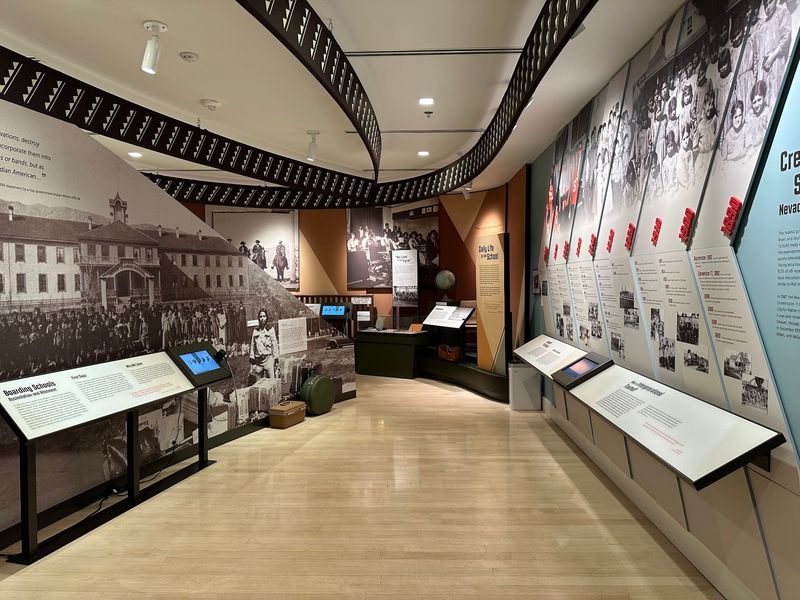
Ninety years is a long time for any school to hold one identity. Stewart opened in 1890 as a federal boarding institution built around a government assimilation policy.
Children arrived from Great Basin tribes first, including Washoe, Paiute, and Shoshone families. Many were taken from home against their families’ wishes.
The goal was blunt. Students were pushed to speak English, learn trades, and set aside Indigenous identity.
That policy caused lasting harm across generations. Museum exhibits state this plainly rather than smoothing it over.
Federal attitudes shifted in the 1930s, and the campus slowly changed character. Later students sometimes chose Stewart for schooling, sports, or a path toward college.
By the time it closed in 1980, students from more than 200 tribes across western states had passed through. The site joined the National Register of Historic Places in 1985.
The full story sits at 1 Jacobsen Way, Carson City, Nevada. Understanding both chapters, harm and community, is what makes the visit stick with people long after leaving.
Stone Buildings Shaped By Hopi Masons And Students
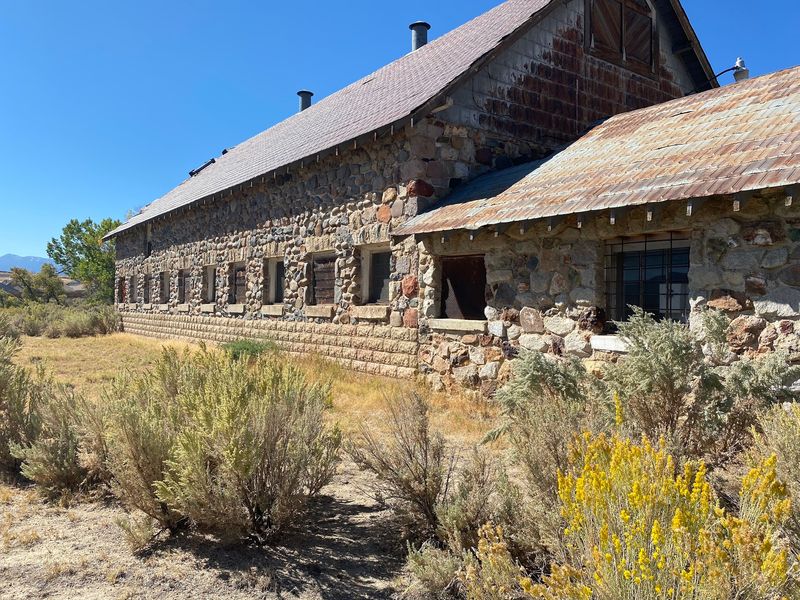
Sixty-five stone buildings stand across roughly 110 acres, and their walls tell a story of craft. Stone construction began in the early 1920s and continued for roughly three decades under his direction.
Hopi stonemasons traveled from Arizona to teach the trade. Students worked alongside them, learning as they built their own campus.
The first administrative building, finished in 1923, now houses the museum itself.
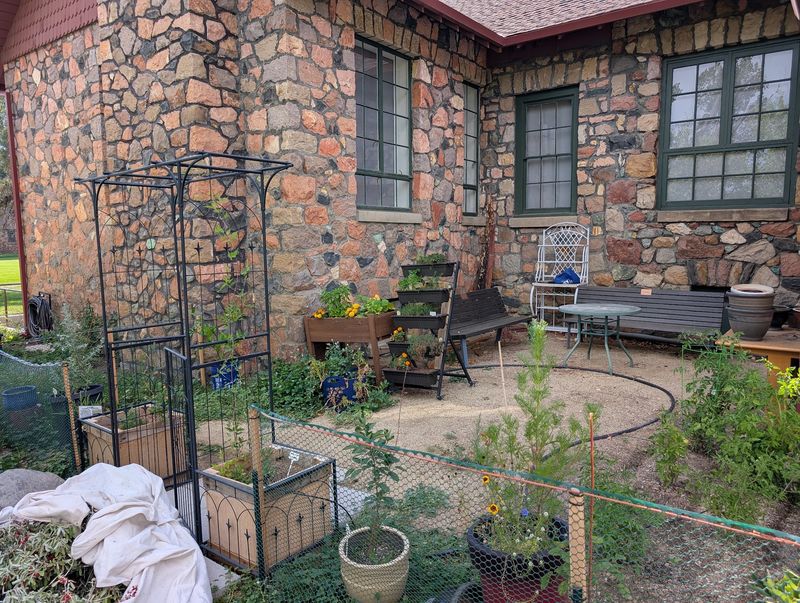
Look closely at the colors. Native stone quarried locally along the Carson River gives the walls their patchwork of reds, greens, and grays.
Those masonry skills traveled beyond the school grounds too. Former students contributed to other notable regional structures, including the Thunderbird Lodge at Lake Tahoe.
Most of those sixty-five stone buildings remain standing today, though some house state offices while others sit closed as restoration conversations continue.
Visitors cannot enter most of them, but the exteriors reward slow walking. Each carefully fitted stone stands as proof of skill learned under difficult circumstances, and that contrast lingers.
An Ecomuseum Built Around People, Not Just Objects
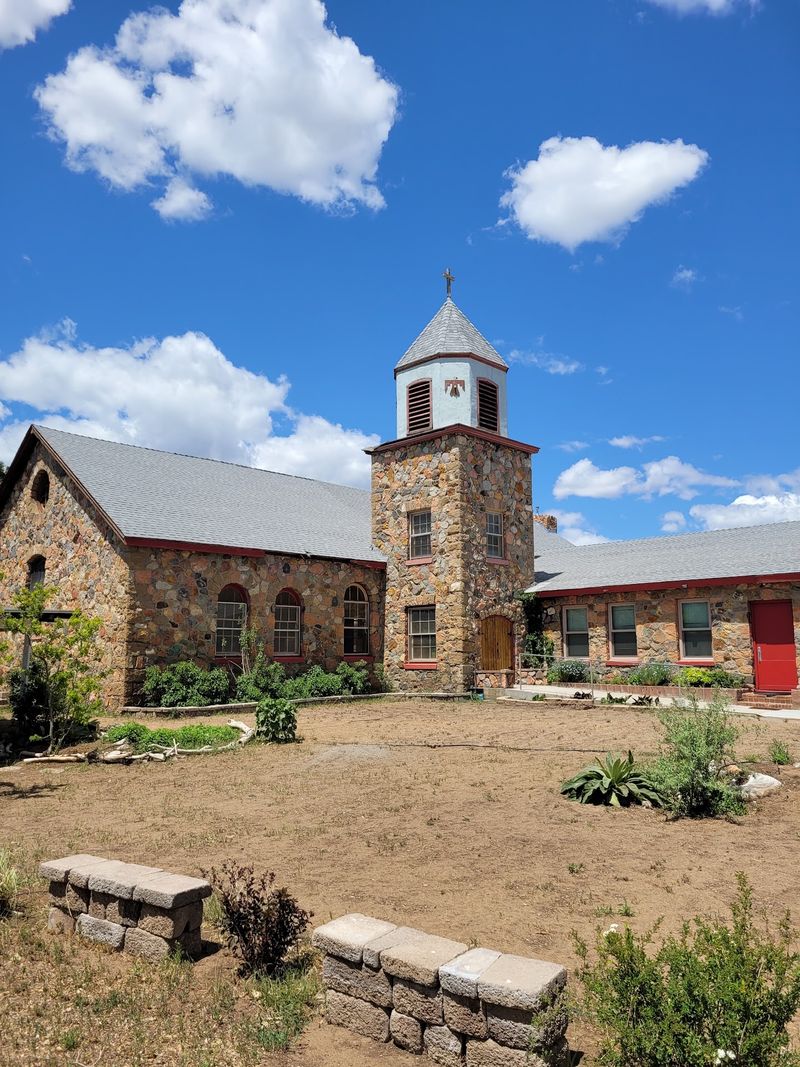
Museums usually collect things. This one collects relationships.
The State of Nevada launched the cultural center project in 2017 and 2019, aiming to interpret the school’s ninety years. Doors opened in January 2020, with a grand opening celebration held in June 2022.
Staff describe the site as an ecomuseum. That approach ties past, present, and future together and keeps community at the center.
The idea recognizes connections among people, animals, plants, songs, ceremonies, languages, and traditions. Nothing gets displayed in isolation.
Alumni and their families gather here, which changes the atmosphere completely. Conversations happen in the halls, not only on the wall panels.
Healing sits at the heart of the mission. So does sharing the resilience of Native peoples touched by the boarding school era.
Admission has been free, with donations welcomed, though details can change over time. Staff and volunteers answer questions generously and often share firsthand knowledge.
A living museum feels different from a quiet archive, and that difference is immediately obvious.
The Talking Trail Where Alumni Do The Narrating
Grab a phone and history starts talking back. The Talking Trail is a free, self-guided outdoor audio tour spread across the campus.
Signs posted along the route list numbers to dial. Recorded voices belong to Stewart alumni and former staff.
Twenty stops stretch about 0.6 miles on paved surfaces. The path winds past the surviving stone buildings, so architecture and storytelling arrive together.
What makes it powerful is the honesty. Speakers describe rules and loneliness, but also friendships, sports, dances, and the ways students made the place feel like a second home.
Hearing that directly beats reading a summary. Tone of voice carries information a paragraph cannot.
The trail works even when the museum building is closed, which helps travelers passing through on off days. Comfortable shoes and a charged phone are the only real requirements.
Guided group tours with a Native American guide are sometimes available as well. Either way, the campus stops feeling like an empty set of walls and starts feeling occupied.
Exhibits That Refuse To Sugarcoat The Record
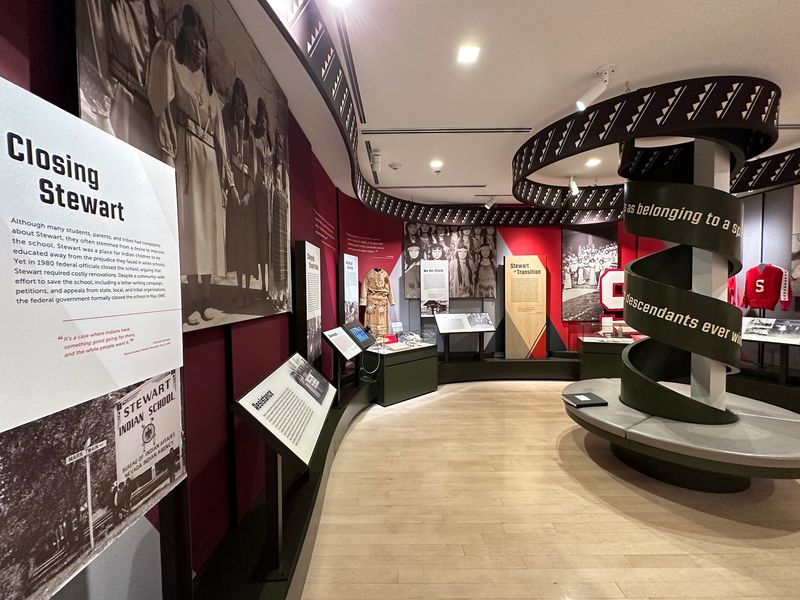
Truth-telling takes courage, and the main gallery shows plenty. Displays trace the school’s ninety-year arc and the shifts it went through.
Federal allotment and assimilation policies get direct explanation. So does the broader history of invasion in the Americas and repeated attempts to destroy Indigenous cultures.
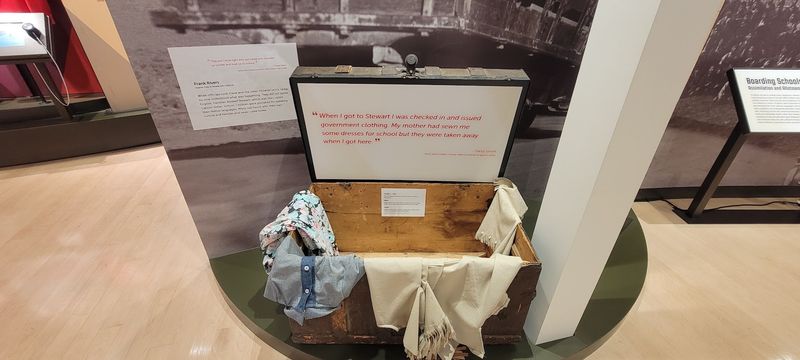
Student words anchor everything. Quotes and recollections give the panels a voice that statistics never manage.
Intergenerational trauma is defined outright, describing pain carried by survivors and passed to their families. Nothing here pretends the harm ended when the doors closed.
Balance appears too. Athletic wins, academic achievements, and student pride share space with the difficult material.
Curators stress that every experience differed. Two students from the same year might remember entirely different schools.
The closing message is unmistakable. Assimilation programs failed, and Indigenous languages and cultures survived.
Younger visitors handle the content better with a bit of preparation beforehand. Plan at least an hour, because reading quickly here feels wrong.
Contemporary Great Basin Art In The Wa-Pai-Shone Gallery
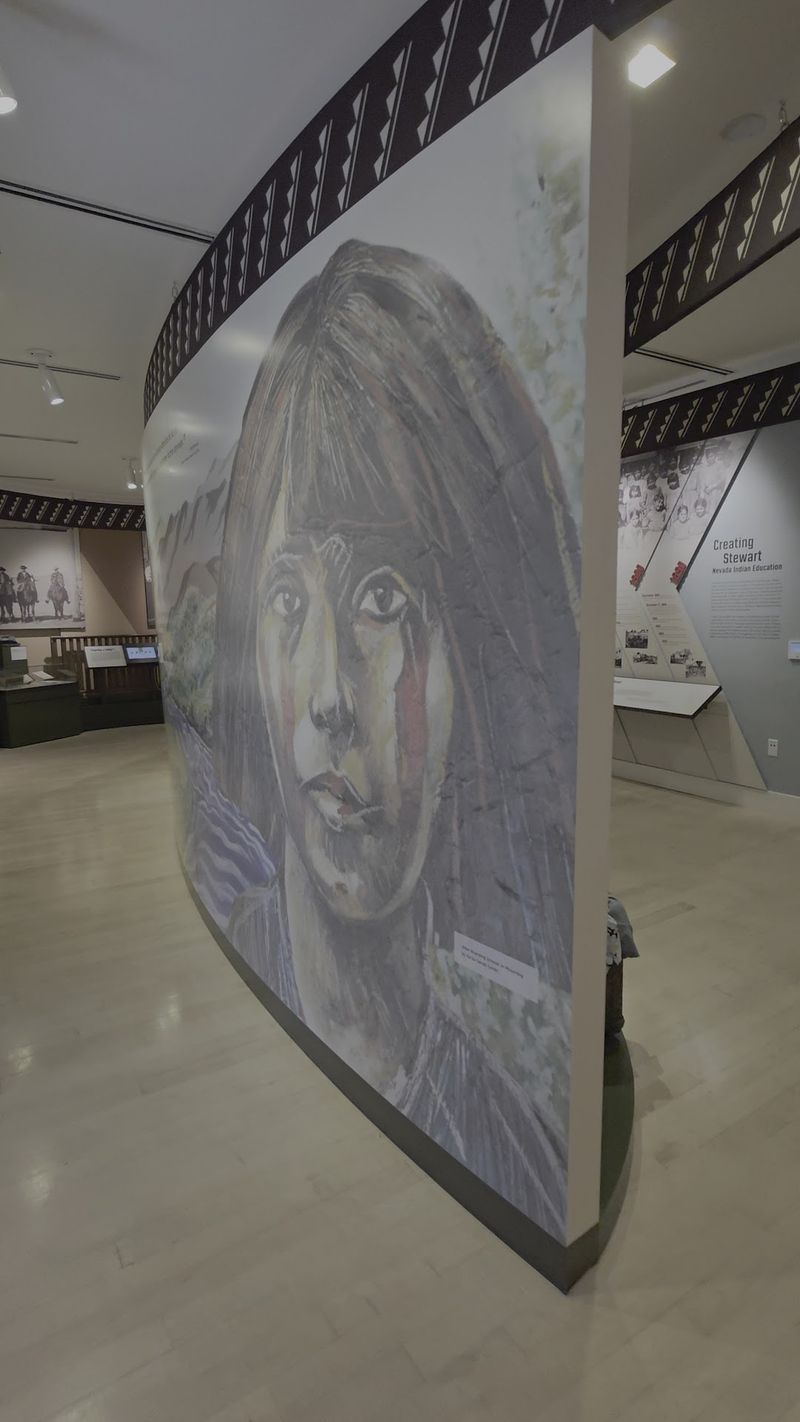
Creativity outlasted every policy aimed at erasing it. The Wa-Pai-Shone Gallery proves that with work by living Great Basin Native artists.
The name carries history of its own. It comes from a series of trading posts started in the 1930s, where Stewart students and Great Basin artists sold their creations.
Today the space rotates contemporary pieces across different mediums. Artists from Nevada and surrounding Great Basin communities bring their own perspectives forward.
Hallway displays add another layer. Graduating class photographs sit near artwork students made while the school was operating.
Those side-by-side pairings hit hard. Faces and creations from the same era occupy the same wall.
Art functions here as evidence, not decoration. It shows cultural identity holding firm under pressure.
Visitors who assume this is only a history museum tend to be surprised. The gallery keeps the story rooted in the present tense.
Spend a few extra minutes here before heading back outside. The shift in mood is worth it.
Hands-On Traditions In The Storytelling Room
Some rooms invite touching, and that changes everything. The Storytelling Room sets aside space for craft making and traditional practice.
An exhibit inside focuses on Nevada’s four main language groups. Those include Wa She Shu (Washoe), Numu (Northern Paiute), Nuwu (Southern Paiute), and Newe (Western Shoshone).
Naming the languages matters. The campus sits on traditional homelands of Great Basin tribes, and the exhibit acknowledges that directly.
Programming rotates through the year. Arts and crafts demonstrations, lectures, and educational activities all appear on the calendar.
Families with children often find this the easiest entry point. Kids can work with their hands while adults absorb heavier material elsewhere.
Calling ahead helps, since program schedules shift and not every activity runs daily. Staff can share what is currently planned.
The point is participation rather than observation. Traditions get practiced here, not merely remembered behind glass.
Leaving with something made by hand gives the visit a different kind of weight, and that stays with people.
Archives, Photographs, And The Research Room
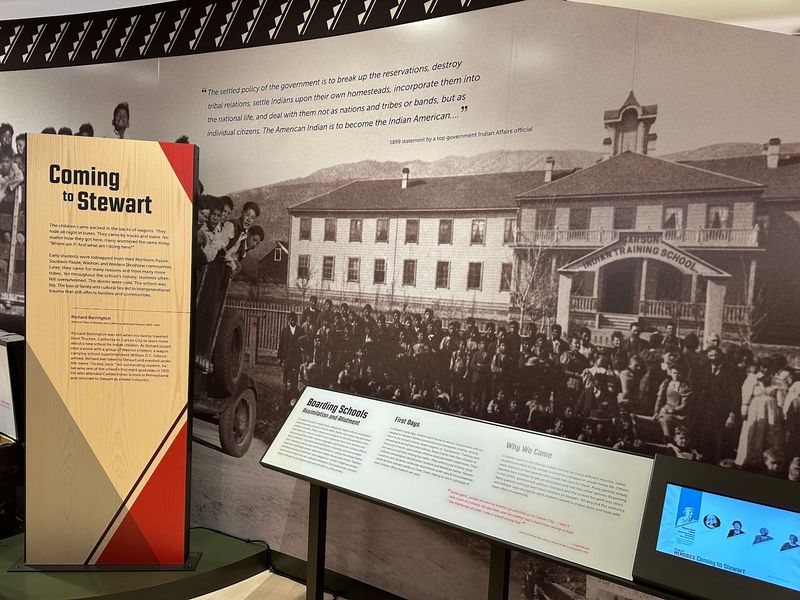
Curiosity gets rewarded in the Research Room. Archival documents, historical photographs, and publications about Stewart and the wider boarding school system live here.
Alumni use it to trace their own years on campus. Students, staff, faculty, and the general public may access the materials as well.
One exhibit inside focuses on the stone buildings and campus landscaping. Anyone curious about the masonry gets deeper background than the outdoor signs provide.
Records make abstract history concrete. A class list or a work assignment sheet turns policy into individual lives.
The room also reflects the museum’s role as a keeper of living American Indian materials and traditions. Preservation and access work together rather than competing.
Anyone planning serious research should contact staff in advance about availability. Access arrangements can vary.
For casual visitors, even a short look through the photographs adds context to everything seen earlier. The faces stop being anonymous.
Truth-telling depends on documentation, and this quiet room is where much of it is kept safe.
Basketry That Carries Generations Of Knowledge
Woven willow can hold more than water. It holds instruction, memory, and identity.
A newer exhibit titled Basketry: Resilience, Beauty, and Ingenuity of the Great Basin honors this tradition among Indigenous peoples of the region. Handcrafted baskets fill the display.
Each piece reflects survival, adaptation, and invention. Techniques passed from one generation to the next, often quietly, often against the odds.
These are not relics behind glass. The exhibit stresses how baskets still function in the lifeways of Native communities today.
Storytelling, images, videos, and discussion accompany the objects. Visitors learn the how and the why, not just the what.
Weaving requires patience most modern schedules cannot spare. Standing close to the work makes that obvious.
Special exhibits rotate over time, so confirm what is currently on view before making the trip. Contents may change.
Pairing the basketry with the earlier history exhibits creates a satisfying arc. One shows what was attacked, the other shows what endured beautifully.
Shade Trees, A Gift Shop, And The Father’s Day Powwow
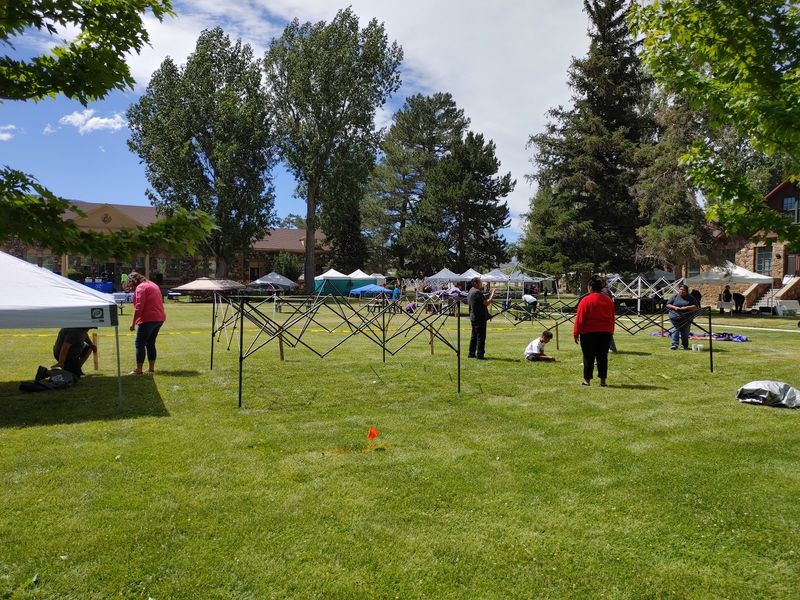
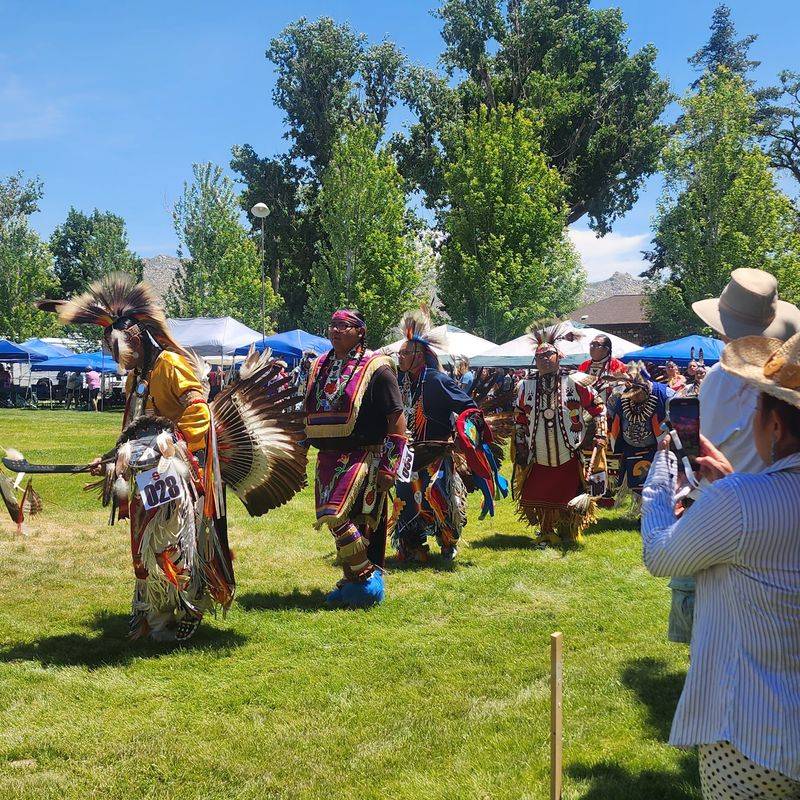
Drums replace quiet once a year. The annual Father’s Day Powwow brings hundreds of dancers to the grounds, along with Native art, crafts, and food.
Regalia colors move against gray stone walls. Visitors who catch this weekend see the campus at its liveliest.
Most other days feel calm. Large older trees throw shade across the lawns, making the grounds a good place to sit and think.
The gift shop stocks authentic, locally made Native American goods. Beadwork, jewelry, art prints, drums, and tule ducks turn up among the shelves.
Buying here supports Native artists directly. Purchases also help sustain cultural traditions tied to the region.
Other cultural events appear on the schedule throughout the year, from lectures to community gatherings. Checking ahead avoids disappointment.
The mix is what makes this Nevada stop unusual. Serious history and joyful celebration share the same acreage without canceling each other out.
Give the visit a couple of hours, then let the walk outside do the rest.