
Few Visitors Know About This Massive 60-Acre Sunflower Field In Illinois
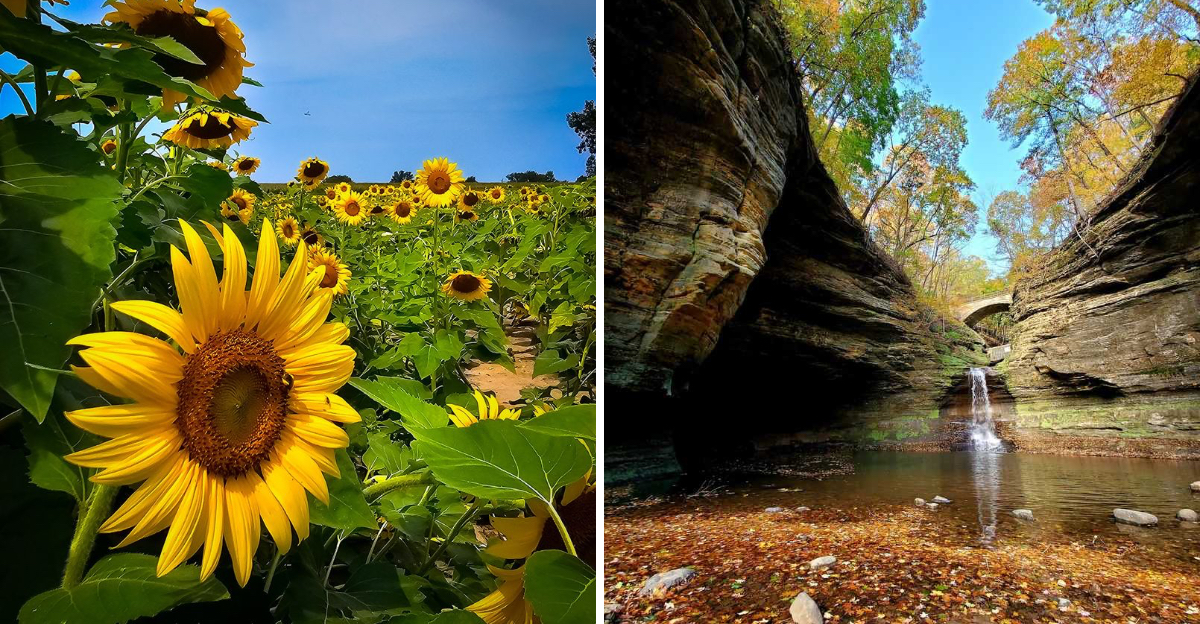
Illinois keeps a field that looks nothing like the rest of the park around it. Sixty acres of sunflowers stretch out where canyons usually steal the spotlight.
Rows tower chest high, and the blooms all face one direction, creating a strange kind of order. Bees hum steadily on warm afternoons, and the whole field seems to glow.
What kind of place keeps farmland scenery inside a canyon park?
Timing matters more than anything else out here. The bloom lasts just days, so plenty of visitors show up too early or too late.
Illinois rewards those who catch it right. Golden light at sunrise turns the whole scene electric, and cameras come out fast.
Visitors often pair the flowers with waterfalls, canyons, and old estate history nearby, worth planning around.
Timing The Short Bloom Window

Blink and the show closes. Sunflowers here typically open from mid-July into the first week of August, though weather can nudge that earlier or later.
Peak color tends to last somewhere around 10 to 20 days. That narrow stretch is why plenty of hopeful visitors arrive to find green buds or drooping, seed-heavy heads instead.
Checking recent park updates or local social posts before driving out saves disappointment. Conditions change fast after heavy rain or a hot spell.
One visitor showed up on July 13 and found native prairie plants blooming instead, plus a small snake sunning itself on the path. Not the plan, still a good morning.
Early in the window, the field looks patchy and uneven. Late in the window, the heads sag and the color fades toward brown.
Aiming for the middle of the range gives the best odds. Flexibility helps more than any camera upgrade could.
Why The Sunflowers Were Planted Nearby
Beauty was never the original goal. Reports indicate the fields were first planted more than 25 years ago in connection with dove hunting season, since sunflowers draw those birds in numbers.
Wildlife management still shapes the planting today. Crops like this fit into a broader habitat plan rather than existing purely as a photo backdrop.
That said, the flowers pull double duty beautifully. Pollinators swarm the blooms, and songbirds such as chickadees and cardinals work the rows for seed.
Deer, raccoons, and opossums use the dense stalks for cover and shade. Standing quietly at the edge often reveals more movement than expected.
Knowing the backstory changes how the field feels underfoot. It stops being decoration and becomes a working piece of land.
Because hunting seasons and access rules can shift, checking current park guidance before a late-summer or fall visit is wise. Certain sections may be restricted at times.
Practical purpose and postcard scenery rarely share the same acre.
Sixty Acres Of Pure Gold
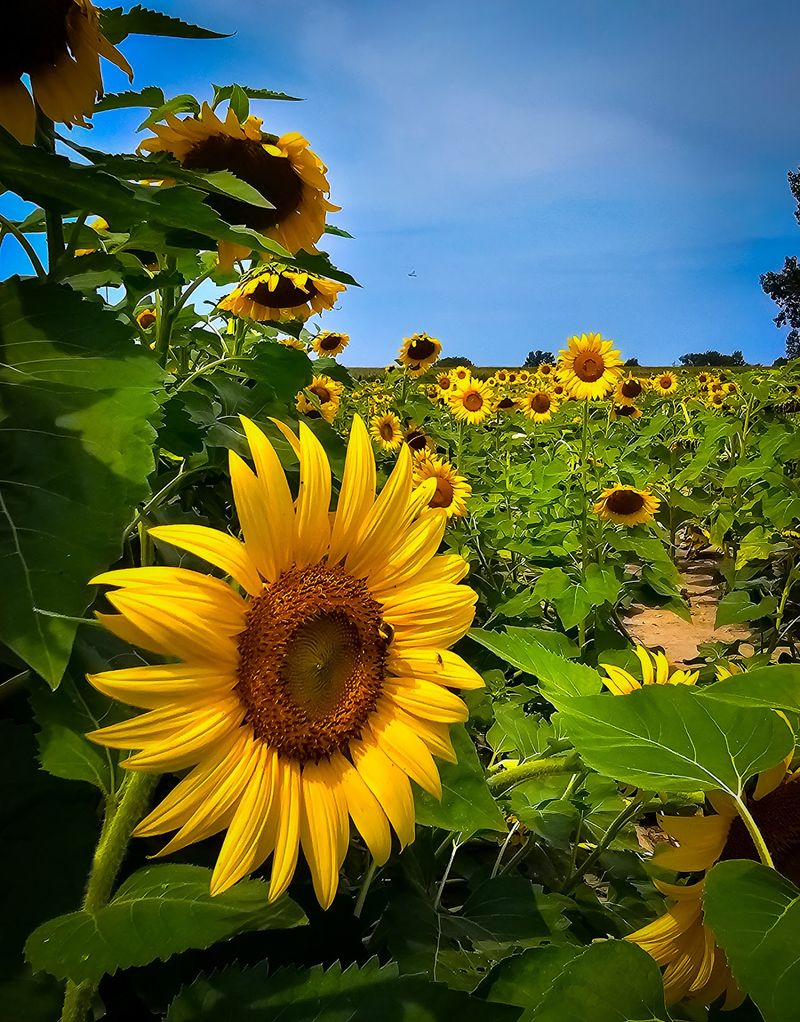
Sixty acres is a lot of sunshine to stand in. The planting inside the park’s River Area stretches far enough that the far edge blurs into haze.
Mowed paths slice through the rows, giving walkers a clear route without stepping on stalks. Many plants grow chest high or taller, so the view often becomes wall-to-wall yellow.
The blooms usually face the same direction, which makes for a strange and lovely sense of order. Bees work the centers, and the buzz is constant on warm days.
Reaching the field means driving to the River Area entrance off Illinois Route 178, then following signage toward the designated area. The park address is 2500 IL-178, Oglesby, IL 61348.
Parking sits close by, though lots can fill during peak bloom weekends. Shade is scarce out in the open rows, so a hat earns its keep.
Few first-time visitors expect farmland scenery inside a park famous for canyons. That contrast is exactly what makes the walk memorable.
Stay On The Mowed Paths
Rules exist for a reason out here. The mowed paths are the only place feet belong, because trampled stalks do not stand back up.
Cutting through rows damages the crop and ruins the view for everyone arriving later. It also flattens habitat that wildlife depends on.
Picking or removing sunflowers is not allowed and can result in fines. Reports mention penalties reaching roughly $195, so souvenirs are best left growing.
Trash is another sore point. Reviewers regularly mention bottles and wrappers left behind on park trails, which is an easy problem to avoid.
Carrying out everything brought in keeps the place worth returning to. A small bag in a pocket handles it.
Paths can be uneven, and prairie grass hides dips and critters. Closed shoes beat sandals every time.
Insects are plentiful in a field this size, so repellent is a smart addition. Respect here costs nothing and protects a genuinely rare sight.
River Area Prairie And Savanna Trails
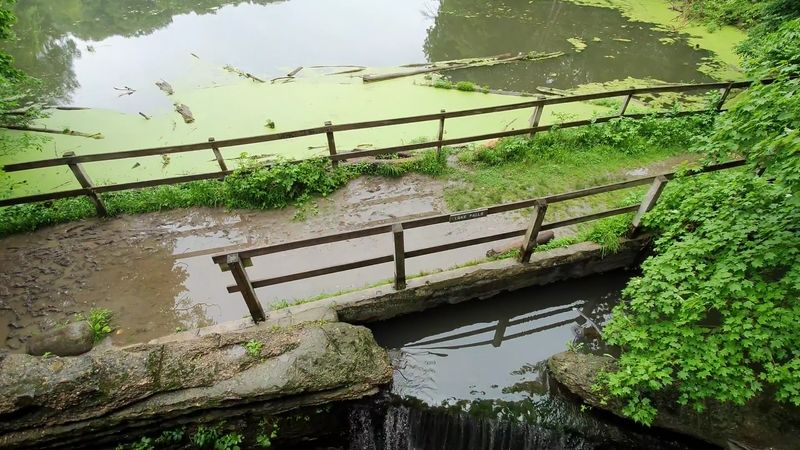
The flowers are only part of the walk. Trails around the River Area run through flatter prairie and savanna, bordering nearby farmland.
Compared with the park’s stair-heavy canyon routes, this ground is easy on the legs. Families and casual walkers often find it far more manageable.
Native grasses and wildflowers fill in the spaces around the crop fields. Even outside sunflower season, the color and texture reward a slow pace.
Wildlife sightings come easily out here. Birds, butterflies, and the occasional snake sunning on warm dirt all make appearances.
Access can vary, and one visitor reported being turned back by a conservation officer because of restricted access along part of the route. Rules change with season and management needs.
Signage at the entrance is the best guide on any given day. Following it prevents wasted mileage.
Bringing water matters, since shade is limited across the open prairie. This corner of Illinois feels wide and quiet, which is precisely its charm.
Waterfalls And Canyons Waiting Nearby
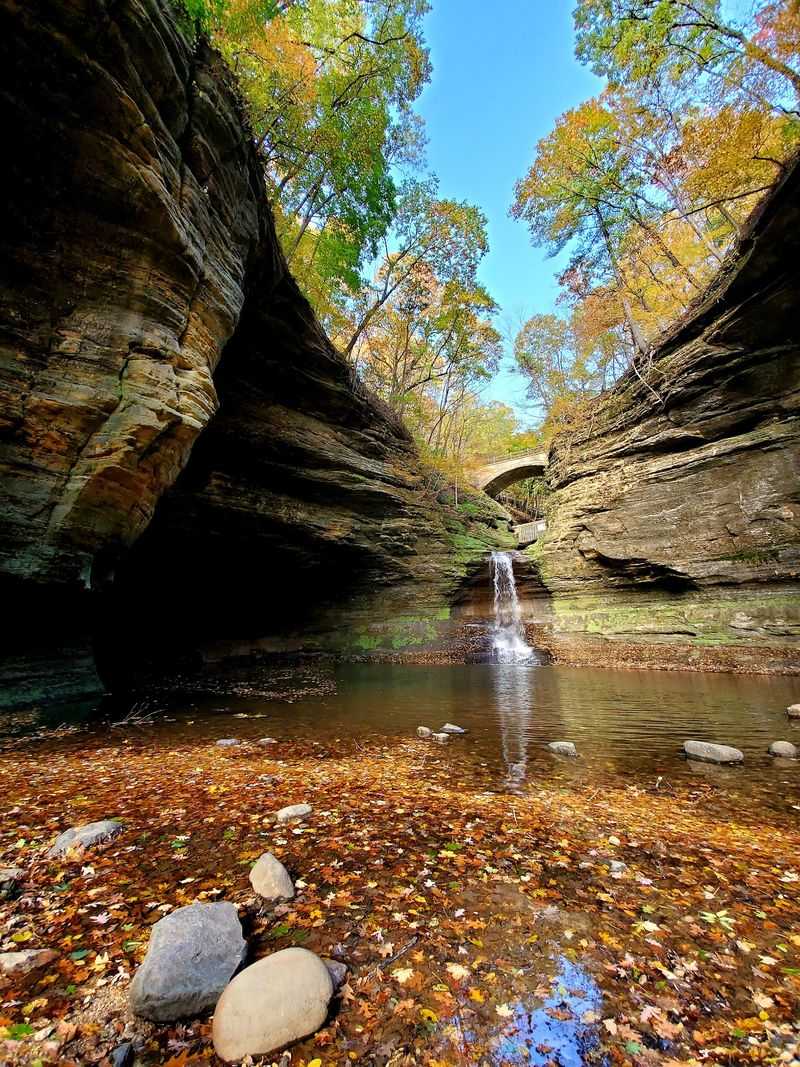
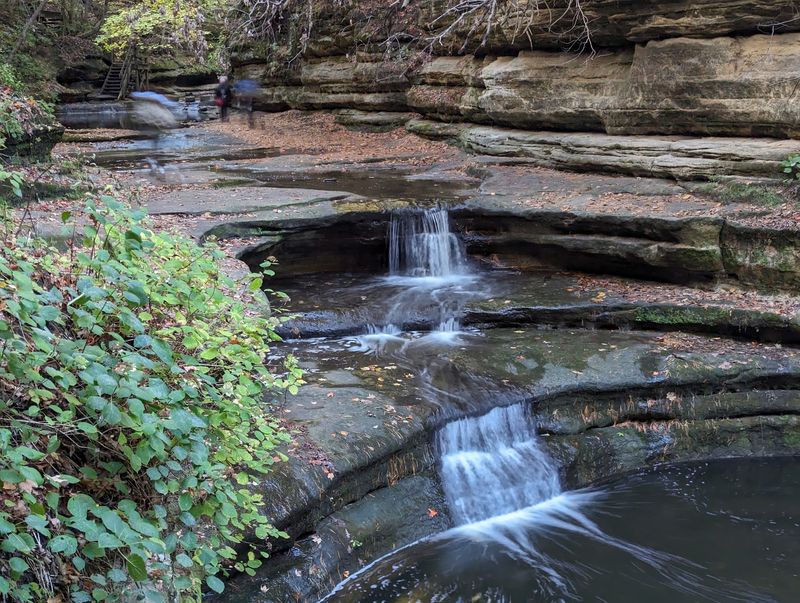
Ready for a total change of scenery? The Dells section of the park delivers canyons, dells, streams, and waterfalls including Lake Falls, Cascade Falls, and Giants’ Bathtub Falls.
Layered sandstone walls rise on both sides of the canyon floor. Small caves along the way offer different angles on the falling water.
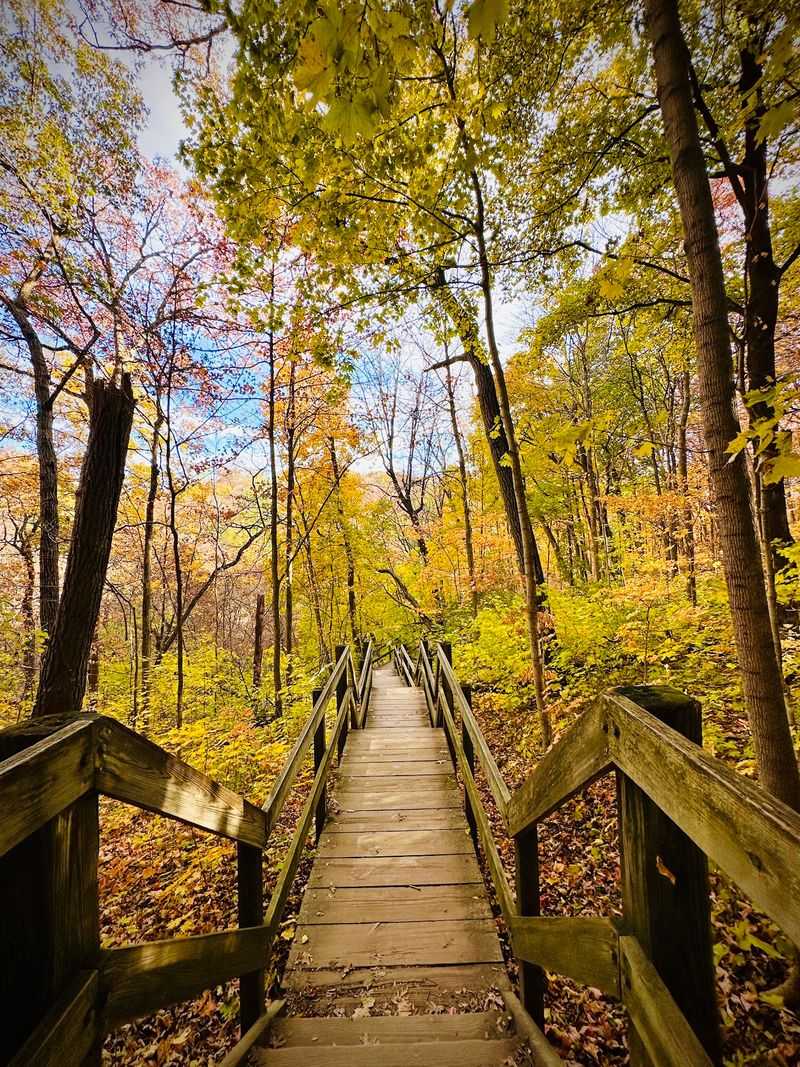
Around five miles of hiking trails thread the park, with several routes dropping deep into the canyons. Stairs are everywhere, both concrete and wood.
Water flow depends heavily on recent rain and snowmelt. Spring visits usually mean the strongest falls and the muddiest boots.
Stepping stones cross shallow water in places, so shoes with grip and a tolerance for wet socks help enormously. Trail poles suit the uneven stretches.
Mountain bikers and horseback riders have about nine miles of multi-use trails to work with. Winter brings roughly six miles of cross-country ski routes.
Pairing golden fields with shaded stone corridors makes one visit feel like two separate trips.
A Private Estate Named Deer Park
Long before hashtags, this land belonged to one family. It was purchased in the late 19th century by Frederick William Matthiessen, an industrialist and philanthropist from LaSalle.
He ran the property as a private park called Deer Park. Trails and structures took shape under his direction in the early 1900s.
After his passing, his heirs donated the land to the State of Illinois. The park received its current name in 1943.
Today the grounds cover close to 1,900 acres, spanning fields, forest, canyons, and lake shoreline. That growth turned a private retreat into public ground.
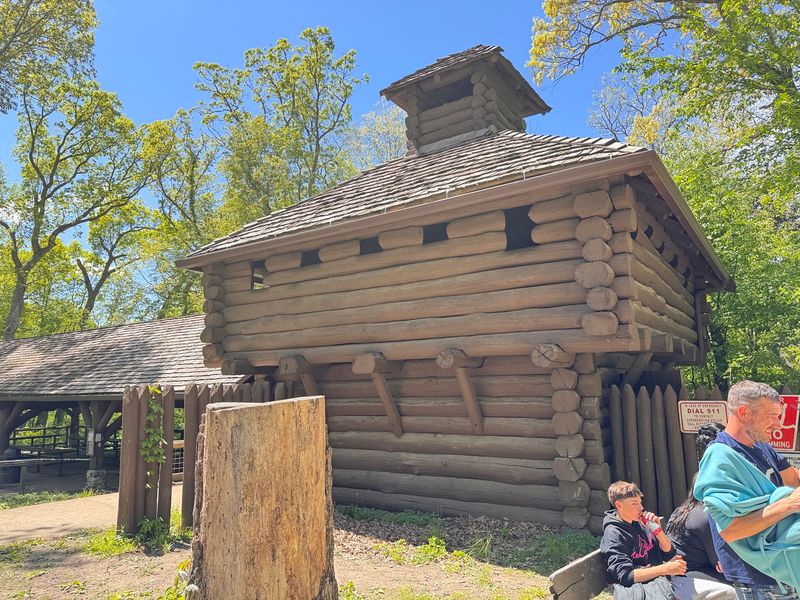
Visitors still encounter reconstructed log cabins and a blockhouse modeled on French colonial forts from the late 1600s and early 1700s. Interpretive signs explain the details.
An arched stone bridge spans a green canyon and remains one of the most photographed features. Walking beneath it feels older than the state park label suggests.
History quietly threads through a place most people visit for flowers and waterfalls.
Practical Notes Before Heading Out
Small preparations make a big difference. Arriving early in the morning or later in the evening dodges both the heaviest heat and the thickest crowds.
Weekdays are usually calmer than weekends across the whole park. Peak bloom weekends can be surprisingly busy for a spot considered overlooked.
Parking is limited at the main lots, though overflow areas exist nearby. Getting there early remains the simplest solution.
Water deserves top billing on the packing list. Shade in the sunflower field is nearly nonexistent, and canyon hikes burn energy fast.
Restroom facilities have been reported out of order at times, with portable toilets standing in. Planning accordingly avoids awkward moments.
Drones are prohibited throughout the park, and so are alcoholic beverages. Pets are welcome on trails when leashed and cleaned up after.
Sturdy shoes handle rocks, mud, and shallow water crossings far better than sandals. A picnic in the parking area rounds out the day nicely.
How This Field Stays A Secret
Fame has a way of skipping neighbors. Starved Rock sits just down the road and pulls the vast majority of attention, leaving this park comparatively quiet.
Regular visitors say the difference in foot traffic is obvious. Many describe it as their own little secret, and they say it fondly.
The sunflower field compounds that obscurity. It sits in a separate entrance area, away from the canyon trails everyone photographs.
Add a bloom window measured in days rather than months, and the math explains itself. Timing keeps the crowds naturally thin.
Word does spread each July, and social media has certainly raised the profile. Even so, the field rarely feels overwhelmed.
The setting sits roughly an hour and a half from Chicago, close enough for a day trip out of northern Illinois. Combining it with the canyons makes the drive worthwhile.
Golden rows, sandstone dells, and old estate history share one address in Illinois. Catch the bloom once and the calendar reminder writes itself.