
This New Hampshire Antique Shop Is Packed With Stunning Architectural Treasures
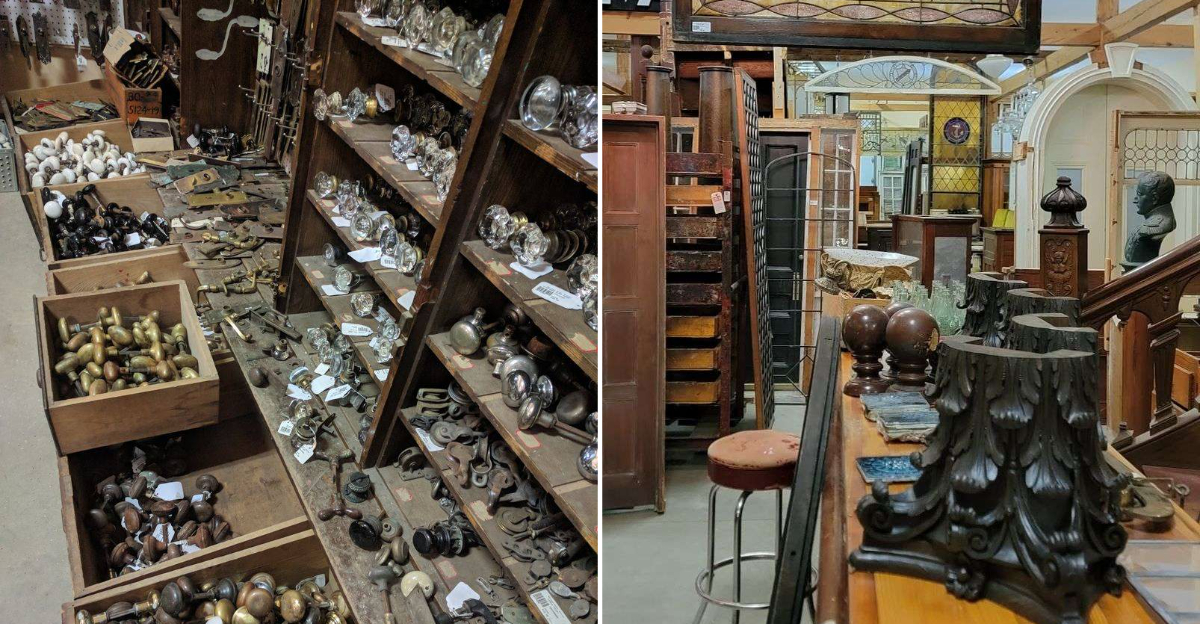
Every collector deeply values places where something truly special can be found. This New Hampshire antique shop delivers exactly that kind of experience.
Architectural pieces fill the space here, from ornate doors to salvaged fixtures most stores wouldn’t think to carry. Regulars know inventory changes constantly, since pieces come from estate sales and demolitions across the region.
Nothing about the selection feels curated for convenience over genuine discovery. Collectors travel well beyond the immediate area, drawn by treasures rarely found anywhere else nearby.
Prices stay reasonable despite the rarity of certain architectural pieces on display. This shop proved that sometimes the best finds require looking somewhere unexpected.
History Of Salvage In The Region
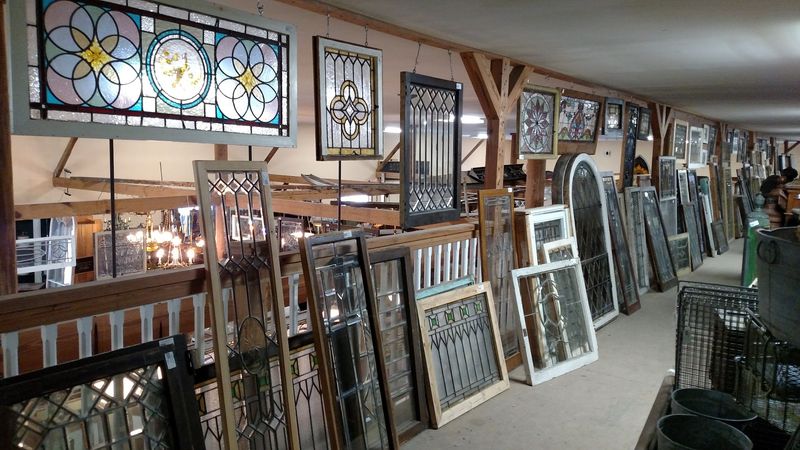
New England was practically built for salvage work. The region is stuffed with old homes, mills, barns, and mansions, and when one of them comes down, somebody has to decide what gets saved.
That is the job NorEast Architectural Antiques took on. The crew focuses on antique building materials from roughly 1700 to 1940, rescuing pieces that would otherwise end up in a dumpster behind a demolition site.
Their specialty has a name that regulars use casually: the New England look. Think heavy paneled doors, hand-hewn timber, cast iron hardware, and glass with a slight wave in it.
One story that made the rounds involved salvage from the Jordan Marsh mansion, including a bay window that had two customers circling it like hawks. The buyer who finally got it went back the very next weekend for more.
Dismantling this material is not a quick job either. Removing a staircase or a stained glass window without cracking anything takes patience, padding, and a lot of careful labor before it ever reaches the sales floor.
Contractors, homeowners, and designers all show up for the same reason. New reproductions rarely match the weight and feel of the real thing.
The shop keeps regular weekday hours and shorter Saturday hours, closed Sundays, at 16 Exeter Rd, South Hampton, NH 03827.
Identifying Authentic Period Building Materials
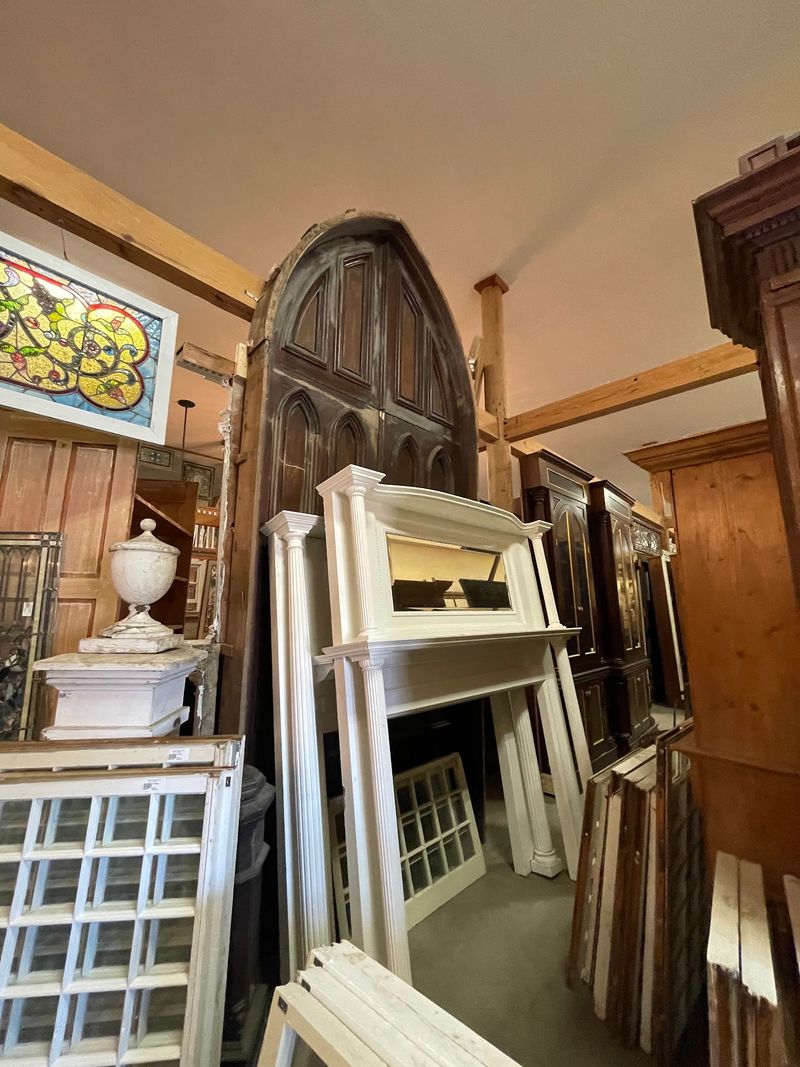
Telling a genuine 1890s door from a clever copy comes down to details most people walk right past. Saw marks, nail types, paint layers, and the way wood has shrunk over a century all leave clues behind.
Restoration pros usually start by cataloging original features before touching anything. That habit keeps a project honest and stops someone from replacing a real element with something that only looks close.
The rule of thumb is simple. Match material to material, wood for wood, masonry for masonry, iron for iron.
Historical photos and old building records help too. If a house once had four-panel doors, a set of six-panel replacements will always read as slightly wrong, even if nobody can explain why.
Glass gives away age fast. Older panes carry ripples, tiny bubbles, and a faint distortion that modern float glass never has.
Hardware tells a similar story. Hand-forged hinges show hammer marks, while early machine-made pieces have crisp, repeated patterns.
Browsers at NorEast often bring a photo of what they already own and hunt for a match.
Bringing measurements matters more than bringing enthusiasm. Nothing stings quite like a beautiful mantel that misses the opening by two inches.
Restoring Vintage Elements
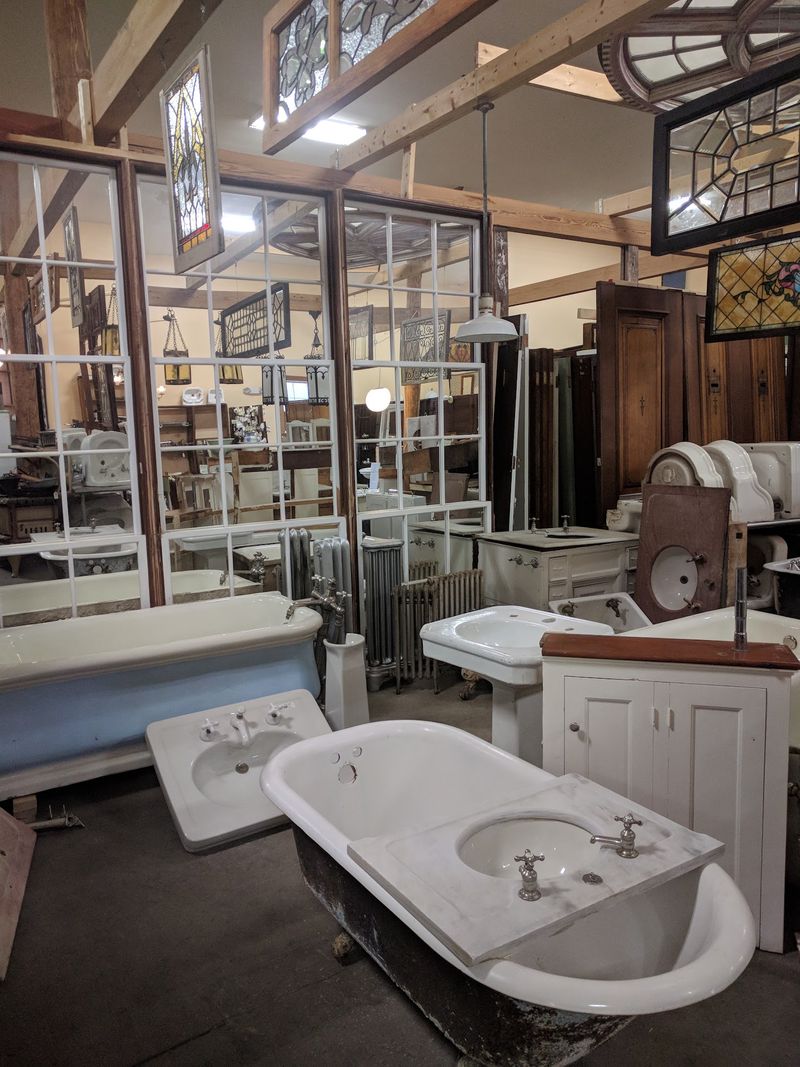
Bringing a tired architectural piece back is less about power tools and more about restraint. Aggressive sanding can erase a hundred years of character in about ninety seconds.
Gentle surface cleaning usually comes first, lifting grime and old wax without stripping the finish underneath. Restorers work in small sections and check constantly.
Fragile wood sometimes needs consolidation, where a thin adhesive soaks into soft or crumbling areas and firms them up. Stabilizing decay early prevents bigger repairs later.
Structural problems tend to hide under paint. A mantel that looks solid may have a split rail or loose joint that only shows once the layers come off.
Modern materials play a role too. Cellular PVC and fiberglass can reproduce exterior trim profiles that will not rot, which keeps the original design intact even when the original board is beyond saving.
Stained glass has its own path. Cracked pieces get re-leaded and re-soldered by specialists, and NorEast has a stained glass repair person who handles windows before they head out the door.
The shop also runs a milling operation, something plenty of first-time visitors do not realize.
Ask questions before buying. Knowing what a piece still needs saves surprises at home.
Incorporating Antique Features Into Modern Spaces
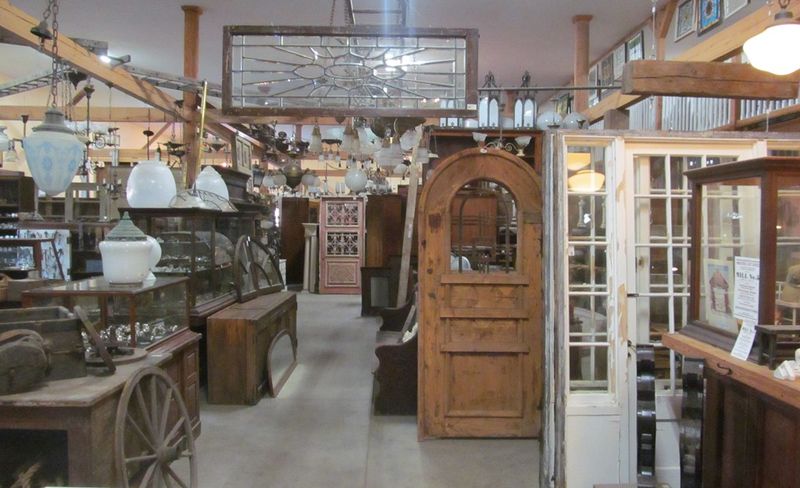
A brand-new room can feel a little like a furniture showroom. One salvaged element usually fixes that instantly.
Old doors get used everywhere, hung on sliding tracks for pantries, mounted as headboards, or set into new walls throughout a farmhouse build. The hardware alone changes how a room sounds and feels.
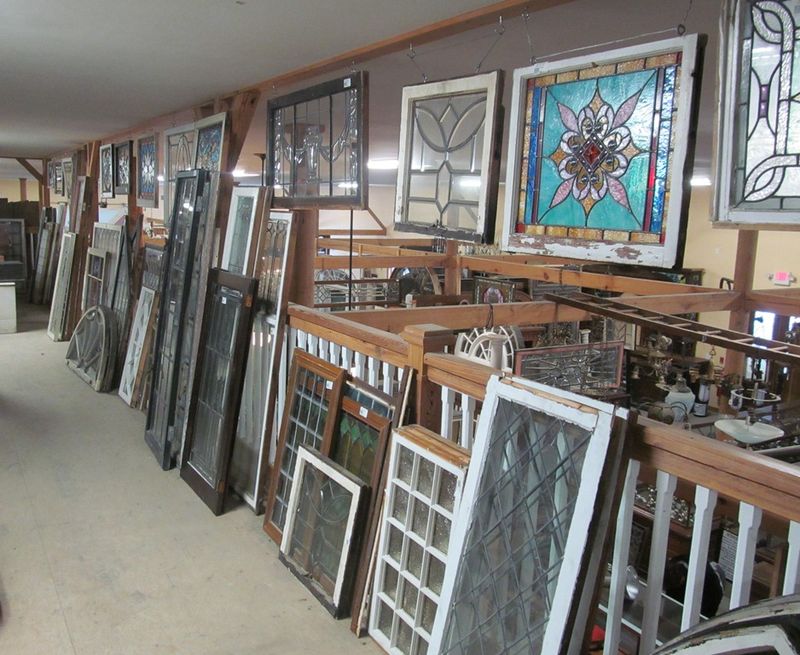
Windows have second careers as cabinet fronts, wall art, or interior partitions that borrow light between rooms. Stained glass panels hung in a bathroom give privacy and color at the same time.
Pressed tin ceiling panels get cut down and applied to island fronts, cabinet doors, or tabletops. The pattern does the decorating for you.
Smaller salvage works as sculpture. Iron floor grates, turned spindles, factory wheels, and corbels look great leaning on a shelf with no job at all.
Start small if you are new to this. A set of glass doorknobs or a single transom window changes a hallway more than people expect.
Bring a photo of your space when you browse.
Popular Styles Of Artifacts
Mantels are the headliners here. Rows of them lean against walls, from simple painted Federal styles to carved mahogany pieces with mirrors and columns built in.
Millwork fills out the inventory in a big way. Baseboards, casings, wainscot panels, corbels, and brackets all show up in profiles that lumberyards stopped making generations ago.
Staircase parts deserve their own mention. Newel posts, balusters, and railings turn up in matched sets, which is close to a miracle for anyone rebuilding a stairway.
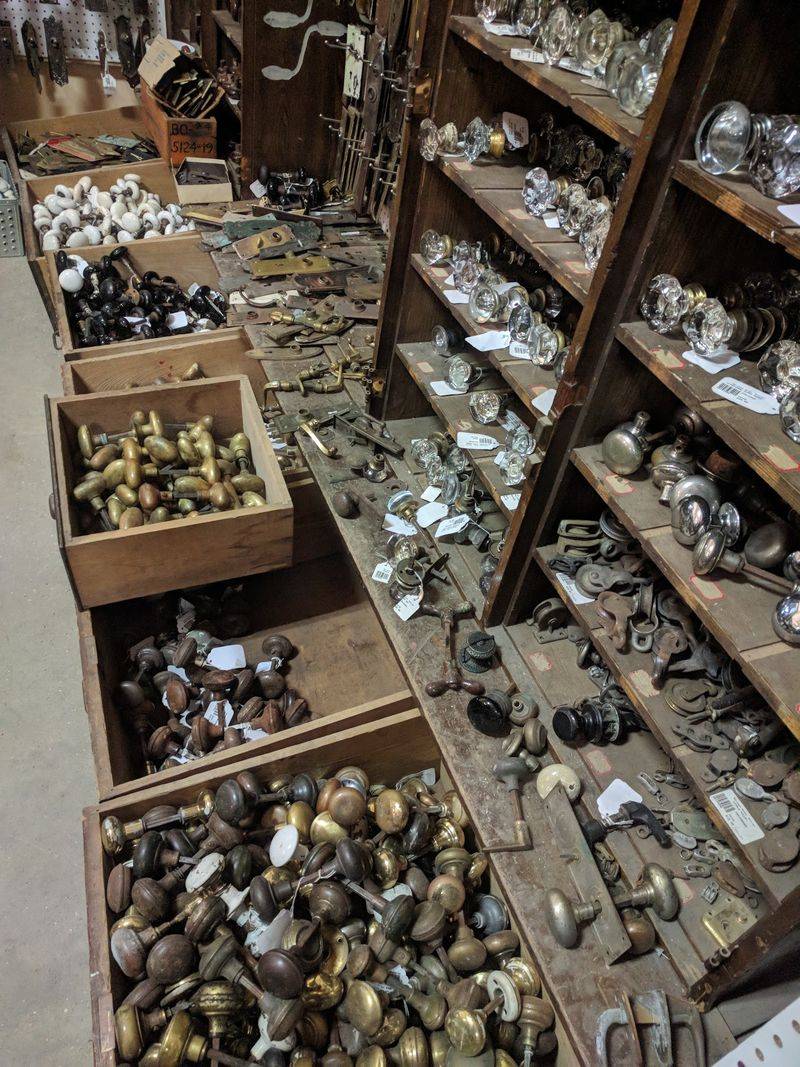
Hardware bins are where people lose track of time. Glass doorknobs, mortise locks, hinges, escutcheons, and hooks sit in boxes waiting to be dug through, and yes, digging is part of the deal.
Then come the odd and wonderful items. Cast iron sinks, garden ornaments, shutters, columns, lighting, and beams that once held up barns.
The date range keeps things focused, roughly 1700 through 1940. That means Colonial, Federal, Greek Revival, Victorian, Craftsman, and early Deco all mingle under one roof.
Preservation Techniques For Wood And Metalwork
Buying the piece is the fun part. Keeping it healthy is the long game.
Wood hates swings in temperature and humidity. A salvaged door stored in an unheated garage through a New Hampshire winter can cup, split, or loosen at the joints.
Direct sunlight causes its own damage, fading finishes and making old wood brittle over time. A shaded spot with steady air does wonders.
For wooden items that get handled often, like railings, newel posts, and door edges, a light coat of paste wax adds protection. SC Johnson paste wax is a common choice, buffed thin rather than slathered on.
Metal has one main enemy: moisture. Storing hardware somewhere dry stops rust and corrosion before it starts.
Cleaning old brass and iron calls for a soft touch. Penetrating oil loosens grime and frees stuck mechanisms, while wire wheels and harsh abrasives strip away patina that took a century to develop.
Patina matters more than shine to most collectors. A doorknob polished down to bare metal loses the depth that made it interesting.
Stained glass needs support. Panels should be stored upright and never stacked flat, since large single panes can crack under their own weight.
Ask staff how a specific item was stored before purchase. It tells you what condition you are inheriting.
Value Factors For Collectable Pieces
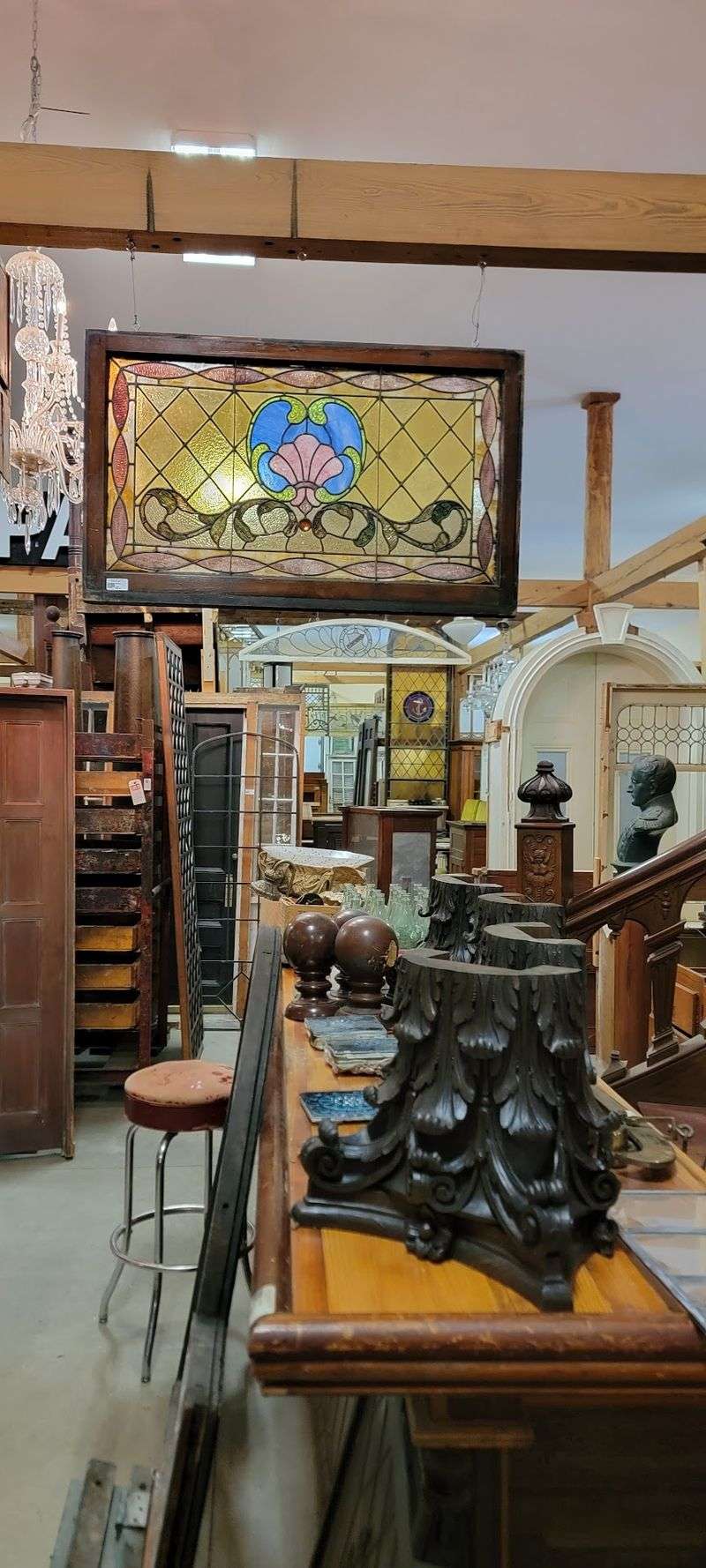
Two mantels can look similar and be worth wildly different amounts. What separates them usually comes down to a handful of factors.
Rarity leads the pack. Matched sets, unusual sizes, and details that were expensive to make in the first place are hard to replace.
Craftsmanship counts next. Hand carving, beveled glass, quartersawn oak, and tight joinery all signal a piece made by someone who knew the trade.
Condition then adjusts everything. A window with original glass and a sound frame sits well above one that needs full re-leading.
Provenance can push value higher still. Salvage from a documented building, like the Jordan Marsh mansion pieces that generated real excitement at this shop, carries a story buyers care about.
Demand plays its part too. Old-house restoration has a devoted following, and popular items like glass doorknobs and Victorian stained glass move quickly.
Careful dismantling, transport, storage, and repair all take real work before an item hits the floor.
One visitor summed up the philosophy nicely, saying that when cheap things will not do, this is where you go. Another noted a range of prices, from modest finds to high-end statement pieces.
Know your budget and your must-haves before browsing.
Locating Rare Items At Antique Shops
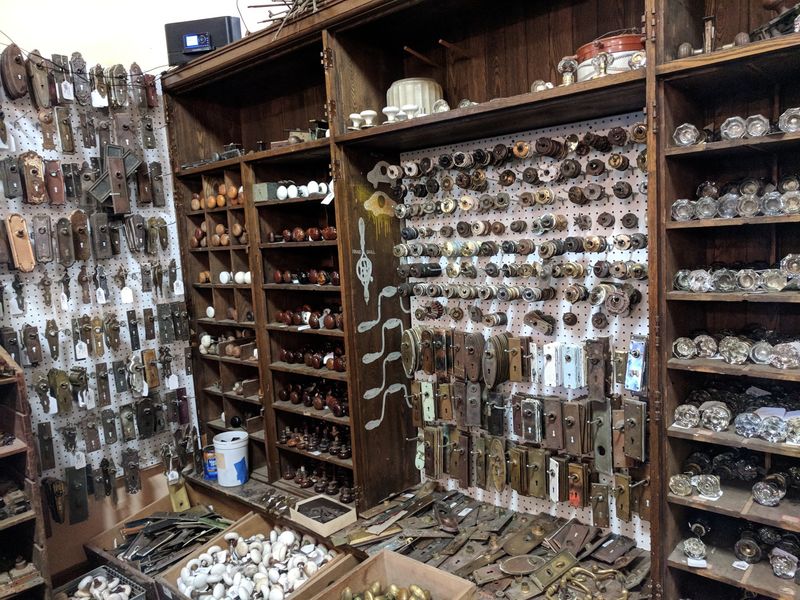
Hunting rare architectural pieces takes a strategy, or at least comfortable shoes. Inventory here is organized loosely by type, so doors live with doors and knobs live with knobs, but within those groups you are on your own.
That randomness is the charm for some and a frustration for others. Boxes of locks and hardware reward anyone willing to sort through them one piece at a time.
Two approaches work well. Check the website inventory and Instagram ahead of time, since listings and photos get updated regularly, or arrive with no plan and see what catches your eye.
Weekday hours run from ten to five, Saturdays close at three, and Sundays are off. Weekday mornings tend to be calmer for serious hunting.
Newcomers should start with small hardware. It builds your eye for age and quality without a big commitment, and you will still leave with something.