
This Missouri Museum Houses One Of The Most Impressive Collections Of Rare Maritime Artifacts
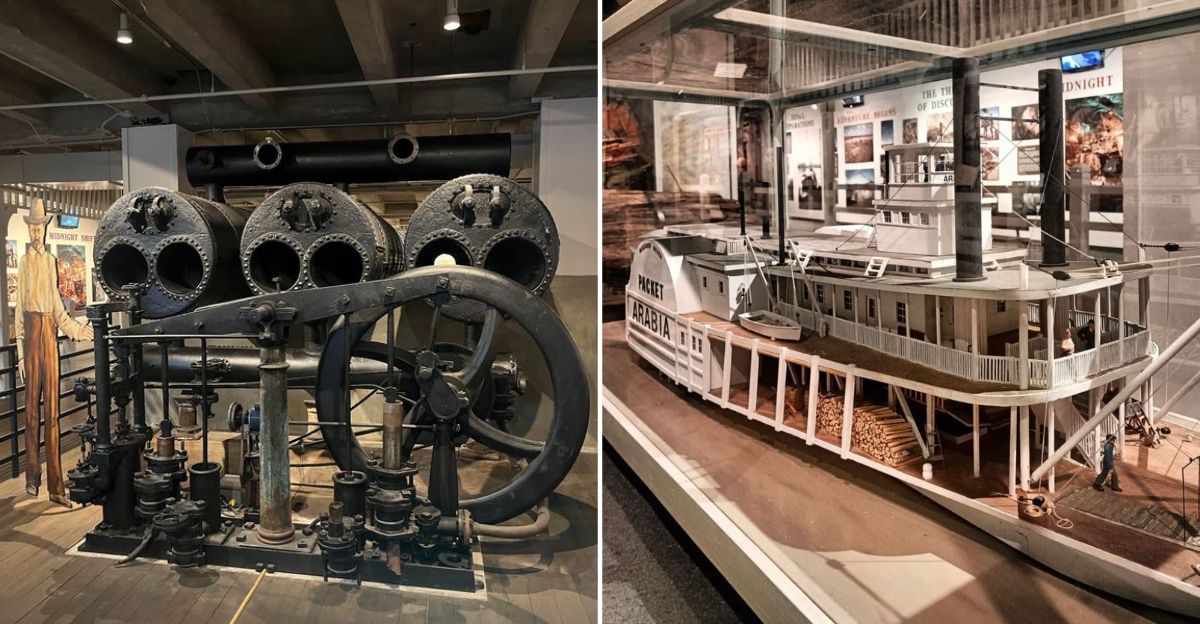
The only word that comes to mind here is wow. This Missouri museum houses one of the most impressive collections of rare maritime artifacts anywhere in the region.
Exhibits here range from centuries-old ship equipment to detailed models most visitors have never seen up close before. Nothing about the collection feels randomly assembled; each piece is carefully preserved and documented.
Regulars treat repeat visits as necessary, since one trip rarely covers everything on display. Staff share context behind specific artifacts, adding depth beyond just walking past glass cases.
Families often lose track of time completely once they start exploring deeper into the building. This museum proved that maritime history can captivate even those far from any ocean.
History Behind Maritime Artifact Preservation
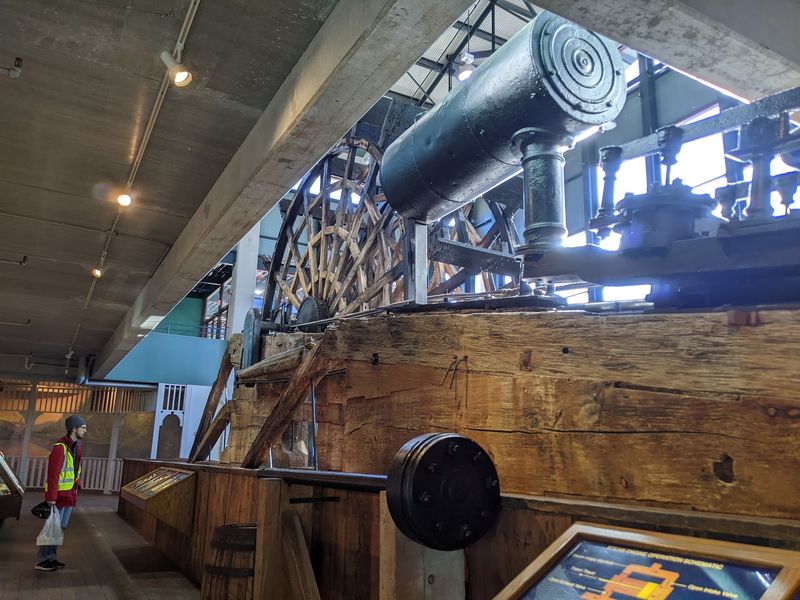
On September 5, 1856, a steamboat named the Arabia was hauling roughly 200 tons of freight up the Missouri River near Parkville when it struck a submerged tree snag. The hull tore open, and the boat went down fast.
All 130 passengers and crew made it out alive. The single casualty was a mule that had been tied to sawmill equipment on deck, which is either tragic or the most 1850s detail imaginable.
Then the river did something remarkable. Over the following decades it shifted course, and the wreck ended up buried 45 feet below a cornfield, sealed away from oxygen and light.
That airless mud acted like a giant pantry. Metal, leather, cloth, glass, and even food stayed shockingly intact while the world above moved on through the Civil War, cars, and cable television.
The Hawley family and their partners located the wreck and excavated it between November 1988 and February 1989, pumping groundwater and hauling out crate after crate. Fragile organic items were frozen inside blocks of ice on the spot to stop them from crumbling once air hit them.
Three years later the collection had a home, opening in 1991 in the River Market district. The result is widely described as the largest single collection of pre-Civil War artifacts anywhere, all sitting at the Arabia Steamboat Museum at 400 Grand Blvd, Kansas City, MO 64106.
Techniques Used In Maritime Artifact Conservation
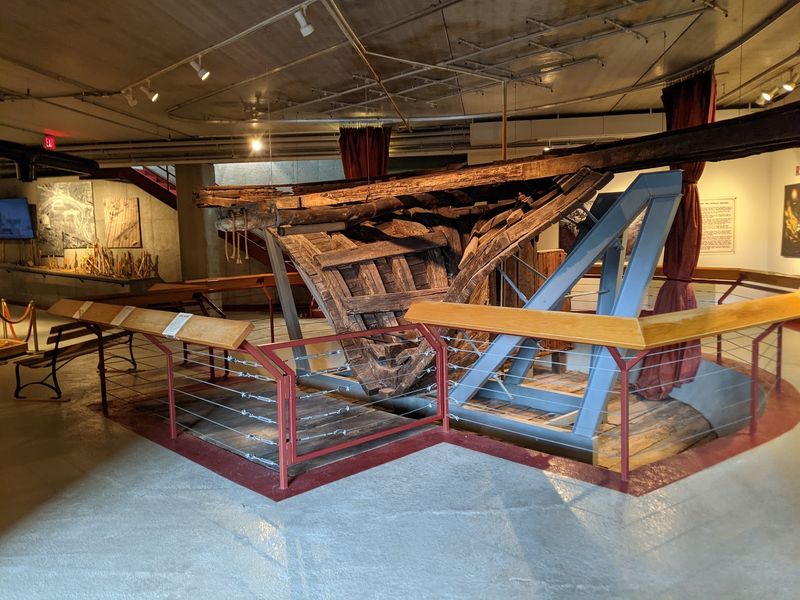
Here is the wild part. The cleaning work is still going, decades after the dig, with staff estimating another ten to twelve years before the last artifact is finished.
Metal pieces get their oxidized crust removed by hand using specialized tools and, believe it or not, ordinary-looking erasers. Patience is the main ingredient.
Bottled and jarred foods are injected with nitrogen gas to keep the contents stable inside their original glass. Leather goods and garments soak in preservatives and then head to a freeze-dryer right on site.
Textiles bring their own headache. The cotton thread that once held shoes and clothing together dissolved underwater, so preservationists restitch the pieces seam by seam to keep them from falling apart.
Time estimates get strange fast. A single small nail can eat up more than an hour of careful work, while one pair of boots might take up to three months.
What makes the museum unusual is that none of this happens behind a locked door. An open preservation lab lets guests watch staff scrub, stitch, and stabilize objects in real time, and workers often stop to explain what they are holding.
Customers regularly mention conversations with preservationists as a highlight.
Notable Items Exhibited In The Collection
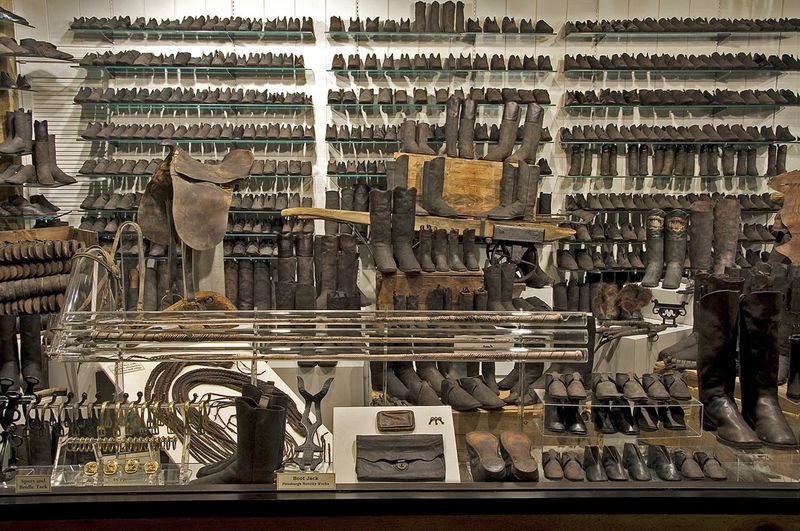
Numbers tell this story best. The collection runs into the hundreds of thousands of items, and only about 40 percent is on display at any given time.
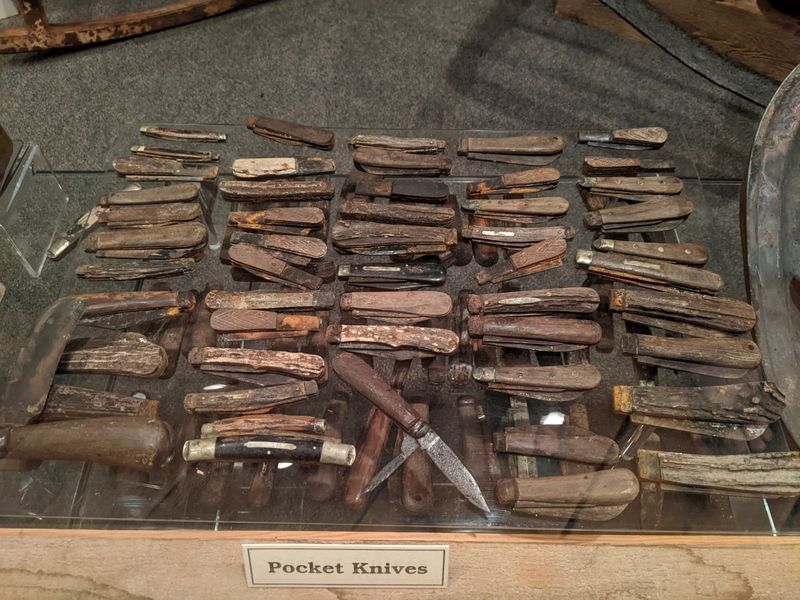
Count the footwear, and you get more than 4,000 boots and shoes. Add 247 hats, 235 ax heads, and 328 pocket knives, and the scale starts to sink in.
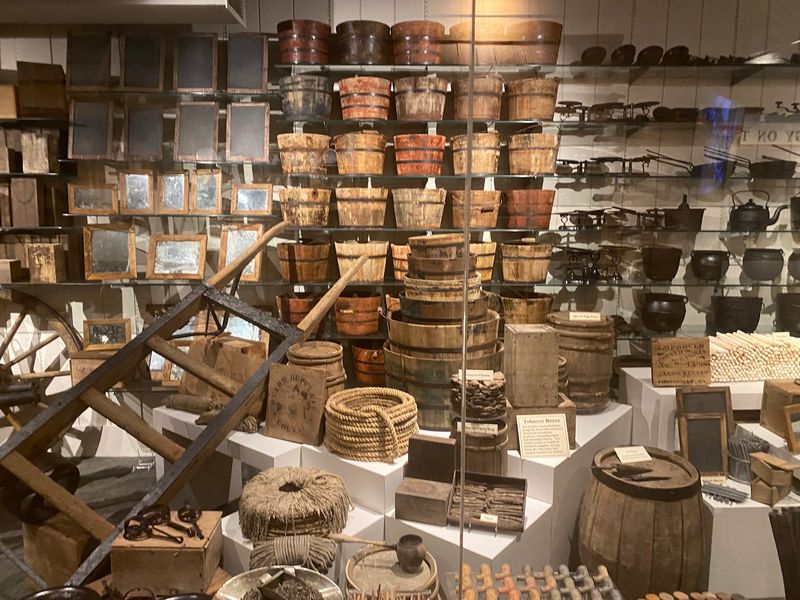
Not everything is practical hardware. There is French perfume, fine china, buttons, medicine, carpentry tools, gunpowder canisters stamped 1856, and a children’s doll that somehow survived the mud without losing its charm.
The pickles get the loudest reactions. Twenty-nine jars came up looking oddly fresh, and reports say a few were actually still edible after their long nap underground.
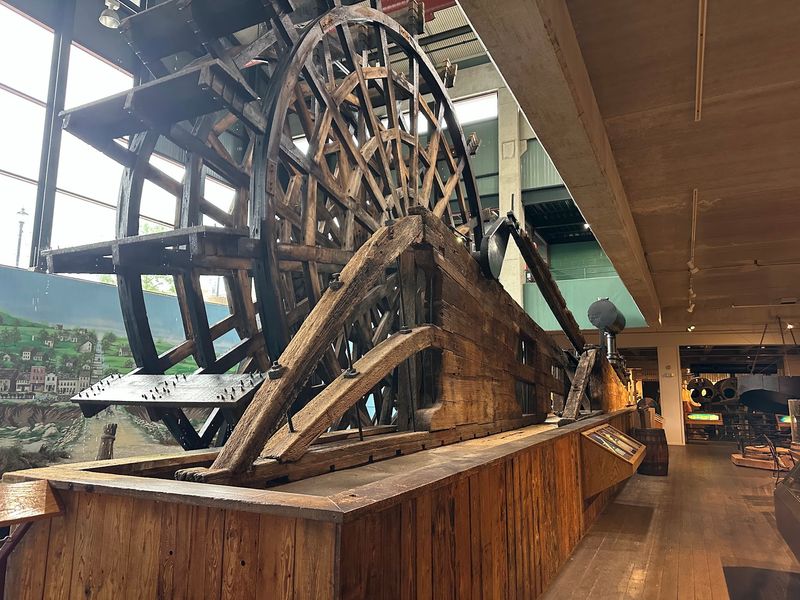
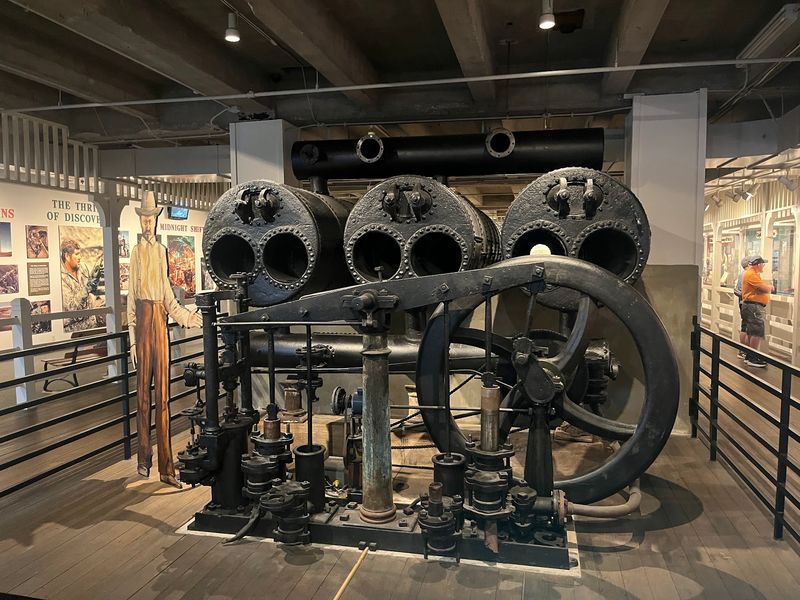
Big machinery anchors the space too. The Arabia’s six-ton stern, original boilers, engine, and anchor are all here, along with a reconstructed paddle wheel that visitors describe as mesmerizing to watch turn.
There is even a bonus wreck. The engine of the Missouri Packet, the first steamboat to sink in the Missouri River back in 1820, sits on display nearby.
Best cameo award goes to the tree snag itself, the very piece of waterlogged timber that sank the boat.
Impact Of Maritime Artifacts On Local Heritage
Someone once compared this discovery to finding King Tut’s tomb on the Missouri River. Dramatic? Sure. Also not far off.
Before railroads took over, rivers were the highways of westward expansion, and boats like the Arabia carried the goods that made frontier towns function. Losing that cargo was a real economic blow in 1856.
What survived tells a clear-eyed story about commerce rather than romance. These were items headed for general stores and household shelves, ordered by real people planning real lives upriver.
Visitors often say the artifacts make the era feel touchable. A worn boot or a dented tin cup lands differently than a paragraph in a textbook.
Kansas City locals have adopted the place as a point of pride. It sits in the River Market, a neighborhood built around the same trade routes that once fed those steamboats.
Locals frequently call it a time capsule, and that description fits better than most. The collection was never curated for rarity; it simply is whatever happened to be on board.
Families, school groups, and out-of-state travelers all leave with the same realization.
Educational Programs Associated With Maritime History
Field trips here come with an unusual perk. Middle schoolers can spend three hours in an interactive program where they clean actual artifacts pulled from the wreck, not replicas.
Guided tours are tailored by grade level and built to line up with state educational standards. Teachers appreciate that the lessons connect to both history and science without feeling like a worksheet.
One eighth-grade teacher wrote about meeting David Hawley himself during a class visit. He talked with students individually, which is not something most museums can offer.
Beyond school groups, the calendar includes lectures, workshops, and special events digging into 19th century river travel. Topics range from steamboat mechanics to frontier commerce.
The preservation lab doubles as an unplanned classroom. Watching someone restitch a boot that lost its thread underwater explains chemistry and craftsmanship faster than any lecture.
Younger kids do fine too. Parents report that children as young as five sit through the introductory films without squirming, mostly because the story has a shipwreck in it.
Stories Revealed Through Artifact Restoration Efforts
Every cleaned object hands over a clue. A bottle meant to hold ketchup shows off surprising craftsmanship, proof that even throwaway packaging got real attention in the 1850s.
Look at the cargo as a whole and a shopping list appears. Carpentry tools, delicate china, children’s toys, medicine, and buttons all reveal what frontier families considered necessary.
One discovery reads like a plot twist. Weapons intended for Free-staters in Kansas territory had been hidden aboard and previously confiscated during a search of the ship.
That single find pulls the wreck into the bigger, tense story of Bleeding Kansas. A freight boat suddenly becomes a piece of political history.
The excavation itself is its own tale. A small group of family and friends, armed with research and serious determination, went digging in a cornfield for a boat nobody had seen in 132 years.
Archival footage of that dig plays throughout the galleries. Muddy hands, giant pumps, and expressions of disbelief as crates came up intact.
Then there is Lawrence the mule, the wreck’s only casualty, whose remains were recovered and who now has his own sticker in the gift shop.
Challenges Faced In Maintaining Maritime Collections
Success creates problems. The collection has grown so large that staff describe the building as bursting at the seams, with most artifacts waiting in storage rather than on display.
Conservation timelines keep stretching. Work was once projected to wrap up by 2022, and now the estimate sits at another ten to twelve years.
There is also more material waiting in the wings. Artifacts from other recovered steamboats, including the Malta and the Radnor, need space that simply does not exist right now.
The current location comes with friction. The city owns the City Market, and disagreements with officials and fellow tenants have surfaced over the years.
Parking trips up plenty of visitors too. One side of the building is free, and the other is paid, a detail worth knowing before you pull in on a busy Saturday.
Money is the biggest hurdle by far. Estimates for new construction and exhibit space run between 65 and 80 million dollars, plus another 15 to 20 million just to move the collection safely.
With the lease expiring in 2026, the owners have reportedly fielded offers from out-of-state institutions.
Visitor Experience And Interactive Exhibits
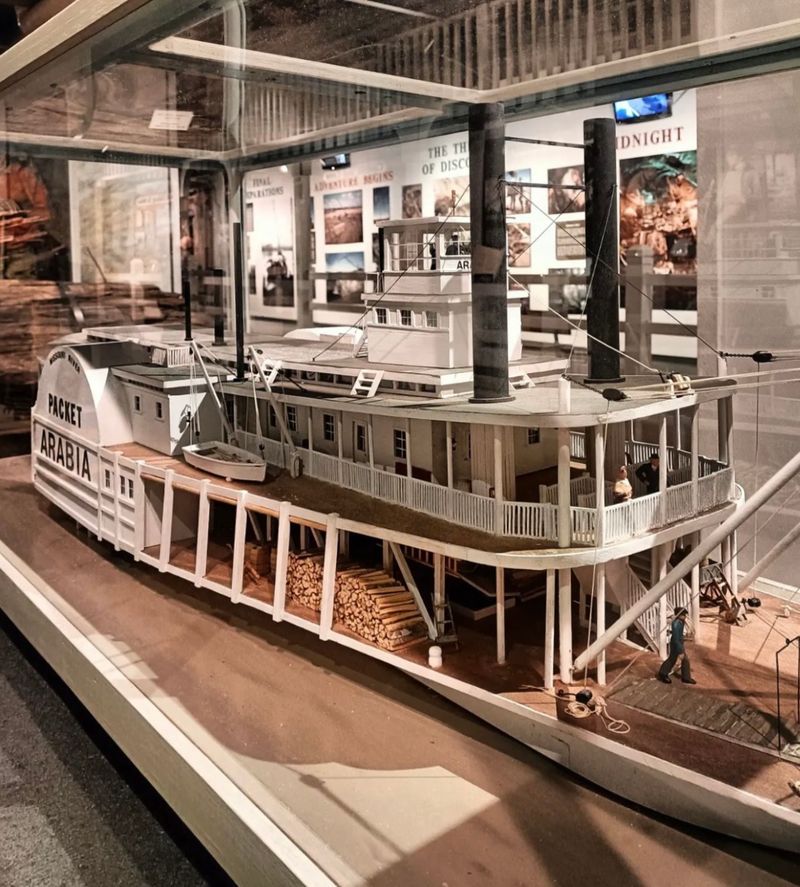
The visit opens with short videos that lay out the sinking and the improbable rediscovery. A 14-minute film called The Fall and Rise of the Steamboat Arabia plays in the theater for anyone wanting the full version.
Then the scale hits. A 171-foot full-size reproduction of the Arabia’s main deck stretches through the museum, complete with side-wheels, steam motors, and boilers.
Walking that deck gives a real sense of how much boat sat under all that farmland. Visitors keep saying it is far bigger than they expected going in.
Screens scattered through the galleries run archival excavation footage and short history segments. There is also a card game table where guests put historical events in chronological order before flipping to check the dates.
The open preservation lab remains the standout. Watching someone actively clean an 1856 object is not a thing most museums offer.
Practical notes help. Hours run 10 AM to 5 PM Monday through Saturday and noon to 5 PM Sunday; most people spend around two hours, and the gift shop leans heavily on Kansas City merchandise plus a few steamboat souvenirs.
Rain-day plans work beautifully here, and lunch options sit right outside in the City Market.