
8 Historic New Jersey Hikes Where You Can Discover Forgotten 1800s Mills Mansions And Abandoned Ruins
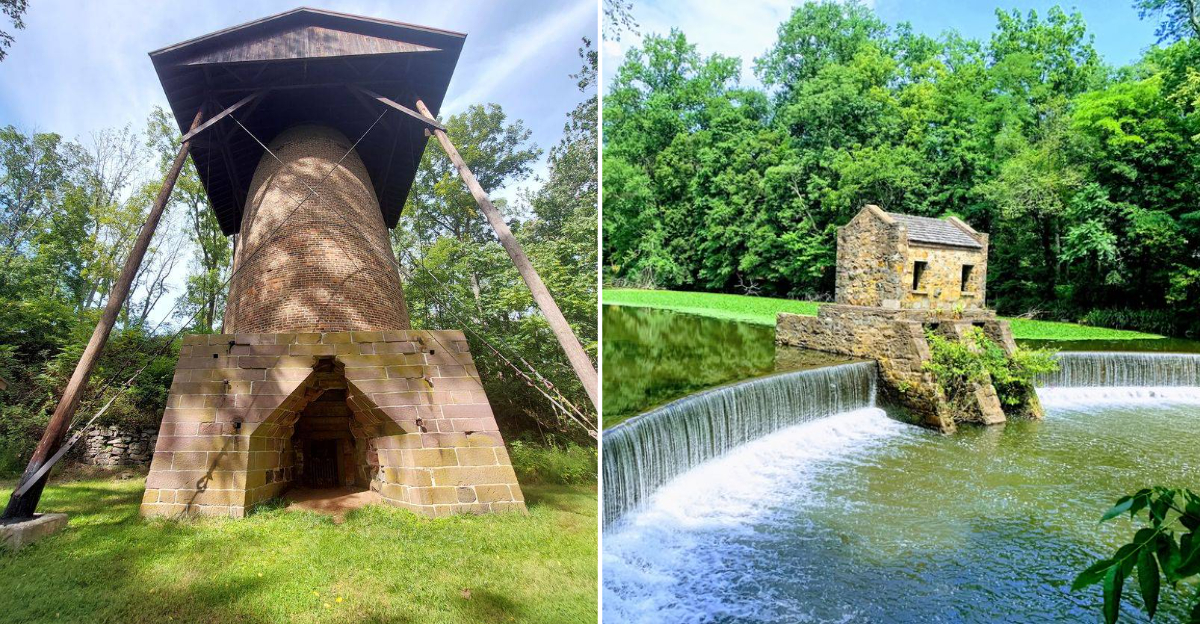
Nature slowly reclaims the past, piece by piece, and New Jersey offers exactly that kind of hiking experience. These trails wind past mills, mansions, and ruins dating back to the 1800s, some barely recognizable after decades of decay.
Structures here stand quietly overtaken by trees and vines, blurring the line between history and wilderness. Hikers who venture through often describe the atmosphere as hauntingly peaceful, far removed from busier trails nearby.
Nothing about these locations gets restored or maintained beyond what nature has already done to them. Local historians continue piecing together the stories behind specific ruins scattered throughout these routes.
Photography opportunities exist at nearly every turn, especially once forgotten structures come into view. These hikes proved that history sometimes hides in the quietest, most overgrown corners of a state.
1. The Deserted Village
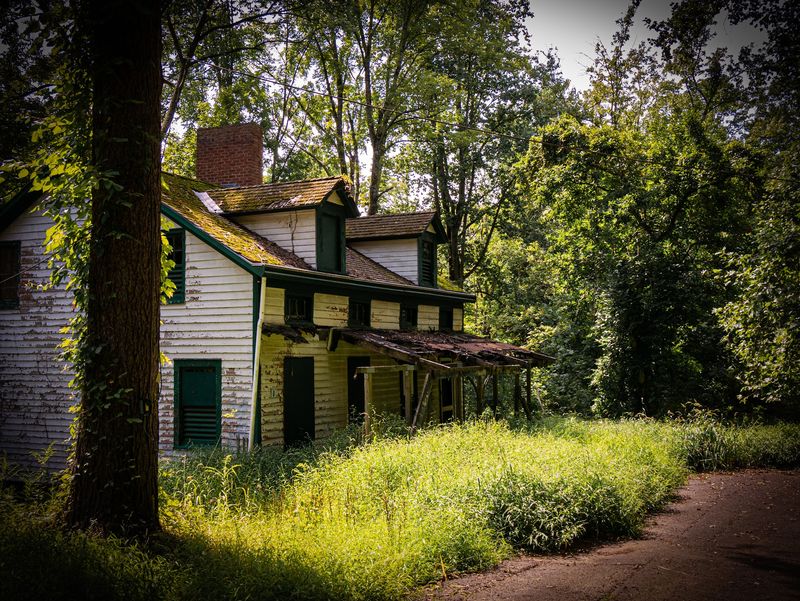
A whole town sits quietly in the middle of the Watchung Reservation, and most drivers on nearby roads have no clue. Ten historic buildings still line the old road, including a church-store combo, a schoolhouse, and a carriage house.
The story starts with a 1730s sawmill built by Peter Willcocks. Then in 1845, a businessman named David Felt bought 760 acres and built a printing mill town around it.
Felt earned the nickname King David because he insisted residents show up for church services. By 1850, about 175 people lived here, working, worshipping, and probably grumbling about the rules.
After Felt retired in 1860, the town emptied fast. Warren Ackerman gave it a second act in 1882, turning the old mill village into a summer resort called Glenside Park.
Fashionable guests came for fresh air until 1916, when the Jersey Shore stole all the attention. The buildings stayed; the people did not.
Trails loop through hemlock groves and past the old mill pond area, and the walking is easy enough for families. A 1776 headstone belonging to John Wilcox is still on the property, which is a strange thing to stumble across on a casual afternoon.
Ghost stories cling to the place like burrs. Two teenage girls supposedly drowned in the mill pond, and three sisters reportedly vanished in 1912.
Masker’s Barn and the Church/Store building tend to be the photo stops, especially in late fall when the trees go bare. Some houses are still used, so the village feels half asleep rather than fully abandoned.
Go on a weekday morning for the quietest experience. Parking fills quickly on weekends because the reservation trails are popular with local hikers.
Find it at 9 Cataract Hollow Rd, Berkeley Heights, NJ 07922.
2. Van Slyke Castle
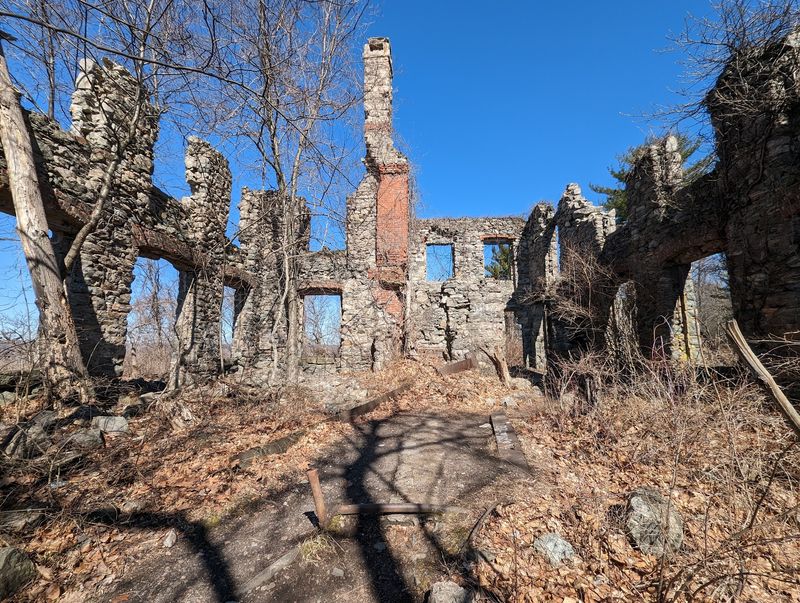
Climb high enough above Ramapo Lake, and the forest opens onto stone walls that look like a movie set. Locals call it Van Slyke Castle, though the original owner named it Foxcroft.
Stockbroker William Porter built the mansion around 1910 as a country escape from city life. He lost his life in a car accident in 1911, barely getting to enjoy it.
His widow, Ruth, later married Warren Van Slyke, and the estate picked up the name that stuck. Ruth stayed on the mountain until she passed away in 1940.
After that, the house sat empty and neglected for years. An arson fire in the late 1950s finished the job, leaving behind the bones.
What survives is genuinely impressive. Thick foundation walls, tall window openings, a separate stone water tower, the remains of a swimming pool, and a heavy-walled furnace that looks ready to fire back up.
The hike itself earns the view. Rocky trails wind up from the lake area through oak and laurel, with some steep, ankle-testing sections that reward sturdy boots.
From the ruins, the panorama stretches across the Ramapo Mountains and reservoirs below. On clear winter days, the sightlines are wide open because the leaves are gone.
Graffiti covers some walls, which bothers purists but also marks decades of teenagers who hiked up here before Instagram existed. The stone still holds its shape beautifully.
A word of caution: the ruins are unstable in spots, and climbing on walls is a bad idea. Loose rock and old masonry do not forgive missteps.
Trail intersections up here can be confusing, so download a map before losing cell service. The whole area sits within the Ramapo Mountain State Forest in Wanaque, NJ 07465.
3. Batsto Village
Cannonballs for George Washington’s army came out of this spot. Charles Read founded Batsto in 1766 as an ironworks, using bog ore dug from the swamps, charcoal from the pines, and water power from the Batsto River.
During the Revolution, the furnace here churned out iron goods for the Continental Army. That made it a target, and guards were posted to protect it.
Bog iron faded in the 1840s when Pennsylvania coal changed the game. The village pivoted to glassmaking, then to farming after industrialist Joseph Wharton bought the place in 1876.
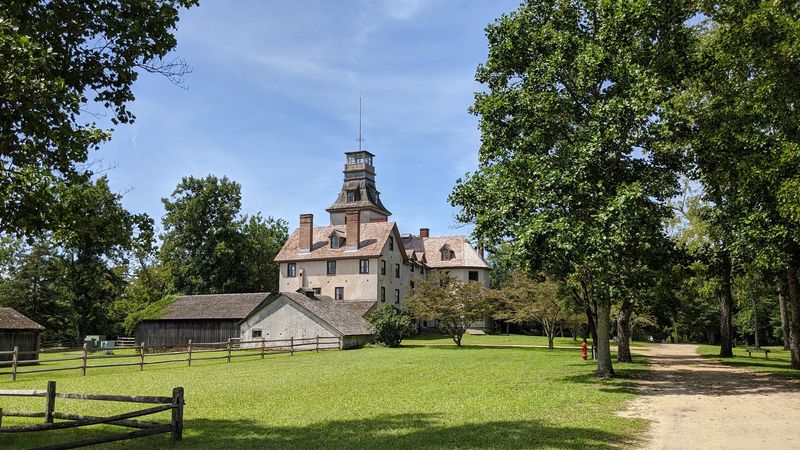
Wharton turned it into a working estate, and his 36-room Italianate mansion still dominates the village with its tall tower. It looks like a wealthy man’s idea of a country home, because that is exactly what it was.
More than 30 historic buildings survive, which makes this less of a ruin hunt and more of a time capsule. The 1852 post office still hand-cancels mail with a special stamp.
A water-powered sawmill from 1882 actually runs, and the gristmill, blacksmith shop, general store, and workers’ houses fill out the rest. The Batsto-Pleasant Mills church, built in 1808, still holds services.
Sharp-eyed visitors can spot remains of an ore boat once used to haul bog iron along the waterways. It sits as a reminder of how the whole operation moved.
Trails fan out from the village into Wharton State Forest, including easy loops around the lake and longer sandy routes for stronger legs. Cedar water stains the streams the color of strong tea.
Summer brings mosquitoes and greenhead flies, so bug spray matters here. Start your visit at 31 Batsto Rd, Batsto, NJ 08037.
4. Martha’s Furnace
Some ruins shout. This one whispers, and honestly, that is the appeal.
Isaac Potts built an iron furnace deep in the Pine Barrens in 1793 and named it for his wife, Martha. The operation ran on bog iron pulled from the wetlands and charcoal burned from surrounding forest.
Fire destroyed the furnace and warehouse in 1813. Workers rebuilt quickly, because a furnace town could not afford downtime.
Production continued until the mid-1840s, when cheaper Pennsylvania iron ended the bog iron era across South Jersey. The little settlement around the furnace emptied, and the pines took over.
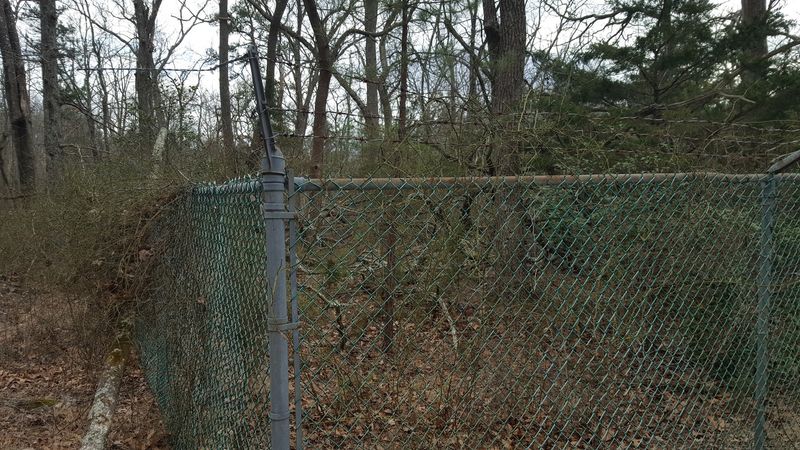
Do not expect towering stone walls here. The furnace stack was buried under sand and fenced off in the 1970s to protect it from souvenir hunters and erosion.
What hikers find today is a fenced area with a noticeable depression in the ground, plus scattered chunks of bog iron and glassy slag. Those dark, bubbly rocks are the real evidence, and they are strangely beautiful.
Traces of the old dam and spillway are still readable in the landscape once you know what to look for. Water shaped everything about this place.
The Batona Trail crosses the Oswego River just below where the dam once held back the flow. That stretch of trail is flat, sandy, and lined with pitch pine and cedar.
Getting here takes effort, and sandy roads have swallowed plenty of overconfident vehicles. Parking farther out and walking in is the smarter move.
Bring water, a paper map, and patience, because cell signal is unreliable in this part of the woods. Leave the iron and slag where they sit.
The area lies within the pines near Chatsworth, NJ 08019.
5. Harrisville Historic Site
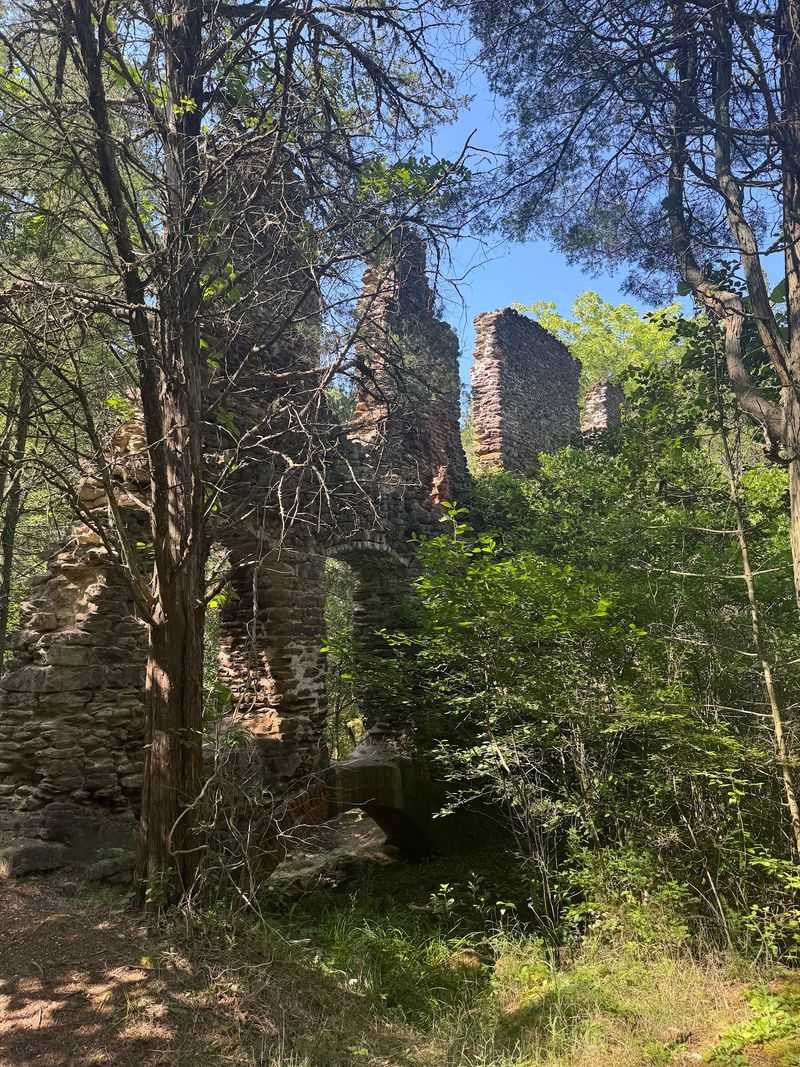
Picture a paper mill so advanced that people in the 1850s considered it one of the best in the country, and then picture its walls standing alone in the pines. That is Harrisville.
The town also went by McCartyville for a stretch, named for William McCarty, whose mill started producing around 1832. Workers made paper from salt hay and old rags, which sounds odd until you realize wood pulp had not taken over yet.
Families lived here, kids went to school here, and a gristmill and even mansions filled out the settlement. Canals moved water where the mill needed it.
By the late 1870s, competitors with better machinery and railroad access buried Harrisville’s business. Residents packed up and left.
Joseph Wharton bought the property in 1896, but the town was already a shell. A fire in 1910 wrecked most of the paper mill, and a forest fire in 1914 charred whatever remained.
Then came the scavengers, hauling off brick and stone for other projects. What survived is remarkable anyway.
Tall skeletal walls of the paper factory still rise out of the undergrowth, impressively thick and stubborn. Foundations, cellar holes, and canal traces hide in the brush nearby.
An artesian well on site still flows, though its iron-heavy water was abandoned long ago for drinking. The taste apparently ended that debate.
The main ruins are fenced for safety and preservation, so viewing happens from outside the barrier. Poison ivy and ticks are the real hazards, not ghosts.
Combine it with a walk along the Wading River for a fuller day in the pines. Access and information start at Chatsworth Rd, Chatsworth, NJ 08019.
6. Palisades Interstate Park
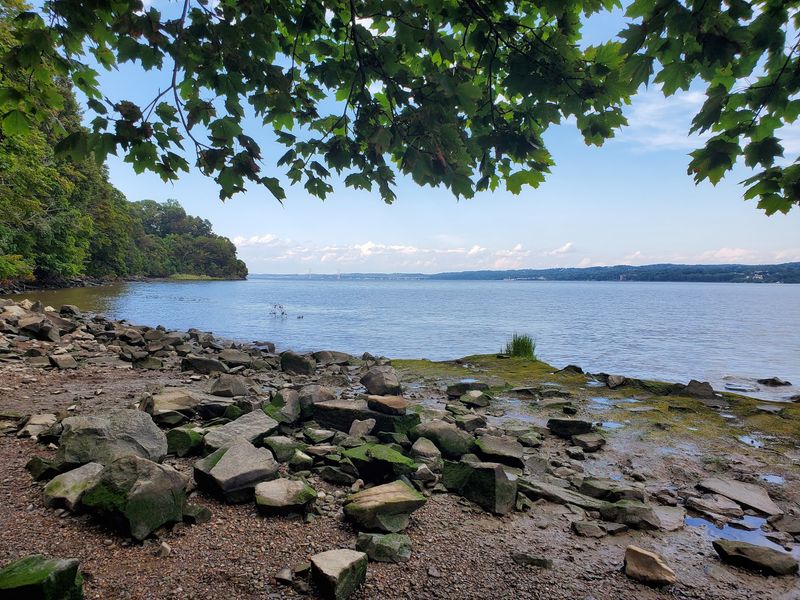
Cliffs hundreds of feet tall, a river below, and Manhattan glinting across the water. That alone would sell the hike, but the history buried in these woods is the better story.
In the 1800s, quarry crews blasted these cliffs apart for building stone, chewing into the rock face year after year.
Outrage over the destruction grew, and the New Jersey State Federation of Women’s Clubs led preservation efforts in the 1890s that ultimately saved the Palisades.
A fancy resort called the Palisades Mountain House hosted guests up here from 1860 until 1884, when it burned down. Nothing says nineteenth century like a hotel ending in flames.
Down at the shore stands the Kearney House, a stone building with roots in the 1760s. During the 1800s, it served as a dockside tavern where boat captains, crews, and local workers stopped in, and it is now preserved as a historic site.
Deeper in the woods lie the remains of Skunk Hollow, a nineteenth-century community of free Black families. Many residents had been born into slavery and built an economically independent, multiracial settlement on land nobody else wanted.
Low stone walls still trace the edges of their small farm fields. Those quiet lines of rock carry more weight than any mansion ruin.
Trails range from the flat Shore Path along the Hudson to the Long Path on the clifftop, plus steep connectors like the Giant Stairs boulder scramble. Footing gets serious fast on the rocky sections.
Fall foliage draws crowds, so early arrivals get the good parking. Look for park access in Alpine, NJ 07620.
7. Allaire Village, Inc.
Four hundred people once lived in a self-contained factory town here, and they made parts for steamship engines. The place was called Howell Iron Works before it took the name Allaire.
James P. Allaire bought the property in 1822 and built it out with almost obsessive thoroughness.
Homes, a bakery, a school, a store, a church, everything a workforce needed without leaving the property.
The furnaces produced pig iron, hollowware, stoves, castings, and components shipped off to New York City. Bog iron from the surrounding lowlands fed the operation.
Business peaked around 1836. Then the economic depression of 1837 hit, orders dried up, and the furnace fires went cold by 1848.
Rather than vanishing, the village froze in place. Thirteen original buildings survive, and Allaire now runs as a living history museum with interpreters working the blacksmith and carpentry shops.
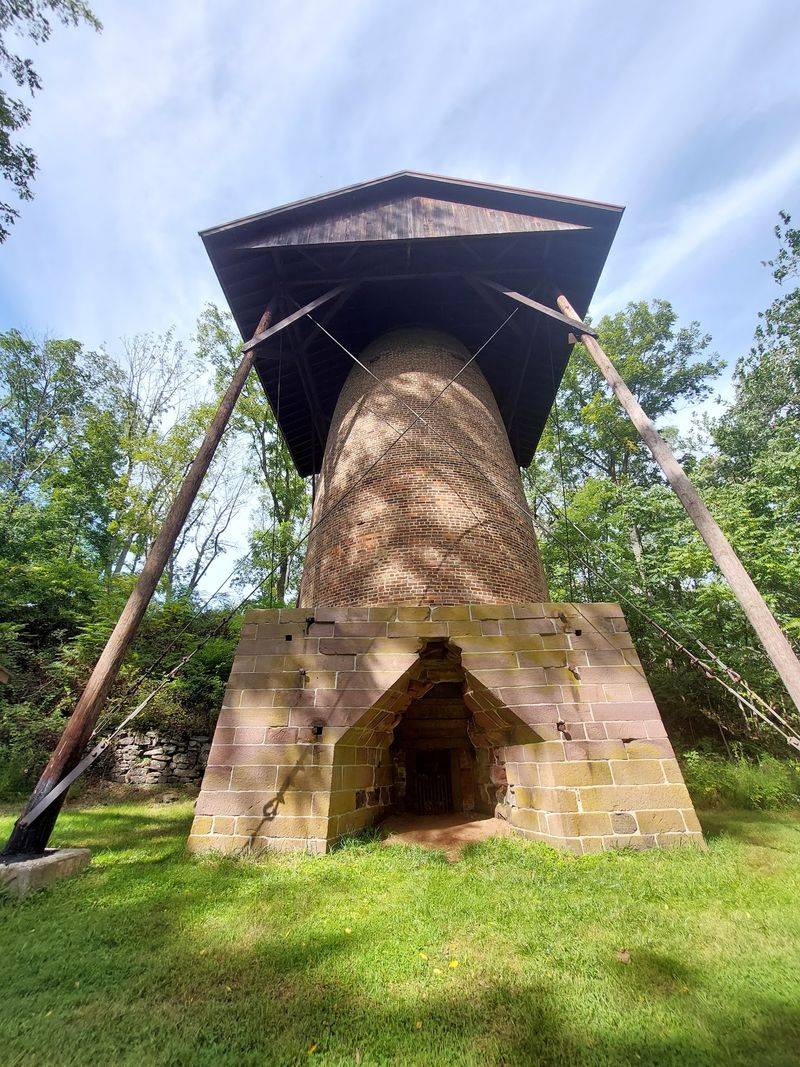
The most striking sight is the furnace stack, a tall brick tower rising beside the sturdy remains of the casting house. Standing next to it makes the scale of the old industry click.
Trails and paved paths wind through Allaire State Park around the village, following the Manasquan River through pine and oak woods. The Henry Hudson Trail connection makes it easy to stretch a short walk into a long one.
Kids tend to love the bakery smells and the general store with its working post office. Adults usually end up reading every interpretive sign twice.
Visit on an event weekend for costumed demonstrations, or on a quiet weekday if you prefer the empty-village mood. Either way, the brick and stone do the talking.
The entrance sits at 4263 Atlantic Ave, Wall Township, NJ 07727.
8. Speedwell Lake Park
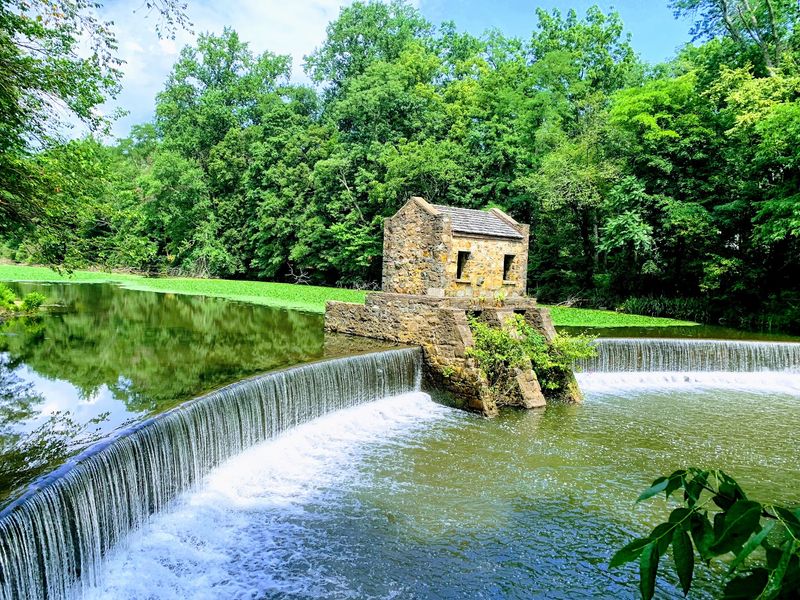
On January 11, 1838, a message traveled through wire in front of a crowd in Morristown, and communication changed forever. Samuel F.B.
Morse and Alfred Vail demonstrated the electric telegraph publicly for the first time in a factory building beside the Whippany River.
Alfred’s father, Stephen Vail, had established the Speedwell Ironworks in the early 1800s. He used the natural gorge of the river to power the machinery, which was clever engineering for the era.
The ironworks built agricultural equipment and industrial machinery of all kinds. It also produced many components for the SS Savannah, the first steam-powered ship to cross the Atlantic in 1819.
Shifting industry and weaker river flow forced the works to close in 1873. A fire in 1908 consumed many of the remaining structures.
Historic Speedwell survives today as an open-air estate with nine restored buildings. The Vail House shows how the family lived, and the Factory Building is billed as the Birthplace of the Telegraph.
The Wheel House holds a working 24-foot overshot waterwheel, which is worth the trip on its own. Watching water move that much wood and iron explains an entire century of manufacturing.
Exhibits in the Homestead Carriage House cover the SS Savannah story. It is a lot of world history packed into a few acres of Morris County.
Next door, Speedwell Lake Park offers a flat, easygoing walk with a dam, waterfowl, and shaded paths along the water. Combining the park loop with the historic site makes a satisfying half-day.
Spring runoff makes the dam and gorge especially loud and photogenic. Look for it all in Morristown, NJ 07960.