
This Quiet Oklahoma Town Has Become A Favorite Escape For Antique Lovers
There is something dangerously satisfying about finding an antique you know nobody else will have. In one quiet Oklahoma town, that feeling can turn a casual afternoon into hours of searching through old furniture, vintage signs, dusty collectibles, and odd little treasures with stories still attached.
What makes this place so easy to love is how unhurried it feels. You can browse without fighting big crowds, talk with shop owners who actually know their inventory, and stumble across pieces that feel far more interesting than anything sitting on a department store shelf.
Oklahoma has plenty of small towns with character, but this one seems especially suited to people who enjoy the thrill of the hunt.
It has slowly become a favorite escape for antique lovers across the state, and once you see how many worthwhile stops are packed into one small town, it is easy to understand why. This corner of the state makes treasure hunting feel like a full-day getaway.
Downtown Streets Lined With Vintage Shops
Collectors talk about the walkability here, and they are right. The heart of shopping sits along Dewey Avenue and the surrounding blocks, where brick buildings from the early 1900s hold booth-style malls and smaller specialty stores.
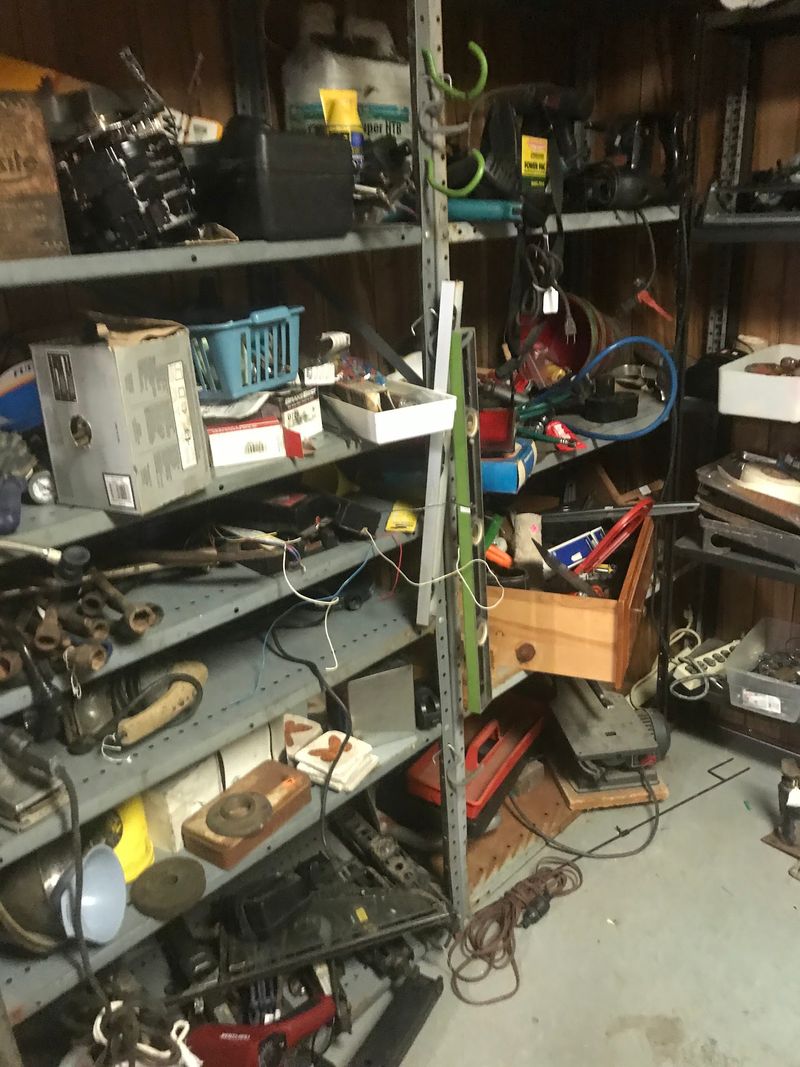
Inside, you will find pressed glass, cast iron cookware, oil-field memorabilia, mid-century furniture, and stacks of vinyl records. Vendors rent individual spaces, so each aisle has a different personality and a different price range.
My advice: bring cash, wear comfortable shoes, and start early. Many shops close by 5 p.m. and some keep shorter Sunday hours, so a Saturday morning start gives you the most room to browse.
Ask the owners questions. Several have been dealing for decades and know exactly which local estate a piece came from, which makes the story worth as much as the object.
Ready to test your haggling skills? Downtown is where the real treasure hunting happens.
Price Tower, The Only Skyscraper Wright Ever Built
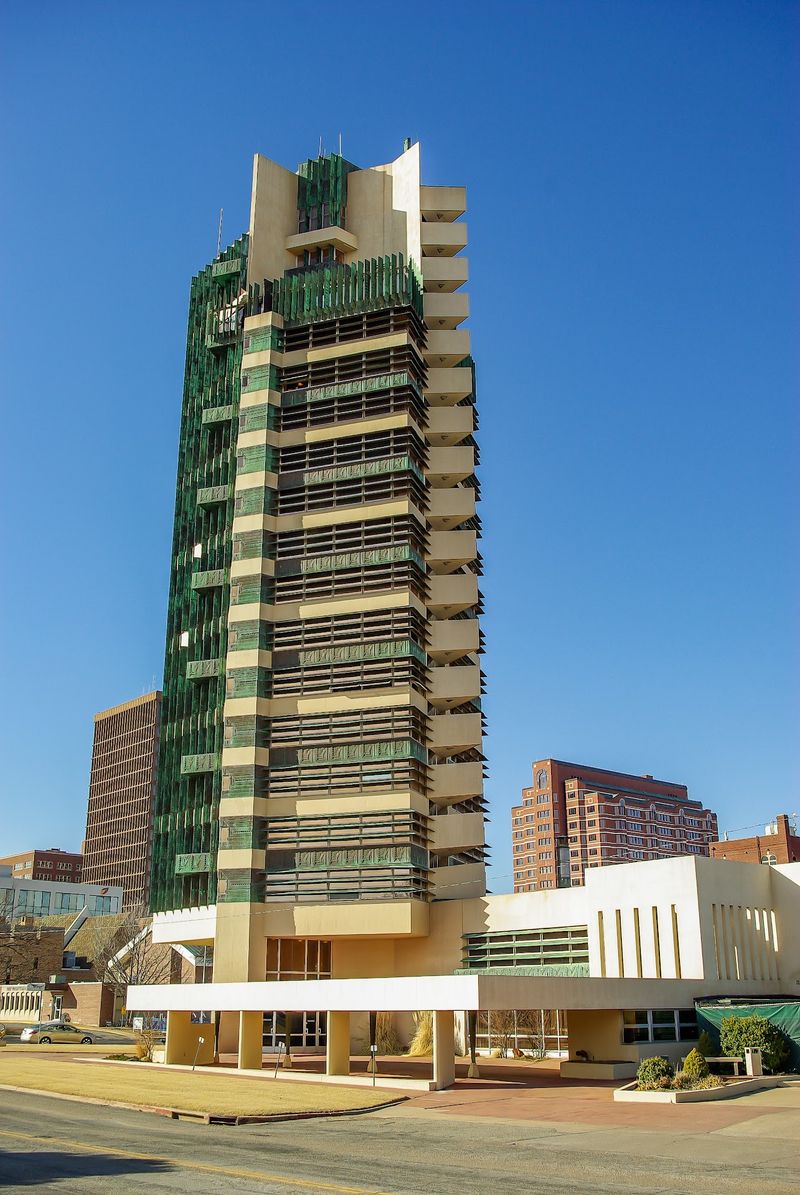
Frank Lloyd Wright called it the tree that escaped the crowded forest. Price Tower opened in 1956 at 510 South Dewey Avenue, and it remains the only realized skyscraper from Wright’s long career.
The 19-story building rises from a central core with cantilevered floors, wrapped in copper louvers and patterned green panels. Wright designed it for the H.C.
Price Company, a pipeline construction firm headquartered in town.
Interior details carry his signature everywhere: built-in furniture, triangular geometry, and copper trim that has aged into a soft patina.
The tower has had periods of limited public access, so check its current status before planning a visit. Even from the sidewalk, the silhouette is striking against the flat Oklahoma horizon.
Design lovers and antique hunters overlap more than you would think, and this landmark explains why so many collectors put Bartlesville on their maps in the first place.
Woolaroc, A Ranch Museum Packed With Oddities
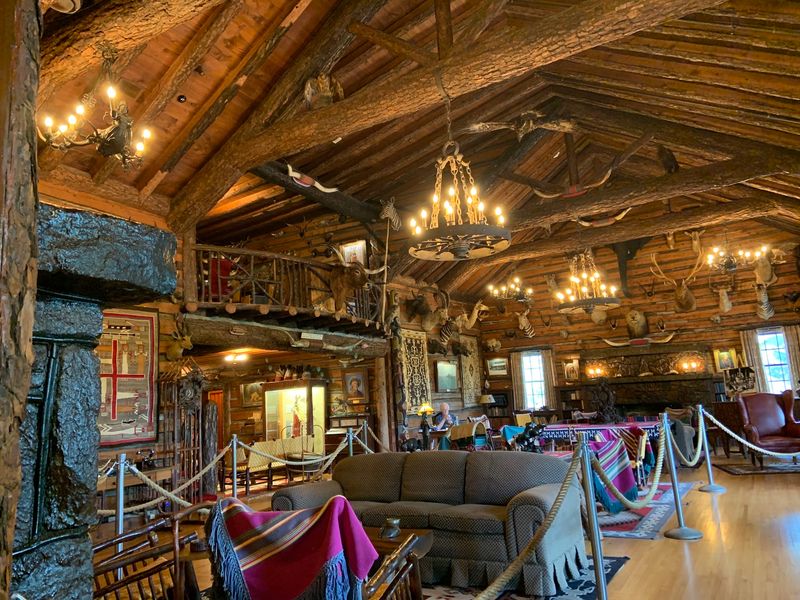
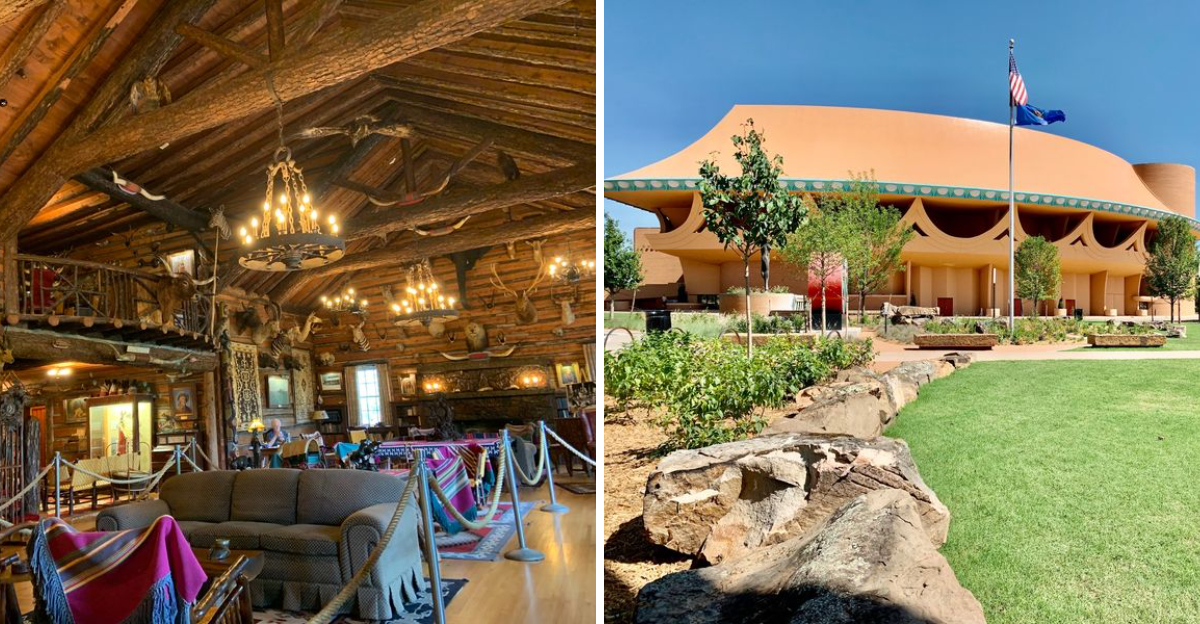
Frank Phillips, co-founder of Phillips Petroleum, built a country retreat southwest of town in 1925 and named it Woolaroc for the woods, lakes, and rocks around it.
The lodge interior is a collector’s fever dream. Blankets, saddles, mounted animals, Western art, and Native American artifacts fill every wall and corner, gathered over decades of Phillips’s travels.
Nearby, a museum holds one of the finest collections of Colt firearms in the country, plus paintings by Charles Russell and Frederic Remington.
The drive in passes through a wildlife preserve where bison, elk, longhorn cattle, and deer wander freely along the road. Keep the windows up and the camera ready.
Woolaroc sits about 12 miles from downtown along State Highway 123. Hours change by season, so confirm before you go.
Few places in Oklahoma pack this much curiosity into one hillside.
The Frank Phillips Home And Its Preserved Interiors
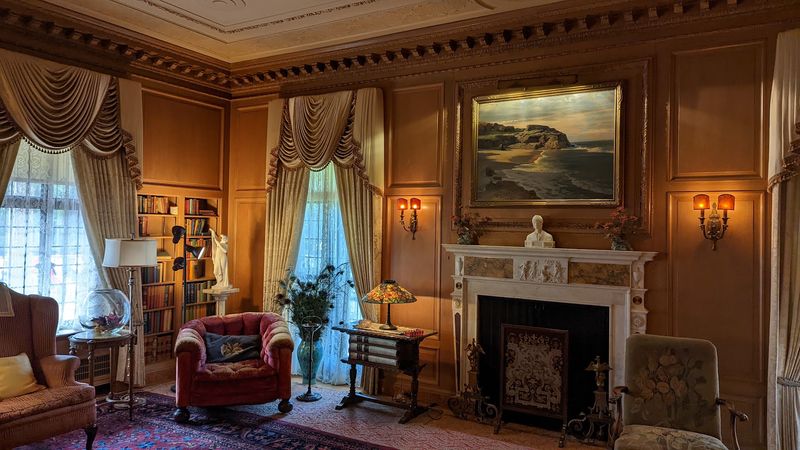
Step through the front door at 1107 South Cherokee Avenue and you are standing in 1930s luxury that nobody redecorated.
Frank and Jane Phillips built this home in 1908 and remodeled it in 1930. Almost everything you see belonged to the family: silk wall coverings, marble, imported woodwork, and original furniture.
The house is now managed by the Oklahoma Historical Society, and guided tours walk you through the main floors while explaining how an oil fortune reshaped this corner of the state.
For antique lovers, the appeal is obvious. Instead of buying a period piece, you get to see dozens of them exactly where their owners placed them.
Admission has historically been free with donations welcome, though hours are limited to certain days. Call ahead.
Think of it as window shopping through a century, minus the price tags.
Where Oklahoma’s Oil Story Actually Started
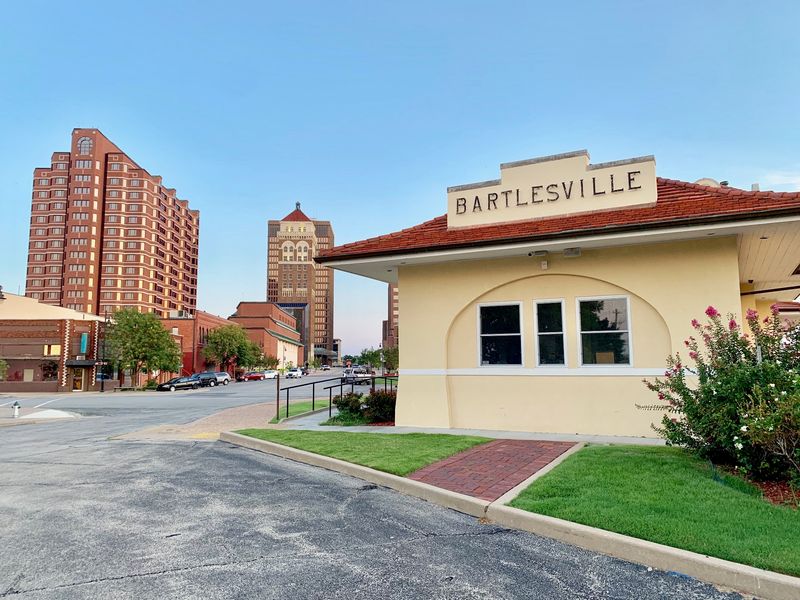
In 1897, a well called the Nellie Johnstone No. 1 came in near the Caney River, and it became the first commercial oil well in what would become Oklahoma.
A replica wooden derrick now stands in Discovery 1 Park downtown, marking the spot where the whole story began. It is free to visit and takes ten minutes to walk around.
That single well explains why Bartlesville grew so fast, why Phillips Petroleum set up shop here, and why so many fine household goods ended up in local homes.
Those homes eventually emptied, and the contents drifted into estate sales and shop booths. History has a way of recycling itself.
The Bartlesville Area History Museum on Johnstone Avenue fills in the rest, with photographs, tools, and everyday objects from the boom years.
Understanding the oil past makes every price tag downtown more interesting.
Dewey And Its Old West Collections Just Up The Road
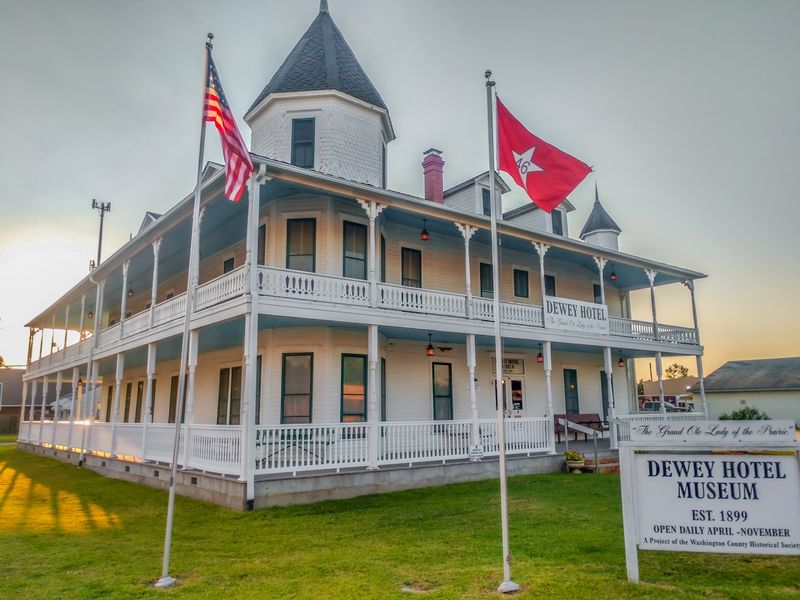
Four miles north of town sits Dewey, a small community founded by cattleman Jake Bartles, and it deserves an afternoon of its own.
The Tom Mix Museum honors the silent film cowboy who once worked as a local lawman. Inside are his costumes, saddles, and film props, plus plenty of early Hollywood ephemera.
Nearby, the Dewey Hotel Museum occupies an 1899 Victorian building furnished with period pieces, from parlor chairs to kitchen tools.
Antique shops in Dewey tend to be smaller and less picked over than the ones downtown, which makes them worth the short drive. Prices can be gentler too.
Combine the two towns into one loop and you cover a surprising amount of ground without ever hitting traffic.
Northern Oklahoma rewards the patient browser, and Dewey is proof that small does not mean empty.
Tallgrass Prairie Views A Short Drive North
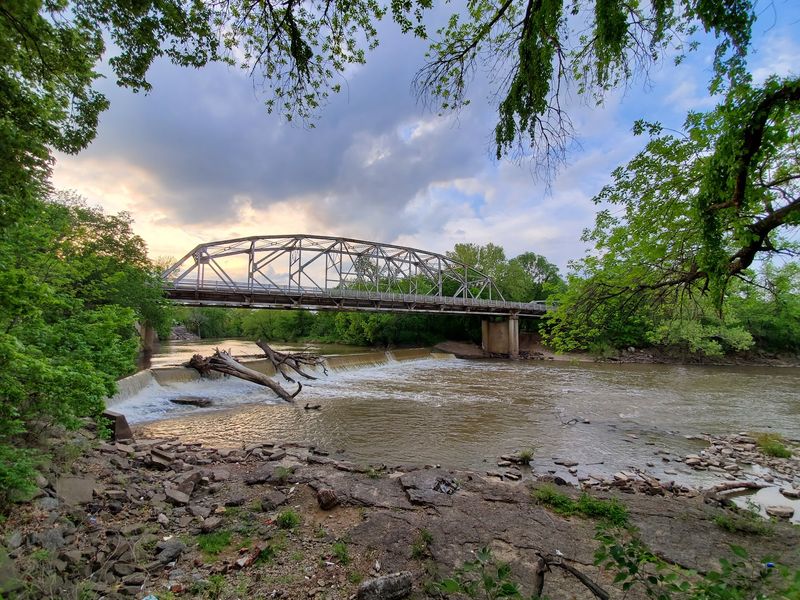
Once the shopping bags are in the trunk, the surrounding country is worth an hour behind the wheel.
West and north of town, the Osage Hills roll out in waves of tallgrass, one of the last large stretches of this ecosystem left anywhere. The Tallgrass Prairie Preserve near Pawhuska protects nearly 40,000 acres and a free-roaming bison herd.
Osage Hills State Park, about 12 miles west of Bartlesville on U.S. 60, adds hiking trails, a swimming pool, cabins built in the 1930s, and a small lake.
Spring brings wildflowers. October turns the grasses copper and gold, which is my favorite time to drive these back roads.
Bring water, a full tank, and patience for gravel. Cell service gets patchy out here.
Trading crowded aisles for open sky is one of the better bargains this part of Oklahoma offers.
Local Cafes And Bakeries For Fueling Up Between Finds
Treasure hunting burns more energy than people expect, and downtown has enough coffee shops and lunch counters to keep you upright.
Independent cafes cluster near the shopping blocks, serving espresso, breakfast sandwiches, and house-made pastries. Several sit inside restored storefronts with original tin ceilings and wood floors.
For lunch, you will find barbecue, Mexican food, burgers, and a few sit-down spots along Frank Phillips Boulevard. Portions run generous, which is standard hospitality across Oklahoma.
My routine: coffee first, then two hours of browsing, then a proper lunch, then back out for the shops I missed.
Weekday lunch rushes fill up fast between noon and one, so shift your timing if you would rather not wait.
Many kitchens close earlier than big-city visitors expect, especially on Sundays. Plan dinner before 8 p.m.
Who knew that hunting for old dishes would make you this hungry?
Community Center Stage And The Town’s Arts Habit
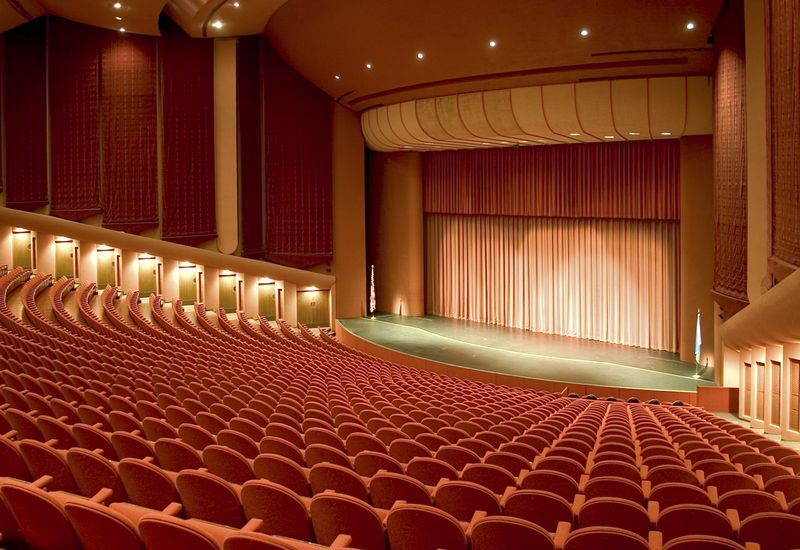
For a city of 37,000, the cultural calendar here punches well above its weight.
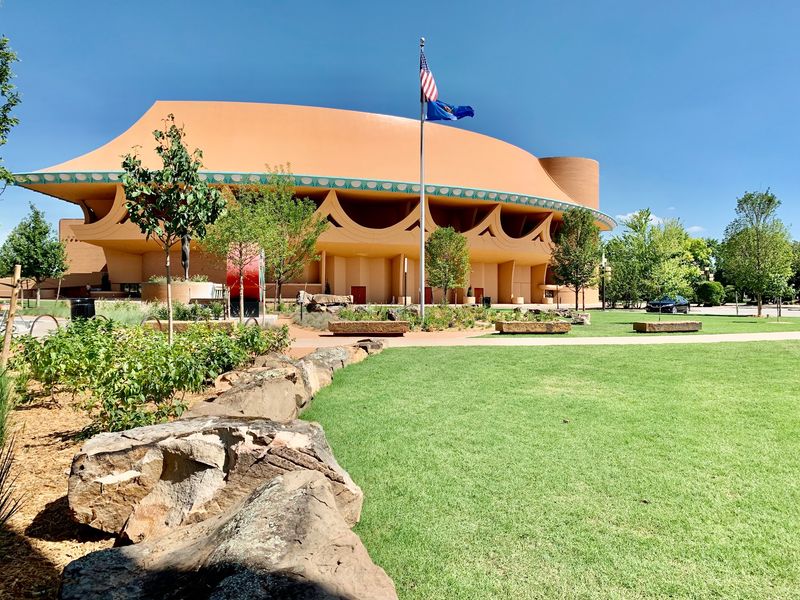
The Bartlesville Community Center, designed in part with input from a Frank Lloyd Wright associate, hosts touring performances, symphony concerts, and theater throughout the year. Its interior color palette of pink and purple raises eyebrows and then wins people over.
Each June, the OK Mozart festival tradition brought classical music to town for decades, and the successor Bartlesville Music Festival continues that thread.
Smaller galleries and studios sit within walking distance downtown, often showing work by regional artists at approachable prices.
Pairing an evening concert with a day of shop crawling turns a simple errand trip into a real weekend.
Check the venue calendar before booking a room, since festival weekends fill hotels quickly.
Art, antiques, and architecture keep good company in this pocket of Oklahoma.
Practical Planning Notes Before You Load The Car
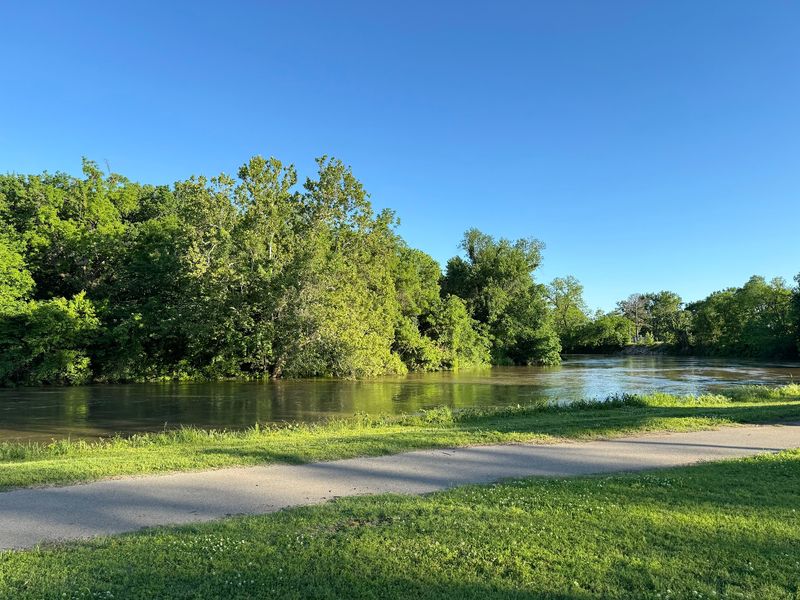
Getting here is easy. Bartlesville sits roughly 47 miles north of Tulsa and 18 miles south of the Kansas border, reachable on U.S. 75 in under an hour from the Tulsa airport.
Lodging includes national chain hotels along the highway plus a handful of historic properties closer to the center. Rates stay reasonable outside festival weekends.
Spring and fall bring the most comfortable weather. Summer afternoons get hot, and winter can turn windy fast.
Measure your vehicle space before you shop. Furniture looks smaller in a crowded booth than it does in your driveway.
Bring bubble wrap, a couple of blankets, and a tape measure. Regulars swear by all three.
Most shops accept cards, but small vendors sometimes prefer cash, and cash can help your bargaining.
Come with room in the trunk, and this quiet corner of Oklahoma will happily fill it.