
This New Hampshire Forest Hike Is Filled With More Than 100 Incredible Sculptures
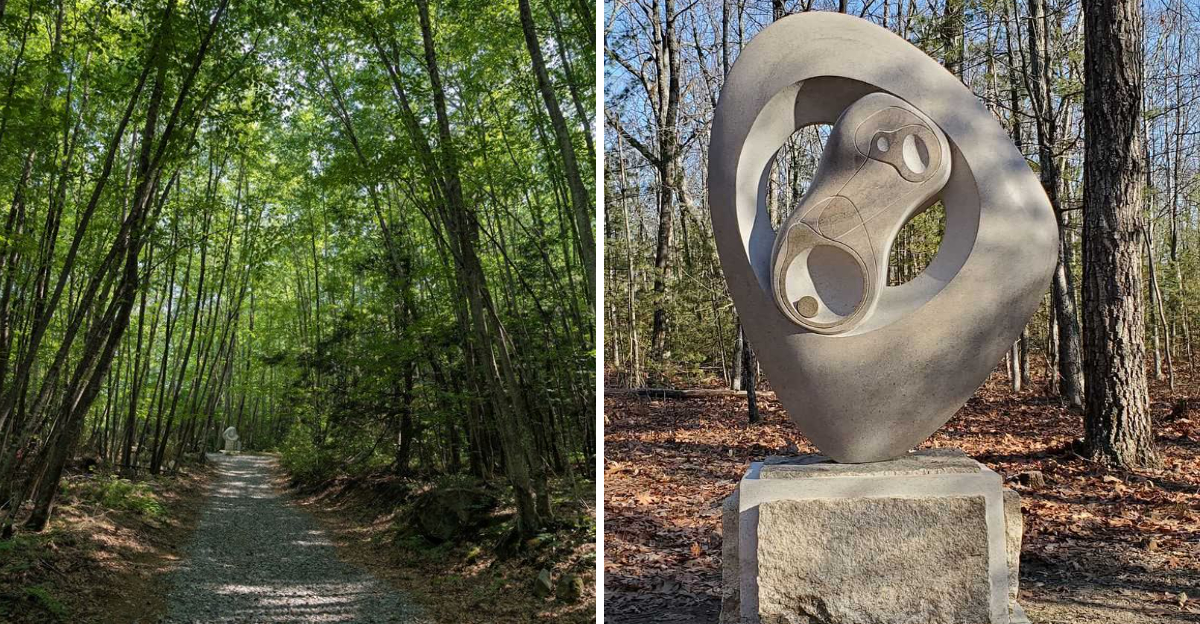
You expect trees, rocks, and maybe a great view on a New Hampshire forest hike. You probably do not expect to turn a corner and find a giant sculpture staring back at you.
That surprise is exactly what makes this trail feel so different. More than 100 sculptures are scattered through the woods, turning an ordinary walk into a strange little treasure hunt where you never quite know what is waiting past the next bend.
Some pieces are playful, others are eerie, and a few may have you stopping longer than you planned.
It is the sort of experience that makes you wonder how something this unusual exists in the state without everyone talking about it. New Hampshire has no shortage of beautiful trails, but this one adds an artistic twist that feels completely unexpected.
If you think you have already seen everything the state can offer, this forest might prove you wrong.
A Former Ski Hill Turned Open-Air Art Trail
Big Bear Hill once had ski runs cutting across its slopes. Today, hikers follow those same wide paths, which still hint at the hill’s earlier life.
The Andres Institute of Art sits at 106 Route 13 in Brookline, New Hampshire, with the sculpture park spreading across the hillside above the parking area. The steady elevation gain makes more sense once you realize people once came here to ski back down.
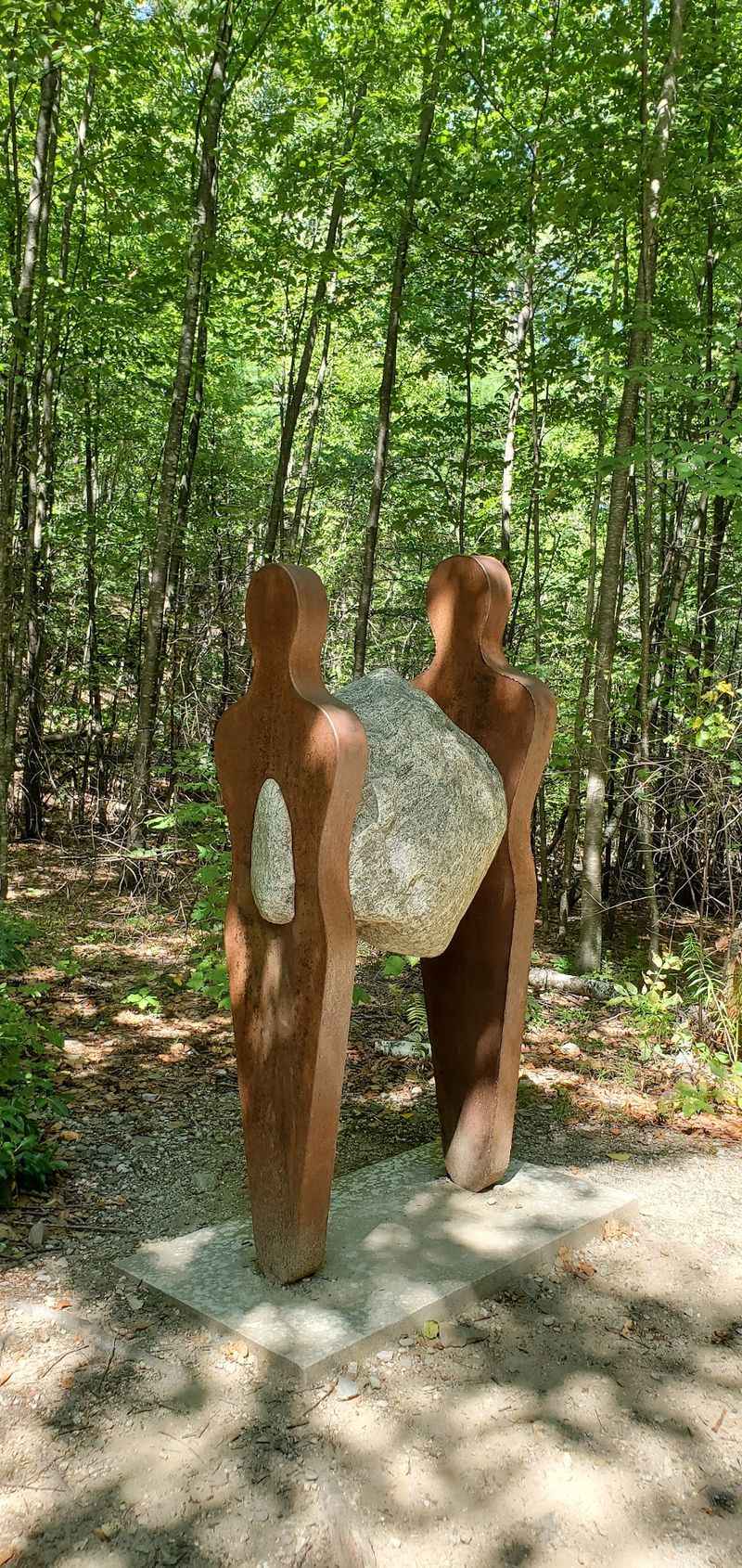
Small surprises keep appearing along the trail. One sculpture might stand right beside the path, while another waits farther uphill among the trees.
A few can be spotted easily, but many require a little more exploring.
The old ski hill still delivers a workout, only now the reward is unusual art instead of a ride back down.
Sculptures Created By Artists From Around The World
International artists are at the heart of this collection. Sculptors travel to this corner of New Hampshire to create pieces that remain on the hill long after the work is finished.
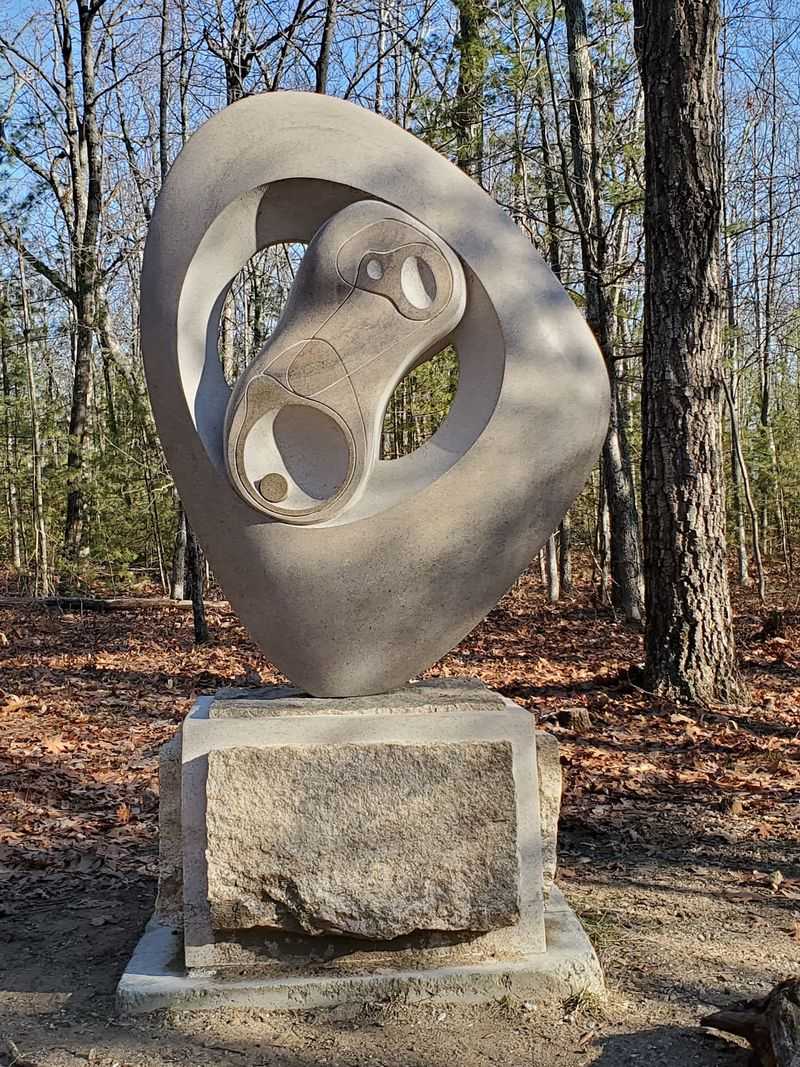
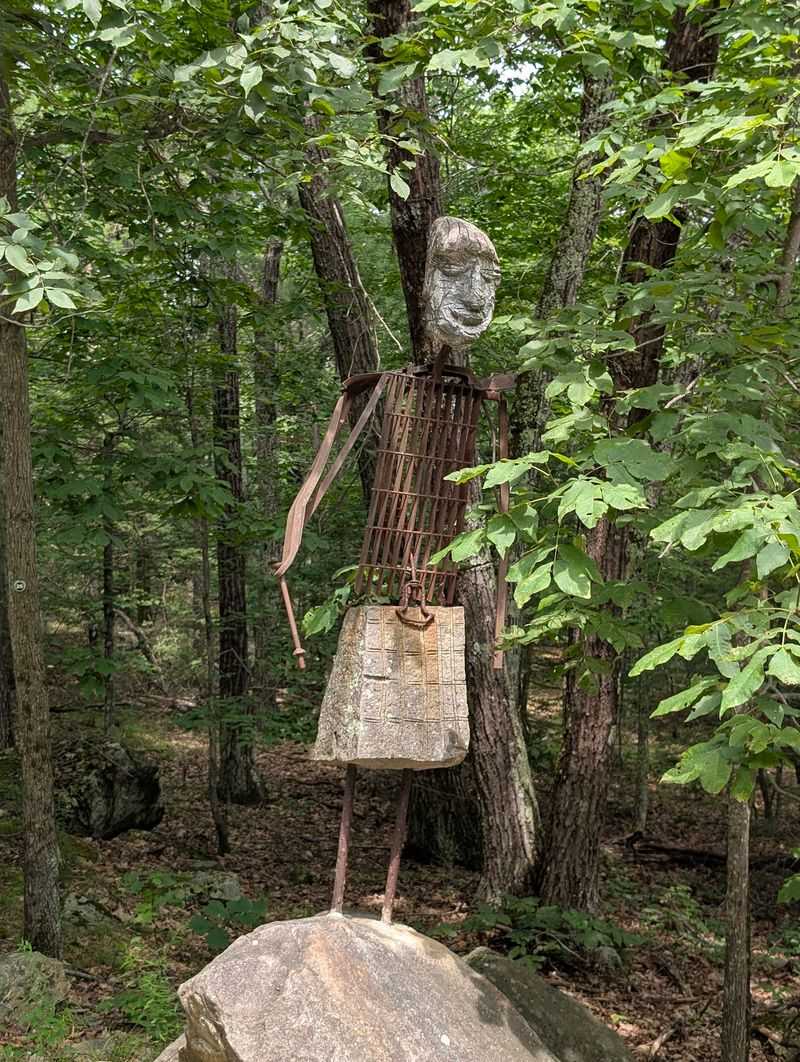
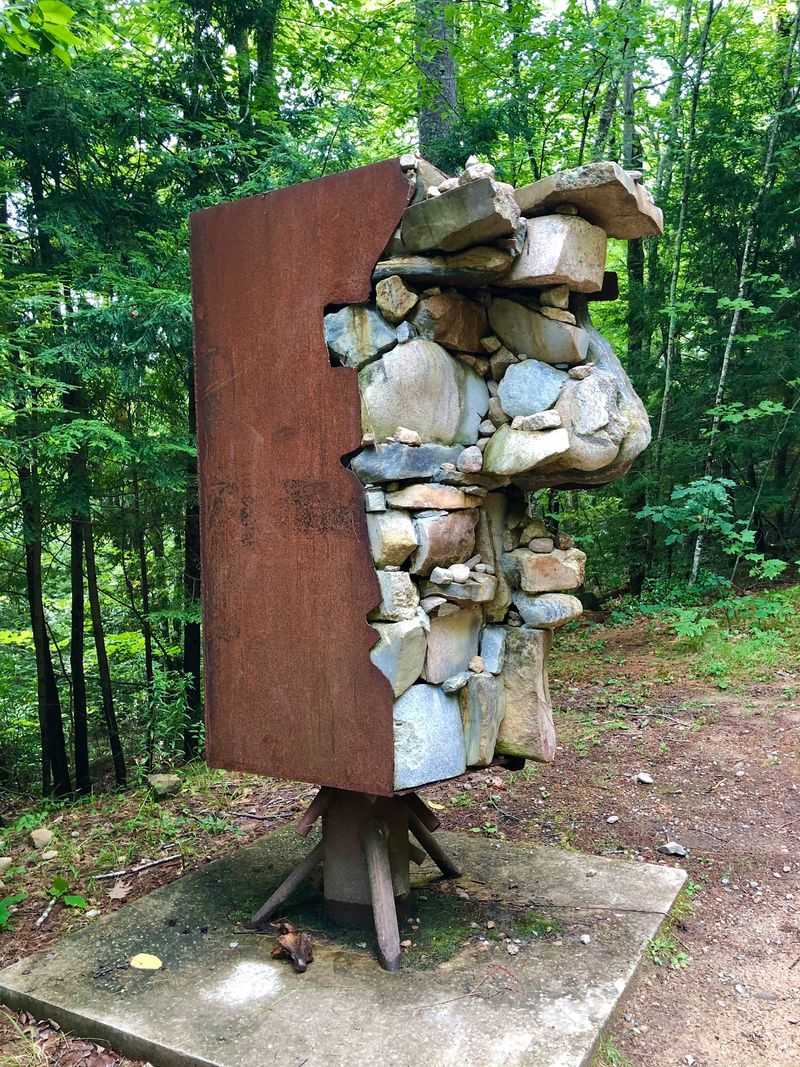
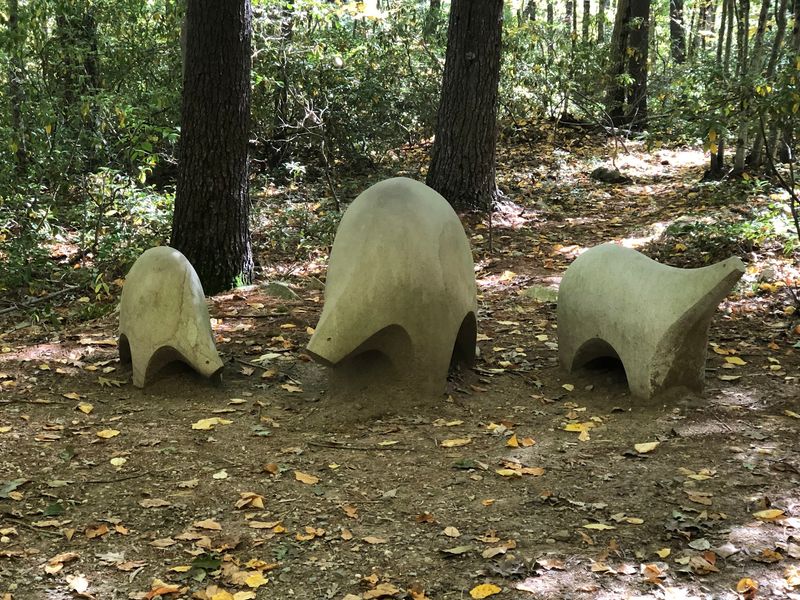
The styles vary widely, with carved stone, welded metal, geometric shapes, and forms that seem to rise naturally out of the ground. Changing weather and seasons can give each piece a slightly different look.
Many sculptures have small plaques showing the artist’s name and title. Reading them adds another layer to the hike, while the different textures and materials make the artwork especially fun to explore up close.
No two sections of the trail feel quite the same. Just when you think you have seen the most unusual piece, another sculpture appears farther along the path.
Free Admission With Donations Quietly Encouraged
No ticket booth, no entry fee, no online reservation. Admission to the park is free, which surprises first-timers who expect to pay for something this large.
Donations are accepted and genuinely help. Maintaining a hillside full of outdoor artwork takes money, and contributing keeps the trails and sculptures in better shape.
If you can drop something in, it goes a long way.
The Andres Institute also runs programs and events, and support keeps those going. Checking the official website before your trip is smart, since details can change with the seasons.
Parking is available on site and generally plentiful.
Free art in the woods sounds too good to be true, right? It is real, and the honor-system spirit is part of what makes the place feel welcoming.
Stopping By The Welcome Center First
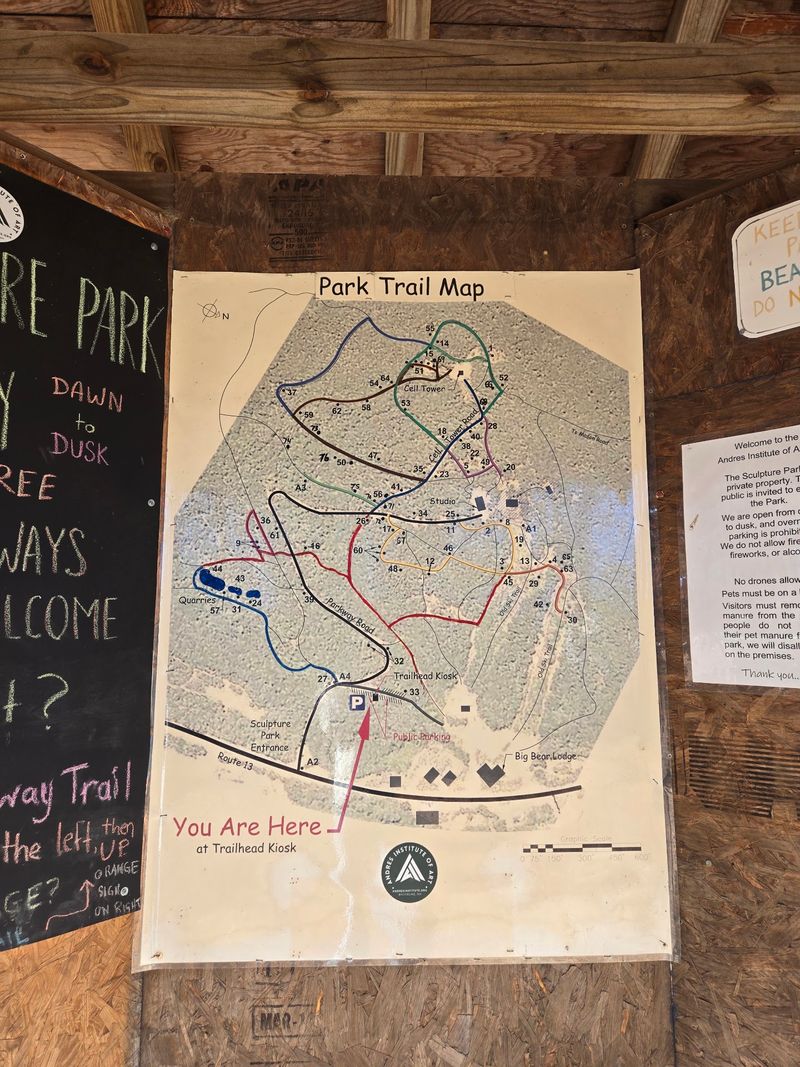
Skipping the welcome center is a mistake I would not repeat. It is worth a stop before you head uphill, both for trail information and for the indoor exhibit.
Staff and volunteers can point you toward routes that match your energy level. Ask which loops are driest if the weather has been wet.
Maps are typically available here, which matters given how easy it is to wander off track. Grab one even if you think you will be fine without it.
Think of it as your basecamp with better lighting. Five minutes inside can save you twenty minutes of backtracking on the hill.
Trails That Climb, Wander, And Occasionally Confuse
Fair warning: the trail network can get confusing. Several paths branch across the hill, and signage is limited or outdated in a few spots.
Grab a map before you start walking. Many people say the map is essential, though it is not perfectly to scale, so treat it as a guide rather than a precise chart.
Downloading a copy from the official site as backup is a good move.
The paths themselves are mostly wide and family-friendly, but they are steep in sections. Expect mud after heavy rain, particularly near the quarry area where the rock base thins out.
Sturdy shoes beat sandals every single time here. Getting slightly lost is almost part of the experience, since wrong turns often lead straight to a sculpture you would have otherwise missed.
The Old Quarry Section And Its Rocky Past
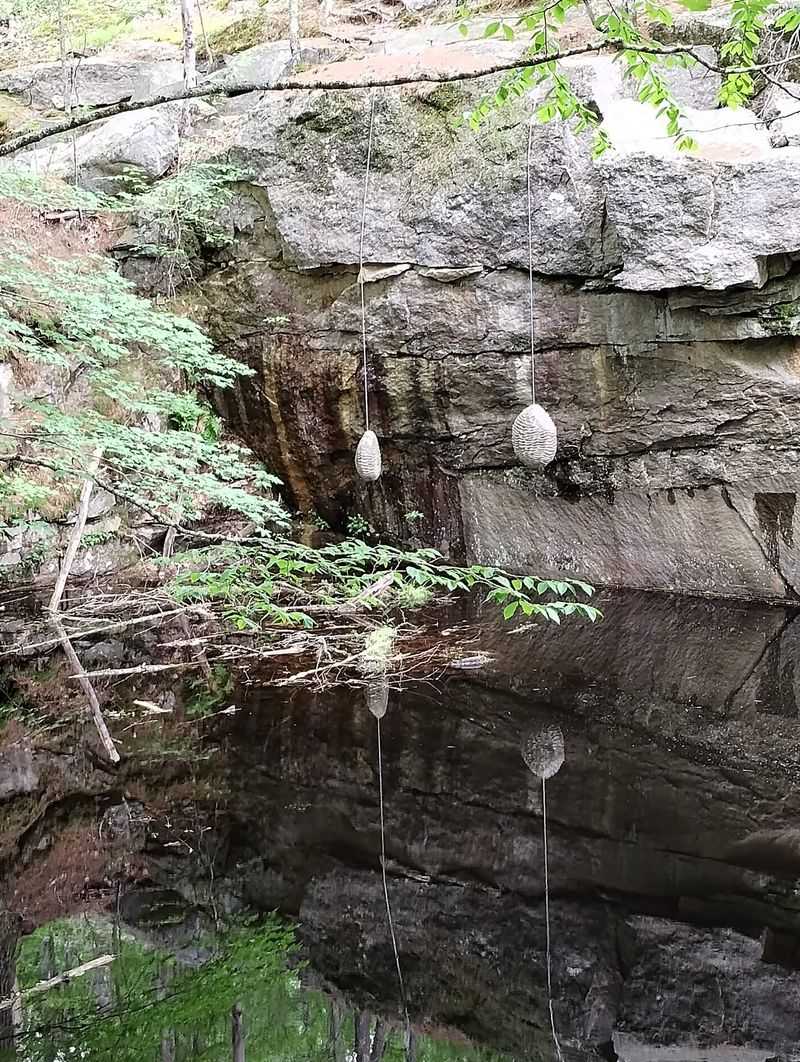
Among the more unusual stops on the hill is the old quarry. Stone was worked here long before anyone thought about installing artwork, and the leftover rock faces give this part of the trail a different feel.
Hikers mention that the quarry section tends to hold moisture. If it has rained recently, expect the ground to get soft and slippery.
Watch your footing on the loose rock.
Pairing a former quarry with a stone sculpture park makes a certain kind of sense. The raw material and the finished art end up sharing the same hillside.
Bring a curious eye and you will notice cut marks and shaped blocks. Kids often find this stretch fascinating, especially when they realize people once hauled stone out of these woods by hand.
Consider it the hill’s rough draft before the sculptures arrived.
Bringing The Dog Along For The Climb
Dog owners, rejoice. The park is dog friendly, and plenty of visitors bring their pups along for the uphill workout.
Since there are no water fountains on site, pack water for your dog as well as yourself. The climb is steady and summer heat adds up quickly.
The pack-in, pack-out rule applies to everything, including anything your dog leaves behind. No trash cans means you carry it out with you.
Leashes keep everyone comfortable, especially near sculptures and around families with young children. The wide paths give room to pass without crowding.
Who knew fine art and fetch could share a mountain? Just keep the tennis ball away from the stone carvings, and everyone stays happy on the way down.
The Fall Symposium And New Works Each Year
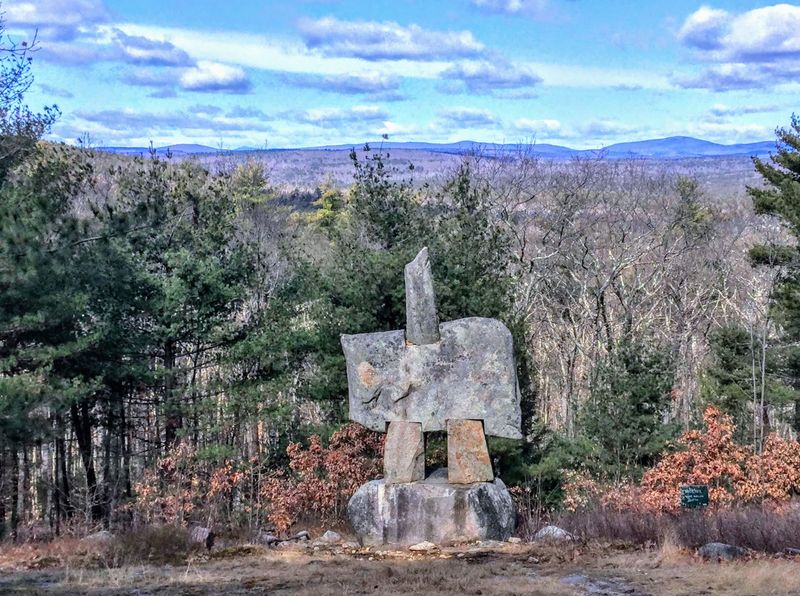
Every autumn, the collection grows. The Andres Institute hosts a symposium where visiting sculptors work on site, and you can watch the carving process happen in real time.
Reports from past years mention a small number of new pieces being added annually, typically three or so. Over decades, that steady pace is how the hill reached more than 100 works.
Seeing an artist mid-project changes how you look at the finished pieces. Dust, tools, and half-formed shapes reveal the labor behind the smooth surfaces you pass on the trail.
Dates and details vary year to year, so check the official website before planning a visit around it. Nothing is guaranteed to run on the same schedule.
Catching a work in progress is a rare treat. You might even recognize that sculpture years later and remember exactly when it was just a block of stone.
Picking The Right Season For Your Visit
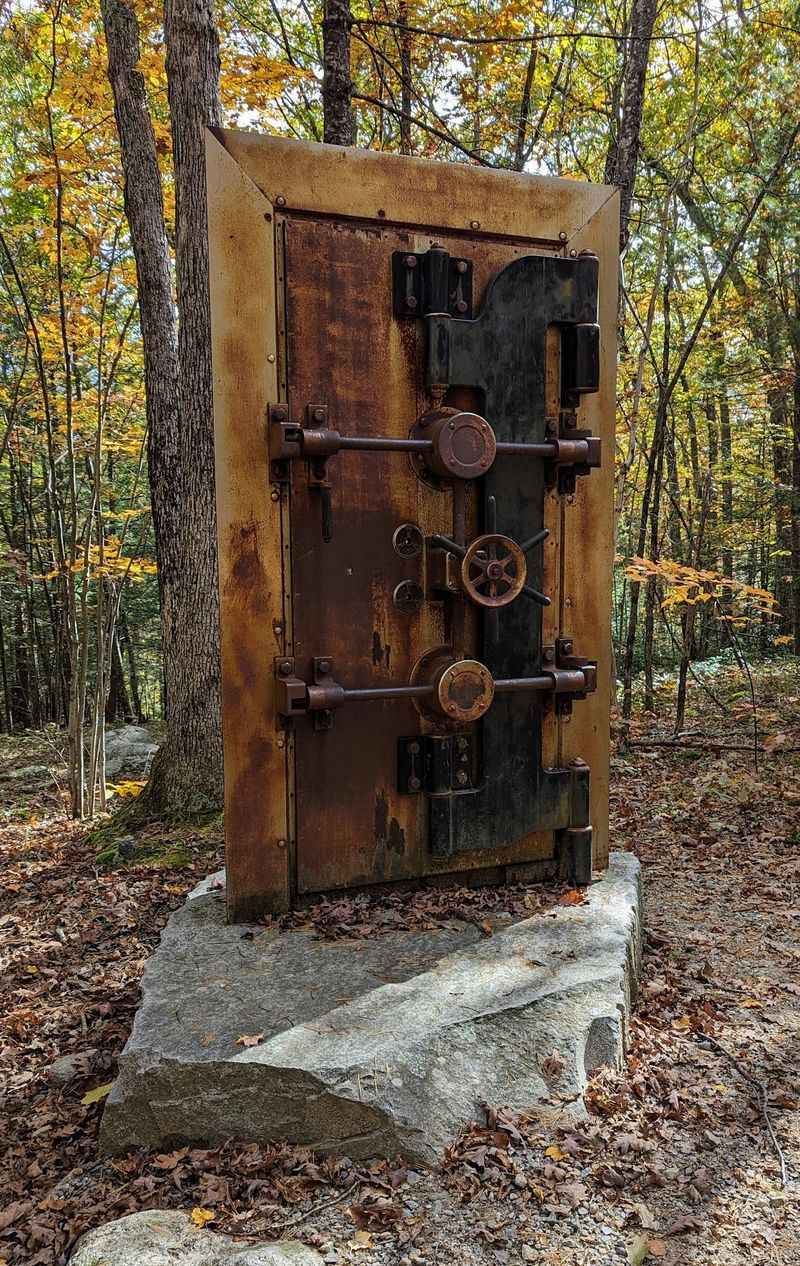
Each season changes the feel of the trail. In autumn, colorful leaves create a striking backdrop for the sculptures.
Winter strips the trees bare, which actually helps. Sculptures stand out sharply against snow, and pieces hidden by summer foliage suddenly become visible from the trail.
Spring means mud. Melting snow and rain soften the paths, so waterproof footwear earns its keep.
Summer delivers shade, green everywhere, and mosquitoes that mean business, so bug spray is not optional in New Hampshire woods.
The park is open year round during daylight hours, which gives you plenty of flexibility.
Which season wins? Ask ten regulars and you will get ten different answers, which is probably the strongest argument for visiting more than once.
Planning Enough Time And Packing Smart
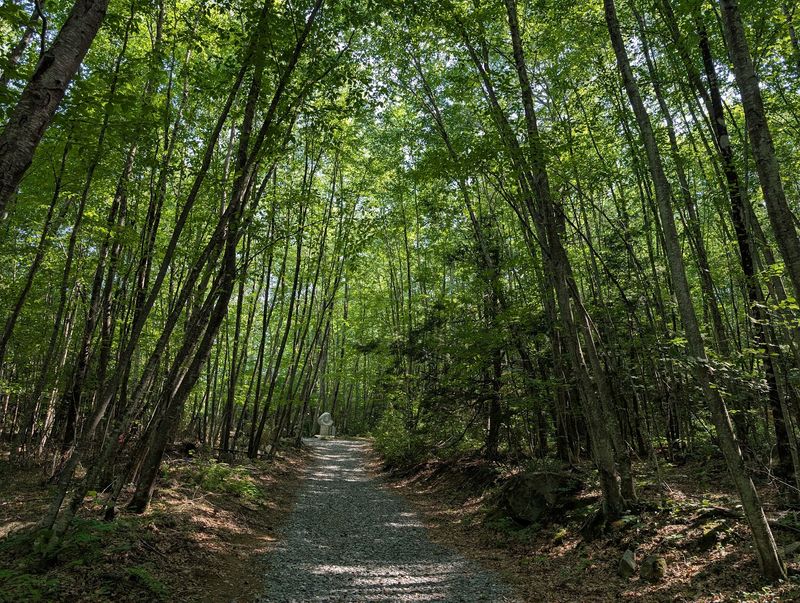
Plan to spend more time here than you might expect. A quick hour can easily turn into three or four once you start following the trails.
Families can spend several hours exploring and still see only part of the sculpture collection. If you want to complete the full loop, start early and leave yourself a generous window.
Bring water, snacks, bug spray, and a fully charged phone for photos and navigation. There are no water fountains or trash cans, so anything you bring in needs to leave with you.
A few picnic tables offer handy spots for a mid-hike break. Restrooms are not available on site.
Kids often turn the hike into a treasure hunt, checking off sculptures as they find them. Using the map like a scavenger list can keep the whole group motivated, adults included.