
8 Charming German And Austrian Restaurants In New York That Taste Just Like Munich And Vienna
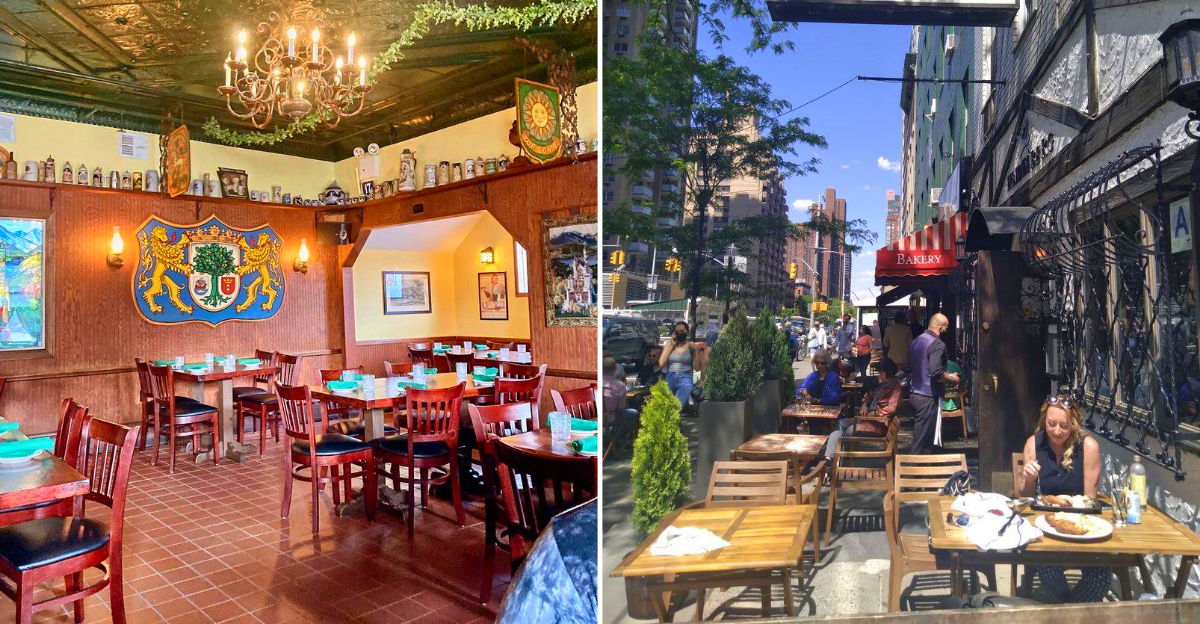
A good schnitzel should crackle when the fork hits it. That alone can turn dinner into a very serious matter. Around New York, a few German and Austrian kitchens still treat old recipes with real care.
New York knows how to keep tradition hungry. Thin cutlets arrive crisp, spaetzle gets a buttery edge, and warm strudel can make dessert feel less optional than usual.
The real charm goes deeper than one plate. Many of these restaurants have spent years cooking food tied closely to family roots and old habits that never needed fixing. Dining rooms may feel cozy, but the flavors carry plenty of confidence.
Sauces stay rich without becoming heavy, while dumplings and roasted meats bring the comfort factor fast. I have a soft spot for places that refuse to chase every food trend. When the classics are handled this well, changing them would almost feel rude.
1. Zum Stammtisch – Glendale, Queens
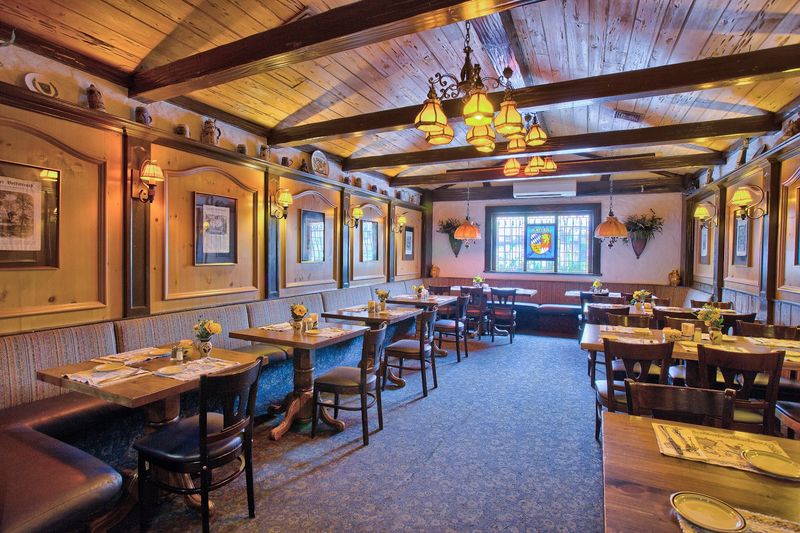
Some restaurants change with the times. Zum Stammtisch decided against it, and the city is better for that stubbornness.
German immigrant Johann Lehner opened the doors in November 1972, and his sons Hans and Werner run the place today. The name loosely means the table of the tribes, which fits a room built for lingering.
Dark wood tables sit under walls hung with flags and banners. Leaded glass windows filter the light. Antique steins line the shelves like a museum nobody bothered to label.
Regulars call it a time machine, and they are not exaggerating. The address is 69-46 Myrtle Ave, Glendale, NY 11385, though the flavors read like a map of southern Germany.
Jager-schnitzel arrives crowned in mushroom gravy. Wiener Schnitzel comes golden and wide as a dinner plate. Sauerbraten gets slow-cooked in vinegar until the beef surrenders completely.
Big eaters should aim for the Bayerische Bauern Platte. Bratwurst, kassler smoked pork, and leberkase German meatloaf all pile onto one platter. Bring a friend, or bring two.
Here is the kicker. There is an attached pork store selling imported candies, local sausages, and shelves of German goods.
You can eat dinner and then shop for tomorrow’s breakfast without stepping outside. Few restaurants in New York offer that kind of two for one.
Reviews hover around 4.7 stars. That much agreement in Queens counts as a small miracle. Weekend evenings fill fast in Glendale, so reserve ahead.
Street parking runs easier here than most Queens neighborhoods.
2. Reichenbach Hall – Midtown Manhattan
Brothers Keith and Willy Reichenbach had grandparents who cooked serious German family meals. In May 2012, they turned those memories into the largest German food hall in New York.
Grandpa Willy and Grandma Gerda get the credit, and their names still hang over the concept. Family recipes have a way of outliving everyone.
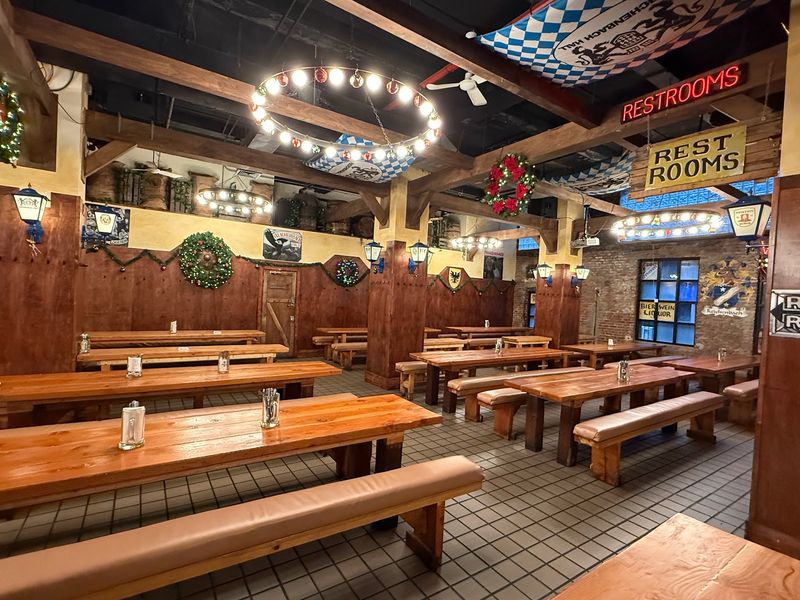
The room goes big in every direction. High ceilings stretch overhead, rustic beams cross the space, and long bare communal tables stretch out like runways.
Strangers become tablemates fast. That is the whole point of a hall, and Midtown could use more of it.
Find the place at 5 W 37th St, New York, NY 10018, a short stroll from the Empire State Building crowds. The contrast is delightful.
Order the giant soft pretzel first. It arrives roughly the size of a steering wheel, warm, chewy, and glossed with coarse salt.
Then work through the wursts. Schnitzels come pounded thin and fried crisp. Spaetzle shows up tender and buttery, the German answer to comfort noodles.
Groups do especially well here. Big tables mean nobody gets stuck at the sad corner seat, and sharing platters feels natural rather than negotiated. Come hungry, come loud, and plan on staying longer than intended.
Halls have a gravitational pull. Midtown crowds thin considerably on weeknights. Larger parties should call first, since communal tables get claimed early on busy evenings.
3. Gottscheer Hall – Ridgewood, Queens
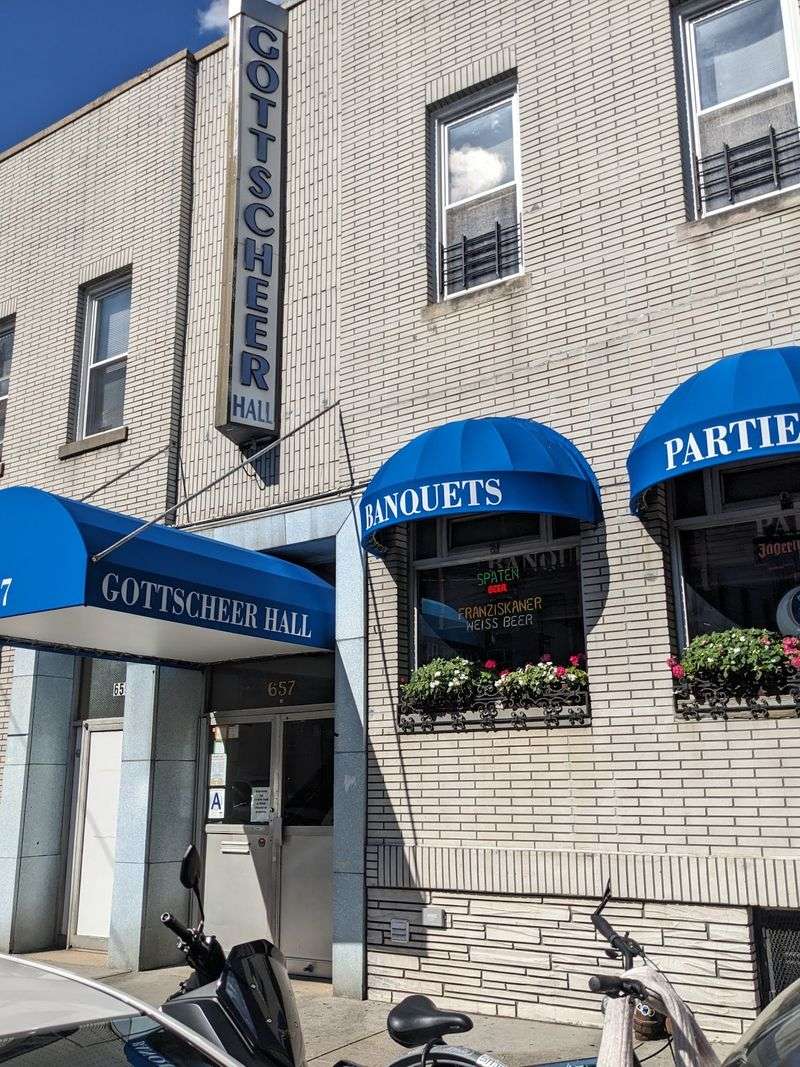
Here is a piece of history hiding in plain sight in Queens. Gottscheer Hall has served Ridgewood since 1924, and it guards a language almost nobody speaks anymore.
Founders came from Gottschee, a German speaking pocket in what is now Slovenia. Their descendants kept the culture alive on Fairview Avenue.
Traces of Gottscheerish, that old dialect, still surface in the building. Where else in New York can you eat dinner inside a living dictionary?
The hall wears many hats. It functions as a restaurant, a community center, and a dance hall, which explains the wonderfully worn floors.
Communal tables fill the old world room. Nothing here feels staged, because none of it was designed for attention in the first place.
Food leans hearty and honest. Krainerwurst brings smoky snap, spaetzle soaks up gravy, and gulasch simmers into something deeply savory.
Sauerkraut cuts through the richness with a tangy jolt. Palatschinken, thin rolled crepes, close things out on a sweet note.
Save space for apple strudel. Flaky pastry, soft spiced fruit, and zero pretense make it a fitting finish.
The address is 6-57 Fairview Ave, Ridgewood, NY 11385, and the block itself feels frozen in a friendlier decade.
Bring your grandmother. She will approve of the portions and the manners. Weekend events sometimes book the hall privately, so a quick call saves you a wasted trip to Ridgewood.
4. Werkstatt – Kensington, Brooklyn
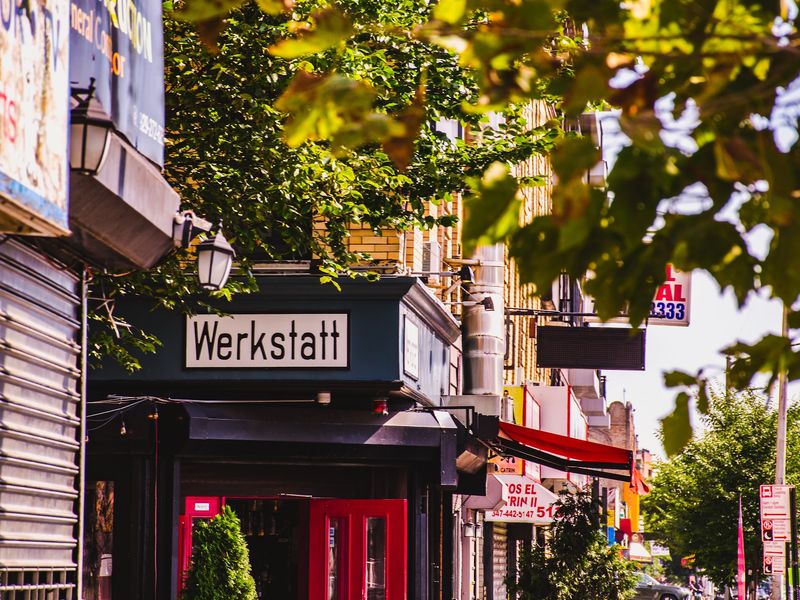
Werkstatt means workshop in German, and the decor takes that name literally. A 1960s motorcycle sits inside, surrounded by reclaimed wood and vintage license plates.
Viennese chef Thomas Ferlesch built the place with his wife Robin Wertheimer. He cooks Austrian food with a light hand, which is rarer than it sounds.
The goal was a heuriger feel, meaning a Viennese tavern built for slow evenings. Austrians call that warmth gemutlichkeit, and the word suits this room perfectly.
Start with liptauer, a punchy paprika spiked cheese dip that vanishes fast. Leberknodel suppe follows, a clear broth carrying one plump liver dumpling.
Schnitzels arrive thin and crackling. House-made bratwurst has real bite. Kasespatzle blurs the line between mac and cheese and something far more interesting.
Braised beef goulash brings the heavy artillery. Silky sauce, tender chunks, and a savory depth that rewards a second helping.
Dessert deserves its own paragraph. Linzer torte comes in hazelnut, walnut, and almond versions, each nuttier than the last.
Apple strudel holds steady as the classic choice. Chocolate hazelnut palatschinken crepes are the move for anyone with a sweet streak.
Head to 509 Coney Island Ave, Brooklyn, NY 11218, a stretch of the borough most food maps overlook. The room stays small, meaning reservations matter more than usual. Weeknight dinners feel calmer and let conversation breathe properly.
5. Heidelberg Restaurant – Upper East Side, Manhattan
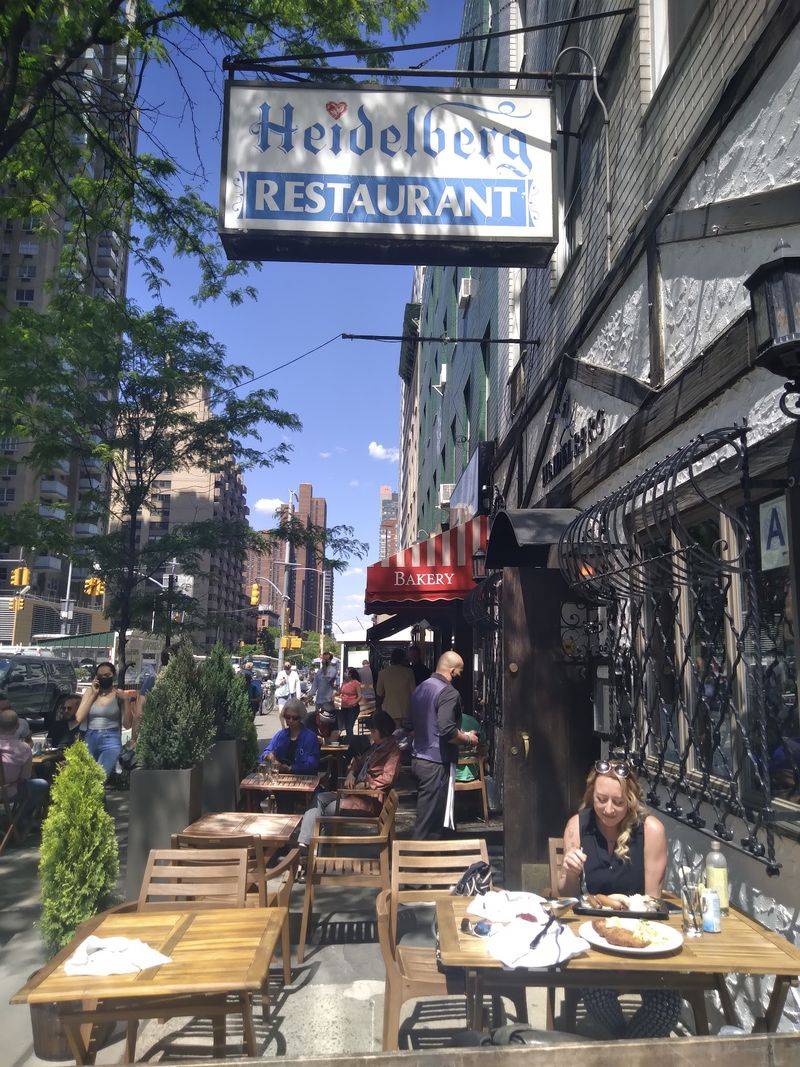
Yorkville was once New York’s great German neighborhood. Most of that world faded, but Heidelberg refused to go quietly.
The restaurant opened in 1939 and has run as a family business since 1963. Generations have taken turns at the helm, which explains why the recipes never wandered.
Inside, the room mimics a German country inn. Rustic wood, homey touches, and a coziness that feels earned rather than decorated.
The Schweinshaxe steals the show. A whole pork shank arrives with crackling skin and meat that slides off the bone with gentle pressure.
Order it once and you will understand why Bavarians treat pork with such reverence. Bring an appetite and maybe a nap plan.
Schnitzel comes pounded flat and fried to a proper crunch. Sausages line up in satisfying variety, each with its own personality.
Potato pancakes deserve real attention. Crisp edges, soft centers, and applesauce on the side make a combination nobody improves upon.
The potato salad leans tangy rather than heavy, closer to the southern German style. Small detail, big difference.
You will find it at 1648 2nd Ave, New York, NY 10028, holding down a corner of the Upper East Side like a friendly holdout. Go in fall. Sweater weather and pork shank belong together.
6. Killmeyer’s – Charleston, Staten Island
Staten Island holds the oldest bragging rights in this bunch. Bavarian immigrant Nicolas Killmeyer bought the property back in 1855, and parts of the building may date to the early 1700s.
Read that again. Sections of this structure predate the United States by decades.
His sons expanded the place and installed a magnificent mahogany bar back in 1890. That carved beauty still anchors the room today.
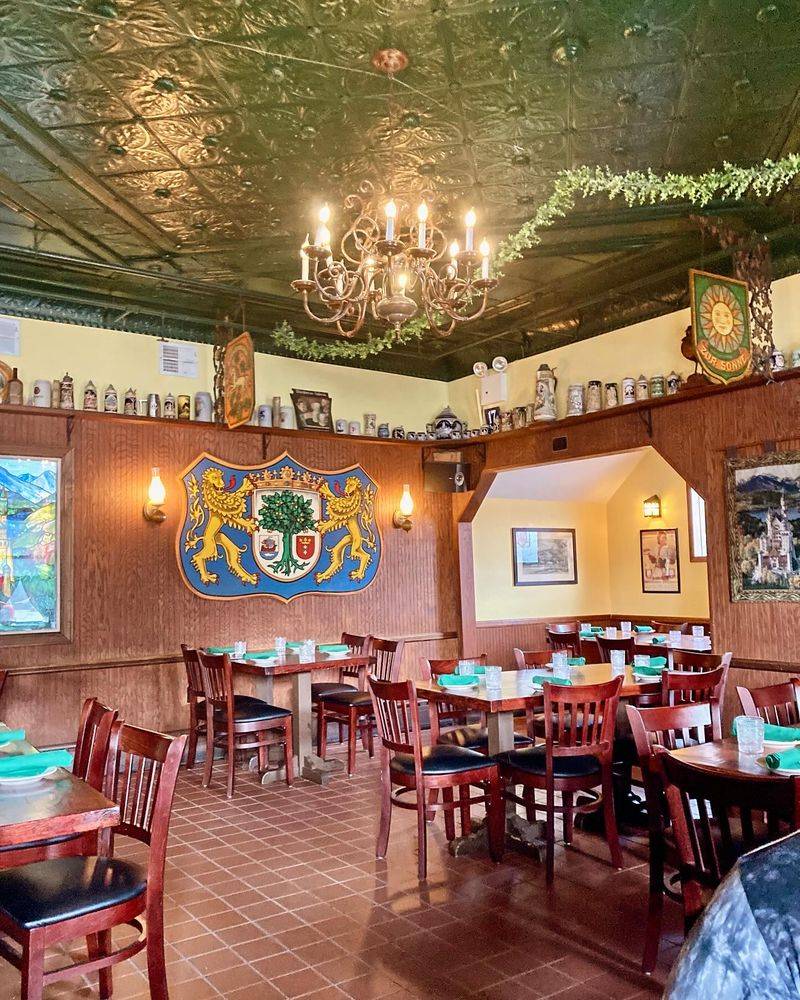
The interior looks like a Bavarian inn that time politely skipped. Every surface seems to have a story it will not fully share.
Spatzle gets made from scratch, which shows in the texture. Little dumplings with soft chew and craggy edges that catch sauce.
Schnitzel appears in several preparations, so choosing takes a minute. Goulash brings warm paprika depth on cold nights.
Then there are the pretzels, and they are enormous. Salt-flecked, burnished, and best pulled apart by hand at a shared table.
Warm months open up the outdoor garden. Long tables under open sky make the Bavarian atmosphere feel complete.
Drive to 4254 Arthur Kill Rd, Staten Island, NY 10309 and the trip becomes part of the fun. Few New York meals come with this much history attached.
Ratings land at 4.4 stars. For a place approaching its 170th year, that steadiness says plenty.
7. Cafe Sabarsky – Upper East Side, Manhattan
Vienna built its reputation on coffee houses where thinkers argued for hours. Cafe Sabarsky recreates that world inside a Fifth Avenue museum.
The room sits within the Neue Galerie, which focuses on early 20th century German and Austrian art and design. Fitting, since the cafe feels like a period piece itself.
It carries the name of Serge Sabarsky, a co-founder of the museum. His vision leans elegant without turning stuffy.
Dark stained wood paneling wraps the walls. Period light fixtures glow softly, and plush banquettes invite you to settle in for the long haul.
The effect borders on time travel. Sitting here, 1908 Vienna feels closer than the traffic outside.
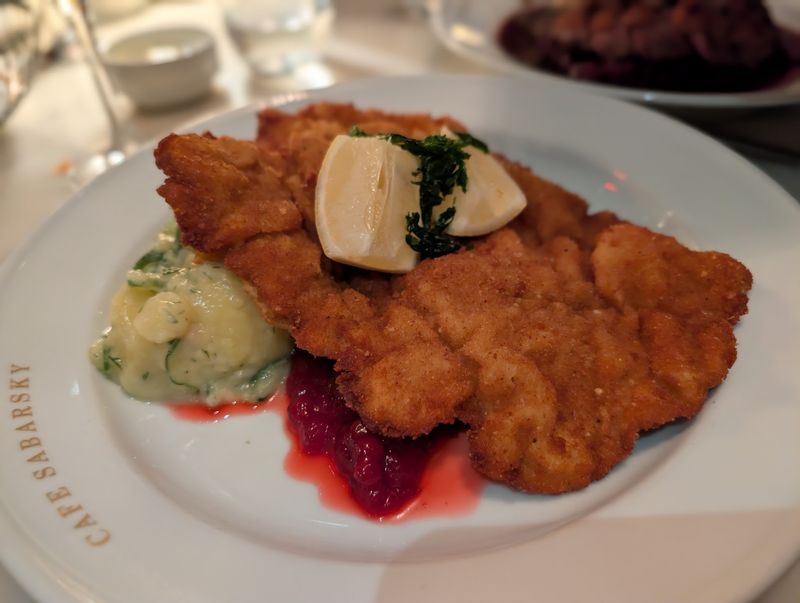
Wiener Schnitzel arrives properly thin and golden, with a squeeze of lemon doing the heavy lifting. Hungarian beef goulash brings a deeper, spicier warmth.
Pastry is where things get serious. Sachertorte layers dense chocolate cake with apricot and a glossy glaze that snaps under the fork.
Linzer torte offers a nutty, jam-filled counterpoint. Strudels rotate and rarely disappoint.
Find it at 1048 5th Ave, New York, NY 10028, directly across from Central Park. Pair a museum visit with lunch and call it a cultured afternoon.
Reviews average 4.3 stars. Lines happen on weekends, so aim for a weekday and thank yourself later. No reservations means arriving early or accepting a wait.
Museum admission is separate, so plan your afternoon accordingly.
8. Cafe Katja – Lower East Side, Manhattan
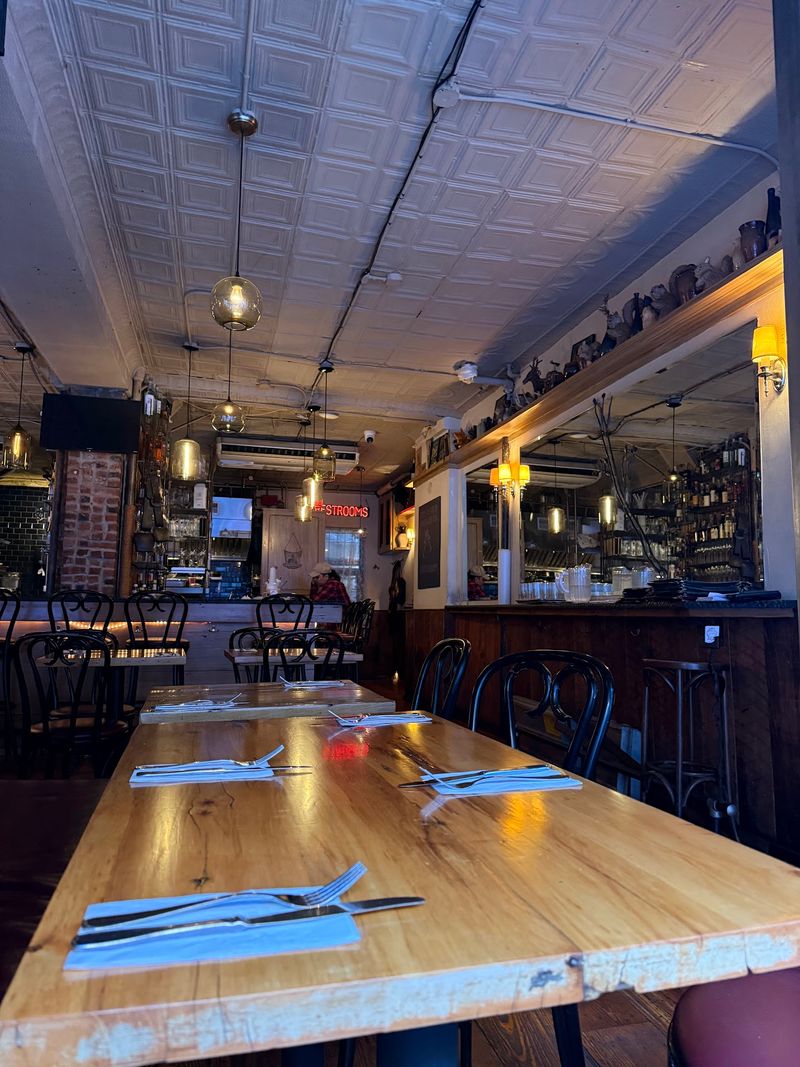
Small rooms sometimes cook the biggest food. Cafe Katja proves it on Orchard Street with a menu built on precision rather than volume.
Erwin Schrottner, a native of southern Austria, opened the spot in 2007 with co-owner Andrew Chase. The name honors one of Schrottner’s daughters.
Casual is the operating temperature. Neighbors treat it like a living room, and newcomers get folded in quickly.
House-made bratwurst sets the tone. Juicy, well seasoned, and snappy in exactly the right way.
Spaetzle comes tender with browned edges. Quark dumplings arrive fluffy and cloudlike, a texture worth ordering for its own sake.
Tangy pickles cut the richness with real bite. Freshly baked soft pretzels land warm, and warm pretzels change everything.
The kitchen also plays with clever crossovers. A sausage sampler covers serious ground for the indecisive.
Then comes the reuben sandwich made with pork belly instead of the usual suspect. Rich, tangy, and gently ridiculous in the best sense.
The burger deserves a mention too, topped with Gruyere and caramelized onions. Austrian roots, American swagger.
Head to 79 Orchard St, New York, NY 10002, where the Lower East Side keeps its edges interesting.
Scores sit at 4.7 stars, the highest tie on this list. Space is limited, so reserve ahead or arrive early and be patient. Either way, New York rewards you.
Orchard Street parking is nearly hopeless, so take the subway. Weeknight seatings open up far more readily.