
This Georgia Sunflower Farm Is A Must-Visit Summer Destination For Your 2026 Bucket List
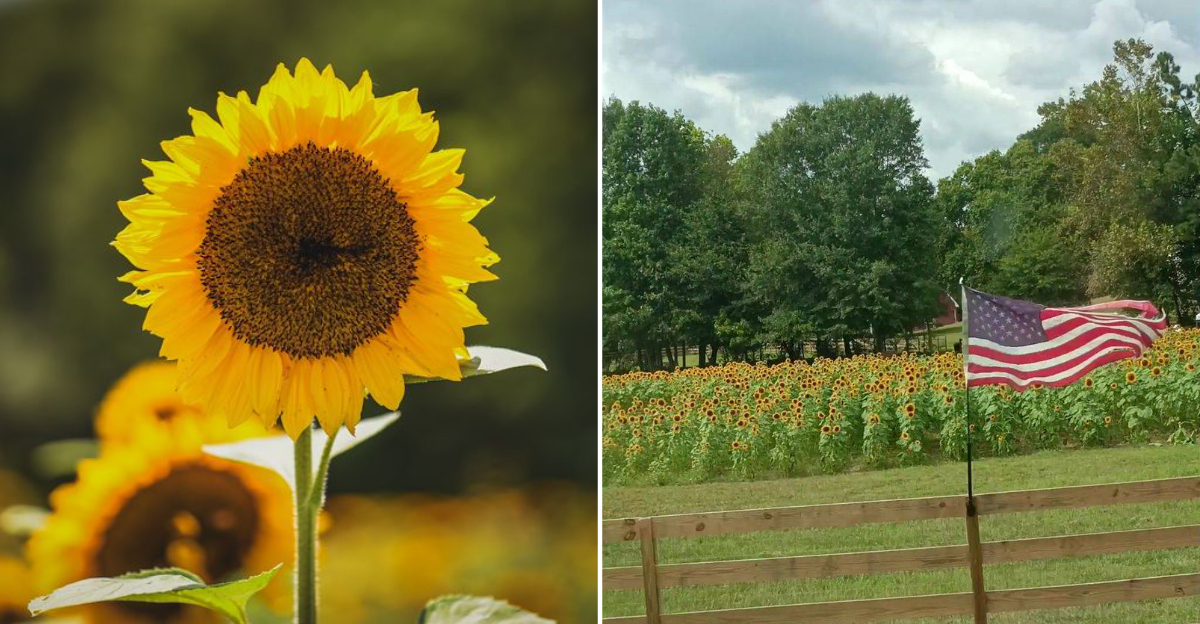
Did you know sunflowers always turn to face the sun throughout the day? This Georgia farm gives visitors the chance to see that phenomenon up close, making it a must-visit for any 2026 summer bucket list.
Fields stretch out wide enough to make an entire afternoon out of just walking through them. Photography opportunities exist around nearly every turn, especially during the golden hour before sunset.
Nothing about the farm feels overrun despite its growing popularity this time of year. Regulars know the best times to visit, avoiding crowds that build up later in the season.
Families often turn the visit into a relaxed outing, comparing favorite photo spots by the end of it. This farm proved that sometimes the simplest natural wonders make for the most memorable summer days.
Varieties And Bloom Seasons
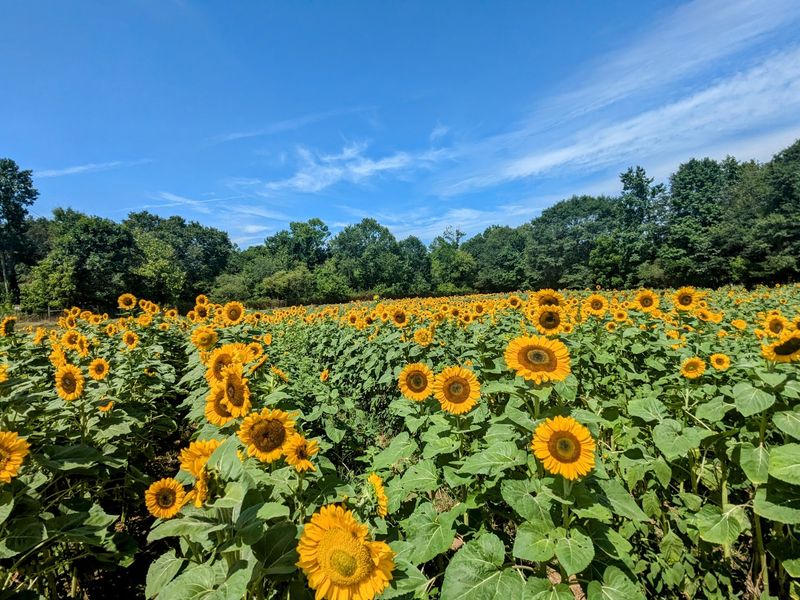
Timing is everything here, and the farm knows it. Blooms usually arrive between early July and mid-August, with the peak show lasting somewhere between seven and twenty days before the flowers start to fade.
That short window is exactly why people mark their calendars. In 2023, the goal was an opening near July 4th, while more recent seasons have leaned toward August.
What keeps things interesting is how the seeds go in. Roughly 50,000 seeds are planted in sections instead of all at once, which staggers the blooms across the property.
The result is a longer overall season. Some fields have carried color well into September, and in certain years even October gets a little yellow.
Sunflowers grown for cutting tend to be tall, sturdy, and thick-stemmed, and the ones here are known for looking healthy rather than scraggly. Only premium quality flowers make it into bouquets.
Weather plays referee. A drought year can thin things out, and heavy rain can shut the fields down for a day, so bloom reports matter more than any calendar guess.
Anyone planning around a specific weekend should treat the dates as a moving target. Nature does not take reservations.
You can find the fields at 4745 Hopewell Rd, Cumming, GA 30028.
Photography Tips For Capturing Vibrant Fields
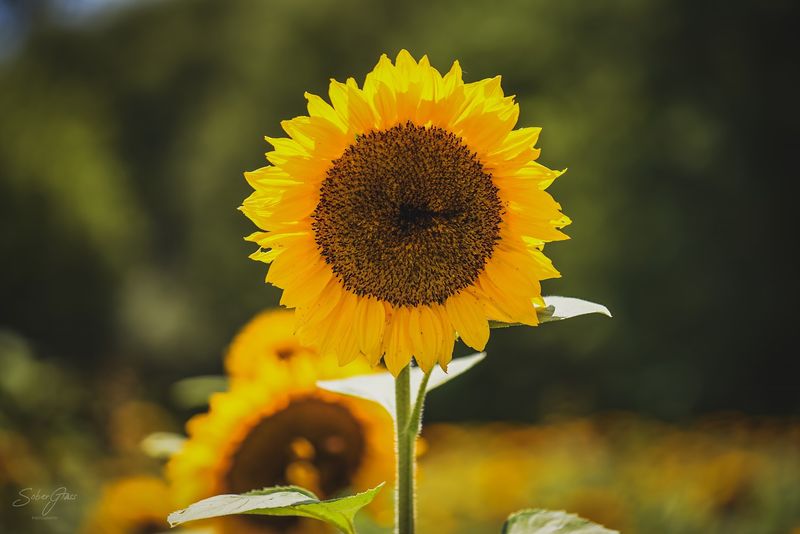
Cameras get a serious workout here. Visitors are welcome to roam the rows and take pictures with the purchase of flowers, though professional photo sessions require a separate fee.
Golden hour is the sweet spot. That means the couple of hours after sunrise or before sunset, when light turns soft, and shadows stop being harsh.
Midday sun is the enemy of nice portraits. It creates squinting, raccoon eyes, and washed-out petals, none of which look good on a phone screen.
One trick worth trying is getting low and shooting upward. It makes the stalks tower over the frame and pushes bright sky into the background.
Shooting straight through a row also works beautifully, giving depth and layers of yellow. A wide-angle lens captures just how far the field stretches.
Here is a fun detail. Once sunflowers fully bloom, most stop tracking the sun and settle facing east, which sets up gorgeous backlit shots as the sun drops behind them.
Watch the background too. A stray car or trash bin can ruin an otherwise dreamy frame, and a small step to the left usually fixes it.
Several designated photo op spots are set up around the property. Bringing an umbrella for shade is a smart move if the light is unforgiving.
Family-Friendly Activities And Events
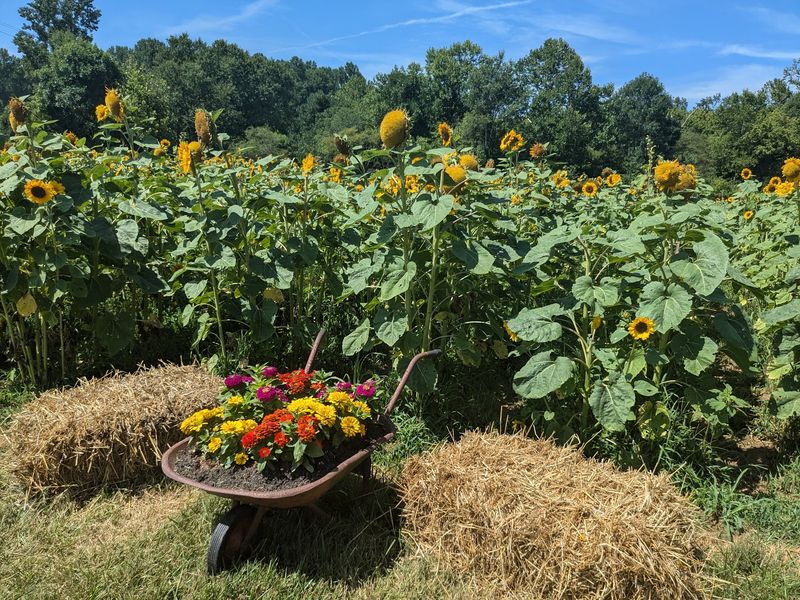
Small farms have a certain advantage, and this one leans into it. Fewer crowds mean kids can wander the rows without anyone getting elbowed, and parents can actually relax.
Cutting your own stems is the main event. Visitors pick their favorites, cut them, and carry them out like little trophies.
Not into the cutting part? Pre-arranged bouquets are ready to go, often bundled in mason jars that double as vases once you get home.
The owners have also hosted Sunflower Yoga sessions in the fields. Downward dog surrounded by giant blooms is a memory that sticks.
Multi-generational trips work well here too. The ground is open enough that wheelchairs can get close to the rows, and the folks running the farm are known to help visitors park nearer to the flowers.
Under the big tent, bouquet building happens in real time. Watching stems get trimmed and arranged is oddly satisfying, especially for kids who like seeing how things are made.
Birthdays, family reunions, and just-because outings all fit the vibe. Cut flowers make an easy gift for grandparents on the drive home.
Plan on a short and sweet visit rather than an all-day affair. Thirty minutes to an hour covers it comfortably.
Local Farming Practices And Sustainability
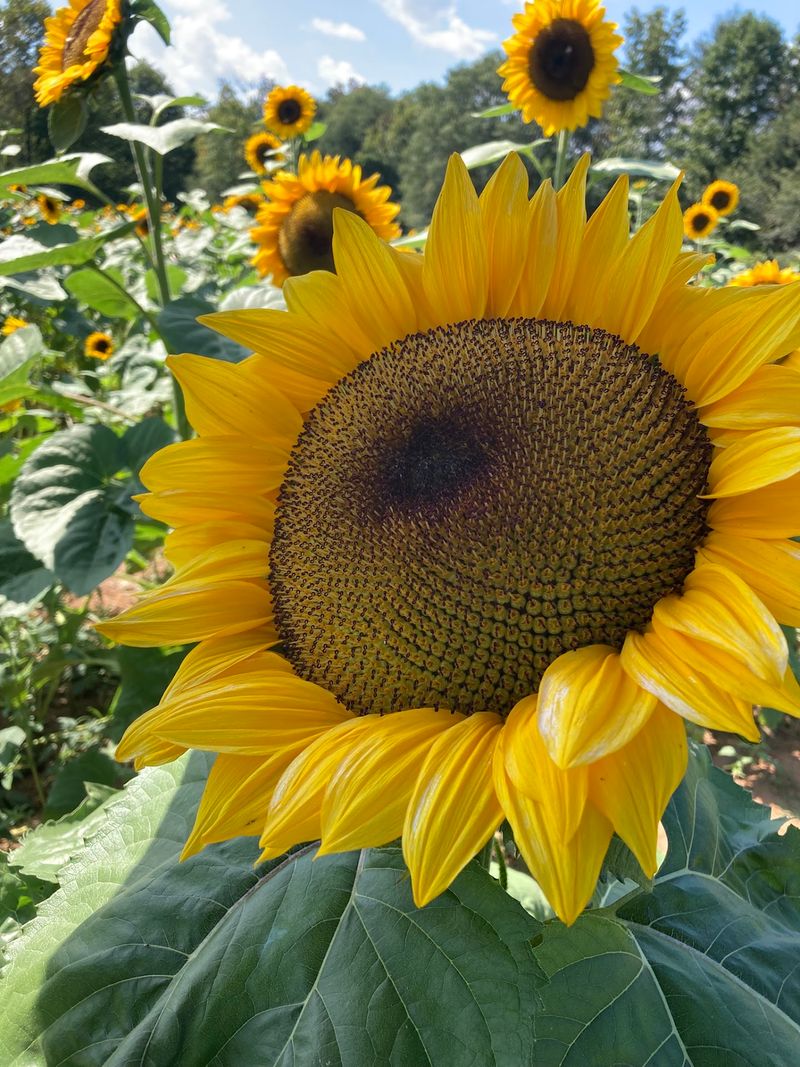
Bees are the real regulars around these fields. The farm attracts many different bee species, which is one of the clearest signs of a healthy growing environment.
That happens on purpose. The operation is herbicide- and pesticide-free, so nothing sprayed is chasing pollinators away.
Sunflowers are quietly useful plants beyond looking cheerful. Their deep roots break up compacted soil and pull nutrients from levels shallower crops cannot reach.
They also feed a long list of insects. Bees, butterflies, and other pollinators show up in waves once the heads open.
Skipping chemical sprays means beneficial bugs stick around and help keep pest populations in check naturally. It is a slower approach, but the payoff shows in the quality of the blooms.
Growing without herbicides takes more hands-on work. Weeds have to be managed the old-fashioned way, which is part of why this stays a small, family-scale operation.
Standards on quality are strict. Flowers that do not meet premium condition simply are not sold, which says a lot about how the crop is treated.
Visitors benefit too. Walking through fields that have not been sprayed means kids can touch stems and sniff blooms without a second thought.
Small farms like this one keep local pollinator habitat alive in a county that keeps growing.
Seasonal Produce And To Table Options
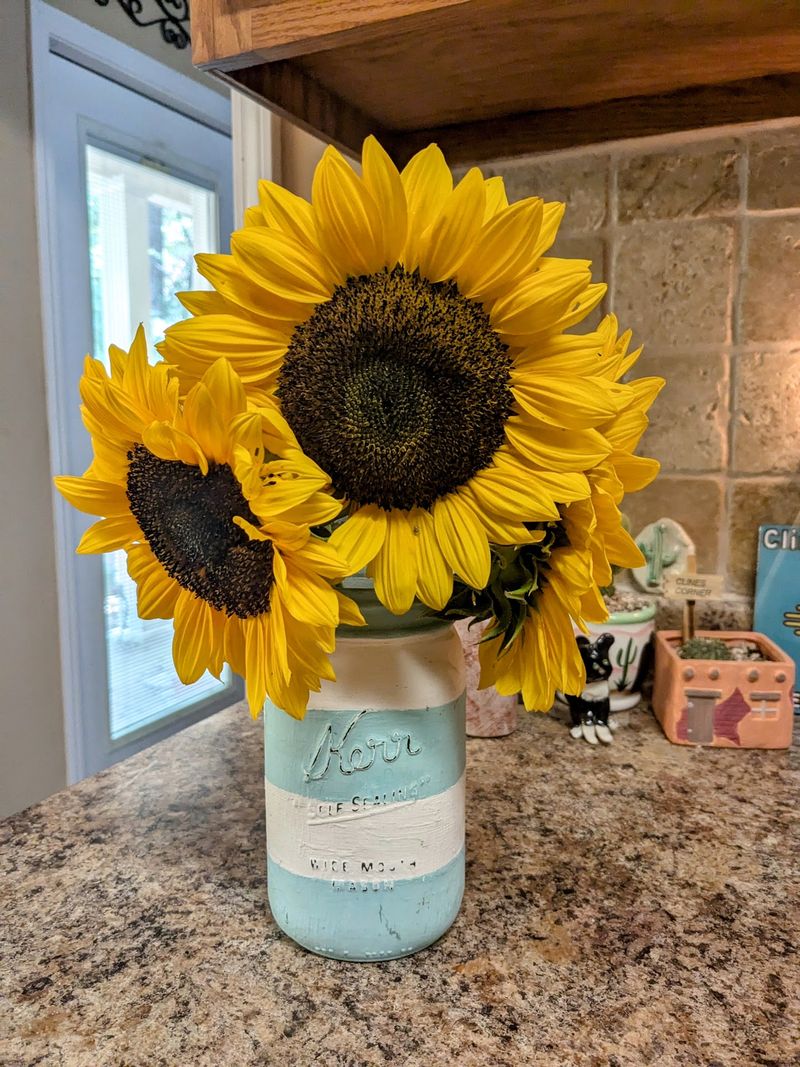
Flowers are the whole menu, and honestly that is enough. The main offering is cut sunflowers, sold either by the stem or as ready-made arrangements.
Mason jar bouquets are the signature. They come assembled and steady enough to survive a car ride without tipping over on the first turn.
Buying by the stem gives you control. Pick five, pick fifteen, mix heights, build whatever arrangement matches the table at home.
A thoughtful touch comes with the purchase. Flower preservative is included so the blooms last longer once they are in fresh water.
This is not a produce stand, so do not expect tomatoes or peaches. There is no broader farm market operating beyond the sunflowers themselves.
What that focus creates is quality. Everything grown goes toward one crop, and the results show in thick stems and full, healthy heads.
Cut flowers travel well if you plan. A bucket or cup of water in the trunk keeps stems happy on a warm drive.
Trim the ends at an angle before putting them in a vase, and change the water every couple of days. Sunflowers are thirsty and drink more than most.
The bouquets also make excellent last-minute gifts, which is a nice bonus for anyone with a birthday to remember.
Educational Programs About Pollinators
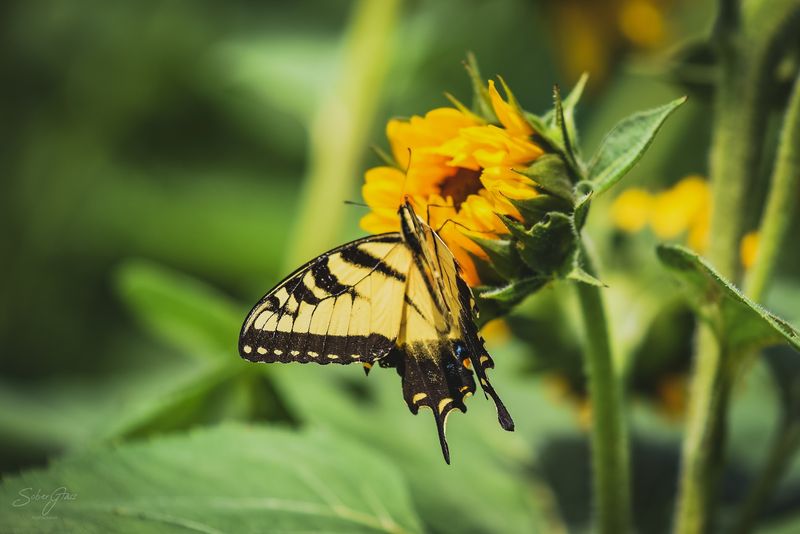
Sometimes the best lesson does not come with a worksheet. The fields buzz with multiple bee species, and watching them work is science happening right in front of you.
Formal pollinator programs are not part of the schedule here. What exists instead is an open field where kids can observe insects up close without any spray keeping them away.
That makes the place a natural teaching stop. Point out how a single sunflower head is actually hundreds of tiny flowers packed together, and watch a kid’s face change.
The owners know their crop well. Conversations about growing conditions, bloom timing, and flower quality happen easily under the tent.
Sunflowers rank among the most reliable pollinator plants around. They produce heavy pollen and nectar right when many bees need it most in mid-summer.
Parents can turn the visit into a mini lesson with almost no prep. Bring a notebook, count bee types, or note which blooms get the most traffic.
Butterflies and other beneficial insects show up too, adding to the list. Nobody needs a guide to appreciate that.
Teachers looking for a real-world example of an ecosystem will find plenty here. It is hands-on learning wrapped in something that happens to be beautiful.
Picnic Spots And Scenic Views
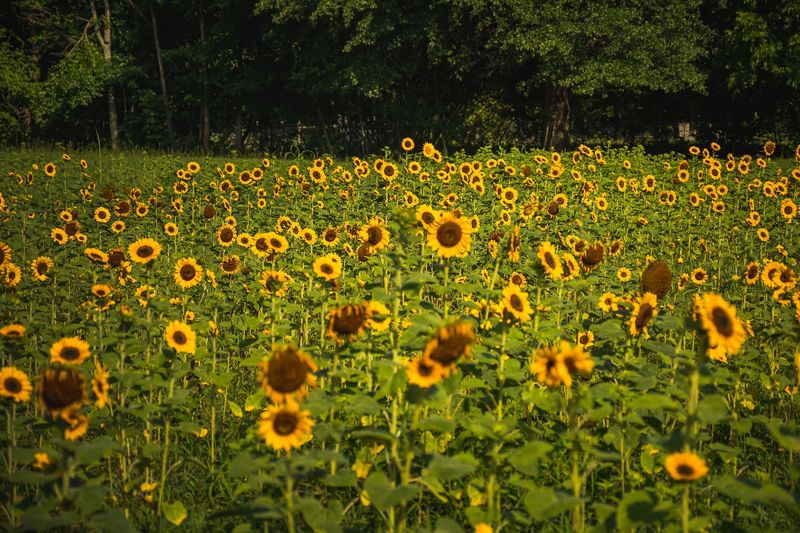
Quiet is part of the appeal. Described as a small, beautiful farm, the property does not draw the overwhelming crowds that bigger operations pull in.
That calm makes it easy to slow down. Rows of golden faces all turned the same direction have a way of making people stop talking for a second.
Packing a blanket and a simple lunch is a common move at sunflower farms, and this setting suits it. Grass edges along the fields work well for spreading out.
Shade is limited, so bringing your own is smart. An umbrella or a spot near the tall stalks helps on hotter afternoons.
The view changes with the light. Morning gives cool air and soft glow, while late afternoon paints the whole field warm and gold.
Storm-watching has its fans too. Visitors have stuck around as clouds rolled in and found the field just as pretty in the rain.
The big tent gives a spot to gather while bouquets get built. It is a nice place to sit and watch the flow of the day.
Rural Forsyth County scenery surrounds the whole thing. Rolling farmland, trees, and open sky make the drive out feel like a small escape.
Tips For Planning A Visit During Peak Season
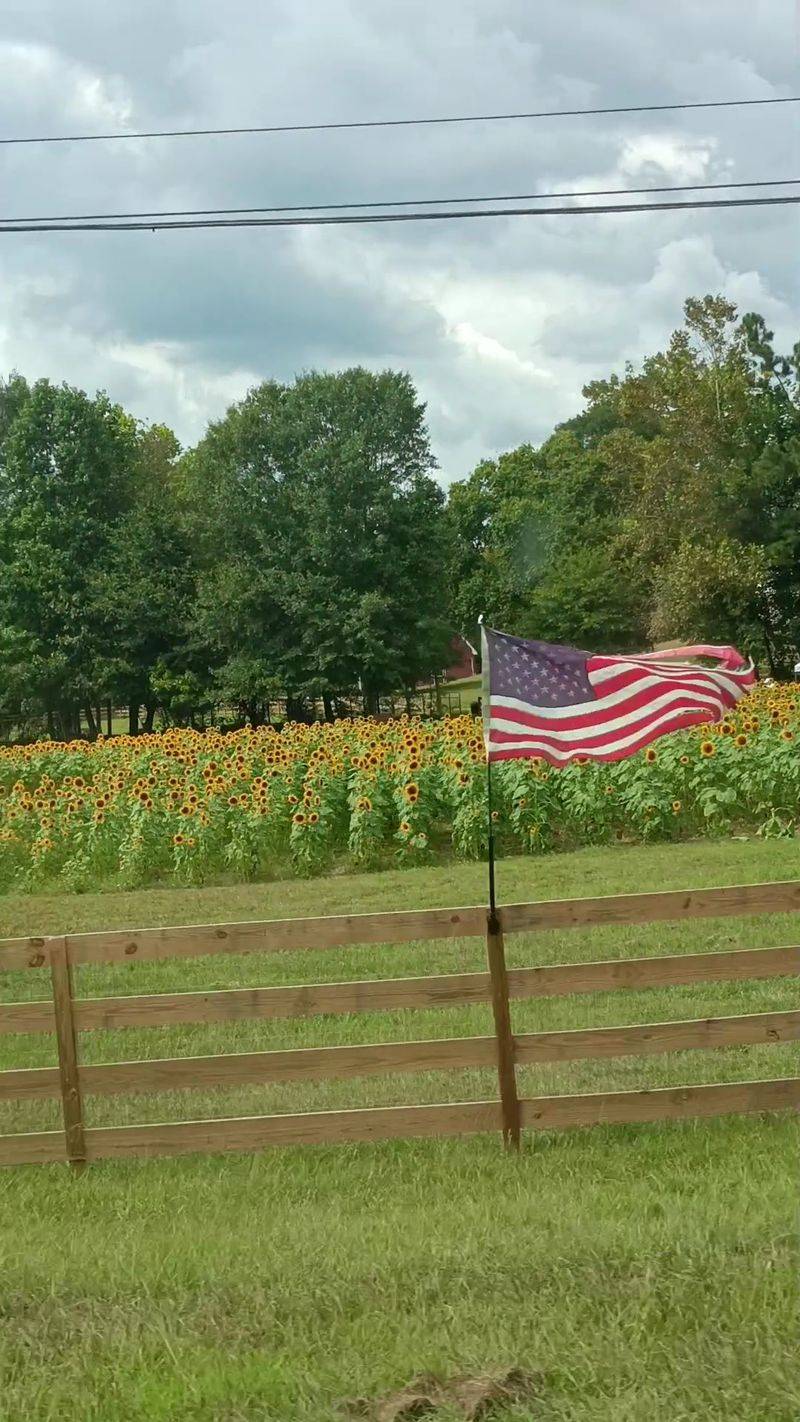
Checking before you drive is rule number one. The farm posts bloom updates on its Facebook page, and since peak lasts only a few weeks, those posts save wasted trips.
Weekends are the window. Recent seasons have run Saturday and Sunday from 9 AM to 4 PM, with hours shifting based on how the flowers are doing.
Earlier seasons ran Friday through Sunday, so the schedule genuinely changes year to year. Rain can close things down entirely.
Aim for early morning or late afternoon. Cooler air, better light for pictures, and usually fewer people sharing the rows.
Footwear matters more than you would think. Closed-toe shoes handle mud and uneven ground far better than sandals.
Pack the basics. A hat, sunglasses, bug spray, and plenty of water go a long way when shade is scarce, and Georgia humidity is doing its thing.
Admission to walk the fields comes with the purchase of flowers, so plan to take a few stems home. That is hardly a hardship.
The location sits close to an outlet mall just a couple of miles away, which makes pairing the visit with other stops easy.
Calling ahead at 678-477-3962 helps if the weather looks iffy. A quick check beats a long drive to a closed gate.