
10 New York Lakes And Ponds So Clear Locals Say They Rival The Caribbean
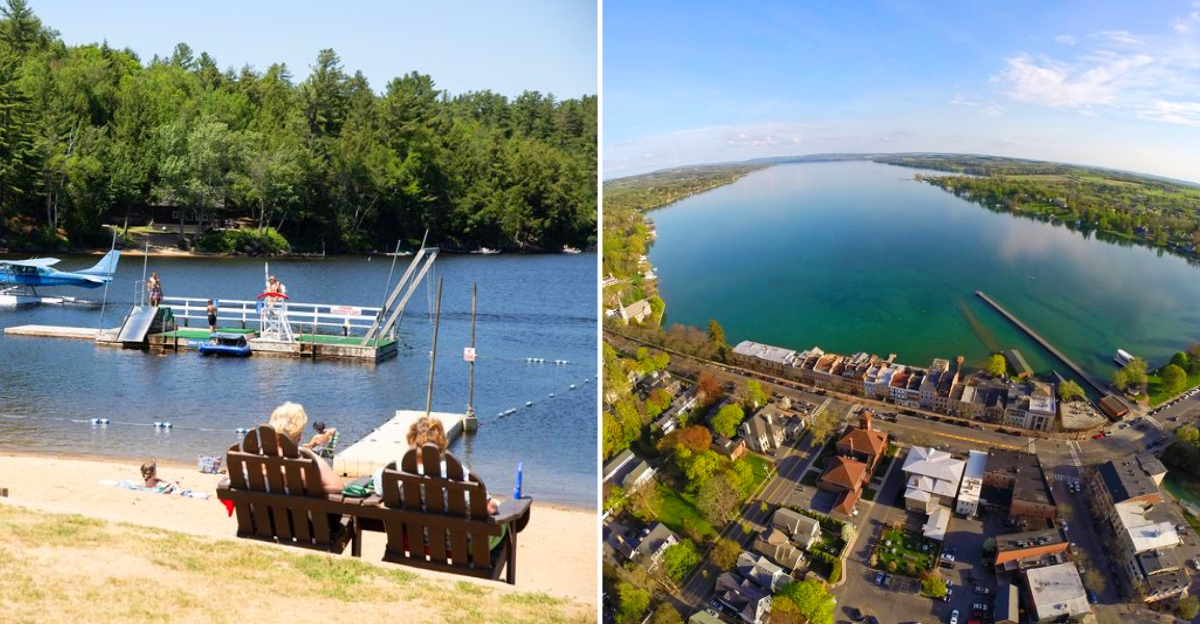
Clear water does something funny to people. They stop talking, lean over the edge, and stare down like the bottom might reveal a secret. Around several lakes and ponds, that reaction happens a lot.
New York gets almost tropical here. The water can look blue green in bright sun, with rocks and fish visible well below the surface.
The surprise is how wild many of these places still feel. Forests press close to the shoreline, and careful water rules help protect what makes each spot special.
You may arrive expecting a normal swim and spend half the time admiring how far you can see beneath your feet.
No palm trees are required. When the water looks this clean and bright, the comparison starts making a little more sense.
1. Lake George – Adirondacks
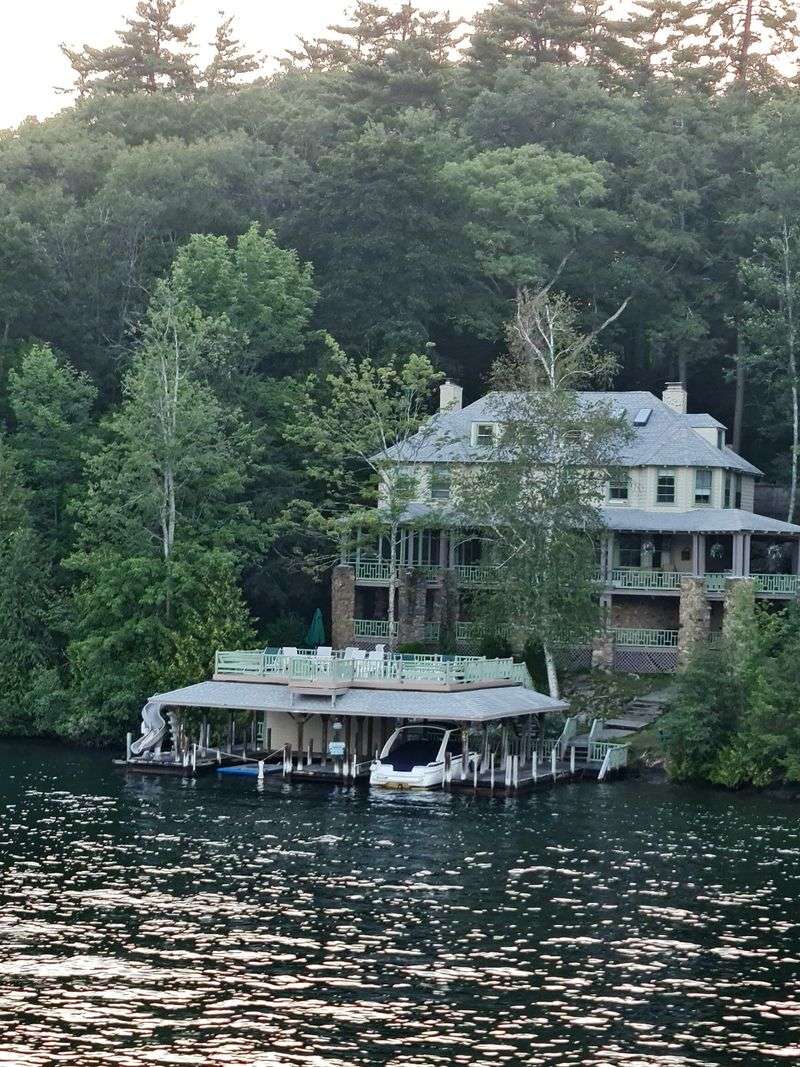
Ranked the cleanest lake in the entire country by an A-Z Animals study and celebrated by Travel + Leisure, Lake George sets a bar the rest of the state chases. The New York State Department of Environmental Conservation gives it a Class AA-Special rating, the highest grade there is.
Translation for the rest of us: the water is drinkable. Plenty of residents along the shore pull their household water right out of the lake, filter it lightly, and call it a day.
Stretching 32 miles between Adirondack peaks, the lake owes its glassy reputation to geography. Over ninety percent of its watershed sits inside protected forest preserve, so rain filters through mountain streams and wetlands before it ever reaches the shoreline.
Visitors regularly report seeing dozens of feet down to the sandy bottom. On a bright July morning, boat shadows drift across the lake floor like clouds.
Million Dollar Beach at 74 Beach Road in Lake George, NY 12845 gives you the easiest public entry point. Bring water shoes, because the shallows are pebbly.
The nickname locals use is the Queen of American Lakes. Honestly, the crown fits. Summer weekends pack the village solid, so an early arrival beats circling for parking.
2. Skaneateles Lake – Finger Lakes
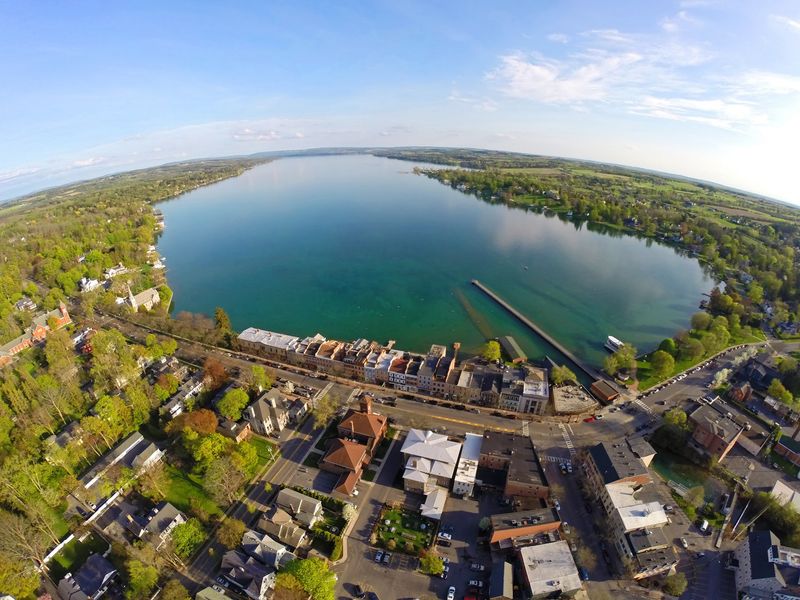
Second cleanest lake in the United States according to World Atlas, and one of just six unfiltered drinking water sources in the whole country. That is not a marketing line. That is a plumbing fact.
Since the 1890s, Skaneateles has piped water to roughly 220,000 people across Syracuse and nearby towns. The treatment process is almost comically simple: a coarse screen, some chlorine, a little fluoride, done.
Low nitrogen levels are the secret sauce here. Fewer nutrients mean less algae, and less algae means water that stays glassy well into August.
Old-timers call it the Roof Garden of the Lakes because it sits at a higher elevation than its Finger Lakes neighbors. That extra altitude helps keep things cold and crisp.
For public swimming, head to Shotwell Memorial Park at 1 Genesee Street in Skaneateles, NY 13152. The village itself is worth an hour of wandering afterward.
Standing waist-deep, you can count the pebbles between your feet without squinting. New York rarely looks this tropical without a plane ticket involved.
3. Keuka Lake – Finger Lakes
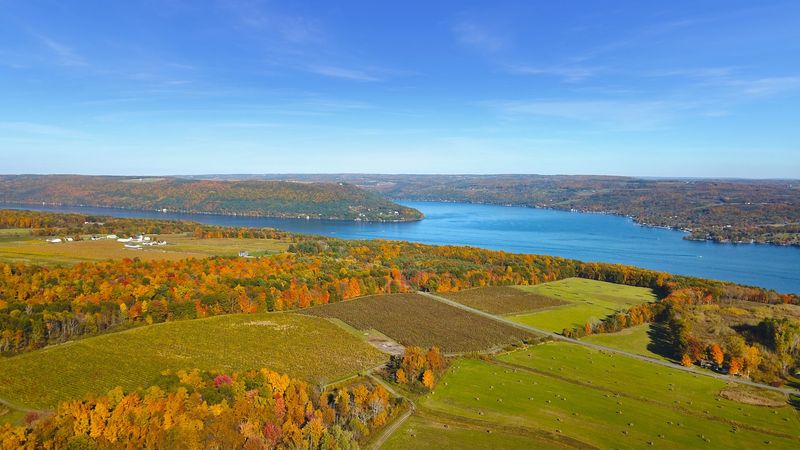
Every Finger Lake runs long and skinny except this one. Keuka splits into a Y, the only branched lake in the bunch, which makes it a favorite for paddlers who like options.
Scientists measure clarity with a Secchi disk, a black and white plate lowered until it disappears. In 2017, Keuka’s reading hit 5.6 meters, which is roughly eighteen feet of visibility.
The average sits near 5 meters, with seasonal swings between 2 and 9 meters depending on rain and sunshine. Clarity has been creeping upward over the years, likely thanks to zebra mussels doing their filtering thing.
Beyond the numbers, the lake is genuinely healthy. Nutrient levels stay low, plankton stay balanced, and the fishery thrives without turning the water soupy.
Keuka Lake State Park at 3370 Pepper Road in Bluff Point, NY 14478 has a swimming beach with parking and picnic space. Arrive before noon on weekends unless you enjoy circling lots.
Vineyard rows climb the hills above the shoreline. The view alone earns the drive through upstate New York. Water temperatures stay cool well into June, which surprises anyone expecting bathwater.
4. Mirror Lake – Lake Placid
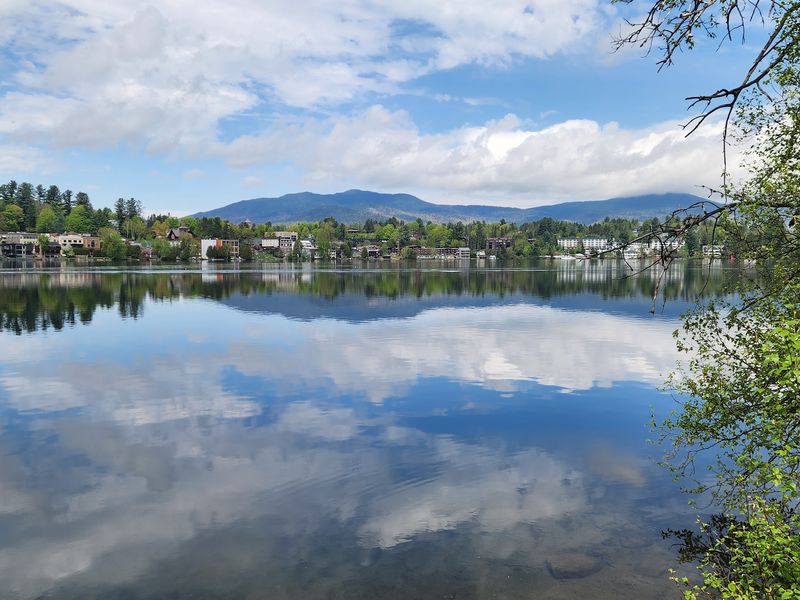
Some lakes earn their names the hard way. Mirror Lake earned its name by simply existing, reflecting the village of Lake Placid and the High Peaks with unsettling accuracy.
Gas-powered motorboats are banned outright, which keeps the surface calm and the water sparkling. Electric motors get a pass, so the loudest sound most mornings is a paddle dipping in.
Canoes, kayaks, and stand-up paddleboards rule these waters. Cold, clean, and quiet is the whole vibe.
A paved 2.7-mile loop wraps the entire shoreline, flat enough for strollers and popular with runners chasing sunrise views. Walk it once and you will understand why locals do it daily.
Swimming happens at the Lake Placid Public Beach on the south end, near 2 Parkside Drive in Lake Placid, NY 12946. The sand is soft and the drop-off is gradual.
Fun bit of trivia: the swim leg of the Ironman Triathlon takes place right here. Athletes get a Caribbean-clear view of the bottom while they suffer.
Winter turns the whole thing into a skating rink. Different season, same magic. Village shops and restaurants sit steps from the shoreline, making a swim easy to pair with lunch.
5. Blue Mountain Lake – Adirondacks
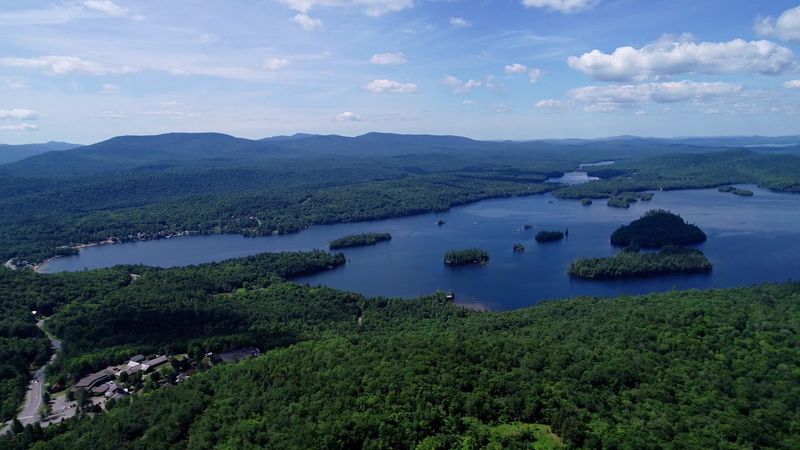
Naming a lake after its color takes confidence. Blue Mountain Lake backs it up with water so sharply blue you can track your shadow several feet down.
Spread across 1,334 acres in Hamilton County, the lake sits in the heart of the central Adirondacks. Some pockets plunge close to 100 feet deep, while the mean depth hovers around 25 feet.
Depth matters for clarity. Cold, deep water resists the algae blooms that cloud shallower lakes by midsummer.
Swimmers get lucky here because the clarity holds steady through the warm months. Wade in during August and the view underfoot looks the same as it did in June.
A public beach and boat launch sit just outside the hamlet of Blue Mountain Lake, NY 12812, along Route 28. Picnic tables make it easy to turn a swim into an afternoon.
Islands dot the surface, tempting anyone with a canoe to go exploring. The Adirondack Experience museum sits nearby if the weather turns.
Bring a mask and snorkel. You will actually use them.
6. Schroon Lake – Adirondacks
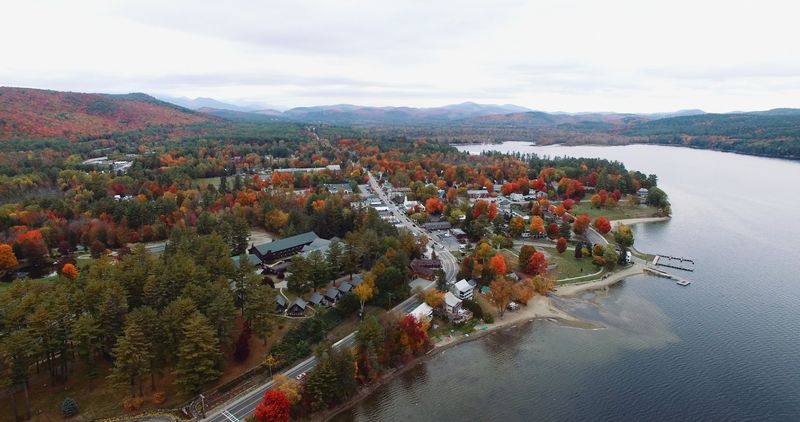
Nine miles long, 4,126 acres wide, and holding another AA quality rating from the DEC. Schroon Lake is proof that strong rules produce clear water.
Adirondack Park protections do the heavy lifting. Conservation easements shield the surrounding forests, which cuts erosion and keeps sediment out of the lake.
The watershed covers 202,575 acres, and New York State owns roughly sixty percent of that land. Fewer lawns and parking lots means less runoff sliding downhill.
Phosphorus levels stay naturally low, which is the technical reason the water refuses to turn green. Local groups keep working to reduce stormwater carrying fertilizer toward the shoreline.
Boaters running motors anywhere in the Adirondack Park must follow Clean, Drain, Dry rules to stop invasive species from hitching rides. Skipping that step is not just rude, it is illegal.
The town beach sits at the end of Dock Street in Schroon Lake, NY 12870, with 24 miles of shoreline to admire from the sand. Sunsets over the western hills are absurdly good.
Quiet, deep, and honest. That is Schroon in three words.
7. Long Lake – Adirondacks
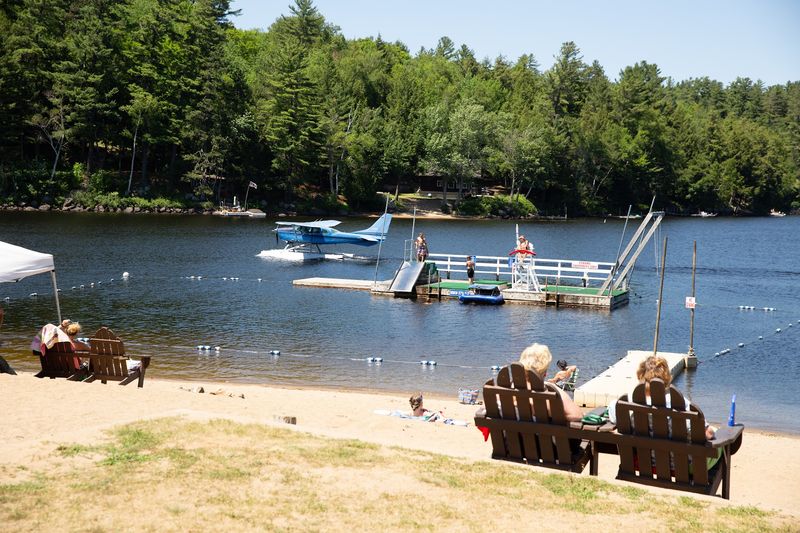
Technically, it is a river wearing a lake costume. Long Lake is a 14-mile widening of the Raquette River, and the illusion is convincing.
Morning is when the magic peaks. The surface goes completely still, turning pines and clouds into a flawless duplicate below the waterline.
Paddlers treat this stretch as a highway. The Northern Forest Canoe Trail runs through, connecting Long Lake to a network of waterways that reaches deep into Adirondack backcountry.
Sandy beaches make swimming easy for people who prefer their lake bottoms free of mystery. The town beach sits along Route 30 in Long Lake, NY 12847, right beside the public docks.
Hamilton County keeps things low-key. There are no traffic lights for miles, which is exactly the point.
Floatplanes take off from the water during summer, offering aerial tours that show just how transparent the shallows really are. Watching one skim the surface never gets old.
Pack a paddle, a sandwich, and zero plans. Long Lake rewards people who move slowly and look down often.
8. Raquette Lake – Adirondacks
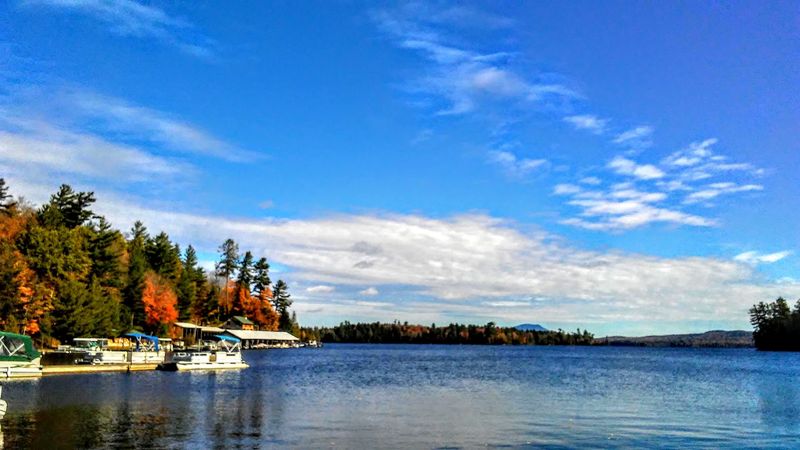
Ninety-nine miles of pine-fringed shoreline, and eighty percent of it belongs to New York State under a Forever Wild designation. Raquette Lake is wilderness with paperwork to prove it.
As the largest natural lake in the Adirondacks, it sprawls across 4,925 acres with a mean depth of 44 feet. Coves and inlets branch off in every direction, each one clearer than the last.
The clarity feels rougher and more untamed than the polished resort lakes. Tannins from surrounding forests give shallow corners a faint amber tint that somehow makes the sandy patches glow brighter.
History buffs get a bonus. Raquette Lake is the birthplace of the Great Camp tradition, where nineteenth century families built elaborate rustic compounds along the water.
Boating, swimming, fishing, kayaking, and paddleboarding all happen here without much crowding. The hamlet of Raquette Lake, NY 13436 offers a small public launch and a general store.
Cell service is spotty at best. Consider that a feature rather than a flaw.
Loons call across the water at dusk. Nothing tops that soundtrack. Supplies run limited out here, so stocking up before you arrive saves a long backtrack.
9. Little Clear Pond – Franklin County
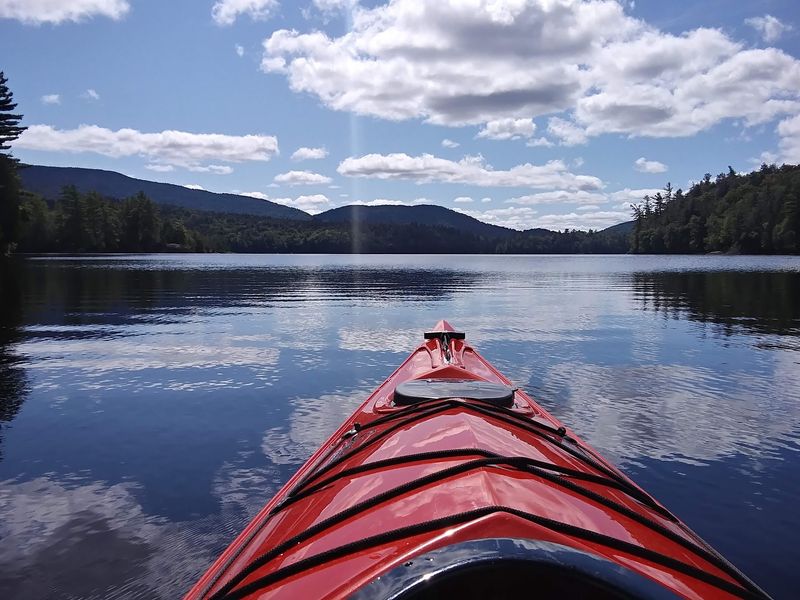
Some places tell you exactly what they are before you arrive. Little Clear Pond does not bother with mystery, and the 400 acres of glass-clear water deliver on the promise.
Motorboats are banned entirely. Only kayaks and canoes touch this surface, which explains the eerie stillness and the absence of engine noise.
Access comes by way of a boat launch off State Route 30 on Fish Hatchery Road, near Lake Clear, NY 12945. The carry from car to water is short and forgiving.
Several small islands break up the paddle, and a sandy beach on the eastern shore near a large rock has become the unofficial lunch spot. Swimming there feels like floating in liquid air.
Fishing is off the table completely. The pond serves as broodstock water for the neighboring Adirondack Fish Hatchery, so the fish are working professionals.
Camping is also prohibited along the shoreline, which keeps the place pristine. The payoff is wildlife: common loons and bald eagles thrive here in unusual numbers.
Bring binoculars alongside your paddle. Franklin County does not disappoint.
10. Canandaigua Lake – Finger Lakes
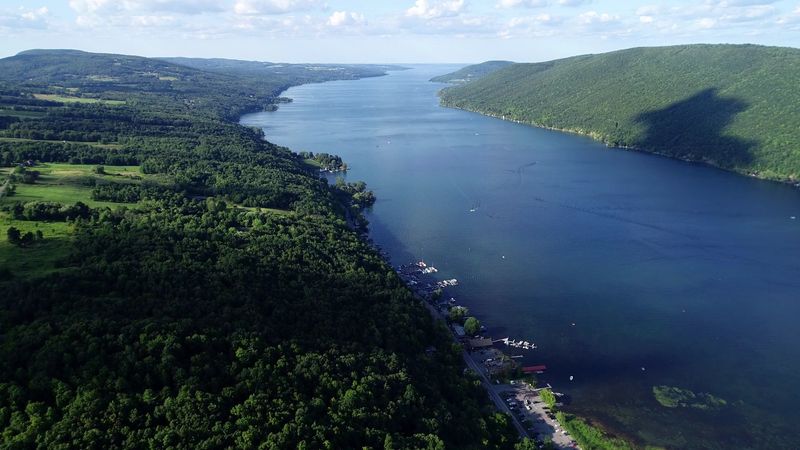
Sixteen miles of clean Finger Lake water, and the swimming access is genuinely excellent. Canandaigua makes clarity feel approachable rather than precious.
Kershaw Park anchors the north end with nine acres of green space, lakefront walkways, a bathhouse, a playground, and a proper beach. Families set up camp there for entire afternoons.
For a quieter dip, Deep Run Beach sits just outside the city along scenic East Lake Road, at 4279-4281 East Lake Road, Canandaigua, NY 14424. Parking is limited, so timing matters.
Roughly eight miles south of the city, Onanda Park offers another swimming area plus hiking trails climbing into the gorge above. Two very different experiences on one shoreline.
Keeping the water this clean takes ongoing work. Erosion and sediment control projects around the watershed stop soil from washing in and clouding things up.
The name comes from a Seneca word meaning the chosen spot. After one swim, the naming committee’s logic becomes obvious.
Sunlight hits the shallows and turns them a shade of green that belongs on a postcard from somewhere much warmer. Kershaw Park charges a small seasonal fee for beach access, worth knowing before you arrive.