
This New York Seafood Restaurant Just Earned Three Michelin Stars, And It’s Worth The Hype
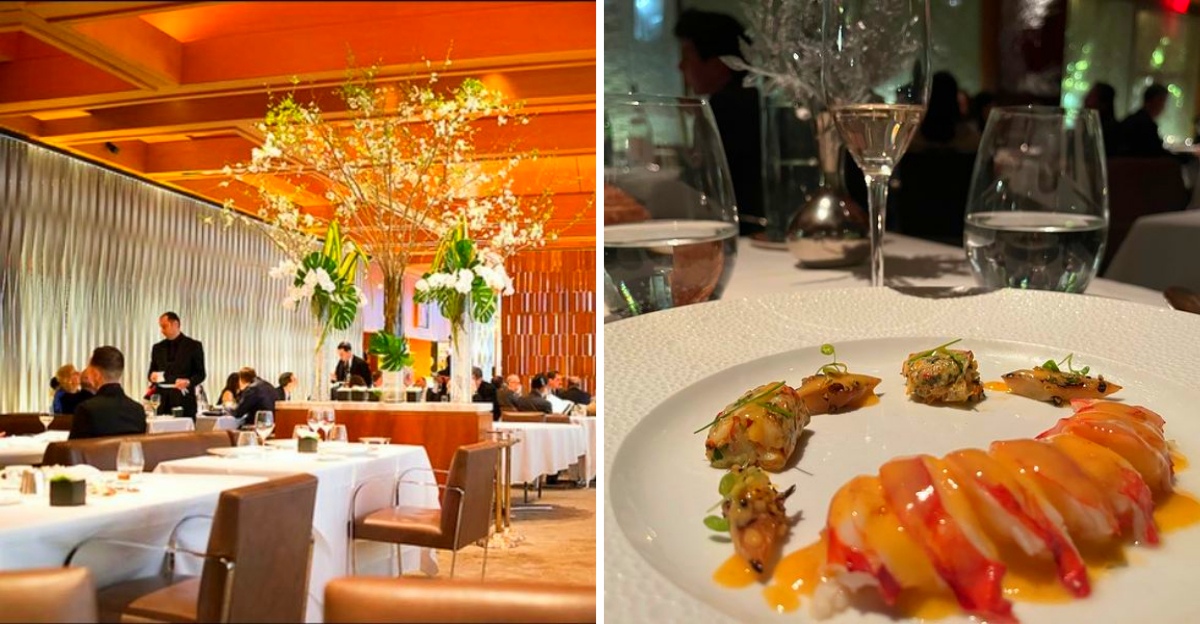
Three stars leave very little room for an off night. One seafood restaurant has lived with that pressure for years, yet dinner still feels calm instead of overly serious. New York sets a high bar here.
Fish arrives treated with remarkable care, and every course seems built around what the ingredient actually needs rather than how fancy it can look.
That restraint may be the most interesting part. Nothing needs to shout when the kitchen already knows exactly what it is doing. Service moves smoothly, the room stays relaxed, and the food gets your full attention without demanding it.
Holding Michelin’s highest rating year after year is difficult enough. Making the whole experience feel effortless is another trick entirely, and that may explain why the praise has lasted so long.
A Temple Built For The Ocean
Some restaurants shout. This one hums. The whole philosophy rests on a single idea: the fish is the headline act, and everything else plays backup.
Menus are grouped by how much heat the seafood sees. Almost Raw, Barely Touched, and Lightly Cooked. That structure tells you exactly where the kitchen stands on cooking fish.
Less fussing, more respect.
Diners in New York have plenty of options for a fancy night out. Very few offer this level of restraint. A scallop arrives sliced paper thin with watermelon radish and basil.
A piece of salmon rests over lotus root in a citrus broth. Nothing gets buried.
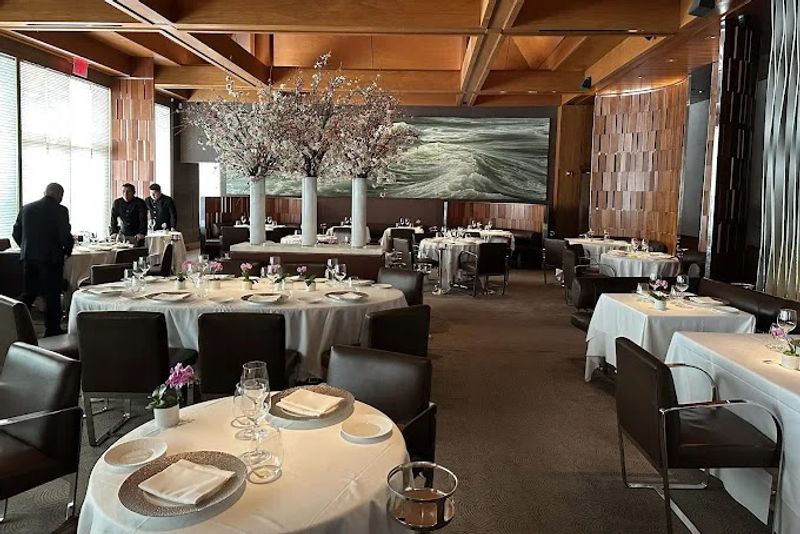
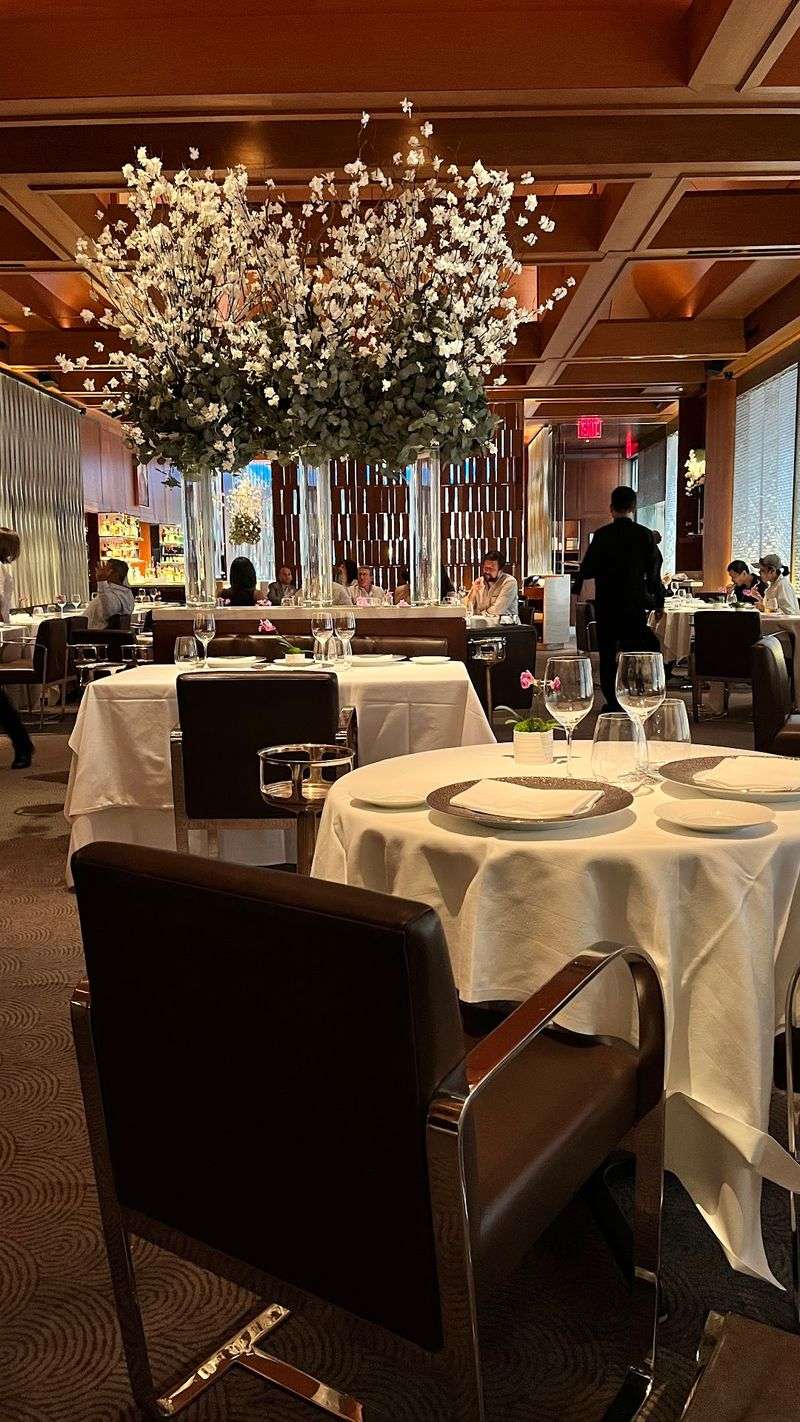
The dining room matches the food in mood. Soft lighting, neutral shades, warm wood, and an enormous painting of rolling green waves by artist Ran Ortner. The color palette borrows from sand, water, and driftwood.
Service moves quietly and knows when to step back. Coats are taken, questions are welcomed, and courses land at a pace that never rushes you. It feels grand without feeling starchy, which is a difficult balance to strike.
Meet Le Bernardin On West 51st Street
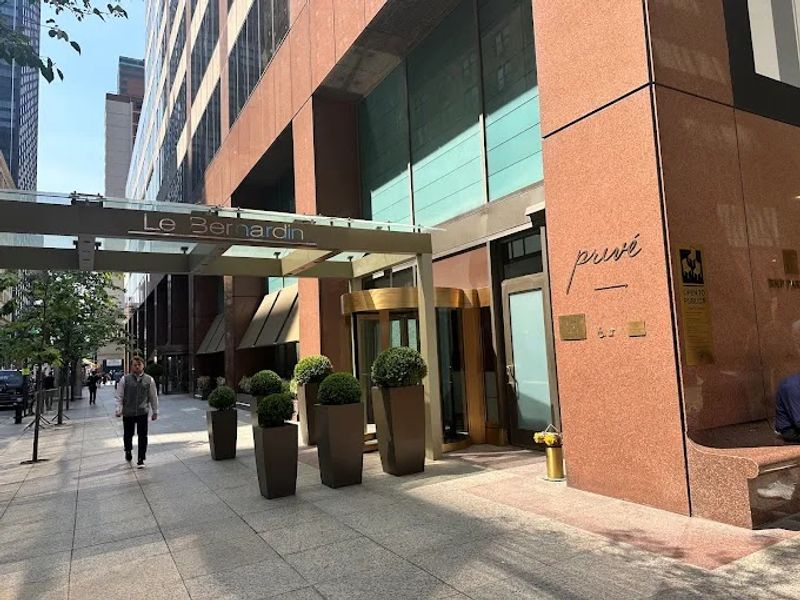
Now for the name. Le Bernardin sits at 155 W 51st St, New York, NY 10019, in the thick of Midtown Manhattan, a short stroll from Rockefeller Center and the theater district.
The story starts far from Times Square. Siblings Gilbert and Maguy Le Coze opened the first Le Bernardin in Paris back in 1972. It earned Michelin recognition there before the pair carried the concept across the Atlantic in 1986.
New York took to it immediately. The restaurant has held a four star rating from The New York Times since it opened, a run that has stretched past 35 years. No other restaurant in the city has managed that.
Reservations are the smart play, though the lounge accepts walk ins for lunch. Phone lines are open at 212-554-1515 for anyone who prefers a human voice over a booking form.
Lunch service runs weekday afternoons, and dinner fills the evenings. Sundays are quiet, since the doors stay closed. Plan around that, because showing up hungry to a locked door is nobody’s idea of fun.
Eric Ripert And The Calm Kitchen
Kitchens have a reputation for chaos. Not here. Executive chef and co-owner Eric Ripert runs his brigade with a steadiness that has become part of the restaurant’s identity.
Ripert grew up in Antibes on the French Riviera and trained under heavyweights including Joel Robuchon and Jean-Louis Palladin.
He joined Le Bernardin as chef de cuisine in 1991, took over as executive chef in 1994, and became co-owner in 1996 after Gilbert Le Coze passed.
His practice of Buddhism shapes the tone on the line. Voices stay low. Focus stays high.
That composure travels straight onto the plate, where nothing looks rushed or overworked.
He won the James Beard Award for Outstanding Chef in 2003, and his television appearances and cookbooks have made him a familiar face well beyond the restaurant world. Guests often mention how down to earth he seems.
Consistency is the real trick, though. Anyone can have one brilliant night. Holding a standard for decades takes systems, patience, and a team that actually enjoys the work.
That shows every time a plate lands.
Twenty Years Of Three Stars
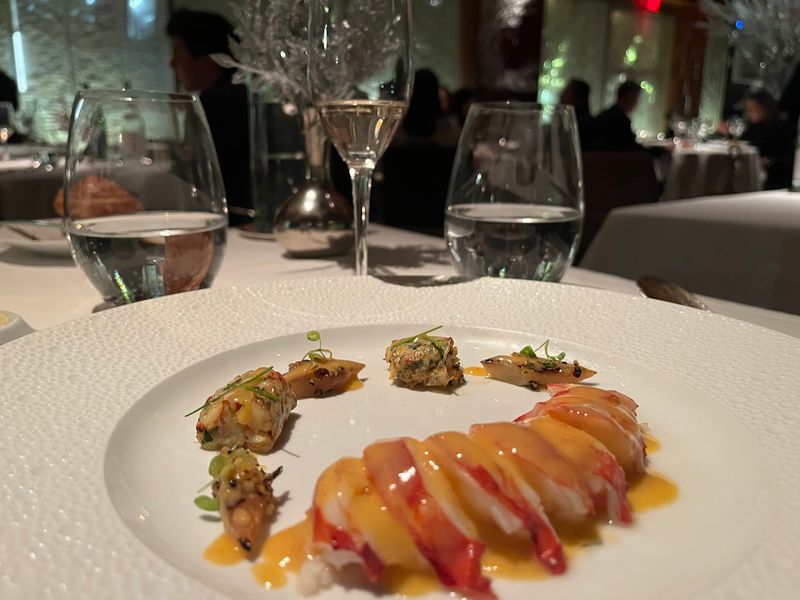
Here is the number that stops people. Le Bernardin has held three Michelin stars every single year since 2005, which was the very first year Michelin published a guide for New York City.
Three stars means the guide considers the cooking worth a special journey. Only a handful of restaurants worldwide reach that level, and even fewer hold it without interruption.
Inspectors visit anonymously and return often. Slipping is common. Places rise, wobble, and drop back to two stars all the time.
Two decades of steady three star status is closer to a marathon than a sprint.
The accolades pile up elsewhere too. James Beard named it Outstanding Restaurant in 1998, honored Maguy Le Coze as Outstanding Restaurateur in 2013, and recognized the room’s design in 2012. La Liste ranked it number one in the world in 2019.
A Global Recognition Award followed in 2025. Awards alone do not make dinner taste better, of course. What they signal is a kitchen that refuses to coast, and that reliability is exactly what guests are paying for.
Tuna, Foie Gras, And A Legend
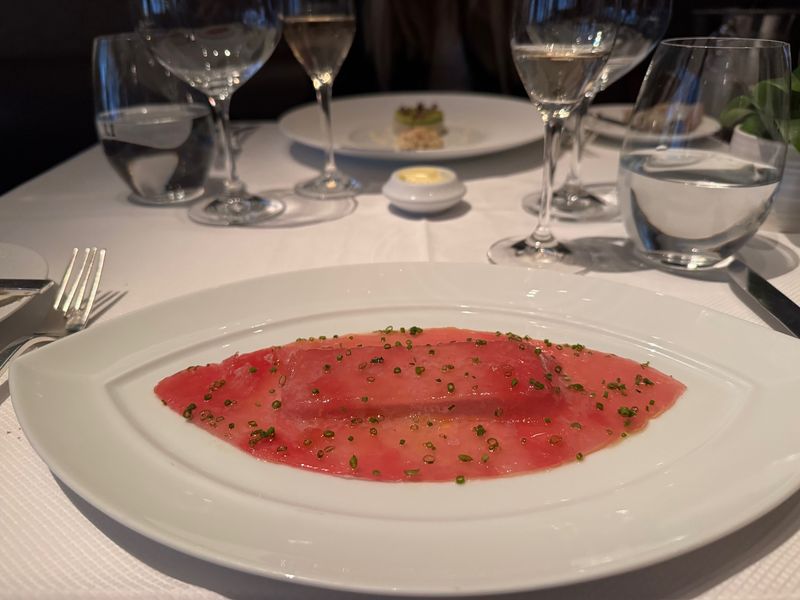
Ask regulars about the signature dish and one answer comes up again and again. Layers of thinly pounded yellowfin tuna sit over a toasted baguette spread with foie gras, finished with chives.
The tuna gets pressed until it is nearly translucent. That thinness matters. It lets the richness underneath come through without turning the whole bite heavy.
Texture is the sneaky star. Crisp bread, silky tuna, and the buttery layer between them create three sensations in one mouthful. Guests describe it as delicate and indulgent at the same time, which sounds contradictory until you try it.
The dish has been on the menu for years, and for good reason. Changing it would probably cause a small uprising among longtime guests.
Lunch in the lounge often includes a version at a friendlier price point, which makes it an accessible entry point for anyone curious about the kitchen without committing to a full tasting menu.
Order it early in your meal. The flavors are bold enough to set a tone, and the rest of the courses build nicely from there.
Scallops, Sea Urchin, And Other Showstoppers
Beyond the tuna, the menu holds several dishes that guests talk about long after they leave. The scallop paired with sea urchin comes up constantly, praised for tasting like the ocean in its purest form.
Dover sole and halibut represent the cooked side of the menu. Both arrive tender with a firm spring, never soft or falling apart. Getting fish to that exact point requires timing measured in seconds.
Poached lobster shows up with charred baby leeks and a saffron hollandaise. Sometimes truffle and chanterelles join instead. Either version leans rich without tipping over.
Skate gets a brighter treatment with jalapeno and radish salad alongside a roasted tomatillo and cilantro emulsion. That one surprises people who expect only classic French flavors.
Fluke arrives as a flash marinated ceviche with Thai basil, cilantro, and lime infused olive oil. Clean, sharp, and refreshing.
Vegetarians are not an afterthought either. A dedicated vegetarian tasting menu exists, built with the same attention as the seafood courses. Nobody at the table has to settle for a plate of sad steamed vegetables.
The Room That Feels Like Water
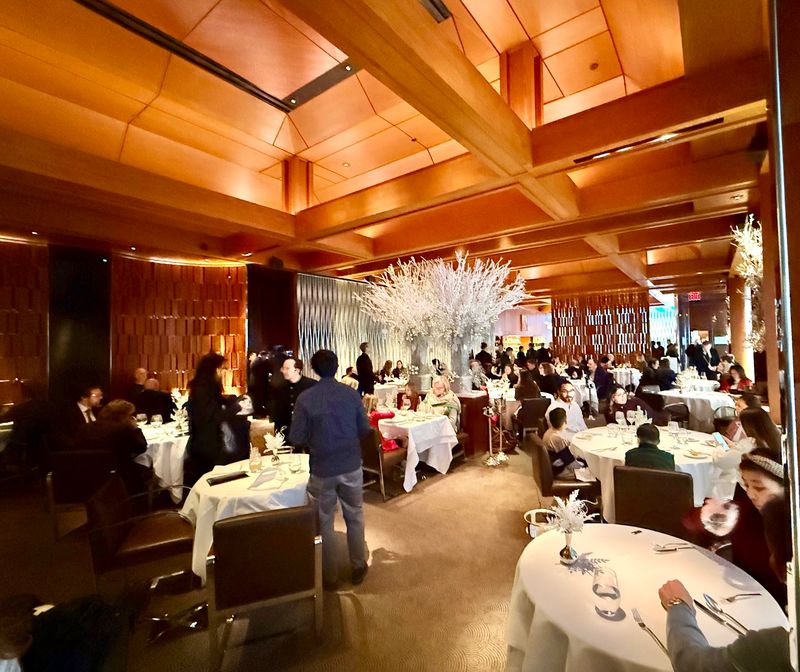
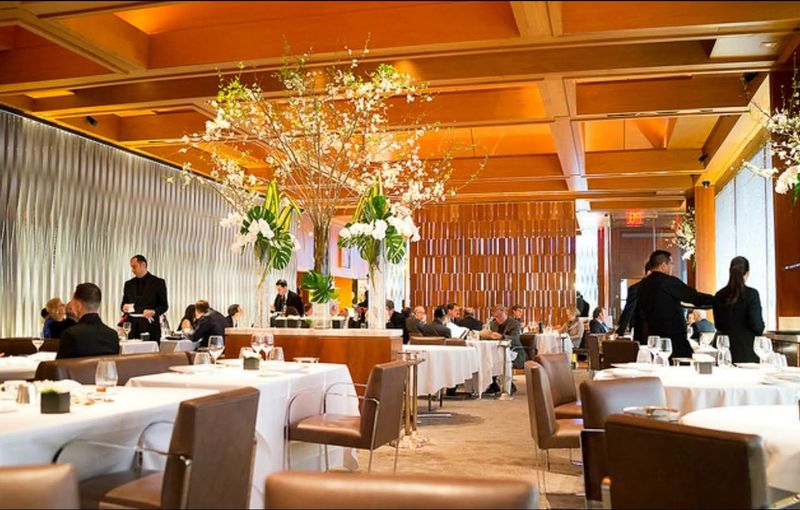
Design nerds have a lot to admire here. A major redesign in 2011 by architecture firm Bentel and Bentel reshaped the space with a specific goal: warm, welcoming, and serene all at once.
That renovation introduced a lounge area, the first in the restaurant’s history. It changed how people use the place. You can now stop in for a lighter meal without booking weeks ahead.
Colors borrow directly from the shoreline. Sand tones, water blues, and driftwood grays run through the materials. Rich wood accents keep everything grounded.
The centerpiece is a massive painting by Ran Ortner showing rolling green waves. It anchors the room and quietly reminds everyone what the kitchen is celebrating.
White tablecloths and comfortable seating complete the picture. The lighting sits low enough to feel intimate but bright enough to actually see your food, which more restaurants should figure out.
The design work earned a James Beard Award for Best Restaurant Design in 2012. Sitting in that room, the honor makes sense. It feels considered rather than decorated.
Sweet Endings Worth Saving Room For
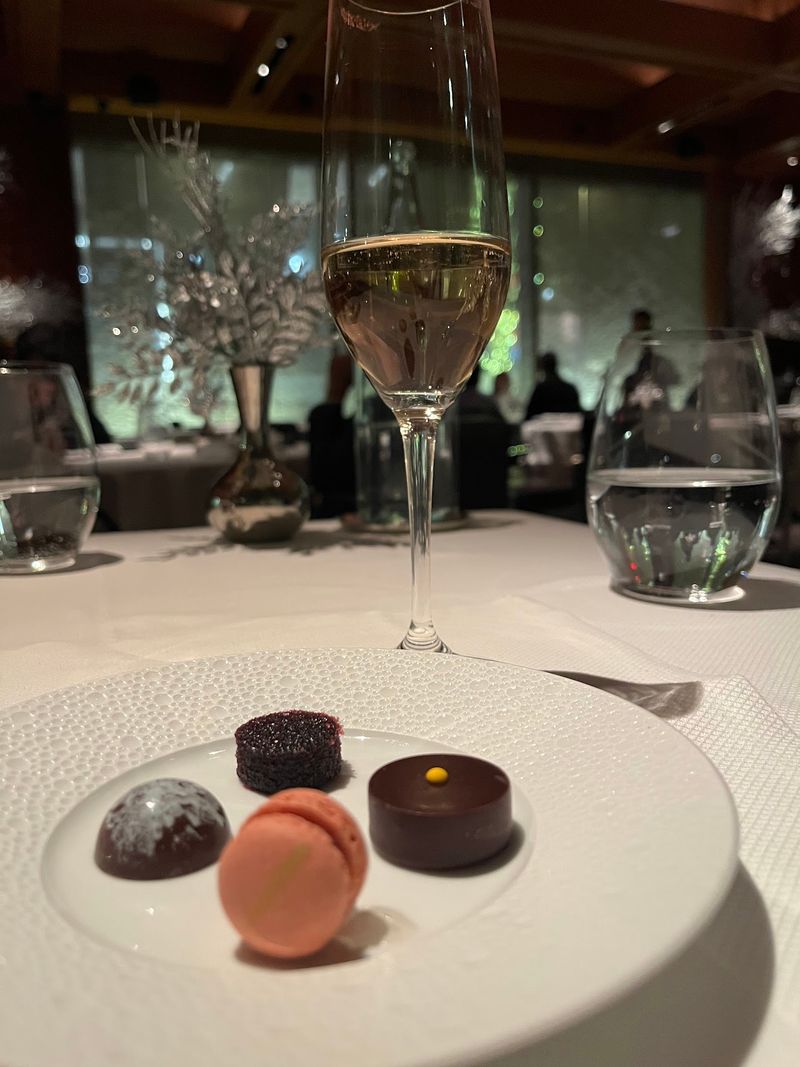
Seafood may be the reason people come, but the pastry team refuses to be forgotten. Desserts here land with the same precision as the savory courses.
A warm Peruvian dark chocolate tart with Tahitian vanilla ice cream is a frequent favorite. Deep, smooth, and balanced rather than overly sugary.
Pistachio appears in multiple forms on one plate, including praline and a Grand Marnier bavarois. Each component brings a different texture, and the ice cream version tends to steal the show.
Seasonal fruit desserts rotate through as well. A peach and cottage cheese preparation surprised plenty of guests who did not expect that combination to work so beautifully.
Macarons and petit fours arrive at the end, sometimes packaged in a box to take home. That small gesture stretches the evening into the next morning.
Celebrating something? The kitchen has been known to send out a complimentary cake, and the carrot cake in particular has earned serious praise.
Ending on dessert here feels less like a formality and more like a proper finale. Save room, seriously.