
This Under-The-Radar Tennessee Park Might Be The Best Place To See A Black Bear In The Wild
Something is moving through the trees in this part of Tennessee, and it isn’t a deer. This park sits deep in the Cumberland Plateau, next to one of the largest protected wilderness areas in the state.
Bears here aren’t a rumor. They show up often enough that the park doesn’t even use trash cans, asking visitors to pack out their own garbage instead.
Rangers post regular alerts when sightings pick up. Mornings and evenings tend to bring the most activity, especially near berry patches and quiet trailheads.
The terrain helps keep things calm too, with steep ridges and thick forest giving bears plenty of space to roam without much human contact. Campers often mention encounters that happen right at their site, sometimes in the middle of the night.
It’s a reminder that this land still belongs to something wild. Bring bear safe food storage, stay alert on trails, and keep a respectful distance.
Tennessee has bear country, and this park sits right in the middle of it.
Black Bears Really Do Show Up Here
Acorns are the secret ingredient. Bears at this park have been spotted foraging for them close to the Visitor Center, which is about as convenient as wildlife watching gets.
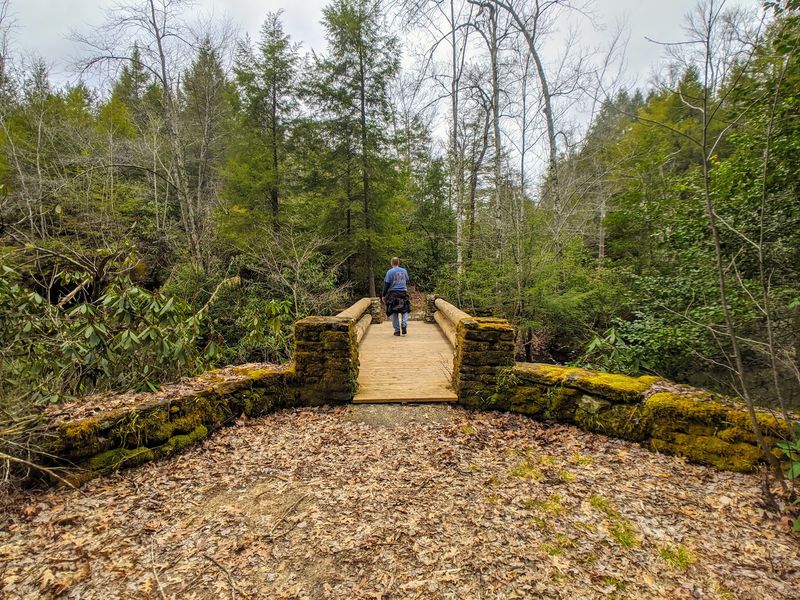
One sow and her three cubs were seen browsing on sassafras berries inside the park boundaries. Sightings have also happened along the Hidden Passage Trail and the Natural Bridge Trail, two of the most walkable paths here.
The American black bear population across the Upper Cumberland region is growing, and Pickett CCC Memorial State Park sits right in the middle of that expansion. Bears are moving in, settling down, and raising cubs in this stretch of Tennessee forest.
Timing helps your odds. Late summer and fall bring heavy feeding as bears fatten up, so berries and acorns pull them out into the open.
Keep a healthy distance and never leave food unattended. Campers here have heard bears sniffing around tents at night, which is a reminder that proper food storage matters more than a good photo.
Bring binoculars and patience instead of expectations. Wildlife runs on its own schedule, and the quiet mornings and early evenings tend to be your best window.
Even without a sighting, the tracks and claw-marked trees tell you plenty about who else uses these woods.
Somehow This Spot Stays Off The Radar
Being overshadowed has its perks. The 125,000-acre Big South Fork National River and Recreation Area sits right next door, and most travelers head straight there.
That leaves this 922-acre park refreshingly uncrowded. It has earned the nickname Tennessee’s Best Kept Secret, and the label fits better than most marketing slogans.
The address is 4605 Pickett Park Hwy, Jamestown, TN 38556, in Pickett County northeast of Jamestown. It sits in the north-central part of the state, deep in the upper Cumberland Mountains.
Surrounding it is the 19,200-acre Pickett State Forest, which creates a wide buffer of unbroken woodland. That buffer is exactly why bears, birds, and other wildlife move through so freely.
Small size works in your favor as a traveler. You can see the headline features in a single day without a punishing hike or a shuttle bus.
Cell reception drops off in many spots, so download your trail maps before you arrive. That lack of signal is part of the appeal for anyone who wants a real break from screens.
Arrive early on weekends anyway. Even a quiet park gets busier once word spreads, and the best parking spots near trailheads fill first.
Hazard Cave And Its Glowing Residents
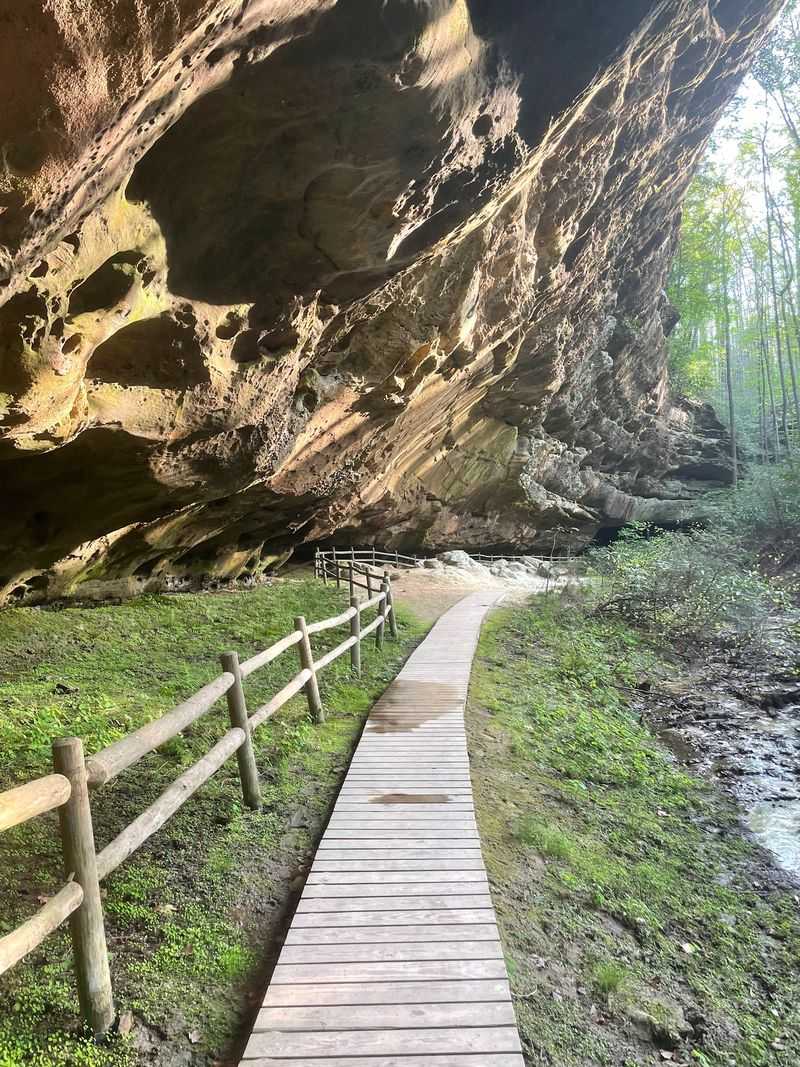
Not every cave is a cave. Hazard Cave is actually an enormous sandstone overhang, a rock shelter so wide it makes hikers look like ants.
The trail to reach it is moderate and family friendly. Late afternoon light filters into the shelter and turns the sand a warm gold, which photographers appreciate.
Here is the part that surprises people. This park is one of the few places in North America where you can watch bioluminescent glow worms, and Hazard Cave is the star location.
These tiny creatures give off a blue-green light along the damp rock walls. They are most active from late May through late June, when the nights are warm and humid.
Rangers lead nighttime cave tours during glow worm season, roughly May through July. Lantern-guided walks add context, and rangers often point out salamanders and other small residents along the way.
Reserve your spot early because these programs are popular and group sizes stay small. Bring sturdy shoes and a red-filtered flashlight if you have one.
Give your eyes several minutes to adjust once the lights go out. The glow is subtle at first, then it seems to multiply across the stone.
Stargazing Under A Certified Dark Sky
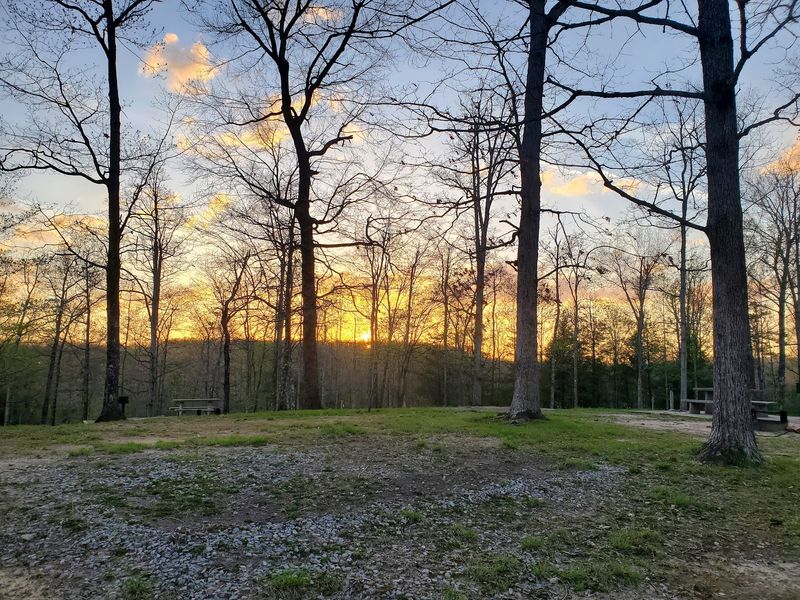
Silver-tier sounds like a trophy, and in a way it is. In 2015 this became Tennessee’s first International Dark Sky Park and the only one in the Southeast at the time.
Light pollution here is minimal, which means the Milky Way shows up plainly on moonless nights. You can pick out the galactic core stretching above the tree line with your own eyes.
There is an astronomy field at the Pogue Creek Canyon State Natural Area parking lot on Highway 154. It is a short drive from the park and gives you an open horizon.
Meteor showers are the big draw. Plan your trip around one and you will understand why people book cabins months ahead.
Dress warmer than you think you need to. Plateau nights get chilly even after mild afternoons, and standing still makes it feel colder.
A tripod turns a phone into a decent astrophotography tool. Long exposures pull out star colors your eyes cannot catch.
Check the moon phase before booking. A full moon washes out the faint detail, while a new moon delivers the full show across this corner of Tennessee.
Arches, Bridges, And Sandstone Oddities
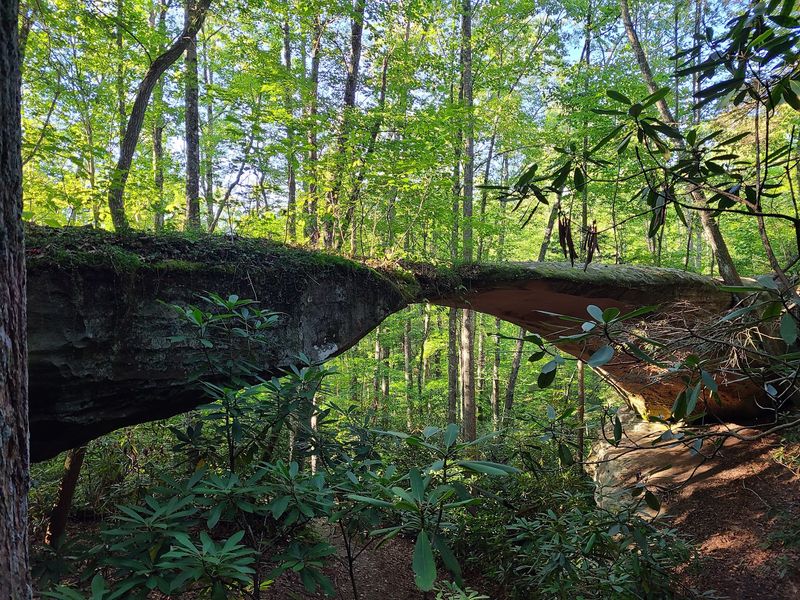
The Cumberland Plateau is a geology classroom without walls. Dramatic sandstone cliffs, deep gorges, caves, and natural rock arches all show up within a short radius here.
Natural Bridge is the headliner, a stone span shaped by water and time. Another natural sandstone bridge arches over Arch Lake, which is where the lake got its name.
Several formations sit close to the road. That makes them reachable for anyone who would rather not commit to a long hike, including families with small children.
Indian Rock House is another worthwhile stop. Its trail is short and delivers a big payoff in the form of a broad overhanging shelter.
Elevations in the surrounding mountains climb to roughly 2,200 feet. The ups and downs create the overlooks and rock ledges that give the trails their character.
Trail closures happen after storms, so check conditions at the park office before you set out. Rangers there know exactly what is open and what needs a detour.
Wear shoes with real tread. Sandstone gets slick when damp, and morning dew lingers under the tree canopy well past sunrise.
Crystal Falls And The Hidden Passage Trail
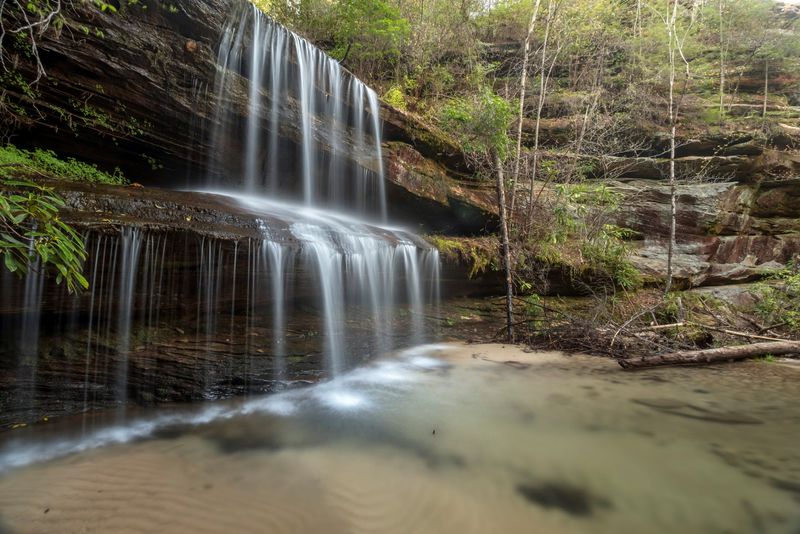
Waterfall hunters, take note. Crystal Falls drops in two tiers and stands roughly 30 feet tall, hiding along the Hidden Passage Trail. The falls run strongest after rain and during spring runoff.
Summer can slow the flow, so time your walk with the weather if the cascade is your main goal.
Hidden Passage is also one of the trails where bears have been reported. Make a little noise as you walk and stay alert around berry thickets and oak groves.
The path threads between rock walls and beneath overhangs, which is how it earned its name. Shade keeps things cool even on warm afternoons.
Over 100 bird species live across this ecosystem, and the ravines near the falls are prime listening spots. Bring a bird app or just stop and let the sound wash over you.
Warm summer nights add another layer with synchronous fireflies blinking through the forest. Rangers lead night hikes during firefly season, which is a completely different experience from the daytime version.
Pack more water than feels necessary. There are no refill points once you are deep on the trail.
The Civilian Conservation Corps Legacy Built In Stone
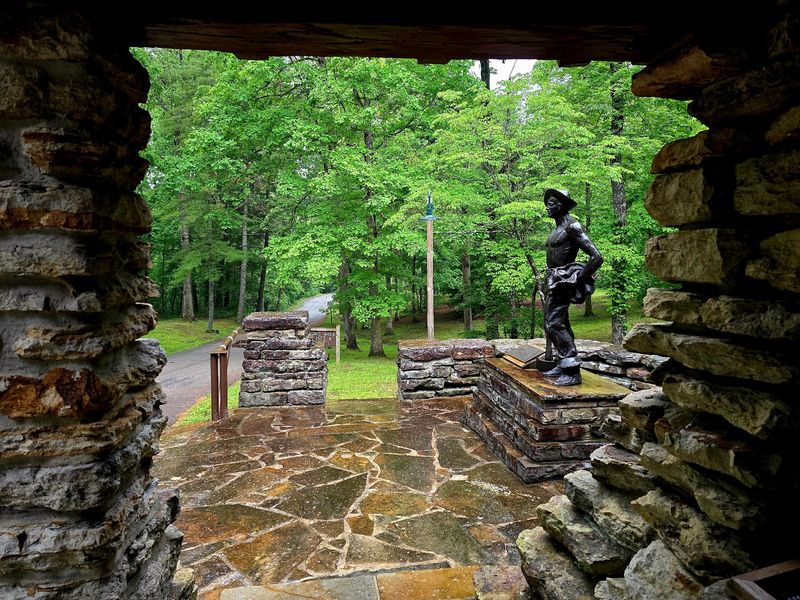
Every stone here has a story. Between 1934 and 1942, Civilian Conservation Corps crews built the trails, cabins, recreation lodge, ranger station, and the 12-acre Arch Lake.
The land came from the Stearns Coal and Lumber Company as a donation. Workers quarried sandstone locally, which is why the buildings look like they grew out of the ground.
Those original facilities are listed on the National Register of Historic Places. The park was renamed Pickett CCC Memorial State Park to honor the men who did the work.
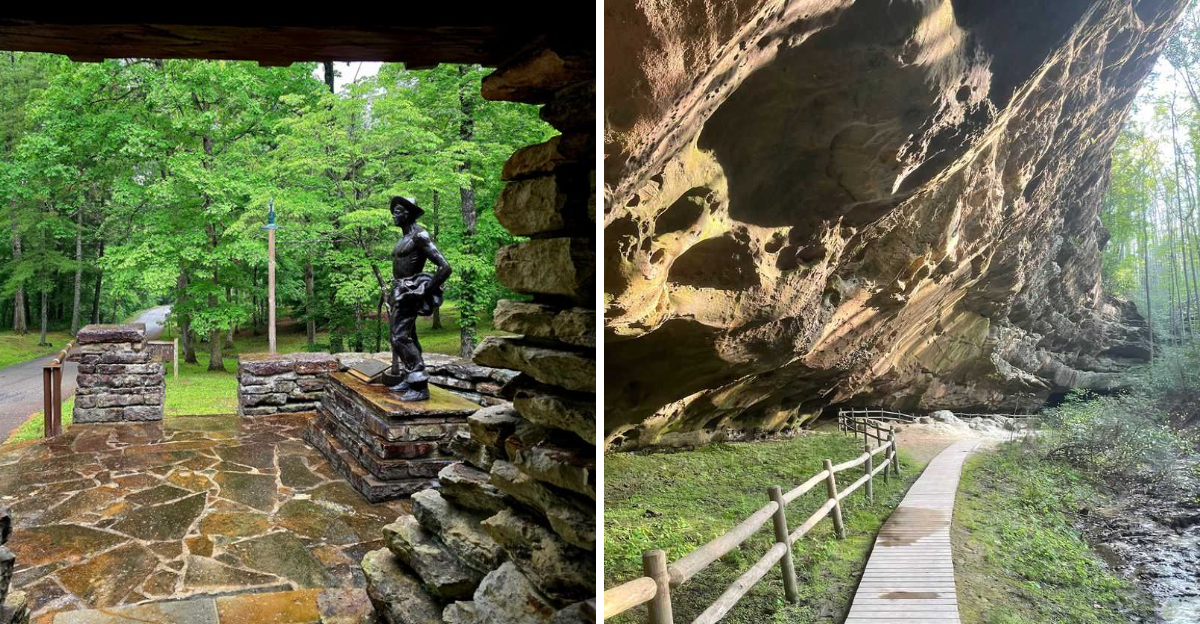
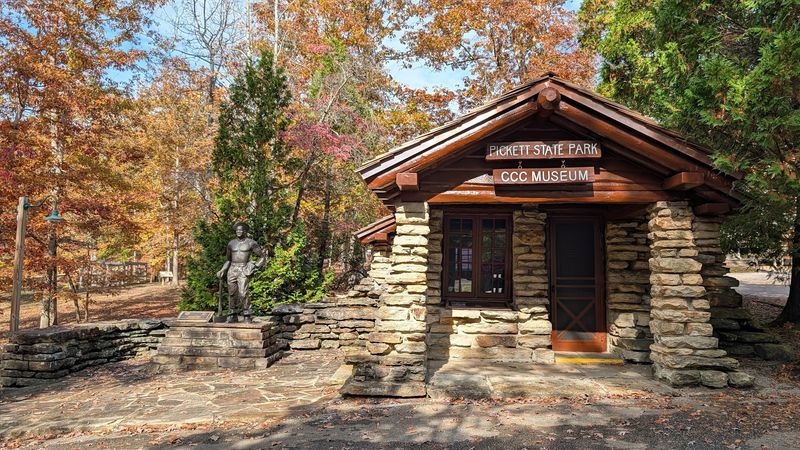
A museum and a statue at the entrance carry that story forward. The museum is small but packed with detail, and rangers there love to fill in the gaps.
You can also sleep inside the history. Historic rustic cabins with stone walls and covered porches are available, and some have been updated with modern comforts.
Bear education happens at the CCC Museum too, through programs called Bears at Pickett. It is a smart stop before you head out on the trails.
Give yourself thirty minutes indoors. Understanding who shaped these grounds makes every trail feel different on the way back.
Here’s How To Plan Your Visit Around Arch Lake
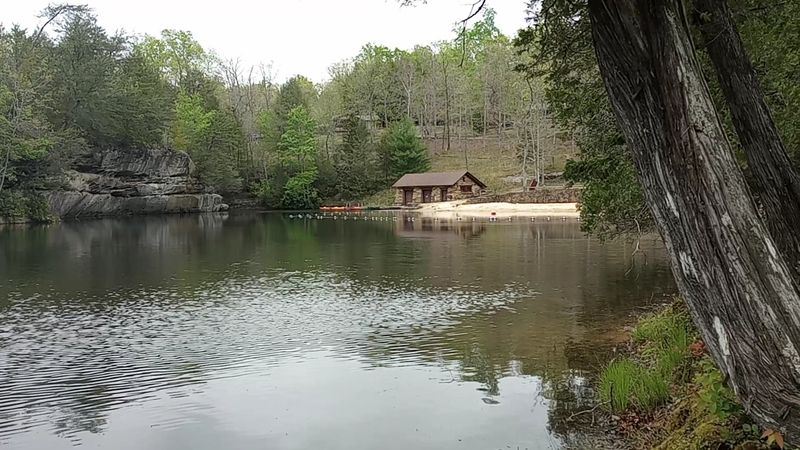
Twelve acres of calm water anchor the whole park. Arch Lake handles kayaking, canoeing, fishing, and swimming without ever feeling crowded.
Trout fishing is a known draw here. Rentals are available if you did not haul your own boat across the state.
Swimming season runs from Memorial Day through Labor Day at the designated beach area. Picnic tables and a playground nearby make it an easy base for families.
Campers have 27 pet-friendly sites for tents and RVs, with water hookups and electricity at some. The sites suit tents and smaller campers better than large rigs.
The Lake Trail and Island Trail loop around the shoreline and cross a swinging bridge. Most of it is moderate, though a few short sections near the bridge get steep and slippery when wet.
Park hours run 8 AM to 4:30 PM daily, and the phone number is 888-867-2757 for reservations and trail updates. Horseback riding and mountain biking round out the options.
Store all food securely, especially overnight. Doing that keeps bears wild and your trip smooth, which is the whole point of coming to this quiet slice of Tennessee.