
This Overlooked Nevada Park Could Be The Ultimate Spot For Wild Bighorn Sheep
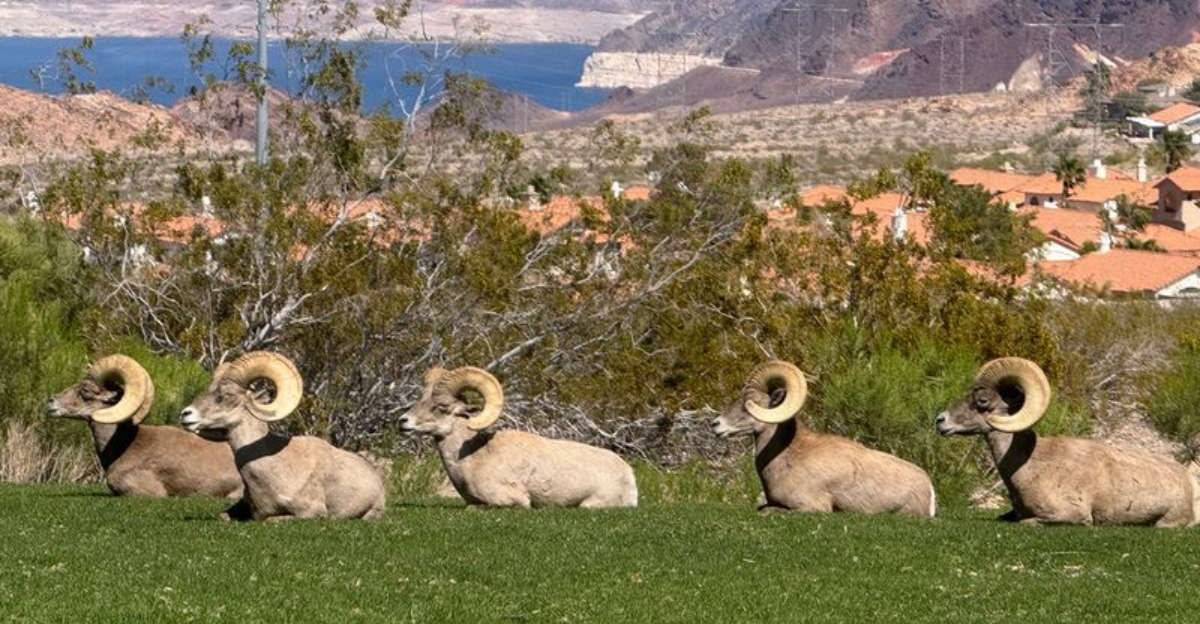
Curled horns, muscular shoulders, and a stare too calm to belong on a fully wild animal.
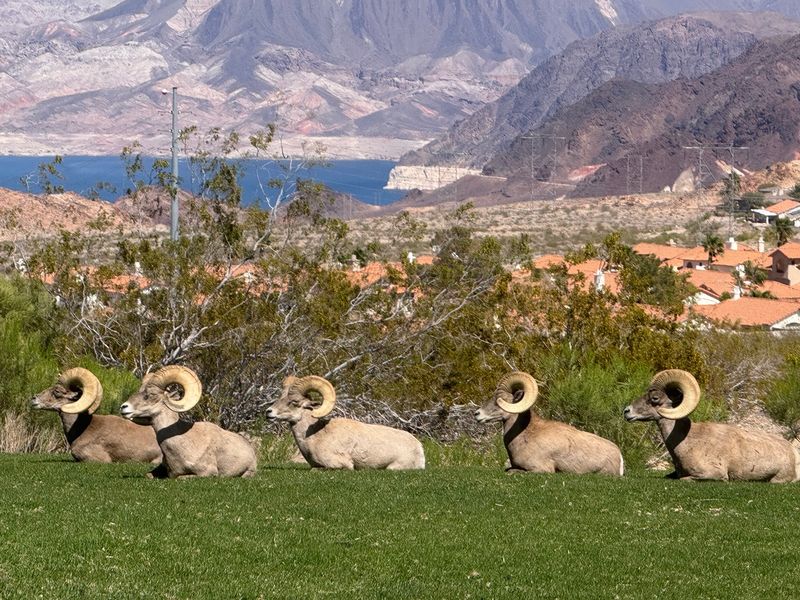
That calm belongs to Nevada’s official state animal, grazing right off an overlooked stretch of grass most people drive straight past.
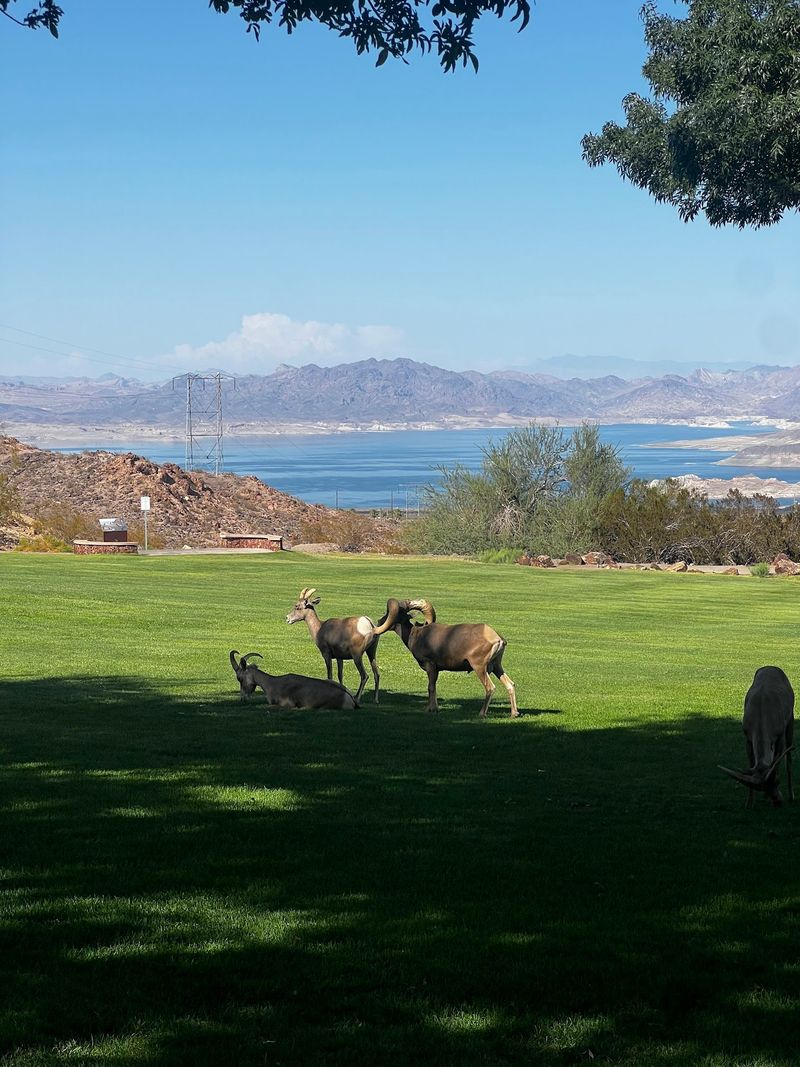
Steep desert cliffs rise right behind it, yet the herd chooses open lawn instead, with a lake glittering just past the trees.
Nothing separates you from the herd. No feeding, no chasing, just rams grazing and lambs staying close to their mothers.
Families spread blankets on the grass while photographers wait patiently for one perfect close-up shot.
Nevada rarely hands out wildlife views this easy, and that is exactly why word keeps spreading.
Bring a zoom lens and a little patience. This wild encounter is worth planning a whole afternoon around.
Grass That Pulls Sheep Off The Mountain
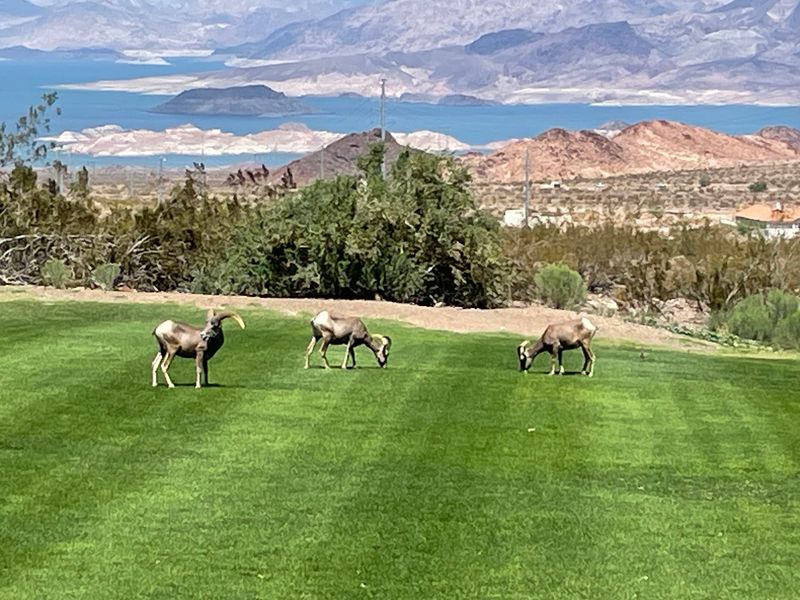
Green grass in the middle of a dry desert works like a dinner bell. That is the simple secret behind Hemenway Park and its famous visitors.
Desert bighorn sheep live in the rugged River Mountains just behind the park. Those slopes offer thin, tough vegetation and very little water.
The park, meanwhile, keeps its lawns irrigated and trimmed. Sprinklers add moisture the sheep also drink from, which matters enormously in summer heat.
So the herd walks downhill, crosses into town, and settles onto the turf. They graze, rest in shade, and eventually head back up the rocks.
The full address is 401 Ville Dr, Boulder City, NV 89005, sitting just north off the highway that leads toward Lake Mead. Parking sits close, so the walk from car to viewing spot stays short.
Nothing here is staged or fenced. These animals are wild and choose to come, which means sightings are likely but never promised.
That uncertainty is part of the fun. Visitors who arrive at the right hour often find a whole group sprawled across the lawn, entirely unbothered by the crowd nearby.
Meet Nevada’s Official State Animal
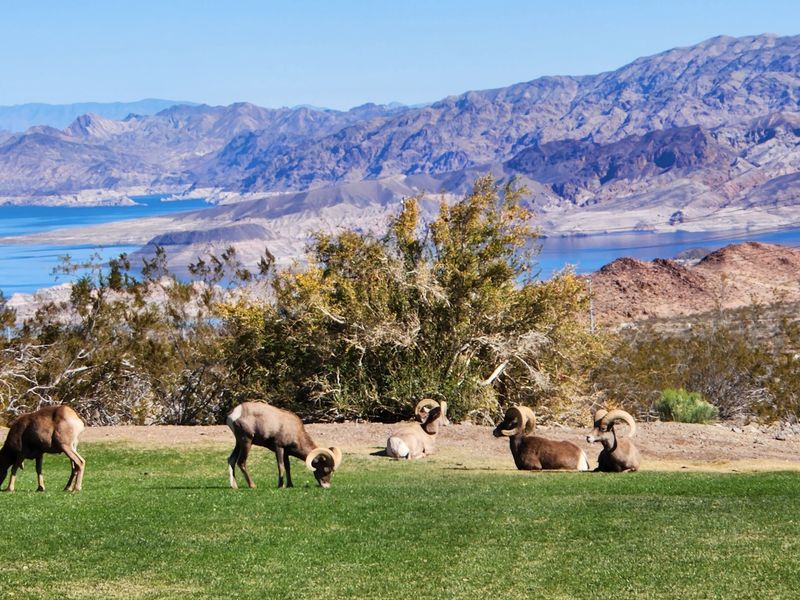
Curled horns, muscular shoulders, and a completely calm stare. The desert bighorn sheep earns every bit of its reputation.
Nevada named this animal its official state mammal, and few places let you study one so easily. Rams carry the heavy, spiraling horns that photographers chase.
Ewes have shorter, thinner horns that curve back only slightly.
Both sexes handle steep rock with startling skill. Their hooves grip surfaces that would send most animals sliding.
At Hemenway Park they trade cliffs for lawn, which makes the contrast almost comic. A creature built for canyon walls lies down beside a basketball court.
Look closely and you notice small details. Lambs stick near their mothers.
Younger rams test each other with light head bumps.
Coats blend into desert tan, so a resting group can vanish against dry brush uphill.
Learning a little about them changes the visit. Instead of just snapping photos, people start reading behavior and noticing who leads the group.
Fun bit of trivia: these sheep can go long stretches without drinking, which explains how they survive summers in the surrounding mountains.
Morning Light Or Late Afternoon, Pick Your Window
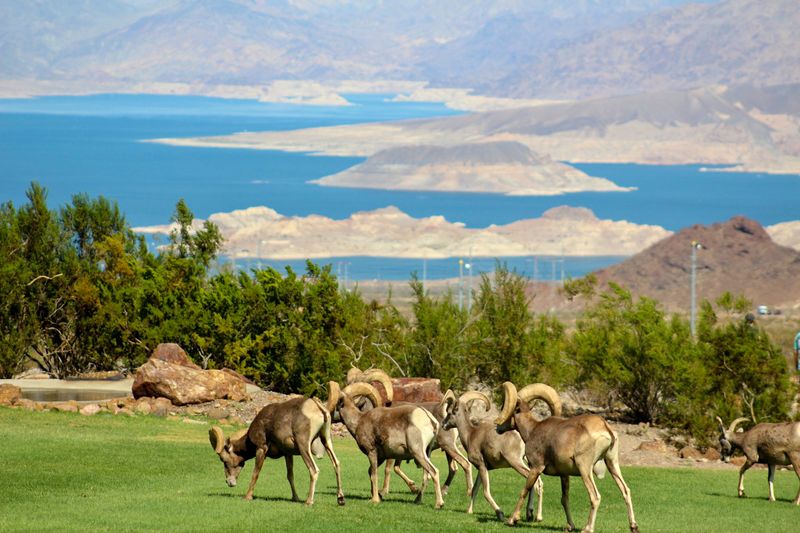
Show up at noon in July and you may see nothing but empty lawn. Timing shapes this entire experience.
The sheep move most during cooler hours. Early morning and the stretch before sunset give the best odds.
Season matters too. Sightings happen most often between April and October, and hot summer months tend to bring larger numbers because mountain plants dry out.
After heavy rain, wild vegetation greens up on the slopes. The herd then has less reason to walk down to Hemenway Park.
Shade plays a role as well. On warm afternoons, the group often gathers under trees rather than out in open sun.
Patience beats schedules here. Some visitors wait twenty minutes and see the whole herd stroll in from the hillside.
Bring water, a hat, and a camera with decent zoom. Desert sun in this part of Nevada does not negotiate.
Plan a flexible stop rather than a fixed appointment. If the lawn sits empty, the lake views and walking paths still reward the detour, and the sheep may simply arrive later that same day.
Lake Mead Views From A Hillside Lawn
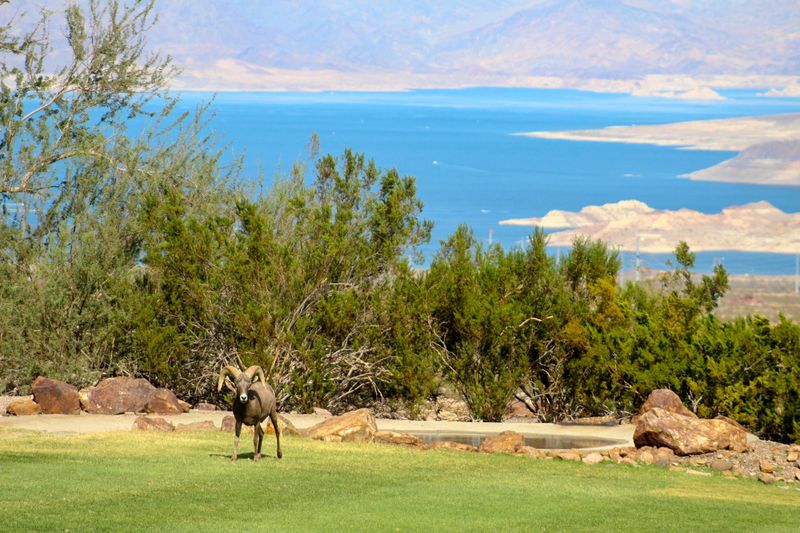
Even without a single sheep in sight, the view earns the drive. The park sits on a rise, and Lake Mead spreads out below.
Blue water against bare brown mountains creates a striking picture. The reservoir lies roughly five miles away, close enough to dominate the horizon.
Benches face the scenery, which encourages long, lazy sitting. Photographers love the layered look of grass, desert, then water.
Light changes everything through the day. Mornings feel soft and pale, while evenings push orange and pink across the ridges.
Hoover Dam hides just out of sight beyond the hills. Many visitors combine both stops since the park sits on the route down toward the lake.
Wind can pick up on the open slope, so a light layer helps in cooler months.
Picnic blankets work well on the turf. Families spread out, eat, and keep one eye on the hillside for movement.
Few small city parks anywhere in Nevada offer this combination of water views and grazing wildlife, which explains why word about Hemenway Park keeps spreading among travelers.
Playgrounds, Courts, And Picnic Shelters
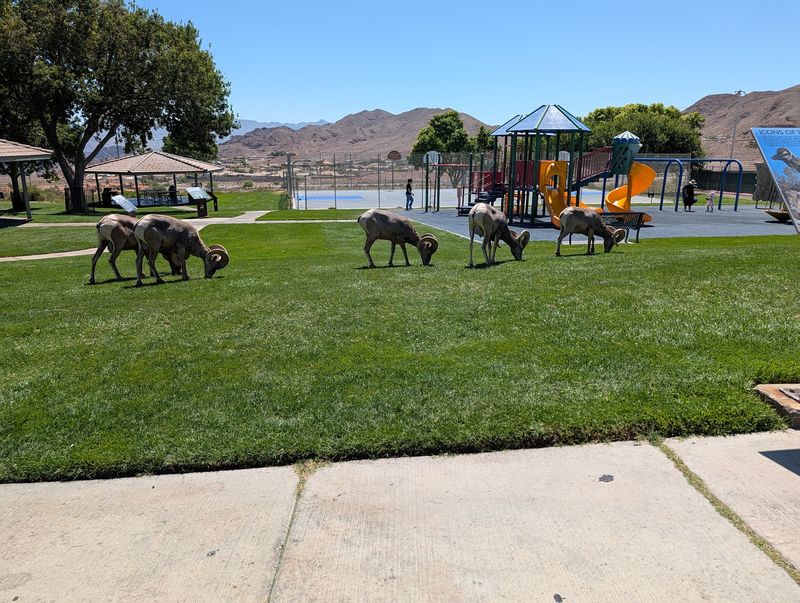
The sheep steal the show, but the park itself keeps everyone busy. Ten acres hold a lot more than lawn.
Kids gravitate to the playground with its slides and swings. Open grass gives them room to run without bothering anyone.
Sports fans find two lighted tennis courts and basketball courts. Horseshoe pits sit nearby for slower competition.
Two lighted softball fields occupy an adjoining flood control basin behind the main area.
Covered gazebos and picnic tables bring welcome shade, and barbecue grills make lunch plans easy. Restrooms are available, which matters on family trips.
Parking includes a lot plus angled street spaces, though busy weekends fill up fast.
Trees scattered across the lawn give both people and animals somewhere cool to settle.
City funding was secured in 2020 for renovation work, part of ongoing care for the grounds.
All of it means Hemenway Park functions as a real neighborhood hub, not just a wildlife stop. Locals play here daily, and tourists slot in beside them without disrupting the rhythm of the place.
Watching Wildlife The Right Way
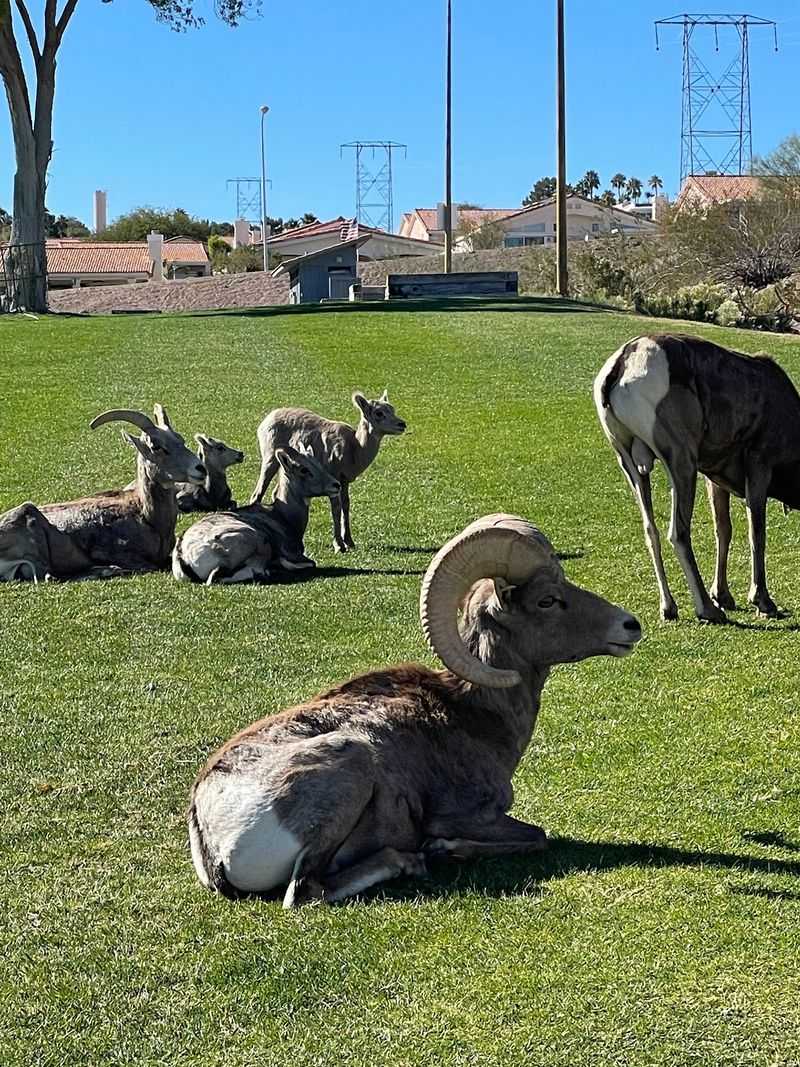
Calm does not mean tame. Every sheep on that lawn remains a wild animal with wild instincts.
Park guidance asks visitors to keep a respectful distance. Approaching, touching, or feeding the herd is not allowed.
Feeding causes the most harm. Animals that learn to expect handouts change their behavior and can become dependent or bold.
Rams also carry serious weight and strength. Crowding them creates risk for people, especially children playing nearby.
Zoom lenses solve the problem neatly. Stay back, stay quiet, and the photos still turn out well.
Dogs are prohibited under Boulder City ordinance specifically to protect the sheep. Leaving pets at home is part of the deal.
Noise matters as well. Sudden shouting or running can scatter a resting group in seconds.
Health is a real concern too. A pneumonia outbreak affecting the River Mountain herd since 2013 reduced how many sheep visit, so limiting stress on the animals carries extra weight.
Good manners keep this rare arrangement alive. Visitors who follow the rules help ensure the herd keeps choosing to come back to Hemenway Park.
Check The Ram Cam Before You Drive
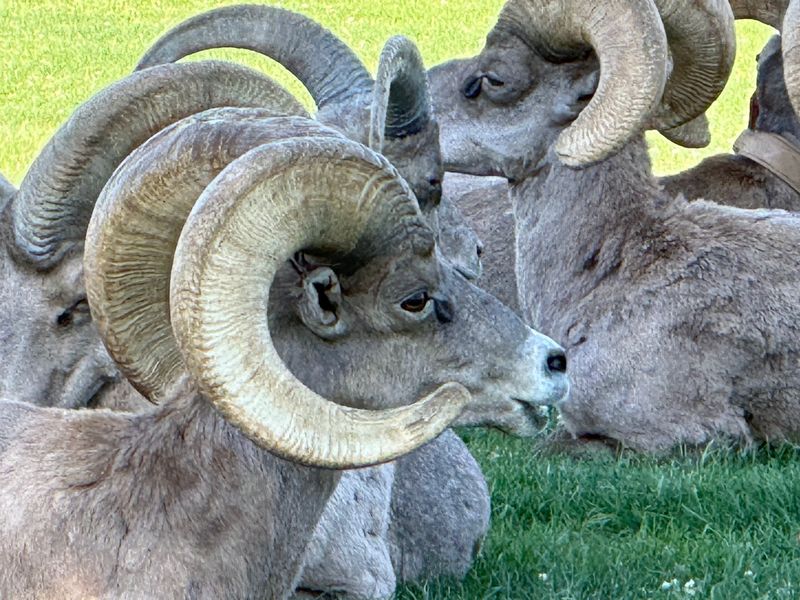
Smart move before setting out: peek at the live camera. Boulder City installed a webcam nicknamed the Ram Cam, streaming a view of the park around the clock.
The feed launched in 2023, and it changed how people plan a visit.
The camera also lets faraway fans watch without traveling at all. Teachers, wildlife enthusiasts, and curious kids all tune in.
A quick check saves fuel and frustration, especially for anyone driving over from the Las Vegas area.
Keep expectations reasonable. Camera angles cover part of the park, so sheep might be resting just outside the frame.
Still, it beats blind hope. Pair the live view with the cooler morning and evening hours for the best shot at a sighting.
Technology quietly serving desert wildlife feels like a small win. It reflects how seriously this Nevada town treats its most famous four-legged guests.
A Short Nature Trail Worth Strolling
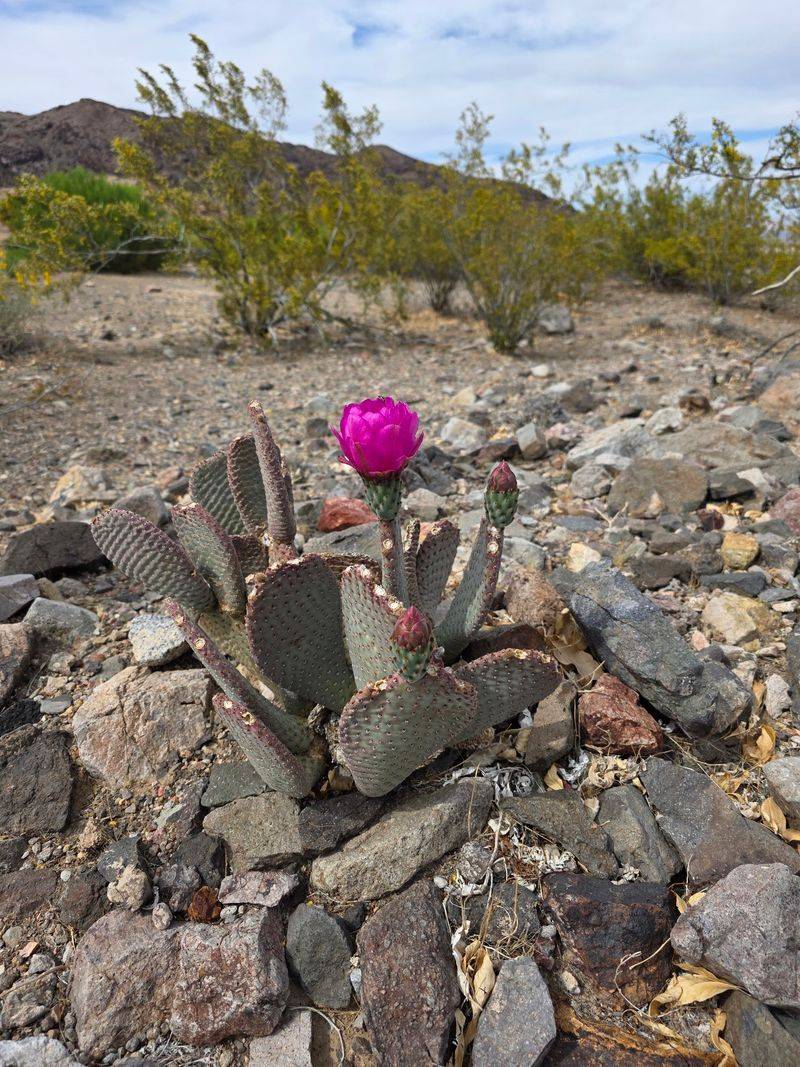
Short, easy, and packed with small discoveries. A nature trail loops through the park past desert plants.
Benches appear along the way for anyone who wants to sit and scan the hillside. Signs explain what grows here and why it survives.
Length suits young walkers perfectly. Families finish the loop without complaints about tired legs.
Desert shrubs, gravel, and low brush line the path. The plants look plain at first glance, then reveal texture and detail up close.
Real shoes are the smart choice. Rocky ground and desert habitat mean snakes and scorpions live in the area, so staying on the trail makes sense.
The route also offers different angles on the lake and mountains. Photographers often find better framing here than from the parking area.
Sheep sometimes wander near the path, coming down from the slopes. Keep distance and let them pass.
Slow walking pays off at Hemenway Park. The trail turns a quick photo stop into a proper outing, teaching a bit about how desert life manages in a very tough neighborhood.
Rabbits, Quail, And Other Neighbors
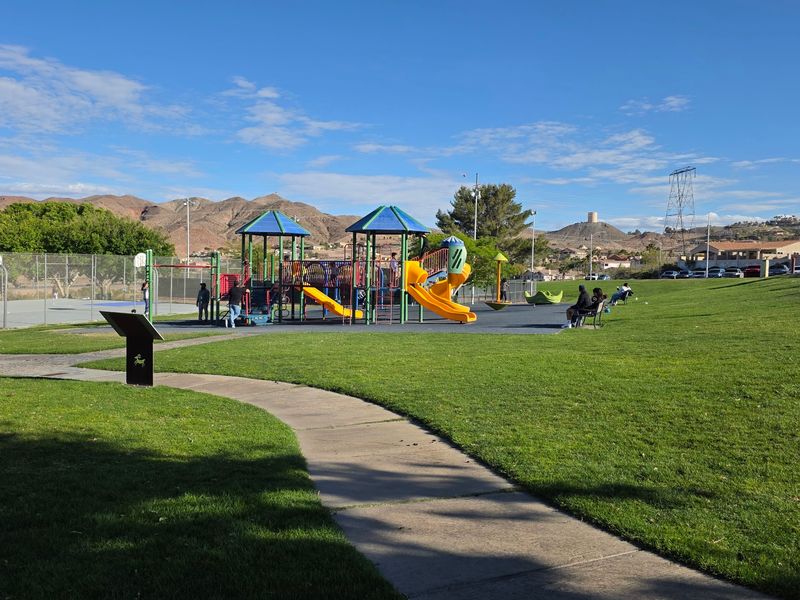
The sheep hog the spotlight, yet plenty of other animals share the grounds. Look low and slow.
Rabbits bolt between bushes with sudden bursts of speed. Quail travel in small groups, chattering as they go.
Roadrunners dash across open ground, all legs and attitude. Hawks circle overhead, scanning the desert edge.
Bird watchers do well here even on days when no sheep appear. The mix of watered lawn and dry desert attracts a wider range of species than either habitat alone.
During the right season, wildflowers add color along the margins. Timing depends on winter rain, so blooms vary year to year.
Early hours favor the smaller animals too. Heat pushes most of them into shade by midday.
Sitting still works better than walking around. Patience turns an ordinary lawn into a busy little stage.
All this makes Hemenway Park more than a one-trick destination. Even a blank day for bighorns can hand visitors a hawk overhead, a covey of quail underfoot, and a lesson in how much life a desert edge can hold.
Signs, Talks, And Free Learning
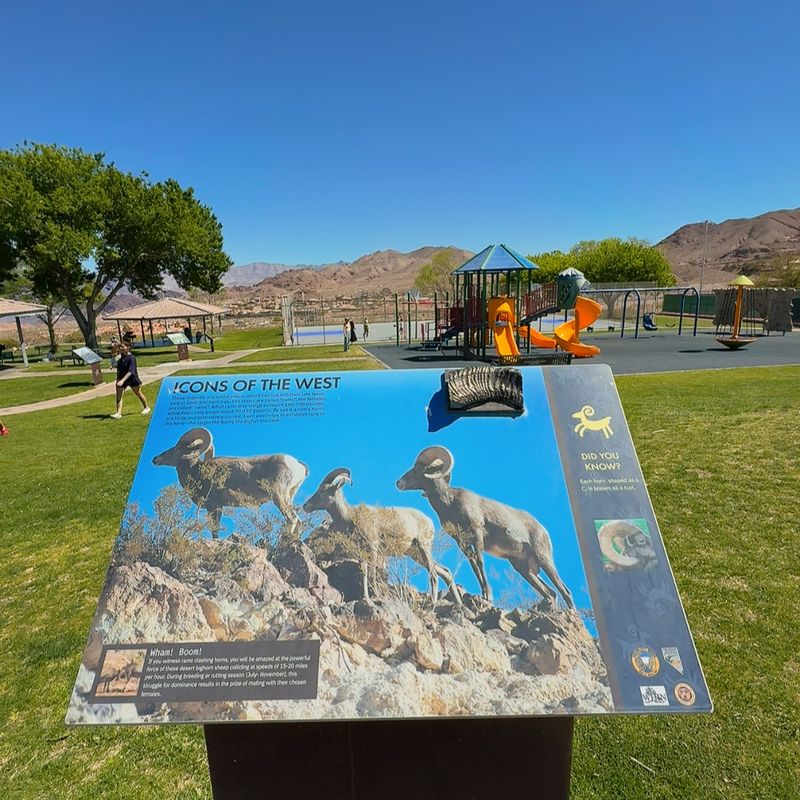
Reading a sign rarely feels exciting, unless the subject is standing twenty steps away. The Nevada Department of Wildlife installed educational displays here in 2014.
Panels cover bighorn sheep biology and their history in the region. Details include diet, horn growth, and how the animals cope with heat.
Staff occasionally host informational talks at the park. Those sessions dig into conservation work and the pressures facing local herds.
Kids absorb the material quickly when a real ram is grazing nearby. Abstract facts turn concrete fast.
Adults tend to linger too. Most people never learn how a herd navigates cliffs or why water access shapes their range.
Herd numbers offer sobering context. The River Mountain population once numbered in the hundreds, but ongoing illness has cut it down to under 200 animals today, so limiting stress on the herd carries extra weight.
Understanding that history explains the rules about distance and feeding.
Education woven into a city park is a quiet strength of this place. Visitors leave knowing something new about desert wildlife, and that knowledge tends to travel home with them.
Boulder City Roots And A Name Nobody Solved
Here is a puzzle nobody has cracked. The origin of the name Hemenway remains unclear, with no confirmed source.
Theories float around, but none carry solid proof. The mystery adds a little charm to an otherwise plain-sounding title.
The town around it has a far clearer story. Boulder City was established in 1931 to house workers building Hoover Dam.
That project pulled thousands of people into the desert. Streets, homes, and services rose quickly to support them.
The park itself opened much later, in 1984, serving a community that had settled into permanent life.
Traces of the old planned town still show in the layout and older buildings nearby.
Hoover Dam sits just beyond view from the park, close enough that many travelers pair the two stops in one afternoon.
History and wildlife overlap in an odd, pleasant way here. A town created for concrete and construction now hosts one of the easiest bighorn sheep viewing spots in Nevada, which is a twist worth appreciating on the drive out.
How To Fit It Into A Vegas Day Trip
Half an hour of driving swaps neon for open desert. The park sits just north off the highway heading toward Lake Mead, which makes it a natural add-on.
Most travelers pair it with Hoover Dam. Others fold it into a lake outing or a drive through the historic district.
An hour is usually enough, though sheep watchers often stay longer.
Aim for early morning if summer heat is a factor. Late afternoon works well in cooler months.
Pack water, sunscreen, snacks, and a blanket for the grass. Shade exists but fills up on busy days.
Leave the dog at home, since pets are not permitted in the park.
Bring a zoom lens or a phone with decent optical reach. Close-up photos should come from distance, not proximity.
Entry costs nothing, and parking is free, which makes this one of the better value stops in the region.
A quiet lawn, a big lake, and wild sheep doing their thing. Hemenway Park delivers a slower kind of Nevada afternoon, and it tends to stick in memory longer than expected.