
The Indiana Amish Market That Keeps Traditional Baking And Fresh Bread Traditions Alive
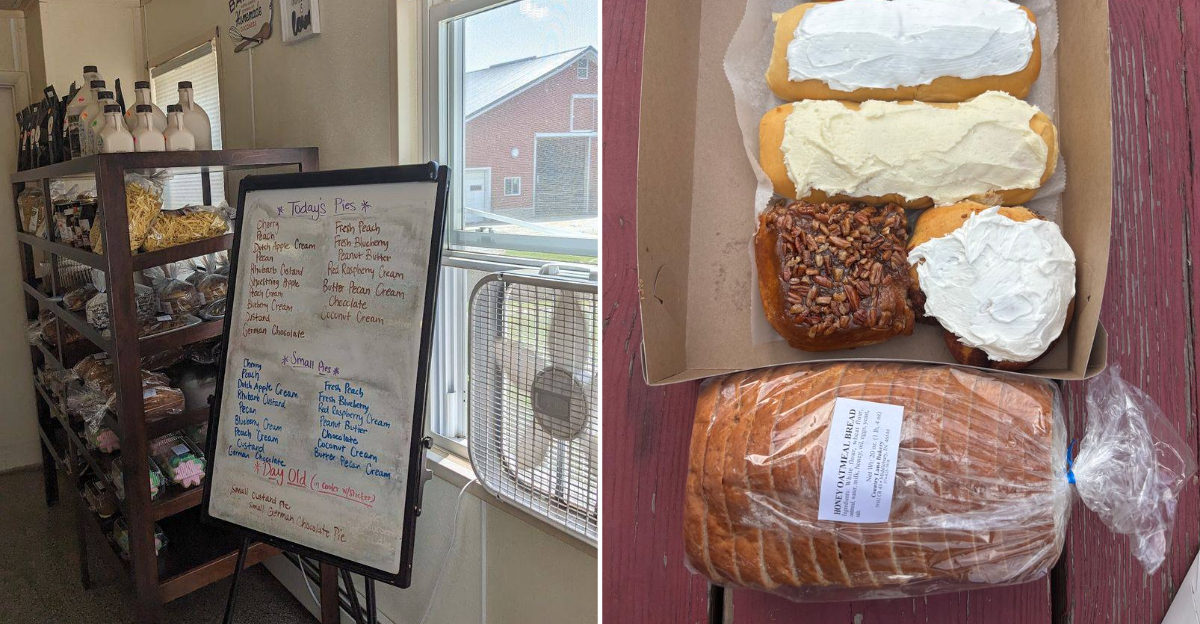
Amish workers put an incredible amount of care into everything they make. Their products earn loyal customers for good reason, and this Indiana market proves that with every fresh loaf.
Bread comes out of the oven throughout the day, never sitting long enough to lose its warmth. Traditional baking methods stay untouched here, refusing to chase shortcuts or mass production.
Nothing gets rushed just to keep up with demand, since quality always comes first. Regulars plan visits around baking schedules, showing up right when fresh batches come out.
Shelves get restocked constantly, but popular items still tend to disappear fast. This market proved that some traditions are worth preserving exactly as they’ve always been.
History Of Traditional Amish Baking Methods
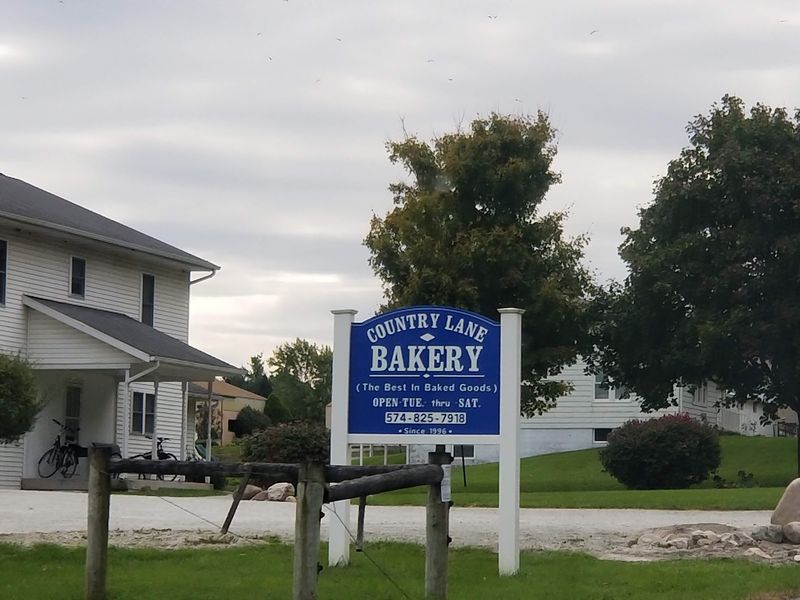
Back in June 1996, Howard and Ida Yoder opened a small bakery on a farm road outside Middlebury, Indiana. Nearly three decades later, their son Vernon and his wife Jo Ann run the place, having taken over in 2015.
Amish baking travels through families rather than culinary schools. Recipes get written by hand, splattered with butter, and passed down until they turn into something closer to a family heirloom than a set of instructions.
The philosophy behind it all is simplicity. Fresh eggs, farm milk, seasonal fruit, and flour, with no artificial preservatives or dough conditioners sneaking into the mix.
Everything gets made from scratch, which sounds like a marketing line until you learn that the famous cinnamon rolls come from Vernon Yoder’s grandmother’s recipe. Same measurements, same method, decades later.
Fun detail worth knowing: the original Middlebury building operates without electricity. That single fact explains a lot about why the baked goods taste the way they do.
Doors open at 5 AM Tuesday through Friday and 5 AM on Saturday, which tells you when the real work starts. Bakers have been at it for hours before the first customer pulls into the lot.
You can find it at 59162 Co Rd 43, Middlebury, IN 46540.
Varieties Of Fresh Breads Available Daily
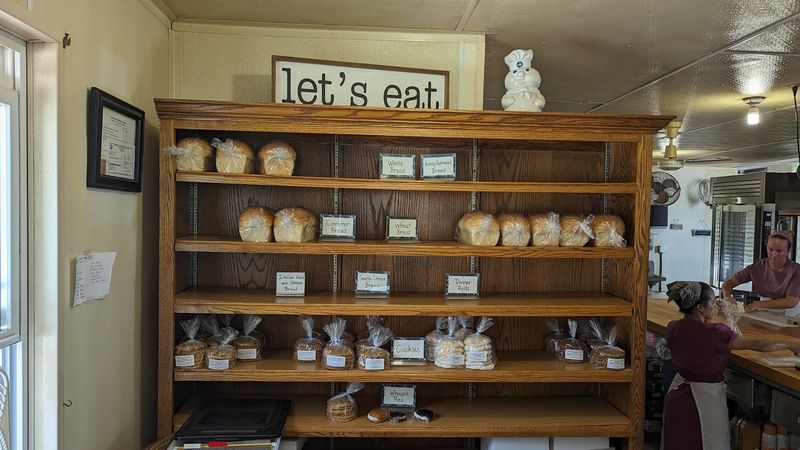
More than a dozen bread varieties come out of these ovens every single baking day. That is not a rotating selection where three things sell out by nine.
That is a genuine wall of loaves.
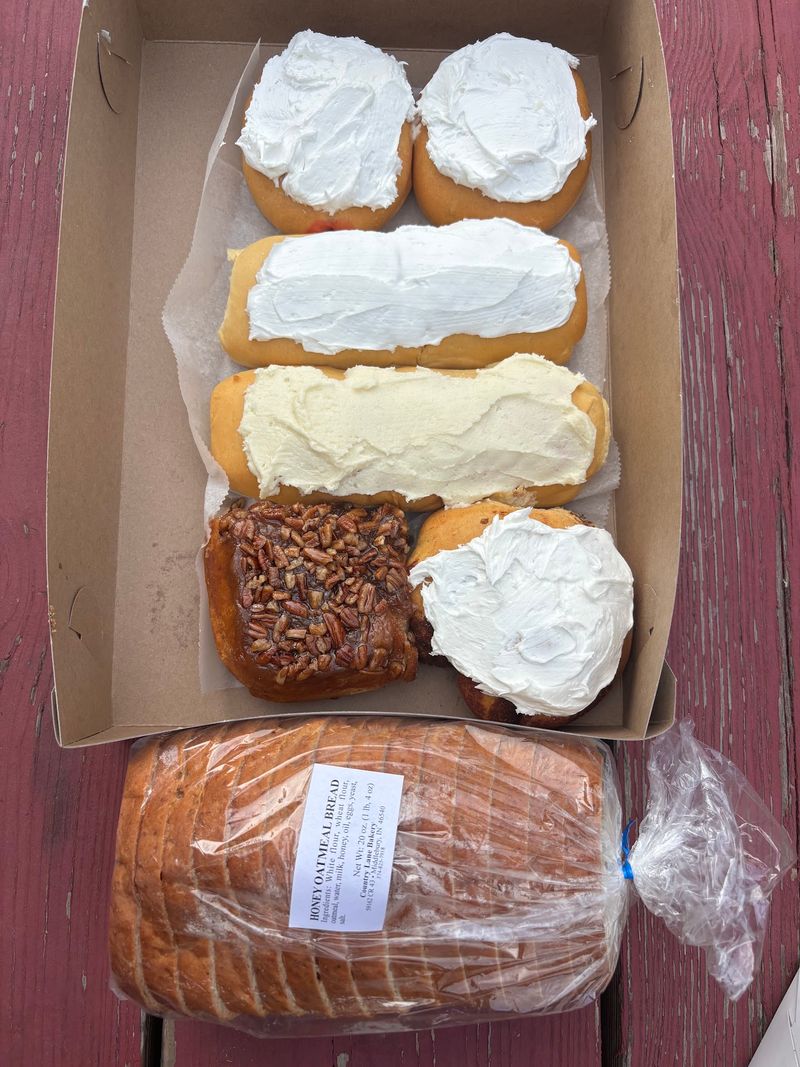
Honey oatmeal bread is the gentle crowd pleaser, sweetened with honey and soft enough for sandwiches all week. Then there is jalapeno bread, which flips the whole thing sideways with a little heat and cheese.
Sourdough gets serious attention here. Plain, cheddar jalapeno, cheddar jalapeno bacon, and yes, chocolate chip sourdough for the people who refuse to choose between bread and dessert.
The sweeter sourdough lineup keeps going with brown sugar cinnamon, cinnamon raisin, and a s’mores version that sounds like a dare and tastes like a win.
Worth understanding before you go: these are soft sandwich-style loaves, not the crusty artisan bread with a shatter-proof exterior. Different tradition, different purpose, and much friendlier to a peanut butter knife.
Pizza bread and pepperoni bread show up too, and the pepperoni one is best toasted and dipped in ranch dressing. That tip comes straight from the owners.
Cinnamon bread has been known to leave the counter still warm from the oven. If that happens to you, eat it in the car. No shame in it.
Techniques Behind Handcrafted Dough Preparation
Ever wonder why some bread tastes flat and forgettable? Usually it comes down to shortcuts, and there are remarkably few of those happening in this kitchen.
For the whole-grain breads, flour gets ground fresh right before each batch. Not the night before.
Not last week. Right before, because whole grain flour loses flavor fast once the germ is exposed to air.
Sourdough here relies on natural fermentation with wild yeast and lactic acid bacteria doing the heavy lifting. Slow-developed starters, a long fermentation window, then hand shaping before the loaves ever meet the oven.
That slow schedule is the opposite of convenient. It means bakers plan around dough rather than the dough bending to a clock, and it is the reason the texture holds up.
Artificial preservatives and dough conditioners stay out of the picture entirely. Those additives exist to speed things up and fake softness, neither of which is needed when time and technique are doing the job.
Cinnamon rolls get iced on the spot, right after baking, so the frosting settles into the warm spirals instead of sitting on top like a lid.
Almost everything gets made by hand, which is slower and messier and completely worth it. You can taste the difference in the crumb, and that is not an exaggeration.
Importance Of Local Ingredients In Baking
Long before the words farm to table existed, Amish bakers were simply using whatever the neighbors grew. Flour milled nearby, eggs from family farms, fruit picked in season because that was the only time it existed.
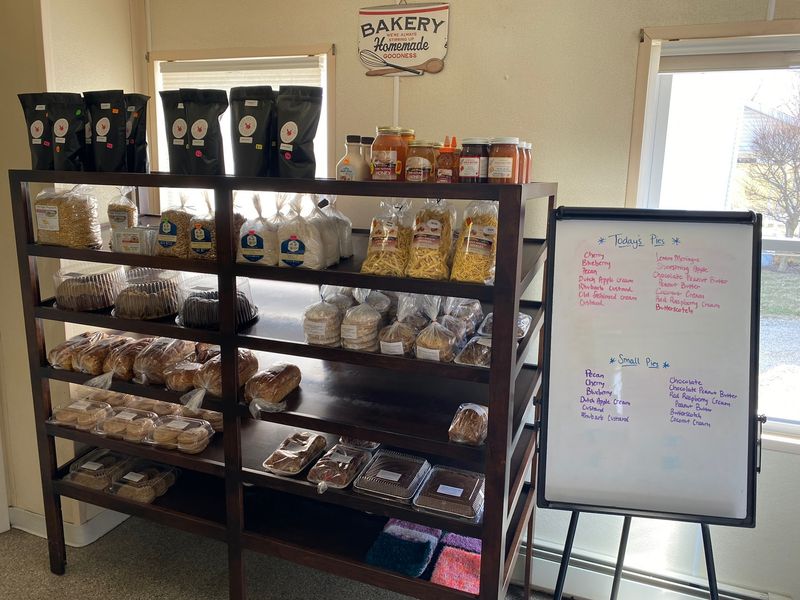
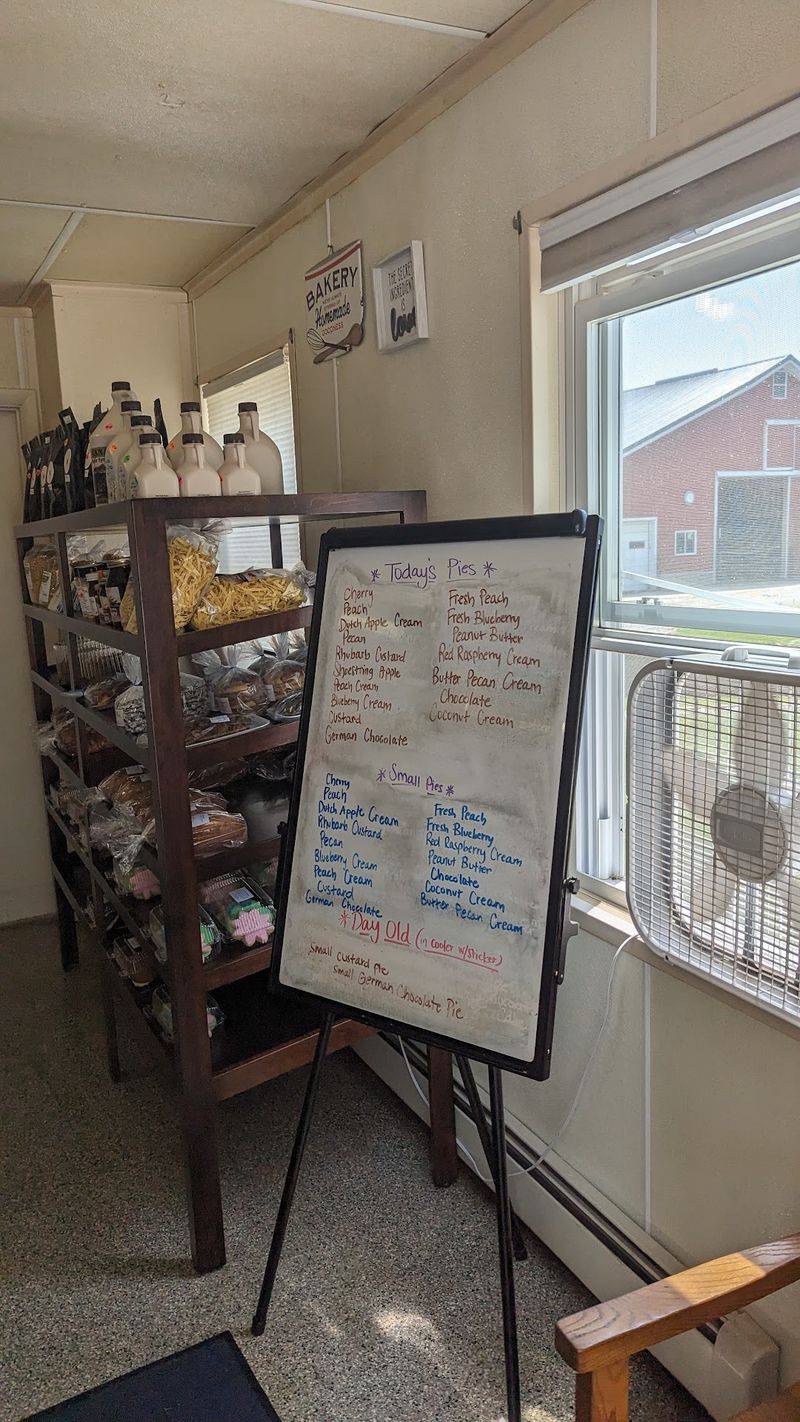
That habit continues at this bakery, where the shelves hold more than baked goods. Locally made noodles sit alongside signature butters and spreads, which makes a quick bread run turn into a full grocery stop.
Homemade apple butter and peach butter show up in jars, plus a peanut butter spread that has a loyal following of its own. Spread it on a warm slice, and you will understand.
Honey does the sweetening in the honey oatmeal bread, a small choice that keeps the flavor round and natural instead of sharply sugary.
Elkhart and LaGrange counties are dairy country, and that matters more than people realize. Butter from this region carries a higher butterfat content, which changes how pastry behaves and how it tastes.
Ingredient lists here stay short enough to read out loud without stumbling. Flour, butter, eggs, sugar, yeast, and not much else.
Pies follow the same logic, with seasonal fillings like rhubarb custard showing up when rhubarb is actually ready. Nature sets the menu, and the bakery just keeps up.
Seasonal Specials And Holiday Baking Traditions
Fall is when things get a little wild around here. Pumpkin rolls, pumpkin pies, and pumpkin bread arrive together like a very orange parade.
Pumpkin cutout cookies join the lineup, along with pumpkin cookies finished with brown butter icing. Brown butter icing is one of those small touches that turns a good cookie into one you think about later.
Pumpkin whoopie pies deserve their own sentence. Soft, cakey, and gone quickly, they are among the most talked-about items of the season.
Thanksgiving and Christmas bring mincemeat pie back to the case, an old-fashioned offering that not everybody understands anymore. The people who love it plan their holidays around it.
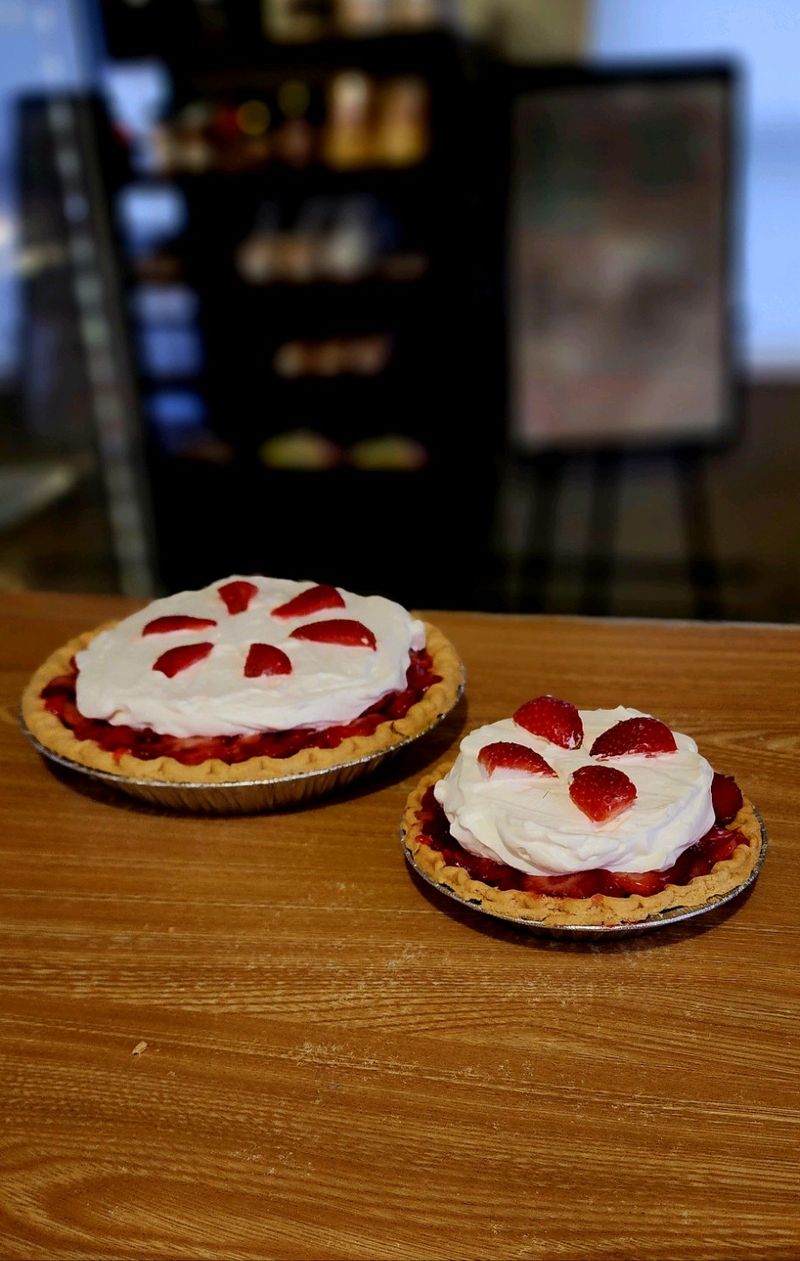
Pie sizes work in your favor too. A smaller version around six inches means you can grab three different flavors instead of committing to one giant decision.
Shoestring apple pie, red raspberry cream, rhubarb custard, and classic double crust apple all rotate through depending on the season and the fruit.
A Cookie of the Week keeps regular visits interesting, so even a Tuesday morning stop has a surprise in it.
The bakery also handles special orders, and cinnamon rolls and pies have made appearances at wedding weekends. Nothing says celebration quite like eighty-five people fighting over cream cheese frosting.
Health Benefits Of Naturally Leavened Bread
Here is a strange but true idea about sourdough. The bread starts digesting itself before you ever take a bite.
During natural fermentation, wild yeast and lactic acid bacteria break down complex carbohydrates and proteins in the dough. That means your body has less work to do once the bread arrives.
For folks with mild gluten sensitivities, that pre-digestion of starches and gluten can make a real difference in comfort. Not a cure, just easier going.
Sourdough also tends to have a lower glycemic index than many other breads. Glucose enters the bloodstream more gradually, which helps with steadier blood sugar instead of a spike and crash.
Whole grains naturally contain phytic acid, which blocks mineral absorption. Lactic acid bacteria break that compound down, freeing up iron, zinc, and magnesium for your body to actually use.
Fermentation produces prebiotics and probiotics too, feeding the helpful bacteria living in your gut. A happier microbiome affects more than digestion.
Antioxidant levels rise during the process as well, which may help reduce inflammation over time.
None of this makes bread a health supplement, and nobody should pretend otherwise. It does explain why a slowly fermented loaf feels different from a bagged sandwich bread with fourteen unpronounceable ingredients on the label.
Community Role In Sustaining Operations
Second-generation family businesses have a certain steadiness to them. Vernon and Jo Ann Yoder now run what Howard and Ida started, and that continuity shapes everything from the recipes to the way people are greeted at the window.
Being Amish-owned and Amish-staffed connects the bakery to a wider network of neighbors, suppliers, and helping hands. Amish settlements run on that kind of mutual support, and a small bakery benefits enormously from it.
Relationships matter here as much as the product. The owners put real effort into knowing their employees and the people who drive out to buy bread.
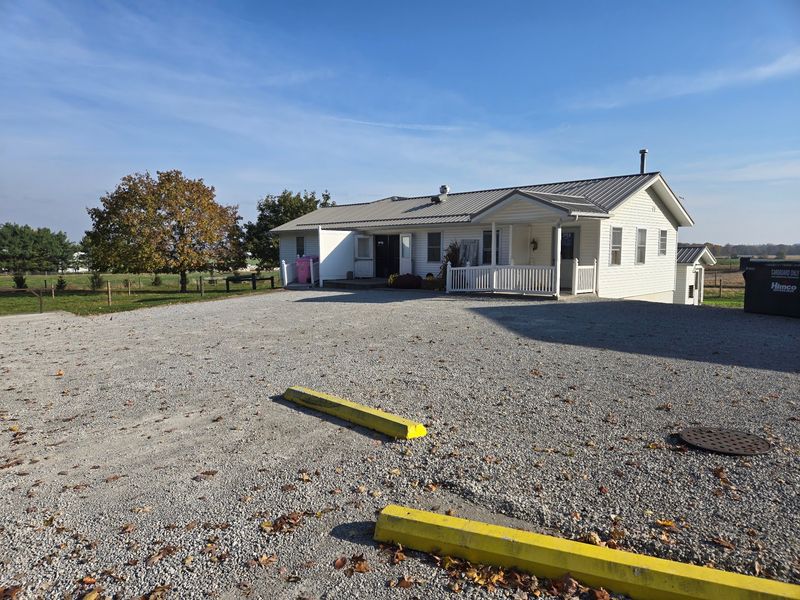
Open house days have become their own event, with the gravel drive filling up and food handed out to visitors. Turkey sandwiches, donuts, and cookies have all been part of it.
Worth planning for: this is a cash or check operation, no credit cards. Bring paper money or you will be staring longingly at a case of pies.
Success has spread, too. A second location opened in downtown Shipshewana with seating, cafe drinks, and sandwiches, which is a nice option when you want to actually sit down.
The original farm spot keeps its small counter window and its quiet, working atmosphere. Growth did not erase the beginning, and that says plenty.
Baking Tools And Equipment Used In Amish Kitchens
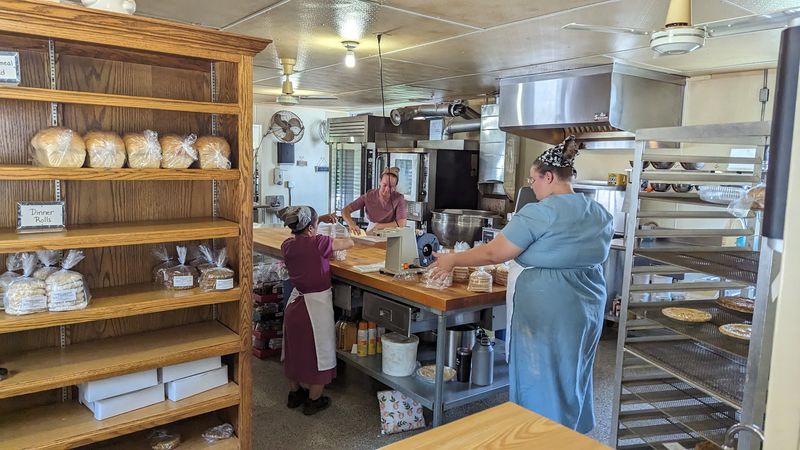
Picture a bakery kitchen, and you probably imagine humming mixers and digital timers. Now remove the electricity, because the original Middlebury building operates without it.
That single detail reshapes how the work gets done. Tools lean toward the mechanical and the manual, and skill fills in for automation.
Grinding flour fresh before every whole grain batch means a grain mill sits somewhere in that kitchen doing steady duty. Fresh-milled flour has a sweetness that bagged flour loses within weeks.
Hand shaping is central to the naturally leavened breads. Fingers can feel when dough has developed properly in a way no machine setting can measure.
Wooden work surfaces, sturdy pans, rolling pins, and simple hand tools do most of the heavy lifting. Nothing flashy, nothing that needs a software update.
Experience becomes the most important equipment in the room. Bakers who have handled the same dough for decades know by touch whether a batch needs five more minutes or none at all.
That combination of basic tools and deep practice produces the texture people associate with Amish baking. Soft crumb, even rise, honest flavor.
Doors close Sunday and Monday, and Saturday hours end early at 1 PM. Plan accordingly, because sold out is a real possibility by midday.