
This Vermont Town Feels Like A Norman Rockwell Painting Come To Life With Historic Buildings Scenic Streets And Classic Charm
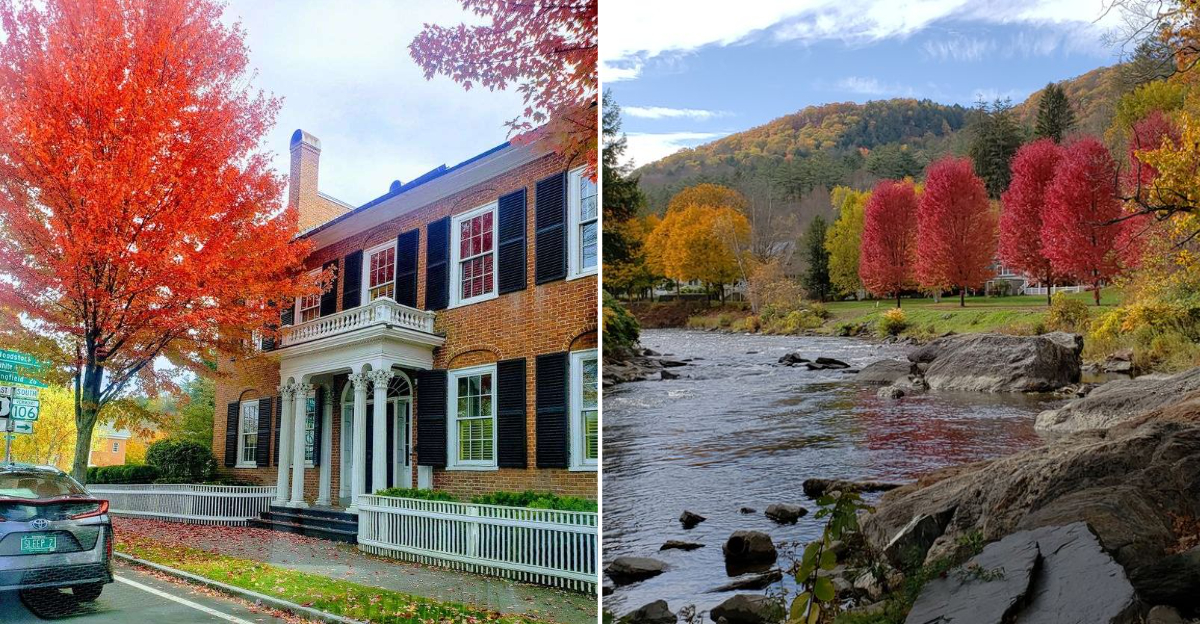
Norman Rockwell painted everyday American life exactly as it looked, and that same atmosphere still exists in this Vermont town today. Historic buildings line the streets, preserved with the same character they’ve held for generations.
Nothing about the town feels modernized beyond what actually improves daily life for residents. Scenic streets wind through the area, framed by architecture that hasn’t changed much over the decades.
Locals treat preservation as a genuine priority, keeping the town’s original charm intact. Visitors often compare the setting to stepping directly into one of Rockwell’s paintings.
Classic charm shows up in details easy to miss at first, like hand-painted signs and old storefronts. This town proved that sometimes the past holds up better than anything modern could replace.
Architecture That Preserves History
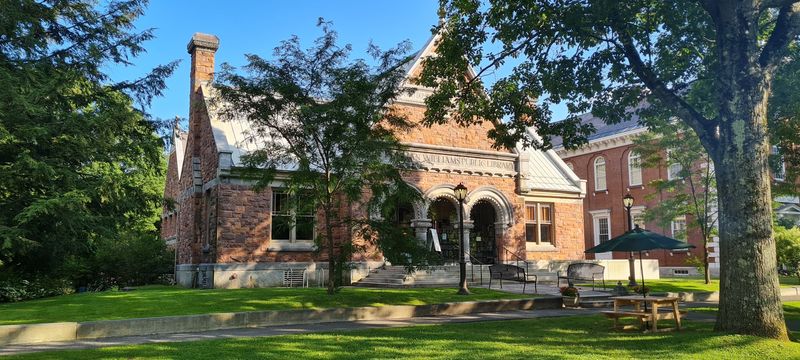
Walk one loop around The Green, and you get a crash course in 19th-century New England building styles. Federal doorways, brick facades, and white clapboard homes stand shoulder to shoulder like they were arranged by a very picky set designer.
The Woodstock Inn & Resort, built in 1892 in Georgian style, holds one end of the scene. Nearby stand the Dana House, the First Congregational Church, and F.H. Gillingham & Sons, all rooted in the early 1800s.
Then there is the Norman Williams Public Library, made of pink sandstone in the 1880s. Pink sandstone.
In a town this restrained, that counts as showing off, and honestly, it works beautifully.
Billings Farm & Museum brings Queen Anne flourishes into the mix with its 1890 farmhouse, while the Town Hall leans Neoclassical with columns and clean symmetry. Different eras, same quiet confidence.
None of this survived by accident. Design review regulations have been in place since 1980, which means new construction has to play nicely with the old guard instead of bulldozing it.
The result is a village that reads as one continuous story rather than a patchwork of decades. Even the hardware and window trim tend to match the period.
Photographers love it because there are almost no visual distractions. History buffs love it because the buildings still serve their original purposes.
Streets Defined By Timeless Beauty
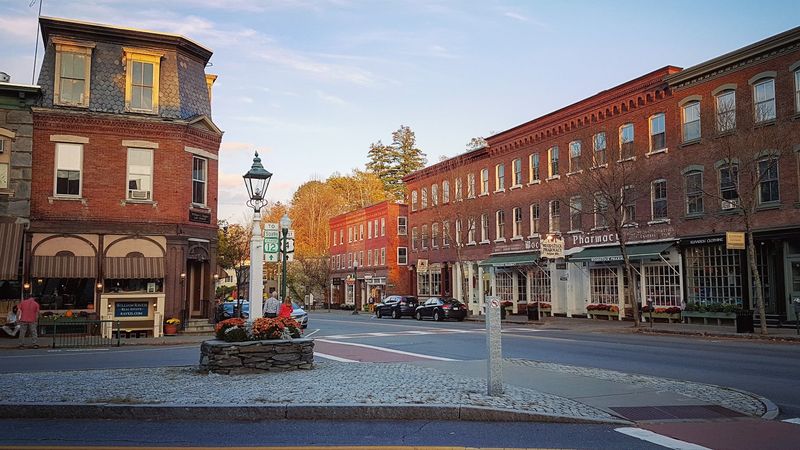
Central, Elm, North Park, and South Park streets do something clever. They frame mountain skylines at the end of nearly every block, so the view keeps changing as you walk.
Elm Street is the showstopper. Some of the oldest and grandest properties in town sit along it, with deep front lawns and porches built for watching absolutely nothing happen.
The Green sits at the heart of everything, an oval of grass that has served as the community meeting spot for generations. Kids run across it.
Dogs judge each other from opposite ends.
Then there is the Middle Covered Bridge, right in the village. Wooden covered bridges usually live out in the countryside somewhere, so having one within walking distance of shops and cafes feels like a small gift.
Locals took the views seriously enough to create scenic ridgeline districts. That means the hills framing the village stay wooded and undeveloped instead of sprouting rooftops.
Sidewalks are wide and shaded, and traffic moves slowly because there is nowhere worth rushing to. Walking is genuinely the best way to see it.
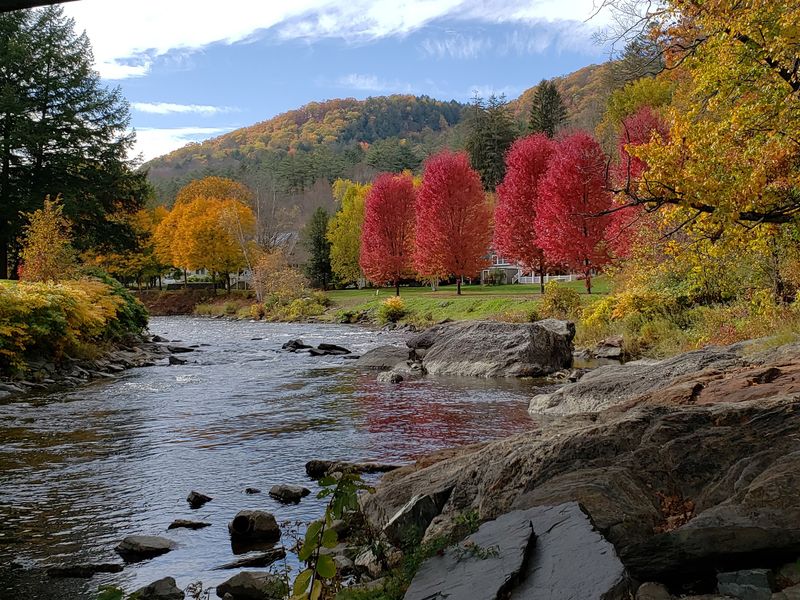
Every season rearranges the palette. Maples flame out in October, snow softens the rooflines in January, and summer turns the whole village into a green tunnel.
It is a street grid that rewards wandering without a plan or a map.
Quaint Shops Offering Local Crafts
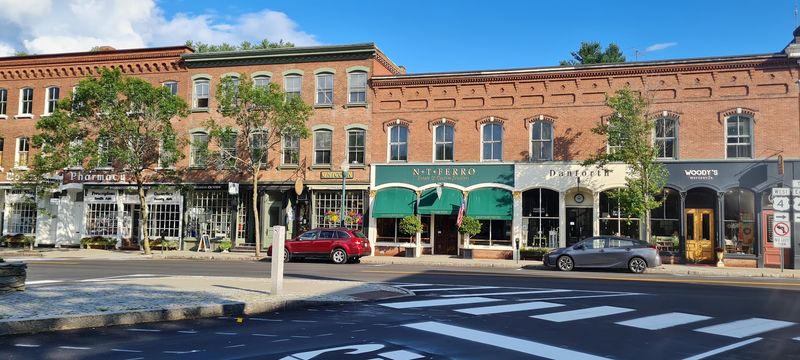
Shopping here has almost nothing to do with malls or big brands. F.H.
Gillingham & Sons has been running since 1886, which makes it older than most American highways.
The old general store stocks Vermont-made goods, kitchen supplies, and the sort of odd useful items you did not know existed until you needed one. Creaky wooden floors included.
Vermont Flannel Company handles the state uniform, turning out shirts and blankets in patterns that never really go out of style up here.
Woody’s Mercantile leans toward curated home goods, gifts, and pottery from area artisans, while Clover Giftshop stocks decor and locally made apothecary products.
Collective – The Art of Craft works differently. It is cooperatively owned, so the artists who made the ceramics, textiles, and woodwork also help run the gallery floor.
Danforth Pewter turns out handcrafted pewter pieces, from ornaments to serving ware, using techniques with real colonial roots. Farmhouse Pottery shapes stoneware that looks equally right in a farmhouse or a city apartment.
The whole shopping district sits within a few walkable blocks, so browsing does not require a parking strategy or comfortable driving shoes.
Best part? Most items were made within a short drive of where you buy them.
Souvenirs here actually mean something instead of gathering dust in a drawer back home.
Community Events Celebrating Tradition
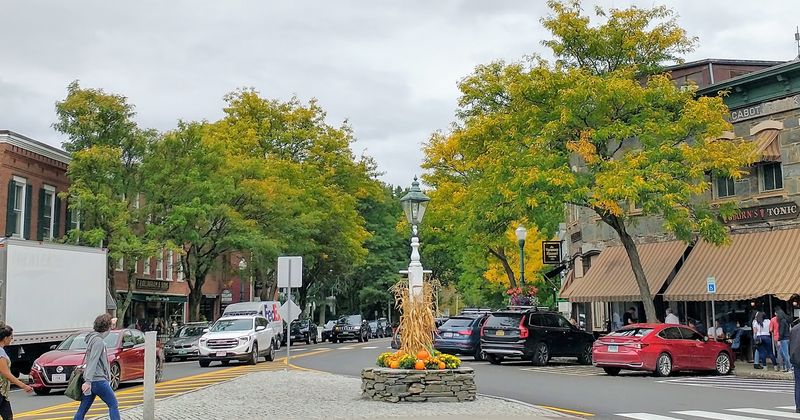
Small towns either fade or they double down on tradition. Woodstock chose the second option, and the calendar shows it.
Market on the Green runs weekly through the warmer months, with local produce, baked goods, and artisan work spread out across the village center. It doubles as the town gossip hub.
Wassail Weekend is the big winter event. The village fills with horse-drawn wagon rides, holiday markets, and a parade of horses and riders in period clothing.
Imagine a Christmas card that suddenly starts moving and includes the sound of hooves on pavement. That is roughly the effect.
The Apples & Crafts Fair arrives with fall foliage, bringing juried artisans, food trucks, and crowds who came for the leaves and stayed for the apple everything.
August belongs to the Taste of Woodstock Festival, which shuts down the main stretch for local arts, farm-to-table food, live music, and dancing in the street.
Independence Day gets the full treatment too. Parade, fireworks, a market on The Green, and a community dinner where neighbors actually sit together.
None of these feel manufactured for tourists. Residents show up in numbers, volunteers run the tables, and the events have been repeating long enough to feel inherited.
Visiting during any one of them turns a pretty village into a genuinely lively one.
Natural Landscapes Enhancing Visual Appeal
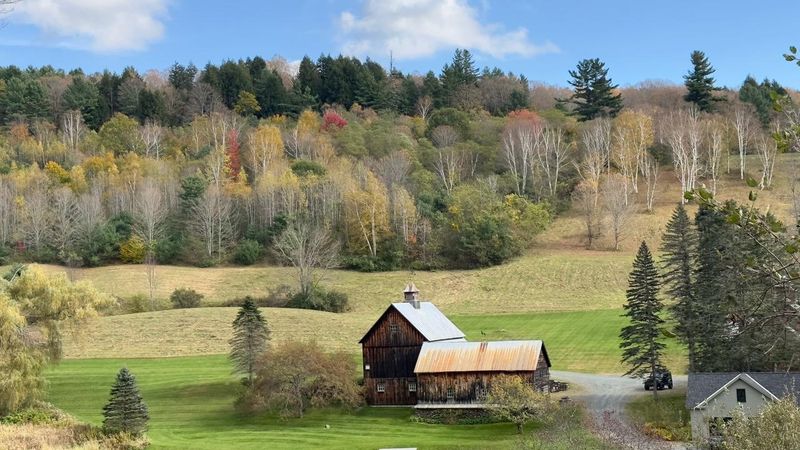
Every direction out of the village leads somewhere worth seeing. The Green Mountains roll along the horizon, offering hiking, biking, and skiing depending on the month.
The Ottauquechee River threads through forests, fields, and past covered bridges. Kayaking and tubing are both popular, and the current stays friendly for most of the summer.
A short drive away, Quechee Gorge drops 165 feet. Glaciers carved it, hiking trails run along it, and the bridge overlook makes most visitors grip the railing a little harder.
Mount Tom and Mount Peg both have trail networks right near the village. Tom’s summit hands over a wide valley view that explains why painters keep showing up with easels.
Marsh-Billings-Rockefeller National Historical Park protects a managed forest and historic estate with about twenty miles of trails. It also happens to be the birthplace of American conservation thinking.
Billings Farm & Museum adds working pastures, gardens, and a nature path, plus Jersey cows that seem entirely unbothered by attention.
Covered bridges like the Middle and Taftsville crossings tie the scenery together. Red planks, wooden trusses, water underneath, hills behind.
Fall gets the most attention, obviously. But spring mud season, green summers, and snowy winters each rearrange the whole picture in ways worth returning for.
Dining Experiences With Classic Ambiance
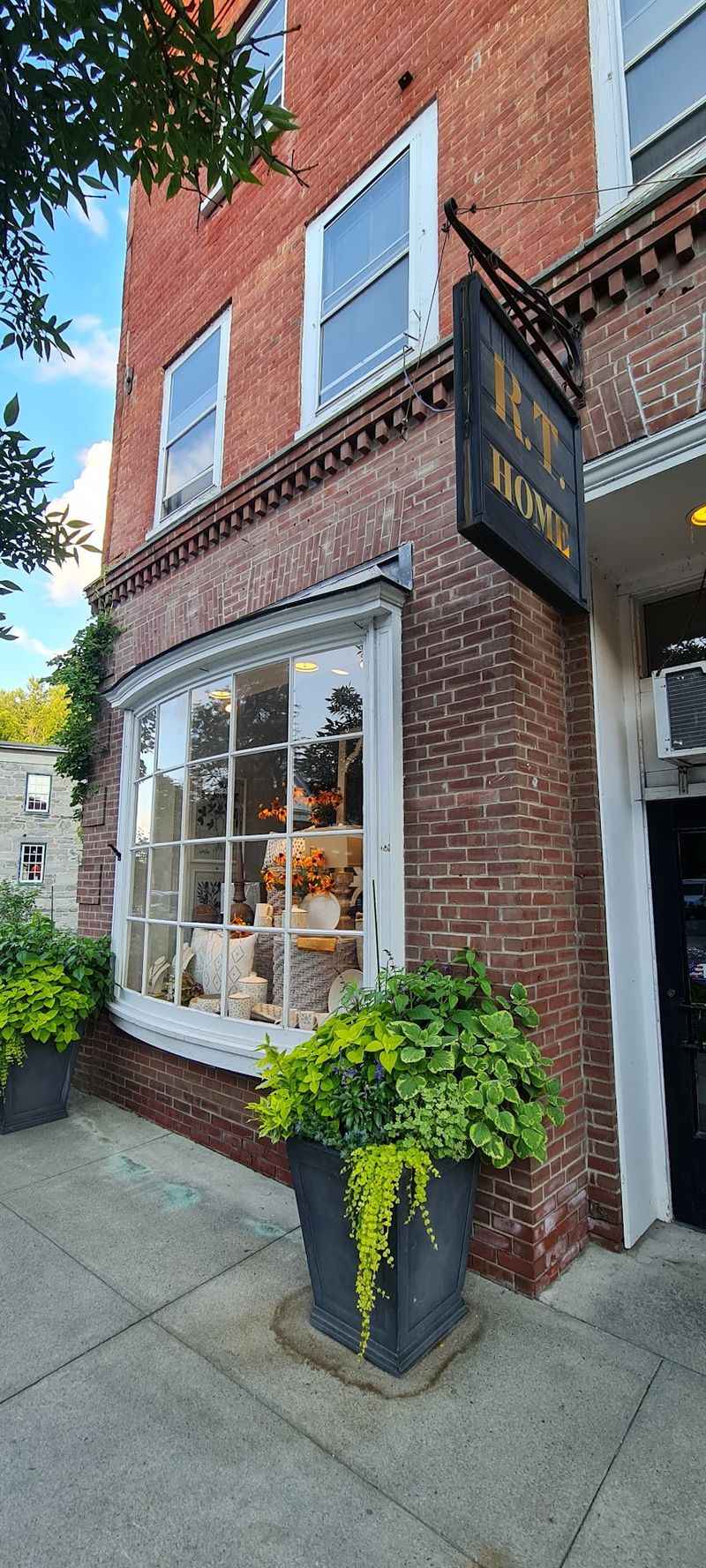
Food here leans local, seasonal, and unfussy about proving a point. The Red Rooster at the Woodstock Inn & Resort handles the refined end, with Vermont ingredients in a classic dining room setting.
Richardson’s Tavern, in the same building, keeps things relaxed. Low lighting, comfortable seating, and the kind of room built for lingering after a long hike.
The Prince & The Pauper offers an intimate setting with a three-course prix fixe menu that changes with what is available. Small dining room, big attention to detail.
Mornings belong to Farmer and the Bell, a bakery and cafe leaning hard on regional ingredients. Pastries, coffee, and a room that hums by nine.
Cloudland Farm takes farm-to-table seriously by growing much of what lands on the plate. Dining at a working farm changes how the meal registers.
Simon Pearce Restaurant sits nearby in Quechee, overlooking a waterfall on the Ottauquechee River and a covered bridge. The view competes with the food, and both hold up.
Mon Vert Cafe covers casual breakfast and lunch in the village. Worthy Kitchen goes in a comfort-food direction, and Oakes & Evelyn brings a more contemporary menu.
Reservations matter during foliage season and holiday weekends. Plan, or plan on wandering, which is not exactly a punishment around here.
Art Galleries Showcasing Regional Talent
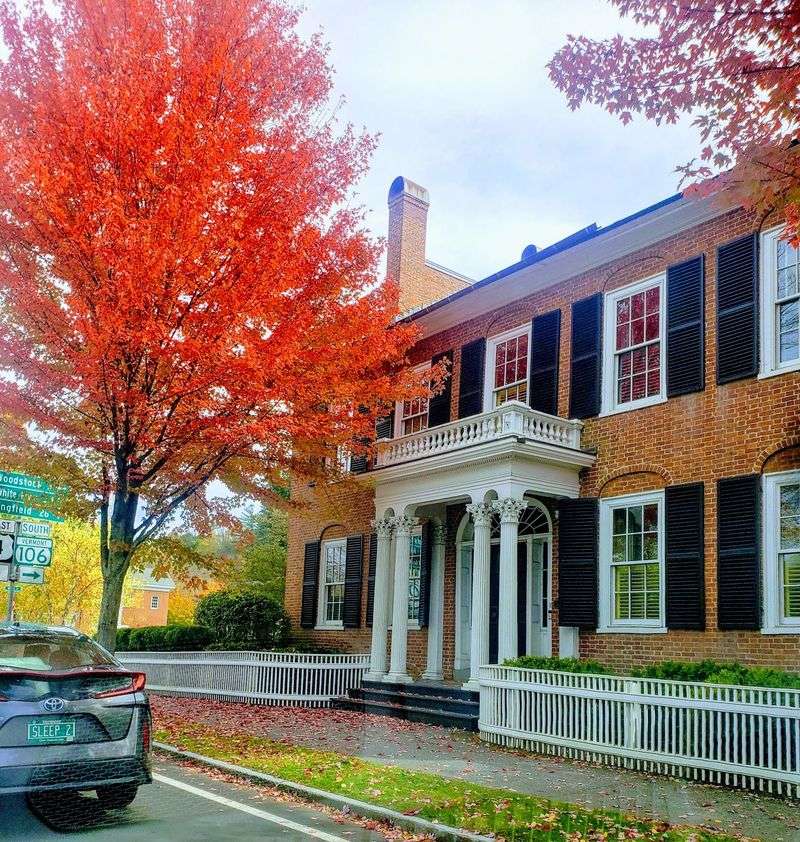
Something about Vermont light makes painters restless, and this village has the galleries to prove it. The Woodstock Gallery focuses on regional New England artists across several media.
Paintings hang beside ceramics, sculpture, and jewelry, so browsing feels less like a museum walk and more like poking through a very talented friend’s studio.
Collective – The Art of Craft operates as an artist-owned space. Member artists show handcrafted work alongside guests, and the people staffing the room often made what is on the shelf.
That setup means you can ask how a piece was made and get an actual answer instead of a shrug and a price tag.
Fossil Glass puts the work of a local glass artist on display, with pieces that catch afternoon light in ways photographs never quite capture.
Every year after Labor Day, the Woodstock Art Festival takes over the Village Green. More than 30 New England artists set up booths outdoors, which turns the whole green into a temporary open-air gallery.
Landscape work dominates for obvious reasons. When the hills outside look like that, painting them is less a choice than a reflex.
Gallery hopping here takes an afternoon at most, since everything sits within a few blocks. Comfortable shoes, no map required, plenty of time left for coffee afterward.
Seasonal Festivals Bringing Vibrancy
There is barely a month without something happening. Wassail Weekend anchors December, filling the village with holiday markets, wagon rides, and a horse parade that draws crowds from across New England.
Fall belongs to the Apples & Crafts Fair, timed with peak foliage. Juried artisans, food vendors, and hillsides doing their annual color show all at once.
The Taste of Woodstock Festival lands in August, turning the main street into an open-air celebration of local arts, farm-to-table cooking, music, and dancing.
After Labor Day, the Woodstock Art Festival brings regional artists onto the Village Green with tents and easels. Cooler air, smaller crowds, excellent browsing.
July 4th gets the classic small-town treatment, complete with a parade, fireworks over the hills, and a community dinner that stretches into the evening.
Pride of Woodstock celebrates diversity and community spirit, adding a modern layer to a town that leans heavily on tradition. Both things coexist just fine.
Timing a visit around any of these events shifts the experience completely. Quiet postcard village one week, buzzing gathering place the next.
Lodging fills quickly during foliage season and Wassail Weekend, so booking early saves headaches. Off-peak visits trade the crowds for empty sidewalks and unobstructed views, which some travelers prefer anyway.