
This Tennessee Amish Produce Auction Draws Crowds For Farm-Fresh Goods All Summer Long
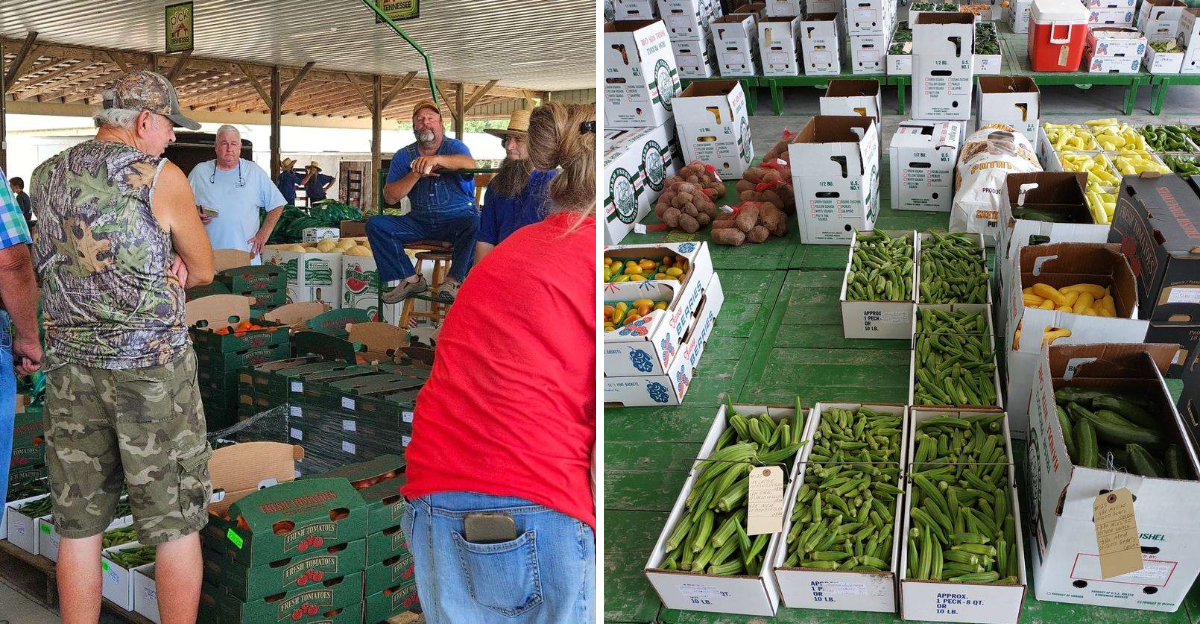
How fresh can your summer vegetables really get? At one Tennessee auction, the answer may be fresher than anything sitting under supermarket lights.
Local growers bring in the crops they have harvested, creating a colorful lineup that changes as summer moves along. Boxes of tomatoes may dominate one week, while corn, peppers, squash, melons, or peaches steal the attention on another.
Instead of picking through a regular produce department, buyers watch entire lots go up for bid.
The experience makes you think differently about where dinner begins. These vegetables and fruits come with very little distance between the field and the buyer, and the auction format adds energy to what could otherwise be a simple shopping trip.
There is always another box coming up and another chance to score something seasonal. For anyone who loves fresh food, Tennessee summers do not get much more connected to the farm than this.
The Spot To Put On Your Summer List
Some places hide behind fancy signs. Not this one. A simple road, a wide gravel lot, and rows of crates tell you everything.
The gathering happens at Plowboy Produce Auctions, 469 S Brace Rd, Ethridge, TN 38456. Lawrence County sits in the southern part of the state, close to the Alabama line. Ethridge itself is a small farming town surrounded by Amish homesteads.
Getting there takes a little planning, and that is part of the charm. Country roads wind past hand-lettered farm stands and fields plowed by horse teams. You will likely pass a buggy or two on the way.
The auction operates Monday, Wednesday, and Friday from 1 PM to 5 PM during the growing season. Tuesdays, Thursdays, and weekends stay quiet. Plan your trip around those three days.
Parking is straightforward, though the lot fills fast on big sale days. Arrive early and you will find a spot near the front. Latecomers walk a bit farther, which is a small price for what waits inside.
How The Morning Builds Toward Auction Time
Long before any bidding starts, the lot begins to hum. Wagons pull in loaded with the morning’s harvest. Trucks back up beside them, tailgates dropping.
The office opens at eleven o’clock, giving everyone two full hours to look around. That window matters more than most newcomers realize. Smart buyers use it to size up the day’s supply.
Walking the rows before the sale is how you build a plan. You can lift a lid, check a crate, and note which grower brought what. Nobody rushes you along.
Produce arrives still cool and dewy from the field. Corn husks squeak. Tomatoes carry that heavy, sun-warmed weight that supermarket fruit never has.
The unloading itself is worth watching. Crates move hand to hand with practiced speed. Everything lands in neat rows, sorted and labeled.
By half past twelve, the aisles are packed and the mood tightens. People stake out positions near the lots they want. Anticipation builds like a pot about to boil, and then the auctioneer steps up.
When The Auctioneer Takes Over
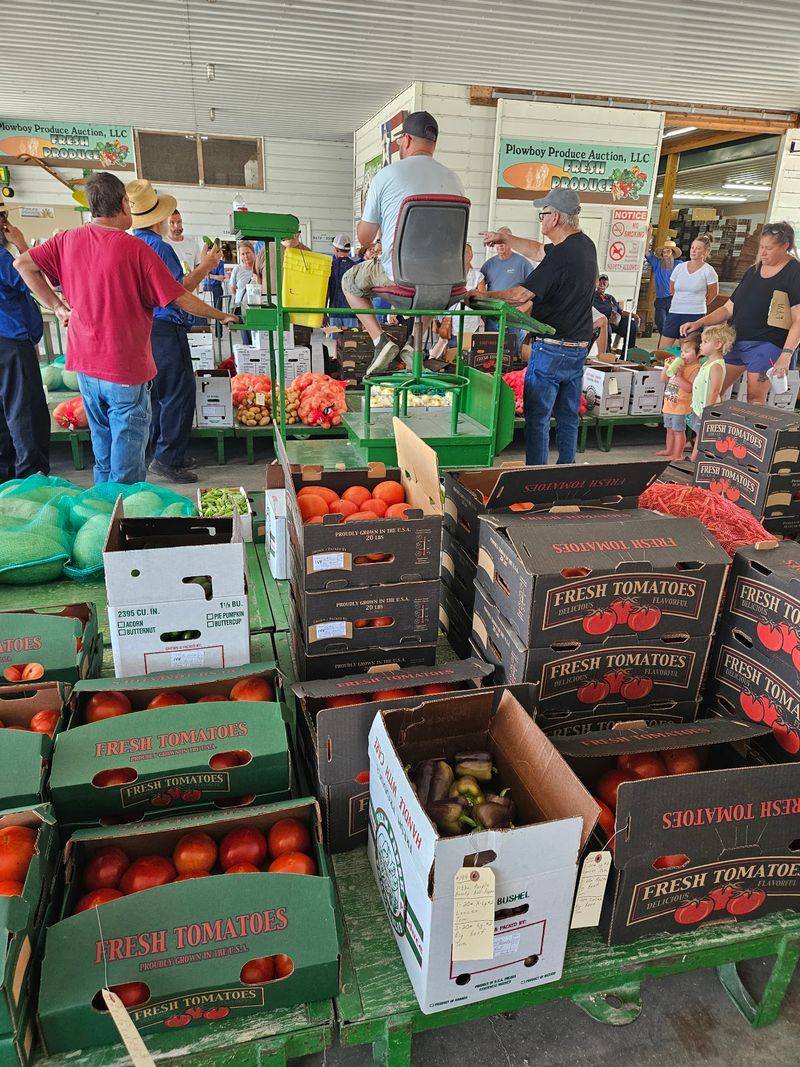
One o’clock arrives and the whole place changes gear. The auctioneer starts his call, fast and rhythmic. Heads turn, hands go up, and crates start moving.
Getting a bidding number costs nothing. You sign up at the office and you are in. That simplicity keeps the door open for first-timers.
Following the pace takes a few minutes of listening. The chant sounds like a foreign language at first. Then the numbers separate out and it clicks.
On busy days, several sales run at once. Some afternoons have seen seven rings going simultaneously. Splitting up with a friend helps you cover more ground. Bidding gestures stay small and quick. A nod, a raised finger, a lifted card.
The ring men catch every signal. Prices rise and fall with the crowd. Two people wanting the same lot can push a number higher fast. Patience often pays better than eagerness.
Not everything requires a paddle. A retail table offers small quantities at set prices for anyone who just wants a basket rather than a pallet.
The whole rhythm feels like theater with vegetables. It is genuinely fun to watch, even if you never raise your hand once.
A Rainbow Of Crates And Bushels
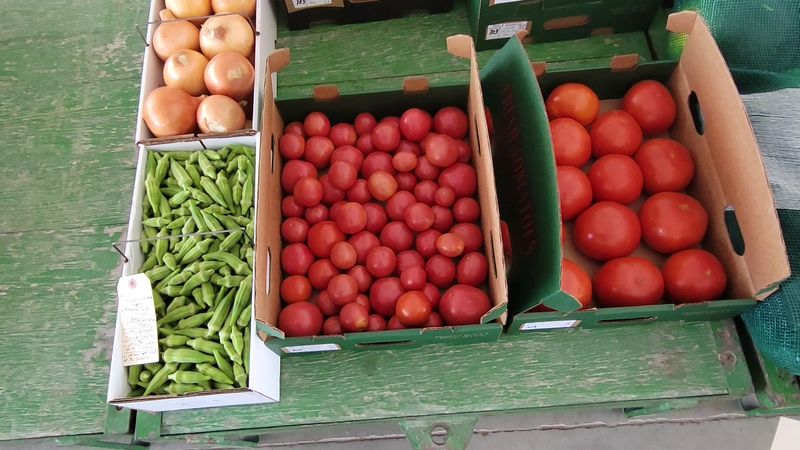
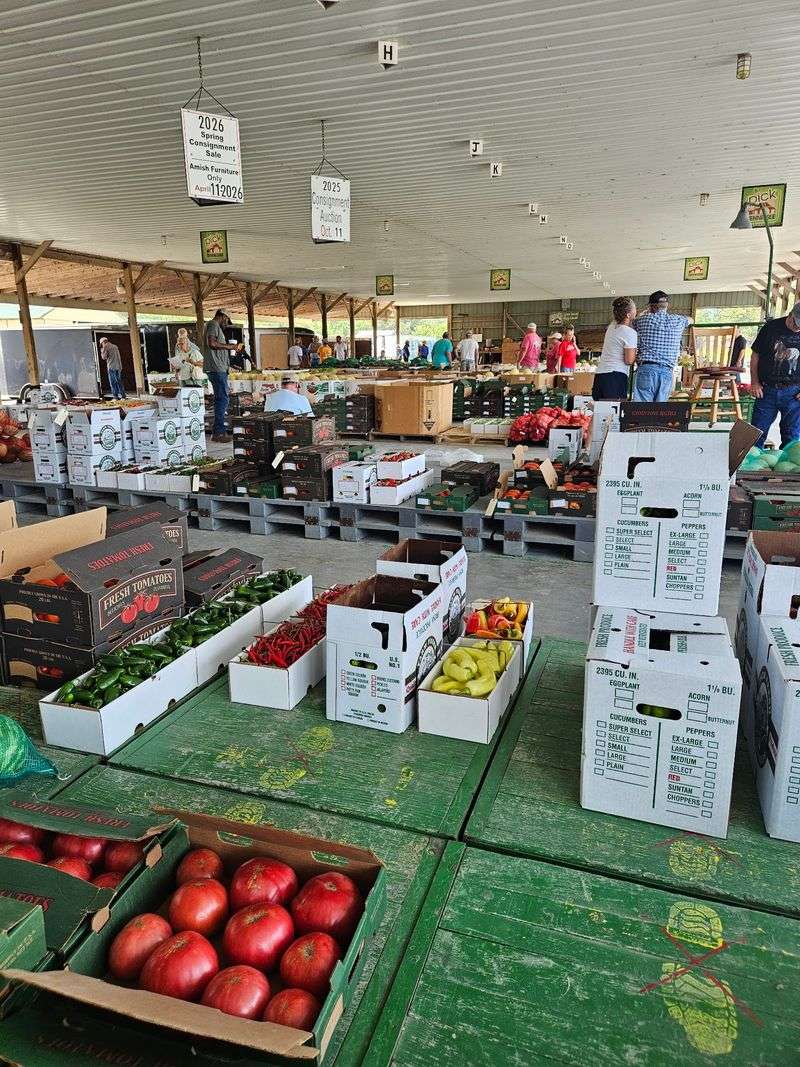
Color hits you first. Reds, greens, yellows, and deep oranges stacked shoulder high. The variety shifts week by week as the season rolls forward.
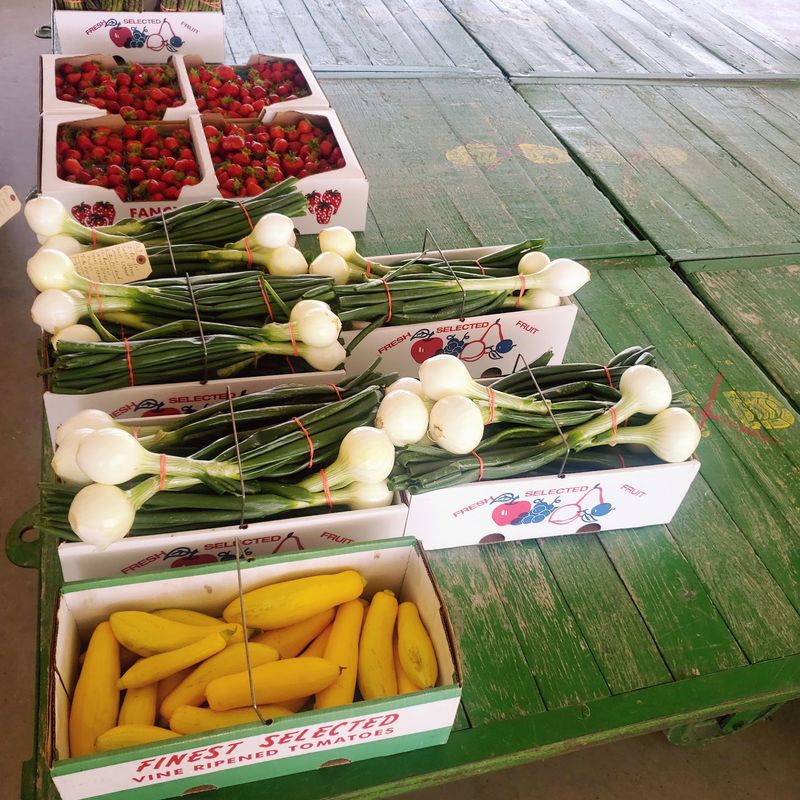
Spring brings asparagus and strawberries, the kind that perfume a whole car on the ride home. Hanging baskets often appear early too. Those sell quickly.
Midsummer belongs to tomatoes. Slicers, romas, heirlooms, all piled in flats. Canners buy them by the hundreds of pounds.
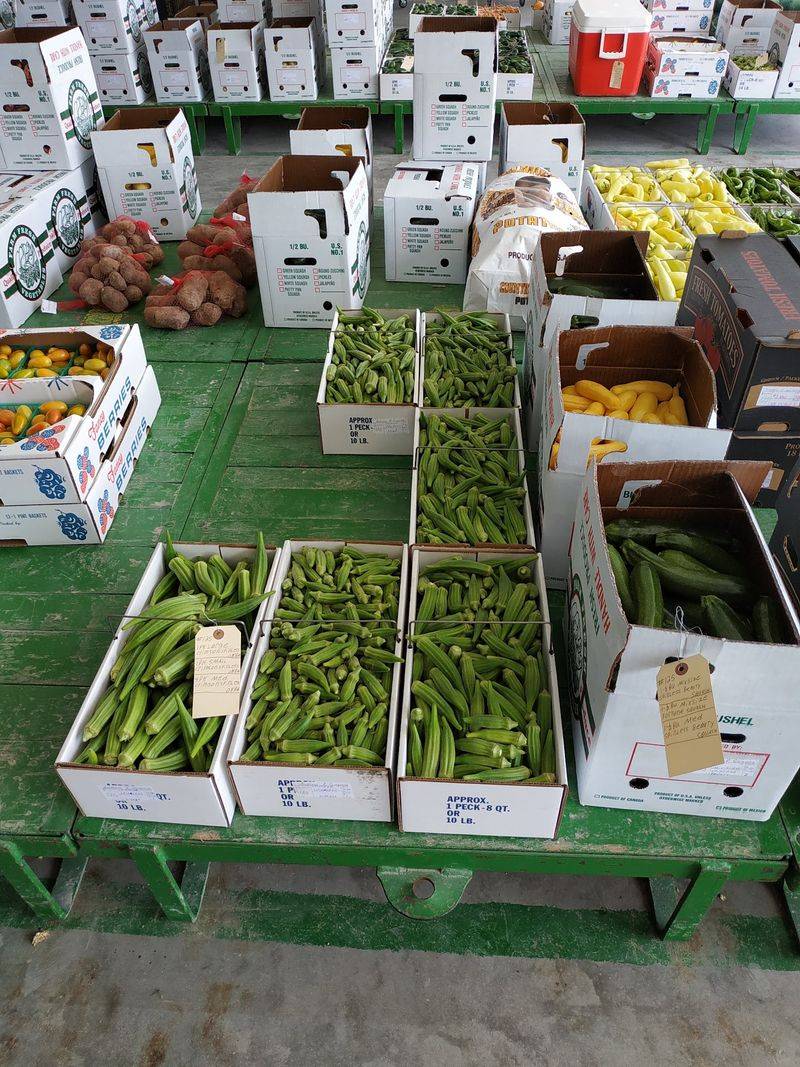
Sweet corn shows up in tall stacks. Okra, cucumbers, onions, and yellow squash fill the middle rows. Peaches make appearances as well.
Late season turns toward bell peppers, sweet potatoes, and pumpkins. Autumn lots skew heavy and orange. Decorators and bakers both show interest.
Every box carries a label with the grower’s name and a grade. That small detail builds real trust between farmer and buyer. You know exactly whose field your food came from.
Produce arrives cleaned and packed with care. Nothing looks tossed together. The presentation reflects genuine pride in the work.
Most lots are sold in bulk, which suits preserving and reselling. Home cooks often split a crate with a neighbor. That trick keeps the quantity manageable and the price friendly.
Old-World Farming, Delivered By Wagon
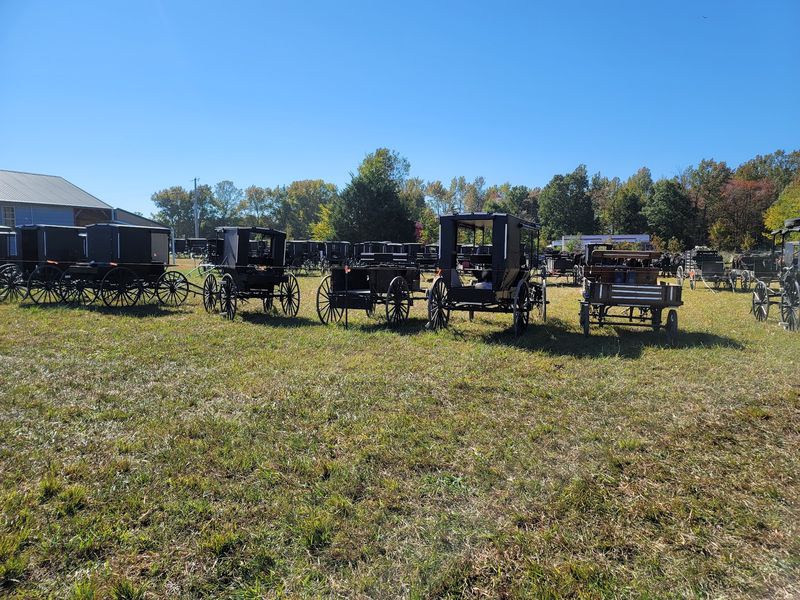
Horses do a lot of the heavy lifting here. Wagons roll in from farms just down the road. The clip of hooves mixes with the rumble of pickup engines.
Ethridge is home to one of the largest Amish settlements in Tennessee. Families farm without tractors, relying on horse teams and hand labor. That method shapes everything that reaches the auction floor.
Crops grown this way ripen on their own schedule. Nothing gets rushed. The flavor difference in a tomato picked at peak is hard to overstate.
Fields near Ethridge run in tidy strips, worked by hand and hoof. Produce often travels only a few miles from row to crate. Freshness is a matter of geography.
Out of respect for the Amish community, photography is not permitted on the grounds. Leave the camera in the car. Bring your attention instead.
That single rule sets a tone. The atmosphere stays calm and focused on the business at hand. It feels less like a spectacle and more like a genuine workday.
Watching skilled growers present their harvest is quietly impressive. Patience and diligence show up in every crisp head of lettuce and every unbruised pepper.
Furniture Sales And The October Consignment
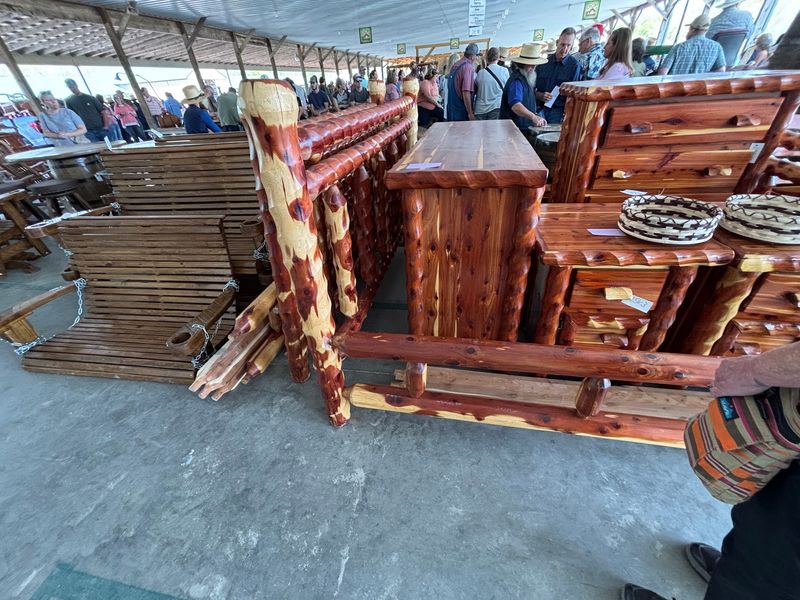
Vegetables are only half the story. Twice a year the lot fills with something entirely different. Wood, iron, and handmade goods take center stage.
Spring brings an annual furniture sale, typically the second Saturday of April. Amish craftsmen display pieces built through the winter months. Rocking chairs, tables, cabinets, and bed frames line the grounds.
Shoppers can talk directly with the builders. Custom orders get arranged on the spot. That direct connection is rare in the furniture world.
Solid hardwood and joinery done by hand explain the appeal. These pieces are made to outlast their owners’ grandchildren.
Prices reflect real value rather than showroom markup. Come October, a consignment sale takes over. The atmosphere leans toward a country fair.
Horse-drawn equipment, hand tools, and household items all cross the block.
Baked goods and preserves often appear at these bigger events. Amish women set up with breads, pies, and jars of jam. Those tables tend to empty early.
The consignment sale draws serious collectors and casual browsers alike. You never quite know what will roll through. That unpredictability is exactly why people mark it on the calendar.
Plan to spend the whole day. There is far more to see than one quick pass allows.
The People Behind The Gavel
Every good market depends on strong relationships, and that is especially true here.
Susan A. Kelley bought the operation in 2014 and remains its owner and manager today. Her connection with local Amish growers has become an important part of how the auction works.
For farming families around Ethridge, the auction provides a dependable outlet for crops grown nearby. Most sellers live within 10 miles, and the large majority are Old Order Amish.
Growers can bring anything from a few boxes to much larger wagon loads, giving farms of different sizes a place to sell their harvest.
New buyers register for a bidding number before joining the auction. Once things get moving, small home canners may find themselves bidding alongside wholesale buyers and restaurant operators.
Some buyers travel more than 300 miles to attend. Produce also makes its way to markets and restaurants well beyond Ethridge.
That mix of growers, serious buyers, and curious visitors gives the auction much of its energy. Commerce keeps everything moving, but local agriculture remains at the center of it all.
How To Get Ready For Your First Auction
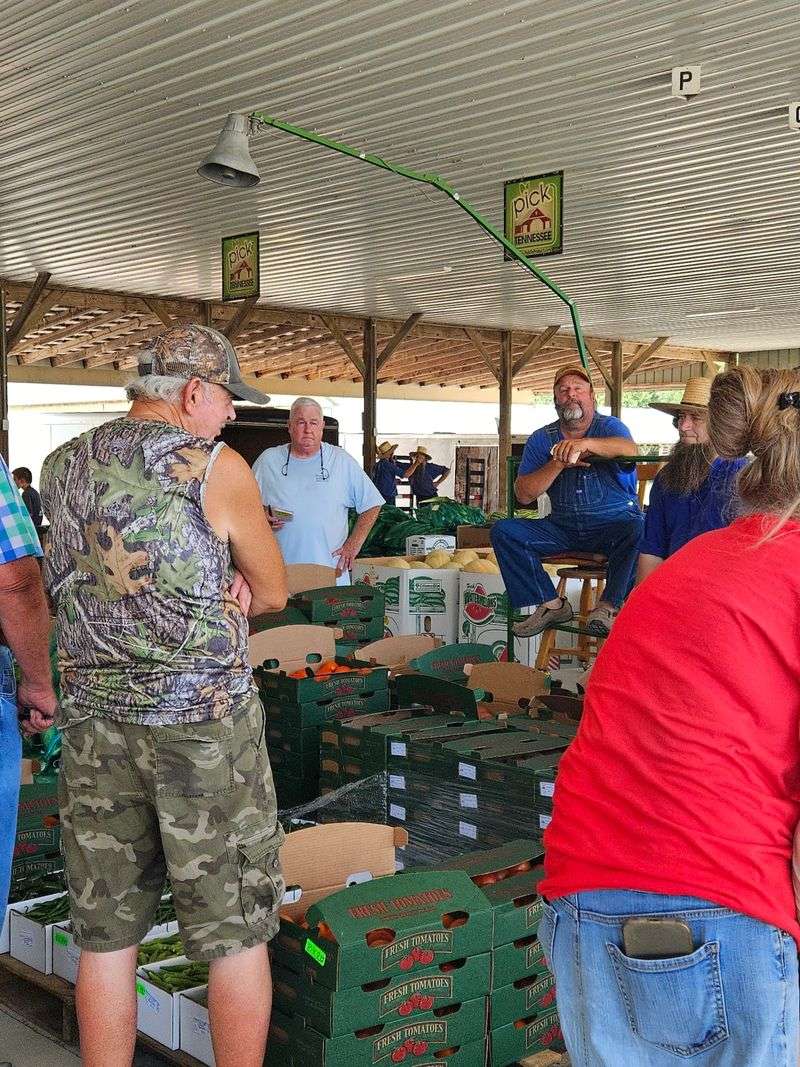
A little preparation turns a good outing into a great one. Bring cash, coolers, and more space in your vehicle than you think you need. Bulk lots add up fast.
Arrive by eleven when the office opens. That gives you two hours to study the crates before bidding starts. Rushing in at one o’clock puts you at a disadvantage.
Wear closed shoes and dress for the weather. The lot is gravel and mostly open air. Summer afternoons in Tennessee get warm.
Set a budget before the chant begins. Excitement can push a bid higher than planned. Writing a number on your hand is not a bad idea.
Bring a friend if you can. On days with several rings running at once, two sets of ears cover much more.
Skip the camera entirely out of respect for the community. Plowboy Produce Auctions asks that photographs not be taken on the property.
The season runs roughly April through October, with sales on Monday, Wednesday, and Friday afternoons. Leave room in your schedule too.
Plowboy Produce Auctions rewards people who linger, listen, and let the afternoon unfold at its own country pace.