
A Tiny Tennessee Farm Town Hides A 50-acre Museum Kids Never Want To Leave
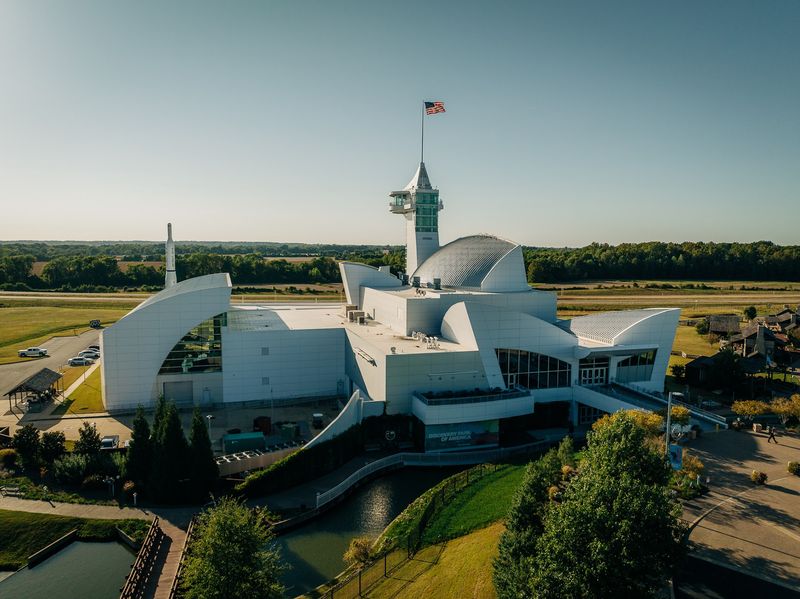
Driving through northwest Tennessee, you get used to a certain rhythm: soybean fields, grain bins, a tractor easing onto the shoulder. Nothing about that scenery prepares you for a glass-and-steel building rising out of the farmland like it wandered in from a much bigger city.
Inside and out, it spreads across 50 acres packed with dinosaurs, a shaking floor that mimics an earthquake, a log settlement, and a tower you can climb for a view of three states worth of flatland. Kids walk in expecting a quiet afternoon and end up begging for one more loop.
Farmland Address, Big-City Ambitions
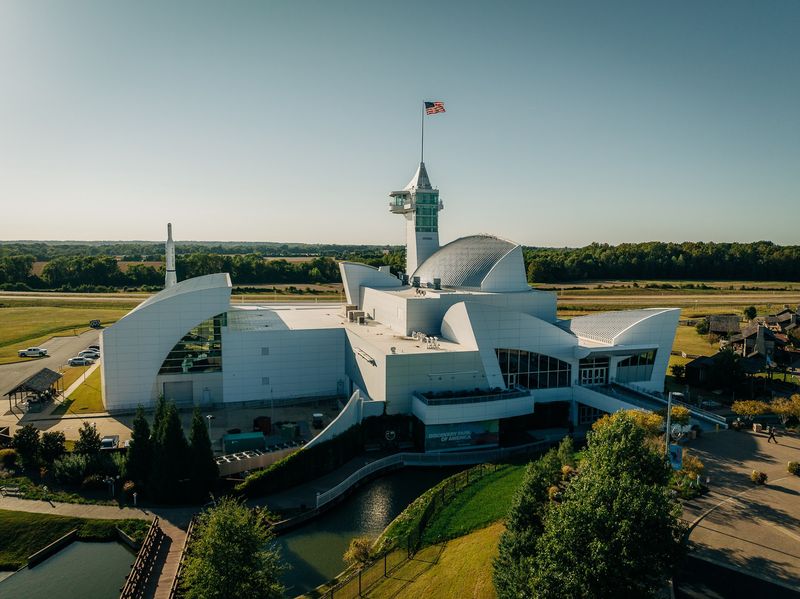
The address is 830 Everett Blvd in Union City, Tennessee, a small farming community closer to the Kentucky line than to Nashville. What sits at that address is Discovery Park of America, a 50-acre museum and heritage park built around a 100,000-square-foot main building.
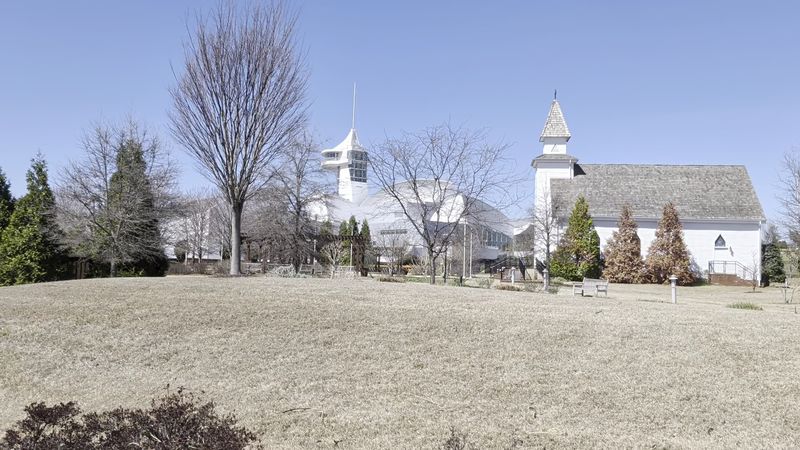
Ten galleries fill the interior, running from space and science to art, history, transportation, and innovation. Outside, the grounds hold gardens, a working gristmill, a replica 19th-century town, a historic train, and a 100-foot observation tower.
Visitors regularly describe arriving with modest expectations and leaving stunned by the scale. Several mention spending three hours or an entire day and still missing large chunks of the place, which says more about the square footage than about anyone’s pacing.
The park carries a 4.8-star rating across nearly 4,000 reviews, unusual for an attraction in a town most travelers only pass on the way somewhere else. One guest summed up the surprise neatly, calling it a must-see if you find yourself in the middle of nowhere in Tennessee.
That contrast between setting and substance is the whole story here.
The Kirkland Vision and the Words See Beyond
Behind the whole project stand Robert and Jenny Kirkland, who funded and shaped the park as a gift to their region. Their guiding phrase, see beyond, appears throughout the experience and explains the odd, wonderful range of what’s on display.
Rather than picking one narrow theme, the founders built something deliberately eclectic. A guest who visited friends nearby described it as an assortment of collections pulled into a single place: a massive arrowhead display, dinosaur bones, classic automobiles, and military artifacts, all under one roof.
That breadth is intentional. The idea was to give kids growing up in a rural corner of West Tennessee a reason to imagine careers, places, and ideas beyond the county line, without requiring a plane ticket.
Adults benefit from the same logic. Parents who have toured plenty of science centers say this one operates on a different level, largely because it refuses to stay inside the usual children’s-museum lane.
Knowing the origin story changes how the building reads. It stops feeling like a random marvel and starts feeling like a promise someone kept.
Dinosaurs That Stop Kids in Their Tracks
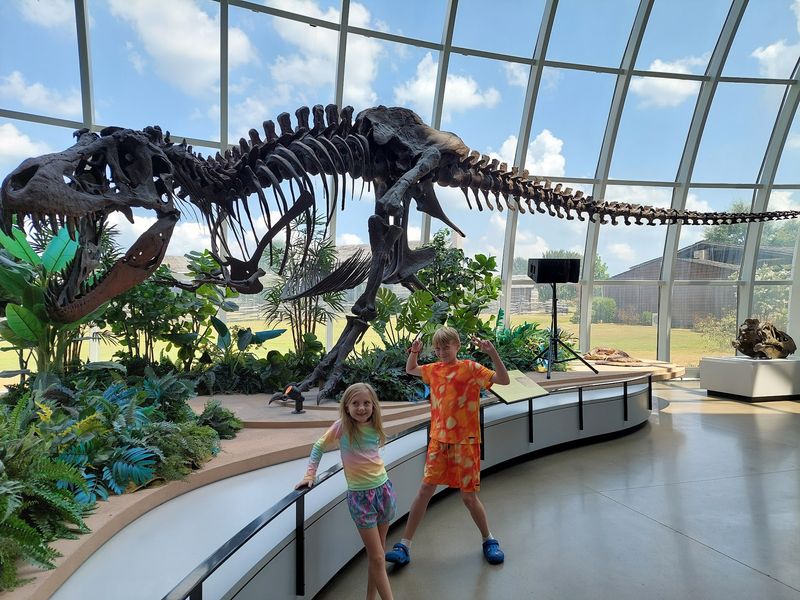
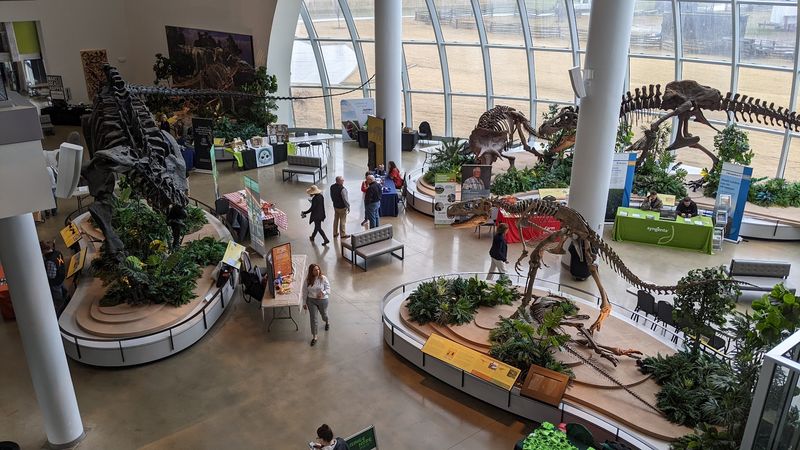
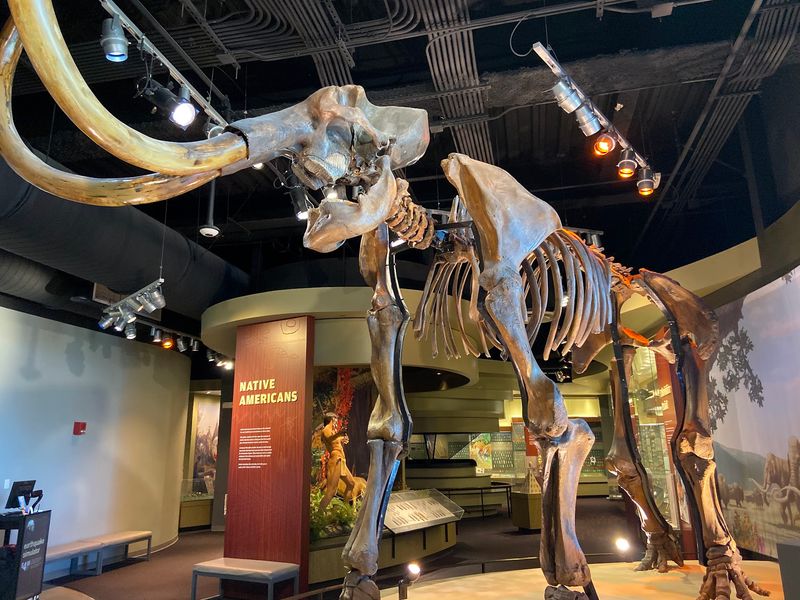
Ask any family what their kids talk about afterward and the answer tends to arrive fast: dinosaurs. They’re the single most mentioned feature in visitor comments, with more than 60 people bringing them up.
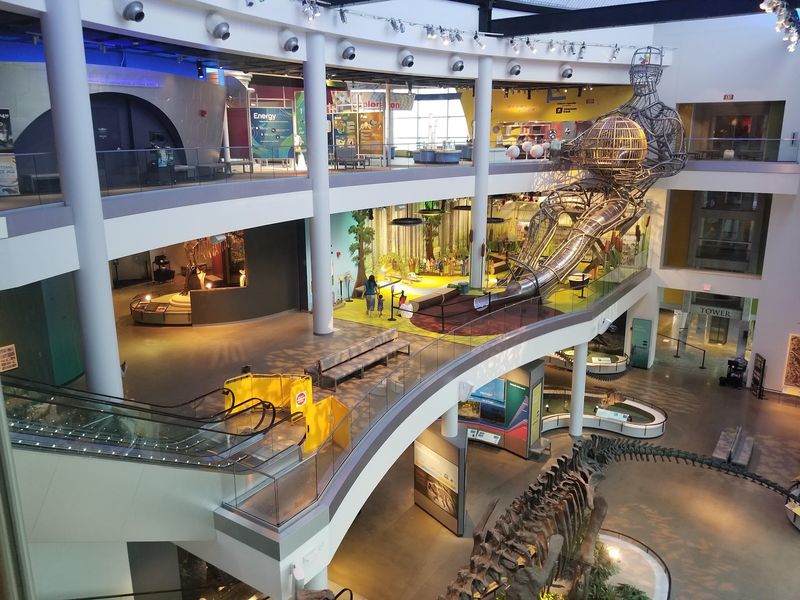
Life-sized displays and real fossil material anchor this section, and the sheer scale does the heavy lifting. Small children crane their necks; older ones start reading the bone structures like puzzles.
A parent of a four-year-old described their son barely containing himself among the variety of engaging displays, and that reaction seems typical rather than exceptional.
Fair warning from a more critical guest: some of the fossil and artifact labeling is thinner than collectors might like, with fewer dates and detailed descriptions than a serious history buff would want. If your family reads every placard, be ready to fill a few gaps yourself.
For most young visitors, though, the appeal is immediate and physical. Standing beside something enormous does something that a textbook photograph never manages, and it’s often the moment a hesitant kid decides museums are actually fun.
Four Dimensions of Shaking Ground
Few museum exhibits get the kind of unprompted enthusiasm this one does. The 4-D earthquake simulator recreates the powerful New Madrid quakes that reshaped this part of Tennessee, and the floor moves while you watch.
One visitor put it memorably, saying you can truly feel Reelfoot Lake being formed. The nearby lake was created by that historic seismic upheaval, which makes the simulation a local story rather than a generic thrill.
Adults tend to be as taken with it as children. A father visiting with a four-year-old singled it out as an amazing attraction worth experiencing for both the sensation and the history behind it.
It ranks among the most talked-about features in the entire building, with more than twenty separate mentions in guest feedback. Given how many exhibits compete for attention across ten galleries, that’s telling.
Plan to hit it early if crowds build. It runs on cycles, and once word spreads through a group of school kids, the line tends to grow quickly.
A Replica Town Where the 1800s Still Stand
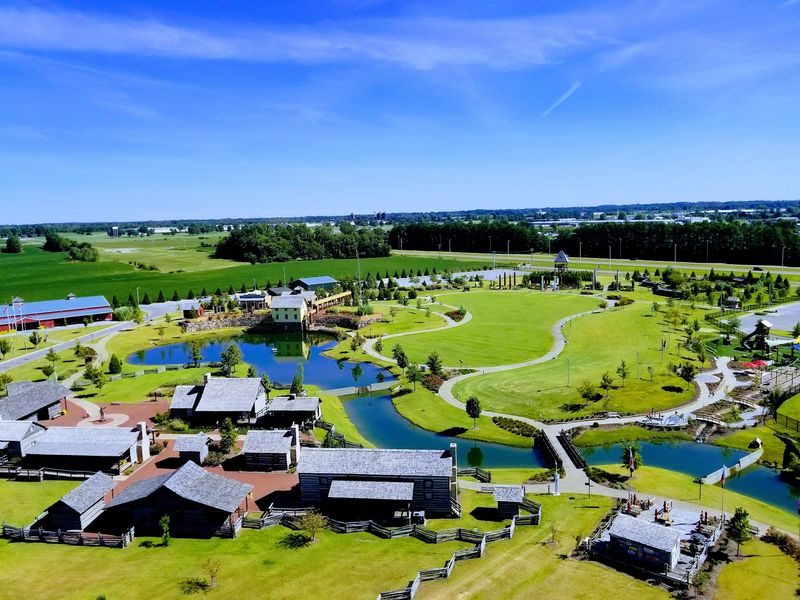
Step out the back and the century flips. A full-size replica of a 19th-century town spreads across the grounds, complete with historic buildings, log cabins, a working gristmill, and a church that guests describe as genuinely stunning.
Walking the settlement feels less like touring a museum wing and more like drifting through a small community that simply stopped aging. Log homes draw steady praise, and the paths connecting them wind past gardens and waterfalls.
A train depot and historic rail equipment sit nearby, giving a clear picture of how goods and people once moved through this region. One family called the vintage village well maintained and a pleasure to stroll through, and that mix of history and open air seems to be the appeal.
Accessibility holds up better than you might expect for a period recreation. A visitor traveling with a wheelchair user found most outdoor paths paved, the settlement and gristmill areas surfaced with well-packed fine gravel, and ramps leading into several cabins.
Bring comfortable shoes. Covering the outdoor half properly takes real walking.
One Hundred Feet Above the Soybeans
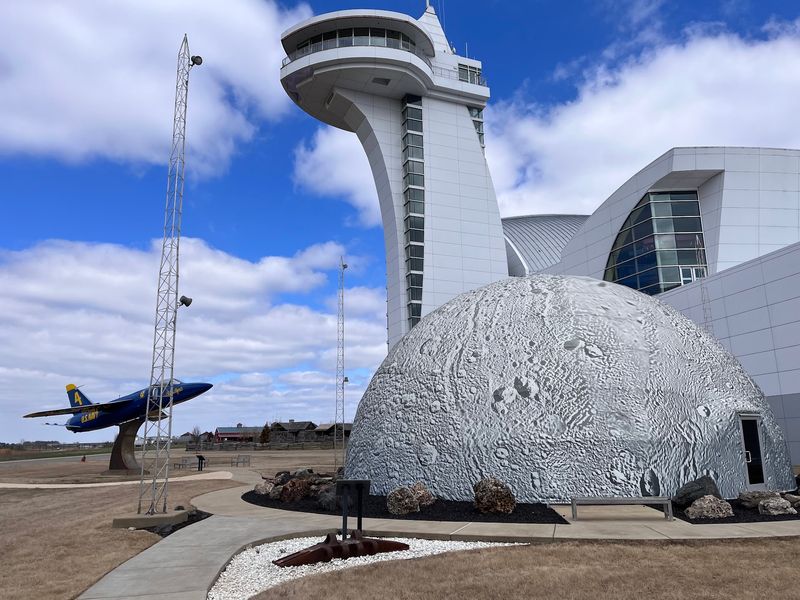
Climb the 100-foot observation tower and the geography finally makes sense. From the top, the flat farmland of northwest Tennessee stretches out in every direction, with the interstate threading through it and the park’s outdoor exhibits laid out below like a map.
On cold or windy days, the tower doubles as a shortcut. Guests who skipped the outdoor grounds during winter visits mentioned viewing the settlement, gardens, and train depot from up high instead, which at least gives you a sense of what you’re missing.
The tower is one of the paid add-on attractions rather than being included in general admission. A family who chose a pick-two package paired the tower with a 3-D show and found the extra cost reasonable.
Another visitor called the climb worth it purely for the perspective, noting that the view revealed outdoor exhibits they hadn’t even realized existed: settlement recreations, mazes, playgrounds, and more scattered around the building.
Consider going up early. Seeing the layout first helps you plan the rest of the day instead of wandering.
Cars, Aircraft, Aquarium Glass and a Giant Slide
Car people, take note. The automobile collection surfaces again and again in visitor comments, described as a genuinely impressive lineup that any enthusiast would appreciate.
Military history occupies another substantial chunk, with vehicles and memorabilia drawing steady attention. The transportation and space galleries round things out, along with an interactive Starship Theater and 3-D film shows that families single out as a highlight.
A 20,000-gallon aquarium holds live creatures and gives the building an unexpected splash of blue light. Elsewhere there’s an arrowhead collection large enough to startle people, plus a rock and mineral display where one knowledgeable staff member gave a seven-year-old visitor an impromptu mini tour.
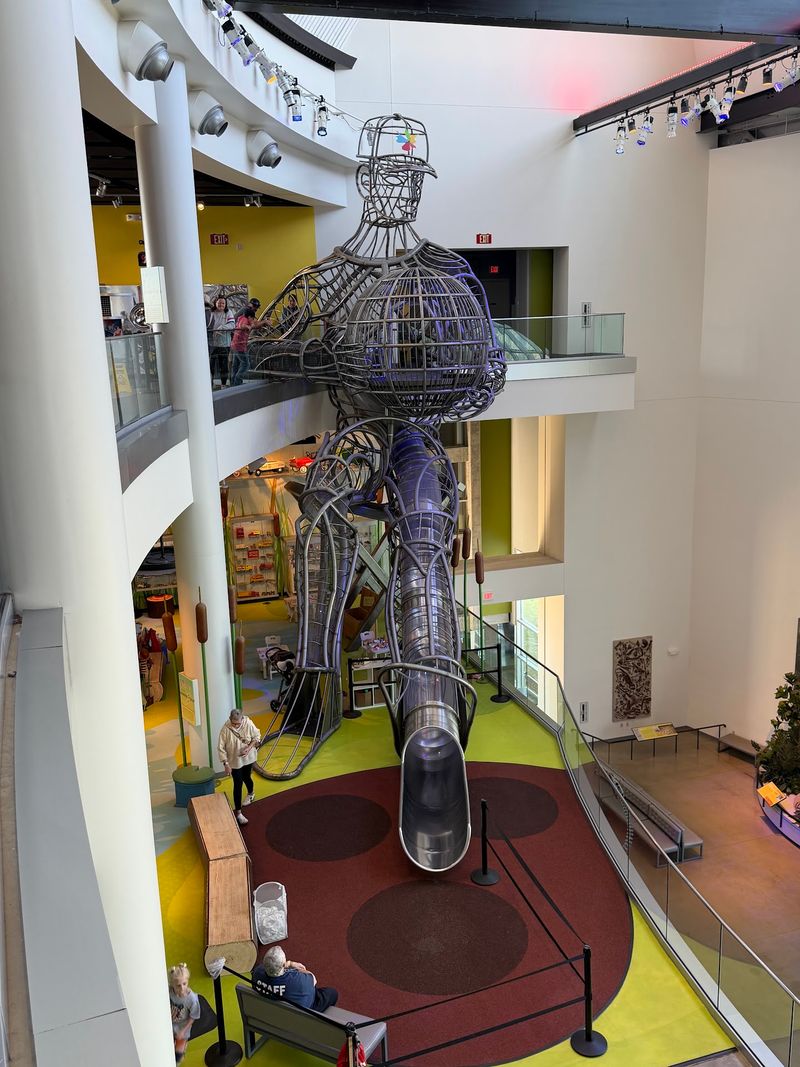
The oddest and most beloved feature waits outside: a 48-foot human statue with a giant slide built into it. Add mazes, playgrounds sized for toddlers, and an agriculture and technology center exploring how farming evolved, and the variety starts to feel almost comical.
Guests keep repeating a version of the same line, that there’s something here for every age. With this many unrelated collections sharing one campus, it’s hard to argue.
Who Fits Best in a Place This Sprawling
Families with elementary-age kids get the most obvious payoff. Parents of four- and six-year-olds report hours of happy chaos, and one family celebrated an eighth birthday here, praising how inclusive and hands-on the activities were.
Couples without children do fine too. One pair visited on their own, loved the western-style log homes, caught a Boston Tea Party reenactment, and waited out a rain shower in the Japanese gardens, calling the pause deeply peaceful.
Older visitors mention something practical and easy to overlook: plenty of benches, both indoors and out. For seniors pacing themselves across a campus this size, that matters.
Teens with specific interests, whether rocks, cars, or military history, tend to find their corner. A family traveling with a wheelchair-using teenager and an older brother reported both kids genuinely enjoying the day.
The main caution is stamina. Multiple guests describe barely covering half the park in a full visit, so anyone hoping to see everything in two hours will leave frustrated.
Arrive early, pace yourself, and accept that you’ll be planning a return trip.
Hours, Tickets and Getting There
Doors open at 10 AM Monday through Saturday and close at 4 PM, with Sunday running 11 AM to 4 PM. That six-hour window fills up fast, and regulars strongly advise showing up right at opening because it genuinely is an all-day outing.
General admission runs in the neighborhood of thirty dollars for a couple of tickets based on visitor accounts, with certain attractions like the observation tower and 3-D theater available as paid add-ons. A pick-two bundle keeps those extras from stacking up.
Food is available on site. Opinions split here: some guests found the grill served a solid lunch at fair prices, while others thought the cafeteria menu could use an upgrade.
Call ahead at 731-885-5455 or check discoveryparkofamerica.com before driving out, especially in winter, since some outdoor shops and eateries close seasonally and the gardens look sparse when it’s cold.
The park also runs a holiday light display with both drive-through and walking options, which families describe as a completely different kind of visit and reason enough to come back.
Worth the Detour Off the Highway
Nearly 4,000 people have weighed in and the average lands at 4.8 stars, which for a rural attraction is a remarkable consensus. The praise clusters around the same themes: scale, variety, friendly staff, and well-kept grounds.
Criticism exists and it’s worth hearing. A few visitors wanted more dated labels and audio descriptions on the collections, and one thought the outdoor gardens needed livelier planting during the off-season.
Still, even the more measured comments end up recommending the stop. The recurring refrain is that one visit isn’t enough, which is an unusual complaint for a museum in a town of this size.
What lingers isn’t any single exhibit. It’s the strangeness of finding a 50-acre park with dinosaurs, a shaking floor, an aquarium, a gristmill, and a slide inside a giant statue, all sitting quietly among soybean fields.
If your route through West Tennessee passes anywhere near Union City, give it most of a day rather than an hour. The kids will not want to leave, and there’s a decent chance you won’t either.