
The Mysterious Kentucky Bridge You Shouldn’t Visit After Dark
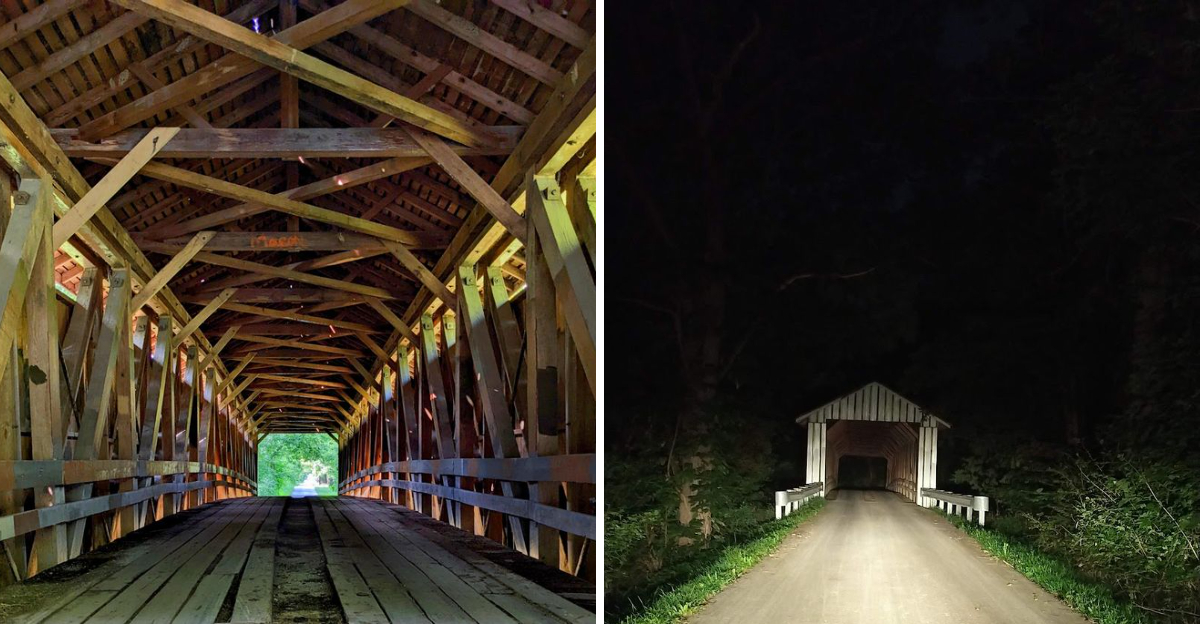
Kentucky hides a piece of engineering that still earns its keep every day.
Built in the 1800s, this wooden crossing still carries real traffic across a quiet creek. Horse farms roll along the road, fences and barns stretching toward the hills.
Locals talk about this crossing with real pride, then their voices drop once talk turns to nightfall. A toll gate once guarded the entrance, and a flood nearly swept it away.
Old stories about that dark road still refuse to fade. Kentucky offers scenic drives everywhere, but few end inside a creaking wooden tunnel packed with folklore.
Would you dare take that final curve after sunset? Bring a camera, take it slow, and let those old tales shape how you feel under that roof.
Built In 1877 And Still Doing Its Job
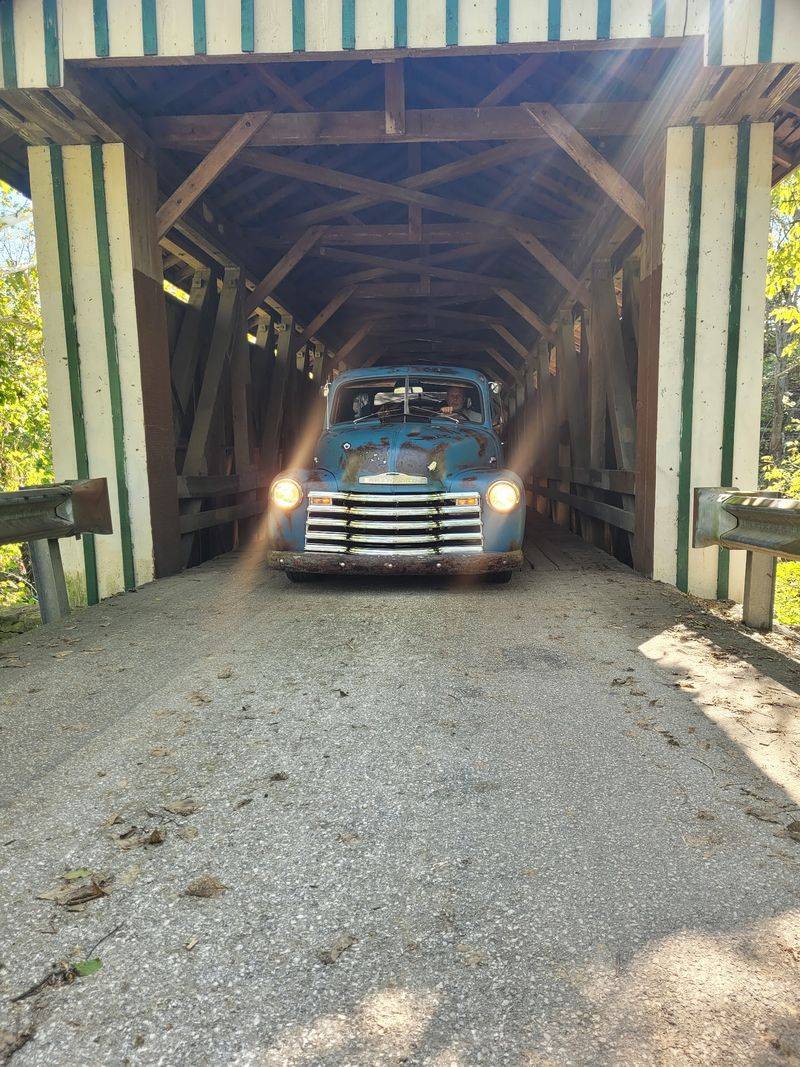
Old bridges rarely get to keep working. Colville Covered Bridge does.
Construction dates to 1877, and the span still carries traffic across Hinkston Creek today. That makes it one of a small handful in Kentucky where drivers can actually roll through instead of just looking.
Bourbon County once had several covered crossings. Colville Covered Bridge is the last one standing here, which gives it a quiet kind of importance.
Travelers find it at 543-509 Colville Rd, Paris, KY 40361, out where the pavement narrows and the farms take over. The setting feels far from anywhere, though it sits close to town.
The bridge measures roughly 124 feet long and 18 feet wide, with the deck sitting about 28 feet above the water. A toll gatehouse once stood at the entrance, back when crossings cost money.
Nothing about the structure feels like a museum piece behind glass. Tires still thump on the planks, and farm equipment still passes through.
History here stays useful, which may be the best kind of preservation anyone could ask for.
The Burr Truss That Refuses To Quit
Strength hides in the geometry. Look up inside Colville Covered Bridge and the framework explains itself.
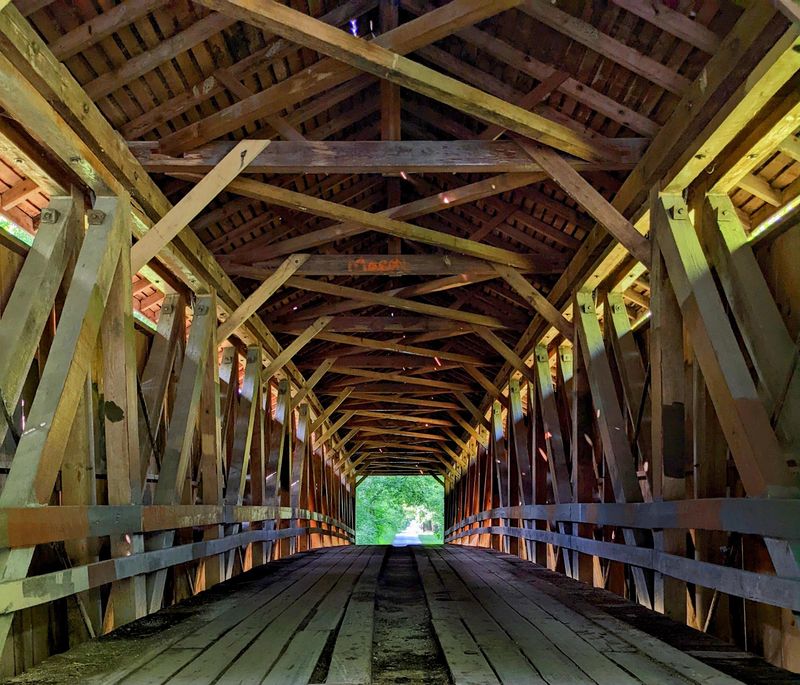
The design uses a Burr truss, a system that pairs an arch with a series of king posts. Engineers of the 1800s trusted it because it spread weight well and held steady under load.
A well-known bridge builder from Maysville, Kentucky oversaw the 1877 construction. His family name stayed attached to the structure for decades, since his son and grandson later handled repairs.
Yellow poplar formed the original timbers. Builders of that era considered poplar nearly indestructible as long as rain never touched it.
That belief explains the roof. Covered bridges were never covered for romance or for shade; the roof simply kept water off the wooden joints below.
Reviewers often mention the massive boards and the wooden pegs used in place of steel bolts. No rust, no corrosion, just timber locking into timber.
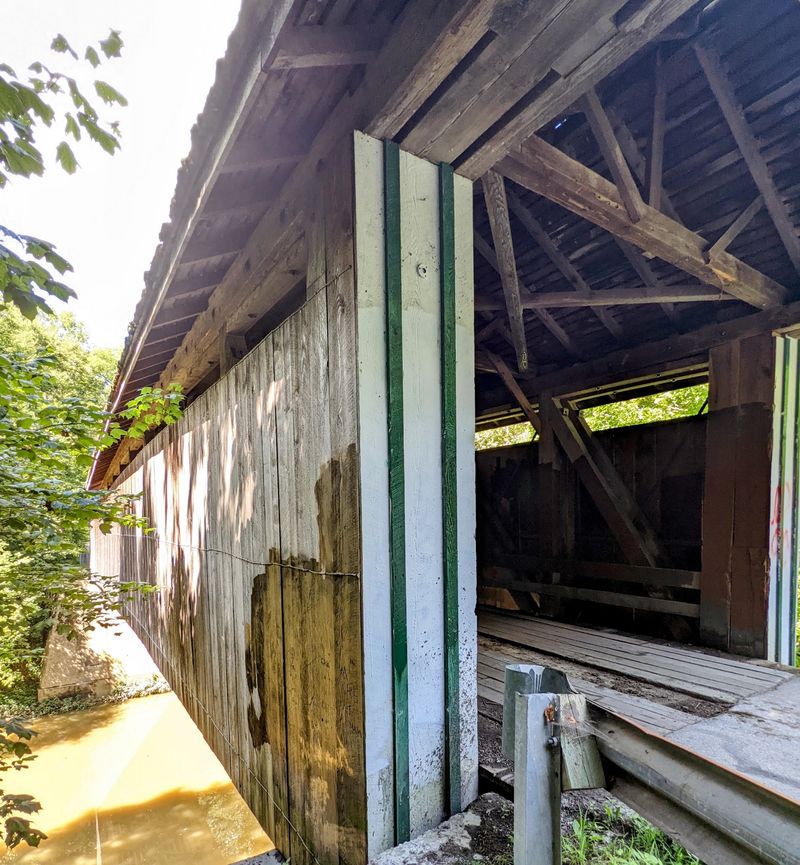
The green and white portal trim remains a signature detail, restored to match the original scheme. Craftsmanship like that deserves a slow walk-through.
A Flood That Nearly Took It Away
1997 came close to ending the story. Hinkston Creek rose an estimated 37 feet, climbing several feet above the bridge decking.
The current shoved the span off its stone abutments. What followed was a roughly two-year restoration effort, careful and slow.
Crews salvaged as much original material as possible. The goal stayed simple: return Colville Covered Bridge to the way it looked before the water arrived.
The rebuilt bridge received a wood shingle roof and freshly restored portal details. Anyone visiting today sees the results of that patient work.
Flooding was not the first problem, either. Major repairs happened in 1913 and again in 1937.
An overloaded truck damaged the structure in 1972, closing it for about a year while workers made repairs. Weight limits exist for good reasons.
Many Kentucky covered bridges disappeared during the Civil War era, taken down by troops on both sides. Colville Covered Bridge somehow stayed upright through all of it.
Survival stories like that give a wooden bridge a certain stubborn dignity.
Horse Country Scenery On The Way In
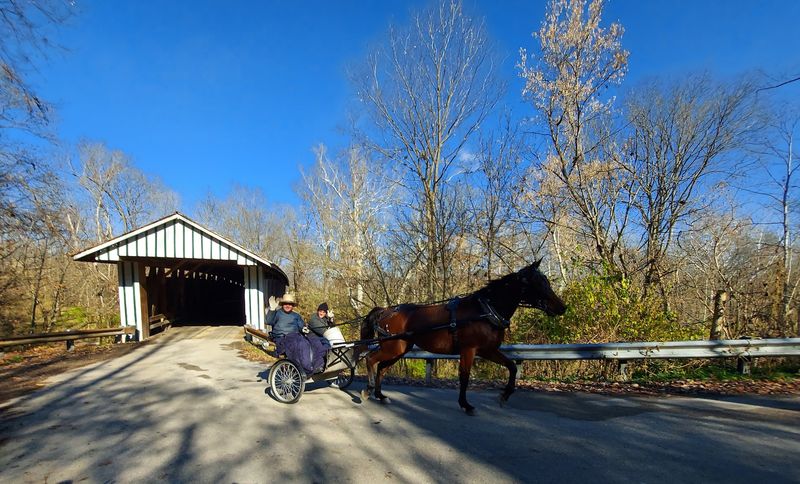
The drive earns half the applause. Roads leading toward Colville Covered Bridge cut through classic Bluegrass horse country.
White fences line the pastures. Barns sit on hilltops, and thoroughbreds graze in wide fields.
Many visitors approach through Paris, a small town with restored buildings and an easygoing pace. Past town, the land starts rolling and the hills grow steeper.
The final stretch of Colville Road twists between farm fields. Then the wooden portal appears in a bend, almost without warning.
Motorcyclists and cyclists talk about this route often, and the reason shows itself quickly. Low traffic, curves, and long views make for pleasant riding.
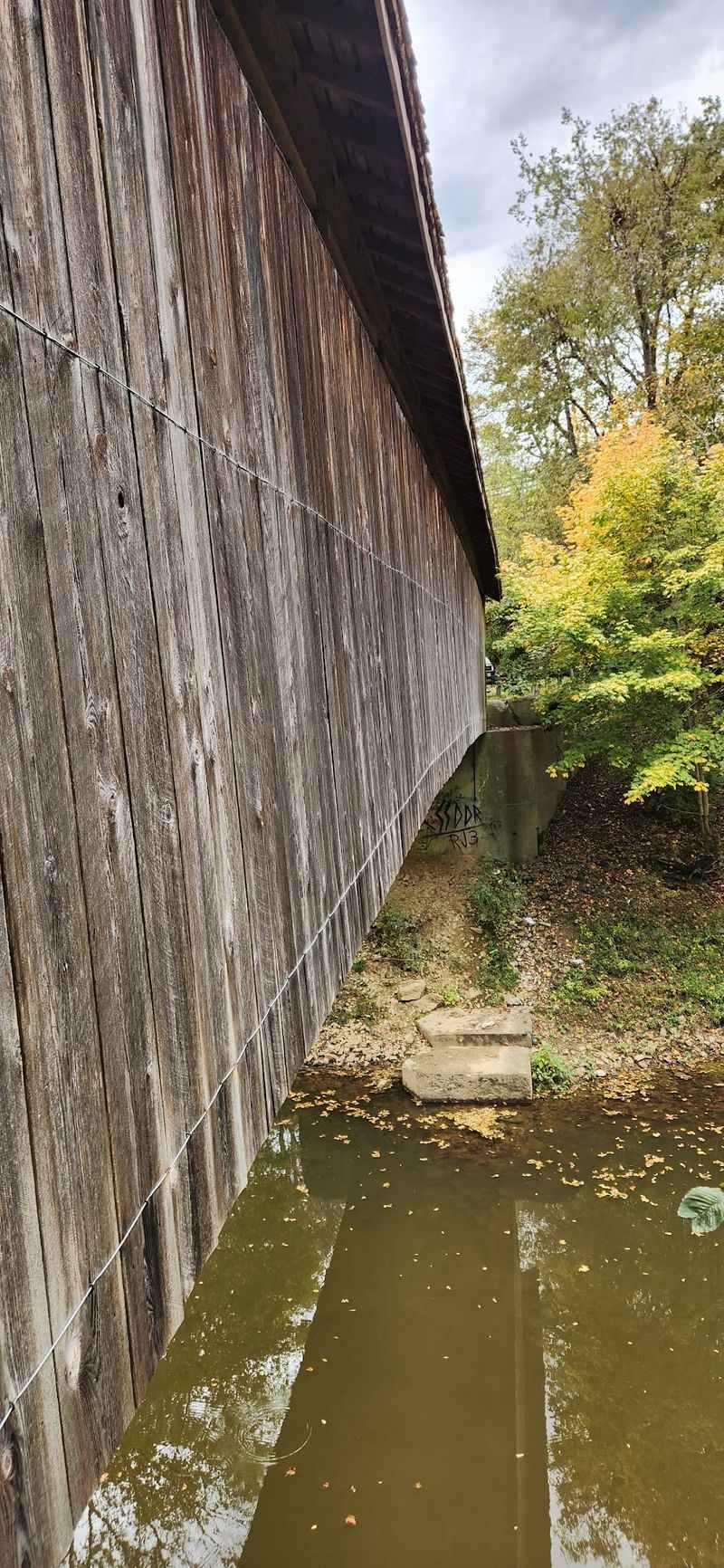
Hinkston Creek moves calmly under the span. Trees lean over the banks, and the water reflects the timber above.
Nothing feels commercial out here. No gift shop, no ticket window, no crowds pressing in.
The countryside surrounding Colville Covered Bridge stays working farmland, which keeps the whole scene honest. Bring a camera and expect to linger longer than planned.
Why Locals Warn About Nighttime Visits
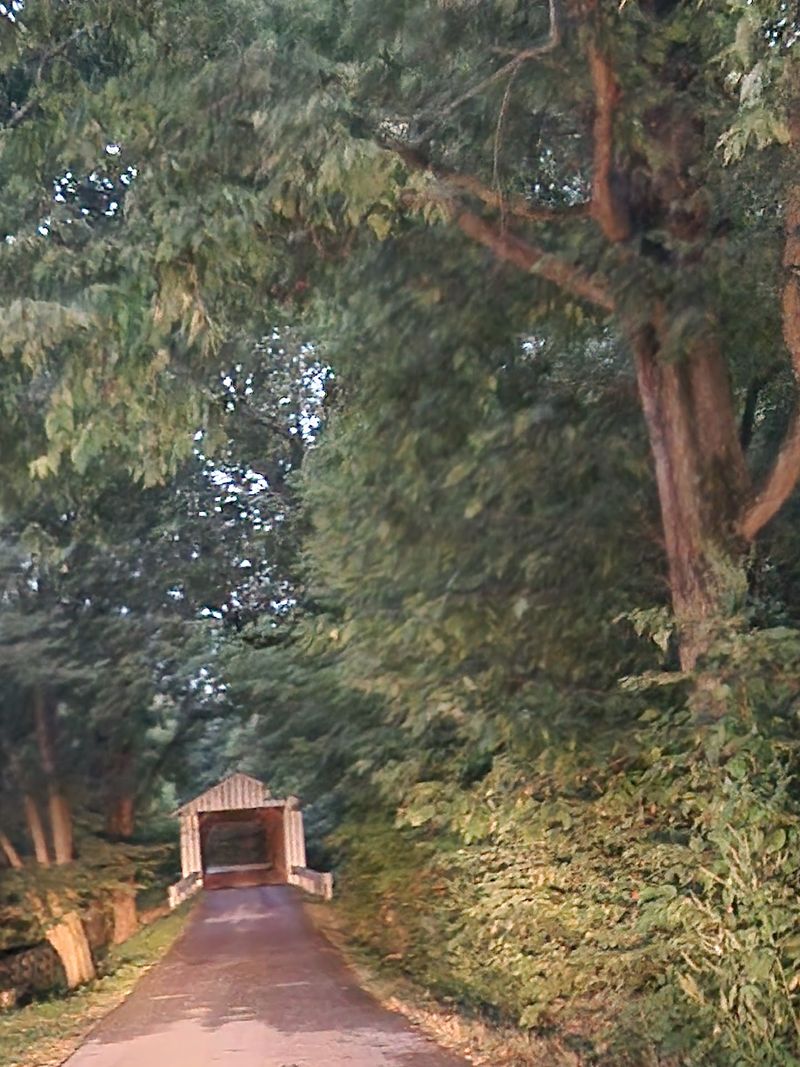
Sunset changes the mood fast. Once daylight fades, Colville Covered Bridge stops feeling quaint and starts feeling watchful.
Folklore around this span runs deep. Some storytellers call it the most haunted covered bridge in Kentucky, though that title has no official source.
The remote setting does most of the work. No streetlights reach out here, and the nearest houses sit well away.
Visitors describe a heavy feeling inside the wooden tunnel. Sounds echo strangely between the trusses, and the creek gurgles somewhere below.
Practical concerns matter too. The bridge holds one lane, the approach curves sharply, and the pull-off area barely fits a single car.
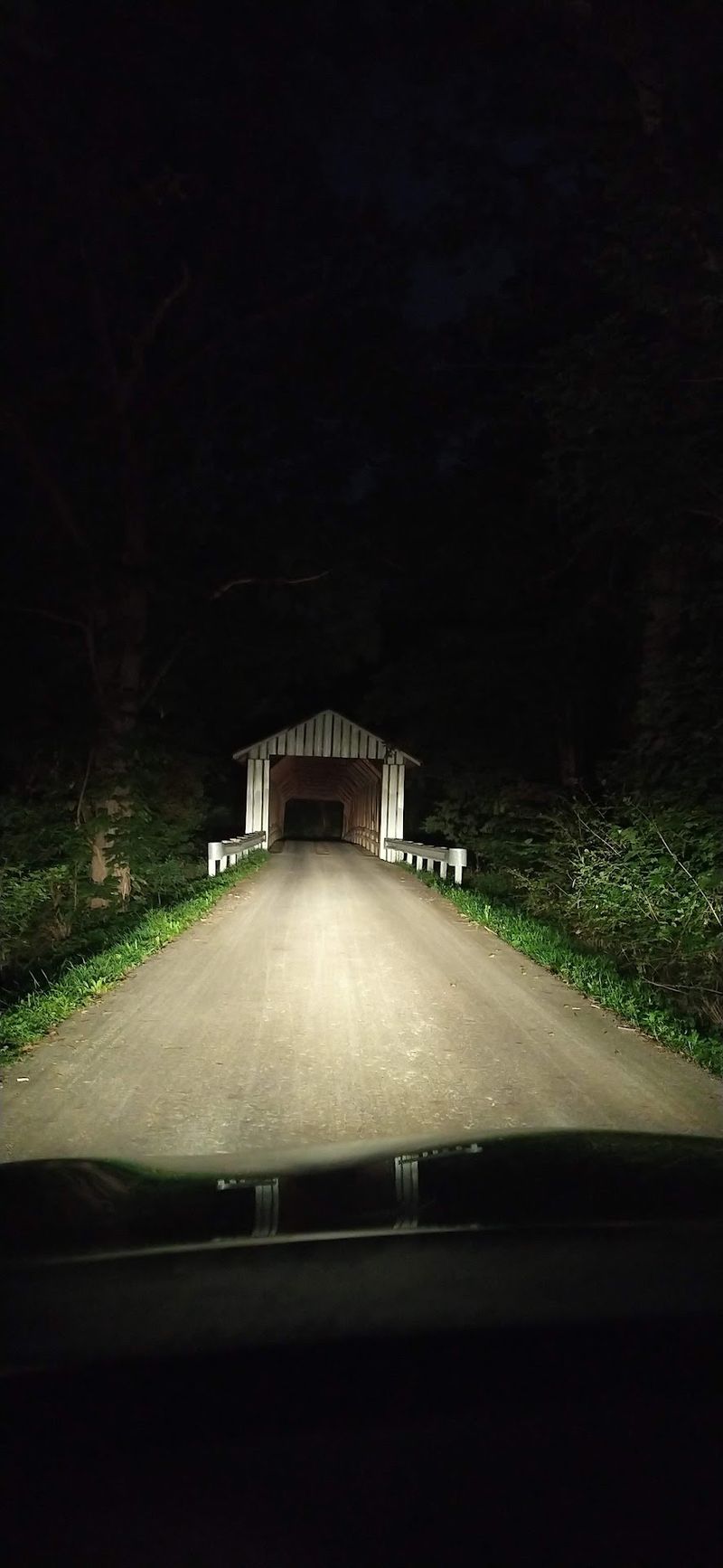
Driving that road in darkness means limited sightlines and almost no shoulder. Plenty of good reasons exist to arrive while the sun is still up.
Locals repeat their tales with a grin, then add a shrug. Believe the ghost stories or not, the road itself gives fair warning.
Daylight visits deliver the same charm with far fewer surprises.
Legends Whispered Through The Rafters
Every old bridge collects stories. Colville Covered Bridge collected more than its share.
One legend traces back to a man from the early 1900s who is said to have vanished near the bridge under circumstances nobody could ever explain.
Another story involves an older woman who suffered a heart attack while walking through the bridge. Locals have repeated her name for generations.
Reported experiences follow familiar patterns. Sudden cold pockets, unexplained sighs, faint whispers when nobody else stands nearby.
Paranormal groups have brought equipment out to the site. They mention meter readings and audio recordings, but none of it counts as proof.
Treat these accounts as folklore rather than fact. Rural communities have passed down bridge legends for well over a century, and details shift with each retelling.
The stories still add something real to a visit. Standing under those rafters, the imagination fills gaps quickly.
Skeptics leave amused. Believers leave convinced.
Colville Covered Bridge seems perfectly happy to let both groups argue about it.
The Prom Night Story People Still Repeat
1930s. A high school dance.
A dark country road.
According to the most repeated legend attached to the bridge, a car once missed the narrow entrance on a dark night decades ago. Ever since, travelers have reported strange lights flickering near the span, and locals still treat the story as a reason to take that curve slowly.
Neither survived, the story goes. Nobody arrived in time to help.
Ever since, travelers have claimed to see odd lights near the span. Some describe a glow flickering between the planks, low and steady, like headlights shining up from the water.
Others mention a faint outline of an old car near the entrance. It fades when anyone looks directly at it.
Verification for the incident remains elusive. Treat it as regional folklore rather than documented history.
The tale does carry one useful lesson. The bridge entrance really is tight, the road really does curve, and speed really is a bad idea here.
Legends sometimes double as safety warnings. This one manages both jobs at once.
Rolling Across Wooden Planks Yourself
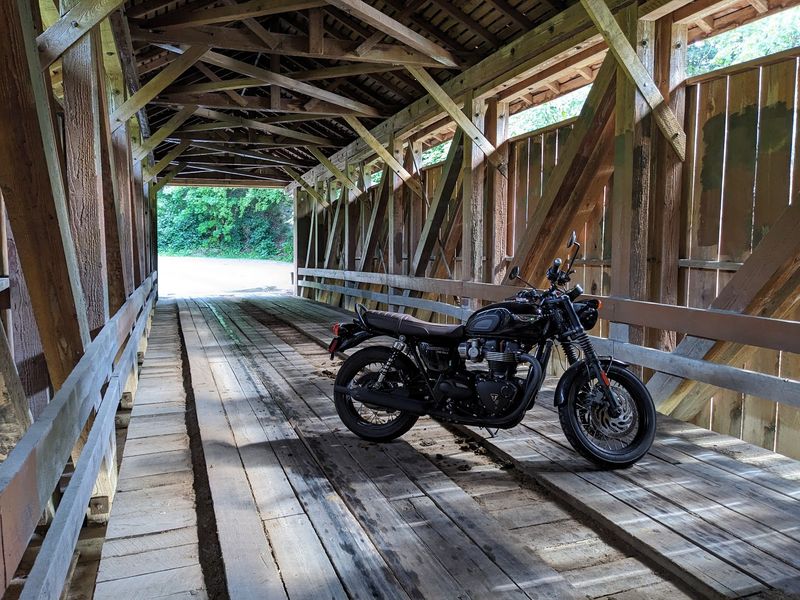
That rumble sticks with people. Tires on old planks produce a sound no modern road can copy.
Colville Covered Bridge remains one of the few in Kentucky open to vehicles. Only about a dozen covered bridges survive statewide, and most exist as look-only landmarks.
Driving through takes seconds. The experience lasts much longer in memory.
One lane means one car at a time. Slow down, check for oncoming traffic, and let anyone already inside finish crossing first.
Weight and height limits apply, so large vehicles should skip the crossing entirely. Past damage from overloaded trucks explains the caution.
A plaque about covered bridges sits near the far side. Turning around and crossing back gives easy access to it.
Cyclists and motorcycle riders enjoy the crossing even more. Less metal, more sound, better view of the trusses overhead.
Farm tractors still use the bridge, a reminder that it belongs to the community first. Visitors just get to borrow it for a moment.
Smart Tips For Photos And Parking
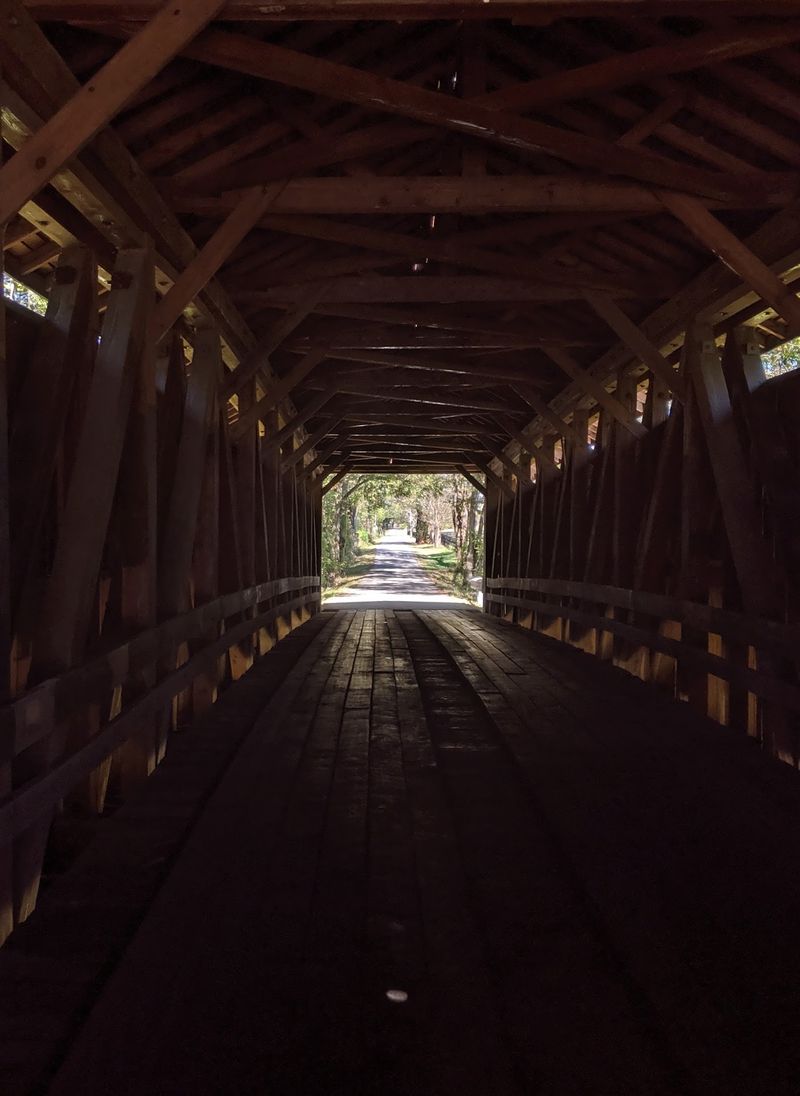
Space is tight. Only one side of Colville Covered Bridge offers a pull-off, and it fits roughly one vehicle.
Plan accordingly. Arriving early in the day usually means having the spot to yourself.
Golden hour light works beautifully on the green and white portals. Morning sun hits one entrance, late afternoon favors the other.
Creek-level angles show off the trusses and stone abutments. The banks can be slick, so watch footing near the water.
Interior shots come out best with a person or car in frame for scale. The tunnel effect looks dramatic either way.
Cell service can be spotty out in this part of Bourbon County. Download directions before leaving Paris.
Bring water, and expect no restrooms, trash cans, or vendors anywhere nearby. The site stays refreshingly undeveloped.
Never block the lane while shooting. Farm traffic needs the road, and patience runs thin when a tractor waits.
Leave the timbers unmarked. Residents work hard to keep graffiti off this bridge, and that effort shows.
Pairing The Visit With Nearby Stops
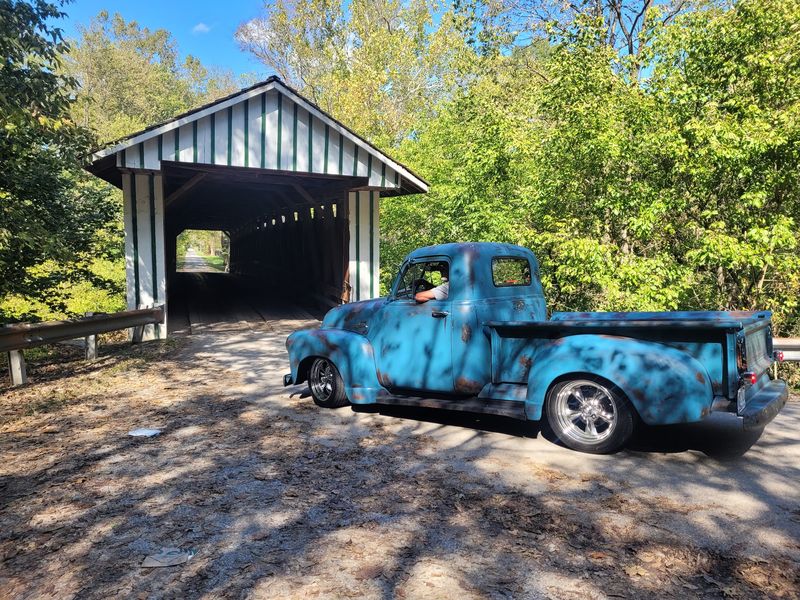
Ten minutes at a bridge hardly fills a day. Bourbon County solves that easily.
Paris sits closest, a small town with restored brick storefronts and a walkable center. Duncan Tavern, an old pioneer stopping place, stands among its notable historic buildings.
Millersburg lies nearby as well. Restored homes and antique shops line its streets, and browsing there passes time pleasantly.
Parts of the surrounding area belong to Kentucky Amish country. Horse-drawn buggies occasionally share these rural roads, so drive with extra care.
Colville Covered Bridge carries a listing on the National Register of Historic Places. That recognition helps explain why locals guard it so carefully.
Other covered bridges survive elsewhere in the state, and bridge-hunting road trips have become a popular Kentucky pastime. Colville tends to rank high on those lists because visitors can drive it.
Fishing sometimes happens along Hinkston Creek near the crossing. Families have spent whole afternoons in the shade there.
Build a loop, take the long way back, and let the countryside do the entertaining.