
Ride A Vintage Train Through Ohio’s Hocking Hills Fall Color With The Windows Open
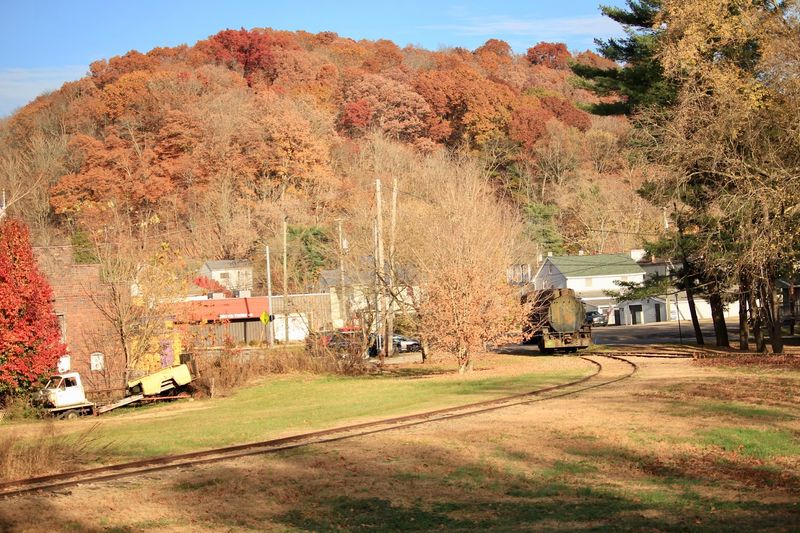
Somewhere in southeast Ohio, tucked behind a boot outlet on a highway most people speed right past, sits a small depot where a 1950s locomotive still pulls passenger cars built before your grandparents were born. I went looking for autumn leaves and found something better: two hours of clacking rails, open windows, and cool October air rushing through a car older than the interstate system.
It is not polished or fancy, and that turns out to be the whole point. If you like your fall color served slow, with a little rust and a lot of history, this ride deserves a spot on your October list.
A Working Railroad Behind the Boot Outlet
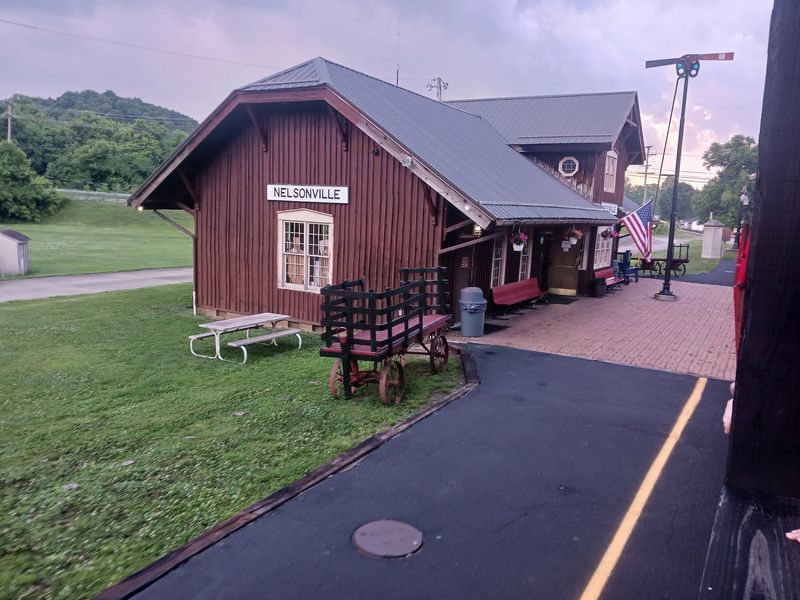
Nelsonville, Ohio sits along U.S. Route 33 about fifteen minutes from the heart of the Hocking Hills, and the Hocking Valley Scenic Railway operates right there at the corner of the highway and Hocking Parkway, tucked behind the Rocky Boots Outlet.
The depot address is 33 W Canal St, and honestly, the first-timers who miss the turn are legion.
What you find is not a theme park version of a train. It is a real railroad, a nonprofit run largely by volunteers, carrying passengers on a two-hour round trip toward East Logan and back through Appalachian Ohio.
Trains here cross a river, pass through neighborhoods, roll by fields, and slip alongside working industry, because that is what the corridor actually holds. The railway itself has pointed out that it has no control over the properties along its track.
Set expectations accordingly and the ride opens up. Roughly 837 people have weighed in on Google Maps, landing the operation at four stars, with fall foliage rides and open air cars among the most talked-about topics.
That combination, old equipment and honest scenery, is the draw.
Passenger Cars Older Than the Interstate
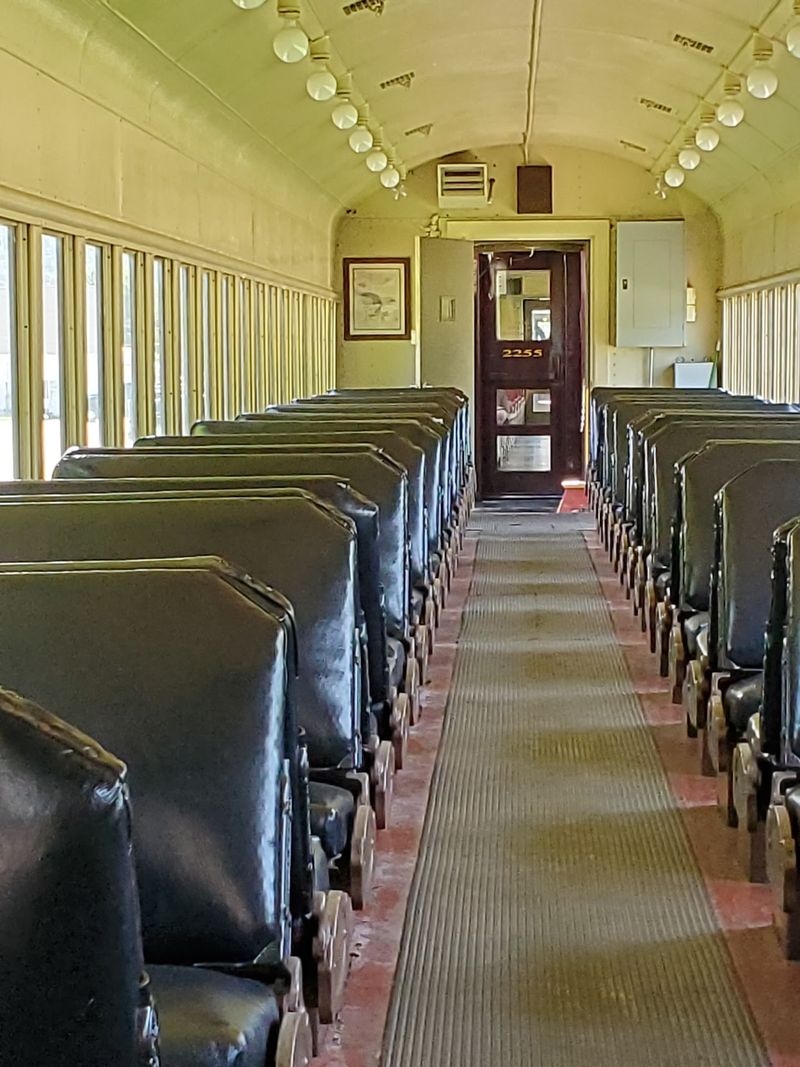
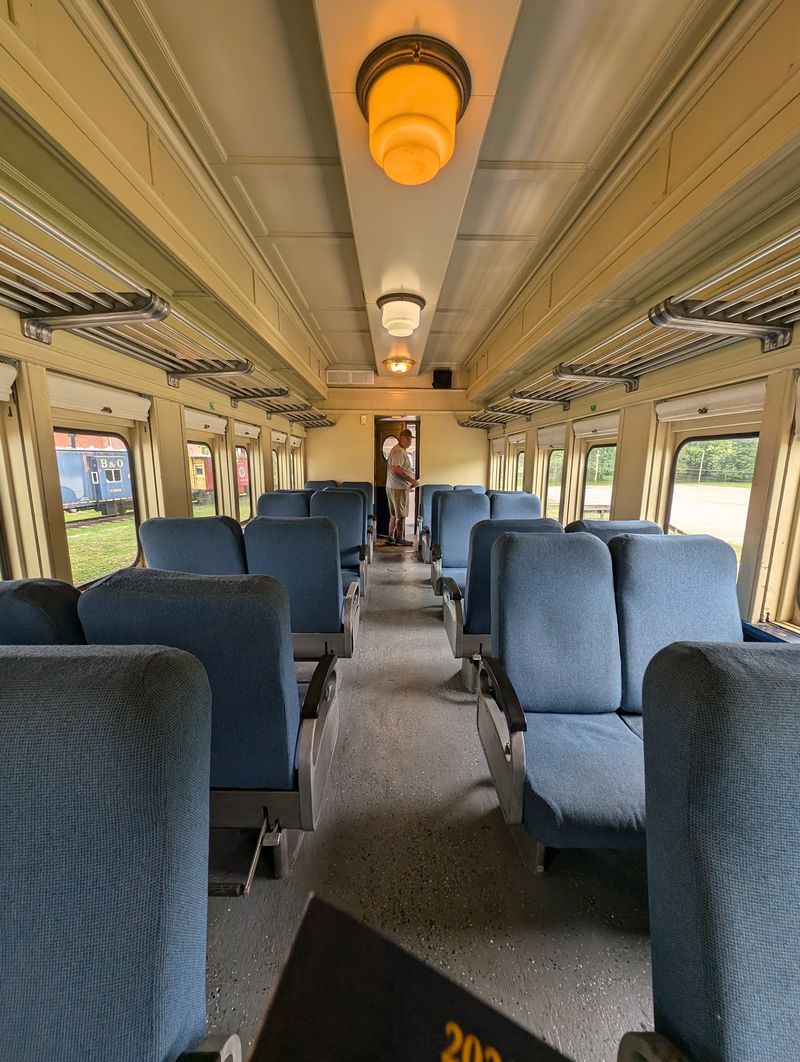
Step aboard and the calendar slides backward. The coaches in service here date from 1916 through the 1960s, and riders have specifically mentioned vintage passenger cars from 1921 that looked well maintained despite their age.
Seats surprise people. One passenger noted that the chairs were genuinely comfortable and reclined a good bit, which felt oddly luxurious for equipment a century old.
The enclosed coaches get heat when the weather calls for it, a real mercy on a raw late-October afternoon. Windows in these older cars slide up by hand rather than lock into place, and a few riders have mentioned windows dropping shut from the train’s vibration, so keep hands and elbows clear of the frame while you lean out for photos.
Cleanliness gets mentioned in the popular topics, and comfortable seating does too. A handful of people have wished the window glass were clearer for photography, which is fair, though sliding the sash open solves that problem entirely.
Pulling the whole thing is usually a heritage diesel locomotive built in 1952. Steam specials appear on select dates, and those sell to a devoted crowd.
Open Air Cars and the Case for Arriving Early
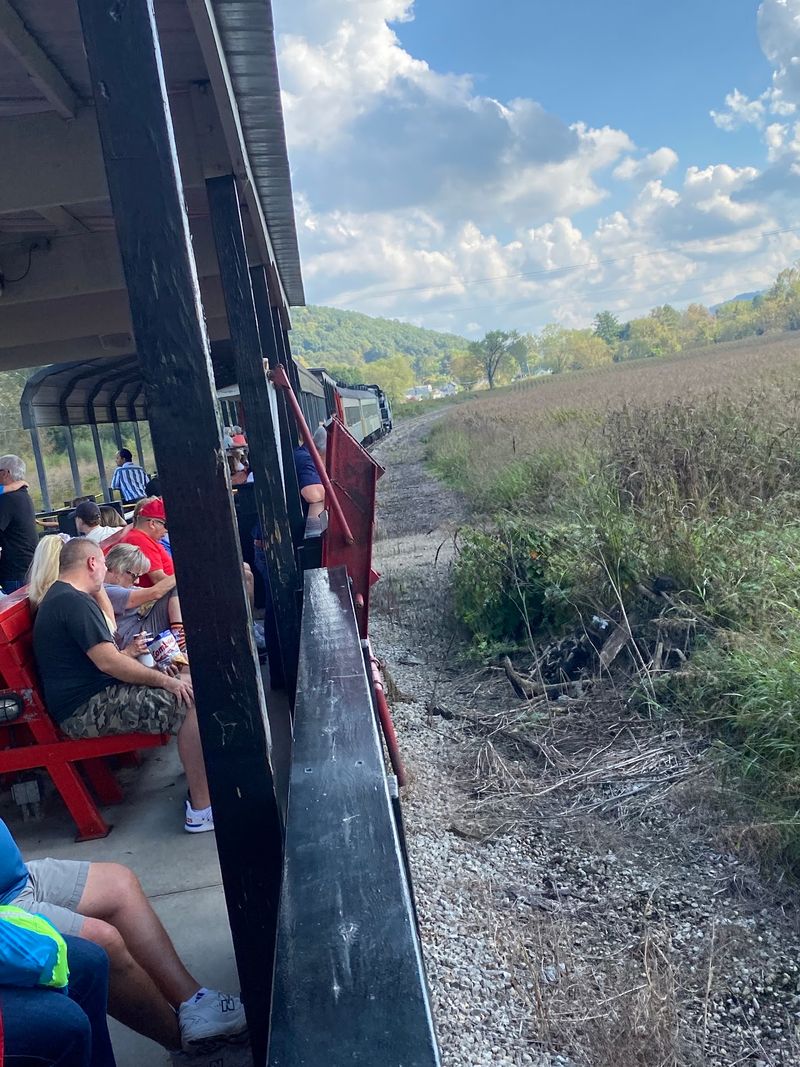
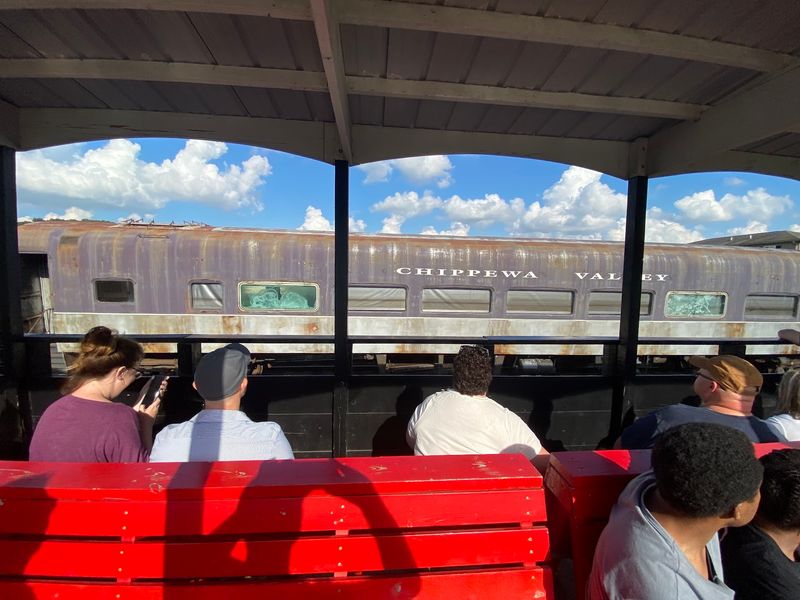
Former flat cars, stripped down and fitted with benches, are the reason a lot of people book this ride in the first place. No glass between you and the hardwood ridges, no reflection ruining the photo, just wind and the smell of leaves.
Open air cars come up again and again in visitor comments, usually paired with one piece of advice: get there early. Repeat riders say the good spots vanish fast, and one couple who arrived forty-five minutes ahead of departure still found the car packed shoulder to shoulder.
Crowding is the honest trade-off. Bench seating means you may sit closer to strangers than you would prefer, and a few folks have wished for a firmer cap on car capacity.
Weather governs everything. Open cars run when conditions permit, so a cold snap or steady rain may push you into the enclosed coaches instead.
My take: on a mild October afternoon with the sun angling low through the trees, the open car is the whole experience. Bring a jacket anyway, because moving air at fifteen miles per hour bites harder than you expect.
October Foliage Runs and When Color Actually Peaks
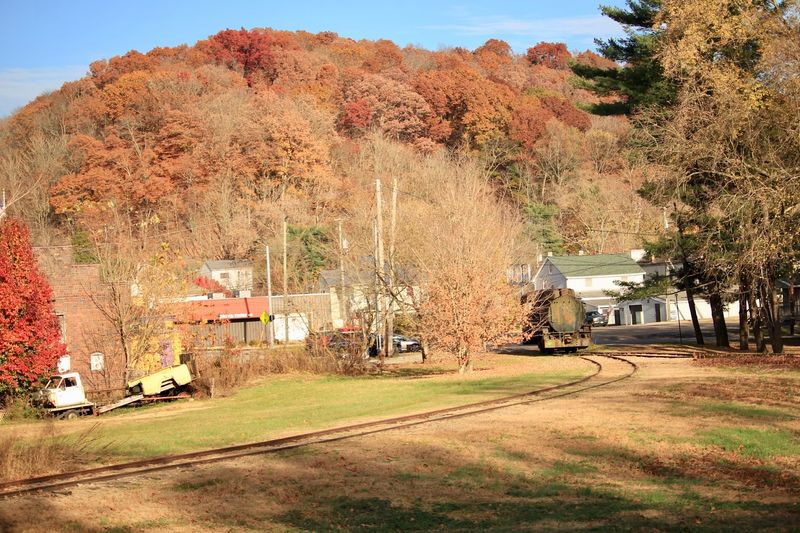
Timing matters more than anything else on this trip. Southeast Ohio’s hardwood forests usually hit peak color from mid to late October, with pockets of brightness hanging on into the first days of November.
Fall Foliage trains run Thursday through Sunday across October, with one final outing on November 1st. Weekday departures on Thursday and Friday leave at 1:00 p.m.
Weekends add two options, 11:00 a.m. and 2:30 p.m.
Each round trip runs roughly two hours, which is enough time for the light to shift noticeably if you take the later Saturday train. Late-day departures reward photographers with warmer tones through the open windows.
Fall foliage ride is the single most mentioned topic among visitors, appearing in more than two dozen comments, and scenic views turns up even more often. One rider called the views amazing and praised the local history woven into the narration.
Fair warning from the other side of the aisle: a few people booked during off-peak weeks and felt the color underdelivered. Aim for that mid-to-late October window and check foliage reports before you commit.
What Rolls Past the Window on the Way to East Logan
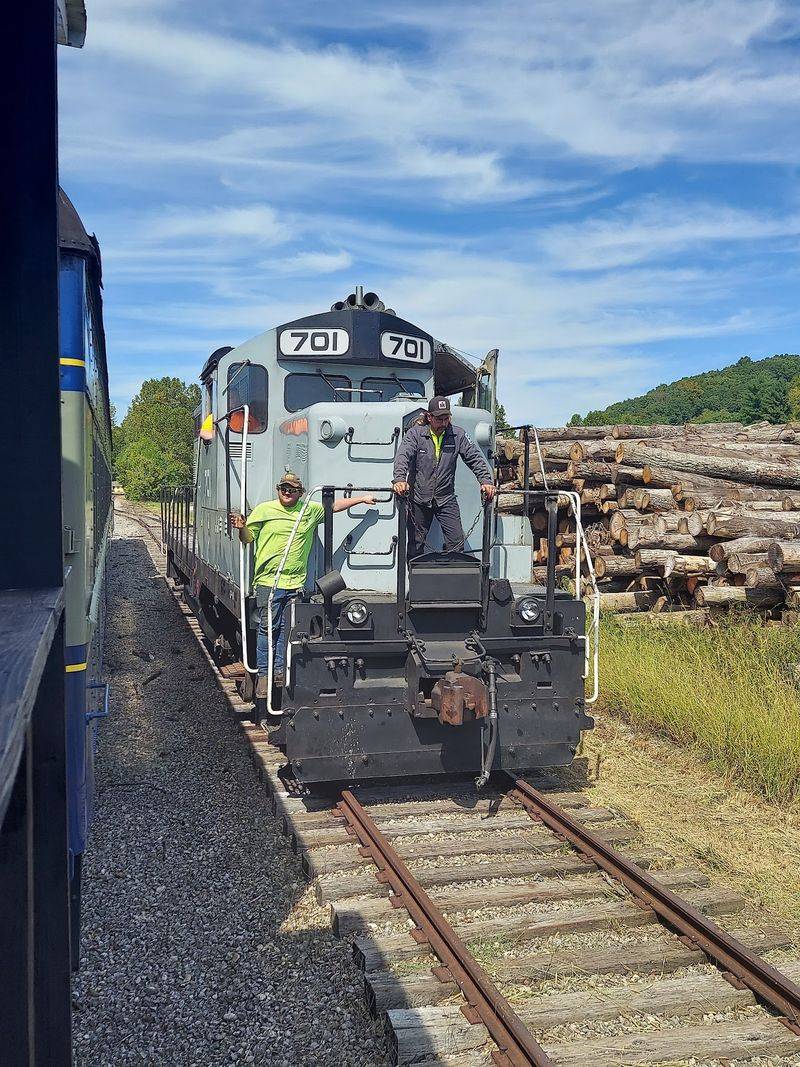
Leaving Nelsonville, the track runs toward East Logan through a corridor that never pretended to be a postcard. You follow the Hocking River, pass the visible stonework remains of Hocking Canal Lock No. 19, and roll through Haydenville, a town with a genuinely unusual brick-and-tile history.
Working Ohio shows up too. Active gravel mining, a lumber facility with stacked timber and pallets, backyards, outbuildings, and the occasional yard full of projects someone hasn’t finished.
Reactions split sharply here, and it is worth knowing that going in. Some riders came expecting unbroken wilderness and left disappointed, describing industrial sites and rundown properties rather than sweeping vistas.
Others found exactly what they wanted. One passenger summed it up as seeing everything you would expect to see in Ohio, and thought the ride was quite an experience for it.
The forest stretches are real, the river crossings are lovely, and the canal ruins give the whole route a layer of history you cannot get from a highway. Treat it as a slow-moving cross-section of Appalachian Ohio and the mixed scenery becomes part of the appeal.
The Volunteers Who Make the Trip
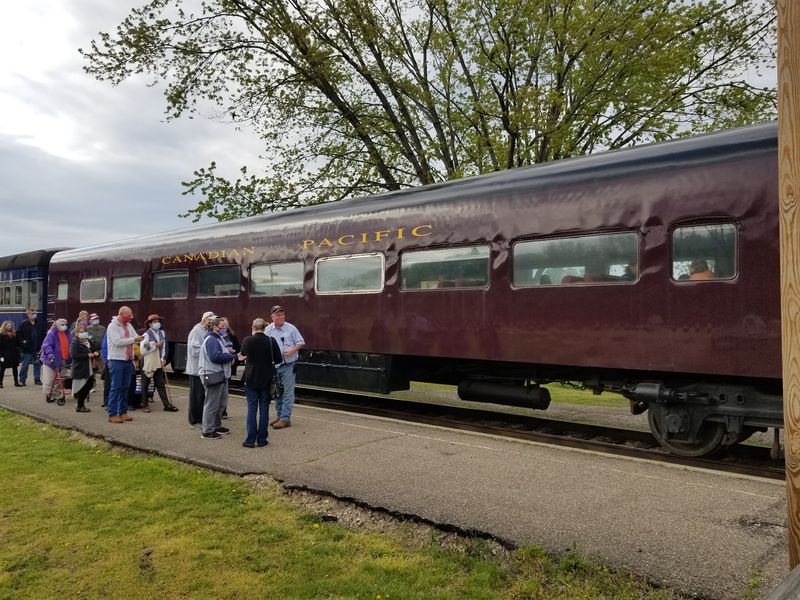
Ask around about this railway and the conversation swings quickly to the people running it. Nearly every visitor comment, glowing or critical, lands on the same point: the crew tries hard.
One conductor has become something of a local legend for playing saxophone for passengers, and multiple riders have gone out of their way to mention him. A grandmother on the Christmas run praised how he made sure everyone aboard was looked after.
Volunteers staff much of the operation, since the railway runs as a nonprofit and accepts donations of any size to keep the antique equipment maintained. Riders describe the crews as well seasoned, patient, and quick to greet anyone who walks up.
Even guests who disliked the scenery or the food have separated the staff from their complaints. A passenger who felt let down by a dinner train still called the crew the obvious highlight of the day.
Not every interaction has landed well, and a few guests have raised serious concerns about inconsistent treatment at the depot counter. That feedback exists alongside the praise, and prospective riders deserve to know both sides.
Snacks, Gift Shop, and the No-Restroom-Aboard Rule
Bring food. Seriously, the railway allows food and soft drinks aboard, which turns the ride into a rolling picnic if you plan for it.
The depot gift shop stocks snacks and drinks you can carry onto the train, and riders have described it as a nice little stop before boarding. Grabbing coffee and something sweet before the 11:00 a.m.
Saturday departure is a small ritual worth adopting.
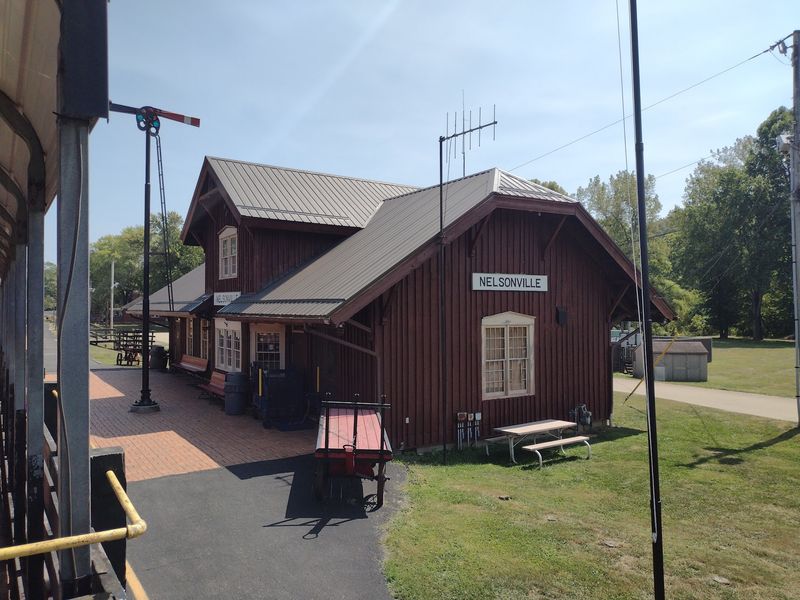
One logistical detail catches people off guard every single season. Restrooms exist inside the Nelsonville Depot, but there are none on the train cars.
Two hours is a long stretch for young kids and anyone who just finished a large drink, so handle that before you climb aboard. Parents in particular should build the depot restroom into the pre-boarding routine.
Nelsonville itself offers a few post-ride options, and regulars point newcomers toward a local bakery within easy reach of the depot. The depot building draws compliments on its own, described by one visitor as really cool, and picking up tickets there is genuinely painless.
Small comforts, planned ahead, make the difference between a pleasant ride and a fidgety one.
Steam Specials and the Seasonal Lineup
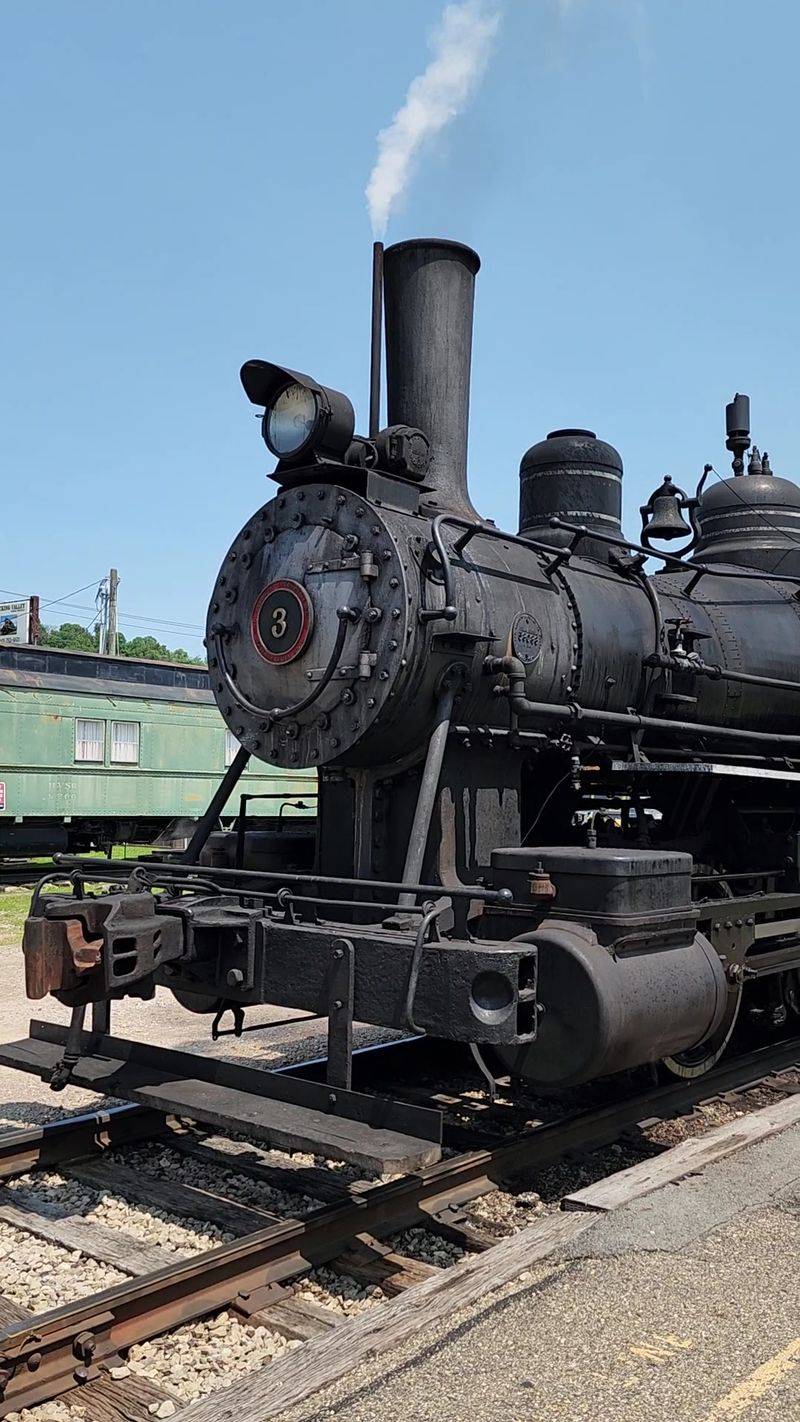
Diesel does the daily work here, but steam is the event. The heritage 1952 diesel handles most departures, while steam locomotive specials appear on select dates and draw a noticeably different crowd of enthusiasts and photographers.
One rider who received Steam Special tickets as a birthday gift described the outing as a perfect mix of local history and pure enjoyment of the ride, with staff who were friendly and professional throughout.
Fall foliage is only one chapter of the calendar. The railway also runs Christmas trips, Easter outings, a New Year’s Eve celebration ride, and dinner trains, plus themed runs like train robberies that keep turning up in visitor chatter.
Holiday trips lean hard into family fun. Grandparents have written about kids meeting Santa, the Grinch, and Frosty aboard the Christmas train, and the enthusiasm in those accounts is hard to fake.
Dinner trains get more mixed reactions, with some guests loving the meal service and others feeling the price outpaced the plate. If your goal is autumn leaves and open windows, stick with the October foliage runs and treat the rest as reasons to return.
Who Will Love This Ride, and Who Might Not
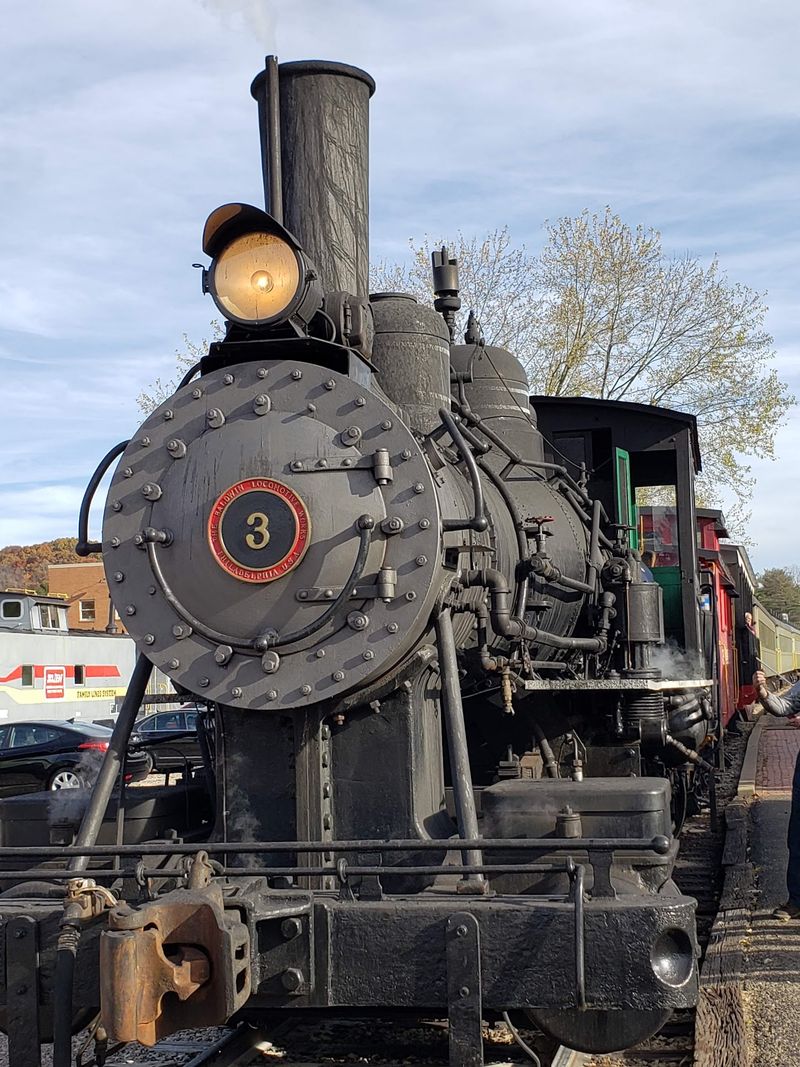
Families with young kids are the natural fit. Riders repeatedly call this a family-friendly outing, and there is something about a real locomotive and clacking rails that holds a four-year-old’s attention better than any screen.
Railroad fans get a genuine antique fleet to study, right down to the 1952 diesel and the century-old coaches. Photographers with a taste for texture, rust, river bends, and small-town Ohio will find plenty to frame.
Value for money comes up often in visitor comments, and several people described the trip as an inexpensive way to spend a couple of hours doing something they had never done before.
Now the honest caveat. Anyone expecting uninterrupted mountain vistas or polished luxury service will likely walk away unimpressed, and several riders have said exactly that.
The public address system draws consistent criticism too. Between wheel noise and conversation, some passengers could not make out the narration, so sit near the conductor if hearing the history matters to you.
Go for the atmosphere, the leaves, and the slow pace, and the two hours land beautifully.
Tickets, Timing, and Getting There Without Stress
Book online ahead of time, especially for October weekends. Foliage runs fill up, and walking in hoping for four seats on a peak Saturday is optimistic at best.
Here is the step people forget: your online confirmation will not get you aboard. You must go inside the Nelsonville Depot and pick up physical tickets before boarding.
Plan to arrive at least thirty minutes before departure. If you or someone in your group needs wheelchair access, arrive forty-five minutes to an hour early, because capacity for accessible seating on antique equipment is genuinely limited.
Experienced riders push those numbers further. Anyone determined to claim open air seating should aim for an hour or more ahead of the whistle, since one couple who showed up forty-five minutes early still found benches full.
Directions are simple once you know the landmark. The depot sits where U.S.
Route 33 meets Hocking Parkway, also called Fulton Street, behind the Rocky Boots Outlet at 33 W Canal St.
Questions can go to 855-323-3768, and schedules and ticketing live at hvsry.org. Restroom stop first, then board.
Final Thoughts From the Open Window
Two hours, a 1952 locomotive, coaches from another century, and October light coming through an open sash. That is the deal on offer, and for a lot of people it is more than enough.
Four stars across roughly 837 opinions tells the story fairly. Plenty of riders leave delighted by the color, the crew, and the sheer novelty of a real train ride close to home, while others expected grand scenery and got working Ohio instead.
Both groups are describing the same trip. What separates them is expectation, and you get to choose yours before you buy a ticket.
My honest read: come for the ride itself rather than a highlight reel. Pack snacks, grab a bench in the open air car, let the gravel pits and the canal ruins and the river bends roll by, and pay attention to the hardwood ridges when they open up.
Mid-to-late October is the sweet spot, weekends give you two departure choices, and the leaves do not wait. If a slow train through Appalachian Ohio sounds like your kind of afternoon, book it.