
Near Mount Charleston In Nevada, This Hidden Trail Ends At A Quiet Overlook Few Vegas Visitors Ever See
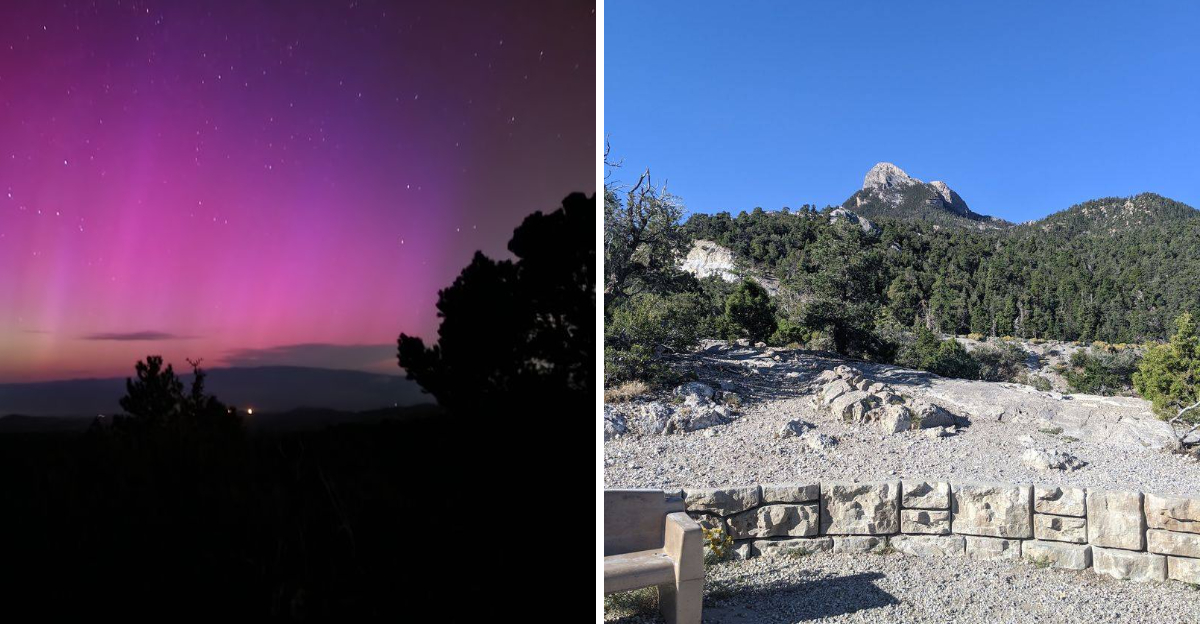
A dusty desert basin unrolls beneath you, and almost nobody driving past Vegas pulls over to see it. Near a famous Nevada mountain escape, a short paved path leads straight to a hush that feels miles from anywhere.
Pines give way to open sky in minutes. Wind hums past a railing while jays chatter overhead, and the valley floor stretches out in waves of tan and rust.
History sits in plain sight up here too, folded into old signs and quiet ridgelines that once drew crowds for a very different reason. Nevada keeps stories like this scattered along its mountain roads, waiting for someone curious enough to stop.
Bring water, bring a jacket for the wind, and let the view slow you down before you even reach the platform.
A Paved Path That Welcomes Everyone
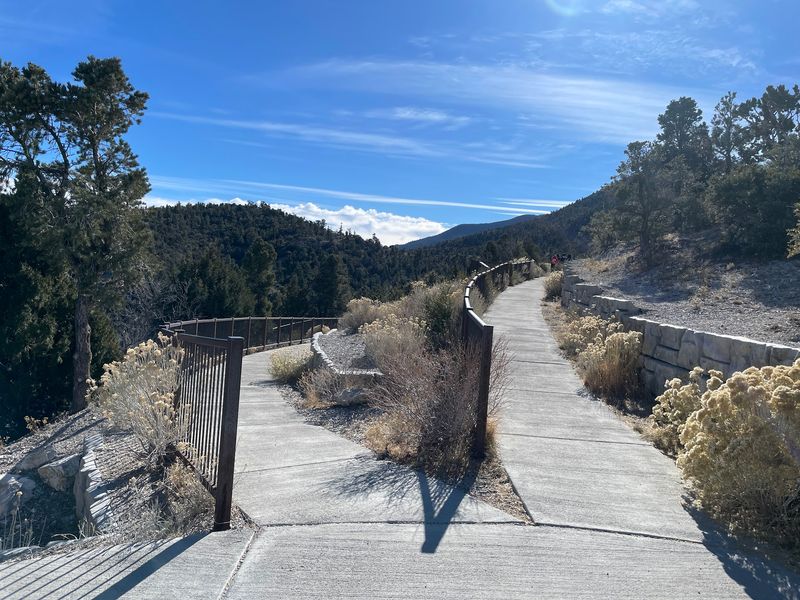
Short, smooth, and shockingly easy. The Desert View Overlook Trail runs on solid concrete from the parking lot to the viewing platforms.
Reports on the length vary, with some sources listing roughly a fifth of a mile each way and others closer to three quarters of a mile round trip. Either way, the walk rarely eats more than twenty minutes.
Gentle switchbacks handle the elevation drop, and railings line the steeper bends. Strollers roll fine.
Wheelchairs manage it too, which is rare for a mountain viewpoint.
You can find the trailhead at Desert View Overlook Trail, Deer Creek Rd, Spring Mountains National Recreation Area, Las Vegas, NV 89166, right along the road that links Kyle and Lee Canyons.
Grandparents, toddlers, and people who consider hiking a personality flaw all handle this one comfortably. That accessibility explains why the parking lot fills on holiday weekends.
Shade stays scarce along most of the path, so hats earn their keep. The concrete reflects sun in summer.
Take it slow anyway. Rushing past the platforms defeats the entire point of coming up here.
Views That Run All The Way To The Great Basin
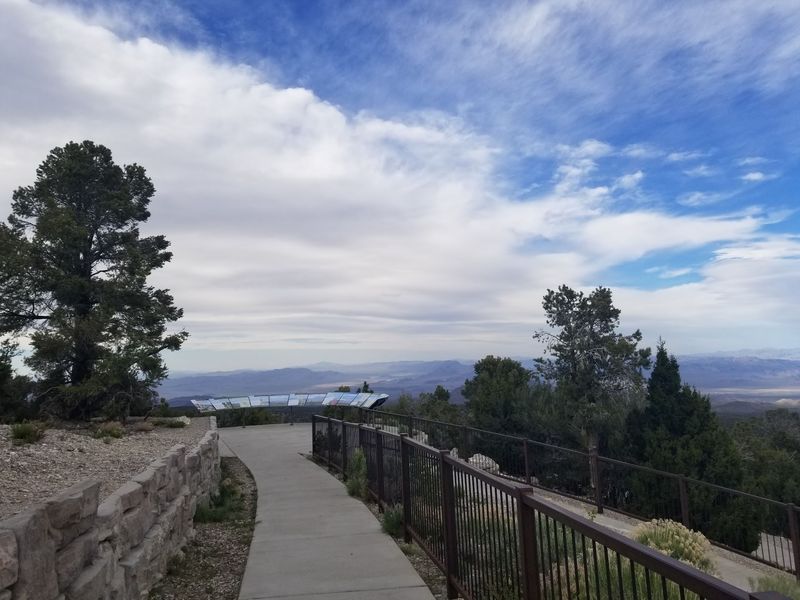
The horizon does the heavy lifting here. From the platforms, the northern Mojave Desert unrolls in tan waves broken by distant ridgelines.
On clear days the Great Basin Desert appears far to the north, a faint smudge of blue behind everything else. Visibility shifts with weather and haze, so no two visits look identical.
Sitting around 8,000 feet, the Desert View Overlook gives an odd sense of altitude that photos never fully capture. Reviewers say the same thing repeatedly.
Valley floors, alluvian fans, and folded mountain ranges stack up in layers. Binoculars turn the scene into a full afternoon.
Morning light sharpens the ridges. Late afternoon paints everything gold and rust, which is why sunset draws a small but loyal crowd.
Wind picks up on exposed platforms, so hold onto hats and loose maps. The railings help with steady phone shots.
Give the view ten quiet minutes before reaching for a camera. The scale registers slowly, and that pause is the part most visitors remember afterward.
Cold War Echoes On A Mountain Ledge
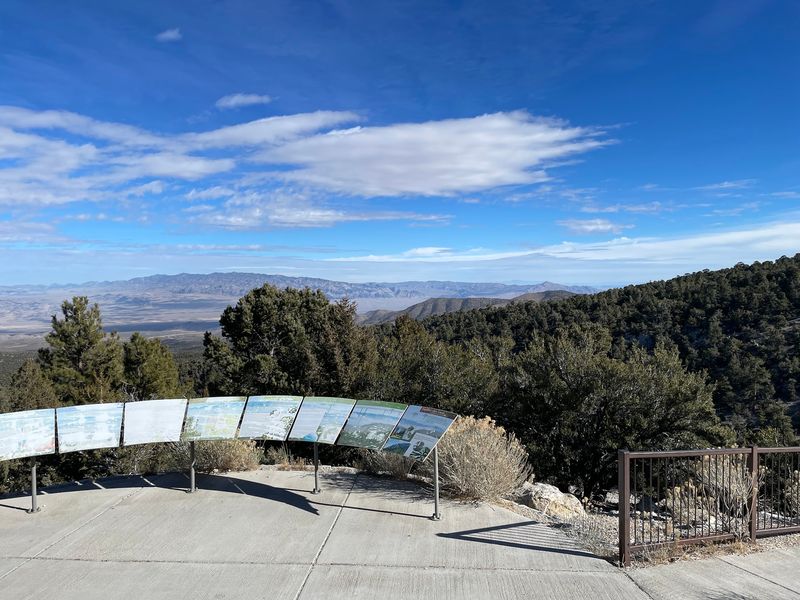
Hard to believe now, but crowds once gathered here for a very different show. Between 1951 and 1963, this ledge served as a vantage point for watching distant mushroom clouds from tests at the Nevada Test Site.
Tourists drove up from the city, parked, and waited. The overlook became part of a strange chapter in Nevada history.
Interpretive panels along the Desert View Overlook path have covered that story alongside geology and plant life. Several visitors report that some panels have faded badly or gone missing in recent years, so conditions vary.
Even without full signage, the setting speaks. Standing where those crowds once stood adds weight to an otherwise breezy walk.
The nearby Nevada Test and Training Range still keeps the sky busy. Jets occasionally streak across the valley, and the sound arrives well after the aircraft.
Watching for military maneuvers has become an unofficial pastime up here. Some visitors joke about spotting stealth bombers or mysterious aircraft heading somewhere beyond the horizon.
History and scenery rarely share a railing this neatly.
Trees That Should Not Be Here, But Are
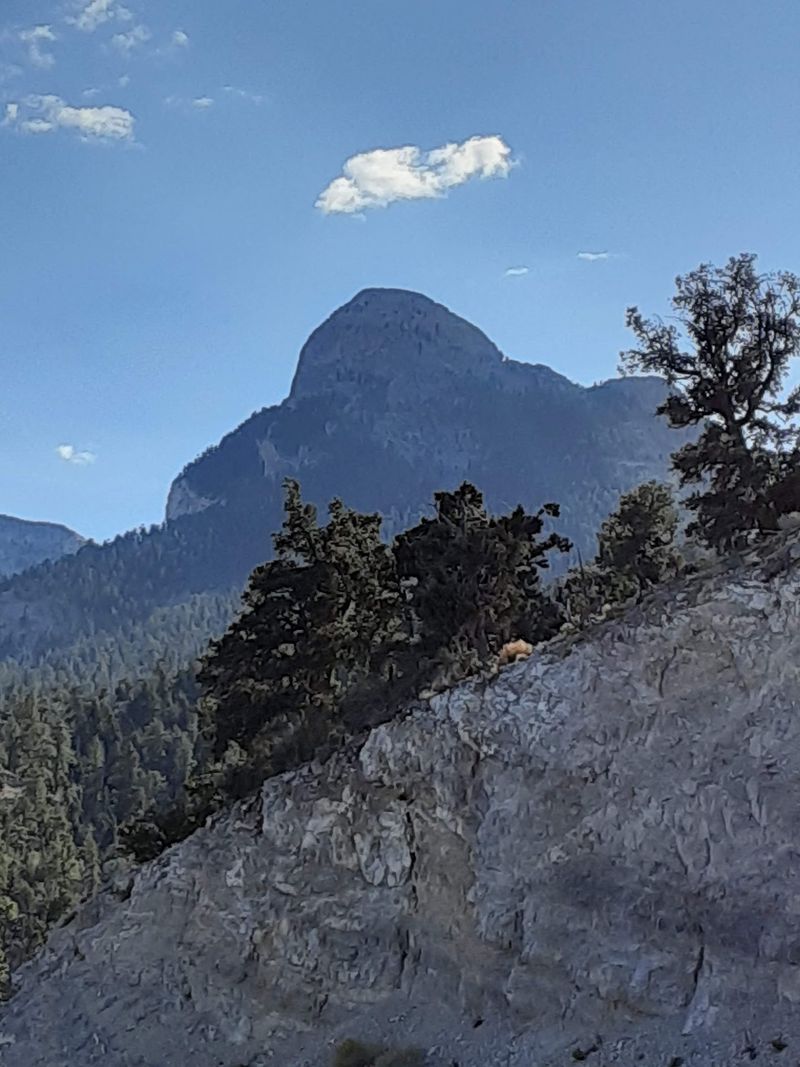
Pines above, cactus country below. That contrast defines the plant life along the Desert View Overlook Trail.
Singleleaf pinyon pine and Utah juniper dominate the slopes, joined by rocky mountain juniper and curlleaf mountain mahogany. Lower shrubs include Fremont’s mahonia, green ephedra, and plenty of sagebrush.
The Spring Mountains function as a sky island. Higher elevations trap cooler, moister air, creating a forest surrounded on all sides by open desert.
That elevation gap explains everything you smell here. Warm pine resin and dusty sage mix in a way the valley floor never manages.
Pinyon pines produce edible nuts that have fed people and wildlife in this region for generations. Jays and rodents cache them constantly.
Look closely at the junipers and you may spot pale blue berry-like cones. Their scent lingers on fingertips.
Botany fans should walk slowly and check the trailside plants before reaching the platforms. Interpretive panels have traditionally identified several species.
Even casual walkers notice the shift. Driving up from Las Vegas, the change from creosote flats to conifer forest happens in under thirty minutes.
An Escape Hatch From Valley Heat
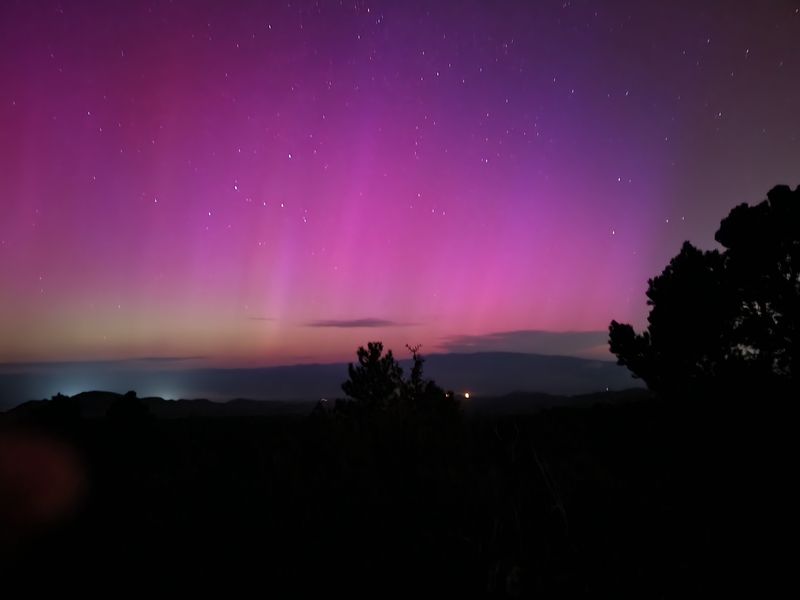
Twenty degrees can change a whole day. Summer temperatures at the Desert View Overlook typically run far cooler than the Las Vegas Valley below, thanks to elevation.
Visitors regularly report needing a light jacket in the evening, even in August. Locals treat the drive as air conditioning with a view.
Early mornings feel especially crisp. The air smells clean, the parking lot sits half empty, and birds handle most of the noise.
Sunrise fans swear by this spot. Sunset draws a different crowd, some hauling folding chairs and snacks for a leisurely stay.
Bring water regardless of season. Thin air at higher elevation dries people out faster than expected, and shade is limited along the path.
Anyone arriving straight from sea level may notice shortness of breath on the walk back uphill. Take a breather at a bench-worthy spot.
Cell service can be spotty on the mountain roads, so download directions before leaving town.
For a quick reset from city noise and pavement heat, few stops in southern Nevada work this efficiently.
Winter Snow And What It Changes
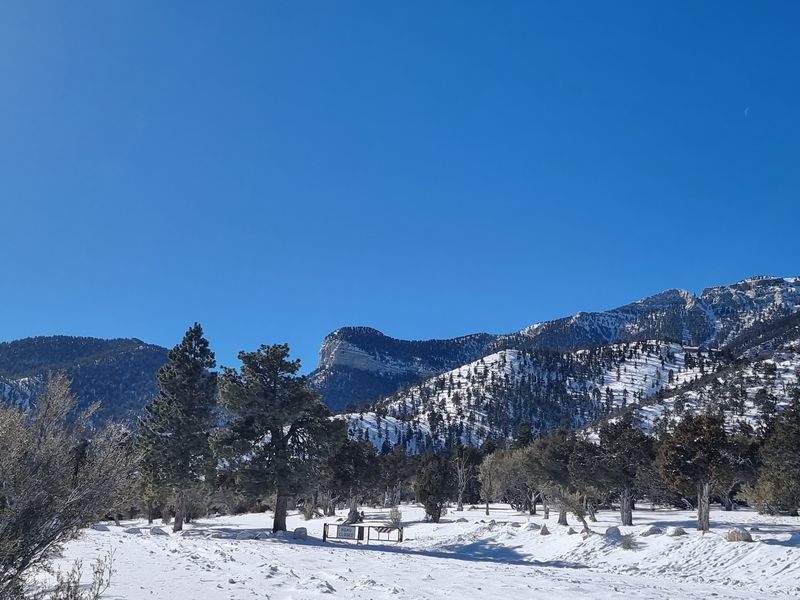
Snow up top, sunshine down below. Winter at the Desert View Overlook creates one of the more striking contrasts in southern Nevada.
The parking area generally stays open through the colder months. The trail itself may not be plowed, so ice and packed snow can linger on the concrete.
Traction devices help. Sturdy shoes matter more here than any fancy gear.
Cold air often improves visibility, sharpening distant ranges into crisp outlines. Photographers chase those clear winter mornings for good reason.
Storms can close or slow mountain roads, so checking conditions before driving up is smart. Weather shifts quickly at this elevation.
Winds bite harder on the exposed platforms in January. Gloves and a warm hat turn a shivery stop into a pleasant one.
Fewer people visit during the cold season, which means the platforms often sit empty. Quiet becomes the main attraction.
Snow dusting pinyon branches above a sunlit desert basin is a scene that surprises first-timers. Plan extra minutes to simply stand there and look.
Wildlife Sightings Worth Slowing Down For

Look up often. Large birds ride the thermals above the Desert View Overlook, circling the drop-off with barely a wingbeat.
Raptors show up regularly, and visitors mention seeing big soaring birds year-round. Binoculars turn a five-minute stop into thirty.
Pinyon jays work the pines noisily, hauling seeds from cone to cache. Their chatter carries across the whole slope.
Wild horses and burros roam parts of the Spring Mountains, and some travelers report sightings along nearby roads. Encounters are never guaranteed, so treat any as luck.
Keep a respectful distance from all animals. Feeding wildlife causes real harm and can create road hazards.
Lizards dart across warm concrete in summer. Chipmunks patrol the trail edges hoping someone drops a crumb.
Dogs are welcome on the paved path when leashed, which makes this a favorite quick outing for local pet owners.
Early morning and late afternoon bring the most animal activity. Midday tends to go quiet, with most creatures resting somewhere shaded and out of sight.
Parking, Restrooms, And Other Practical Notes
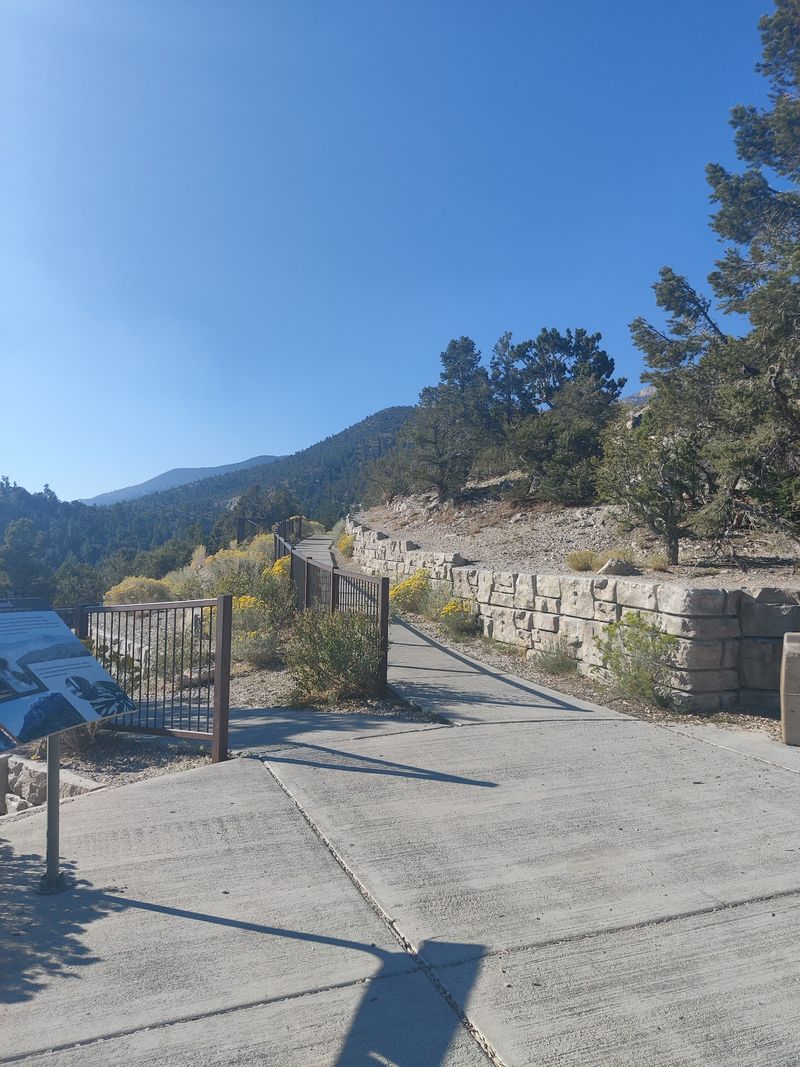
Good news for road trippers. A large parking lot sits right at the trailhead, so no roadside scramble is needed.
Spaces generally hold up well outside peak weekends and holidays. Arriving early still helps on Saturdays.
Restrooms do not exist at the overlook itself. The nearest facilities sit at the Deer Creek Picnic Area, a short drive away on the same road.
Plan accordingly before the walk. Families with small children especially appreciate knowing this in advance.
The Desert View Overlook stays accessible around the clock, which appeals to sunrise chasers and stargazers alike. Mountain darkness up here is deep.
Pack out everything brought in. Trash bins may be limited, and wind scatters litter quickly across the slope.
Fuel up in town before heading into the Spring Mountains National Recreation Area. Services on the mountain roads are sparse.
Cell coverage fades in spots, so screenshot directions ahead of time.
A few minutes of planning turns this stop from a rushed pullover into an unhurried highlight of the drive.
The Drive Along Deer Creek Road
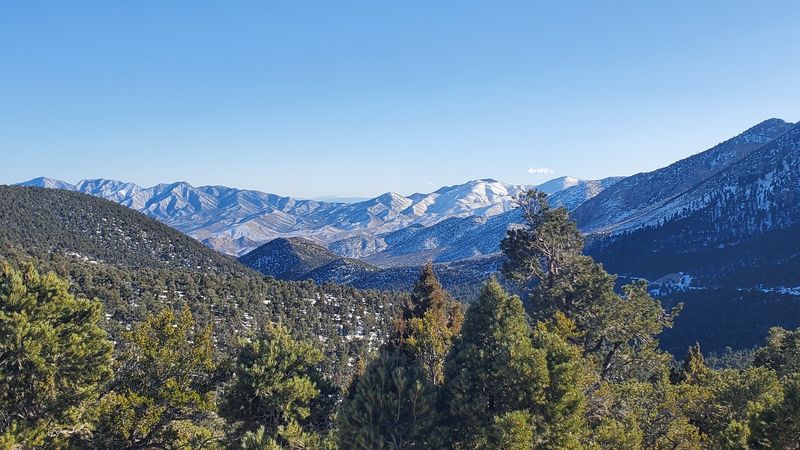
Half the fun happens before parking. Deer Creek Road, also signed as NV-158, connects Kyle Canyon and Lee Canyon with a ribbon of curves through the pines.
The climb from the valley floor takes roughly forty-five minutes to an hour and fifteen from most parts of Las Vegas, depending on where you start.
Scenery changes fast. Creosote and joshua-dotted flats give way to juniper, then to tall conifers and rocky outcrops.
Pull-offs appear along the way for photos. The Desert View Overlook turnoff is easy to miss if you are enjoying the curves too much.
Watch for cyclists and slow-moving vehicles on the bends. Locals treat this road as a training climb.
Winter travel may require caution or chains after storms, and conditions can change without much warning.
Pairing the overlook with a loop through both canyons makes a satisfying half-day outing. Many drivers do exactly that.
Roll the windows down near the top. Pine-scented air pouring into the car is a small pleasure that never gets old in Nevada.
Nearby Stops That Stretch The Trip
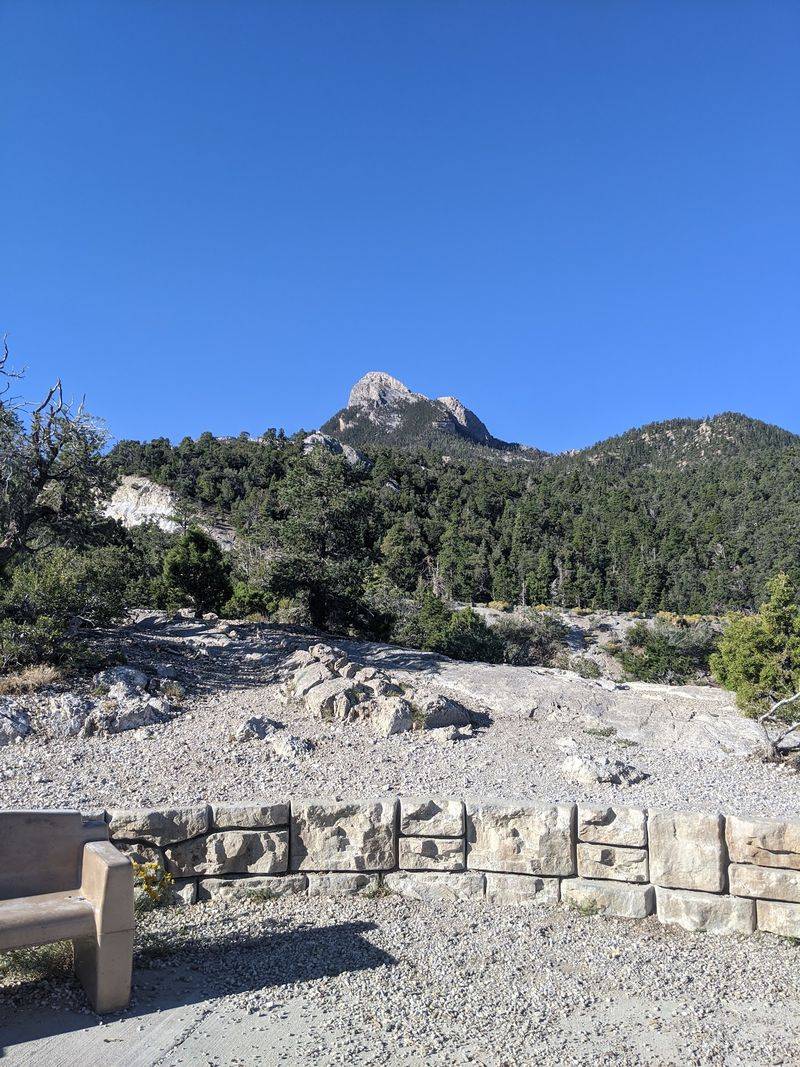
One overlook rarely satisfies. The Deer Creek Picnic Area sits close by with tables, shade, and the restrooms the trailhead lacks.
Packing lunch turns a quick photo stop into a relaxed afternoon. Squirrels will absolutely take an interest.
Hikers wanting more mileage can head toward the Bristlecone Trail, a short drive away, where ancient-looking trees and longer loops await.
The broader Spring Mountains National Recreation Area offers everything from steep canyon climbs to easy forest strolls. Options suit almost every fitness level.
Kyle Canyon and Lee Canyon both branch off nearby, each with its own character and viewpoints.
Trail conditions and seasonal closures vary, so checking current forest service information before setting out is wise.
Stringing the Desert View Overlook together with a picnic and one longer hike makes a full day without much driving.
Bring layers regardless of plan, since mountain weather swings hard between sun and shade.
Plenty of visitors come for a ten-minute stop and end up staying half the day, which counts as the highest compliment a roadside overlook can earn.