
The Quiet Tennessee Town Where A Whole Saturday Fits On One Walkable Main Street
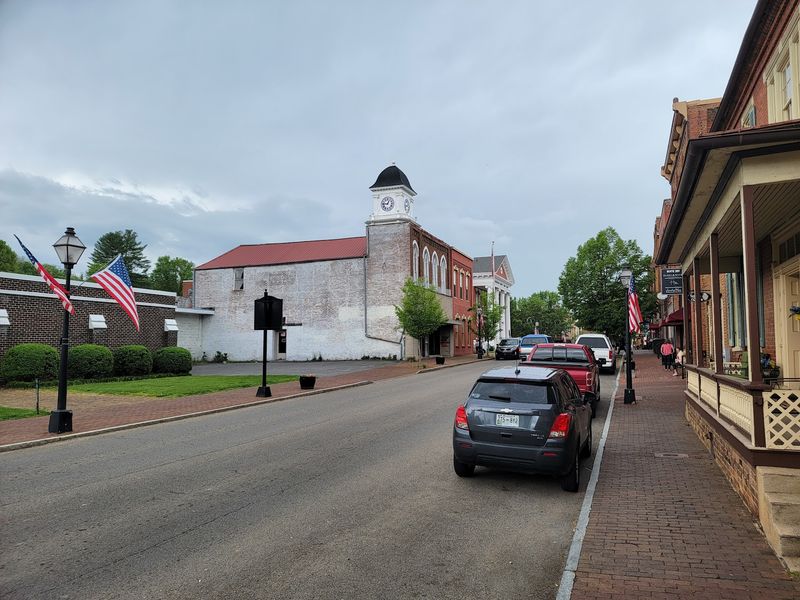
I pulled off a northeast Tennessee highway looking for nothing more ambitious than a sandwich and a place to stretch my legs. What I found was a town where the entire day, browsing, eating, wandering and people-watching, happened between two ends of the same street.
There was no ticket gate, no shuttle bus, no parking deck to circle. By late afternoon I realized I had walked maybe half a mile total and still felt like I had been somewhere.
Tennessee’s Oldest Town, Sitting Quietly in the Tri-Cities
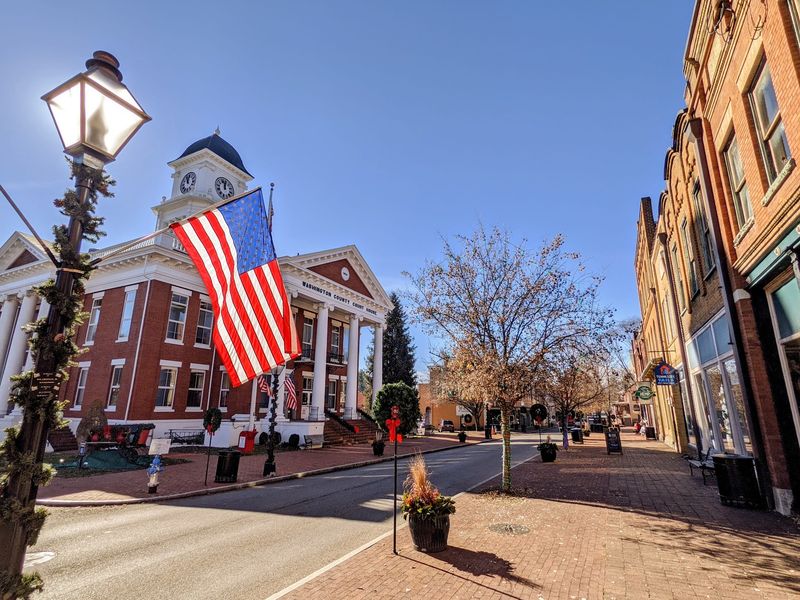
Northeast Tennessee’s oldest town is not a museum campus or a manufactured attraction built for tour buses. Jonesborough is a working county seat, home to roughly 5,860 people as of the 2020 count, and the government center for Washington County.
It also sits inside the Johnson City metropolitan area, part of the cluster of communities known regionally as the Tri-Cities.
That location does a lot of quiet work for visitors. You get a genuinely small town, compact enough to cross on foot in minutes, without being stranded an hour from gas, a pharmacy or a place to sleep.
The appeal here really comes down to geography. Nearly everything people drive in for lines up along one historic Main Street, which reduces the day’s logistics to a single decision: where to leave the car.
Anyone who has burned half a Saturday shuttling between scattered stops will understand why that concentration matters. Children can handle the distance easily, older knees can handle it too, and when someone is finished, the vehicle is usually a block behind you.
Add one unhurried lunch and the afternoon fills itself without any planning at all.
A Story That Begins Before Tennessee Was a State
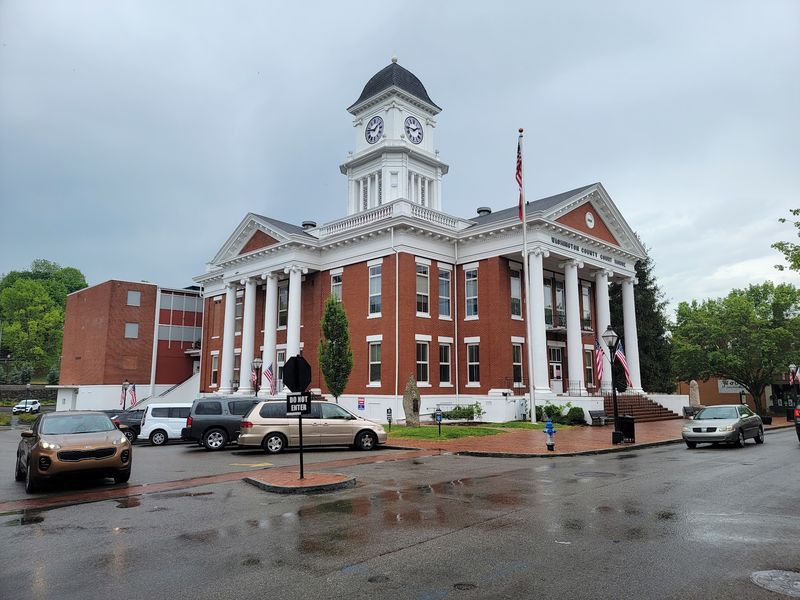
Claiming the title of Tennessee’s oldest town is a heavy thing for a community of fewer than six thousand residents to carry. It means the settlement’s beginnings reach back into the frontier period, well before Tennessee joined the Union in 1796, when this corner of the map was still the far edge of the country.
Washington County grew up around it, and the town became the county’s seat of government, a role it still holds today. Very few places in the state can say their courthouse function and their downtown have stayed in the same neighborhood for that long.
What that history buys a modern visitor is continuity. Instead of a preserved fragment surrounded by strip development, the historic core remained the actual center of town, which is why a Saturday here feels layered rather than staged.
Details and interpretive displays around town do change over time, so it is smart to check current information before you drive if a specific historic site is your reason for going. The broader point holds either way: the age of the place is not a marketing line, it is the reason the street looks the way it does.
One Street, Front to Back, on Foot
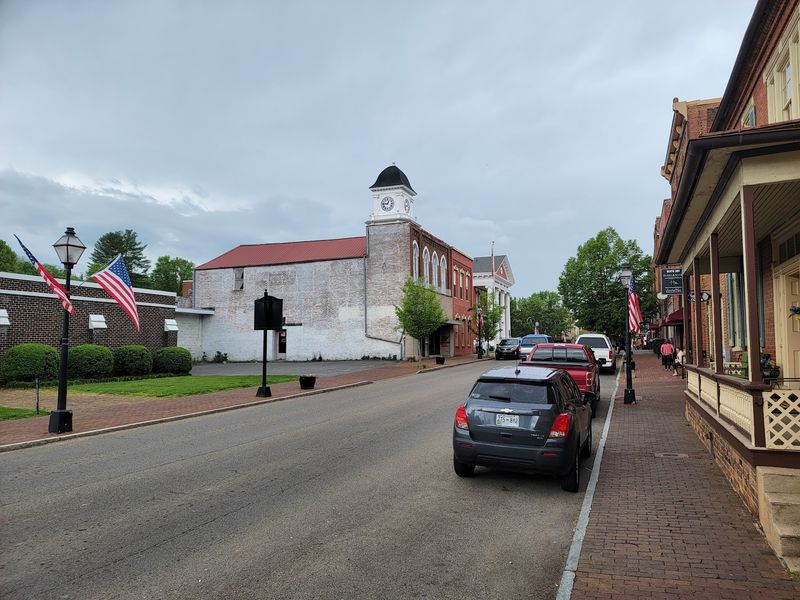
Walking beats driving here, and not by a small margin. The historic commercial stretch runs in a straight, readable line, so the standard approach is simple: work down one side, cross over, and come back up the other.
Most visitors find the full length manageable in a slow morning, with plenty of pauses. There is no need to move the car between stops, which is the single biggest time saver compared with a typical day trip built around three separate destinations.
Terrain in this part of the state rolls, and sidewalks in older downtowns can involve steps up into individual buildings. Families pushing strollers and anyone using a walker will generally do fine along the sidewalk itself, though entering every single storefront may not be realistic.
A practical rhythm that works well: arrive mid-morning while the street is still quiet, walk the whole length once without stopping to get your bearings, then double back to whatever caught your eye. Weekday mornings tend to be calmer than Saturdays, so if crowds bother you, shift your timing rather than skipping the trip.
Old Brick, Deep Porches and Windows Worth Slowing For
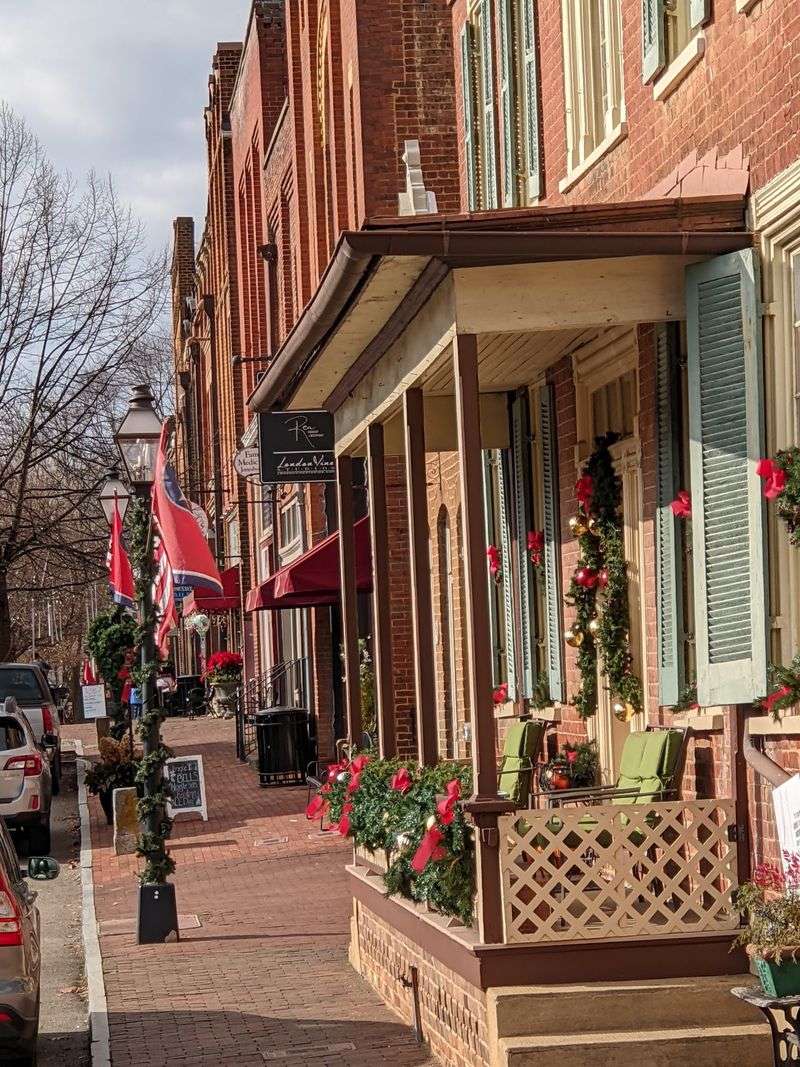
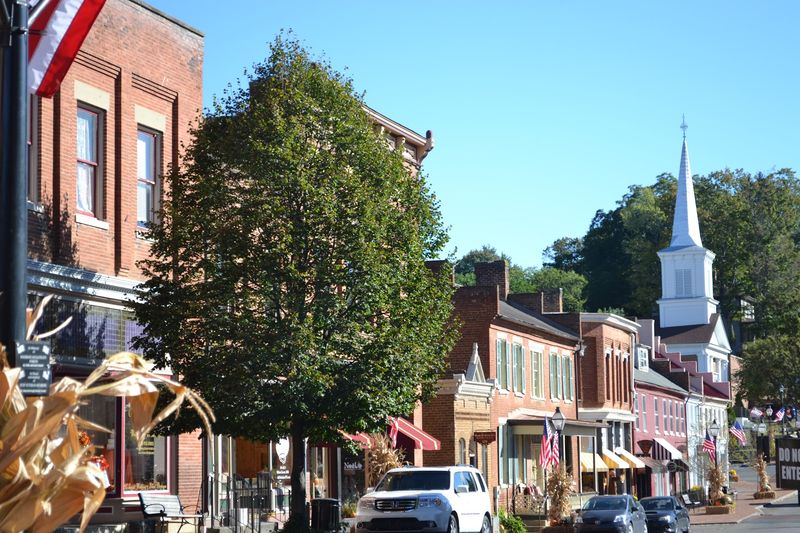
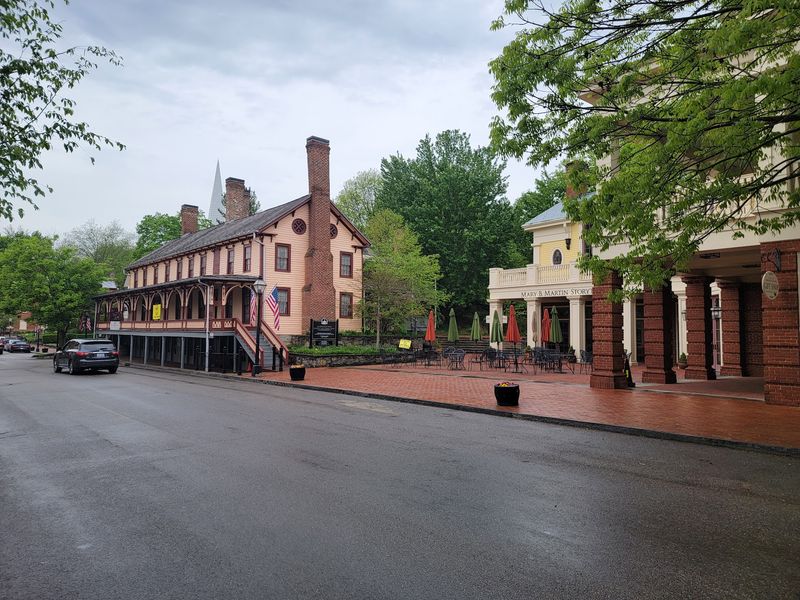
Photographers tend to slow to a crawl about thirty steps in. The building fronts along the historic district read like a timeline of American small-town construction, from plain frontier-era simplicity to later brick storefronts with tall windows and decorated cornices.
Porches matter here as much as facades. Covered walkways and deep front porches mean you can keep browsing during a summer shower or a cold snap, which is a genuine advantage over an outdoor attraction with no shelter.
Light is the free bonus. Late afternoon throws long shadows across the brick and makes the street look considerably older than it does at noon, so if you care about photos, plan your walk for the last two hours before sunset.
None of this requires an admission ticket. Looking at the architecture, reading the plaques and markers you pass, and sitting on a bench costs nothing at all, which is why the town works as a budget outing even for visitors who never open a wallet beyond lunch.
Individual buildings house private businesses, though, so interior access depends entirely on what is open that day.
Slow Browsing in Small Storefronts
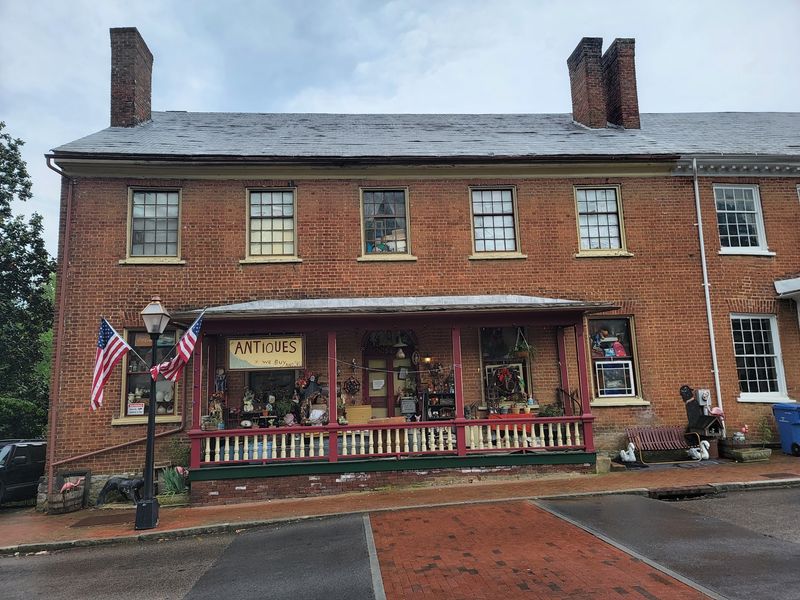
Nobody rushes you in a shop where the owner is standing behind the counter. Independent storefronts fill much of the historic street, and the browsing is the entertainment, not a gift-shop afterthought tacked onto something else.
The specific mix of businesses in any small downtown shifts from year to year as leases turn over, so treat what you find as a pleasant unknown rather than a checklist. Small-town shopping districts like this one typically lean toward antiques, handmade goods, books, home items and sweets.
Retirees seem to get the most out of this part of the day, partly because it rewards patience and conversation. Kids do better when you set expectations early, promising one small souvenir instead of one per store.
Budget-wise, this is the flexible section of the Saturday. You can walk the entire street spending nothing, or you can drop twenty dollars on something handmade and call it the whole point of the trip.
Hours vary by business, and some independent shops in small Tennessee towns close on Sundays and Mondays. Checking a few storefront pages before you leave home prevents a quiet drive back.
Lunch Without Leaving the Sidewalk
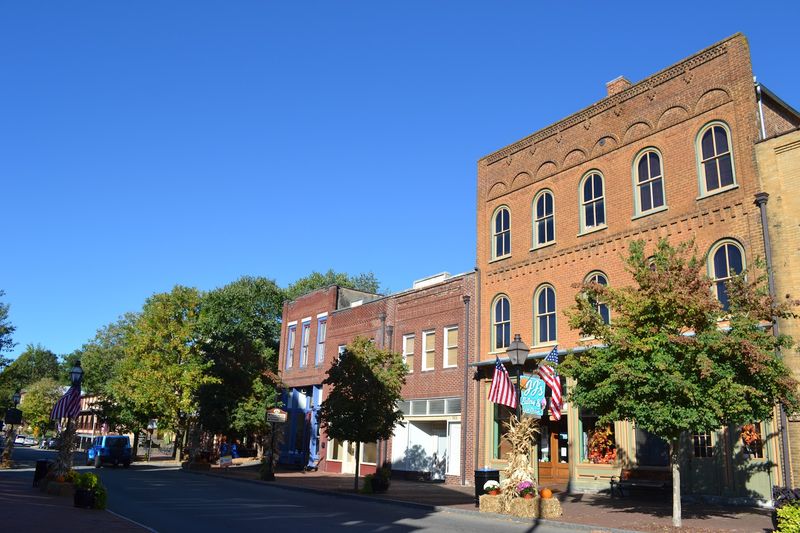
Midday is when a one-street town proves its worth. Because the eating options sit along the same walk as everything else, lunch becomes a pause rather than a detour, and nobody has to fold back into the car and re-park.
Small-town Tennessee cafes generally land in comfortable territory on price, and a family of four can usually eat a sit-down lunch here for less than the cost of a nice dinner out in Knoxville or Nashville. Portions in this part of the state are rarely shy.
Timing is the one thing to manage. Independent kitchens in towns this size often keep shorter hours than chains, and some close in the mid-afternoon between meal services, so eating at 11:30 or right at noon is safer than showing up at 2:45 and hoping.
Coffee and dessert stops make good bookends. Grabbing something cold or sweet toward the end of the walk gives kids a reason to keep going for another twenty minutes, and it gives adults an excuse to sit on a bench and watch the street do very little in a pleasant way.
Courthouse Corner and County-Seat Rhythm
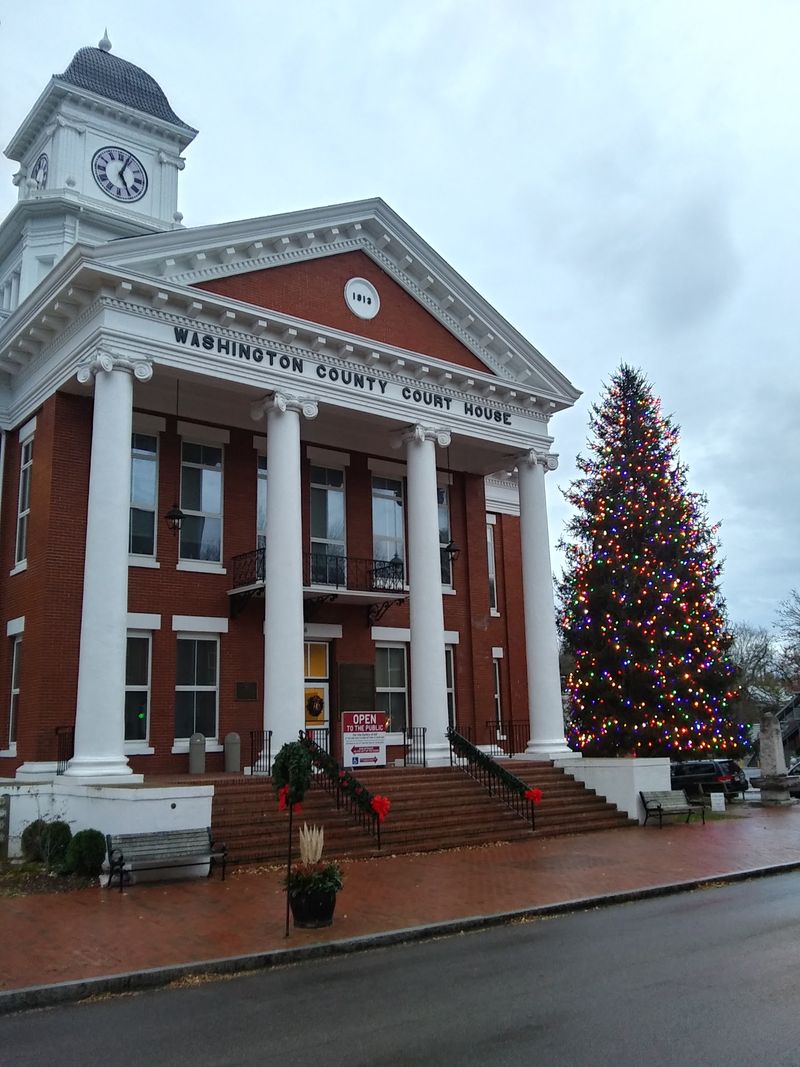
Here is a detail most visitors miss until they notice the license plates and the lack of tour groups: this is a functioning seat of county government, not a preserved village. Washington County business happens here, which means the street carries real errands alongside sightseeing.
The practical effect is a split personality between weekdays and weekends. Weekday mornings bring courthouse traffic and working locals, while Saturdays skew toward walkers, browsers and families with time to burn.
Both versions have something going for them. If you want the town at its most authentically ordinary, come on a Thursday.
If you want the shops and kitchens most reliably open, aim for a Saturday and expect a little more company on the sidewalk.
Parking behaves accordingly. On regular days, finding a spot near the center is usually straightforward, while festival weekends and busy event days push visitors to the edges of the district and add a short walk.
None of this changes the core promise. Whether the street is bustling or nearly empty, the same compact geography still holds the whole day inside walking distance.
Drive Times, Parking and What the Day Actually Costs
Start with the tank of gas, because that is how most Tennessee families plan. Sitting inside the Johnson City metropolitan area, the town is a short local hop for anyone in the Tri-Cities, and Knoxville drivers can generally plan on roughly an hour and a half to two hours depending on traffic and route.
From Nashville, this is a longer haul and better paired with an overnight than squeezed into a single Saturday. Chattanooga sits in similar territory, so build in more driving time if you are coming from the southwest.
Cost is the friendliest number. Walking the historic street, looking at the buildings and sitting on a bench are free, so a realistic family Saturday runs about thirty to forty dollars total once you add lunch and a small souvenir.
Two housekeeping notes save frustration. Shop and restaurant hours in a town this size change seasonally and around holidays, so confirm before you drive, and expect parking near the center to tighten during festivals and community events.
Restrooms and benches follow the businesses, which is another argument for arriving while things are open.
Who Should Point the Car This Way
Not every traveler will love a town whose main event is a street. If your idea of a good Saturday involves rides, big-ticket attractions or a packed itinerary, the pace here will feel too slow by about the second hour.
Everyone else tends to leave happy. Retirees get architecture, conversation and easy walking distances; parents get a day that costs little and does not require refereeing three car rides; teenagers get shops, snacks and photo backdrops that do not look like everywhere else.
The honest verdict is that this works best as a deliberately unambitious day. Arrive without a schedule, walk the length of the historic district twice, eat somewhere with a screen door, buy one thing you did not plan on, and drive home before dark.
Autumn deserves special mention for anyone within range, since northeast Tennessee’s hills put on a show and the covered porches make a cool day comfortable.
For a town of about 5,860 people wearing the title of Tennessee’s oldest, that is a fair trade: very little money, very little driving between stops, and a Saturday that somehow still feels full.