
Tennessee’s 1894 Gothic Cathedral Fills With Stained-Glass Light, And Anyone Walks In Free
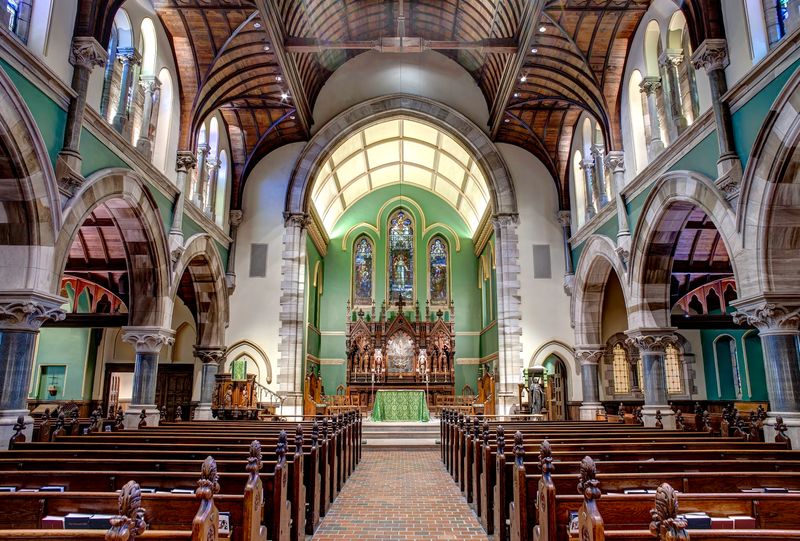
Half a mile from the loudest sidewalks in Tennessee, the noise just drops away. Behind a stone facade with gargoyles peering down at traffic, there is a room where colored light pools on the floor and the loudest thing you hear is your own footsteps.
Admission costs nothing, the doors stay open most days, and nobody asks why you came. For families and retirees hunting a Saturday outing that does not empty the wallet, that combination is hard to beat.
A Stone Landmark at the Quiet End of Broadway
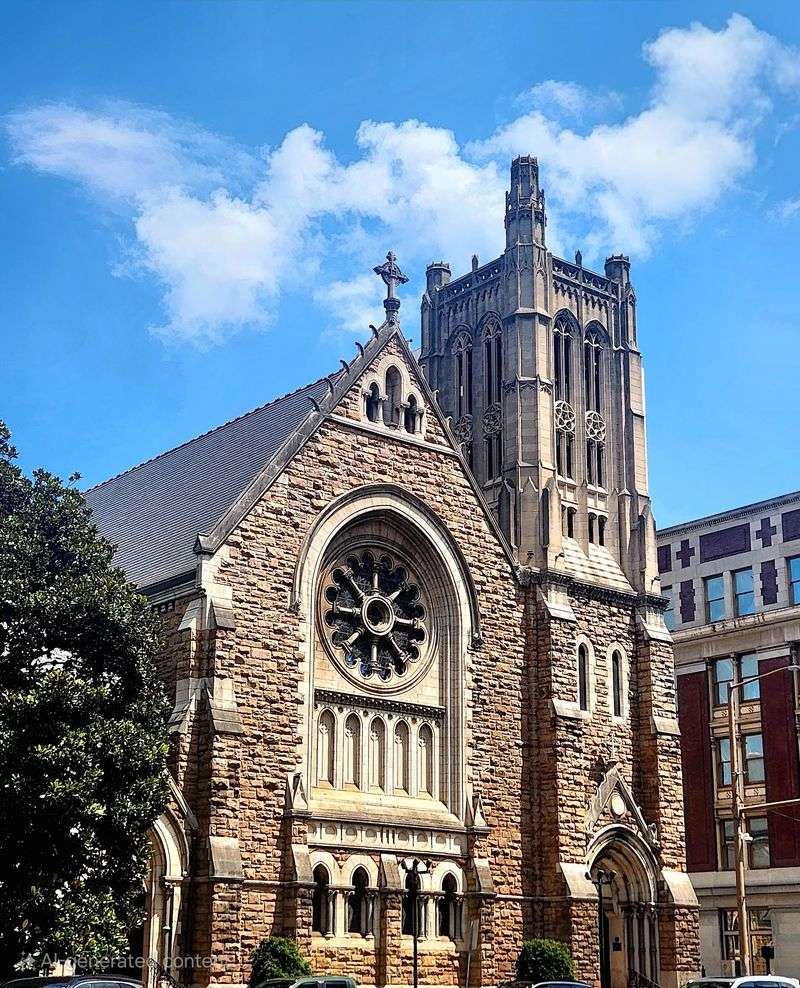
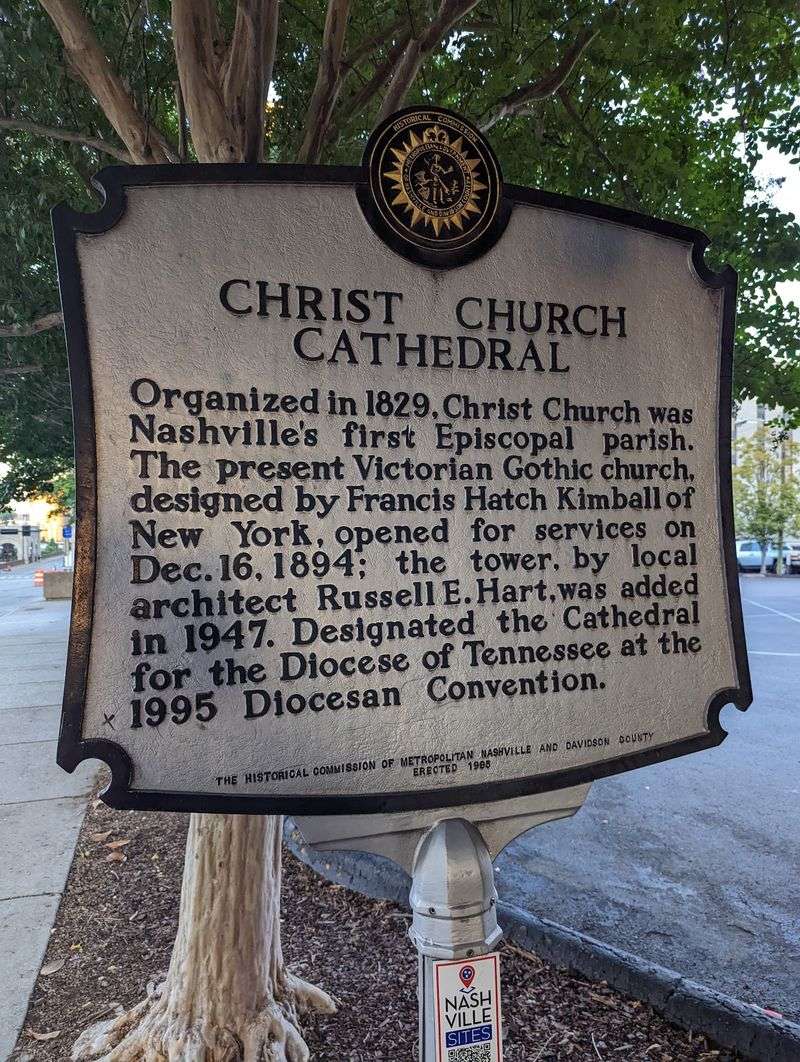
Walk far enough up Broadway from the honky-tonk stretch and the crowds thin out fast. At 900 Broadway sits Christ Church Cathedral, a Victorian Gothic pile of Sewanee sandstone trimmed with Bowling Green stone, finished in 1894 after seven years of construction.
It serves as an Episcopal cathedral and was Nashville’s first Episcopal parish, so this is a working church rather than a museum piece with a ticket booth. Even so, it welcomes drop-in visitors and offers guided tours, which is unusual for a building still in daily use.
The exterior rewards a slow lap around the block. Stone gargoyles crouch along the roofline, and a rose window anchors the Broadway facade, hinting at the colored glass waiting inside.
Visitors often describe stepping through the doors as a genuine break from downtown’s constant motion, the kind of contrast you feel in your shoulders before you notice it in your ears. One reviewer called it a welcome respite from the noise of Broadway, and that reaction shows up again and again.
Free admission, a downtown address, and no reservation required make it an easy first stop on a Nashville day.
Seven Years of Building, Finished in 1894
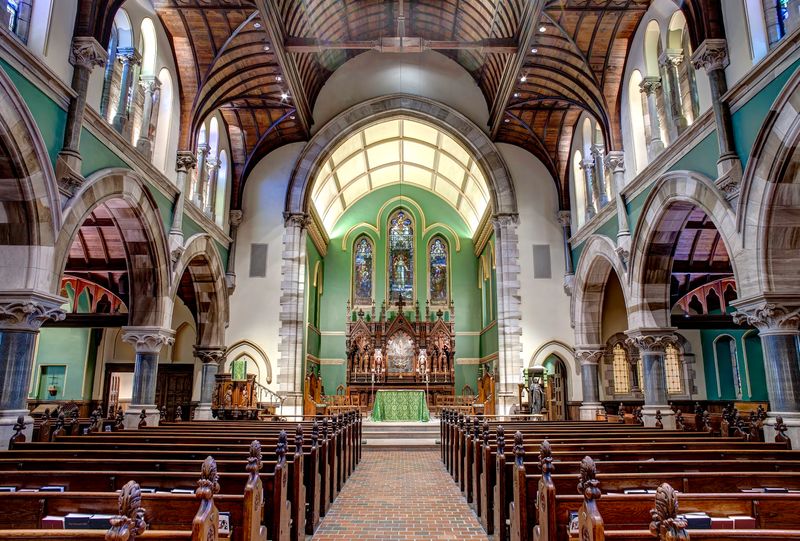
Construction started in 1887 and wrapped in 1894, a stretch long enough that stonemasons and carvers left their fingerprints on nearly every surface. The result is a textbook example of Victorian Gothic work in Tennessee, built when handcraft was still the only option.
What makes the age worth thinking about is how little has been swapped out. Original woodwork remains in place, and the carvings around the altar and under the curved ceilings show a level of detail that would be prohibitively expensive to reproduce today.
Guests who have seen plenty of historic churches single out that woodwork as the thing they did not expect.
The cathedral’s roots reach back further than the building itself, since this was Nashville’s first Episcopal parish. Congregations gathered here well before the sandstone walls went up.
One long-ago visitor mentioned that historical books kept on hand explain the building and point out oddities, including a trapdoor tucked into the Baptismal Chapel. Details like that may or may not be available on any given day, so ask at the reception desk if you are curious about the building’s quirks.
Tiffany Glass in the Clerestory
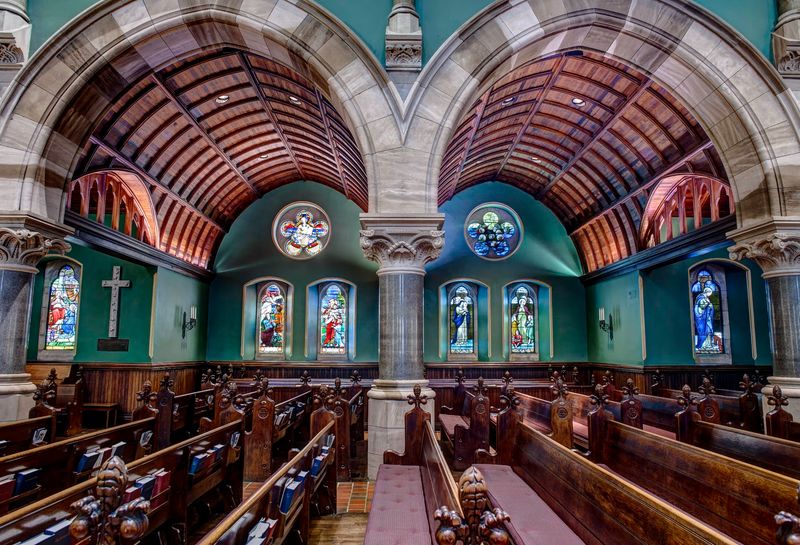
Colored light does most of the work here. Two sets of clerestory windows came from Louis Comfort Tiffany and the Tiffany Company, and on a bright afternoon they throw saturated patches of blue, gold and rose across the floor and pews.
Tiffany glass in a Tennessee church is not something you stumble across often, and the placement high in the clerestory means the color shifts through the day as the sun moves. Late morning and mid afternoon tend to be the most dramatic windows of time, though cloud cover changes everything.
Photographers show up for exactly this. The space handles a camera well because it is grand without being cluttered, and visitors regularly mention the glass and the ceiling arches in the same breath.
Down on the Broadway side, the rose window reads differently from inside than out, a reminder that Gothic builders designed for both audiences.
If your group includes someone who loves crafts, textiles or color, this is the section of the visit that will hold them longest. Bring no equipment at all and it still lands.
Polished Granite Columns and Carved Ceiling Arches
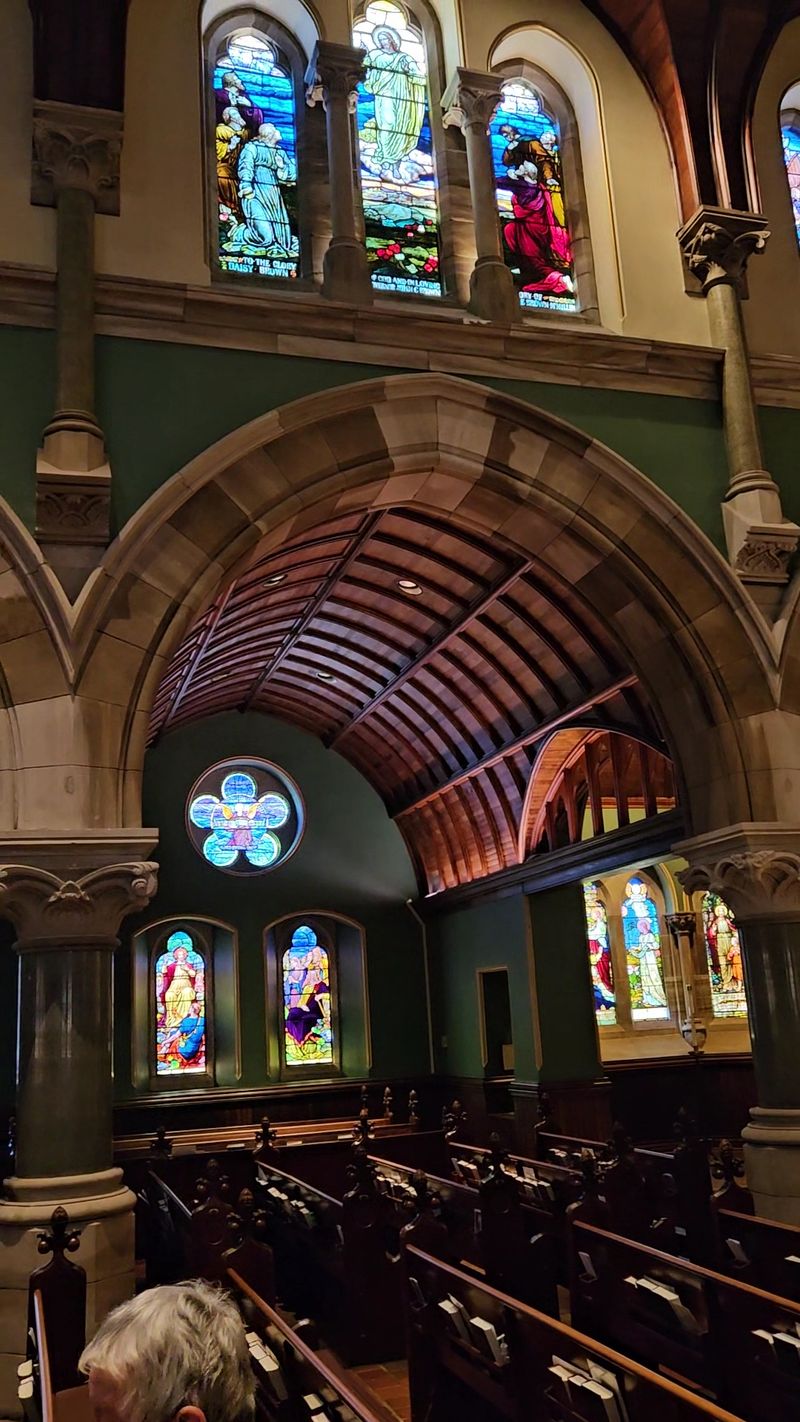
Look up first. The curved wooden ceiling arches are the feature guests describe most, dark timber ribs sweeping overhead in a way that makes a modestly sized nave feel considerably taller than it measures.
Polished granite columns run the length of the space, and the stonework stays restrained rather than showy. Several visitors have used the word cozy, which sounds odd for a cathedral until you stand in it.
The proportions are human-scale, described by architects as an early English feeling, and the effect is intimacy rather than intimidation.
Carvings cluster around the altar and along the woodwork, the sort of detail that repays standing still for a few minutes instead of walking a loop and leaving.
For anyone who enjoys architecture, this is the payoff section of the building. It carries a 4.8-star average across roughly 154 Google reviews, with the craftsmanship and the sanctuary itself named over and over.
Kids may need a nudge to look upward, but the ceiling usually wins them over once they do.
The Pipe Organ, the Choir, and Sunday Jazz
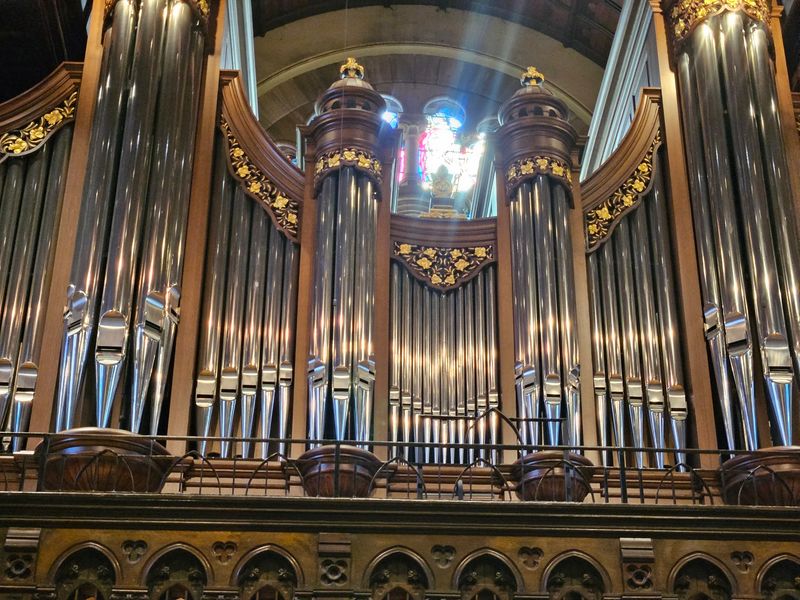
The pipe organ gets nearly as much attention as the glass. Intricate, historic and carefully maintained, it sits in a loft that visitors photograph as often as the windows, and the building’s acoustics were clearly built with music in mind.
Choral and organ programs are a regular part of life here. Guests have described joining a Messiah performance, sitting in on a chamber concert featuring a lautenwerk paired with violin, and hearing brass ensembles before major feast services.
Sunday evenings at 6 p.m. bring BreakingBread@6, a more casual liturgy, and the first Sunday of each month features a Jazz Mass. No food is served at that service despite the name, so plan dinner separately.
Sunday mornings typically include a traditional-language service at 7:30 a.m. plus modern-language services at 8:45 and 11:15 a.m., though schedules shift with the seasons and holidays, so confirm before driving in.
A note worth passing along: the organ is not always playing when tourists wander through on a weekday. If music matters to you, time your visit around a service or a scheduled concert.
Who Feels at Home Here
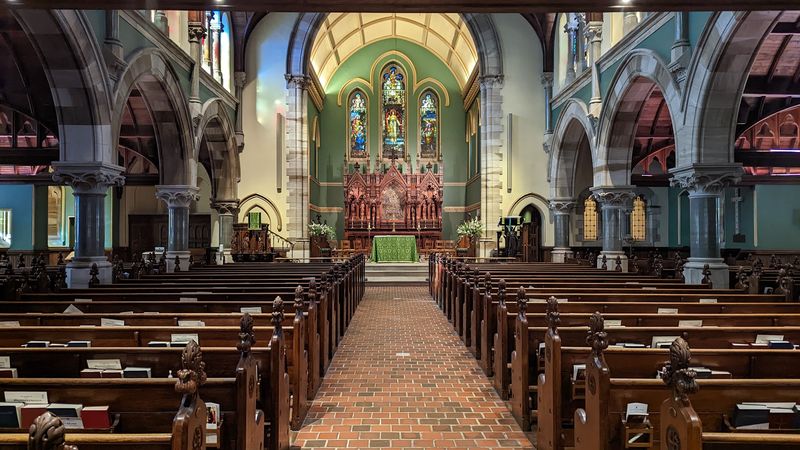
An all-are-welcome atmosphere comes up repeatedly from people with no connection to the congregation. Several describe stopping in mid-afternoon simply to sit, rest and take in the room, religious or not, and leaving calmer than they arrived.
Retirees traveling with cameras, architecture buffs, music lovers and anyone needing twenty quiet minutes downtown all seem to find something. Newcomers to worship services frequently mention being greeted and guided from the parking lot onward.
Honesty helps here: a couple of guests over the years have noted that on very busy holiday weekends the welcome felt thinner, and the cathedral has responded publicly to that feedback. Regular weekends tend to be steadier.
Families with small children can manage this stop comfortably. Sunday School runs for ages three through fifth grade, a nursery serves infants and toddlers on Sunday mornings, and older kids can join the Cathedral Choristers program or the Episcopal Youth Community for grades 6 through 12.
Ramps and elevators make the building genuinely accessible, and a single-stall, gender-neutral accessible restroom with a changing table sits on the first floor near reception.
Free Entry, Drop-In Tours, and Drive Times
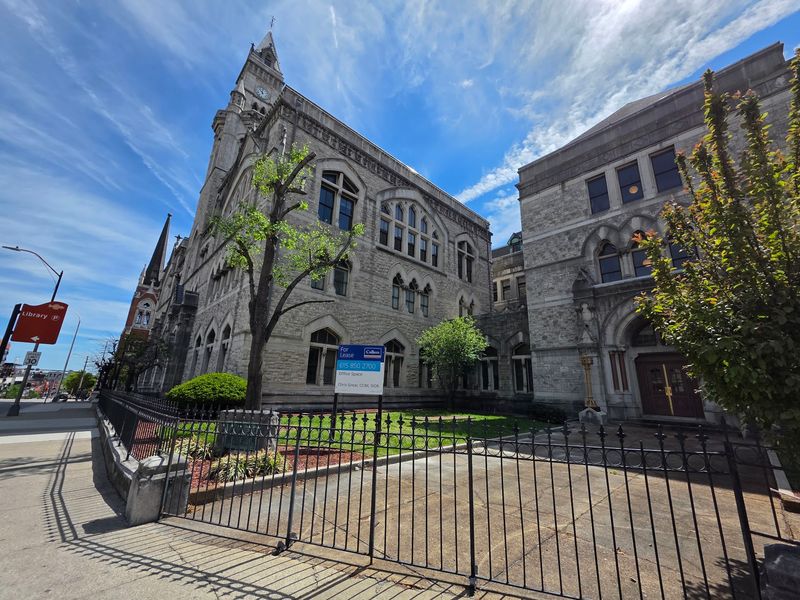
Nothing at the door. Admission is complimentary, with donations accepted to support the cathedral’s programs, and the building is typically open daily for worship on Sundays and weekdays.
Drop-in tours are generally offered on Fridays, Saturday mornings and after Sunday liturgies, with times adjusted seasonally. Saturday tours have historically run 10 a.m. to noon.
Once a month, clergy lead a Talk and Tour session for visitors wanting the deeper version. Church offices operate Monday through Friday, 9 a.m. to 4 p.m., with the reception desk staffed 10 a.m. to 3 p.m.
Because hours here follow a church calendar rather than a tourist one, a quick call to 615-255-7729 or a look at christcathedral.org before you load the car is time well spent.
Drive times from around Tennessee: roughly two hours from Chattanooga, about two hours and forty-five minutes from Knoxville, three to three and a half hours from Memphis, and four to four and a half hours from the Tri-Cities.
Parking includes the cathedral’s own lot, which functions as paid public parking during certain hours, plus free downtown street parking on Sundays.
Building a Cheap Nashville Saturday Around It
Here is the math families care about. Entry is free, Sunday street parking downtown is free, and a filling lunch nearby generally runs $12 to $20 a person, which means two adults and two kids can spend a genuinely memorable half-day for well under $60 including gas from most of Middle Tennessee.
Budget lunch options downtown and nearby cover a lot of ground: banh mi, ramen, tacos, bagels, salads, diner plates and pizza all land in that price window. Brown’s Diner and Calypso Cafe are longtime Nashville standbys if you want something familiar.
Late May or early June brings the annual Parish Picnic at Centennial Park, an outdoor gathering open to all ages and dog-friendly, which pairs nicely with a park afternoon.
Weekday mornings tend to be the quietest window inside if photographs or reflection are the goal. Sundays deliver the organ, the choir and the full color of the glass in use.
For a stop that costs nothing and still leaves an impression, this 1894 sandstone landmark earns the detour off Broadway.