
Freshwater Jellyfish Have Been Spotted In This Little-Known Tennessee Lake
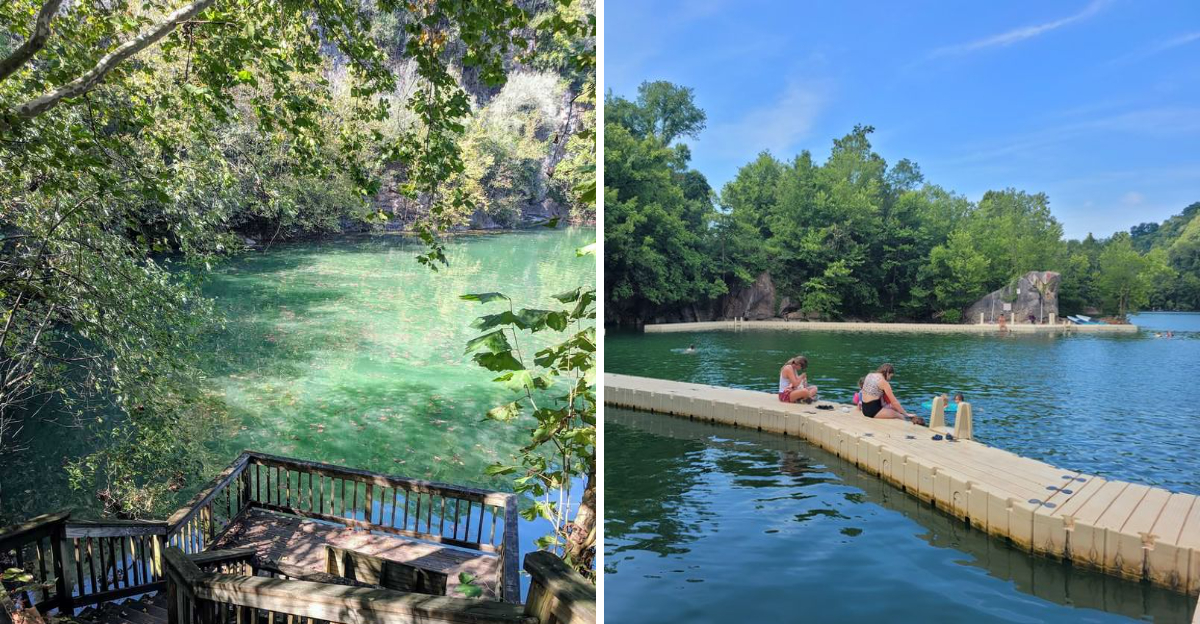
Jellyfish in Tennessee sound like the start of a joke, but one quiet lake has actually had them drifting through the water. Tiny, clear, and easy to miss, these freshwater creatures can suddenly turn an ordinary paddle into something worth talking about.
They are not the stinging ocean jellyfish most people know. Freshwater jellyfish are much smaller, usually appearing when the water is warm and conditions line up just right.
Sightings can be unpredictable, which makes spotting one feel even more unusual.
The lake itself adds to the appeal. Calm water, wooded surroundings, and easy access make it a popular place for paddling and swimming, yet many visitors have no idea what may be floating beneath the surface.
That little surprise gives this Tennessee lake a story few nearby swimming spots can match. Keep your eyes on the water, because the next tiny jelly might be closer than you think.
Meet The Penny-Sized Drifters Of The Quarry
Something about a jellyfish in landlocked Tennessee sounds like a tall tale. Yet Craspedacusta sowerbii is entirely real, and it drifts here every so often.
The bell measures roughly 5 to 25 millimeters across. That means most are somewhere between a penny and a quarter in size. Their bodies are nearly see-through, sometimes faintly white, which makes them easy to miss.
Look closer and the detail gets remarkable. Up to 300 to 500 hair-thin tentacles fringe the edge of the bell. Inside the translucent dome, four small gonads show up as pale shapes.
Movement is the giveaway. A muscular membrane called a velum contracts and pushes the animal forward in gentle pulses.
Swimmers often describe a floating bit of cellophane that suddenly decides to swim.
Here is the twist worth knowing. Despite the nickname, these are not true jellyfish at all. Scientists classify them as hydrozoans, which puts them closer to hydra than to the ocean species most people picture.
Spotting one takes patience and stillness. Bright light, calm water, and a slow eye help enormously. Once your brain learns the shape, the whole surface layer can suddenly seem full of them.
A Marble Quarry That Became A Swimming Hole
Before it was a lake, it was a hole in the ground with a serious résumé. Mead’s Quarry produced Tennessee marble, the pink-toned stone shipped far beyond the state line.
That stone shows up in places you may already know. The JP Morgan Library in New York City used it. So did the National Gallery of Art in Washington, D.C.
Industry eventually moved on, and the site fell into rough shape as an illegal dump. The turnaround came through stubborn volunteer labor and steady stewardship from Ijams Nature Center staff.
Knox County acquired the land in 2001, and Ijams took over management. What had been a scarred industrial leftover slowly became a place families now choose for a summer afternoon.
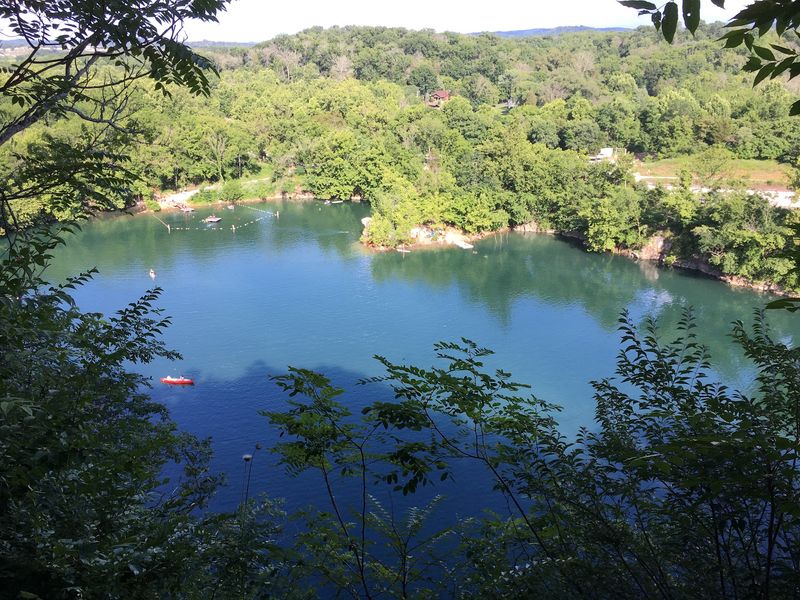
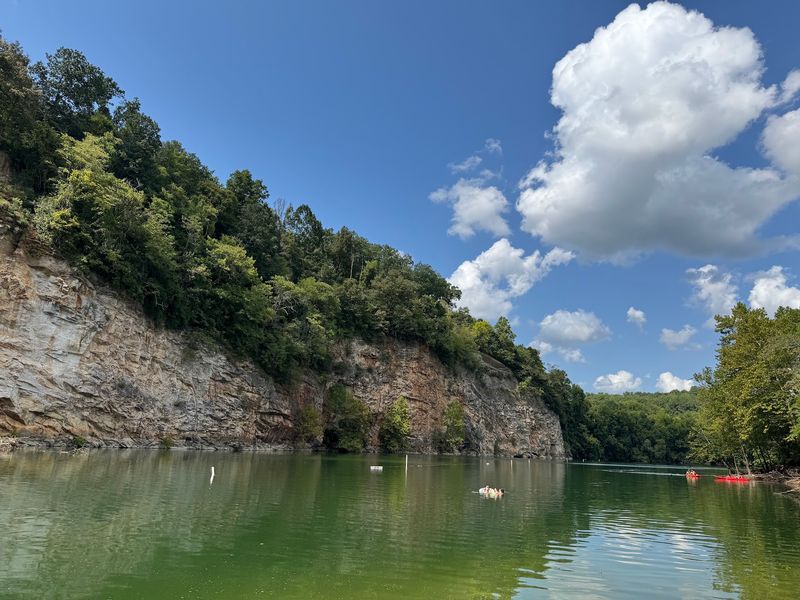
The water filled the old pit and stayed. Today the lake covers about 25 acres and plunges to roughly 80 feet at its deepest point, which explains those steep drop-offs near the walls.
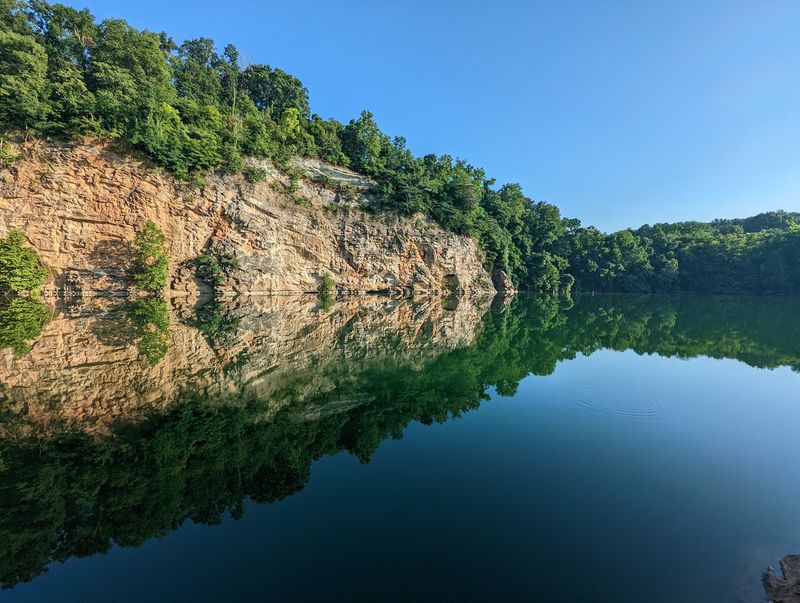
Knowing the history changes how the place feels. Those pale rock faces above the waterline are not natural cliffs.
They are cut surfaces, left by workers who never imagined jellyfish would one day float above their old workbench.
Where To Find It Just Minutes From Downtown Knoxville
Getting here does not require a road trip through the mountains. The lake sits inside Ijams Nature Center at 3518 Island Home Pike (or Avenue), Knoxville, TN 37920.
Downtown Knoxville is only minutes away by car. That closeness surprises people who expect a wild-feeling lake to demand an hour of winding highway.
The whole property anchors South Knoxville’s Urban Wilderness. Skyline on one side, forest and water on the other, all within the same zip code.
Access costs nothing. The park opens daily from dawn until dusk, and there is no entry fee for the lake area.
Parking works best early. Multiple lots serve the site, including gravel spaces near the trailhead, and they fill quickly on warm weekends.
Facilities are simple rather than fancy. Expect restrooms in the form of porta-potties, a boat rental kiosk, and a concession stand during busy months.
A short walk connects the parking area to the shoreline. Picnic tables sit within easy reach, and the path is manageable for most people carrying gear.
Plan around the light if jellyfish are your goal. Midday sun makes those translucent bells far easier to notice against the darker water below.
The 1997 Sighting That Put This Lake On The Map
September 1997 is the date that matters here. That is when freshwater jellyfish were first documented in Mead’s Quarry Lake.
Tennessee’s connection to the species runs deeper than that, though. Records show the animals appeared in the state as far back as 1938.
That earliest sighting also happened in Knox County. It took place at Andrew Jackson Lake, known today as Dead Horse Lake.
Some databases list 1999 as the state’s first record. The older 1938 documentation shows that figure understates how long these creatures have been around here.
Stephen Lyn Bales, senior naturalist at Ijams Nature Center, has confirmed the jellyfish in the quarry. He actively looks for them when conditions line up.
Naturalists tend to check the same way anyone can. Scan the top layer of calm water on a bright day, ideally from a dock or a boat.
Documentation matters more than it sounds. Because appearances are unpredictable, each confirmed sighting adds a data point to a patchy record.
The takeaway is encouraging. A lake once treated as a dumping ground now hosts an organism that scientists genuinely want to track, which says a lot about what restoration can accomplish.
Timing Your Trip For A Jellyfish Bloom
Luck plays a bigger role than skill with these sightings. Blooms arrive on their own schedule, not yours.
Mid to late summer offers the best odds. Blooms in the quarry usually show up then and can last several weeks.
Warm water is the trigger. As temperatures climb and food becomes plentiful, the jellyfish rise toward the surface to reproduce.
Early fall can also deliver. Across their range, late summer and early autumn produce the most frequent reports.
Consistency is not part of the deal. A lake may swarm with them one year and show none the next, which frustrates anyone hoping to plan ahead.
Calm mornings favor observers. Wind chops the surface and scatters the light, making a transparent animal nearly impossible to pick out.
Practical tip: bring goggles or a clear container. Scooping a little water and holding it up often reveals what the naked eye skims past.
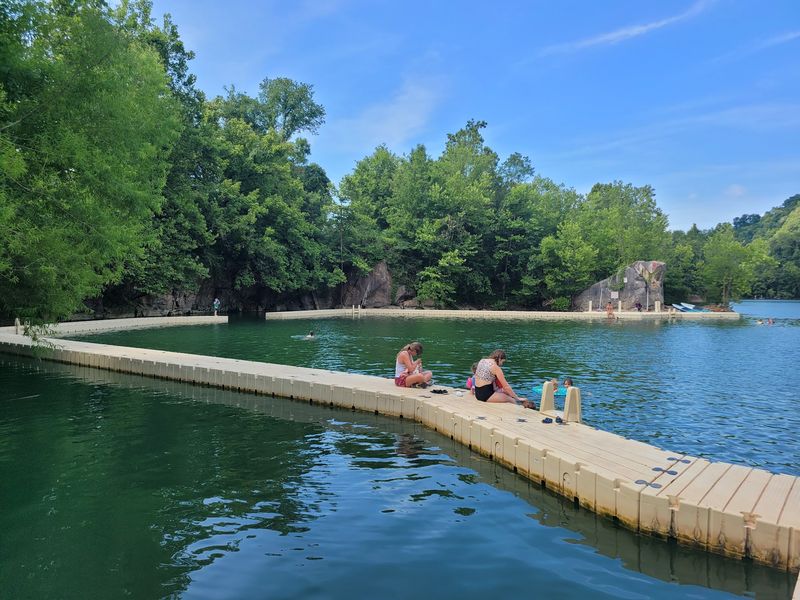
Floating docks give you a steady platform. Sitting quietly for ten minutes beats pacing the shoreline for an hour.
If nothing appears, the trip still pays off. Few places let you hunt for jellyfish while a city sits just over the treeline.
No Sting, No Worry For Swimmers
Let’s settle the question everyone asks first. These jellyfish cannot hurt you. They do carry stinging cells called nematocysts, same as their ocean relatives. The difference is scale.
Those cells are far too small to pierce human skin. Sharing the water with them is completely harmless.
Their menu explains why. Zooplankton such as daphnia and copepods make up most of the diet, along with small insects that drift into the tentacles.
Opportunistic feeding is the strategy. Tentacles hang in the water, and whatever tiny thing bumps into them becomes dinner.
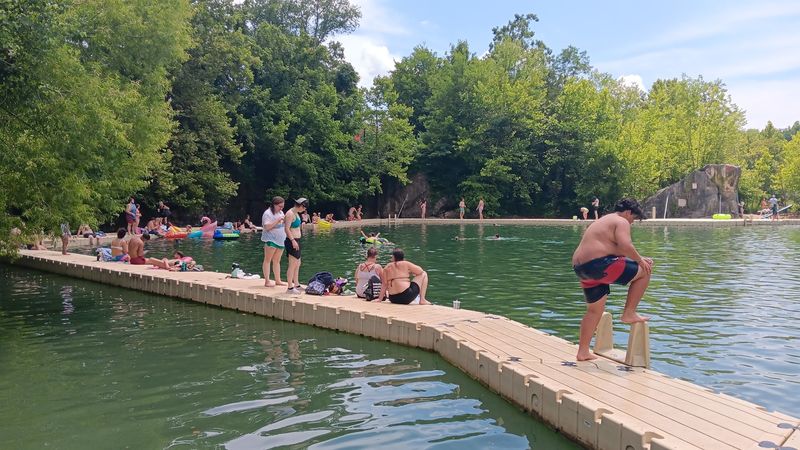
Real safety concerns at the lake have nothing to do with jellyfish. Swimming is allowed but at your own risk, since no lifeguards are on duty.
Depth deserves respect. The old quarry walls create steep drop-offs, and the bottom falls away quickly in places.
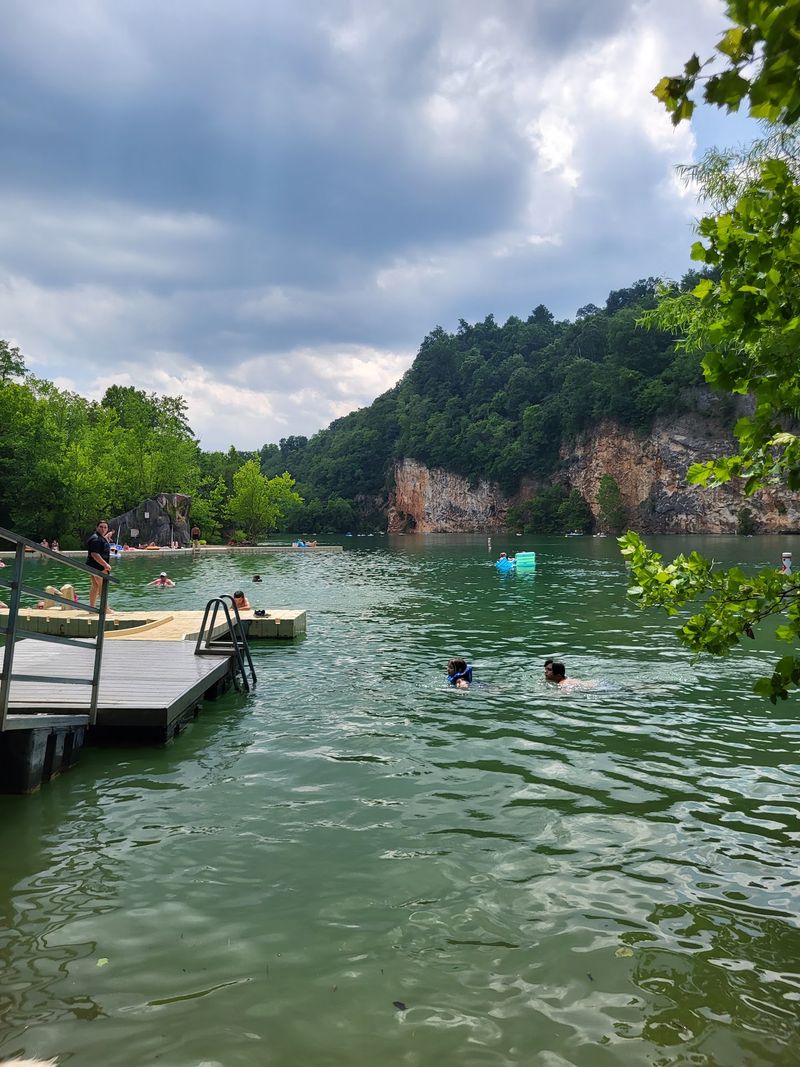
Bringing life jackets for children is a sensible call. Floating docks include ladders, which helps anyone who prefers not to jump.
Water shoes make the rocky entry more comfortable. Small stones line parts of the shore near the sandy patch. So float freely. If a tiny bell pulses past your arm, enjoy the moment rather than flinching away from it.
The Secret Life Hiding On The Lakebed
Here is the part that genuinely surprises people. The jellyfish you might see are the final chapter, not the whole book.
For most of their existence, these animals live as polyps. Tiny, coral-like, and attached to submerged rocks, lakebeds, or underwater plants.
Polyps reproduce asexually and stay put. They are so small and unremarkable that almost nobody notices them.
That hidden phase can stretch on remarkably long. Lifespans exceeding 15 years have been recorded for the organism in this stage.
The medusa form, the recognizable jellyfish, typically lasts only a few months. Its main purpose is sexual reproduction.
Think of it as a brief public appearance after years backstage. The bell rises, does its job, and the population returns to quiet residence below.
That structure explains the on-again, off-again sightings. Polyps may be present in the quarry every single year while medusae stay absent.
Conditions decide the schedule. Water temperature and available food nudge the polyps toward producing the swimming stage.
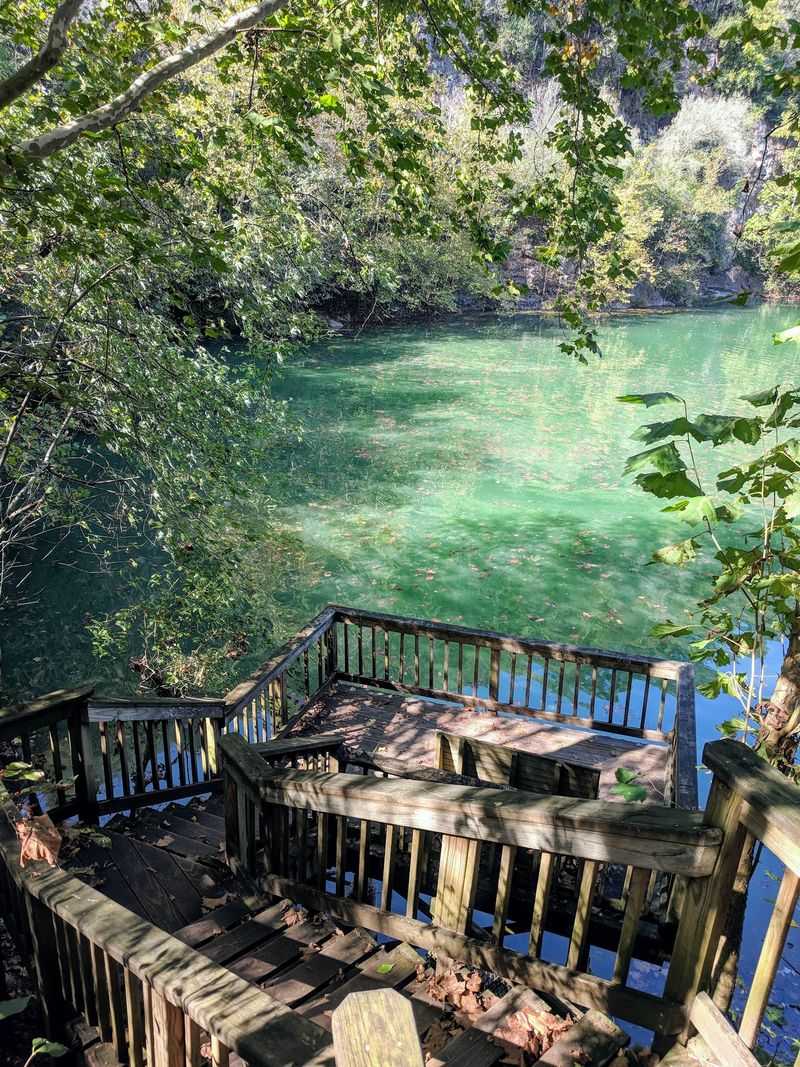
So even on a jellyfish-free afternoon, they are likely still there. Somewhere under the green surface, clinging to stone cut by quarry workers a century ago.
Paddling, Trails, And Everything Else Waiting Onshore
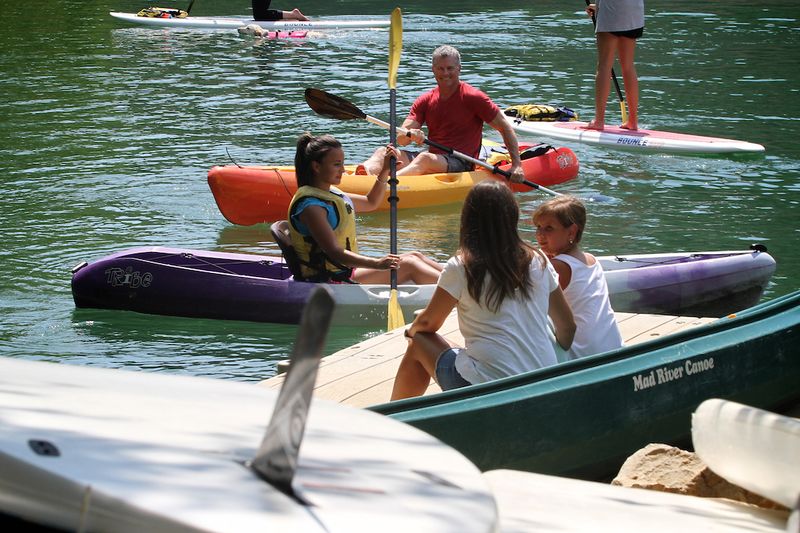
Jellyfish or not, nobody leaves this place bored. The activity list is genuinely long. Kayaking and paddleboarding rank near the top. Canoes, kayaks, and paddleboards are available to rent on site, so gear-free trips work fine.
A paddleboard doubles as an excellent observation deck. Standing above calm water gives you the clearest possible view of anything drifting below.
Anglers can fish here too. Floating platforms, a small sandy beach, and picnic areas round out the shoreline options.
Trails are the other headline. Mead’s Quarry itself offers 1.5 miles of multi-use paths for walking, running, and mountain biking.
Ijams Nature Center adds far more. The wider property holds over 12 miles of trails, and South Knoxville’s Urban Wilderness exceeds 40 miles overall.
Tharp Trace Trail is the one to remember. It circles the lake along the upper bluff and delivers overlooks that peer straight down into the water. Expect one steep climb on that loop. Bring water, especially in Tennessee humidity.
Leashed dogs are welcome, which makes it a favorite for four-legged company. Combine a morning paddle with an afternoon hike and Mead’s Quarry Lake easily fills a full day.