
Kids Dig For Real Fossils And Keep What They Find At This Sylvania, Ohio, Quarry
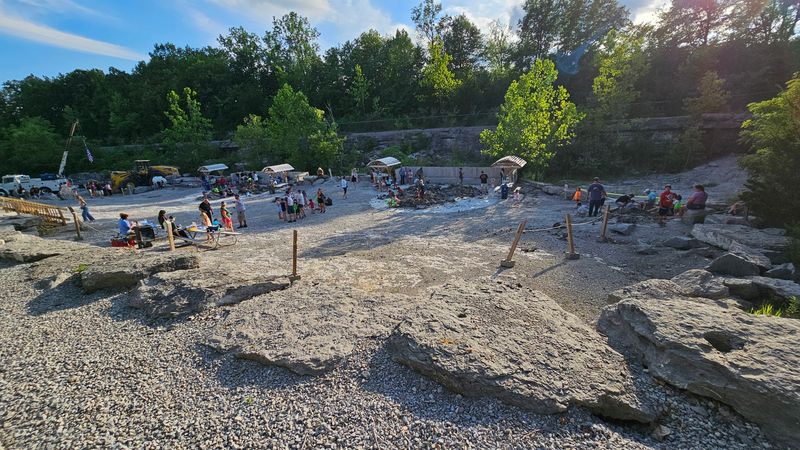
Somewhere in northwest Ohio, there is a five-acre patch of gray shale where a kid can pick up a rock, split it open, and hold something that has been waiting 380 million years for that exact moment. No glass case, no velvet rope, no gift shop replica.
Whatever comes out of that pile goes home in your bucket, and it costs nothing to try. It looks like a pile of dirt from the parking lot, which is exactly why people underestimate how long they will end up staying.
A Working Quarry Turned Public Dig Site
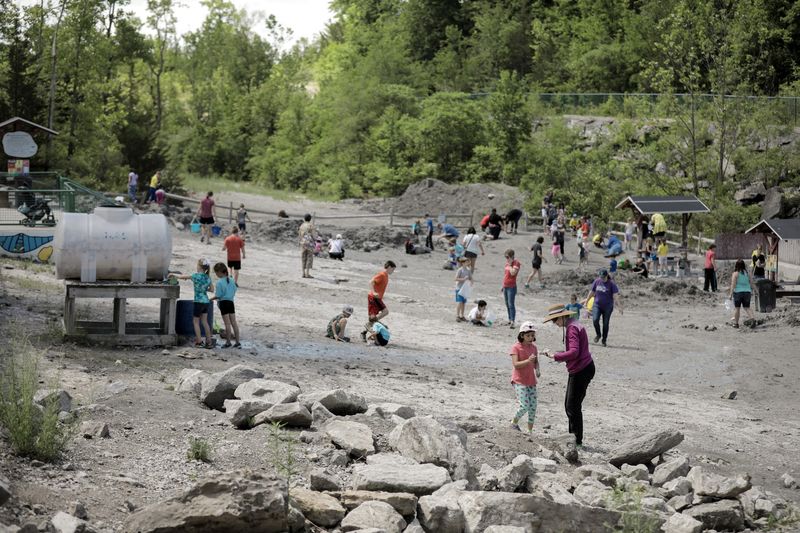
At 5705 Centennial Rd in Sylvania, Ohio, Fossil Park sits on ground that once belonged to the Medusa Portland Cement Company quarry. The Olander Park System runs it today, working alongside Hanson Aggregates and Sylvania Township to keep the five-acre dig area stocked with fresh material.
What makes the arrangement unusual is the pipeline. An active quarry sits right next door, and shale from that operation gets trucked over and dumped into the public pit on a regular basis.
Instead of a picked-over site that goes barren after a few busy weekends, visitors get rotating piles of untouched rock.
The park opened in 2001, and geologists rank the surrounding formation among the most productive fossil units anywhere in North America. It is described as one of only two prime Devonian Era dig sites of its kind on the planet, which is a strange sentence to write about a spot with a parking lot and clean restrooms in suburban Lucas County.
Visitors keep everything they find. There is no limit beyond a simple rule: if you cannot physically carry it out, it stays.
Shale From a Tropical Sea That Vanished 380 Million Years Ago
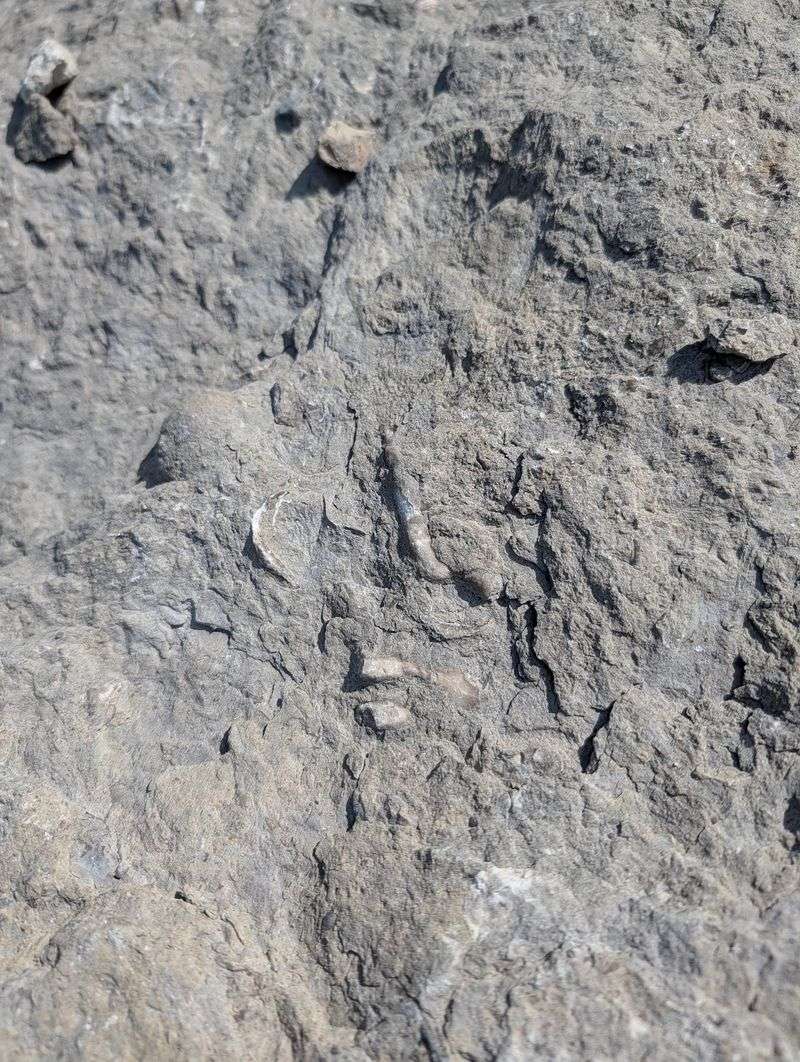
Northwest Ohio was not always flat farmland and highway exits. Roughly 375 to 385 million years ago, during the Middle Devonian, this entire region sat underwater near the equator, submerged beneath a warm, shallow tropical sea.
Fine sediment settled slowly over the creatures living down there, and that slow burial is why the preservation is so remarkable. Geologists call the resulting layer the Silica Formation, and it has yielded around 200 recorded species from this site alone.
Handle a piece of the shale and you will notice how soft it is. It splits along natural planes with nothing but thumb pressure, sometimes cracking open like a book to reveal a shell pressed flat inside.
That softness is the whole reason the park works for young children.
Worth knowing: the Devonian predates dinosaurs by well over a hundred million years. Grandparents joke about hunting dinosaur bones with the grandkids, but what actually comes out of these piles is older and, arguably, stranger.
Ancient reefs, not reptiles.
Interpretive posters scattered around the site explain the geology and help visitors sort out what they are looking at.
Brachiopods, Horn Coral, and the Trilobite Everyone Wants
Brachiopods dominate. These small, hinged shells turn up so consistently that most first-timers find one within minutes of starting, and several varieties appear here, including the round little ones collectors nickname walnuts.
Horn coral is the other guaranteed crowd-pleaser. Solitary horn corals look like tiny curved cones, and colonial forms show up as honeycombed masses.
Crinoid fragments, the stem pieces of ancient sea lilies, scatter through the shale like beads from a broken necklace.
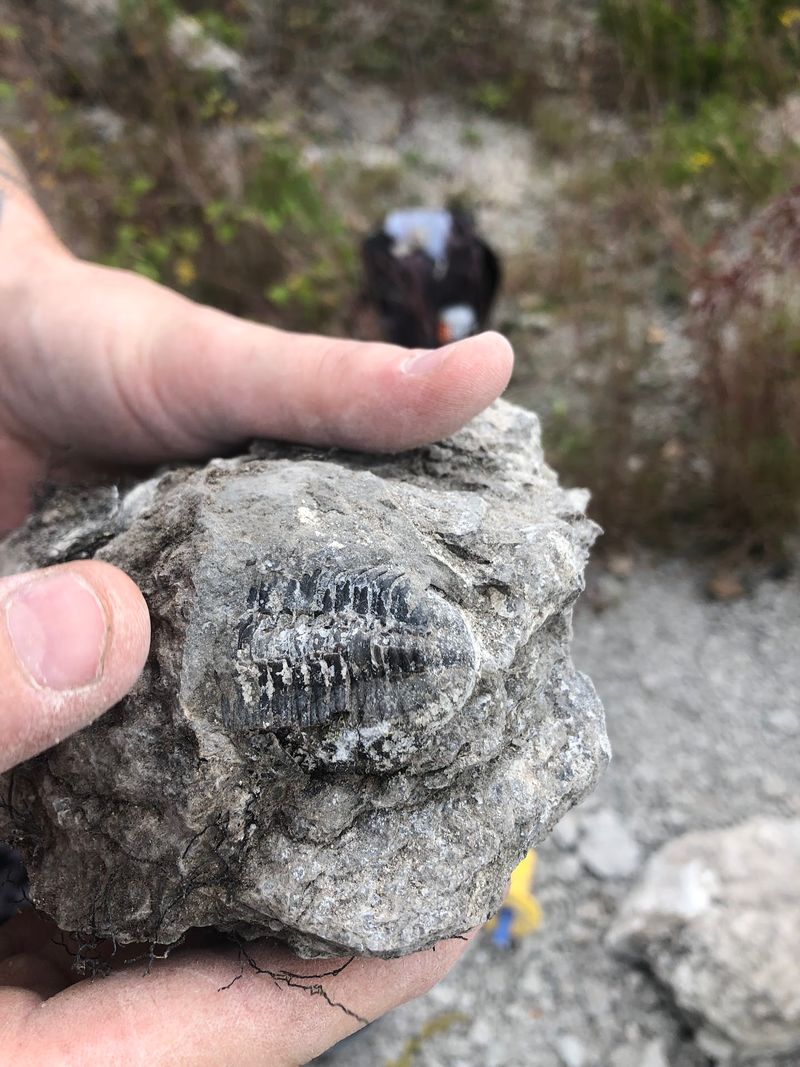
Then there is the prize. Complete specimens of the trilobite EldredgeopsPhacops, formerly classified as , hide in these piles, and finding an intact one is the unofficial jackpot.
Bryozoans reward the patient searchers too, along with the occasional flash of iron pyrite catching sunlight.
Not everyone strikes trilobite gold. Plenty of visitors report leaving with boxes of crinoids and brachiopods and no trilobite at all, which does nothing to dampen the enthusiasm.
Regulars mention that fossil hunting, brachiopods, and trilobites come up constantly in conversation across the pit. People compare finds with strangers.
Kids run rocks over to whoever looks knowledgeable.
Bare Hands Only: The No-Tools Rule
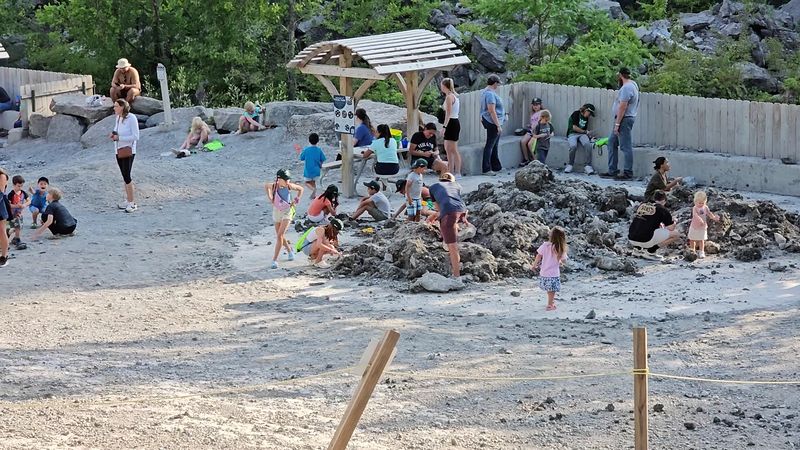
Leave the rock hammer at home. Metal tools are prohibited in the dig pit, and that rule catches a few people off guard, particularly seasoned rockhounds who arrive equipped for serious excavation.
The reasoning holds up once you handle the material. Silica Formation shale is soft enough that fingers do the job, splitting slabs cleanly along bedding planes without any chiseling.
Chunks come apart with a satisfying snap.
Some visitors admit to wishing they could bring proper equipment, especially when they hit a large block buried deep in a pile. Others note that a stick and a stiff plant stem work fine as improvised picks and brushes, which is a very kid-friendly solution.
What you should bring instead: a small brush for cleaning grit off finds, plus a container to protect them on the ride home. Egg cartons and cut-open milk jugs get recommended often, since delicate specimens crumble if they rattle around loose in a bag.
Digging stays inside marked areas only. A rope marks the boundary of the active pit, and staff keep hunting contained to that zone.
Shaded Pavilions, Climbing Rocks, and the Quarry Ridge Trail
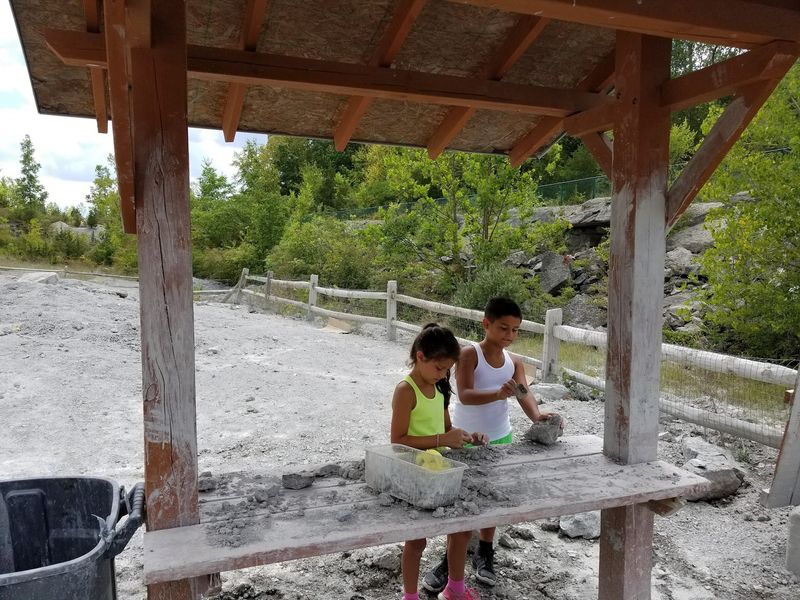
Six covered pavilions with benches ring the dig area, and on a hot afternoon they become the most valuable real estate on the property. Water stations and restrooms sit nearby, and visitors consistently point out how clean the bathroom facilities stay.
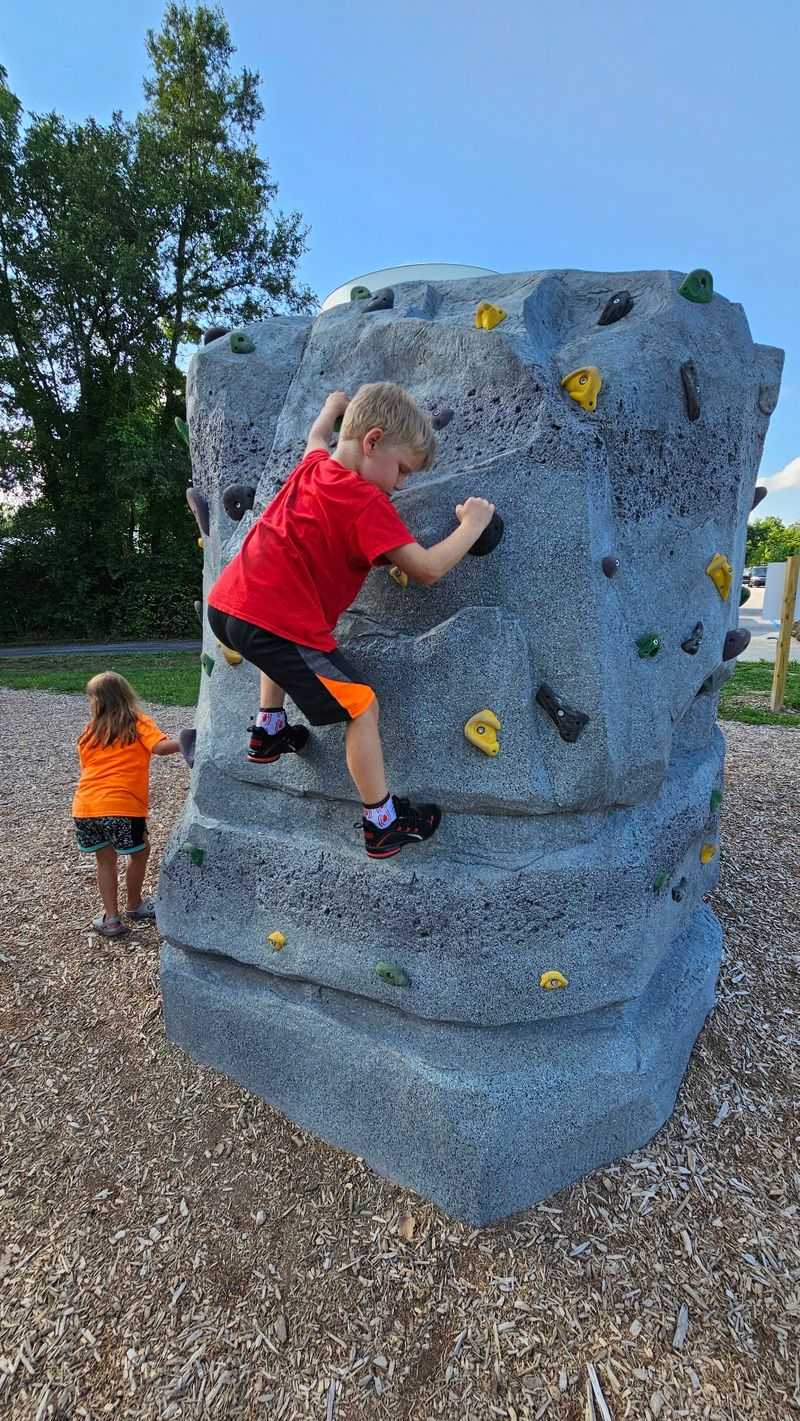
Just off the parking lot, a pair of large climbing rocks gives older kids something to scramble up when their patience for splitting shale runs out. Younger children may need a boost or a different activity.
The Quarry Ridge Bike Trail runs through the property, paved and well maintained, suitable for walking or riding. A group picnic area rounds out the setup, which is why some families treat the whole thing as an all-day outing rather than a quick stop.
Parking is generous. Several visitors describe the lot as huge, with an easy path leading down from the cars to the pit itself.
One honest caveat: shade inside the actual dig area is limited. The pavilions help, but the piles themselves sit fully exposed, and that matters more than you might expect in July.
Volunteers Who Know Every Rock in the Pile
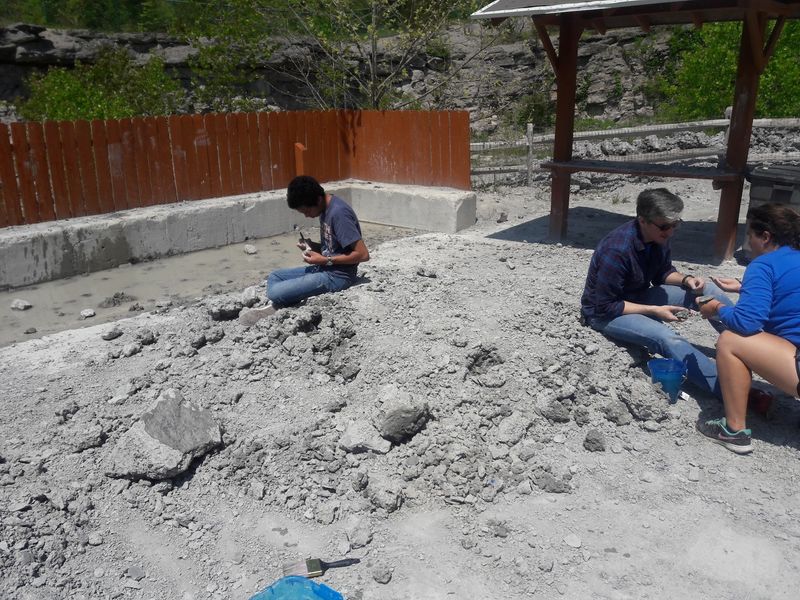
Ask a question at Fossil Park and you are likely to get a twenty-minute answer, delivered with genuine enthusiasm. Staff and volunteers circulate through the pit during open hours, helping people identify what they have pulled from the shale.
Families mention these guides more than almost any other feature. Someone will crouch down, turn a rock over, point out the difference between a crinoid stem and a coral fragment, and then patiently field the follow-up questions that inevitably pour out of a curious seven-year-old.
Longtime volunteers have decades of accumulated knowledge about the formation, and visitors often say they learned more in an afternoon here than they expected to learn all summer. Several describe wishing they had taken notes.
Educational posters supplement the human help. They cover geology basics and fossil identification, positioned around the site so you can check your find against a diagram without waiting for assistance.
School groups tap into this too. Field trips run through the park regularly, and buses of students turn the quiet pit into a very lively classroom for an hour or two.
Free Admission, Seasonal Hours, and What to Pack
Cost is the easiest part: admission is free, parking is free, and you keep whatever you carry out. Field trips run free for Sylvania School District classes, while other organized groups pay two dollars per child, with chaperones and bus drivers admitted at no charge.
The pit operates seasonally, generally mid-April through October, on weekends and selected weekdays. Google lists the park as open 8:30 AM to 5:30 PM daily, though the dig area follows its own calendar, so checking the Olander Park System schedule before driving out saves disappointment.
The phone number is 419-882-8313.
Restrooms and the Quarry Ridge Bike Trail stay open year-round apart from major holidays.
Packing list, drawn from people who have learned the hard way: sunscreen, a hat, plenty of drinking water, a small brush or old toothbrush, a bucket or egg carton, a towel, and a full change of clothes for the kids.
You will end up coated in clay. Several visitors also suggest arriving before July, when the ground holds more moisture and digging goes easier.
Why Two Hours Here Turns Into Five
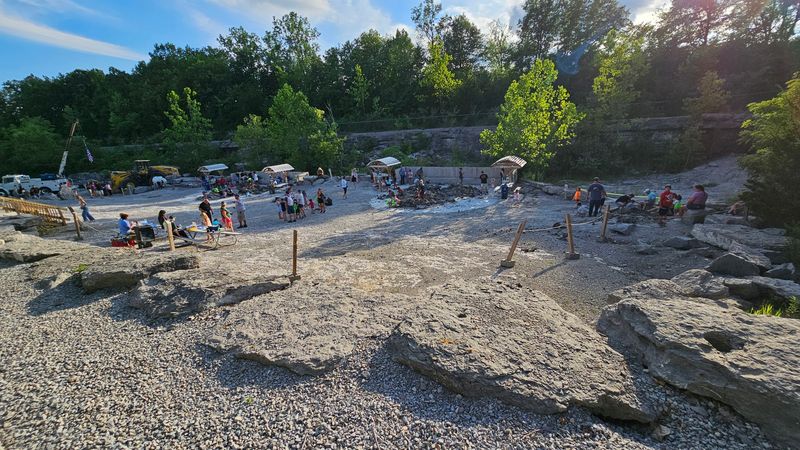
Nearly everyone tells the same story. They pull into the lot, walk down to the roped-off pit, look at the modest pile of gray rock, and quietly wonder whether they wasted a trip.
Then they pick up the first slab, split it, and find a shell staring back.
Time does something odd after that. Two hours evaporate.
Some groups have logged five hours and left reluctantly, buckets heavy, hands gray with clay.
Holding a 380-million-year-old animal that you personally freed from stone is a different experience than reading about one. Kids get it immediately.
Adults who came along as chaperones often end up digging harder than the children.
It is not flawless. Dry stretches make the shale stubborn, shade runs thin, and gates have been known to close a bit ahead of posted times, so allow buffer.
Still, for a free afternoon in Ohio that sends everyone home dirty, tired, and carrying actual pieces of an ancient sea, few places compete. Bring water, bring patience, and expect to stay longer than planned.