
The New York Store Packed With Architectural Antiques Rescued From Buildings That No Longer Exist
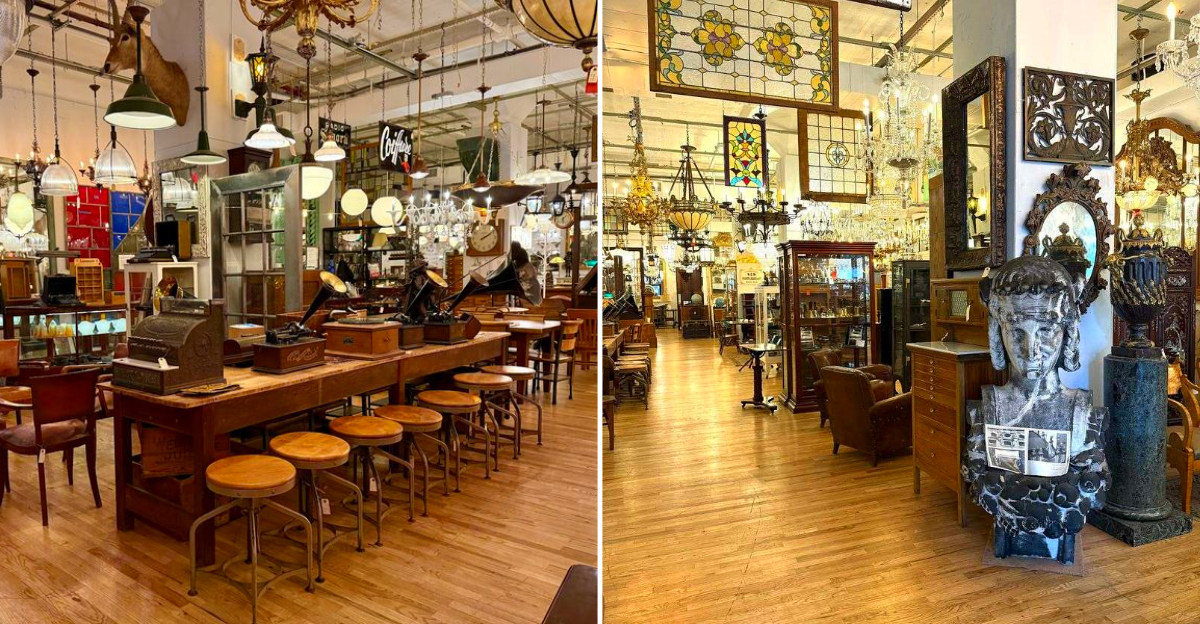
Buildings in New York come down constantly, but their best parts do not always go with them. Doorknobs, stained glass, iron gates, chandeliers that once hung over rooms nobody living has seen.
All of it gets pulled out ahead of the wrecking crews and given somewhere else to be.
One shop in New York has spent thirty years treating what other people call debris as inventory worth saving. Two full floors of salvage sit inside, and you can put your hands on any of it without buying a museum ticket first.
That last part matters more than it sounds. Museums keep the past behind glass. This place lets you turn a doorknob that has been turned by a few thousand people already, most of them dead, in a building that no longer stands anywhere on the map.
A Two Floor Warehouse Where Vanished Buildings Live On
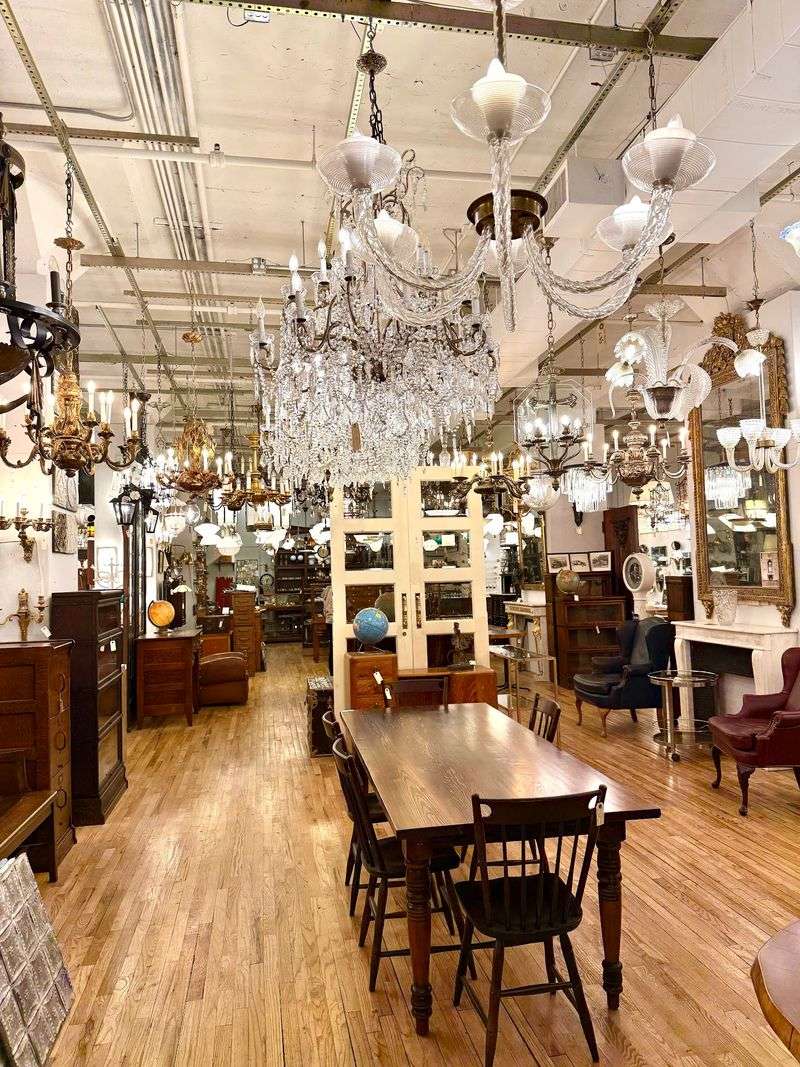
Salvage shops usually feel dusty and cramped. Not here. The space runs 8,000 square feet across two floors, which means gates, columns, and full window frames get room to breathe.
Overhead, rows of brass and crystal chandeliers glow like a small constellation. Below them sit marble mantels, church pews, oak library tables, and drawers of hardware sorted by shape and finish. Every object came out of a real structure somewhere, often one that no longer stands.
What makes the visit stick with you is the origin of things. Pieces from grand New York hotels turn up regularly, including relics from the Waldorf Astoria renovation. Holding a door plate that once guided guests down a marble hallway hits differently than scrolling a photo of it.
Prices reflect the labor behind each rescue. Sourcing, hauling, storing, and restoring a cast iron gate is not a weekend project, and the tags say so. Still, small finds like glass knobs and hooks keep the place friendly to modest budgets.
Ring the doorbell for entry, then give yourself an hour. Rushing through would be a waste of good salvage. Weekday mornings run quietest, giving you room to browse without navigating around other shoppers.
Meet Olde Good Things In Hell’s Kitchen
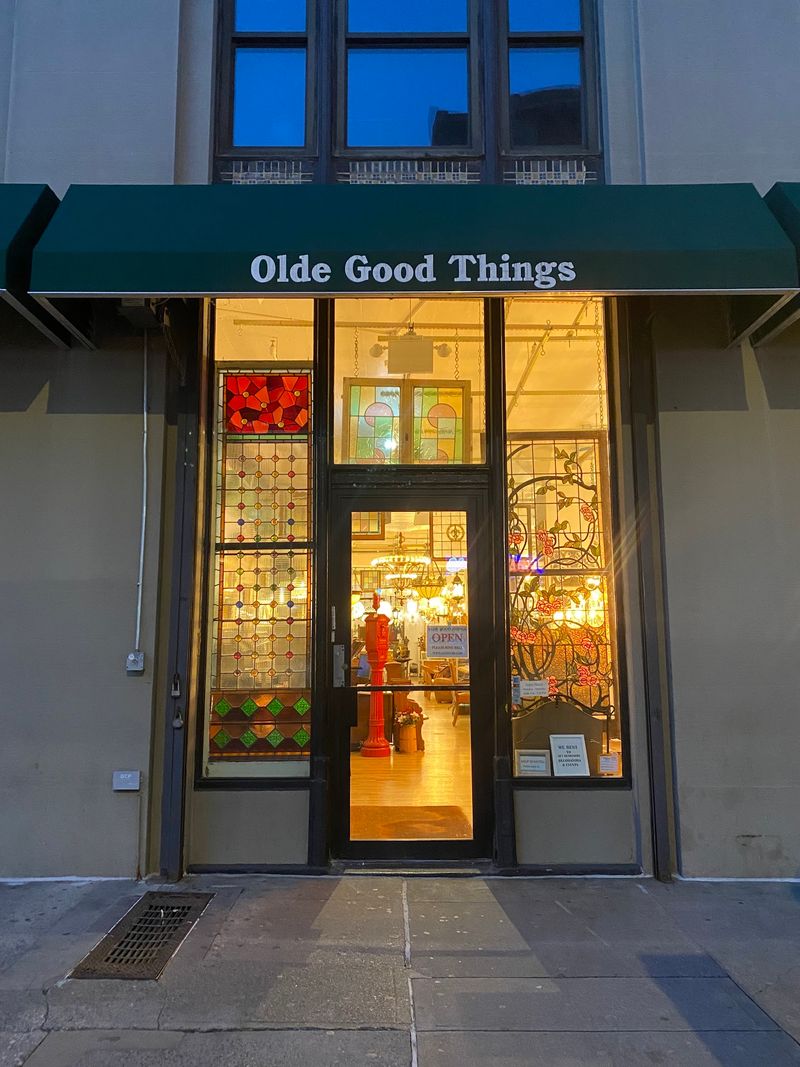
The name on the awning is Olde Good Things, and the flagship sits at 333 West 52nd Street in Manhattan, on the block between Eighth and Ninth Avenues. Theater crowds pass by constantly without realizing what waits behind the glass.
Company history goes back to the early 1990s, with the business founded in 1995 and its first store opening in Brooklyn. Three decades later it ranks among the largest architectural antique dealers in the country.
The West 52nd Street shop opened its doors in October 2020 and pulled several Manhattan operations together under one roof. That consolidation explains the sheer volume inside. Instead of scattered inventory, you get the deep bench in a single stop.
Hours run Monday through Saturday, 10 in the morning until 5:30 in the evening, with Sunday off. Plan accordingly, because a quick five minute peek never actually happens here.
Midtown is not where most people expect to find serious salvage. That surprise is half the fun. New York keeps its oddest gems in the least likely blocks, and this one proves the rule.
Subway access is simple from several lines, which spares you a Midtown parking hunt entirely.
Chandeliers That Once Lit Grand Rooms
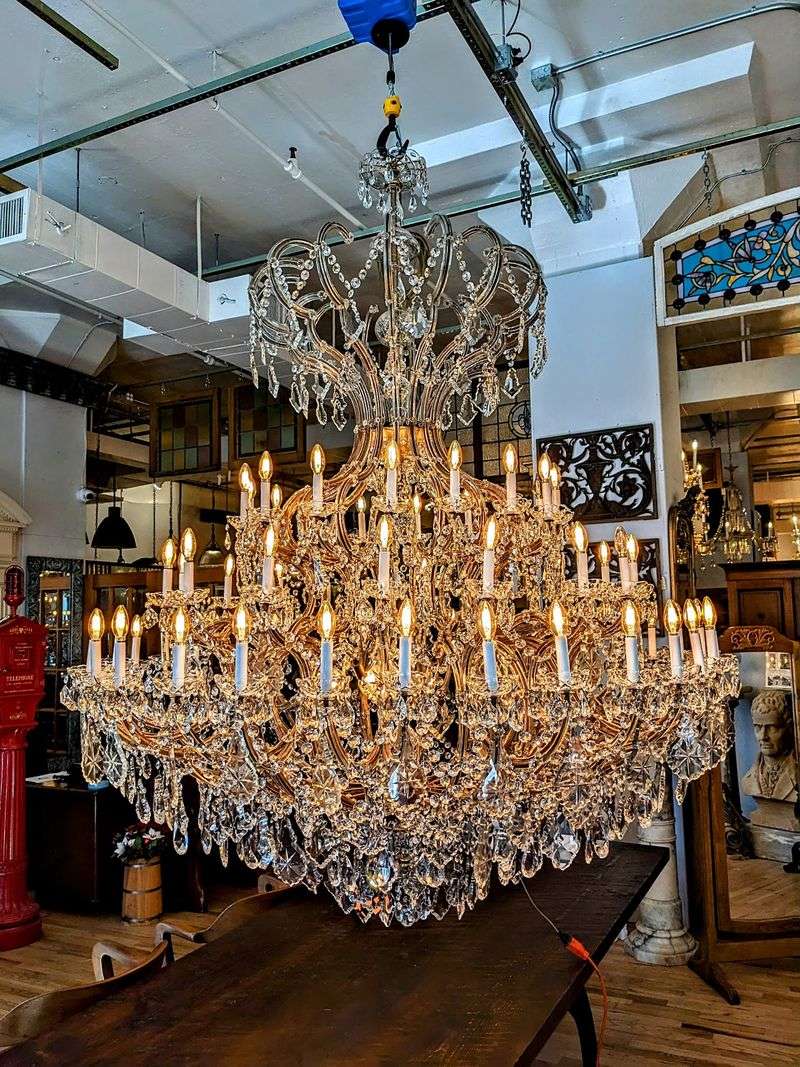
Look up first. The ceiling carries dozens of chandeliers and pendant fixtures, hung close enough that they catch each other’s light. Crystal, brass, milk glass, and hammered iron all share the same airspace.
Many arrived from hotels, banks, and theaters during renovations or demolitions. Art Deco shapes show up often, along with mid century designs and heavier Victorian frames. Each fixture gets cleaned and rewired so it can actually work in a modern home.
Shoppers hunting for one statement piece tend to spend the longest time in this zone. A single restored fixture can reset an entire room, and no big box store sells anything close to it.
Practical tip worth remembering: measure your ceiling height before you fall in love. Some of these fixtures were built for lobbies with twenty foot clearance and will swallow a standard apartment.
Sconces and smaller lamps line the walls for anyone working with tighter space. They carry the same craftsmanship at a friendlier scale.
The lighting section alone justifies the trip. Bring a phone with plenty of storage, because photos happen fast in here. Rewiring means fixtures arrive ready for an electrician rather than needing a full restoration first.
Hardware Bins Built For Serious Rummaging
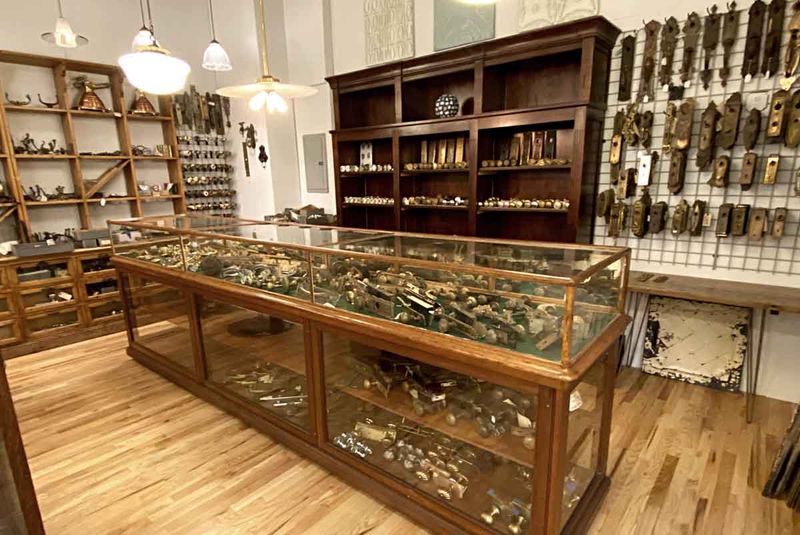
Some people come for furniture. Others come straight for the drawers. Rows of bins hold antique doorknobs, hinges, escutcheon plates, hooks, latches, and register covers, sorted with real care.
Glass knobs sparkle next to weathered bronze ones. Patterns range from plain and utilitarian to floral castings that would look at home in a brownstone parlor. Prices here stay approachable, which makes the hardware area the best entry point for first timers.
Renovators love it for good reason. Matching original hardware in an old apartment is nearly impossible at a modern shop, and reproductions rarely fool anyone. Salvaged pieces carry the correct weight, wear, and screw sizing.
Bring measurements of your existing doors and a photo of what you already have. Staff members know the inventory well and can point you toward the right era and finish quickly.
Even non renovators find uses. A single brass knob becomes a coat hook. Old plates turn into wall art.
Small hinges make thoughtful gifts for anyone who loves old houses.
Digging through these bins feels like a treasure hunt with a very reasonable entry fee.
Iron Gates, Columns, And Windows With History
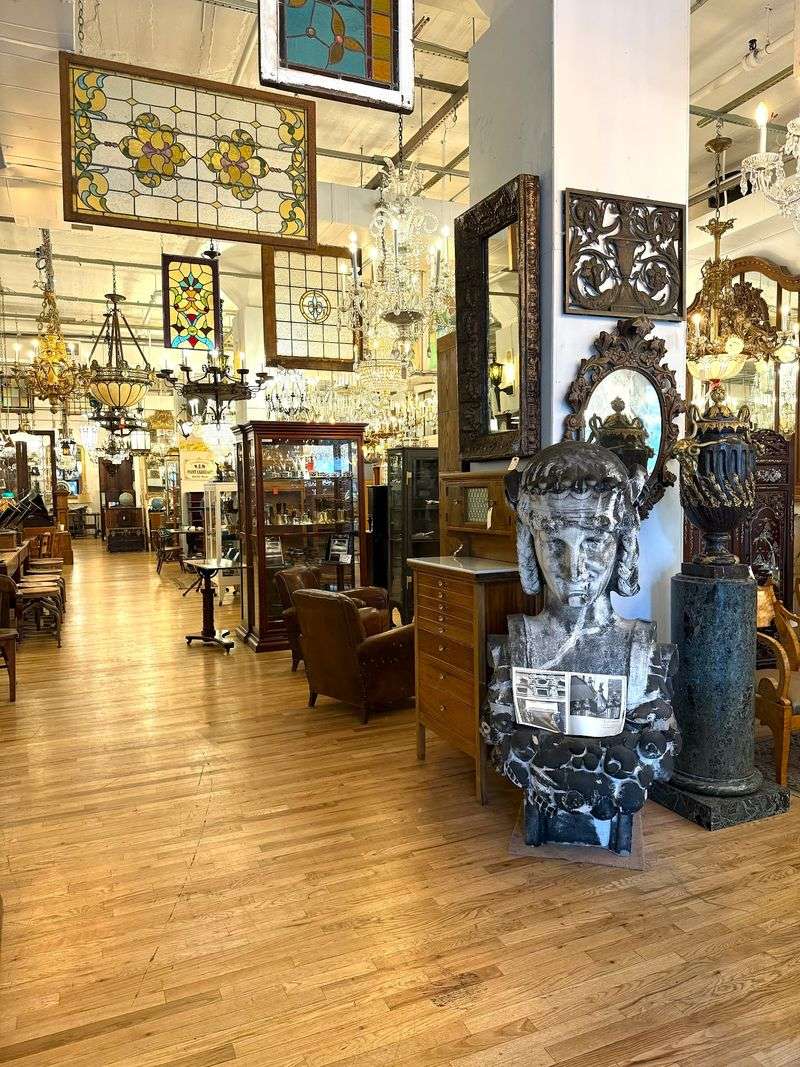
Big salvage needs big rooms, and the ground floor delivers. Cast iron gates lean against the walls, stone and wood columns stand in clusters, and old window sashes hold panes with that faint ripple only aged glass has.
Architects and designers shop these sections for projects that need genuine period detail. A restaurant wall, a garden entry, a loft partition, all become far more interesting with a rescued element anchoring them.
Fun bit of context: much of this material came from buildings that were torn down as the city rebuilt itself over the past century. Salvaging it means the craftsmanship survives even when the address does not.
Homeowners can use these pieces creatively too. A pair of window frames turns into a mirror. A short section of gate becomes a headboard.
Columns work as pedestals for plants or sculpture.
Delivery is available and handled by the shop, which matters when your purchase weighs more than your refrigerator. Ask about it before you commit.
Standing among these giants gives you a real sense of how New York used to build. Solid, heavy, and made to last.
Furniture With A Working Past
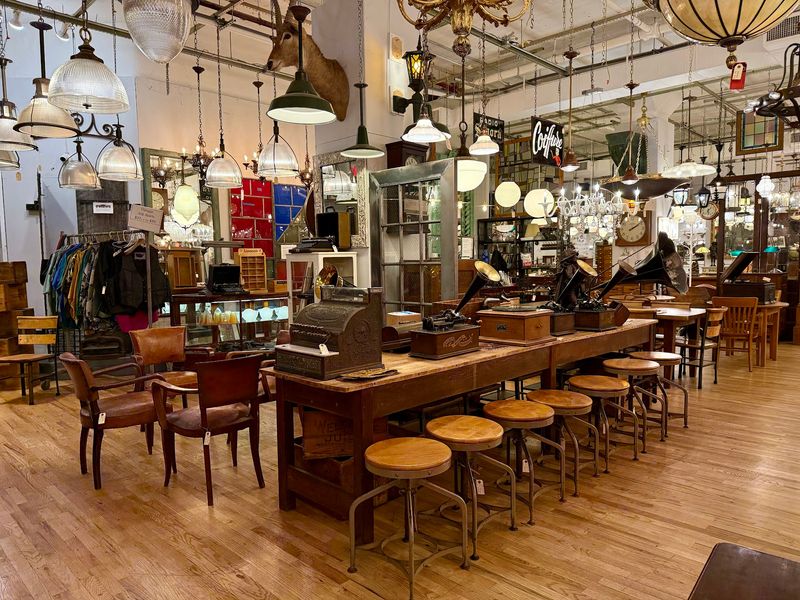
Furniture here rarely came from a living room. Boardroom tables, library chairs, benches, flat file cabinets, and industrial workbenches fill the floor, each one shaped by a job it used to do.
A tall oak flat file once held blueprints. A long conference table hosted meetings nobody remembers. That working history shows in the surfaces, and it gives every piece more personality than anything new.
Restoration is done thoughtfully. Light refinishing preserves the patina rather than erasing it, and custom adjustments are possible when a buyer needs a piece to serve a new purpose.
Quality is the real selling point. Solid walnut, quartersawn oak, and heavy steel bases were built during eras when furniture was expected to outlive its owner. Compare that to flat pack shelving and the value becomes obvious.
Shoppers on a budget should still browse. Smaller stools, side tables, and mirrors appear regularly and cost far less than the showpieces.
Anyone furnishing a first apartment could do worse than one great salvaged table. Buy it once, keep it forever, skip the assembly instructions entirely.
Smart Ways To Shop The Salvage Floor
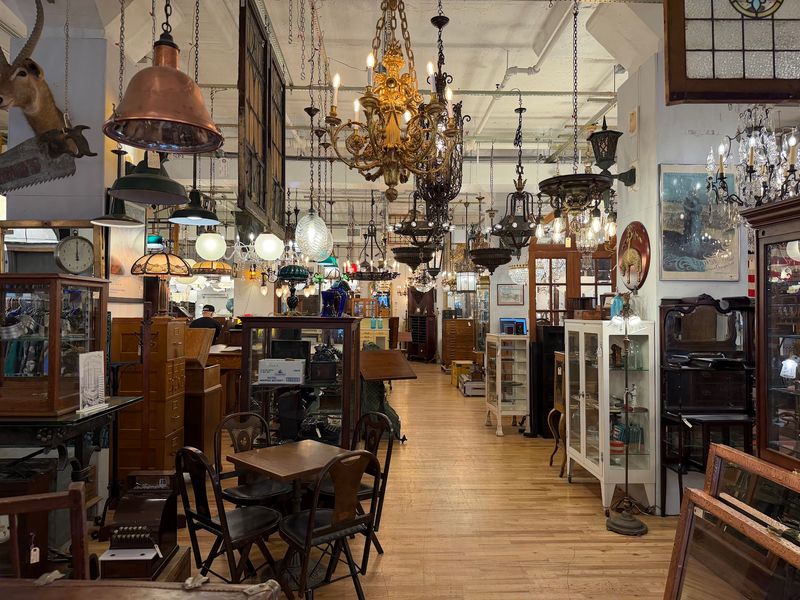
A little strategy goes a long way in a store this deep. Start upstairs and work down, since the smaller decorative items reward slow looking and the heavy salvage is easier to scan.
Inventory rotates constantly. A piece you loved last month may be gone, and something better may have arrived. Repeat visits pay off more than one long marathon trip.
Measure everything at home before you go. Doorway widths, ceiling heights, and stairwell turns decide what will actually fit. Nothing stings like a beautiful mirror that cannot make the corner.
Ask questions freely. The team knows where pieces came from and can share the backstory, which often turns a nice object into a meaningful one.
Online browsing between visits helps too, since the shop lists inventory on its website and ships across the country and beyond.
Set a budget before entering, then add a little cushion. Salvage has a way of talking people into one more small find.
Finally, treat the trip as sightseeing even if you buy nothing. Free entry, real New York history, and no velvet ropes anywhere.