
The 71-Mile New York Scenic Drive Most Visitors Miss That Ends At A River-View Restaurant
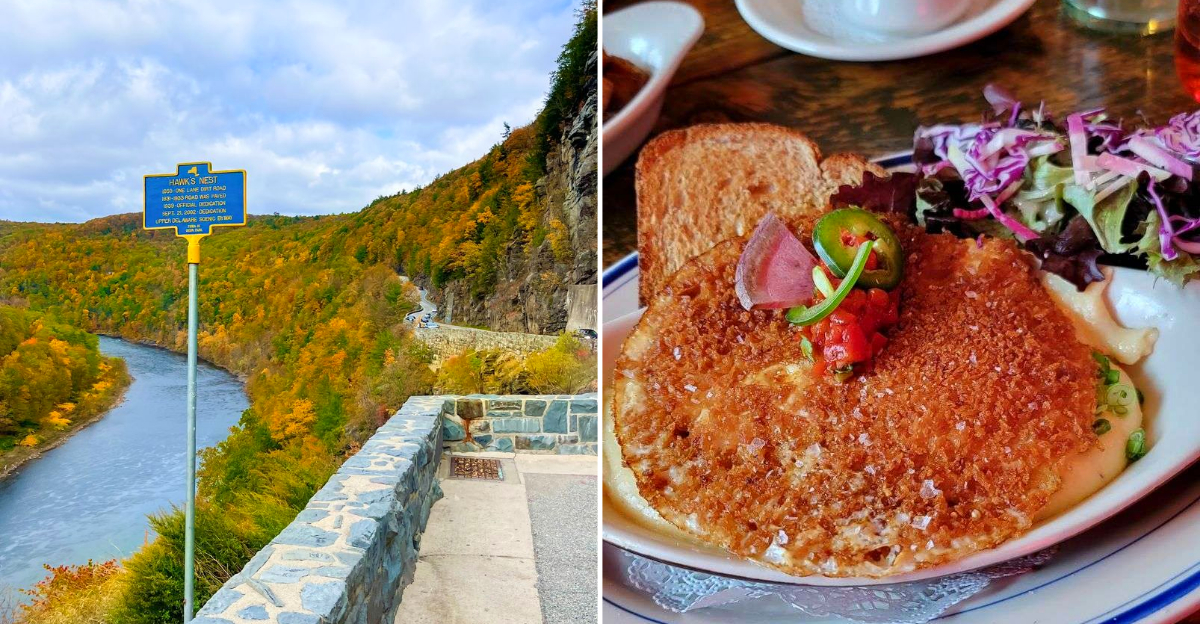
Seventy-one miles of road in New York hug a river without asking for any attention at all, which is the reason most drivers never find it.
Cliffs on one side, farmland stretching off the other, and water that has been carving these hills for longer than anybody has been driving alongside it.
People who do find it come back. The curves are part of it, and so are the eagles, but the pull-offs are what gets talked about afterward, some of them sitting hundreds of feet above the water with nothing between you and the drop but a guardrail and better judgment.
The drive ends the way a drive should, which is with a plate of good food and the river still in view while you eat it.
A Ribbon Of Road That Earned An Old Bragging Right
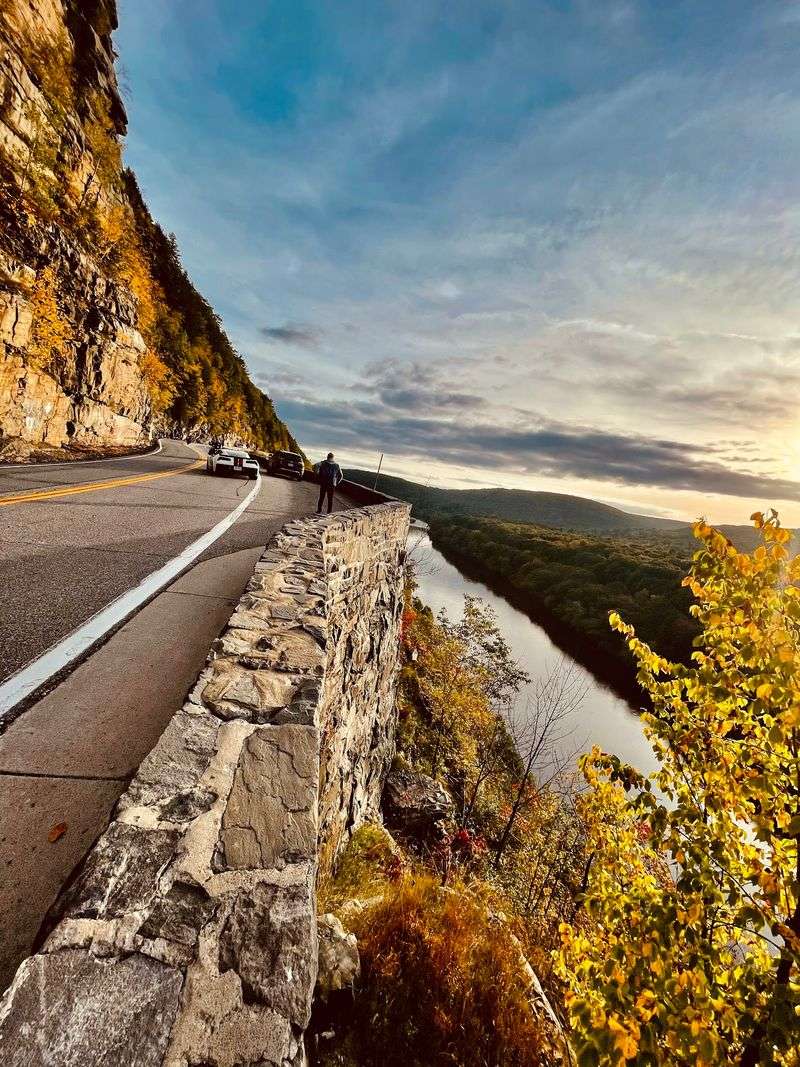
Back in 1939, when this highway was dedicated to the public, boosters called it “The Most Scenic Highway in the East.” That was quite a claim for a road built in the 1920s to link small river towns. Nearly a century later, the bragging still holds up.
What makes the route unusual is its patience. Instead of blasting through hills, it follows the water, bending where the river bends and rising where the cliffs demand it. Long valley views open up, then close again behind stands of hardwood and hemlock.
Rock formations lean over the pavement in places, striped and mossy, looking older than anything else in sight. Farms appear, then vanish. Bridges cross into Pennsylvania at intervals, though the road itself stays loyal to New York.
Drivers rate it highly, and the reason is simple. There is variety here. One mile feels like a mountain pass, the next like a country lane with a river as a neighbor.
Traffic stays light on weekdays, which helps. Bring a full tank, a camera, and a willingness to drive slower than your usual pace. Spring brings running water down the rock faces, which puts on a show the summer months hide entirely.
Meet The Upper Delaware Scenic Byway
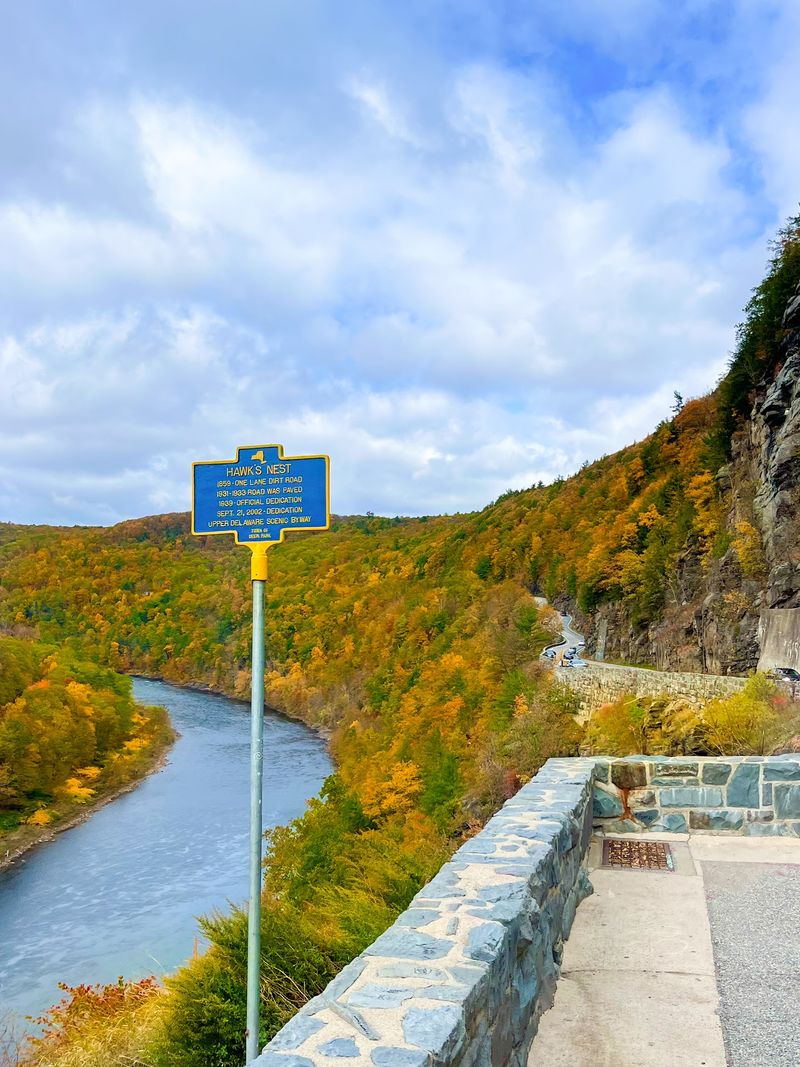
Officially, the road carries the name New York State Route 97, and it joined the New York State Scenic Byways System on August 6, 2002. Locals simply call it the byway. A popular access point and overlook area sits along the route at 585 NY-97 in Sparrow Bush, near the Port Jervis end.
From there, the byway travels north through Orange, Sullivan, and Delaware Counties before finishing near Hancock. It runs parallel to the Upper Delaware Scenic and Recreational River, which carries national recognition.
The byway also acts as a bridge between two vacation regions. The Catskills sit to the north and east, the Poconos across the water in Pennsylvania. Sitting between them gives the corridor a friendly, unhurried feel.
Signs mark the route clearly, so navigation is easy even when phone service fades. And it does fade, especially on the higher stretches, so a paper map or downloaded directions earn their keep.
The road is open around the clock, every day of the year. Winter driving requires more caution, but spring through late autumn rewards nearly any schedule. Gas stations sit sparse along the middle stretch, so filling up at either end saves some worry.
Hawk’s Nest, The Curve Everyone Photographs
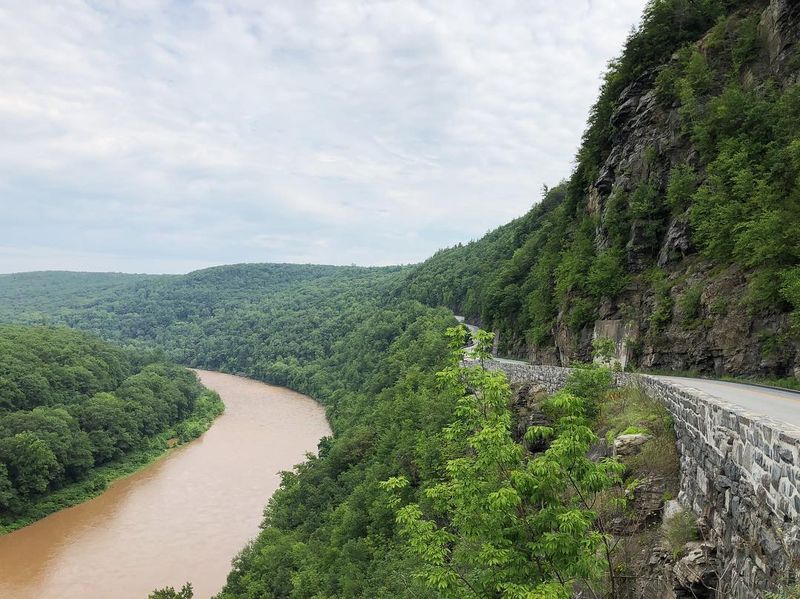
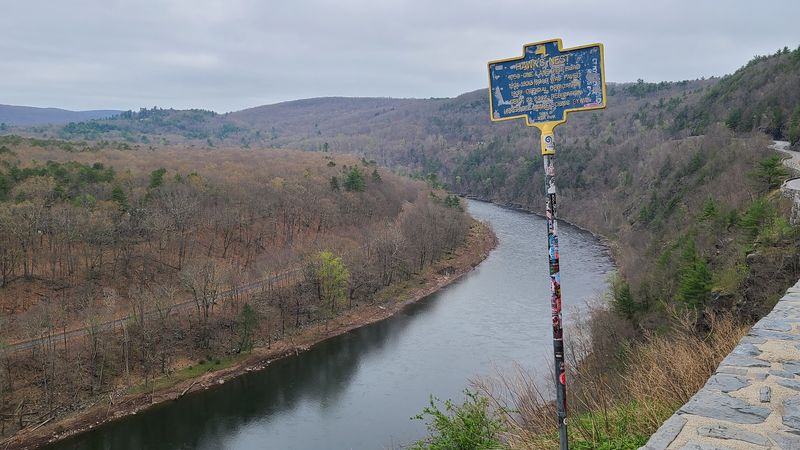
Ask anyone who has driven the byway for their favorite stretch and Hawk’s Nest wins in a landslide. The road coils along a cliff face north of Port Jervis, with stone guardrails and dizzying drops to the river below. Car commercials love it.
So does anyone with a camera.
Pull-offs line the cliffside, though parking spots are limited and fill fast on bright weekends. Driving southbound puts the overlooks on your right, which makes stopping simpler and safer.
The view from the top shows the Delaware curling toward Port Jervis in long, lazy loops. Hawks and vultures ride the updrafts at eye level, which never gets old.
Motorcyclists treat this section as a rite of passage, so expect company on warm afternoons. Speeds should stay low, since the turns tighten without much warning.
Families should hold hands near the walls, because traffic passes close on both sides. Autumn brings the biggest crowds and the boldest color, roughly early to mid October.
Fun detail worth knowing: portions of this curvy road appeared in a 2016 superhero film. The stone walls date to the road’s original construction, hand laid and still holding their line.
Eagles, Herons, And Other Regulars
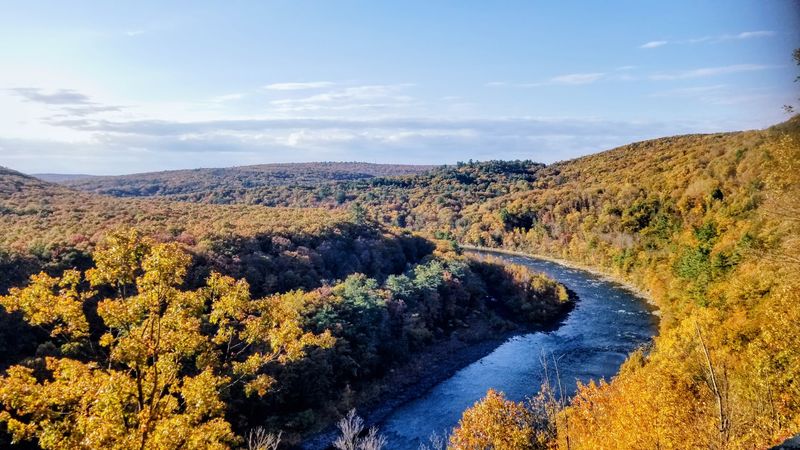
Wildlife watching along the corridor is more reliable than most people expect. Bald eagles winter here in strong numbers, drawn by open water and quiet stretches of riverbank. Binoculars turn a nice drive into a genuine safari.
Cold months are prime eagle season, roughly January through early March. The birds perch in bare trees near the water, easy to spot once your eye adjusts to their white heads and heavy shoulders.
Great blue herons stalk the shallows in warmer weather, moving with the patience of someone waiting for a bus. Deer step out at dusk along field edges, so headlights and slower speeds matter after sunset.
Osprey, kingfishers, and hawks round out the cast. Serious birders keep lists here that run long.
Etiquette is simple. Stay in or near your vehicle, keep voices down, and never approach a nest or perch. Eagles spook easily and burn energy they need in winter.
Trash bins are scarce at overlooks, so pack out everything you bring. The scenery deserves better than stray bottles under the guardrail. An eagle observation area operates seasonally near the river, staffed by volunteers who point out perches.
Trails, Paddles, And Two Wheels
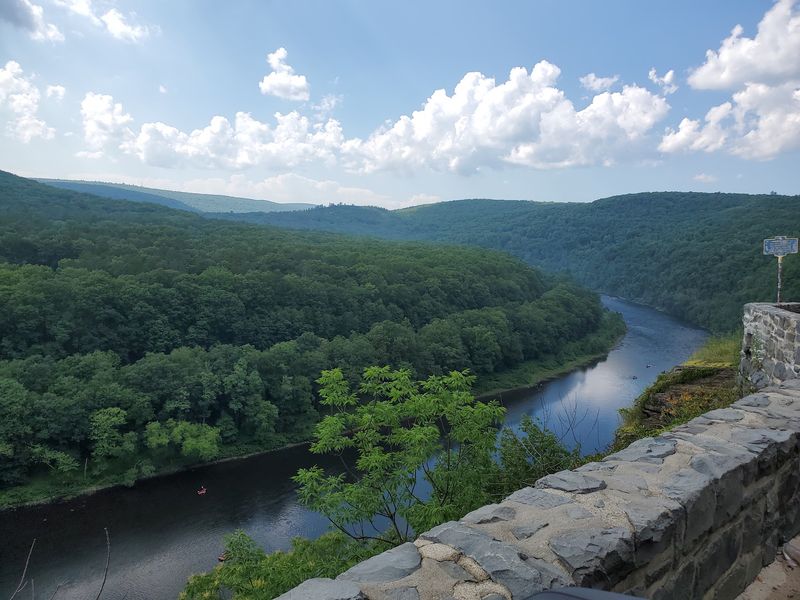
Sitting behind the wheel the whole time would be a shame, because the byway doubles as a trailhead directory. The Tusten Mountain Trail climbs to a ridge with valley views that make the effort feel like a bargain.
Boots with grip help, since the path gets rocky and roots love to trip the careless. Water and a snack round out the packing list.
On the river itself, canoes and kayaks drift past all summer. Outfitters operate in the area, handling boats and shuttles for anyone who would rather float than hike. Fishing draws its own devoted crowd, especially for trout and smallmouth bass.
Cyclists have a claim here too. Portions of Route 97 carry the Bike Route 17 designation, which links the corridor into a longer riding network.
Shoulders vary in width, so cyclists should ride predictably and drivers should pass wide. Everyone gets along better that way.
Local festivals pop up through the season in the river towns, mixing music, crafts, and food. Checking community calendars before a trip can add a happy surprise to the itinerary.
River Towns Worth A Slow Roll
Little communities appear every several miles, and each has its own flavor. Port Jervis anchors the southern end with brick storefronts and railroad history. Hancock closes the northern end near the spot where two branches of the Delaware join.
Between them come places like Barryville, Minisink Ford, and Narrowsburg. Sidewalks are short, parking is free, and shopkeepers actually say hello.
Minisink Ford holds a real curiosity. The Roebling Bridge crossing there was designed by the engineer behind the Brooklyn Bridge, and it stands as the oldest existing wire suspension bridge in the country.
Antique shops, galleries, bakeries, and general stores fill the storefronts. Prices tend to stay reasonable, which feels rare these days.
Hours can be short midweek, particularly outside summer. Calling ahead is not possible in this article, but checking a shop’s posted schedule online saves disappointment.
Give yourself permission to stop often. The byway can be driven in about two hours without pauses, yet doing that misses the entire point.
Plan on a full day. Better yet, plan on staying overnight somewhere along the water.
The Finish Line, The Heron In Narrowsburg
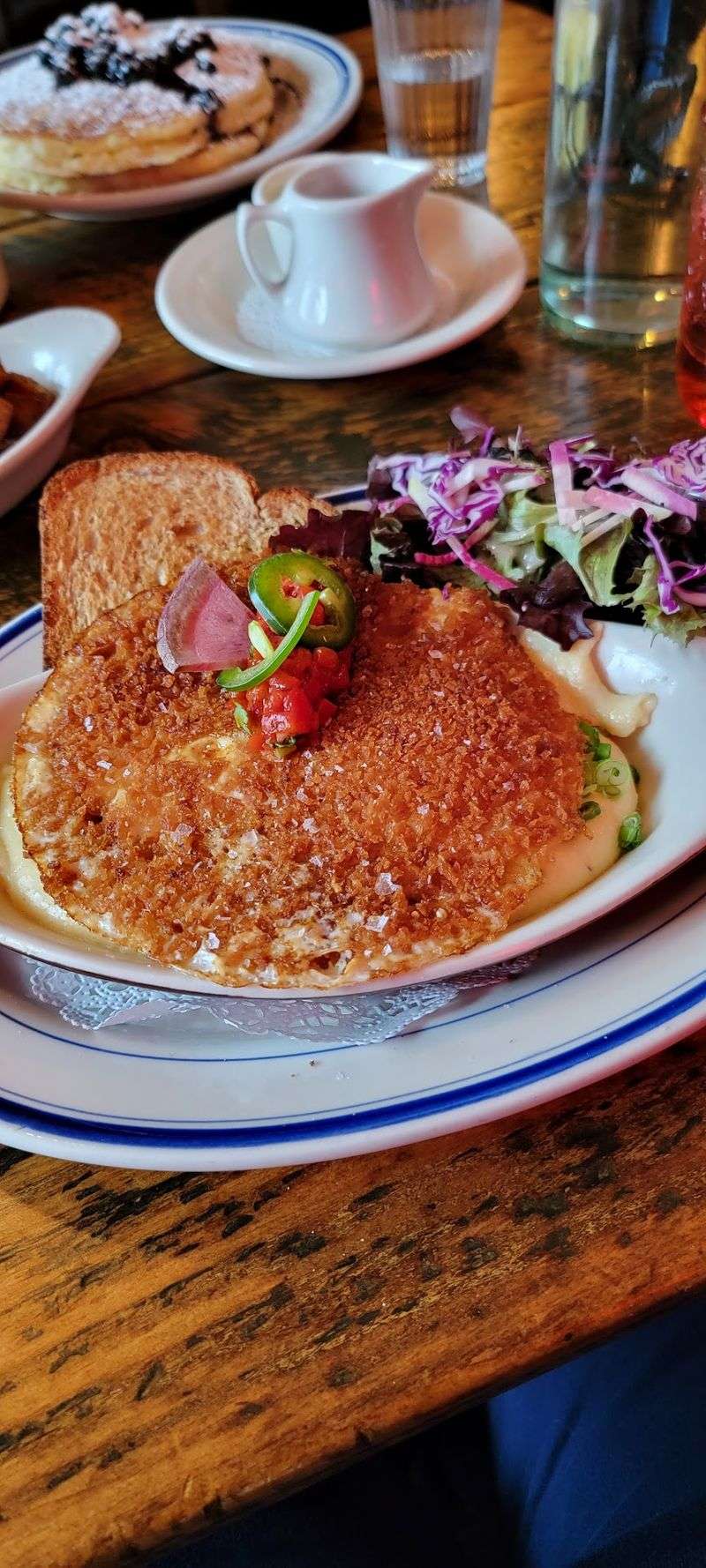
Ending a drive well matters as much as starting it, and The Heron handles that job with quiet confidence. The restaurant occupies 40 Main St, Narrowsburg, NY 12764, right in the heart of the village.
Inside, the dining room seats around forty guests, so reservations are a smart move. In season, an outdoor deck opens up with views of the Big Eddy, the deepest section of the Delaware River.
The kitchen leans on regional farms, and the menu shifts with what is growing nearby. Expect thoughtful plates rather than fussy ones, seasoned with restraint and served without theater.
Opening its doors in January 2012, the restaurant has kept going since, pausing only for short winter breaks. In 2024 it earned the Sullivan Catskills Ambassador Award for Tourism, which says plenty about its standing locally.
Current hours run Thursday from 5 to 8 in the evening. Friday and Saturday offer midday service from noon to 3 plus dinner from 5 to 8. Sunday brings brunch from 11 to 3, and the restaurant closes Monday through Wednesday.
Time your drive accordingly and finish with the river beside you.