
The 300-Acre New York Animal Sanctuary Where You Can Get Close To Rescued Wildlife Most People Never See
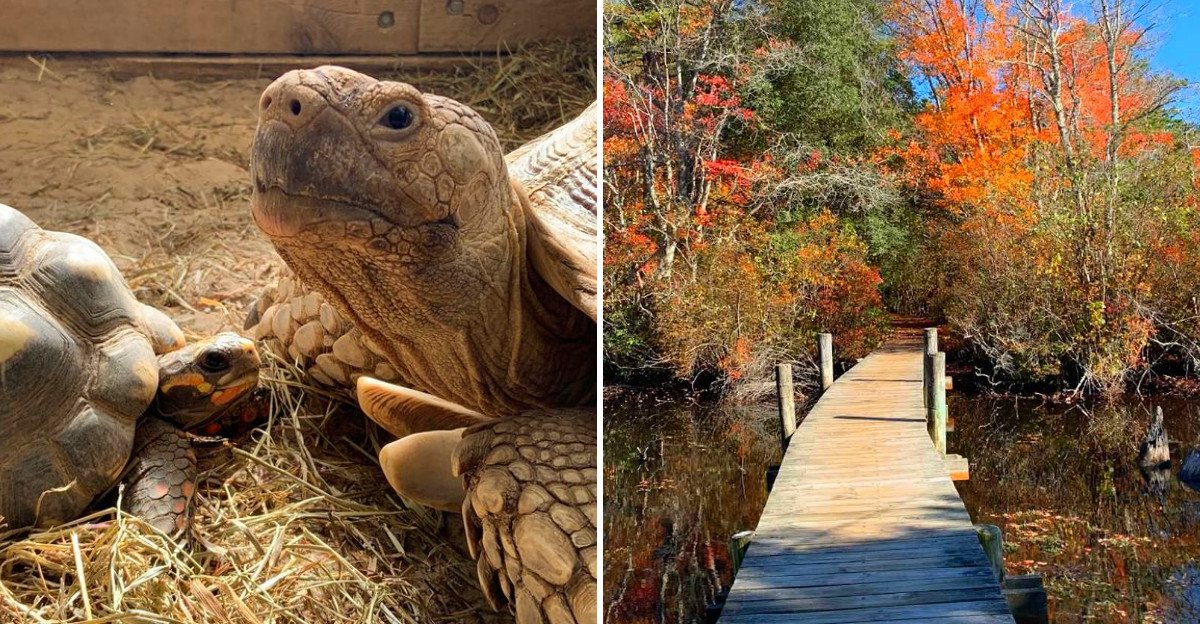
Owls blink at you from arm’s length. Hawks stretch out in the sun without much interest in whether anyone is watching. Turtles the size of dinner plates cross the path at their own pace, entirely unbothered.
All of this sits inside a 305-acre pocket of New York that feels several hours from the highway rather than a few minutes. Seven miles of flat trails wrap around it, easy enough that nobody needs to train for the visit.
None of it costs a dime, which is the part that seems like it must be a mistake until you get there and find the gate open.
A Preserve Where Rare Pines Meet Rescued Raptors
So you think you like animals, huh? That is probably why you are reading this article to begin with. That means that you should keep reading, and see whether this place is worth your time.
Few places on Long Island hold both an ecological rarity and a rescue mission on the same property. Here, dwarf pines grow low and gnarled, a globally uncommon habitat that scientists travel to study.
Walk a few hundred feet and the scenery flips. Bogs give way to wetlands, then a field, then a tidal estuary where salt and fresh water mingle.
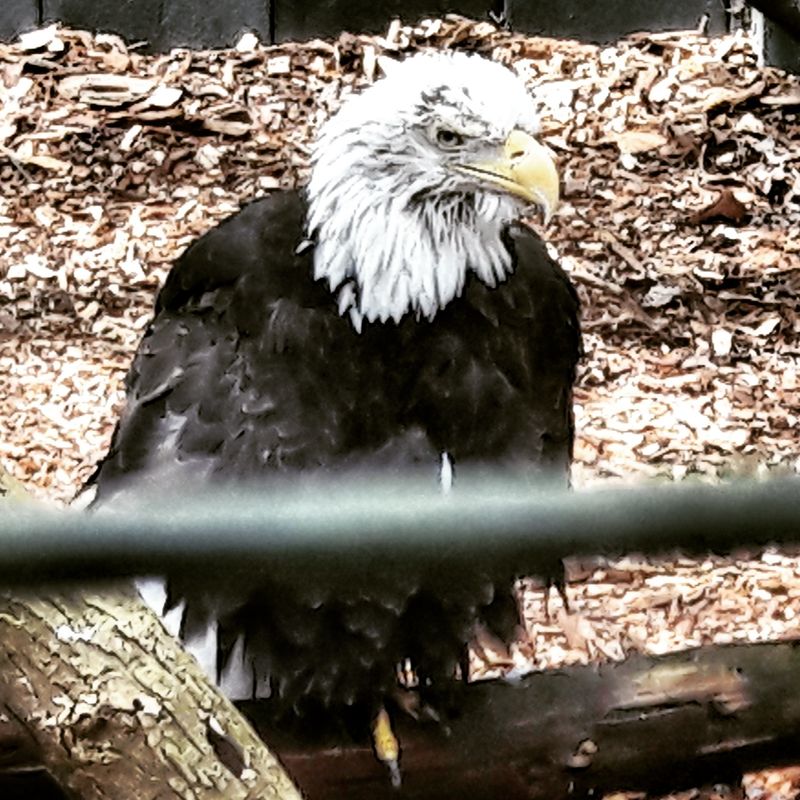
What sets the property apart is the Outdoor Wildlife Complex near the entrance. Permanently injured native animals live there because they cannot survive on their own again. Owls, falcons, and hawks sit close enough that you can count the bands on their feathers.
Seven-plus miles of trails loop past Old Ice Pond and Deer Pond, and most paths run flat and wide. Strollers roll fine. Wheelchairs manage the main route.
Osprey nests perch above sections of trail, so you may pass directly beneath one. Bring binoculars anyway, since songbirds hide better than the big guys.
Admission costs nothing, which feels almost suspicious for a spot this well kept. Donations keep the lights on and the animals fed, so drop something in the box.
Meet Quogue Wildlife Refuge, The East End’s Quiet Giant
Name and address time. The Quogue Wildlife Refuge sits at 3 Old Country Road in Quogue, New York, out on the South Fork side of Suffolk County.
Founding year is 1934, when the Southampton Township Wildfowl Association pulled together a group of local conservationists that October. The same non-profit organization runs the place today.
Management shifted in April 2006, after a cooperative lease with the state’s Department of Environmental Conservation wrapped up. Operations never paused. The refuge has functioned as a nature preserve without interruption for over ninety years.
Parking is free and plentiful, which on the East End counts as a small miracle. The lot sits right by the trailheads, so you are on a path within a minute of shutting your car door.
Trails, the Outdoor Wildlife Complex, and outdoor restrooms stay open every single day of the year, sunrise to sunset. No reservations. No ticket booth.
The Charles Banks Belt Nature Center is closed at the moment for renovations and expansion. Everything outdoors remains fully accessible while that work continues.
Leave the dog at home. Wildlife lives here, and pups are not permitted.
Face To Face With Owls, Hawks, And Falcons
Owls do not blink much, and a barred owl staring straight through you is a humbling experience. Kids go silent. Adults do too, honestly.
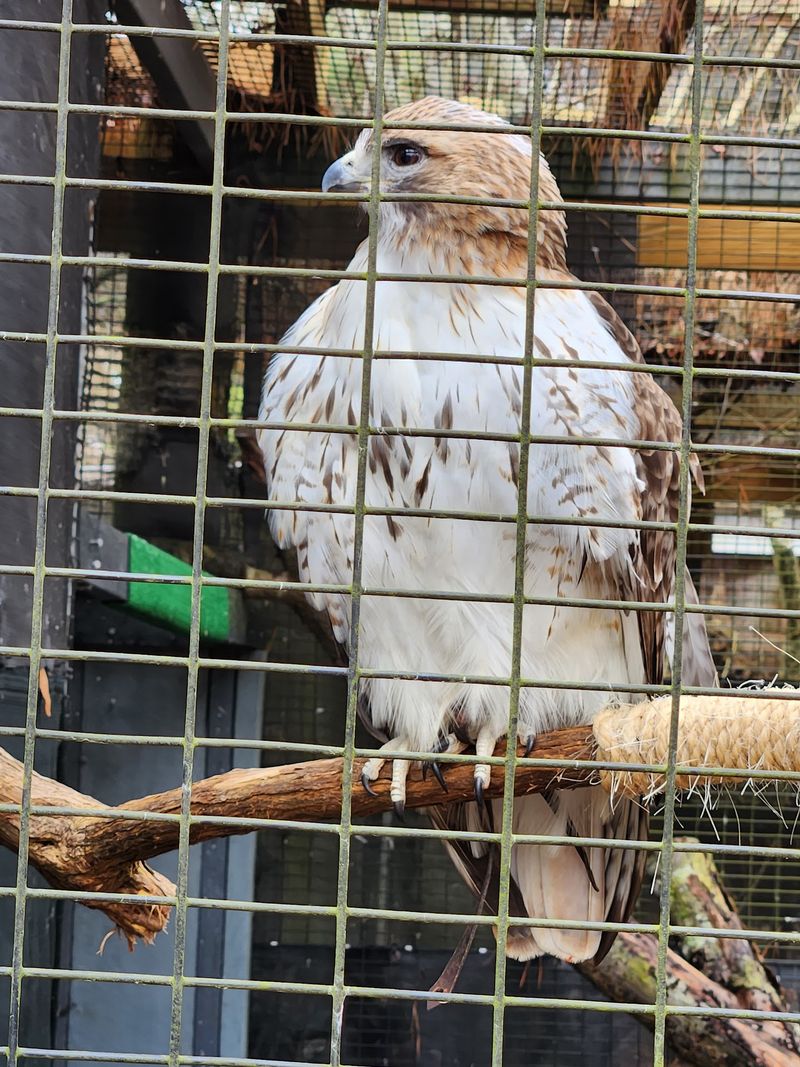
The Outdoor Wildlife Complex houses birds of prey that suffered permanent injuries, mostly from vehicle strikes or wing damage that never healed correctly. Release would not be survivable for them, so they stay as ambassadors.
Enclosures are roomy and clean, built with viewing angles that let you get genuinely close without crowding the residents. Red-tailed hawks, falcons, and owls make up the regular lineup.
Morning light works best for photos, and warmer days tend to bring calmer, sunnier behavior from the birds. Cold snaps make them fluff up like feathered footballs.
Reading the signage pays off. Each placard explains the species, the injury, and what the bird would be doing in the wild right now.
Speak quietly and keep hands to yourself. Fingers through mesh helps nobody, least of all the bird.
Seeing a hawk this close reframes every roadside glimpse you have ever had of one. Suddenly those blurry highway silhouettes have faces, personalities, and a wingspan that commands respect.
Seven Miles Of Trails Built For Every Pair Of Legs
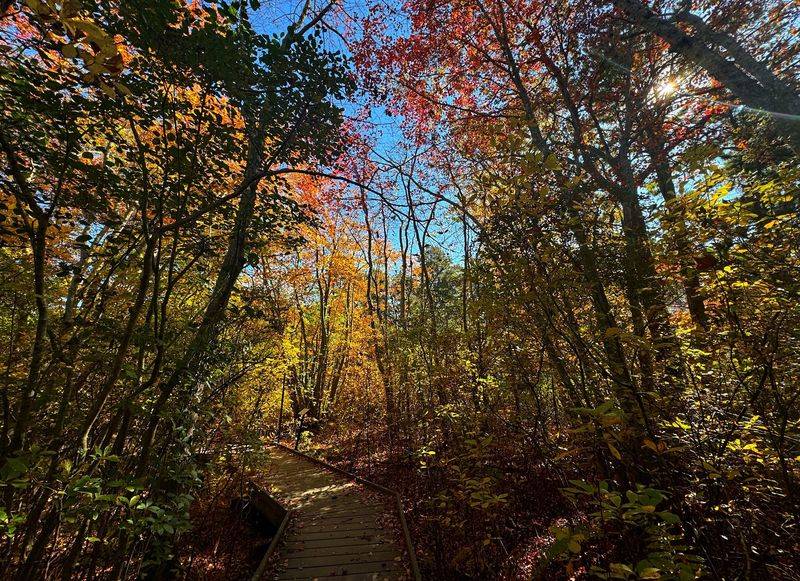
Hikers who groan at elevation gain will love the layout here. Trails run flat, wide, and well marked, threading over seven miles through pine barrens, mixed forest, bog edges, and open field.
Distance is your choice. A quick loop clocks in around a mile, while stitching together several routes builds a comfortable three-mile ramble.
Sandy soil and a thick cushion of pine needles make for easy footing, especially in autumn when the ground turns coppery. The main trail handles strollers and wheelchairs without drama.
Wooden bridges cross the wetter stretches, and a dock reaches out over Old Ice Pond. Sitting there for ten minutes counts as a legitimate activity.
Signage stays clear at junctions, so getting turned around is unlikely, though the property is big enough that you feel pleasantly removed from civilization.
Bug spray and long socks are smart choices between spring and early fall. Ticks live in the tall grass, so check yourself before you head back to the car.
A water refill station near the nature center area helps on hot days. Carry a bottle and top it off on your way through.
Turtles, Tortoises, And Other Slow-Moving Celebrities
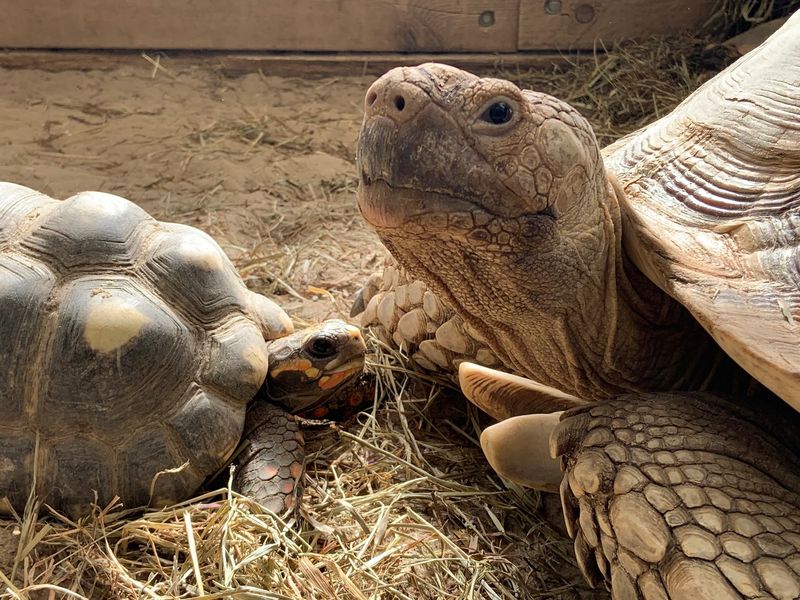
Turtles get more mentions from visitors than almost anything else here, and once you see them, that makes sense. Some are seriously large, moving with the unbothered confidence of animals that have nowhere to be.
Tortoises live in outdoor space during warm months and become a reliable crowd-stopper. Their pace turns watching them into a lesson in patience for antsy kids.
Wild turtles show up too, sunning themselves on logs at the pond edges. Spotting one before it plops into the water is a small victory.
Deer Pond and Old Ice Pond both reward slow walking. Stand still near the shoreline and the surface starts revealing frogs, fish, and shells you missed at first glance.
Ducks paddle around freely, and woodpeckers rattle away in the pines overhead. Nuthatches work their way down tree trunks upside down, which never stops being funny.
Sunrise and late afternoon deliver the most activity across the board. Midday heat sends plenty of critters into hiding.
Fun bit of trivia: the refuge also keeps an Ice Harvesting Museum on the grounds, a nod to when Old Ice Pond supplied blocks of ice locally.
Old Ice Pond And The Museum That Explains It
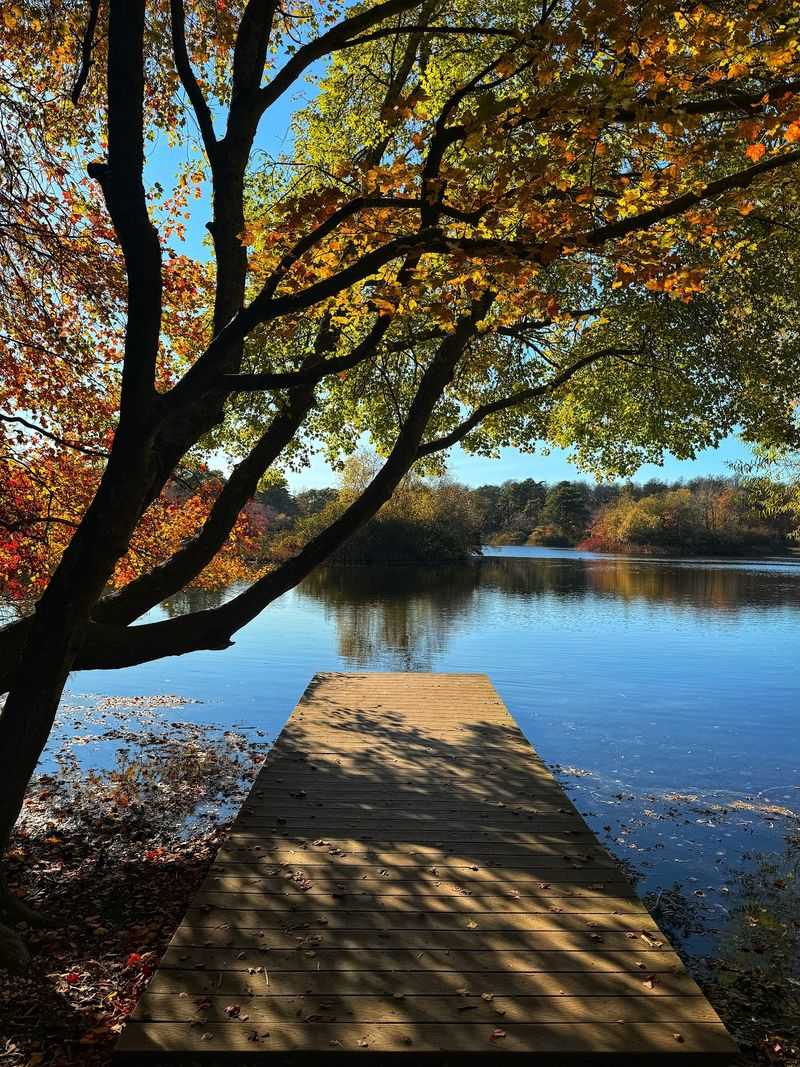
Before refrigerators hummed in every kitchen, ponds like this one were industrial assets. Workers cut thick blocks from frozen water in winter and stored them for the warmer months.
Old Ice Pond carries that history in its name, and a small Ice Harvesting Museum on the property explains how the whole operation worked. Tools, photographs, and displays make the process click.
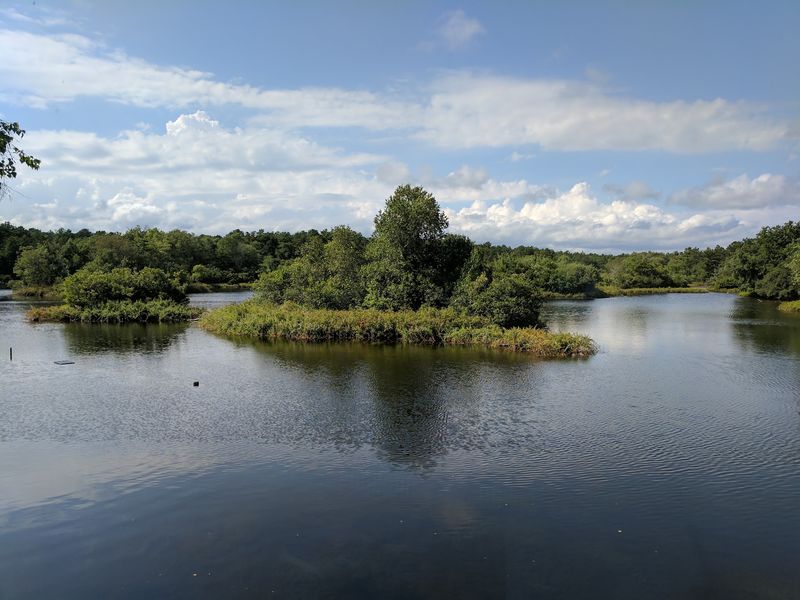
The pond itself is the visual anchor of the refuge. Pines ring the shoreline and reflections turn the water into a mirror on still mornings.
A dock extends over the water, giving you a spot to sit and watch dragonflies patrol. Bring a snack and stay a while.
Autumn transforms the scene, with color creeping into the surrounding trees and needles blanketing the paths. Winter has its own stark appeal, especially when the surface freezes.
History and habitat sitting side by side is part of what makes this New York preserve unusual. You get ecology and local heritage in the same walk.
Photographers should aim for early light. The pond faces catch a soft glow that flatters everything, including amateur phone snapshots.
Timing Your Trip Right, Season By Season
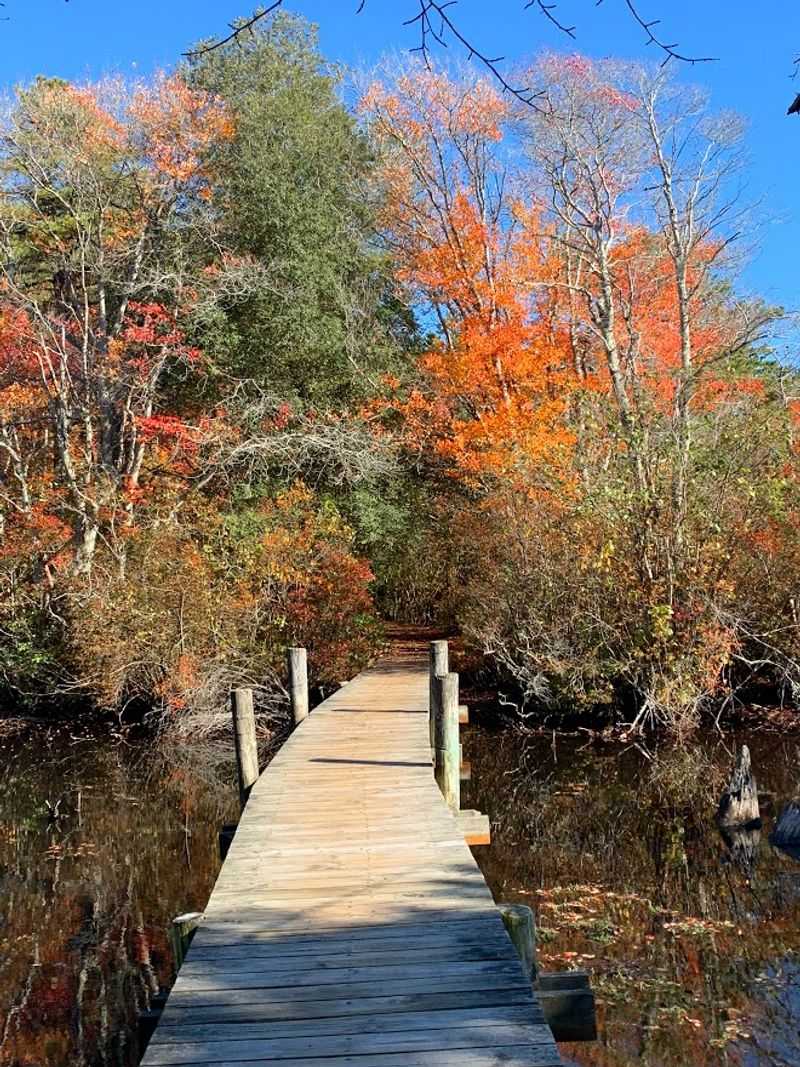
Every season here delivers something different, so the question is what you want to see rather than when to come. Gates open sunrise to sunset, all 365 days.
Spring brings nesting activity, with osprey returning to the large platform nests along certain trail sections. Birdsong gets loud enough to notice.
Summer means green everywhere and warmer, mellower behavior from the resident birds of prey. Go early to dodge the heat and the bugs.
Fall is the standout. Pine needles carpet the ground, foliage turns, and the crowds thin out even on gorgeous weekends.
Winter strips things bare and makes wildlife easier to spot through leafless branches. Layer up, because the wind off the estuary has opinions.
Practical notes worth remembering: no dogs, free parking, free admission, and donations gratefully accepted. Outdoor restrooms stay available year round.
The Charles Banks Belt Nature Center remains closed during renovations, so plan around outdoor attractions for now. The trails and animal complex still fill several happy hours.
Check the refuge website before visiting, since programs and guided activities rotate through the calendar and many are offered at no charge.