
Chattanooga’s Enormous Aquarium Was Crowned One Of America’s Best-And One Ticket Gets Kids Two Buildings
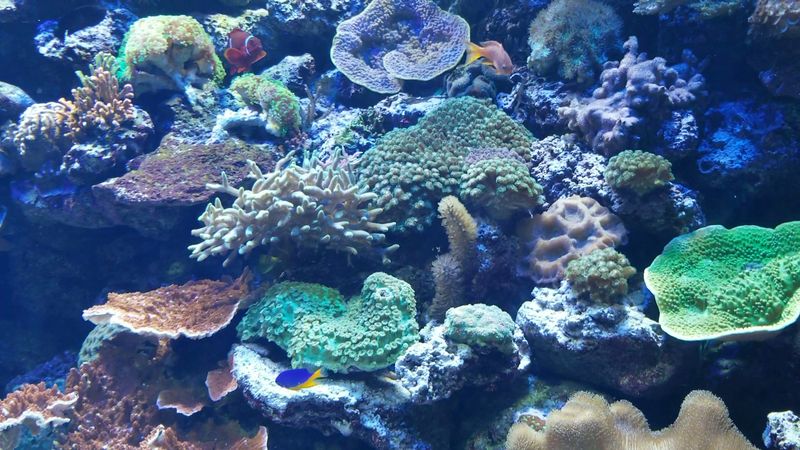
Somewhere along a riverfront in Tennessee, two peaked glass buildings sit side by side, and most people driving past have no idea that a single ticket opens both of them. Inside one, mountain streams turn into wide southern rivers.
Inside the other, sharks glide past and penguins waddle around while butterflies drift overhead one floor up. It is the kind of place where a family shows up expecting a couple of fish tanks and leaves three hours later still arguing about which otter was the funniest.
Two Glass Peaks On The Chattanooga Riverfront

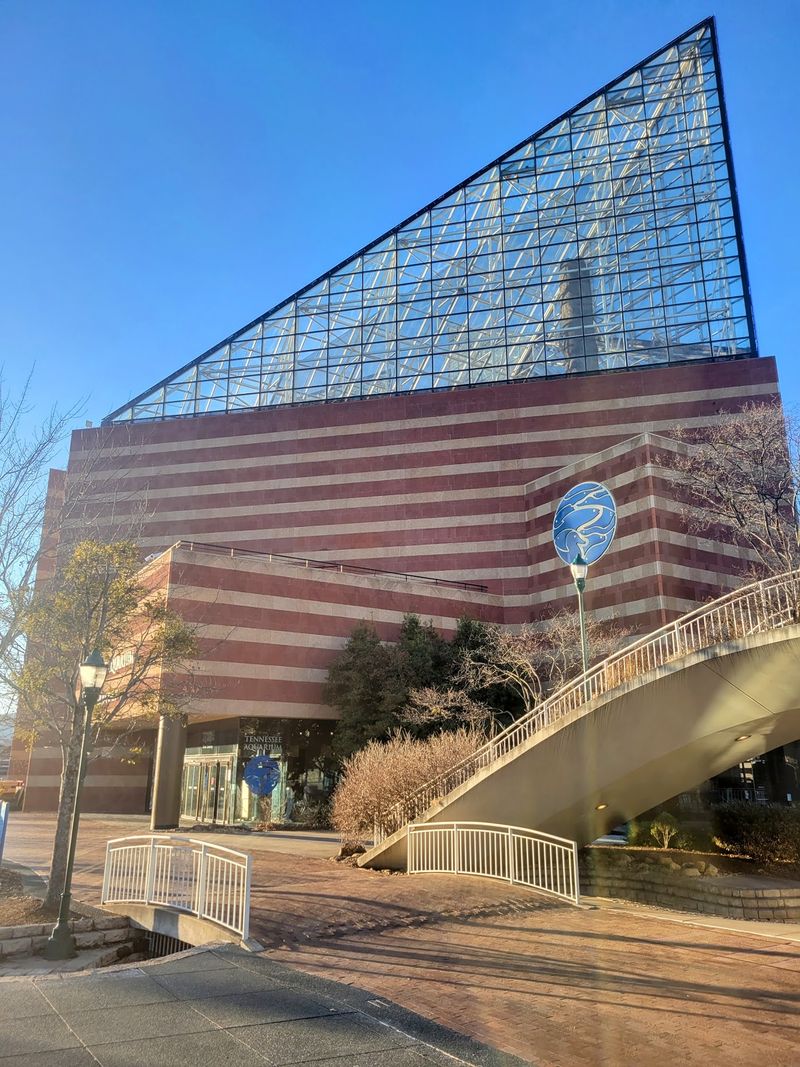
At 1 Broad Street, right where downtown Chattanooga meets the Tennessee River, sit two buildings with sharp glass peaks that look a little like greenhouses designed by someone obsessed with mountains. Together they make up the Tennessee Aquarium, and both are covered by one admission ticket.
The setup is unusual. Most aquariums pack everything under a single roof, but here the collection splits into River Journey and Ocean Journey, two separate structures joined by an open plaza with fountains and running water.
Visitors regularly point out that it feels less like a building tour and more like a walk. You ride escalators to the top floor of each building and work your way down through the exhibits, which keeps the crowd flowing in one direction instead of bunching up.
The riverfront location does a lot of the work too. Step outside between buildings and you are looking at the water, the bridges, and a stretch of downtown that is easy to explore on foot afterward.
With a 4.7-star average from more than 26,000 Google reviews, it has clearly stuck with people.
National Honors And Why They Landed Here

National recognition is not something aquariums pick up by accident. The Tennessee Aquarium was named the country’s Best Aquarium in the 2024 Newsweek Readers’ Choice Awards and picked up another nomination for 2025.
Its awards shelf goes back further than that. USA Today’s 10Best Readers’ Choice Awards nominated it in both 2020 and 2024, and back in 2015 TripAdvisor’s Travelers’ Choice rankings placed it fourth among aquariums in the United States.
What earns that attention is partly scale and partly focus. It stands as one of the world’s largest freshwater aquariums, which is a strange and wonderful thing to build hundreds of miles from any ocean.
Freshwater habitats rarely get top billing anywhere else, so families arriving expecting sharks and coral often find themselves most impressed by the river side, with its sturgeon, alligators, turtles and otters.
Lighting helps too. Guests frequently note how bright and well lit the galleries are compared with the dim, cave-like corridors common at other aquariums, which makes reading signage and photographing fish far easier.
River Journey: A Raindrop’s Trip To The Gulf
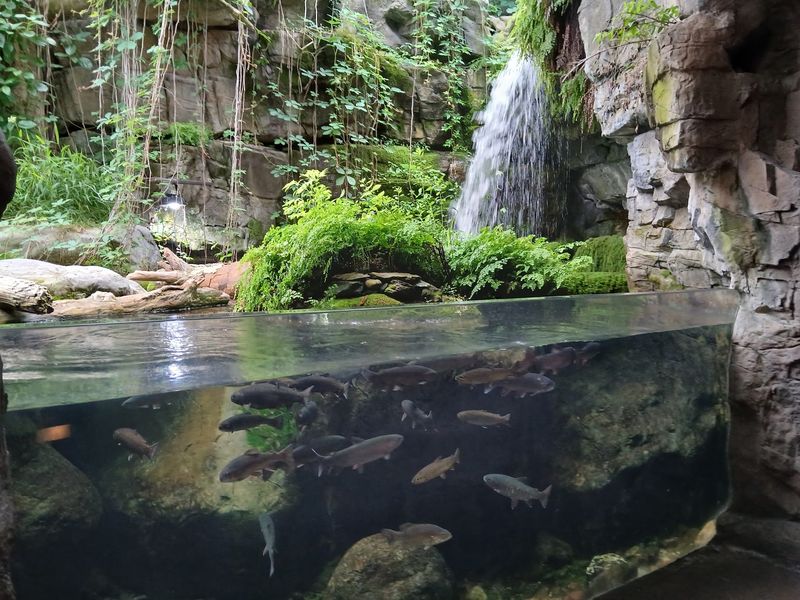
Opened in 1992, the River Journey building is the original half of the aquarium and still the one that surprises people most. The whole layout follows a raindrop as it falls in the Appalachian Mountains, gathers into cold streams, widens into southern rivers, and finally reaches the Gulf of Mexico.
Walking it top to bottom means moving through climates. Cool mountain forest gives way to warmer, wilder water full of catfish, sturgeon, gar, alligators, crocodiles and enough turtles to satisfy anyone with a soft spot for them.
Lemurs and river otters live in this building too, which throws first-time guests completely. Otters get named as a favorite over and over, and one visitor admitted asking a staff member whether the lemurs liked to move it, move it.
Plan on spending the bulk of your time here. Several families report about ninety minutes in the freshwater side alone, and many recommend starting here before crossing to Ocean Journey.
Kids gravitate toward the nursery tanks packed with tiny fish and the interactive viewing portals tucked along the route.
Ocean Journey And Its Saltwater Residents
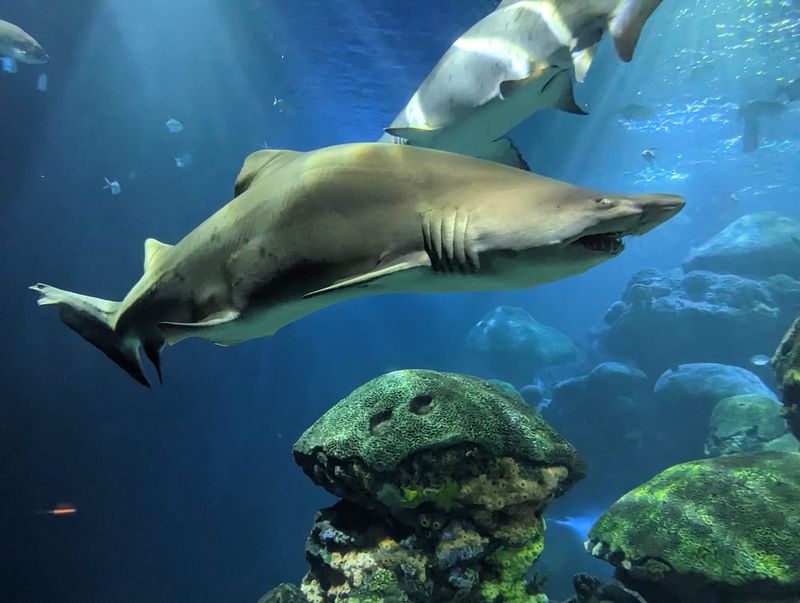
Added in 2005, the Ocean Journey building handles the saltwater half of the story, and it swaps river browns and greens for deep blues. Sharks patrol the big tanks, stingrays glide in slow circles, and jellyfish pulse in backlit columns that stop nearly every passing child.
Penguins are the crowd magnet. Watching them eat during a scheduled feeding ranks high on many families’ lists, and staff presentations explain what the birds are up to while everyone crowds the glass.
A fair warning from repeat guests: Ocean Journey is noticeably smaller than River Journey. Some visitors spend only thirty to forty minutes here after ninety in the freshwater building, and a few say they expected the two halves to match in size.
Others love the pacing exactly as it is. Saltwater exhibits are the single most mentioned topic across reviews, so the shorter walk clearly does not diminish the impact.
Colorful reef fish, sea turtles and open-water tanks round out the building, and the top floor holds something entirely unexpected.
The Butterfly Garden Upstairs
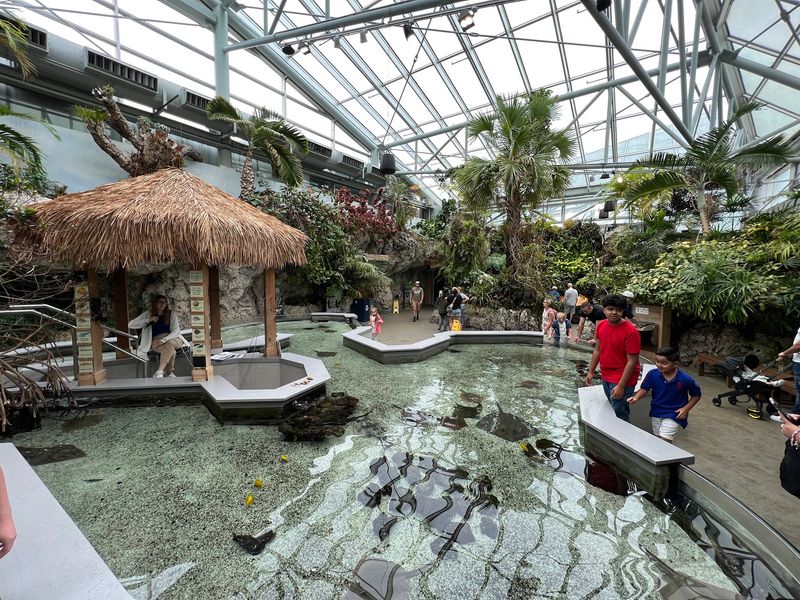
Ride the escalator to the top of Ocean Journey and the temperature climbs with you. Waiting up there is a large tropical butterfly garden under the glass peak, warm and humid and full of plants, with butterflies landing wherever they please.
Nearly 280 reviewers mention this room, making it one of the most talked-about spots in either building. Adults tend to slow down here, and small children usually freeze in place, waiting to see if a butterfly will pick them.
Fair warning about the heat. One parent visiting with three kids under six described the room as genuinely hot, though she understood the humidity is there for the butterflies rather than the guests.
Photographers do well in this space. Sunlight pours through the peaked glass ceiling, the flowers are dense, and the butterflies land at eye level often enough to make patience pay off.
It also makes a natural finishing point. Coming down from the butterflies through the rest of Ocean Journey gives the visit a gentle wind-down rather than an abrupt exit through the gift shop.
Touch Tanks, Diver Chats And Daily Programs
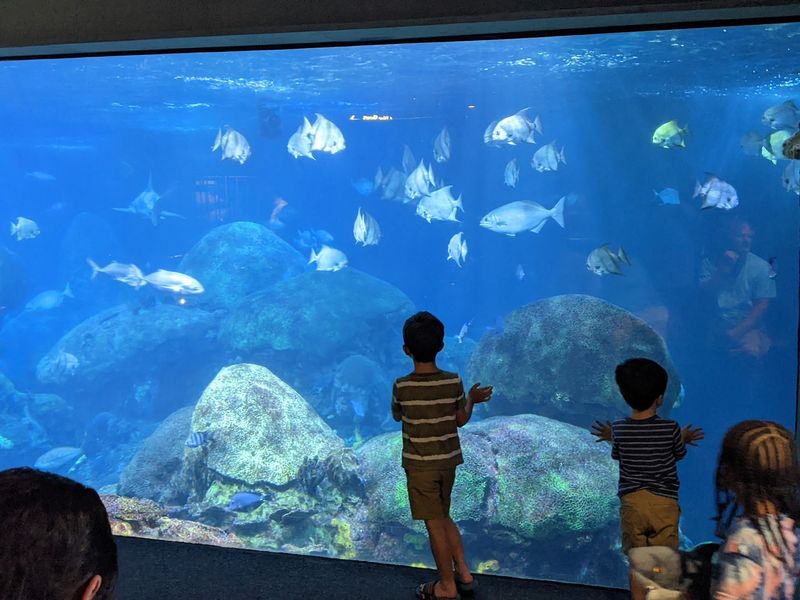
Sturgeon feel nothing like you expect. They are armored, prehistoric-looking creatures, and the touch tank where kids can run a hand along their backs gets mentioned constantly by families who visited with children.
Stingrays share the touching honors. Between the two species, the hands-on stations become the moment most kids talk about on the drive home, and plenty of adults quietly join in too.
Daily programming fills out the rest. Penguin presentations, diver chats inside the big tanks and scheduled feeding dives run throughout the day, and catching one turns a walk-past exhibit into a real event.
Interactive portals are scattered along both routes, small viewing bubbles and hands-on panels that reward curious kids who look closely. A teacher who visited praised the signage for using both child-friendly and research-based language, meaning a seven-year-old and a grown-up can read the same panel and both learn something.
Homeschool families have found the place useful for exactly that reason, with one guest noting the aquarium’s own history makes a solid research topic.
Check the daily schedule at entry so you can time things.
Ticket Prices And The IMAX Add-On

Standard admission covering both buildings runs about $39.95 for adults and $29.95 for youth ages 5 through 17. Children four and under get in free, which matters a lot for families with toddlers.
Timed-entry tickets are the way to go. Buying in advance locks in your slot, and one family who booked a 9:30 AM entry said the early start gave them room to explore before the galleries filled up.
The aquarium also participates in the Museums for All program, so qualifying households can get tickets at a significantly reduced rate. Prices can shift seasonally, so confirm before you drive.
Next door, an IMAX 3D Theater screens 45-minute films for roughly $9.95 more per ticket. It is a fine add-on, though one visitor said honestly that after walking both buildings, the aquarium alone had been a full experience.
For two adults and two school-age kids, you are looking at somewhere near $140 for the pair of buildings. Skipping the film and packing your own snacks keeps that from climbing further.
Driving In From Nashville, Knoxville Or Memphis
From Knoxville, this is barely a morning’s commitment. The run down I-75 South covers roughly 107 to 112 miles and takes about an hour and 45 minutes, which makes a same-day round trip completely reasonable.
Nashville families have it nearly as easy. The drive is around 135 miles and generally takes two to two and a half hours depending on traffic through the outskirts.
Memphis is the outlier. At roughly 315 to 370 miles, that trip runs five to six hours, so West Tennessee households are better off treating Chattanooga as an overnight rather than a Saturday dash.
Parking is the part people grumble about most. Nearby paid lots typically charge $9 for up to three hours, $12 for three to five hours, and $14 for all day, though one guest reported paying $11 for a full 24 hours.
Pay properly and pay early. Visitors have seen tickets over $40 on cars that skipped the meter, and spaces get scarce by early afternoon.
A free downtown shuttle also runs daily if you park farther out.
Hours, Timing And How Long To Budget

Opening times shift by day, so a quick check saves frustration. Sunday and Monday generally start at 9:00 AM, Tuesday through Friday at 10:00 AM, and Saturday brings the earliest opening at 9:00 AM along with the latest closing.
Published schedules vary between sources, with some listing evening closings as late as 7:00 PM or 9:00 PM on Saturdays and others showing 5:00 PM. Last entry always falls two hours before the posted close, and select summer Saturdays add extended evening hours.
Call ahead at 423-265-0695 or check tnaqua.org before setting out. Hours change with the season.
Two to three hours covers a thorough visit for most people. Split roughly, that means an hour and a half in River Journey and closer to forty minutes in Ocean Journey, plus time on the plaza between.
Weekday mornings tend to be calmer. A family who arrived at 9:30 on a busy day found the galleries pleasant early and noticeably fuller by 1:30, when leaving the parking area alone took about ten minutes.
Food, Restrooms And Accessibility Notes

Comfortable shoes are the single most repeated piece of advice from people who have done both buildings. There is a lot of ground to cover, and the escalator-to-the-top layout means steady walking downhill through gallery after gallery.
Accessibility is handled well. The venue is wheelchair accessible throughout, and one guest noted that most exhibits sit at roughly waist height for adults, putting them right at eye level for children and wheelchair users.
Restrooms are in both buildings, including a family restroom, though a parent traveling with young kids and expectant mothers found the facilities less than ideal during a busy stretch. Water fountains for refilling bottles are available and appreciated.
Food-wise, a refreshment center operates on site, but bringing your own snacks and drinks keeps costs down. Lupi’s Pizza sits within walking distance for a cheap, fast lunch, and the Chattanooga River Market on Aquarium Plaza adds more options.
Outside, the plaza fountains, shallow streams and water stairs give kids a free place to cool off in warm weather. Bring a towel if the forecast is hot.
Is It Worth The Drive And The Ticket

Weigh it against a typical family day out and the math holds up. Around $140 buys a household of four several hours inside two buildings, plus free play on the plaza and a downtown riverfront to wander afterward.
Families with elementary-age kids get the most from it. Touch tanks, penguins, otters, lemurs and butterflies stack up into the kind of day children describe in detail weeks later.
Adults without kids should know what they are walking into. One couple said plainly that the place is built with children in mind, and if crowds of excited kids wear on you, a weekday morning will serve you far better than a Saturday.
Repeat visitors are common. Several people mention returning yearly, and Georgia families who spend hours at the aquarium in Atlanta say the freshwater side here genuinely impressed them.
Book a timed entry, start with River Journey, save the butterflies for last, and give yourself three unhurried hours. That combination turns a national award into something you can actually feel while standing there.