
Where Nevada’s Wild Horses And Burros Find A Path To New Homes
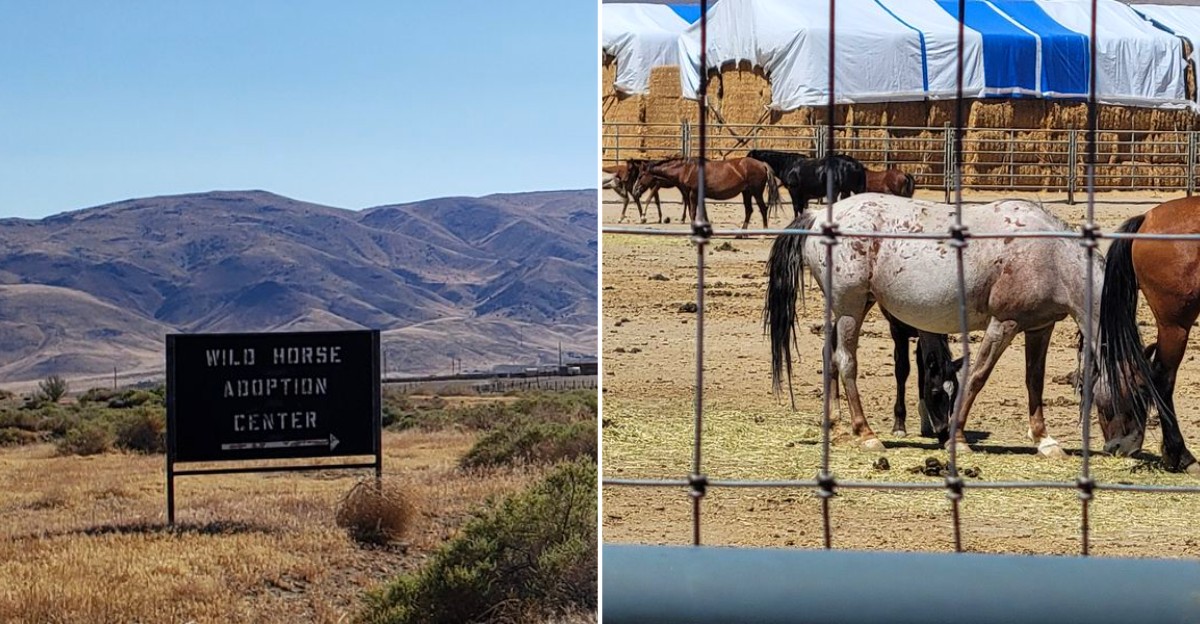
Dust rises before the animals even move. Then a mustang lifts its head, a burro edges closer to the fence, and suddenly the wide-open silence feels anything but empty. Nevada gives you a rare chance to see these animals up close without turning the experience into a polished attraction.
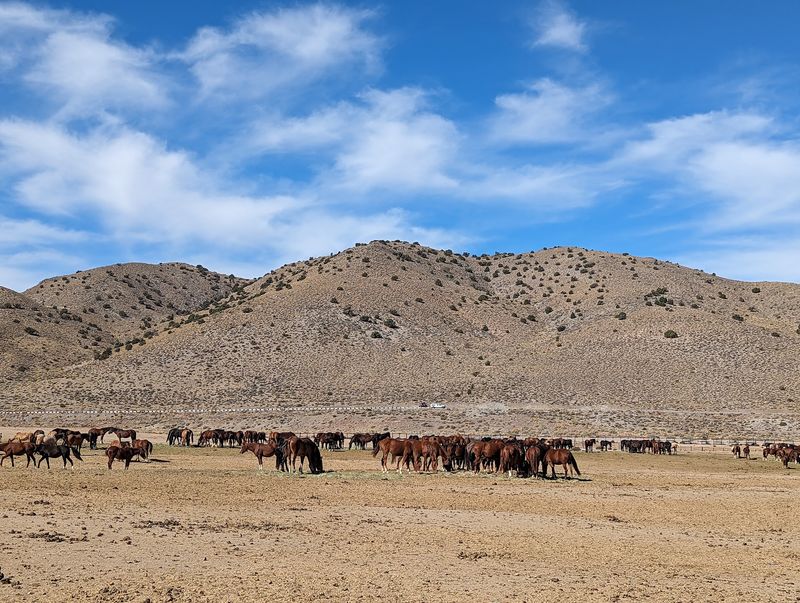
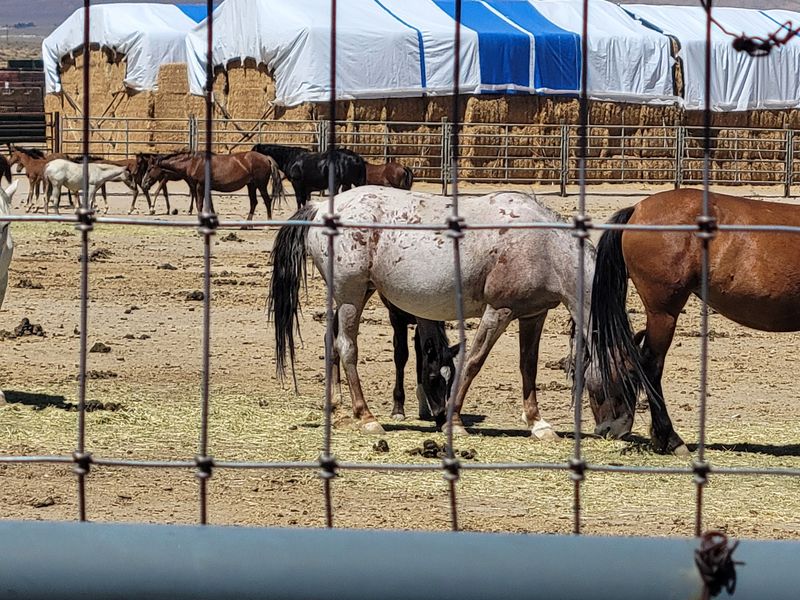
Hundreds may be spread across the pens, some standing in family groups, others watching every movement with sharp curiosity. Signs explain where they came from and what happens next, while the fence lines give you plenty of room to slow down and take it all in.
The most interesting part is how real the visit feels. This is tied directly to public lands, adoption programs, and the ongoing care of wild horses and burros. You can watch, learn, and leave understanding far more than you expected from a stop that looks so simple at first.
Meeting Mustangs Face To Face Along The Fence Line
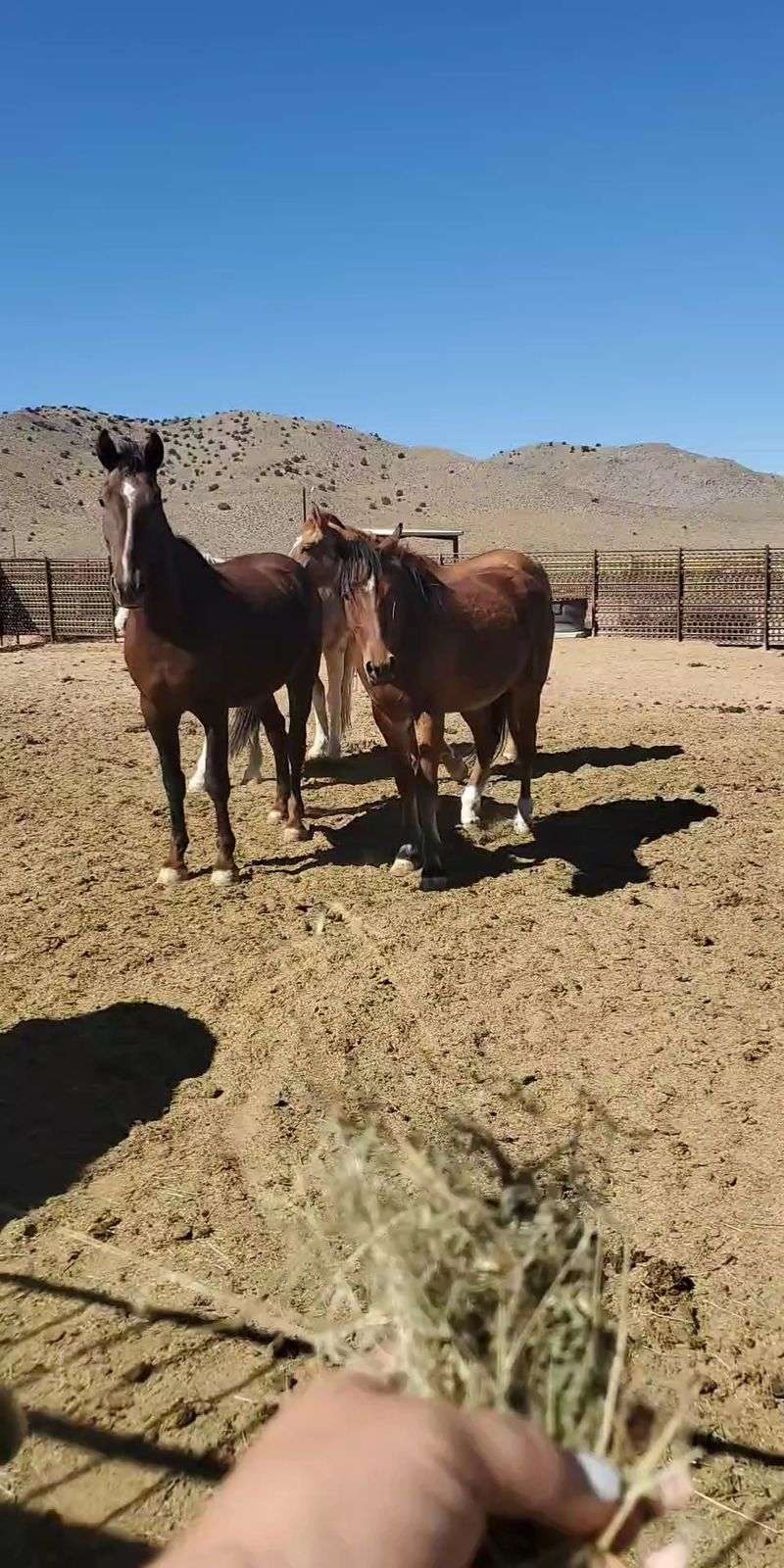
Few places let you stand within a few feet of a genuinely wild horse. At the Palomino Valley Wild Horse and Burro Center, sturdy pipe corrals line the visitor area, and curious mustangs often drift toward the rails to size you up.
Some stay far back, watching with ears pointed forward. Others walk right over, snort once, and study you like you are the interesting one. That moment tends to stick with people long after they drive home.
You should keep your voice low and your movements slow. Sudden noise sends a whole pen scattering, and you lose your chance to watch natural behavior. Give them a minute and they usually settle again.
Bring binoculars if you have them. The pens stretch across a large property, and some of the best action happens far from the fence, where young horses race each other in loose circles.
Please skip the snacks. Staff manage careful feeding schedules, and outside food can upset sensitive stomachs or cause squabbles in the pen. Watching is the gift here, and it costs nothing but patience and a little quiet respect.
How Adoption Actually Works Here
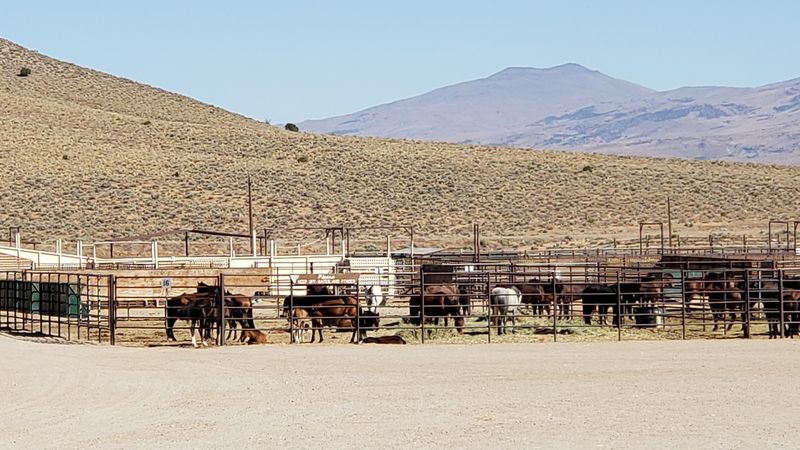
Adoption is the whole point of the place, and the process is more straightforward than most people expect. The Bureau of Land Management runs the operation, and most animals become available for adoption after completing the preparation process.
You start with an application. Staff want to see that you have proper fencing, shelter, space, and land zoned for livestock. Those requirements protect the animal and protect you from taking on more than you can handle.
Once approved, you can look over available horses and burros. Some are freshly gathered and completely untouched. Others have had halter training through partner programs, which makes the first few months far easier for a first-time owner.
Titling comes later. You care for the animal for at least one year, document that humane care has been provided, and then ownership can transfer to you.
Talk to the staff before you fall in love with a particular face. They know which animals suit beginners and which need an experienced hand. That single conversation can save you a year of frustration and set both you and your new horse up for real success.
Burros Are Hard To Ignore Once You Spot Them
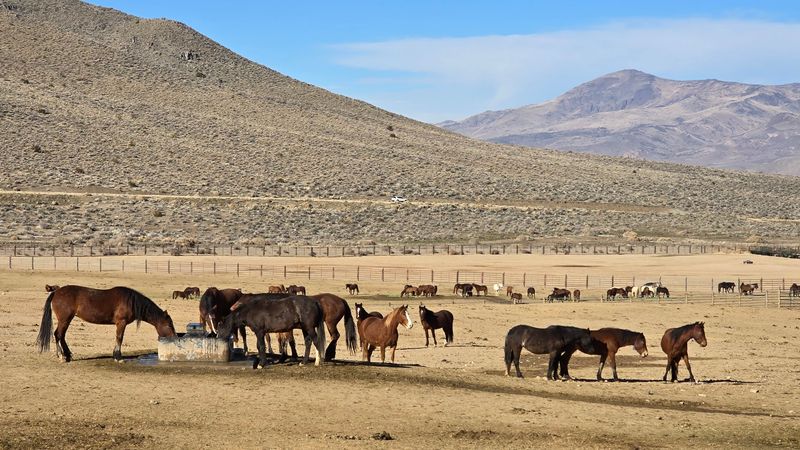
Everybody arrives for the horses. Plenty of visitors leave talking about the burros instead.
Those long-eared characters have a personality that lands somewhere between stubborn and hilarious. They stand still for ages, ears swiveling, then suddenly trot off together like they remembered an appointment.
Wild burros in Nevada descend from animals brought in during the mining era, then left to roam the desert when the work dried up. Generations later, they thrive in country that would defeat most livestock.
At the Palomino Valley Wild Horse and Burro Center, you may find burros among the animals being prepared for adoption. Look for the way they cluster shoulder to shoulder. That closeness is how they stay safe out on the range.
They also make excellent adoption candidates for smaller properties. A burro eats less than a horse, handles heat well, and often bonds closely with the person who feeds it.
If you have kids along, point out the ear length and the dark stripe across the shoulders. Small details like that turn a quick stop into a real lesson.
Timing Your Visit For The Best Views
Show up on a Saturday and you will be reading signs through a locked gate. The office keeps weekday hours only, Monday through Friday from 8 AM to 4 PM, and closes on weekends.
Mornings work best. The light is soft, the temperature stays comfortable, and the animals move around more before the afternoon heat settles in. Summer visits after noon can feel long under that open Nevada sun.
Call ahead before you drive out. Herd numbers shift constantly as animals ship to other facilities or head home with adopters, so the pens might hold hundreds one week and far fewer the next.
Spring rewards patient visitors with foals. Watching a leggy youngster figure out how to run is worth the drive on its own. Winter has its own appeal, with frost on the rails and steam rising off the herd, though the wind out there bites. Layer up.
Give yourself at least an hour. Rushing through defeats the purpose, and the longer you stand still, the more the horses relax and act like themselves.
Getting There Without A Single Wrong Turn
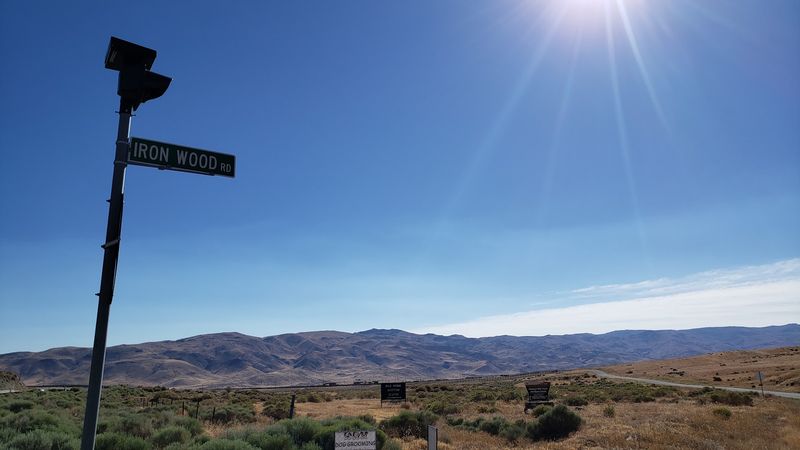
The drive is easy, and it is part of the fun. You head north out of town on Pyramid Highway, trade traffic lights for open desert, and watch the hills open up around you.
Plug this into your map before you leave: 15780 Pyramid Hwy at Ironwood Rd, Reno, NV 89510. Cell service gets patchy on the way out, so download directions ahead of time.
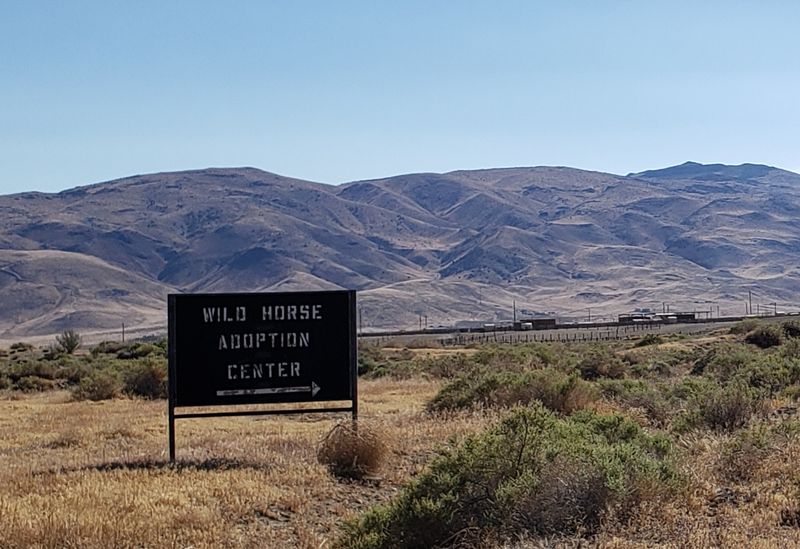
Look for the entrance near the Ironwood Road junction. The turnoff comes up quickly, and the facility sits back from the road, which catches some drivers off guard.
Any regular car handles the route fine. No dirt roads or high clearance required, though the parking area can be dusty after dry spells.
Fill your tank first. Services thin out fast once you clear the north edge of the valley, and there is nothing worse than watching the fuel light while admiring scenery.
The trip takes roughly half an hour from central Reno. Pair it with a loop up toward Pyramid Lake and you have built yourself a full afternoon of Nevada backcountry driving.
What The Staff Can Teach You In Ten Minutes
Here is something visitors miss all the time. If you walk into the office and simply ask questions, you get answers that no sign or website will give you.
The people working at the Palomino Valley Wild Horse and Burro Center handle these animals daily. They can tell you which herd management area a particular horse came from, how old it is, and what its temperament has looked like since arrival.
Ask about branding. Every BLM wild horse or burro removed from public lands receives a freeze mark on the left side of its neck, which includes its birth year and unique registration number.
Ask about the training partnerships too. Programs pair mustangs with skilled handlers, and animals that come through them arrive at their new homes already comfortable with a halter and lead rope.
Keep it friendly and brief during busy stretches. Loading days and intake days keep everyone moving, and a quick question lands better than a long conversation.
You will walk out understanding the whole system, not just the pens in front of you. That context changes how you see every horse on the property.
A Family Stop That Beats Another Screen Afternoon
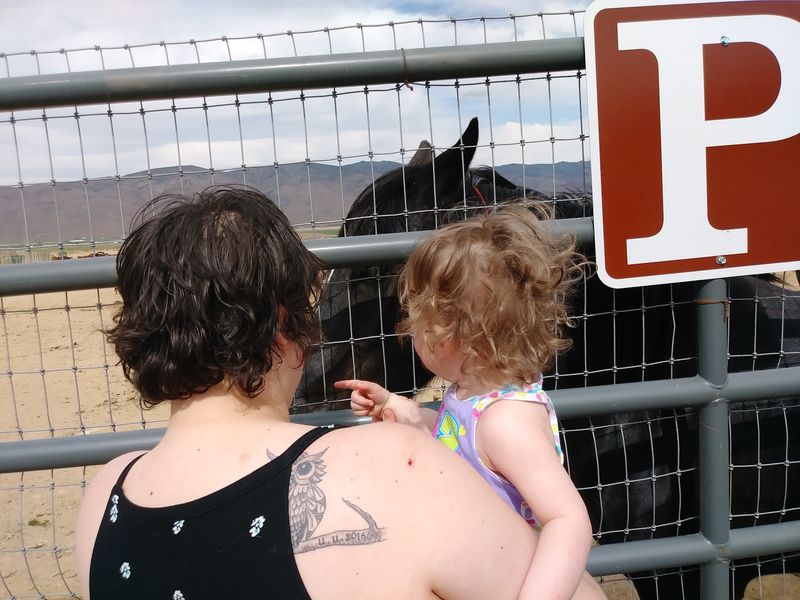
Kids get quiet around wild horses. Not bored quiet, but the focused kind, where they forget to ask for a phone.
The entry area keeps things approachable with posters, displays, and information boards written in plain language. Younger visitors can look at range maps, learn what a herd management area is, and figure out why these animals get gathered in the first place.
Turn it into a game. Have your kids count how many colors they can spot in one pen, or find the youngest foal, or watch which horse acts as lookout for the group.
Safety stays simple. Everyone stays behind the fencing, hands stay on your own side of the rails, and nobody climbs. Wild horses move fast and mean no harm, but they are not petting zoo animals.
Pack water, hats, and sunscreen. Shade is limited across the property, and Nevada sunshine works quickly on unprotected skin.
Best part? The whole outing costs nothing. You get real animals, real open country, and a lesson about public lands that no classroom delivers half as well.
Why The Drive North Stays With You
Most attractions hand you a story. Here, you watch one unfold in real time.
Every animal standing in those corrals came off open range and is on its way to a barn, a pasture, or a partnership with someone willing to do the work. The Palomino Valley Wild Horse and Burro Center sits in the middle of that transition, and you get to see it up close.
You do not need to be a horse person to appreciate it. The scale alone makes an impression, and so does the quiet effort behind keeping hundreds of animals fed, watered, and healthy in high desert conditions.
Go with reasonable expectations. Some days the pens fill up, other days they look sparse, and weekends mean viewing from outside the gate.
What stays consistent is the feeling of standing in wide-open Nevada country beside animals that helped shape the West.
Add it to your list, call before you go, and give yourself unhurried time once you arrive. You will leave knowing more about wild horses than you did that morning, and probably thinking about one particular face all the way home.