
This 600-Foot Sand Pile In Nevada Makes A Sound That Baffles Science
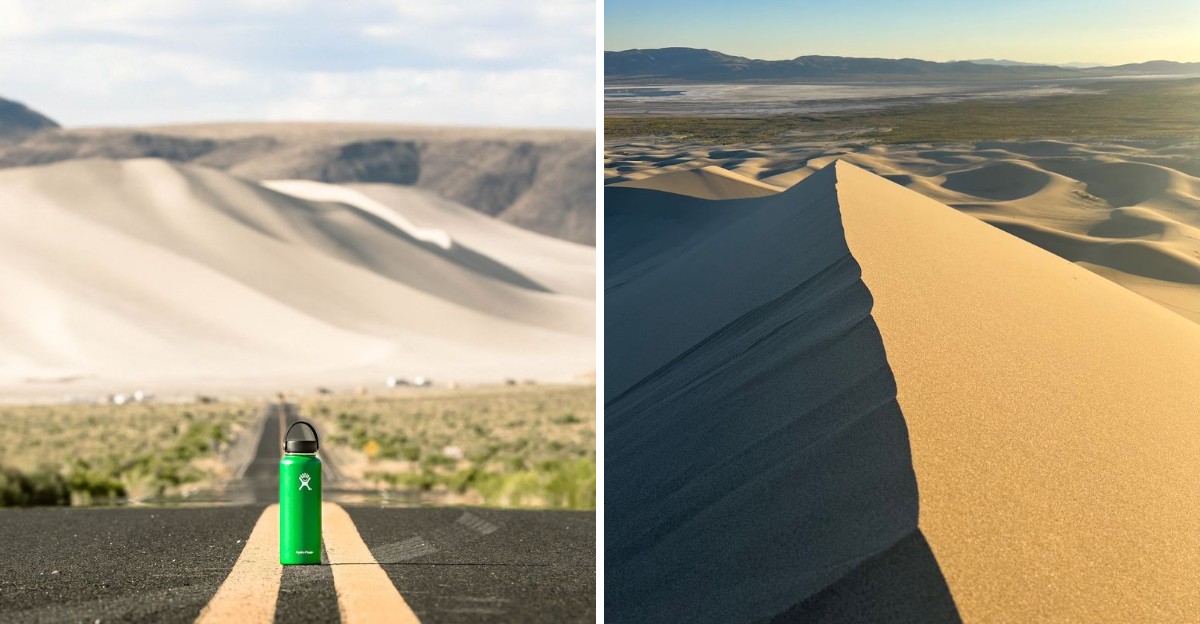
A six-hundred-foot pile of sand has no business making noise, yet it does exactly that.
Wind sweeps across the surface, and every so often the whole slope answers back with a low groan that sounds nothing like nature.
Nevada holds very few landmarks this strange, and even fewer that scientists still cannot fully explain.
Climbers scale the face for the view, then wait quietly hoping for the sound to kick in. Sandboarders carve down the same slope, kicking up grains that sometimes trigger the exact hum researchers keep studying.
A rare blue butterfly lives nowhere else on earth, and a Pony Express ruin sits quietly near the base.
Nevada keeps handing out surprises like this, sitting in corners most road trips skip entirely.
An Ancient Lake Left Behind A Mountain
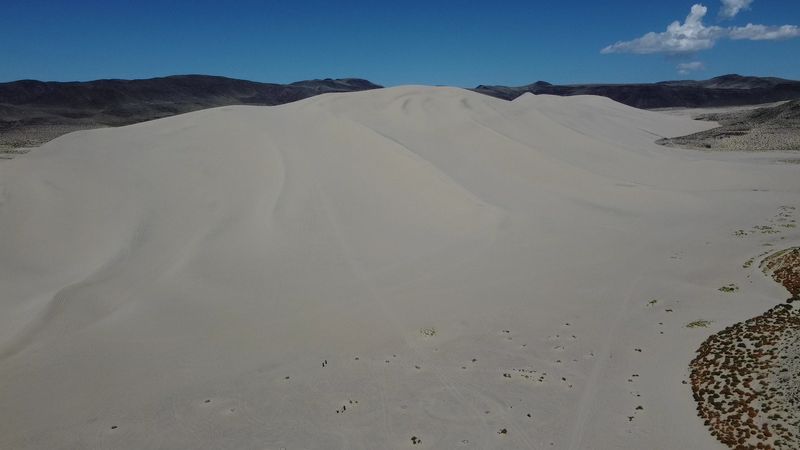
Where does a 600-foot sand pile even come from? The answer sits underwater, or at least it used to.
Thousands of years ago, ancient Lake Lahontan spread across much of northern Nevada. When the climate shifted, the water disappeared around 9,000 to 10,000 years ago and left behind a huge dry lakebed full of fine sand.
Steady winds then went to work. They lifted those grains and pushed them eastward across the flats, mile after mile.
The rising Stillwater Range finally blocked the parade. Sand piled up against that barrier and kept piling, which is how Sand Mountain grew into the largest single dune in the Great Basin.
Measurements vary depending on the source, but it stands roughly 600 feet tall and stretches a few miles across. The dune still shifts with the seasons, so its shape is never quite fixed.
Visitors find it in Churchill County, Nevada, at the Sand Mountain Recreation Area, listed as Unnamed Rd, Fallon, NV 89406, just off U.S. Route 50.
Not many landmarks can claim a prehistoric lake as a parent.
The Hum That Rolls Down The Slopes
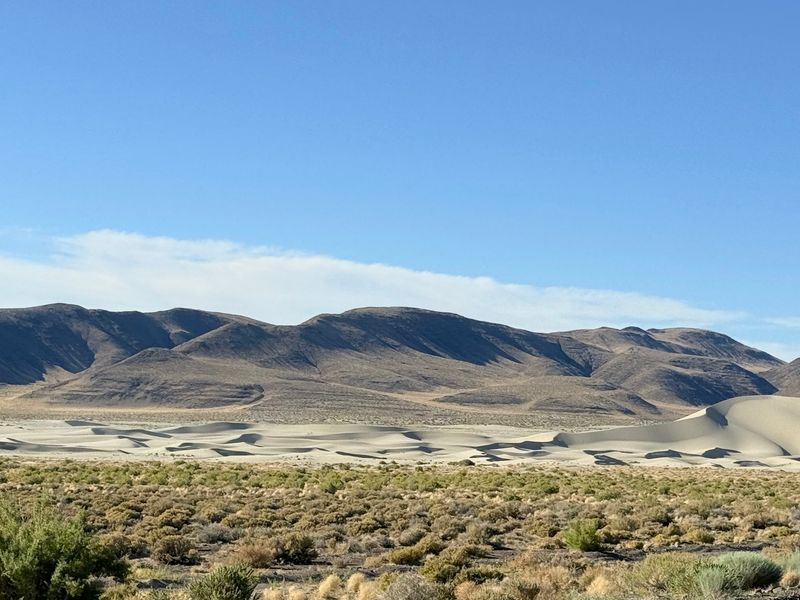
Imagine a mountain clearing its throat. That is roughly what people report here.
Sand Mountain belongs to a tiny club of about 30 to 35 singing sand locations worldwide. Descriptions of the noise range from a low groan to a deep roar, and sometimes a squeak underfoot.
Researchers have recorded volumes reported near 105 decibels, and episodes can last several minutes. One visitor compared the tone to a didgeridoo, another to a distant military plane.
Two things usually set it off. Strong wind sweeping across the crest, or sand disturbed by feet, boards, or tires, which triggers small avalanches down the face.
The dune does not perform on demand. Plenty of people climb it, listen hard, and hear only wind and engines.
Conditions matter enormously, which is part of the appeal. Quiet visits still deliver the view, and a lucky visit delivers something few people ever hear in person.
Reports suggest the sound has carried surprising distances across the flats on the right day.
Patience, dry weather, and a bit of luck seem to be the price of admission.
Why Some Sand Sings And Most Stays Quiet
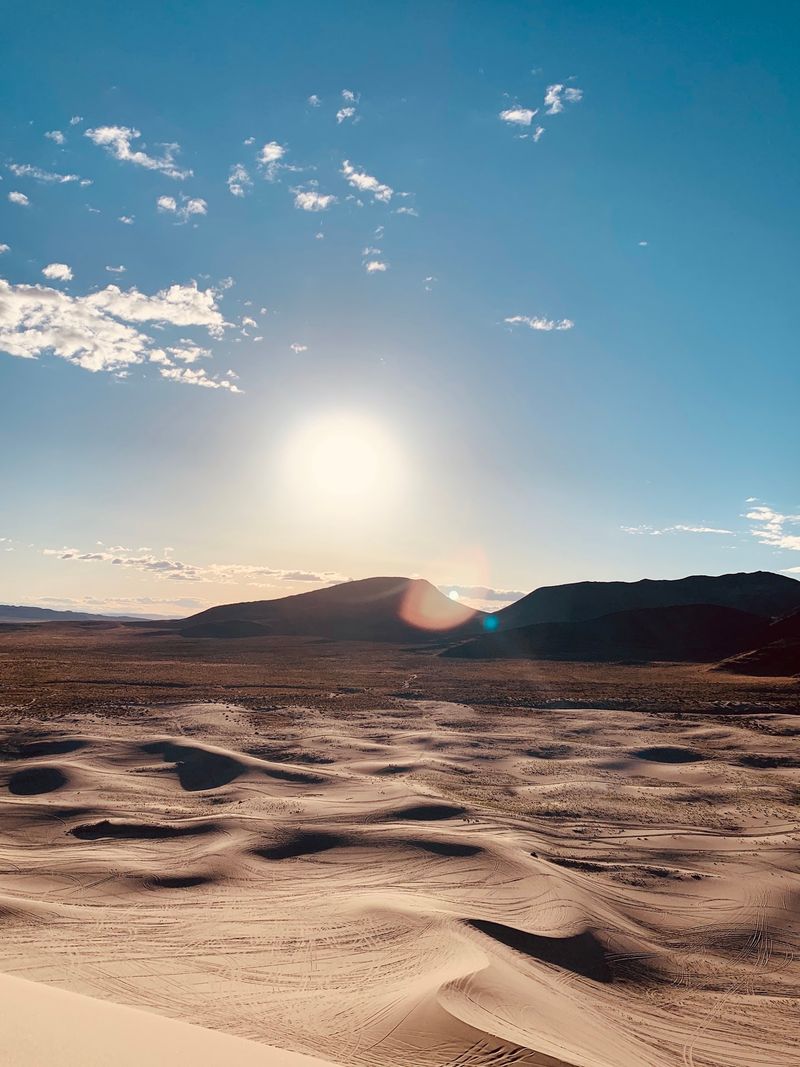
Most sand keeps its mouth shut. The grains at Sand Mountain apparently did not get that memo.
Scientists point to a very specific recipe. The grains tend to be smooth, unusually round, and remarkably uniform in size, generally somewhere between 0.1 and 0.5 millimeters across.
Silica content matters too. So does dryness, which may be the biggest factor of all.
Damp grains cling together and the whole dune goes silent. Only thoroughly dry sand seems capable of producing the effect.
Explanations still compete. One idea credits friction between moving grains as they shear past each other.
Another focuses on air compressed between those neatly shaped particles. A third suggests sound waves resonating between the dry surface layer and slightly moist sand buried deeper inside.
When loose sand avalanches, stored energy converts into motion and noise, which produces the boom. Exactly how those pieces fit together remains an open question.
That unfinished science is part of what draws curious travelers to Sand Mountain rather than any ordinary dune field.
A landform that stumps physicists tends to earn a longer look.
Engines, Whip Flags, And Wide Open Sand
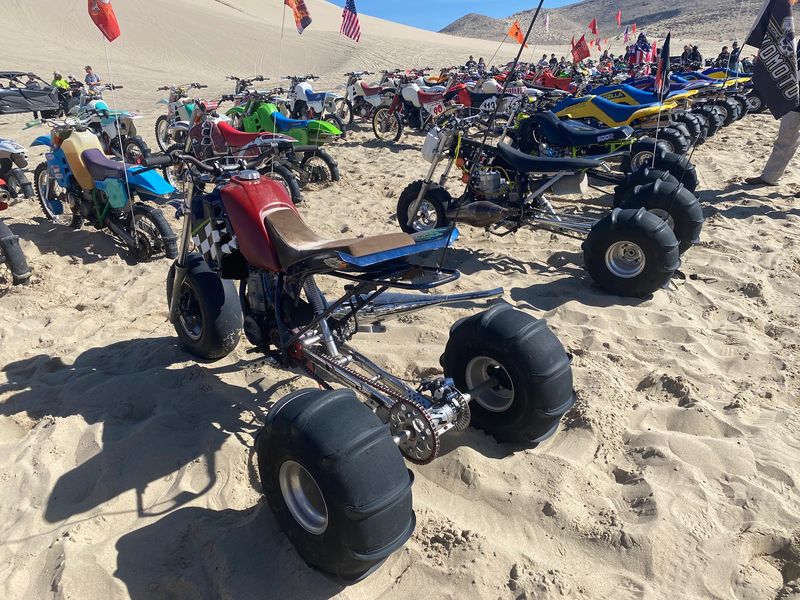
Weekends here come with a soundtrack, and it is mostly two-stroke and four-stroke.
Sand Mountain has long been a favorite for off-highway vehicle riders. ATVs, dirt bikes, sand rails, dune buggies, and side-by-sides all show up in force.
The big hill draws climbers who want to test power and nerve, and it is frequently talked about among riders as one of the country’s better competition hills. Beyond the main dune, smaller dunes and miles of trails spread out to either side.
Sand tires make a real difference. Riders new to soft terrain often describe a learning curve on the first day.
Safety rules apply. Vehicles riding in the dunes are required to carry tall whip flags for visibility, and camping areas enforce a low speed limit.
Steep, sharp-edged crests hide behind gentle-looking rises, so scouting slowly beats charging blind. Families sometimes stick to the small tracks near camp, which are separated from vehicle traffic by rock barriers.
Sand Mountain rewards riders who respect the terrain more than those who rush it.
Sandboarding Down A Six-Hundred-Foot Face
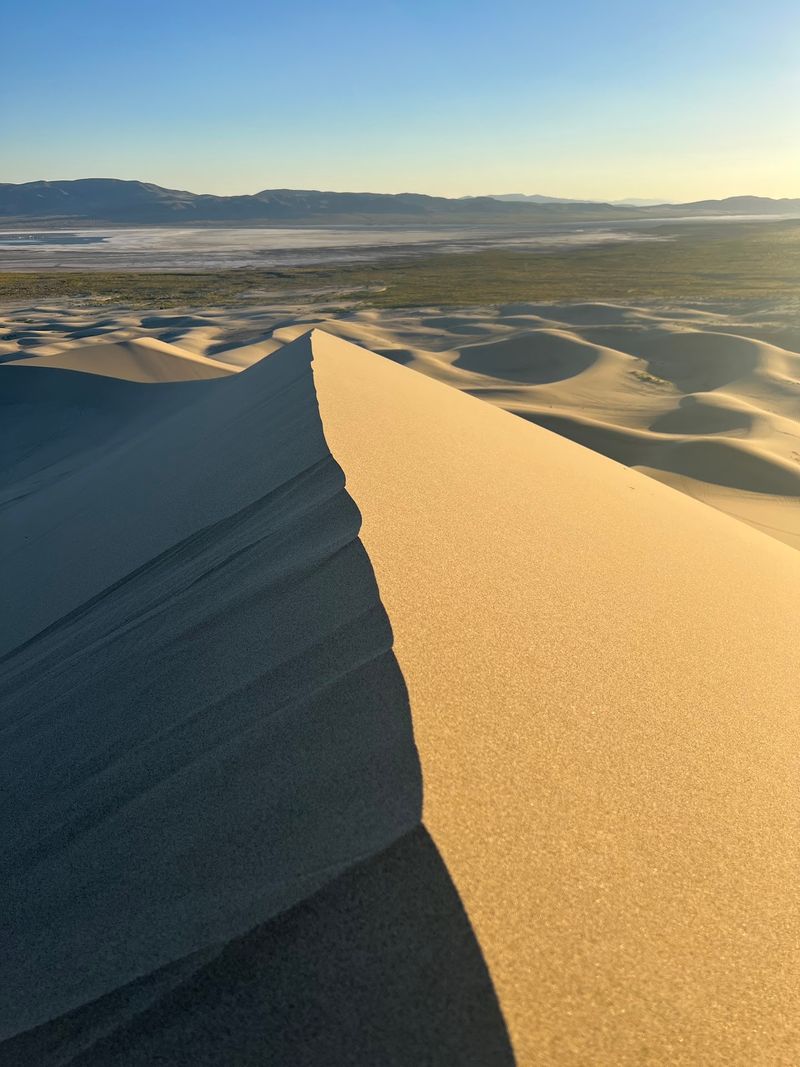
No lift ticket, no snow, no problem.
Sandboarding has quietly become one of the more popular non-motorized activities at Sand Mountain. Riders strap in at the top and carve down the loose face, kicking up a rooster tail of grains.
Sand skiing works too, and sand sailing occasionally appears on the flats when the wind cooperates. Each one turns the dune into a giant playground surface.
The climb up is the honest part of the deal. Loose sand swallows every step, and reaching the crest takes real effort in warm weather.
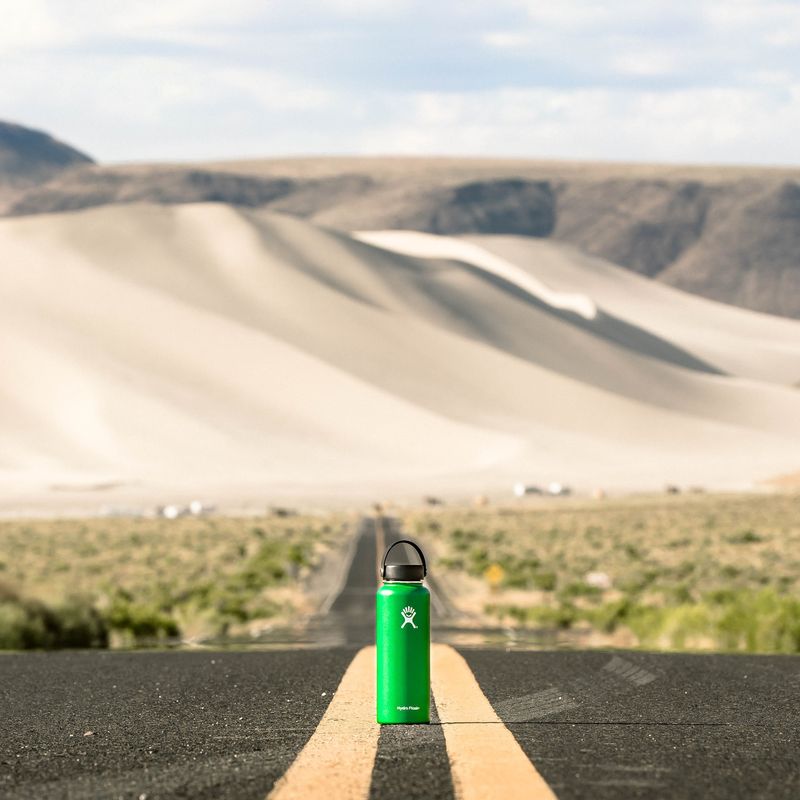
Hydration matters more than gear. Nothing is sold on site in terms of water, so plenty should ride along in the vehicle.
Sliding also happens to be one of the better ways to coax noise out of the slope. Avalanching sand is exactly the trigger scientists describe.
Footwear deserves thought, since surface sand heats up fast under midday sun. Cooler hours in the morning and late afternoon usually feel far kinder.
Few places let a person surf a desert and possibly hear it answer back.
A Rare Blue Butterfly Calls It Home
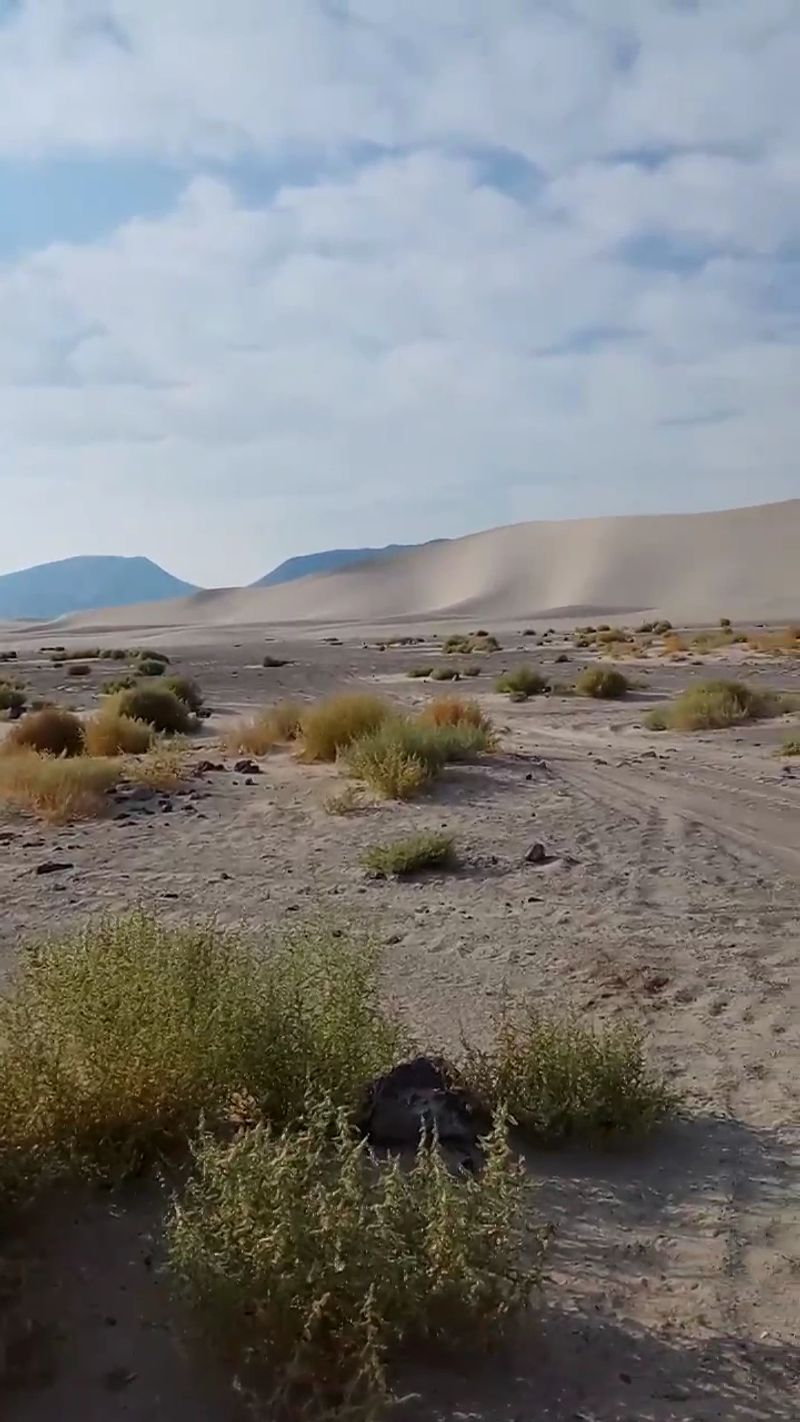
The most fragile resident weighs almost nothing.
Sand Mountain is the only known home of the Sand Mountain blue butterfly, a species considered critically imperiled. Its entire life depends on one plant, the Kearney buckwheat that grows in the sandy soil around the dune.
Lose the plant, lose the butterfly. That simple math shapes how the area is managed today.
In 2007, the Bureau of Land Management established a designated trail system to keep vehicle use away from the butterfly’s habitat. Riders heading outside the open dune area are asked to stay on those marked routes.
The rule sounds small and matters hugely. A single set of tracks through buckwheat can wipe out breeding ground that took years to establish.
Spring visitors sometimes notice wildflowers blooming around the base and more animal activity in the cooler months. That greenery is not scenery filler, it is life support for a species found nowhere else.
Sharing a dune with a creature this rare gives the whole place a different weight.
Tread lightly and the butterfly keeps its address.
Pony Express Ruins At The Dune’s Edge
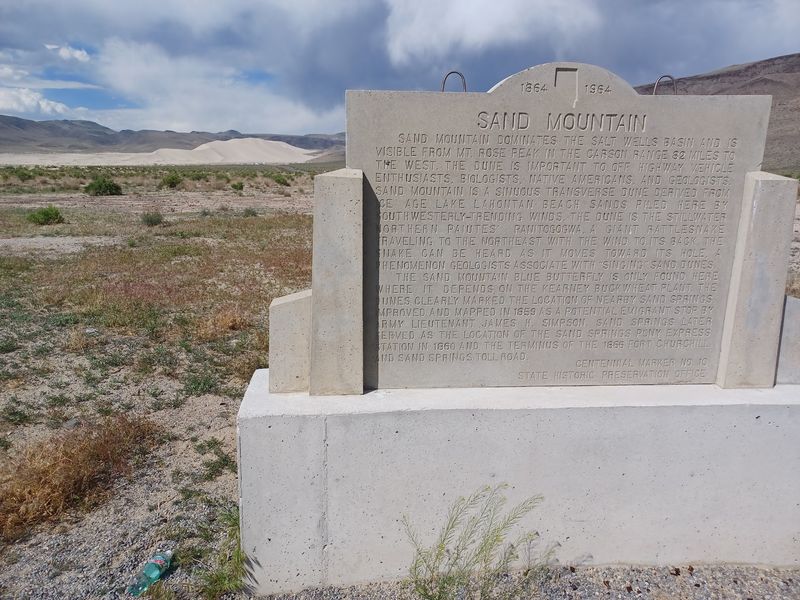
History sits right beside the parking area, low and quiet.
The stone remains of the Sand Springs Pony Express Station stand within the Sand Mountain Recreation Area. Built in 1860, the station gave riders a place to swap horses while carrying mail across an enormous stretch of empty country.
The Pony Express itself lasted barely a year and a half. Its legend outlived the operation by more than a century.
Recognition arrived in 1980, when the site was added to the National Register of Historic Places. Visitors can walk among the low walls and read interpretive information about how the station functioned.
A half-mile loop trail winds through the nearby Sand Springs Desert Study Area. That preserved patch shows the landscape roughly as riders would have encountered it.
Many people drive straight to the sand and never notice the ruins. Skipping them means missing the human story attached to this corner of Nevada.
Fifteen minutes of walking connects a modern dune trip to a much older kind of desert crossing.
The stones say plenty without saying anything.
Nights Without City Glow
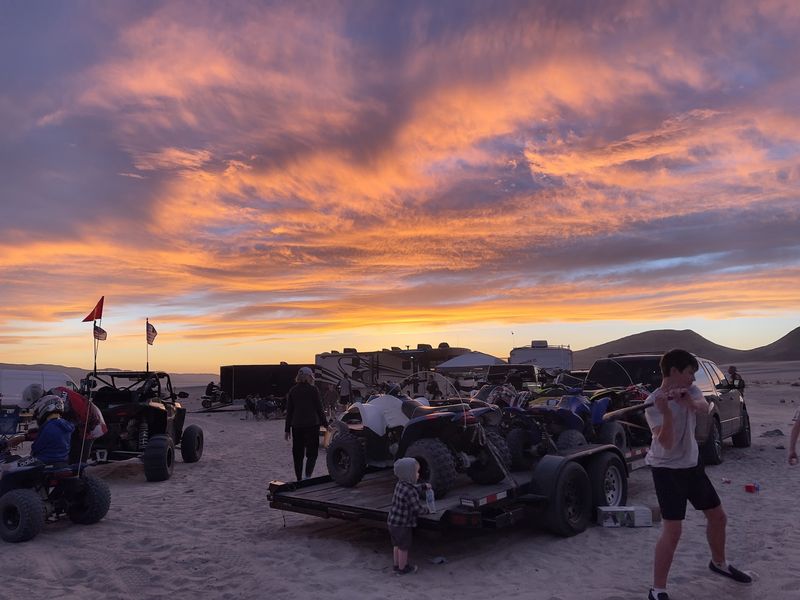
Sunset is only the opening act.
Primitive camping is allowed at the base of Sand Mountain, and the setup is deliberately simple. Vault toilets are provided, trash receptacles too, but water is not available on site.
That means hauling in everything needed, drinking water included. Repeat visitors treat the packing list as non-negotiable.
The payoff arrives overhead. Distance from city lights leaves the sky dark enough that the Milky Way stands out clearly on moonless nights.
Temperature swings are part of the deal. Warm afternoons can turn genuinely cold after dark, so layers belong in every bag.
Ground conditions vary with distance from the pavement. Sites nearer the paved end tend to be firmer, while sand deepens the farther out a rig travels.
Large motorhomes and low-clearance trailers can struggle with steep drop-offs where asphalt meets sand, and some visitors report getting stuck. Scouting on foot first saves headaches.
Holiday weekends fill up quickly, with Halloween often mentioned as the busiest stretch of the year. Quieter midweek nights offer the stars almost to oneself.
Legends Of A Snake Beneath The Sand
Long before decibel meters showed up, people already had answers.
For the Stillwater Northern Paiute, this dune is known as Panitogogwa, understood as a giant rattlesnake. The snake is said to travel northeast with the wind behind it, and the sound is its approach toward a hidden hole.
That story lines up neatly with when the dune tends to sing. Wind from the right direction, sand on the move.
Other local lore adds different voices. One tale speaks of Kwansee, an ancient benefactor whose song for his mate rises from the sand.
Another imagines prehistoric creatures from Lake Lahontan buried below, moaning for lost companions. Each version treats the noise as communication rather than physics.
Both frameworks describe the same event and reach for meaning in different ways. Standing on the crest at Sand Mountain, neither feels unreasonable.
These narratives deserve respect alongside the research papers. They also remind visitors that people have listened to this place for a very long time.
Science measures the sound, while the old stories explain what it might be saying.
Practical Notes For The Loneliest Road Detour
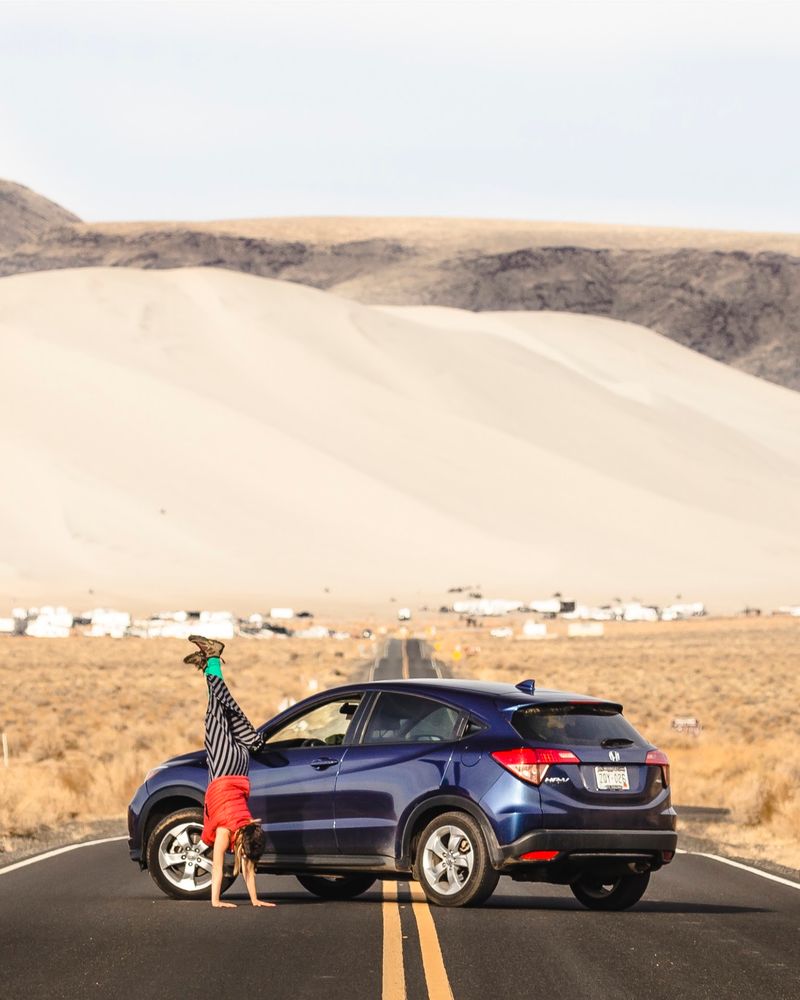
Show up prepared and the desert cooperates far better.
Sand Mountain Recreation Area is managed by the Bureau of Land Management and sits just off U.S. Route 50, the stretch nicknamed the Loneliest Road.
Access is open around the clock.
An entry fee applies, with day-range and annual passes available, and payment has traditionally worked through an on-site envelope system. Checking current rates before arriving avoids surprises.
The access road includes concrete dips that arrive faster than expected. Slowing down protects undercarriages, and scrape marks on the concrete tell the story.
Glass containers are prohibited, along with burning wood that contains metal hardware or burning tires. Rules exist to keep the sand safe for bare feet and bike tires.
Spring and fall generally bring the most comfortable weather in this part of Nevada. Windy stretches can whip up stinging sandstorms, though the surface turns beautifully smooth afterward.
The climb to the crest delivers long views toward the Stillwater Range and the salt flats below.
Sand Mountain manages to be a science mystery, a riding mecca, and a history stop all at once, which is a rare combination anywhere.