
Crafters Pay What They Can For Donated Art Supplies At This Tennessee Reuse Shop
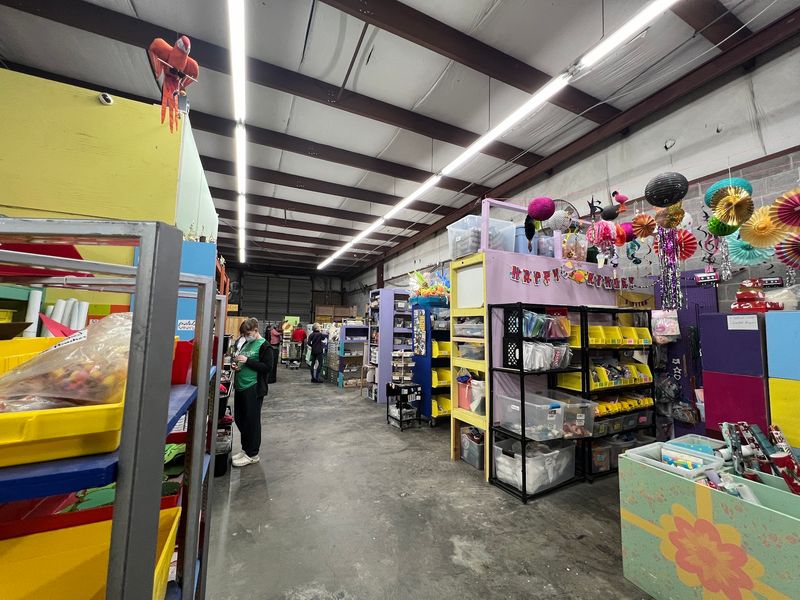
Somewhere in Tennessee there is a warehouse where a bin of crayons, a stack of vintage wallpaper, and a pile of blue airplane seat leather all sit within arm’s reach of each other. Nobody puts a price tag on any of it.
You fill your bag, you decide what the haul is worth to you, and you pay that. For families who have flinched at craft store checkout lines, the whole idea takes a minute to sink in.
A Warehouse Of Second-Chance Supplies On 3rd Avenue South
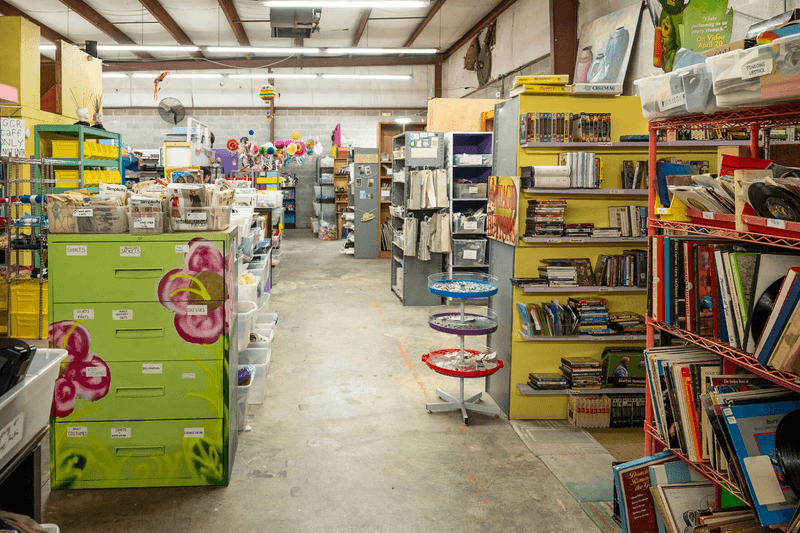
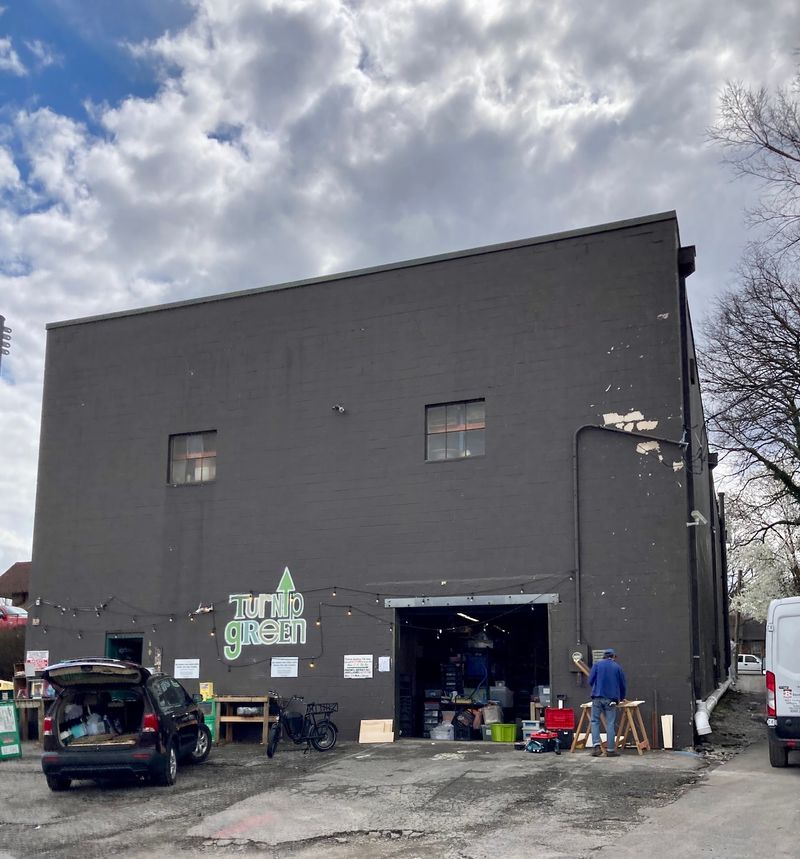
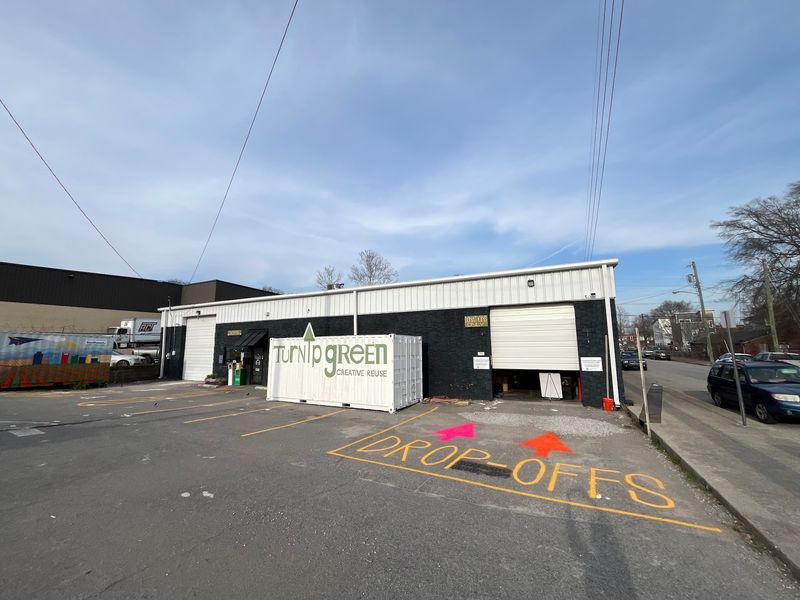
Turnip Green Creative Reuse sits at 1014 3rd Ave S in Nashville, just south of downtown in the Wedgewood-Houston stretch of warehouses and small studios. From the curb it reads as a plain working building.
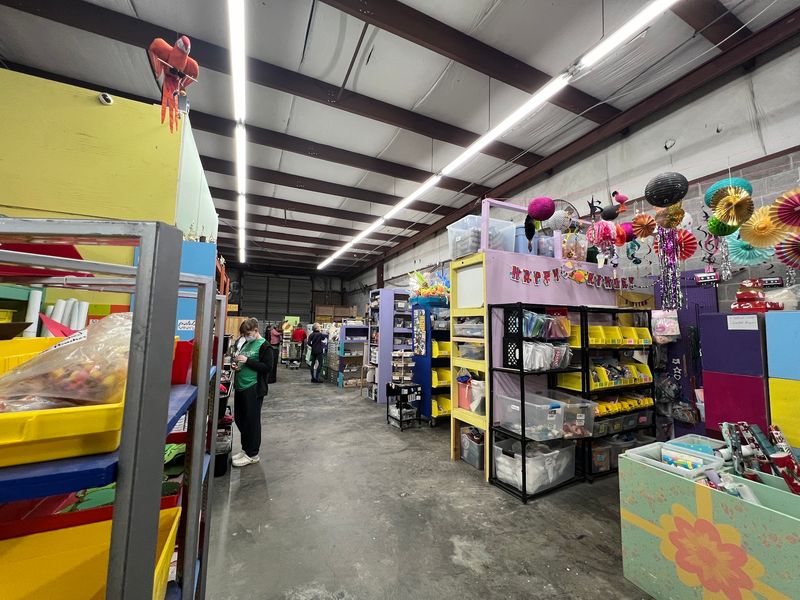
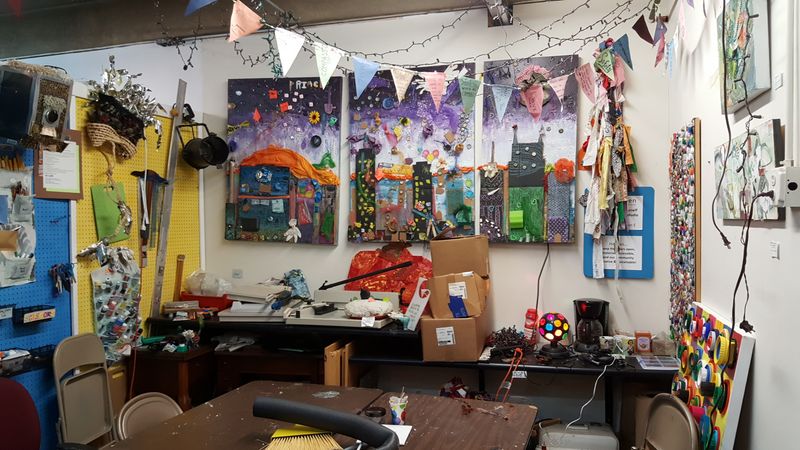
Inside, it is aisle after aisle of donated art and craft materials waiting for somebody to want them.
The organization is a nonprofit arts group, not a retail store, and that distinction shapes everything about how it operates. Materials arrive as community donations, get sorted by staff and volunteers, then go back out to whoever needs them.
What makes the place unusual in Tennessee is the pricing. Shoppers pay what they can, which means a scout leader outfitting twenty kids and a professional illustrator restocking her studio both walk out satisfied without a fixed sticker price dictating terms.
Regulars describe it as treasure hunting rather than shopping, and that is fair. Inventory shifts constantly because it depends entirely on what Nashville households cleared out last week.
Two visits a month apart will not look alike, which is precisely why people keep coming back with empty tote bags.
How A Landfill Problem Became A Craft Room
Roughly 30,000 pounds of material get diverted from landfills every month through this one operation. That figure is worth sitting with.
It is fifteen tons of paper, fabric, paint, beads and office castoffs that would have gone to a dump and instead went home with somebody who had a project in mind.
The mission runs on a simple observation: most things people throw away are not broken, they are just finished being useful to that particular person. A half-used sketchbook still has pages.
Fabric remnants still have yardage.
Creative reuse centers exist in a handful of American cities, and visitors from elsewhere often mention wishing their own hometowns had one. Nashville got lucky here.
The environmental angle matters, but it is not the whole story. Making supplies affordable removes a barrier that keeps plenty of people from ever starting a creative habit at all.
Staff sort donations carefully rather than accepting everything, which keeps quality reasonable on the shelves. That does mean donors should expect their contributions to be reviewed at drop-off rather than simply dumped and forgotten.
Paying What You Can, Explained Plainly
No price tags. No register total.
You gather what you want, bring it to the counter, and contribute an amount that works for your situation that day.
Shoppers say the model does something unexpected to the experience. Instead of mentally adding up costs while browsing, you focus on what you actually need, then settle up honestly at the end.
Several visitors mention leaving having paid more than they expected to, simply because the haul felt worth it.
For a household running on a tight budget, the arrangement is genuinely practical. A parent stocking a rainy-afternoon project box for elementary schoolers can leave with totes of crayons, markers, paints and paper for whatever they can reasonably spare.
For small crafting businesses, the same model works as an inventory lifeline. One shopper described finding sturdy shipping boxes, branded gift boxes and an antique wooden one in a single trip.
Worth understanding: contributions fund the sorting, the space and the programs. Giving generously when you can is what keeps the shelves stocked for the next person who cannot.
Aisles Stocked With Things You Forgot Existed
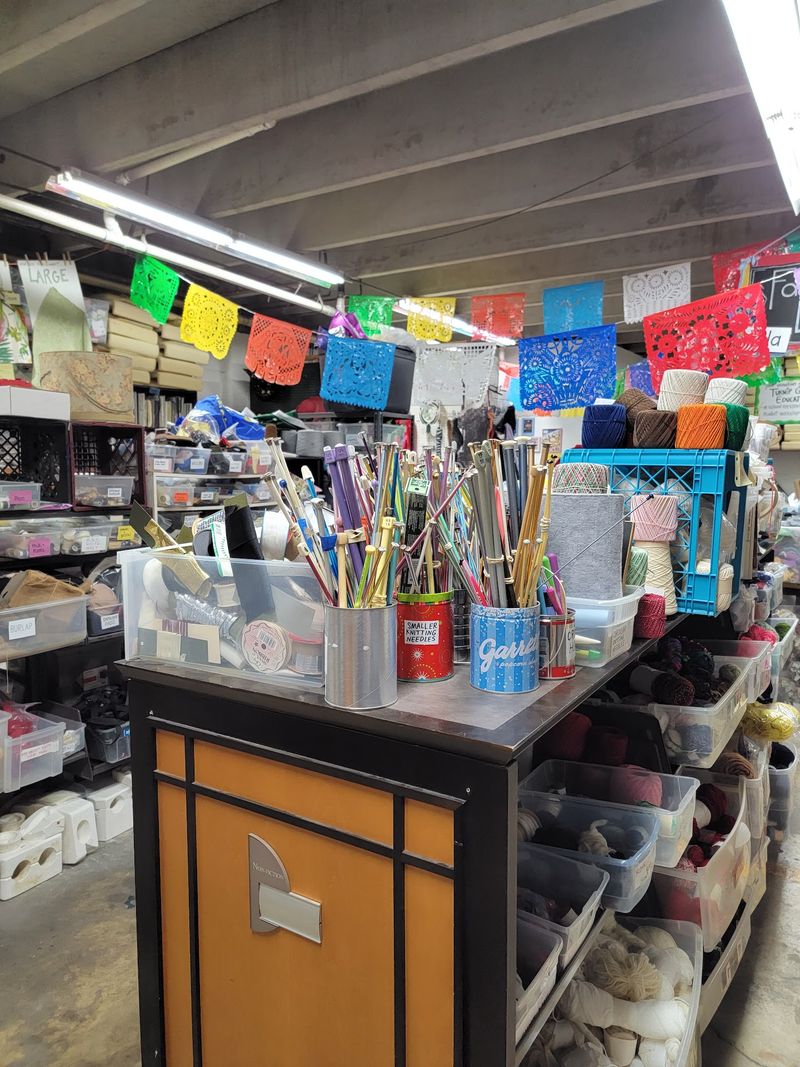
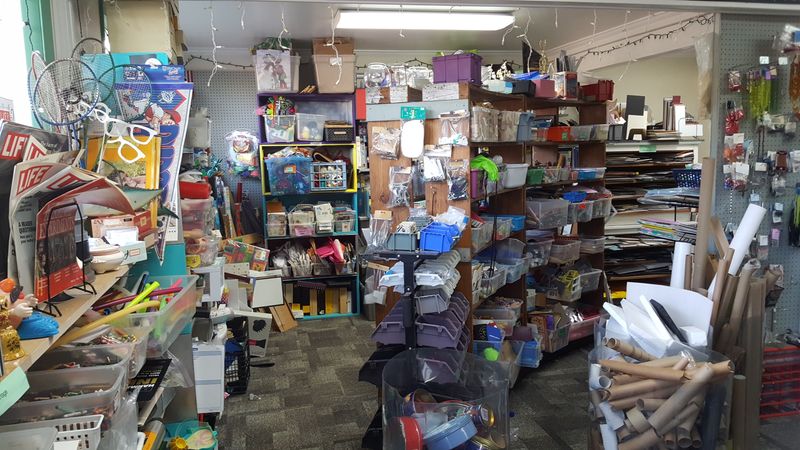
Paints, brushes, canvases and drawing supplies form the obvious backbone. Past those, the inventory gets delightfully strange: printmaking tools, clay and ceramics equipment, stained glass components, jewelry beads, resin, sculpture molds, drafting instruments and bookbinding materials.
Then come the small things that make a kid’s project sing. Pompoms, sequins, glitter, pipe cleaners, feathers, googly eyes, chalk, pastels, rulers and glue of every stubborn variety.
Fabric and sewing notions occupy their own territory, along with unfinished quilt pieces that somebody else started and somebody else will finish. Paper products, office supplies, greeting cards, envelopes, gift wrap and media round things out.
Junk journal makers have quietly claimed this place as their own, hunting stickers, magazines, old books and decorated papers that would be pricey new.
There is also a seed trading cabinet and gardening or houseplant supplies tucked in, which surprises people expecting a strictly art-focused stop.
One shopper summed the inventory up well by saying the shelves hold everything you can think of plus things you never thought of. Go in without a rigid list and you will do better.
The Blue Airplane Leather At The Back Of The Store
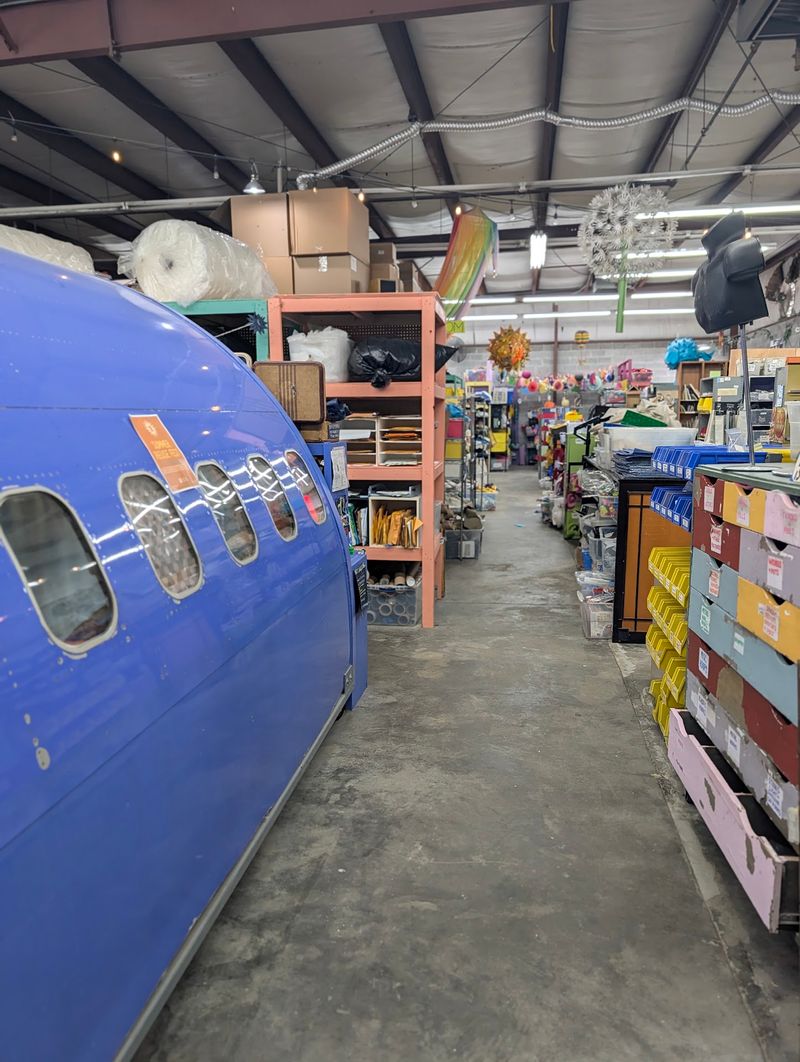
Walk all the way to the rear of the building and there is a partnership that catches almost everybody off guard. Southwest Airlines seat leather, in that unmistakable signature blue, arrives here as scraps and finds new life as bags, journal covers, keychains and whatever else a maker dreams up.
Materials like that are the reason regulars keep exploring past the first few aisles. The obvious stuff sits up front.
The oddities reward patience.
Leather is not a cheap material to buy new, which makes this particular bin one of the higher-value finds in the building for anyone who works with hides or does small leather goods.
Longtime visitors mention returning to Nashville with a suitcase full of donations specifically so they have an empty bag to fill on the way home. The airplane leather usually makes that return trip.
Availability depends on what has come in, so treat it as a happy possibility rather than a guarantee. Supply moves.
That is the nature of the whole operation, and honestly it is part of the fun of walking through the door.
Workshops, Studio Space And Community Markets
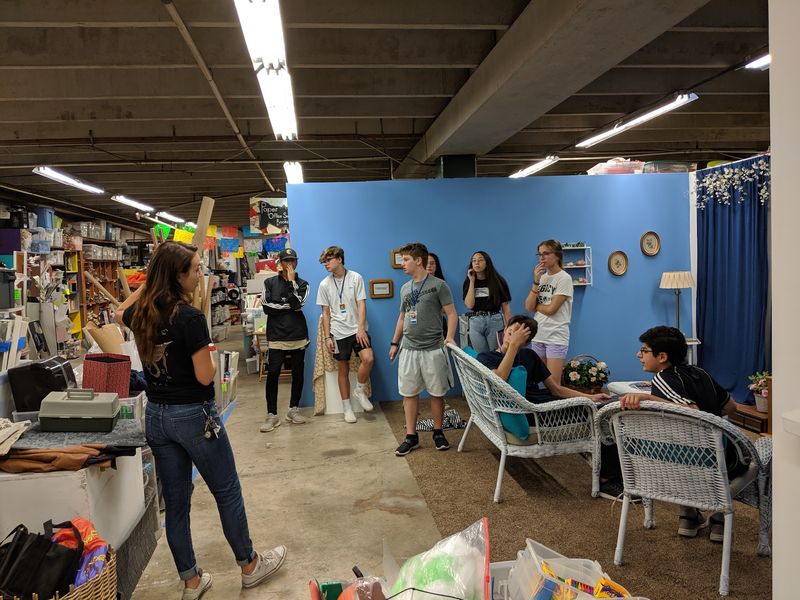
Shopping is only half of what happens here. The organization runs workshops and offers studio space, so people can actually make things on site rather than hauling supplies home and hoping the momentum survives the drive.
Classes cover creative reuse skills, and visitors have mentioned compost sessions among the offerings. Teaching artists work alongside staff and volunteers, which gives the place the feel of a working art school more than a resale floor.
Community markets happen too, giving local makers a place to sell. That connection runs both directions: shoppers have picked up small prints from local artists, zines of poetry and tiny composition notebooks right alongside their craft hauls.
An art gallery component rounds things out, so there is usually something on the walls worth pausing for.
Programming schedules shift throughout the year, so check what is running before you plan a visit around a specific class. Some fill quickly.
For a Tennessee family, the appeal is layered. Kids get materials, adults get skills, and everyone leaves with something they did not arrive with.
A Goldmine For Teachers, Troop Leaders And Group Organizers
Ask any elementary teacher what she spends her own money on and the answer is supplies. That equation changes here.
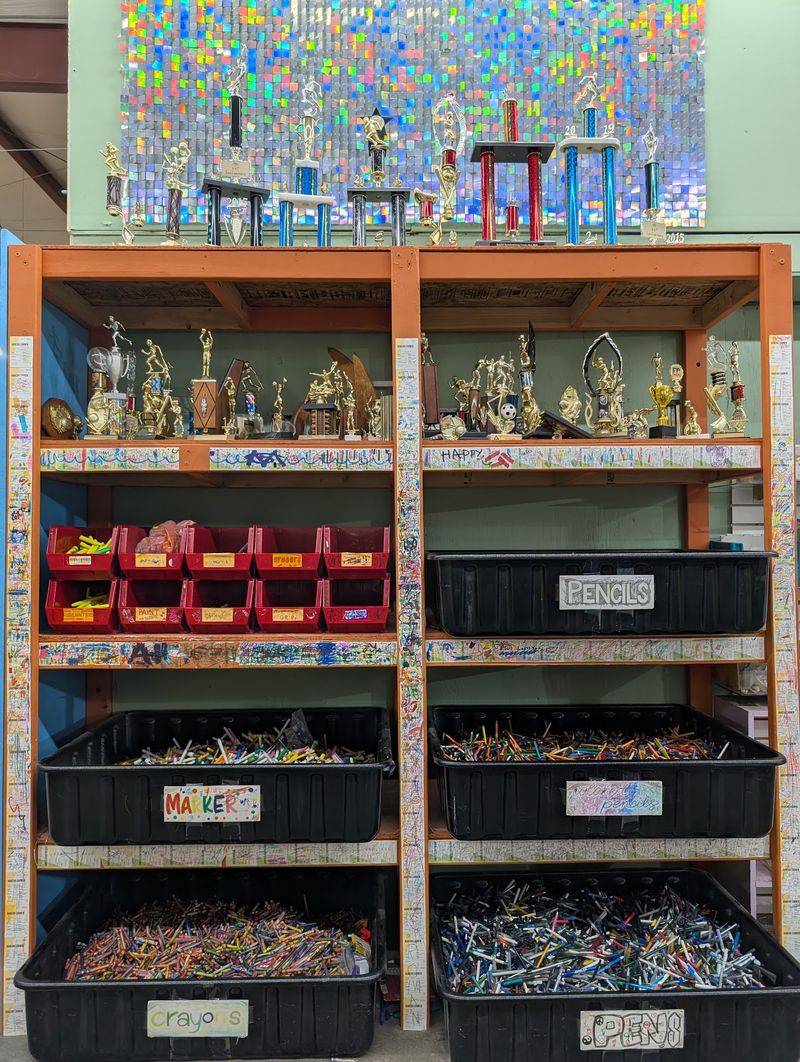
Totes full of crayons, markers, writing implements and paints sit ready for anyone outfitting a group. Scout troops, vacation Bible school programs, after-school clubs and rained-out birthday parties all get solved in one stop.
Need forty medicine bottles for a shoebox diorama project? Corks?
Cardboard? The bulk oddities that no retail store carries in quantity are exactly what accumulates on these shelves.
Art teachers show up regularly for the same reason, and staff are used to helping people think through a project rather than just ringing them up.
Because pricing is pay-what-you-can, a classroom budget stretches dramatically further than it would at a big-box craft chain. That is the practical math that brings people back semester after semester.
Bring reusable bags or a plastic bin. The volume of small items you can end up carrying surprises first-timers, and juggling loose pompoms across a parking lot is nobody’s idea of a good afternoon.
Donating Your Own Clutter The Right Way
Cleaning out a closet, a classroom or a whole apartment? Donations are accepted Tuesday through Sunday from 10:00 AM to 2:00 PM, or by appointment, which is a shorter window than shopping hours.
Fabric and unfinished quilt pieces, greeting cards and envelopes, crayons and markers, stickers, gift wrapping supplies, sewing notions, office supplies and gardening or houseplant materials all find takers here.
Important to know going in: staff review donations at drop-off rather than accepting everything sight unseen. Some donors have found that process slower or more particular than expected, especially with items like partially used spray paint.
The reasoning is practical. Shelves stay usable only if what goes on them is genuinely usable, and the sorting has to happen somewhere.
Drop-off is assisted, so you are not hauling boxes across a warehouse alone. Pull up, unload, knock, and someone will meet you.
Give yourself extra time if you are bringing a large load, and consider calling ahead about specialty materials like leather or bulk fabric so the team knows what is arriving.
The Feel Of The Place On A Weekday Morning
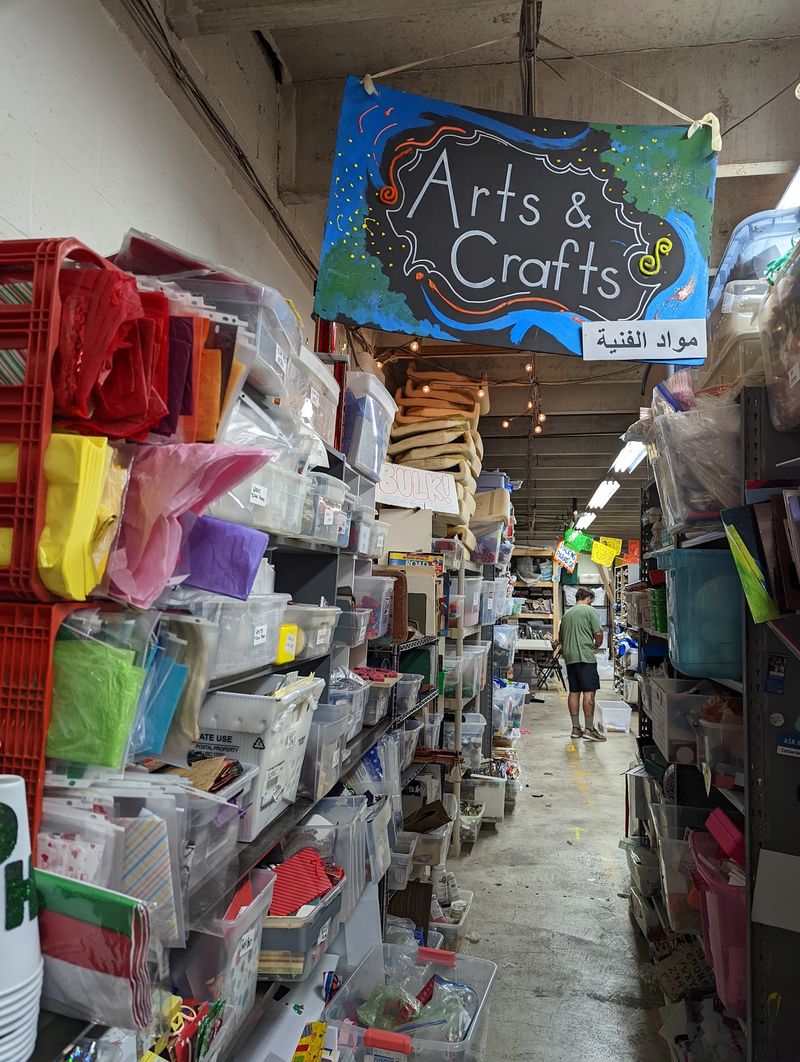
Organized chaos would be the wrong description, because the organization part is what visitors comment on most. Bins are labeled.
Categories make sense. You can find things.
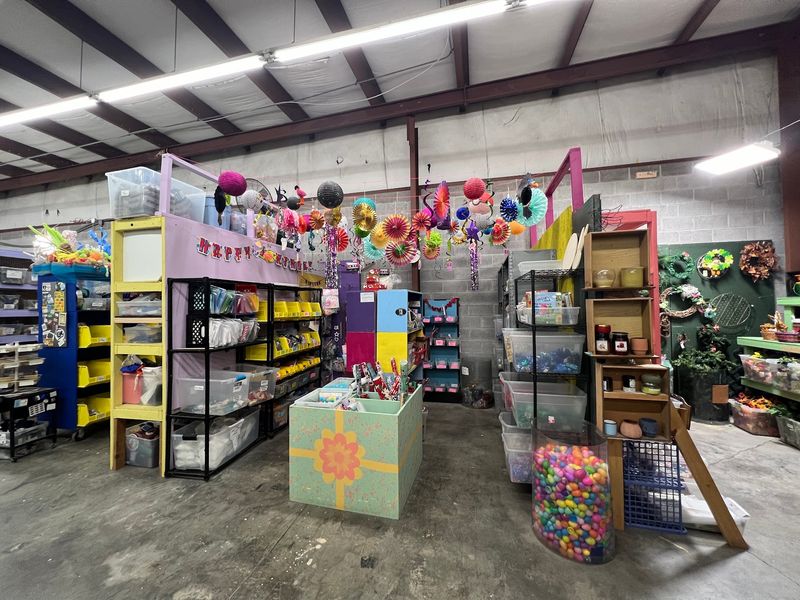
What surrounds you is color. Shelves of it, floor to ceiling, in combinations no retail merchandiser would ever plan.
People describe getting genuinely lost in the visual interest of just walking the aisles.
Staff and volunteers turn up in nearly every conversation about the place. Friendly staff comes up in dozens of visitor comments, and people mention teaching artists and volunteers being quick to help without hovering.
Weekday mornings tend to be calmer than weekend afternoons, so if you want unhurried browsing time, aim early in the week.
The pace here is slow on purpose. This is not a grab-and-go errand.
Plan on at least an hour if you want to actually see what is there, and considerably longer if you have a project brewing.
Children generally do well in the space, though the sheer volume of small shiny things means keeping little hands accounted for.
Hours, Closed Days And When To Show Up
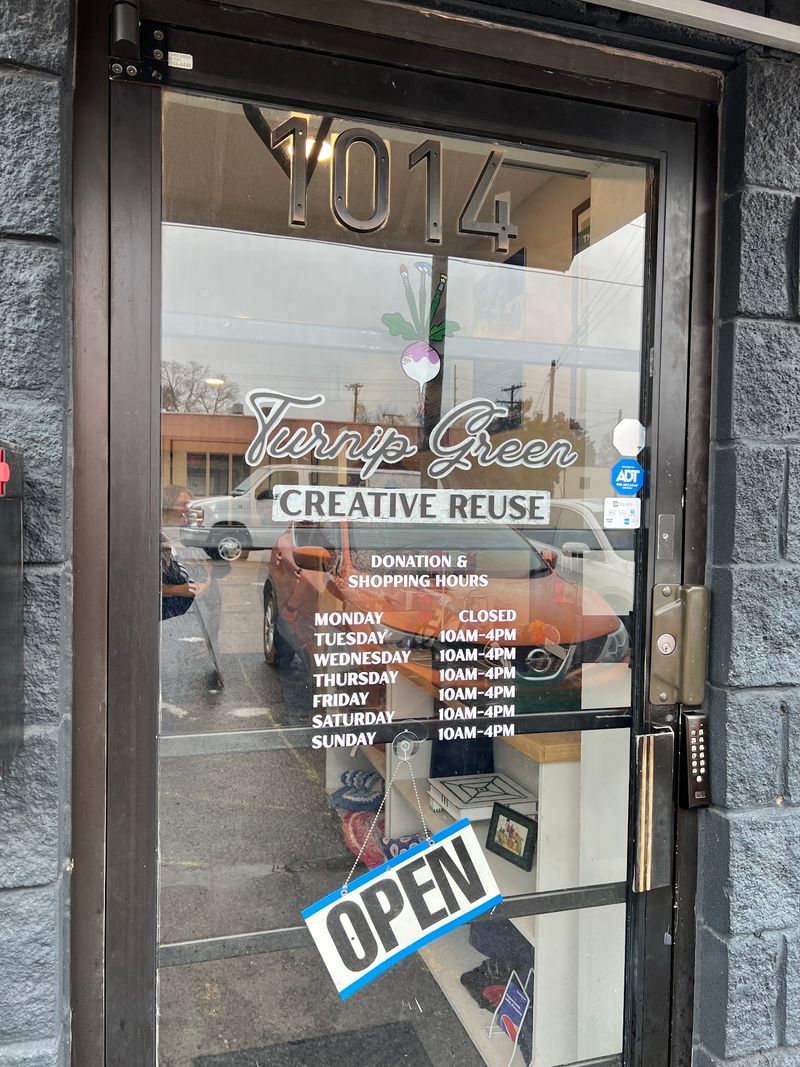
Shopping runs Tuesday through Sunday, 10:00 AM to 4:30 PM. Monday is the closed day, so build your Saturday or Sunday around it instead.
That 4:30 closing sneaks up on people. Arriving at 4:00 gives you half an hour in a building that deserves considerably more, so treat late afternoon as a scouting trip rather than a real shopping session.
Donation hours end earlier, at 2:00 PM, which trips up folks who plan to drop off and shop in one swing. Do the donating first.
Sunday afternoons draw a crowd. If you prefer elbow room in the aisles, a Tuesday or Wednesday morning is the calmer bet.
Holiday schedules and special events can shift things, so confirm hours before making a long drive from Chattanooga or Knoxville. Nobody wants to burn a tank of gas on a locked door.
Allow ninety minutes inside as a baseline. First-timers almost universally underestimate how long the browsing takes once they start opening bins.
Driving In From Chattanooga, Knoxville Or Memphis
Chattanooga families have the shortest run: roughly 2 to 2.5 hours northwest on I-24, about 132 to 140 miles, and you gain an hour crossing into Central Time. Leave at 9:00 Eastern and you are browsing by 10:00 Central.
From Knoxville, figure 2.5 to 3 hours on I-40 west, somewhere around 180 to 190 miles, with the same helpful time zone gain on arrival.
Memphis sits farthest out at roughly 3 to 4 hours east on I-40, about 210 miles, with no clock adjustment either direction.
Nashville locals obviously have it easiest, with the building sitting a few minutes south of downtown off 3rd Avenue South.
Traffic through Nashville can add real time on weekend afternoons, so pad your estimate if you are arriving from any direction after noon.
Pair the trip with other stops nearby to justify the gas. The surrounding Wedgewood-Houston area has galleries and small studios within walking distance, which makes an afternoon out of what could otherwise be a quick errand.
Parking Realities And One-Way Street Warnings
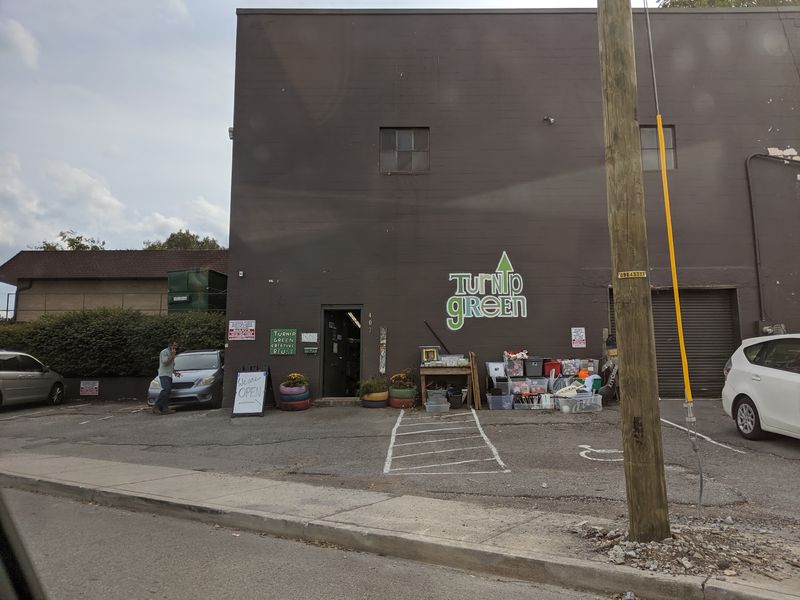
Here is the honest downside. Parking is the one thing visitors consistently flag as a hassle, and the guidance from staff amounts to finding a spot where you can while reading the signs carefully.
Street parking in this pocket of south Nashville comes with restrictions that vary block to block. A few minutes spent reading a sign beats a ticket that erases whatever you saved on supplies.
One-way streets add another wrinkle. Multiple visitors have mentioned GPS getting confused in the area, sending them around an extra loop before landing at the right door.
Pull up the block on satellite view before you leave home if you are unfamiliar with the neighborhood. Knowing which direction 3rd Avenue South runs saves genuine frustration.
Weekday visits generally mean easier parking than weekends, when nearby businesses and galleries draw their own crowds.
If you are dropping off a large donation, the loading area is separate from customer parking, and staff will direct you. Follow the posted instructions to unload and knock rather than carrying boxes through the front.
What A Whole Saturday Here Actually Costs
Twenty dollars. That is a realistic contribution for a family walking out with a substantial bag of supplies, and plenty of people give less when circumstances require it.
Add gas, and a Nashville-area family can turn this into a full creative afternoon for well under the cost of a sit-down dinner for four. Compare that to a big-box craft store run where a single set of decent acrylics eats half that budget.
The math gets better for group projects. Outfitting a dozen kids with markers, paper, glue and assorted decorative bits would run serious money retail.
Here it runs on what you can offer.
Retirees working on quilting, junk journaling, jewelry or bookbinding find similar value, since specialty materials are exactly what accumulates in a donation-based inventory.
Contributions are the funding model, so give what genuinely reflects the value you got if your budget allows. That is what keeps the doors open for the shopper behind you.
No admission fee exists for browsing, either. Walking in and looking around costs nothing at all.
Why This One Stays With People
Something about the model gets under people’s skin. Visitors from other states repeatedly say they wish their own city had a version of this, which is not a reaction most shops provoke.
Part of it is the environmental logic clicking into place. Watching fifteen tons a month move from trash-bound to useful is a tangible thing rather than an abstract promise.
Part of it is access. An artist who could not otherwise afford supplies leaves with them.
A parent who would have skipped the craft project does it anyway.
The place is not perfect. Parking is genuinely annoying, the donation review process can feel particular, and the inventory is unpredictable by design.
None of that seems to dent the enthusiasm. It holds a 4.9-star average across more than 500 visitor ratings, with arts and crafts, friendly staff and the donation model dominating what people talk about.
For a Tennessee family looking for an inexpensive Saturday with something to show for it, this is a solid use of a few hours and a modest contribution. Bring bags and an open mind.