
We Found The Nevada Art Installation That Looks Like It Fell From Space
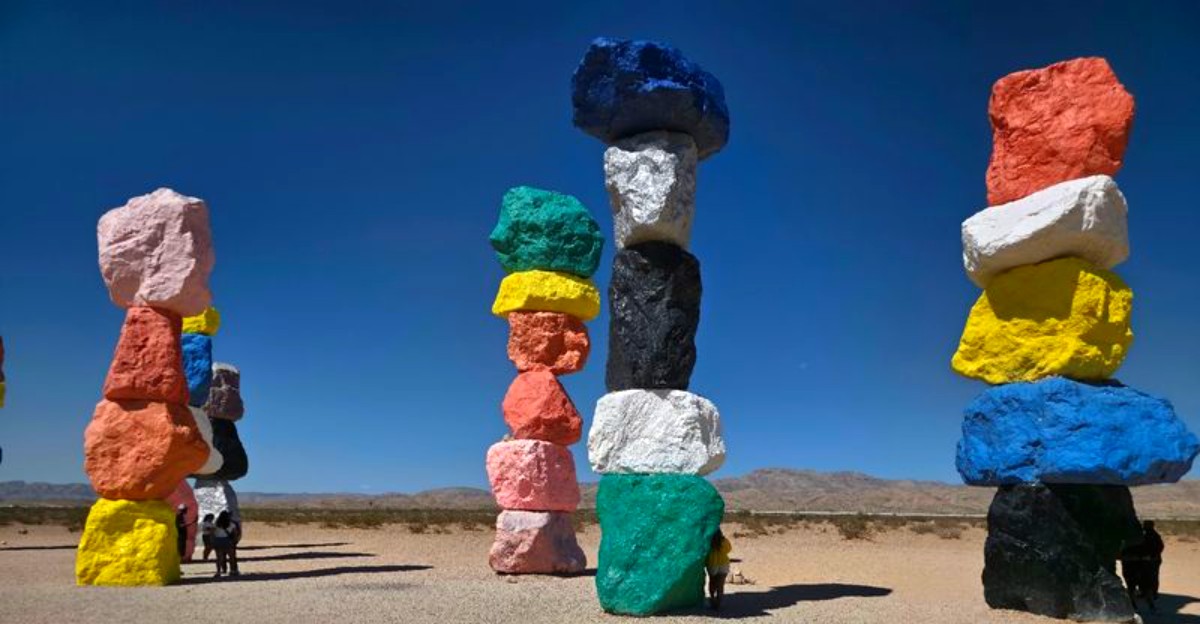
This is the kind of roadside sight that makes you wonder if your eyes are playing tricks on you. Nevada suddenly throws towering stacks of neon-colored rock into an otherwise wide-open desert, and the contrast is impossible to ignore.
How often does a simple detour leave you staring at something that looks this wildly out of place? The shapes are huge. The colors are even louder, and every angle seems to change the scene.
You do not need to understand modern art to enjoy the surprise. Part of the fun is simply standing there and taking in how strange the whole thing looks against the empty landscape. Photos are almost guaranteed. So is a second look.
It is bold, playful, slightly surreal, and exactly the sort of unexpected stop that can turn an ordinary stretch of highway into one of the stories you remember afterward.
Colors Rise Out Of Nowhere
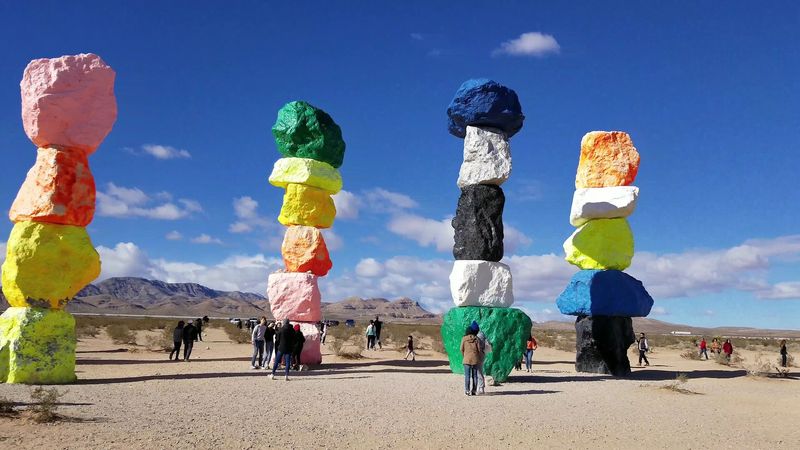
The first thing you notice about Seven Magic Mountains is the color. Fluorescent pinks, yellows, oranges, blues, greens, and other bright shades stand against a desert landscape that naturally leans toward softer earth tones.
There is nothing subtle about that contrast, and that is part of what makes the installation so easy to recognize.
Seven Magic Mountains consists of seven separate towers made with painted, locally sourced limestone boulders. Artist Ugo Rondinone arranged the stones vertically, creating forms that resemble oversized cairns or desert rock formations pushed into an entirely different visual world.
The Nevada Museum of Art describes the individual stacks as containing groups of three to six boulders. You can appreciate the piece before you know any of that history. The colors do most of the initial work.
They make the towers visible across the desert and immediately separate them from the mountains and open ground around them.
I like how quickly your attention shifts once you get closer. What first looks like a collection of brightly colored shapes begins to reveal rough rock surfaces, irregular edges, and the weight of the material underneath the paint.
That tension gives Seven Magic Mountains much of its personality. Natural stone remains recognizable, but color transforms it into something completely unexpected.
The Scale Changes Once You Get Closer
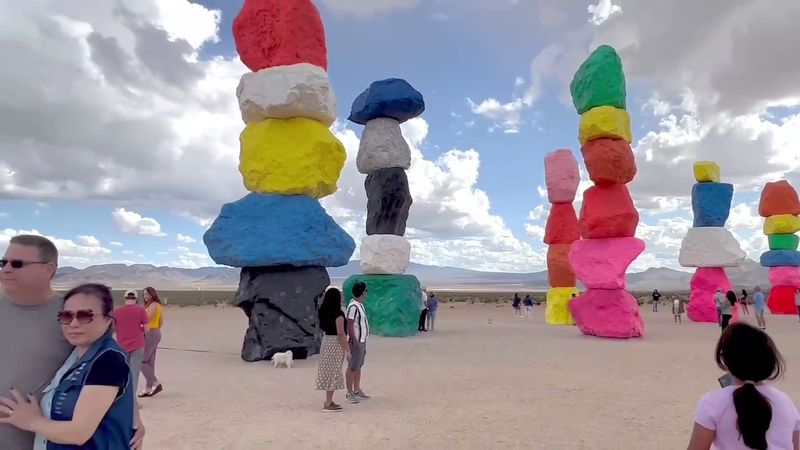
Photographs can make Seven Magic Mountains look surprisingly manageable in size. Stand closer to the towers, though, and the proportions become much clearer.
Each one reaches roughly 30 to 35 feet high, making the installation far larger than a typical roadside sculpture.
That height changes the way you experience the artwork. You are not simply looking across at painted stones on the ground. Your eyes have to travel upward as the boulders rise in irregular stacks, with each large rock supporting another above it.
The open desert makes their scale even more interesting. There are few nearby structures competing for attention, so the towers become vertical markers against a broad horizontal landscape.
Mountain ranges frame the distance while the sculptures provide an immediate focal point.
Seven Magic Mountains is also visible across parts of the surrounding desert and from the nearby transportation corridor. That visibility was intentional.
Rondinone created the work as a site-specific installation, meaning the location is part of the artwork rather than simply a place chosen to display it.
You should give yourself time to move around the site rather than stopping at the first viewpoint. A small change in position can make one tower seem taller, bring several stacks together visually, or reveal more of the mountains behind them.
There Is More Planning Here Than The Playful Look Suggests
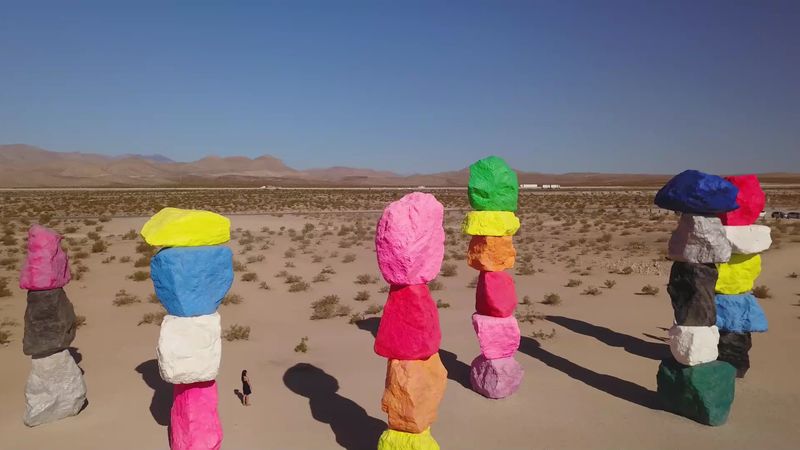
Seven Magic Mountains looks spontaneous, almost as if enormous rocks were painted and stacked simply for the fun of it. The actual project required far more planning.
Ugo Rondinone, an internationally known Swiss artist, developed the large-scale installation over several years before it opened to the public in 2016.
The locally sourced limestone boulders are stacked into seven individual formations, and each stone carries its own fluorescent color. Their irregular shapes keep the towers from looking manufactured even though their arrangement is carefully controlled.
That combination is central to the work. Rondinone placed something clearly human-made into a landscape shaped by geology, distance, and desert conditions. The rocks belong naturally to this part of the world, while their bright painted surfaces clearly do not.
You can find Seven Magic Mountains at S Las Vegas Blvd, Las Vegas, NV 89054. The official visitor directions place the installation about 10 miles south of the intersection of Las Vegas Boulevard and St. Rose Parkway, near Jean Dry Lake and Interstate 15.
The location matters as much as the address. You leave the denser developed landscape behind, follow the road farther into open country, and suddenly these enormous colored forms appear against the Mojave.
That approach helps explain why the installation can feel so unexpected even when you already know what you are looking for.
Desert Light Keeps Changing The View
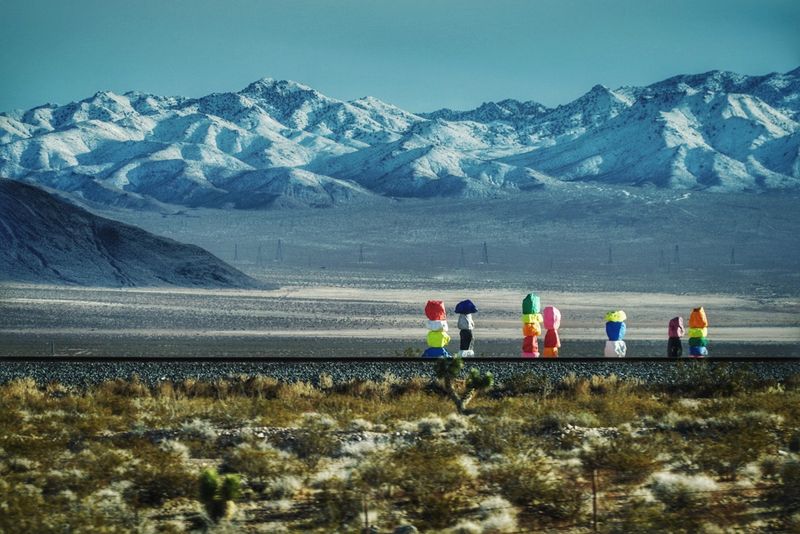
Light can change Seven Magic Mountains more than you might expect. Fluorescent paint already gives the boulders a strong visual presence, but the surrounding Mojave landscape shifts throughout the day as shadows move and the sky changes overhead.
Early light can give you longer shadows and softer conditions around the sculptures. Later in the day, the lowering sun can create another dramatic contrast between the bright towers and the desert floor.
The official site identifies sunrise to sunset as the preferred visiting hours, which also makes sense for appreciating an outdoor installation built around its landscape.
You do not need perfect conditions for the artwork to look striking. Strong midday light can emphasize the intensity of the fluorescent colors, while cloud cover can make the stones stand out against a softer sky.
Each condition gives you a slightly different version of the same installation.
I think this is one reason the site works especially well as a travel stop. You are not entering a room where the lighting and viewing position have already been chosen for you. You decide where to stand and how much surrounding Nevada landscape you want to include.
Spend a few minutes changing your angle. A photograph aimed tightly at one tower tells a different story than a wide frame showing all seven against the mountains.
The Open Landscape Is Part Of The Artwork
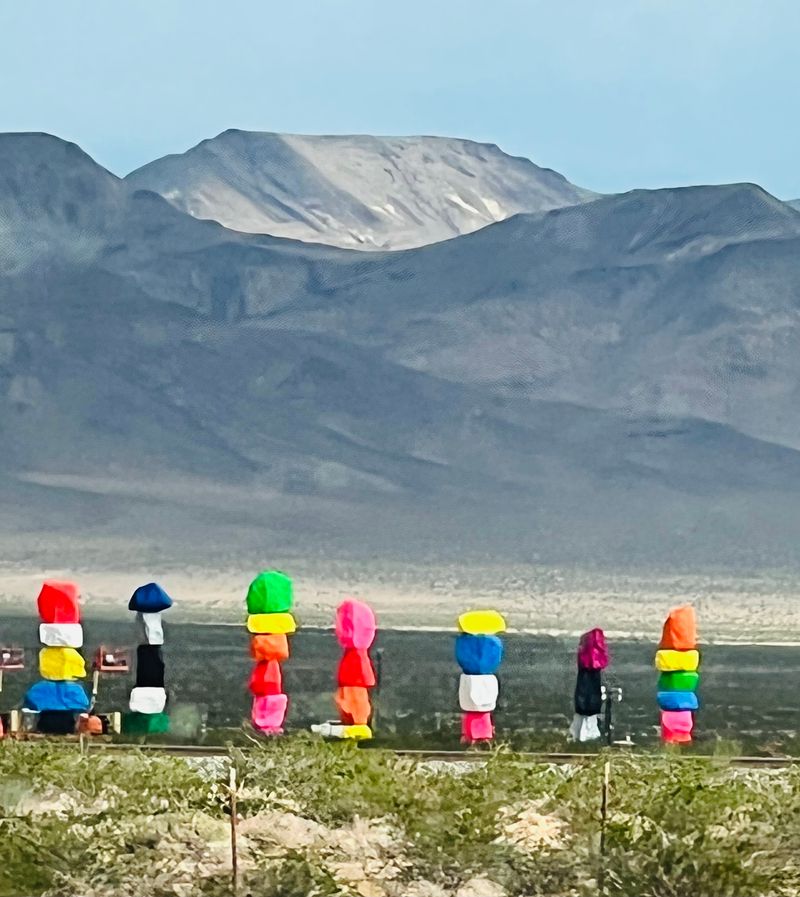
It would be easy to focus entirely on the painted boulders, but Seven Magic Mountains makes much more sense when you pay attention to everything surrounding them.
The installation stands within the Ivanpah Valley, with several mountain ranges nearby and Jean Dry Lake a short distance away. Interstate 15 and Las Vegas Boulevard also place human movement close to the site.
Rondinone deliberately chose a setting that could represent both natural landscape and human presence. That idea becomes easy to understand once you are there. Look in one direction and you see rugged desert terrain.
Shift your attention and you become aware of roads, vehicles, signs, and a major travel corridor.
Seven Magic Mountains stands between those two worlds. The boulders come directly from natural materials, but their fluorescent surfaces are unmistakably artificial.
You do not have to analyze the artistic theory to enjoy that contrast. Simply leaving some empty desert in your view helps you understand why the location works.
A tower photographed closely can look like an abstract sculpture almost anywhere. Pull back, and the relationship between the artwork and southern Nevada becomes much clearer.
That sense of space also keeps the installation visually interesting. The desert is not just scenery behind the art. It gives the towers their scale, their isolation, and much of their unusual character.
A Little Planning Makes The Stop Easier
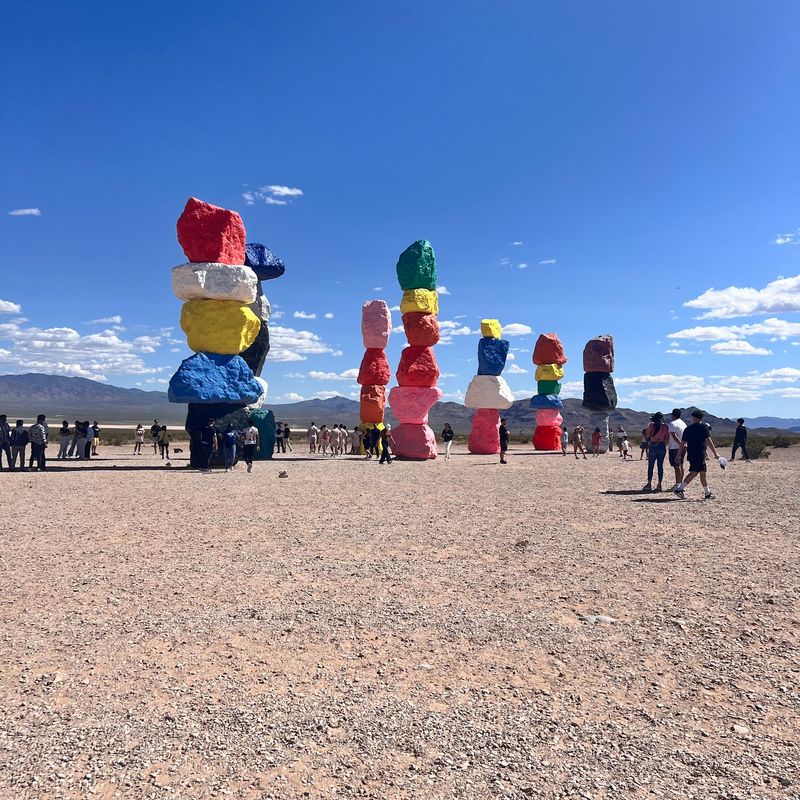
Seven Magic Mountains is straightforward to visit, but the desert setting means you should prepare differently than you might for an indoor attraction.
Visitors should use the onsite parking lot rather than parking along the road. From there, an unpaved path follows a natural wash between the paved parking area and the sculptures.
Water matters here. Southern Nevada can become extremely hot and dry, particularly during warmer months, and the site does not provide the amenities you might expect at a developed visitor attraction.
There are no restroom facilities at the artwork itself, with the nearest facilities several miles away.
You should also wear sun protection and shoes that make sense for an unpaved desert surface. Checking the weather before leaving is useful because seasonal storms can affect desert conditions quickly.
Seven Magic Mountains occupies public land, so respecting the surroundings is part of visiting. The official guidance asks guests to leave no trace, remain aware of desert wildlife, and avoid climbing or disturbing the sculptures.
Snakes and sensitive desert species can be present in the surrounding landscape. A little preparation lets you spend your attention on the artwork instead of thinking about what you forgot to bring.
Your Best Photo May Not Be The Obvious One
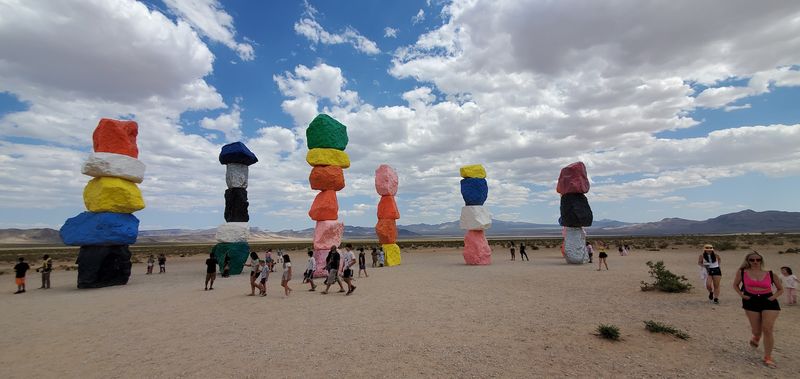
Seven Magic Mountains makes photography seem simple. Point the camera toward the colored towers, include some desert, and you already have a striking image. Spend more time moving around, however, and you begin to see how many compositions the installation offers.
You can use one tower as your main subject and let the others appear farther behind it. Another angle can line several sculptures together so their different colors overlap.
A wider view lets you include more desert and mountains, which gives the viewer a better sense of just how unusual these bright forms look in the Mojave.
Distance also changes everything. Step farther away and the seven towers begin to feel like a single installation. Move closer and individual boulders, paint colors, textures, and irregular shapes become much more noticeable.
You should be patient if other visitors are moving through your frame. The site is open to the public, and people naturally stop near the sculptures for photographs. Instead of rushing, explore another angle and return to the view you wanted a little later.
Seven Magic Mountains permits visitor photography for private, noncommercial use, but the official visitor rules place restrictions on professional equipment and commercial use. That still leaves plenty of room to experiment with perspective.
The landscape provides most of the background work for you.
Why This Strange Desert Stop Stays With You
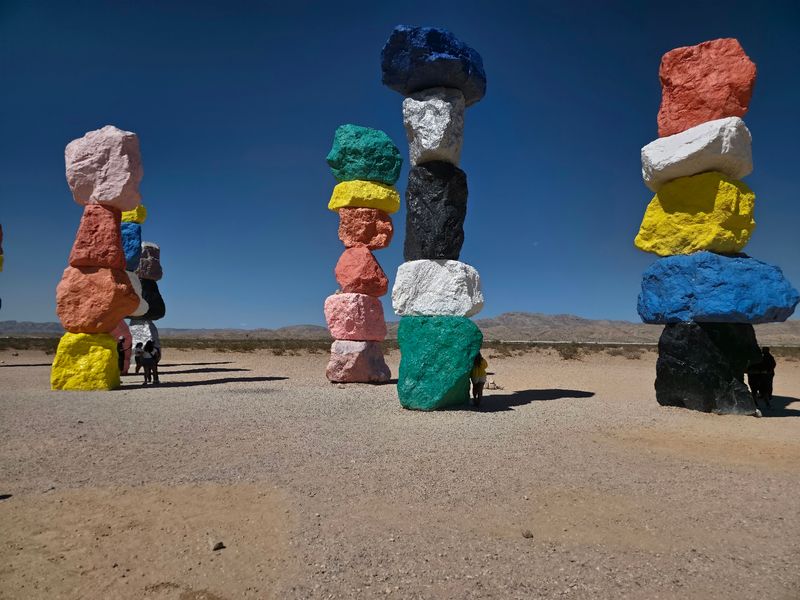
The strongest thing about Seven Magic Mountains may be how quickly it makes sense visually and how slowly the details settle in afterward.
At first, you see color and scale. Seven giant stacks of boulders rise above an otherwise restrained landscape, and the contrast is almost impossible to miss.
Stay longer and you start noticing the rough limestone, the gaps between the stones, the mountains beyond them, and the way each tower changes depending on where you stand.
I like that the installation does not demand one specific reaction. You can treat it as an unusual Nevada road-trip stop, a photography destination, a major work of public art, or simply an excuse to spend some time looking closely at the Mojave landscape.
Seven Magic Mountains succeeds because all of those experiences can happen in the same place. It is accessible enough to understand immediately but unusual enough to hold your attention once the first surprise wears off.
You may arrive because brightly painted boulders towering over the desert sound too strange to pass up. You leave with a clearer sense of why the setting matters just as much as the sculptures.
That is what makes this installation worth remembering. It does not try to disappear into the landscape. It changes the way you look at the landscape around it.