
Every Log Cabin Stands Open At This Rebuilt 1830s Village Near Springfield, Illinois
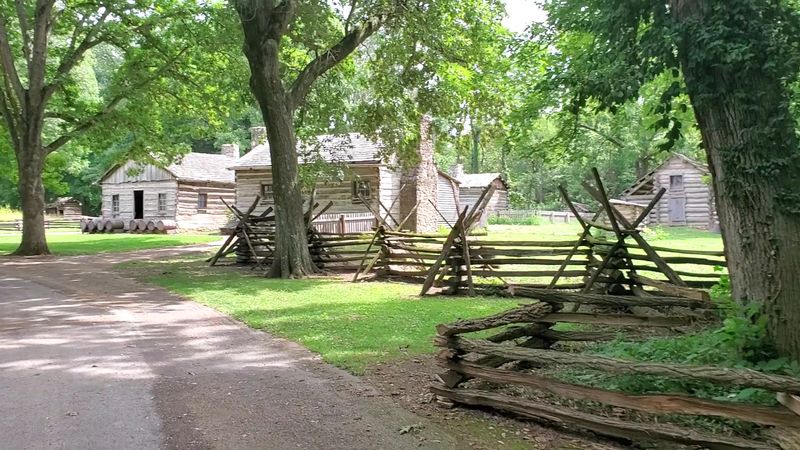
Some road trips through central Illinois turn into a blur of cornfields and grain silos, and then a gravel turnoff changes the whole afternoon. Twenty-three log buildings sit along a dirt path here, doors propped open, hearths swept, wooden floors creaking underfoot.
A future president spent six formative years in this exact spot, working odd jobs and reading borrowed books by firelight. Walking in costs nothing, which somehow makes the whole experience feel even more generous.
A Frontier Village Rebuilt On Its Own Foundations
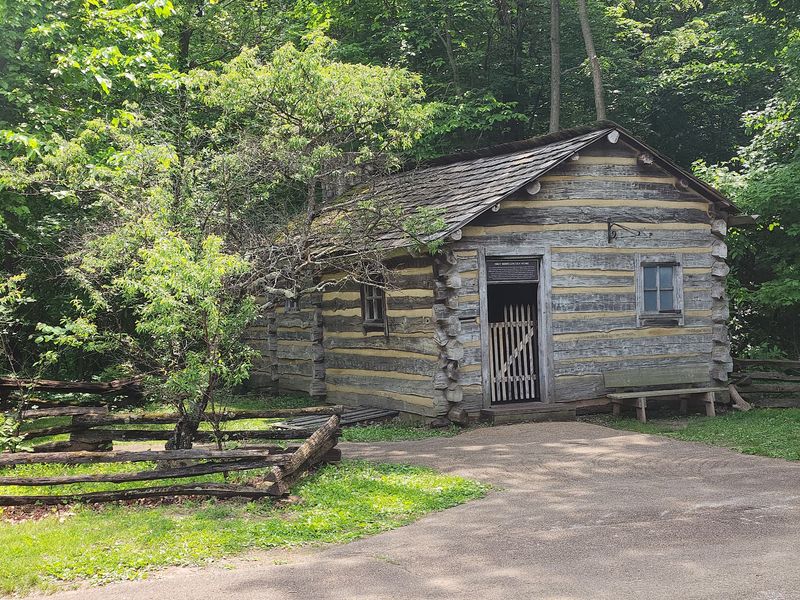
About twenty miles northwest of Springfield, just outside the small town of Petersburg, a whole 1830s settlement waits at the end of History Lane. The address reads 15588 History Ln, and the name on the sign is Lincoln’s New Salem State Historic Site.
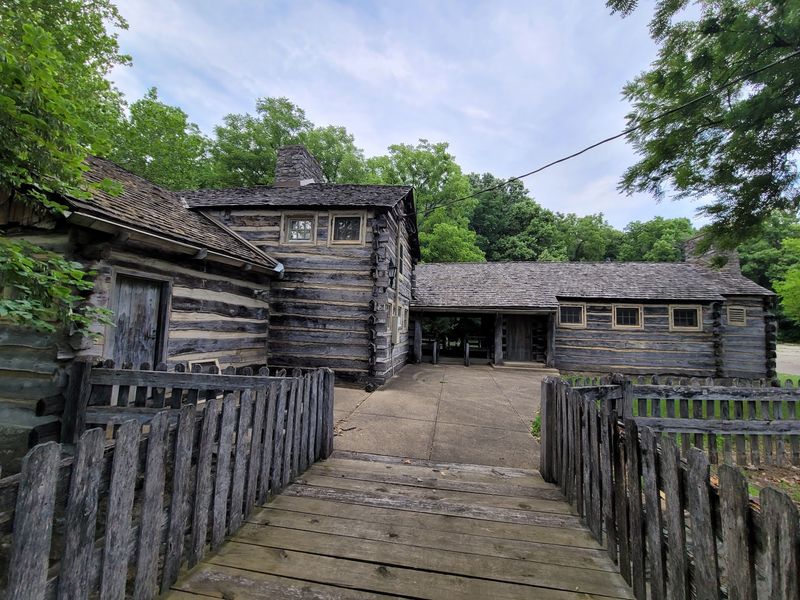
What you find is not a museum with artifacts behind glass. It is a village of twenty-three historically furnished buildings, arranged along the same street pattern the original town followed nearly two centuries ago.
Homes, general stores, tradesmen’s shops, a tavern, a school, a wool carding mill, and a saw- and gristmill all stand in place. Most of them are open, meaning you step across the threshold and stand inside rather than peering through a window.
The whole property covers close to 700 acres of woods and rolling ground above the Sangamon River. Google Maps lists it simply as a historical landmark, which undersells things considerably.
Abraham Lincoln lived here from 1831 to 1837, between his teenage years and his move to Springfield. Those six years shaped nearly everything that followed, and this is the ground where they happened.
The Town That Vanished, Then Came Back
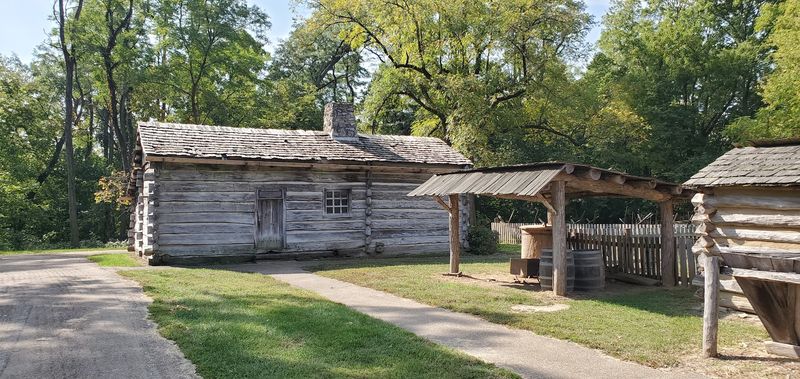
New Salem had a short, bright life. Founded in 1829, it grew fast as a river-trade stop, then faded just as quickly once commerce moved elsewhere.
By 1840, barely a decade after its founding, the place stood empty.
For most abandoned settlements, that would be the end. Instead, the site drew attention precisely because of who had lived there, and rebuilding began in earnest during the 1930s and 1940s.
The Civilian Conservation Corps handled most of the construction work. Their crews did not guess at placement either.
Archaeological digs uncovered original cellar holes and foundations, historical documents filled in ownership details, and surviving former residents supplied memories of what stood where.
One structure escaped the wrecking of time entirely. The Onstot Cooper Shop is the only original building on site, moved back onto what researchers believe was its first foundation.
Visitors often remark on how the buildings sit on documented, excavated ground rather than a convenient clearing. That distinction matters.
The path you walk follows the street a young store clerk walked between jobs, arguments, and long evenings with a law book.
Doors You Can Actually Walk Through
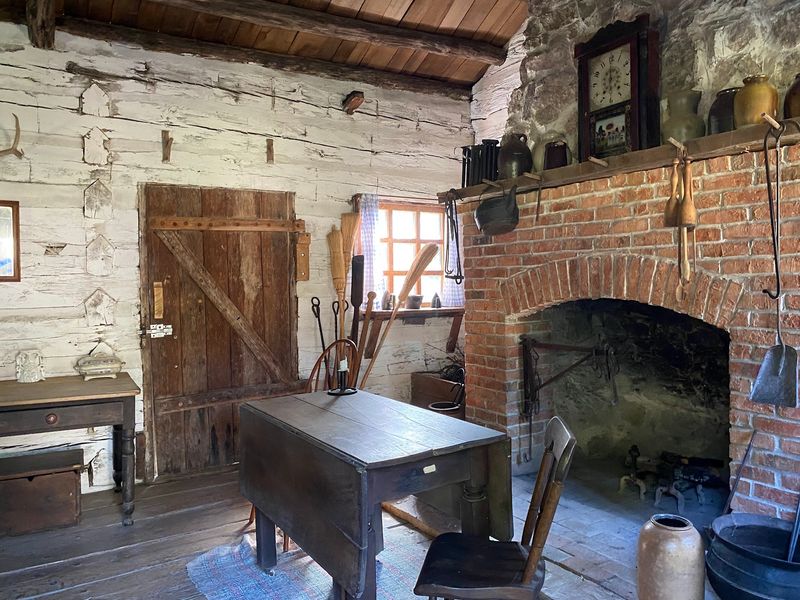
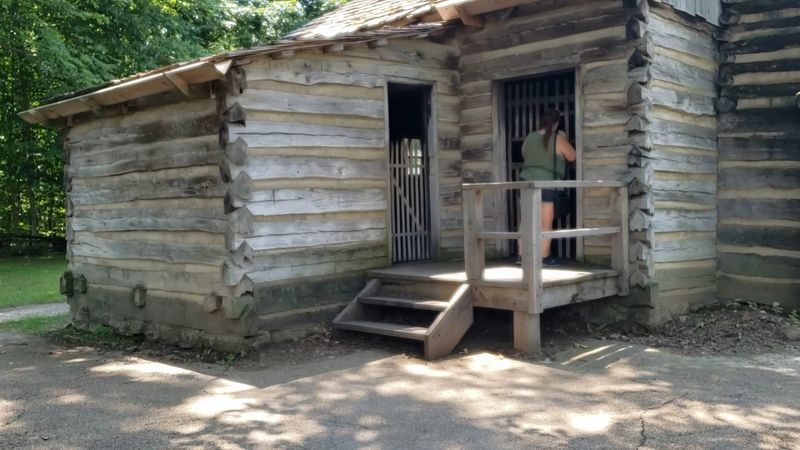
Here is the detail that surprises first-timers most: the cabins are not roped off. You push open a plank door, step onto the floorboards, and stand in a furnished 1830s room.
Each building comes stocked with period furniture and household goods appropriate to whoever lived or worked there. Beds, cooking pots, tools, shelves of goods, and worn wooden counters fill the spaces rather than empty display floors.
Plaques outside explain who occupied each structure and what they did for a living, so the village reads like a census come to life. A cooper here, a shopkeeper there, a schoolmaster down the lane.
Visitors frequently mention the sensory side of it, the creak underfoot and the faint smell of old timber and cold ash. Signs alone would not manage that.
The Lincoln-Berry Store carries particular weight, since it is tied to the failed shopkeeping venture that left Lincoln in debt for years. Reviewers often point out that a good portion of the original store material survives in the reconstruction, which lends the room an unusual hush.
Interpreters In Homespun And Bonnets
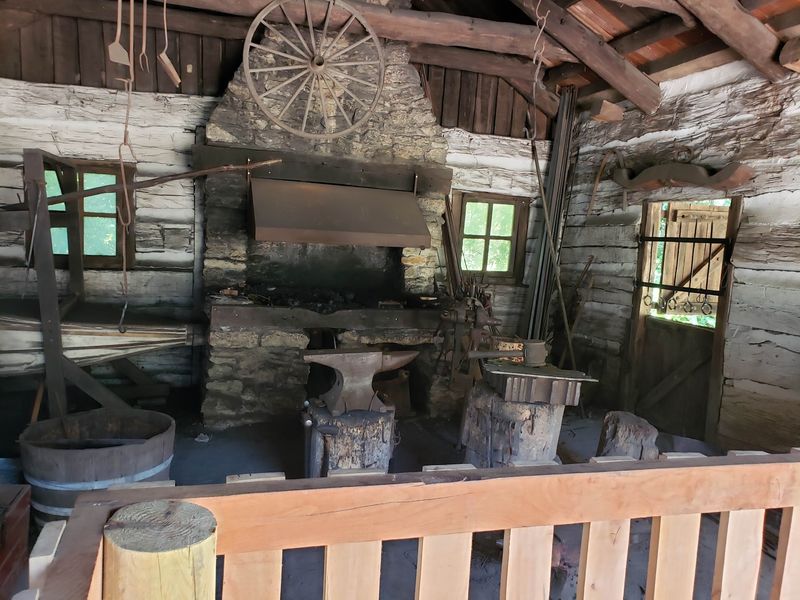
From roughly May through October, the village fills with people in period attire. Staff and volunteer interpreters take up posts in the cabins and shops, demonstrating nineteenth-century daily life and talking freely about Lincoln’s years here.
A blacksmith works the forge, and the ring of hammer on iron carries down the dirt street. Elsewhere someone dyes yarn in a simmering pot, explaining where the colors came from before store-bought dye existed.
Repeat visitors say the difference between a staffed day and a quiet one is enormous. On busy weekends, musicians play period tunes, and the Sangamon County Militia has turned up for firing demonstrations that draw a crowd.
Families with children tend to get the most out of these encounters, especially at the interactive kids’ area where youngsters can try on period-style clothing.
Guests consistently describe the interpreters as knowledgeable, patient with questions, and genuinely enthusiastic about the material. Several mention wishing they had lingered longer at a single cabin instead of hurrying to the next one.
Special event weekends get posted on the site’s website ahead of time.
Mills, Shops, And The Trades That Ran A Town
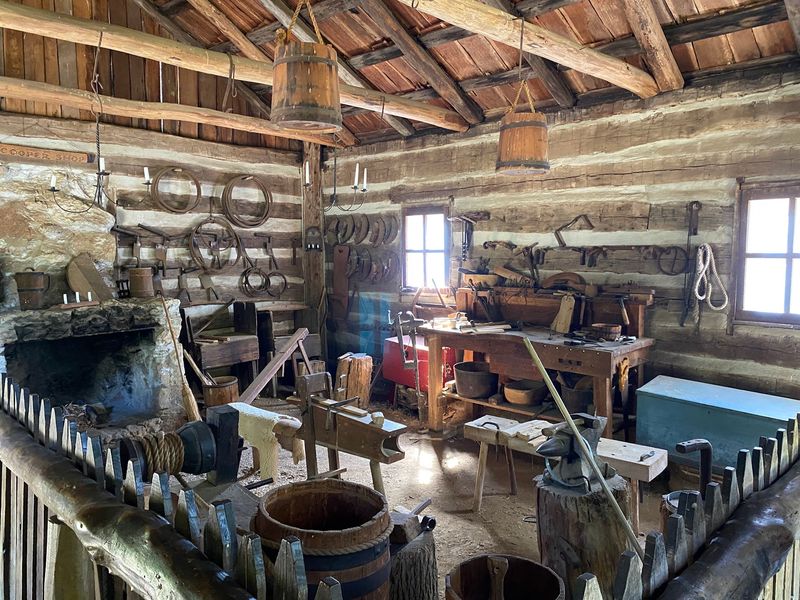
Trades built New Salem, and the village layout makes that plain. A saw- and gristmill sat by the river, turning logs into lumber and grain into flour, while a wool carding mill processed fleece into workable fiber.
The cooper shop turned out barrels, the essential shipping container of the era. Blacksmithing kept horses shod and tools mended.
General stores handled everything else.
Rutledge Tavern served travelers passing through, and the schoolhouse handled the town’s children in whatever fashion frontier education allowed. Seeing all of it clustered within a short walk gives you a compact lesson in how a river settlement actually functioned.
Something visitors find delightful: the village still operates in a small way. Items made on site by craftspeople can be purchased, and certain services are available for a fee, which blurs the line between exhibit and working town.
Fun bit of trivia worth carrying with you, the cooper shop is the one building that never left. Everything around it was rebuilt from the ground up, but those particular walls have stood since the town’s first years.
Visitor Center, Film, And The Rail Splitter Cafe
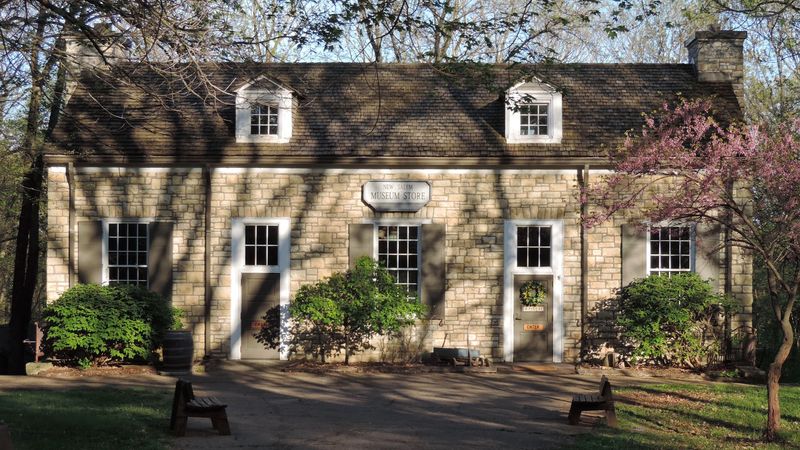
Start at the visitor center if you can, because the orientation makes the walk far richer. A roughly seventeen-minute film plays in the theater, laying out how a rangy young man from Kentucky ended up clerking in this particular village.
Alongside the theater sits a museum exhibit covering Lincoln’s New Salem years, plus a gift shop. The building is air-conditioned, with restrooms and a drinking fountain, and there are additional restrooms roughly halfway along the cabin route.
Right next door, the Rail Splitter eatery handles lunch. Guests report the food is genuinely good, which is not always the case at historic sites, and it saves you a drive back into town on an empty stomach.
Worth checking hours before you count on it, since some visitors have arrived to find the visitor center closed while the village itself remained walkable.
Picnic tables and pavilions scattered around the grounds give you a backup plan. Several regulars recommend packing water and snacks regardless, particularly in summer when the walk gets warm and shade comes and goes.
Trails, Woods, And A Shaded Campground
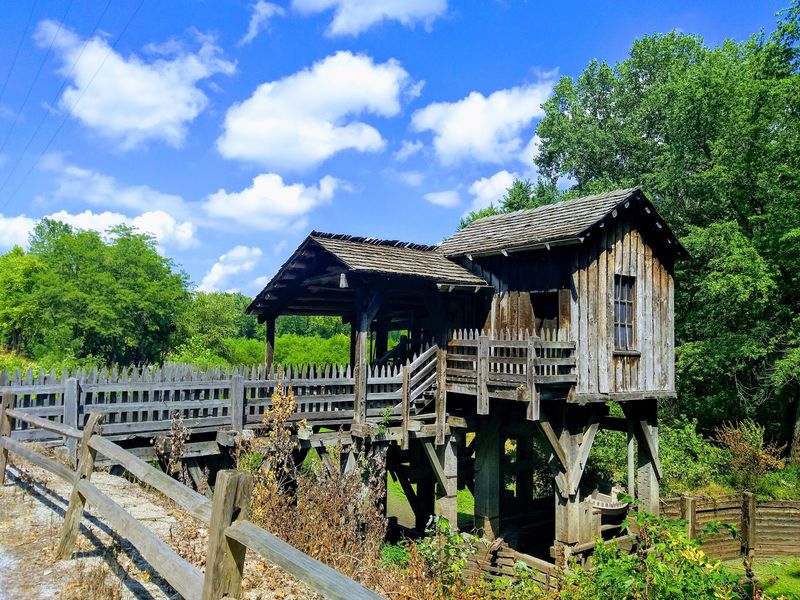
Beyond the cabins, roughly 700 acres of Illinois countryside spread out in every direction. Seven miles of hiking trails wind through the woods, which turn genuinely spectacular in October when the oaks and maples change color.
A boat ramp provides river access, and an outdoor amphitheater hosts performances during the season. Picnic areas dot the grounds for anyone who wants to make a full afternoon of it.
The campground sits just around the corner from the parking area, and campers describe the sites as pleasantly shaded. Combining a night there with a morning in the village works nicely for travelers heading toward Springfield or beyond.
Parking is free and roomy enough for RVs, which matters more than you would think on a road trip. Visitors have brought strollers and dogs along without trouble.
Geocachers have flagged the property as a good hunting ground too. One guest noted spending a couple of hours simply enjoying the fall foliage and reading plaques, treating the history as a bonus rather than the whole point.
Hours, Cost, And Planning Your Walk
Admission is free. A suggested donation of about four dollars per person is welcome, with donation boxes on site and an online option, but nothing gates the entrance.
Doors open at 9 AM and close at 5 PM Tuesday through Saturday. The site is closed Sundays and Mondays, so build your itinerary accordingly.
The phone line is 217-632-4000 for questions about special weekends.
Plan on two to four hours depending on how thoroughly you read plaques and chat with interpreters. Several guests suggest two to two and a half hours for a relaxed pass through on the way to Springfield.
Total walking runs somewhere between one and one and a half miles on mostly flat ground. Three buildings, the Onstot Cooper Shop, the Lincoln-Berry Store, and Rutledge Tavern, are set up for wheelchair access.
Dress for the weather, since almost everything happens outdoors. Summer visitors strongly recommend bug spray, and a rainy morning can leave you nearly alone on the street, which some travelers actually prefer.
Why The Detour Earns Its Keep
Rated 4.7 stars across more than 1,600 reviews, this place clearly lands with people, and the reasons are not complicated. Free admission, open doors, and enough ground to fill a genuine afternoon add up quickly.
History buffs get documented foundations and a mostly original store. Families get costumed storytellers and a hands-on kids’ area.
Anyone just wanting a quiet walk gets seven miles of trails and a peaceful street lined with timber.
The candlelight walk comes up often among returning guests, as do the militia demonstrations and the yarn dyeing. Checking the events calendar before you go is smart if you want the village at its liveliest.
What stays with most visitors, though, is smaller than any single feature. It is standing in a cabin doorway on flat Illinois ground, realizing that a young man once walked this same lane with no idea what was coming.
Twenty miles off the Springfield tourist circuit, with no ticket booth and no crowds on a weekday morning. Few historic sites give away that much for so little.