
This Illinois Arboretum Hides A 4-Acre Children’s Garden Full Of Tunnels And Waterfalls

Somewhere in northern Illinois, past a stretch of highway that gives away nothing, there is a 1,700-acre tree collection that most people assume is just a quiet place for a walk. Tucked inside it sits four acres built entirely for kids, where streams spill over rocks, tunnels burrow under hillsides, and giant acorns are made for climbing.
Families who wander in expecting a polite garden stroll usually end up soaked, laughing, and staying three hours longer than planned. It is the kind of place that turns a simple day outdoors into something children talk about for weeks.
Where The Trees Take Over In Lisle

Just off IL-53 in Lisle, Illinois, roughly 25 miles west of downtown Chicago, the landscape suddenly shifts from suburban traffic into 1,700 acres of woodland, prairie, wetland, and lake. The address is 4100 IL-53, and the sign at the entrance says arboretum, which undersells things considerably.
Founded as a living collection of trees from around the world, the grounds function as part museum, part nature preserve, and part playground. Paved scenic drives loop for nine miles through the property, and more than 16 miles of hiking trails branch off from the parking areas along the way.
Visitors often arrive assuming they will need an hour or two. Many mention discovering, somewhere around hour three, that they have only covered a fraction of the place.
The tree collections are the backbone, with species grouped by geography and family so that a short walk can carry you from Illinois oak savanna to Asian maples. Sculpture installations rotate through the grounds seasonally, and a hedge maze sits waiting near the east side.
Somewhere in all of that, four acres are set aside entirely for children.
A Living Museum Built From Seeds And Ambition

Trees do not grow on a schedule that suits human patience, which makes any arboretum an act of long-range optimism. What visitors walk through today reflects more than a century of planting decisions, with specimens gathered from across the northern hemisphere and arranged for study as much as beauty.
One guest described the feeling as walking through the manicured landscape of a turn-of-the-century mansion set beside a dense forest, and that reading is close to the mark. The estate character lingers, especially around the Thornhill area, where an education center now hosts classes on everything from bonsai to mobility and movement.
Research and conservation still drive the institution. Signage throughout the collections explains what you are looking at, which is why so many people describe their visits as accidentally educational.
The scale creates an interesting side effect. Because the property holds woodlands, wetlands, prairies, lakes, and meadows all at once, the same trail can feel like three different places in twenty minutes.
Understanding that context makes the children’s garden land differently. It was not tacked on as an afterthought, but designed to introduce the next generation to everything surrounding it.
Four Acres Designed For Small Explorers
Four acres sounds modest against 1,700, until you try to walk a seven-year-old through all of it. The Children’s Garden is laid out as a nature playground rather than a display garden, meaning nearly everything in it is meant to be touched, climbed, splashed, or crawled through.
Ten smaller themed gardens fill the space, each one nudging kids toward a different kind of discovery. Some lean into water, others into climbing, hiding, or simply noticing how a leaf feels between your fingers.
The design intent runs deeper than entertainment. Every element is built to encourage imagination alongside a genuine respect for the natural world, which is a tall order for a play space and largely pulled off here.
Age-wise, the sweet spot falls between roughly 2 and 10 years old. Toddlers gravitate toward the shallow streams and low tunnels, while older kids chase the taller climbing features and rope crossings.
Multiple visitors single out the Children’s Garden as their top recommendation on the entire property, often paired with the maze. Parents who came for the trees frequently admit their children never wanted to leave this corner.
Backyard Discovery Gardens: Where The Small Stuff Happens
Younger children tend to head left, into the Backyard Discovery Gardens, and for good reason. Scaled down and gently paced, the area works like a series of familiar backyards reimagined for curious hands.
Paths curve rather than run straight, which keeps small explorers moving from one pocket to the next without needing directions. Plantings sit at eye level for someone three feet tall, and textures vary deliberately from feathery to rough to rubbery.
Quiet nooks are built into the layout, tucked between shrubs where a child can duck away from the noise for a minute. Parents with sensory-sensitive kids often find these spots the most valuable feature in the whole garden.
Water shows up here too, though in mellower form than the woods next door. Shallow channels and splash areas let toddlers get their hands wet without anyone holding their breath.
The section connects to its wilder counterpart through a Central Plaza, which functions as the natural regrouping point when your family inevitably scatters. Benches, shade, and clear sightlines make it a sensible spot to park yourself while the kids orbit outward.
Adventure Woods And Its Climbable Chaos

Cross the plaza and the energy changes fast. Adventure Woods leans into scale and height, with giant sculpted tree roots doubling as slides and colossal acorns built for scrambling up.
Rope bridges stretch between platforms, swaying just enough to feel like an accomplishment. Treehouse-style lookouts rise into the canopy, giving kids a vantage point over the whole garden and a reason to shout down at whoever is waiting below.
Cave hideaways burrow into the landscape, cool and dim inside, which makes them wildly popular on hot July afternoons. Tunnels link several of these spaces, so a child can vanish at one end and pop out somewhere unexpected.
Shade is the underrated feature. Because the section sits under mature trees, the temperature drops noticeably compared to the open lawns, and that matters when Illinois summer decides to show off.
Older siblings who might roll their eyes at a garden usually find their footing here. The climbing challenges are real enough to hold attention from an eight or nine-year-old, while remaining safe enough that parents can sit down for a moment.
Streams, Dams, And A Misty Giant Watering Can
Water is the reason half the families here bring a change of clothes. Hidden streams thread through the garden, shallow and rocky, and children are actively encouraged to redirect them.
Loose stones and logs sit nearby so kids can build dams, bridges, and small waterfalls of their own making. Watching a group of strangers cooperate on a rock wall to hold back a stream is quietly one of the better shows on the property.
Splash pads add a more straightforward option for anyone who just wants to run through spraying water. Then there is the misty giant watering can, an oversized sculpture that releases a cooling fog and reliably draws a crowd of shrieking kids underneath it.
The engineering lesson happens without anyone announcing it. Move one rock, the water finds a new path, and suddenly a five-year-old is running experiments.
Practical note: shoes get soaked, sleeves get soaked, and hair gets soaked. Towels in the car are not a bad idea, and water shoes are an even better one during warm months.
The Maze Garden And Its Twelve-Foot Lookout
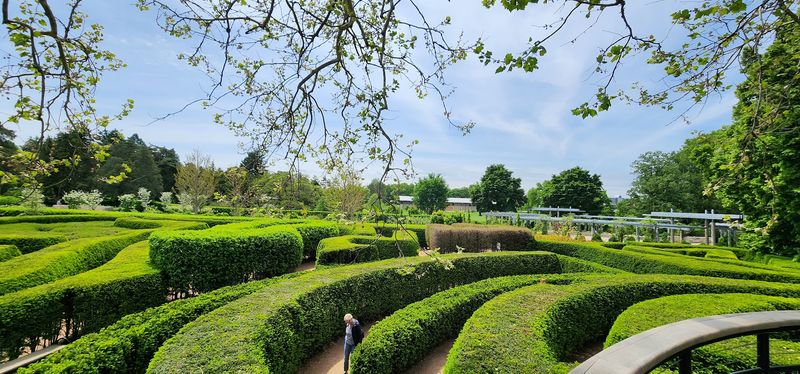
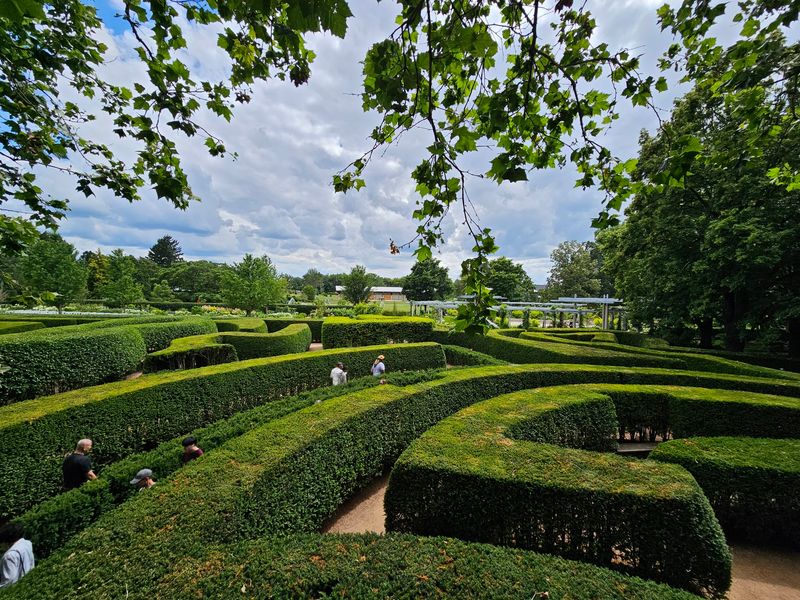
Not far from the children’s area sits a full acre of hedges arranged specifically to get you lost. The Maze Garden earns 17 separate mentions among visitor comments, which tells you people remember it.
A 12-foot lookout platform rises at the center, and reaching it is the whole point. From up there the pattern makes perfect sense, which is deeply satisfying and completely useless once you descend back into the corridors.
Adults tend to enjoy it as much as children, partly because the hedges are tall enough to remove any shortcuts. Groups split up, take wrong turns, and reconvene by shouting over the greenery.
Several families pair the maze with the Children’s Garden as their recommended combination, treating the two as a single afternoon. The proximity makes that easy, and the maze offers a nice change of pace after all that water play.
Miniature golf also operates on the grounds, giving families a third option when energy levels start dictating decisions. Between the three, you could fill a full day without ever setting foot on a hiking trail.
Sculptures, Trolls, And Whatever Arrives Next

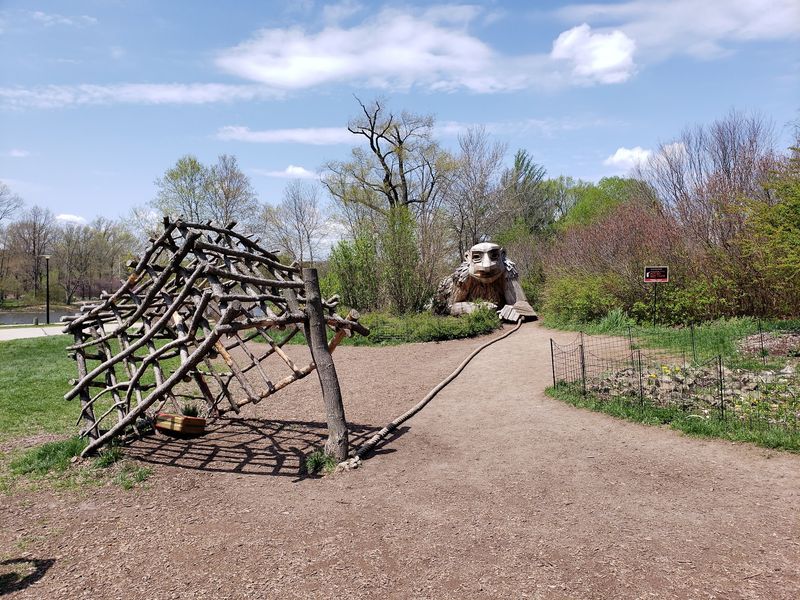
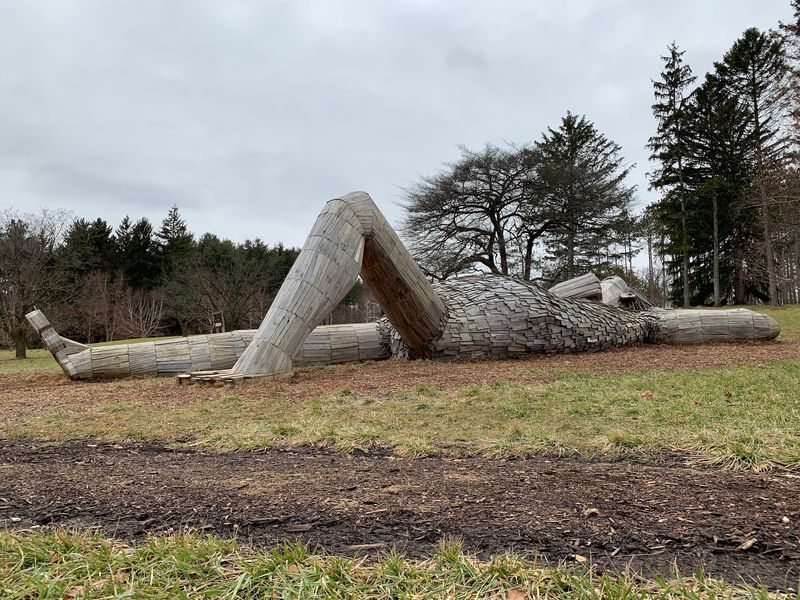
Ask regulars what keeps them renewing memberships and rotating art comes up constantly. Sculpture installations move through the grounds on a seasonal basis, with 300 mentions of sculptures across visitor comments and 215 specifically about trolls.
The troll exhibits generated something close to a scavenger hunt culture, with 41 people referencing a troll hunt by name. Oversized figures tucked among the trees turn a walk into a search, which works remarkably well on children who have declared themselves tired.
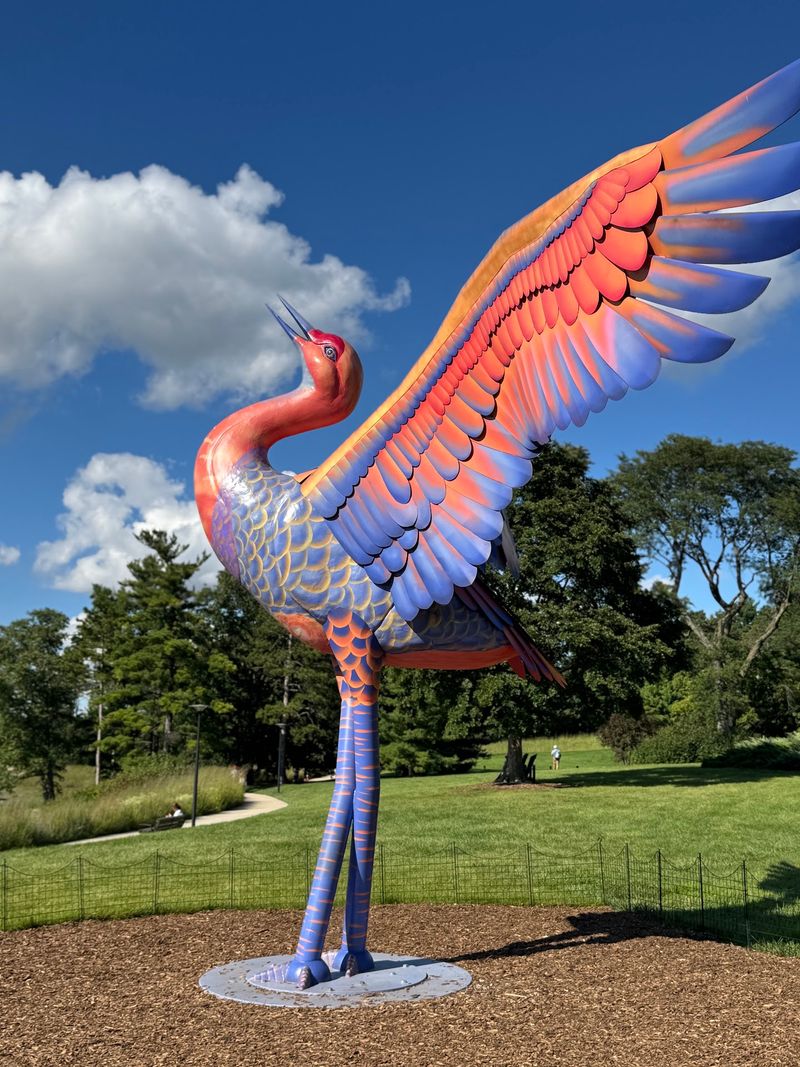
More recent installations have drawn similar enthusiasm, described by guests as vivid and unexpected. One visitor mentioned encountering creature sculptures on a rainy day and finding the whole experience improved by the weather and thin crowds.
Because the art changes, repeat visits do not feel repetitive. Longtime members say they enjoy tracking the different artists who have passed through over the years.
Photographers benefit most obviously. Placing large, whimsical figures inside mature tree collections creates the kind of frame that fills up phone storage fast, and most people report being able to get their shots without jostling for position.
Miles Of Trails Waiting Past The Playground
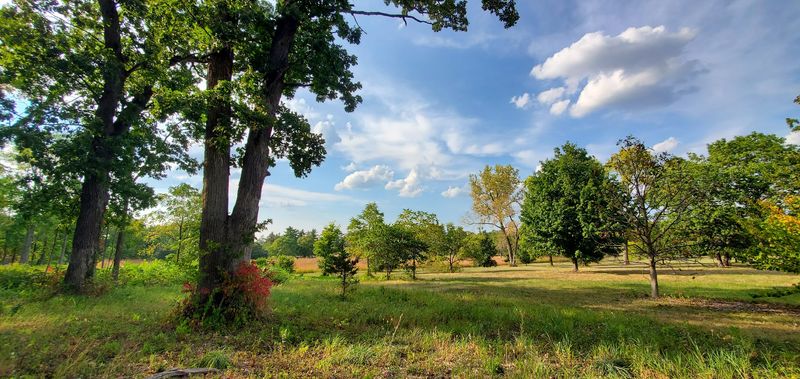
Sixteen-plus miles of hiking trails wrap around the family attractions, and they are the reason plenty of adults come without children at all. Paths run wide and groomed, well marked, and suited to both a serious morning hike and a ten-minute stroll.
One visitor described stopping at Big Rock, walking a wood-chipped path, and crossing paths with birds, butterflies, and squirrels the entire way. The story behind that particular boulder sitting in the middle of the forest is posted nearby and worth reading.
Benches appear at regular intervals, which several guests noted with genuine appreciation. Rest stops make the network usable for older visitors and anyone pacing themselves.
Trail conditions shift with the seasons. February walks get described as clear and pleasant with layered clothing, while midsummer trips through the more wooded temperate areas come with a firm and repeated warning about mosquitoes.
Insect repellent is the single most common piece of advice from visitors, especially after rain. Bring water too, since the trail network is long enough that people regularly underestimate the distance they have covered.
Accessibility, Strollers, And Rolling Comfortably

Paved paths run throughout the Children’s Garden, which makes a real difference for families managing strollers, wagons, or wheelchairs. Surfaces stay smooth, grades stay gentle, and the accessible design was clearly built in rather than retrofitted.
Visitors consistently describe the grounds as handicap accessible and wagon friendly. One guest who attended a wedding on the property noted the ease of entry, clear direction from staff, clean restrooms, and plenty of parking.
Not everything is universally navigable, though. At least one section of the wider trail system was flagged as difficult for strollers and wheelchairs, so checking a map before committing to a long loop is sensible.
Tactile and sensory-rich features are woven through the children’s area on purpose. Textured surfaces, varied plantings, and quiet retreat spaces give kids with different needs multiple ways to engage.
Restrooms get repeated praise for cleanliness, and parking receives the same. For a property this heavily visited, those details are not guaranteed, and families notice when they go right.
Staff friendliness comes up in 179 separate visitor mentions, which suggests asking for help is a reasonable first move.
Tram Tours, Cafe Stops, And Getting Your Bearings

Given the sheer size, first-time visitors are steered toward the Acorn Express tram tour almost universally. Rides run roughly an hour to an hour and a half, with departure times such as 12:30 and 2:30 in the afternoon, and one visitor reported paying around $10 per person.
Guides narrate the route, and on at least one trip the group voted for the extended explanation version. Even people who have lived nearby for two decades credit the tram with finally showing them where to begin.
Seats are hard plastic, so temper expectations on comfort. The trade-off is a full property overview without walking nine miles.
Food-wise, the Ginkgo restaurant serves salads, sandwiches, wraps, hot items, and drinks. Two sandwiches and two beverages ran about $30 for one family, and free water is available in the dining room if you know to look.
Driving your own car along the paved roads remains a solid strategy, particularly in extreme heat. Stop at parking areas, walk a bit, then retreat to air conditioning and continue the loop.
Hours, Admission, And Money-Saving Angles
Gates open at 9 AM every day of the week and close at 7 PM, which gives you a generous ten-hour window seven days running. The phone line is 630-968-0074 for anything the website does not answer.
Admission was reported by one visitor at $25 for adults and $19 for seniors, with small children and infants entering free. Buying tickets online in advance is repeatedly recommended, both for the discount and to skip potential lines.
Several money-saving routes exist. Active duty military members and their families reportedly enter free, and the free admission extends to everyone in the vehicle with valid military identification.
A visitor using a LINK card reported paying just $2 to enter. Another family used a library museum pass and described it as the best free outing they had experienced in a long while.
Membership covers repeat visits and, according to one guest’s research, includes free or discounted access to over 360 other arboreta and botanical gardens across North America. Special days, including designated dog admission days, require advance tickets, so check the calendar first.
Why One Afternoon Will Not Be Enough

Nearly every visitor arrives with a plan and leaves having abandoned it. A common refrain involves allotting three hours, then realizing halfway through that a full day was the correct answer.
With a 4.8-star average from more than 14,000 visitor ratings, the enthusiasm is not a fluke. People mention peaceful atmosphere, beautiful scenery, and staff who actually seem glad you came.
For families, the Children’s Garden and maze combination is the anchor, and the water features alone justify the drive on a warm day. For adults traveling without kids, the trail network, tree collections, and rotating sculptures fill the same amount of time just as easily.
Practical advice worth repeating: pack repellent, bring water, arrive early on weekends for calmer parking, and buy tickets ahead online.
Some people have been married on these grounds and return every autumn for anniversaries. Others come for classes, light displays in the colder months, or outdoor theater performances.
What makes the place stick is the range. Four acres of tunnels and waterfalls for the youngest visitors, and 1,700 acres of everything else for whoever brought them.