
The Illinois State Park Where Kids Squeeze Between Sandstone Walls, Then Split Family-Style Fried Chicken
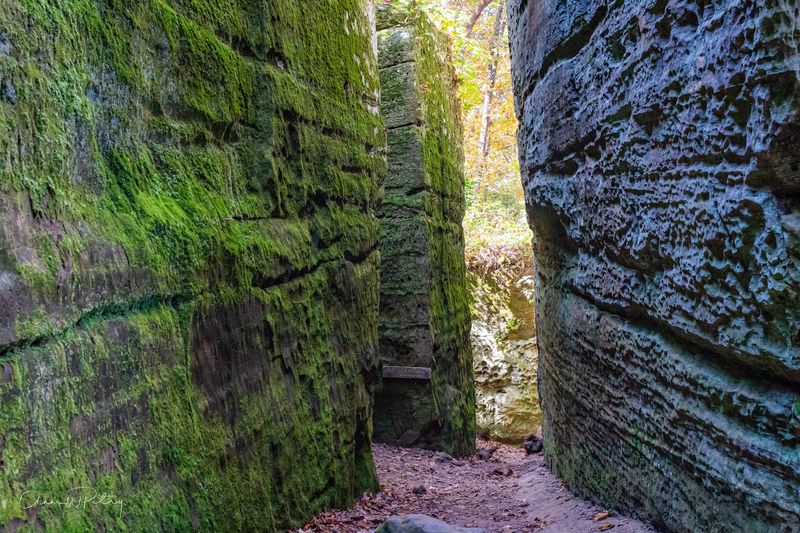
Somewhere in southern Illinois, the flat farmland gives up and the ground buckles into hills, curves, and rock walls tall enough to swallow a school bus. I went expecting a quick walk in the woods and instead spent an hour shuffling sideways through stone corridors with strangers laughing behind me.
Then came the part nobody warned me about: a stone-and-timber lodge at the top of the hill serving platters of fried chicken that keep coming until you wave the white flag. It is the rare place where the hike and the meal are equally the reason to go.
A Rock City Hiding Inside a National Forest
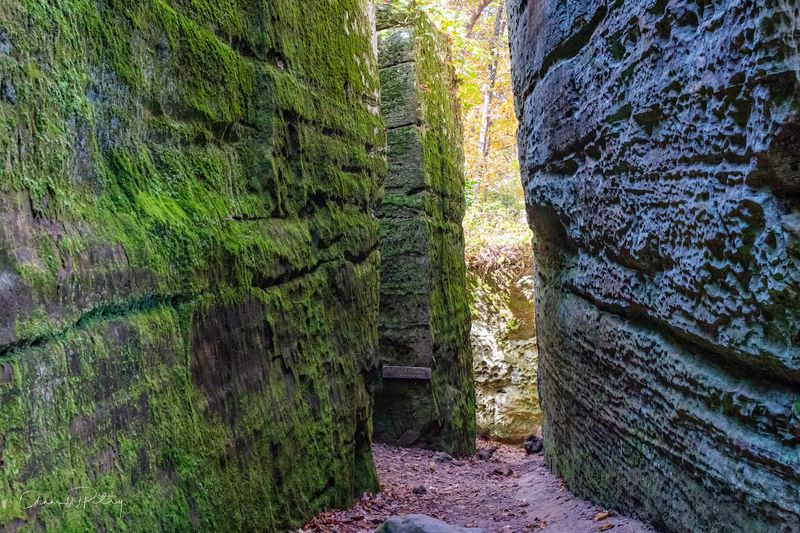
Roughly 4,000 acres of forest, bluffs, and nature preserve sit tucked into the Shawnee National Forest at 235 Giant City Road in Makanda, Illinois. Yes, that means a state park nested inside a national forest, a detail hikers love pointing out.
The name comes straight from the geology. Enormous blocks of sandstone stand in rows with gaps between them, and early visitors thought the arrangement looked like the towering buildings and winding streets of a mythical giant’s town.
Locals still call those corridors the Giant City Streets.
What makes the place feel so unexpected is the contrast with the rest of the state. Illinois has a reputation for corn rows and level horizons, and visitors regularly mention that walking here does not feel like Illinois at all, thanks to the hills, curves, and huge rock outcroppings.
Along with the rock, the park packs in a lodge, rental cabins, campgrounds, picnic shelters, fishing spots, horseback riding, and a visitor center. Holding a 4.8-star average from more than 3,000 Google reviews, it ranks among the most beloved outdoor destinations in the state.
Millions of Years of Water Doing the Carving
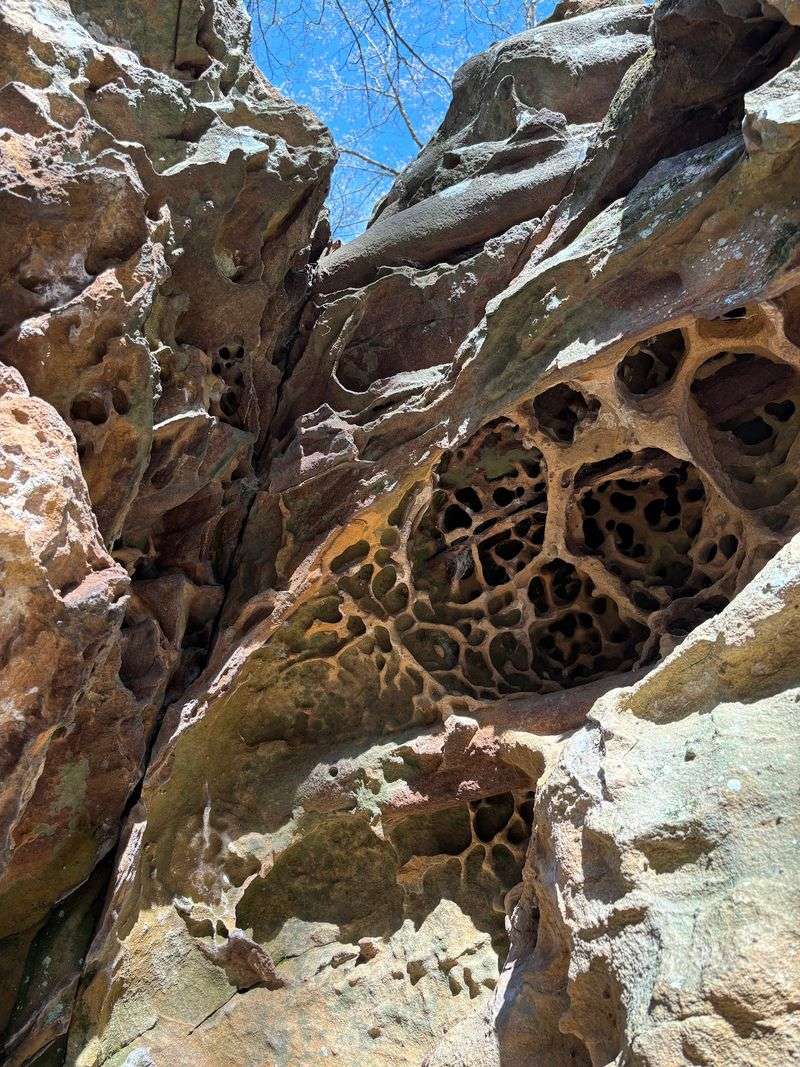
Long before anyone thought to name it, this corner of southern Illinois sat beneath ancient seas and river deltas. Sand piled up, hardened into stone, and then water spent millions of years pulling it apart along cracks and weak seams.
What remains are the bluffs, overhangs, and narrow passages that hikers wander through today. Stand beside one of the big blocks and you can trace horizontal lines in the rock face, each one a record of sediment settling in a place that no longer exists.
Geology buffs treat the one-mile loop like an open-air classroom. One visitor compared exploring it to a video game level where a hidden entrance can lead somewhere unexpected, which is a fair description of how the formations fit together.
Small streams thread through parts of the park, and mossy green coats the shaded stone in spring. Fern beds and wildflowers soften the base of the walls, while the canopy above keeps the corridors cool even in July.
The park itself was established in 1927, though the rock had a considerable head start on the paperwork.
Fat Man’s Squeeze and the One-Mile Labyrinth
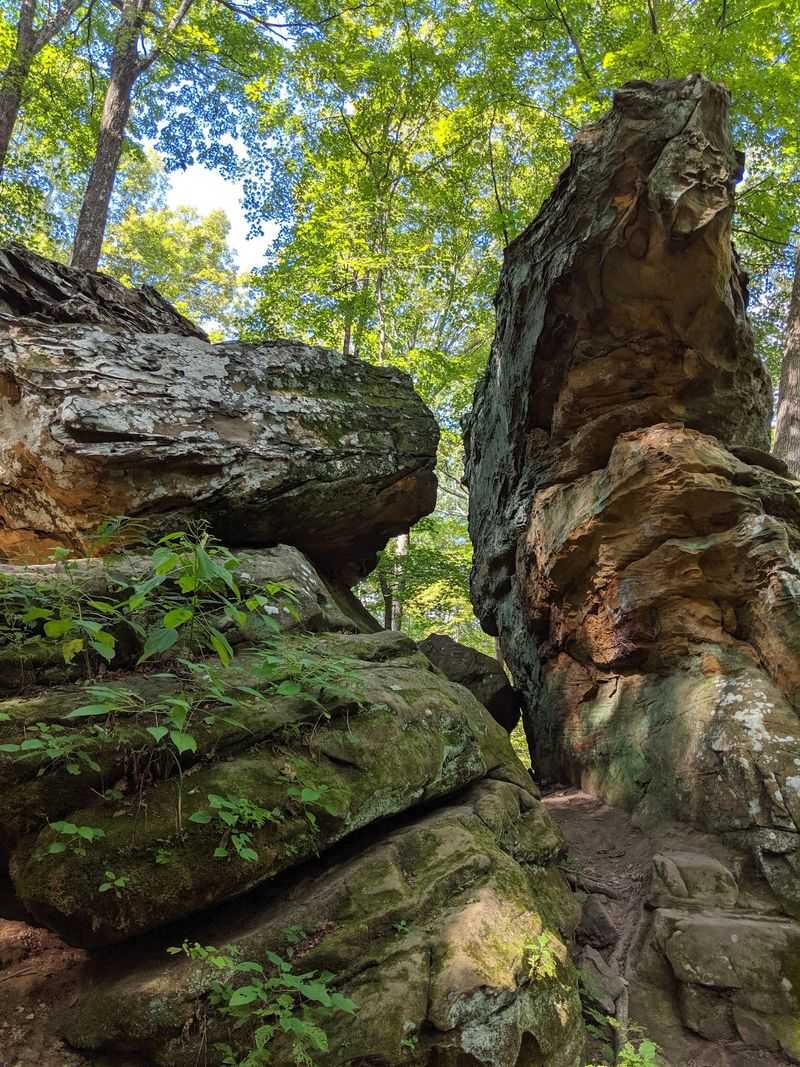
Kids tend to break into a run the moment they see the first gap. The Giant City Nature Trail is a one-mile loop that threads through a labyrinth of rock formations, with massive walls forming corridors and passageways that narrow as you go.
Some stretches get so tight that walking straight ahead stops working. Visitors describe turning sideways and shuffling through, backpacks held out in front, and one famous pinch point has earned the nickname Fat Man’s Squeeze.
Signs suggest an hour for the loop, and that is realistic if you keep moving. Plenty of people take longer because of the stairs, uneven footing, and the constant urge to stop and look up.
One hiker in her sixties, using a cane, reported finishing the loop in about an hour and forty minutes with plenty of breaks, letting faster groups pass while she took in the rock views at her own pace.
The trail is rugged in spots, so anyone unsteady on uneven ground should plan accordingly. Sturdy shoes matter more here than on most short loops.
Devil’s Standtable and the Climbing Crowd
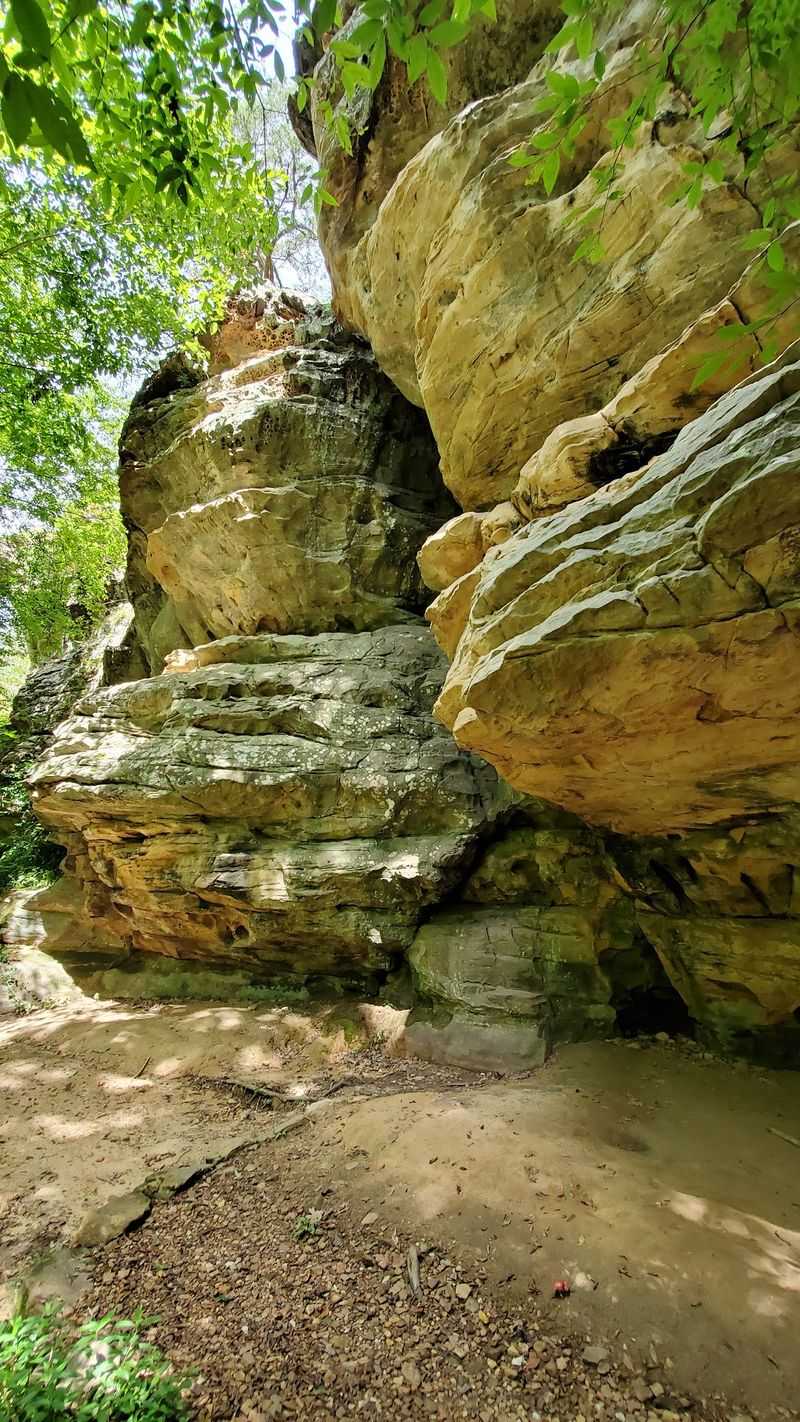
A single mushroom-shaped column of sandstone, balanced on a narrower base, is one of the park’s most photographed features. Devil’s Standtable sits along a short trail of its own and doubles as one of the designated rock climbing areas in the park.
Climbers show up with ropes and chalk bags, and rock climbing comes up often in visitor conversations about the park. Because climbing is restricted to specific areas, checking the rules at the visitor center before you gear up saves trouble.
Hikers who prefer their feet on dirt still get a payoff. Take Pin Oak Trail, follow the beaten path to the left, and you can end up standing on top of the formation looking down.
There is a well-known gap between the overlook and the standtable that some people jump across. Watching it is nerve-racking, and most visitors are entirely content to stay put and take the photo instead.
Copperheads are active in warm months, so watch where you place hands and feet around the ledges and rock piles.
The Water Tower Observation Deck
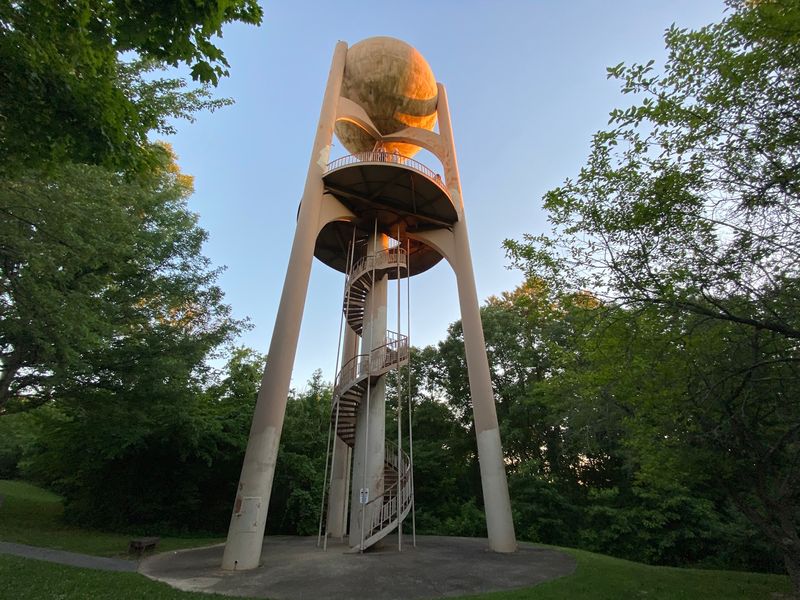
Perched on the highest point in the park, an observation tower gives you the only view that takes in the whole thing at once. Locals call it the water tower, and climbing the stairs to the deck is practically a rite of passage.
From the top, the Shawnee canopy rolls out in every direction. One visitor described the structure as looking like an art piece in its own right, with vast forest views as the bonus.
Autumn turns the panorama into a patchwork of orange and rust, but winter has its defenders too. With the leaves down, you can see the shape of the ridges and the rock formations that summer hides.
The tower comes up in visitor chatter more than almost any other single feature besides the lodge, which says something about the payoff versus the effort.
Plan on driving between attractions rather than linking everything on foot. Trailheads are spread across the park, each with its own parking area, and the tower sits well away from the nature trail loop.
A CCC-Built Lodge of Sandstone and White Oak
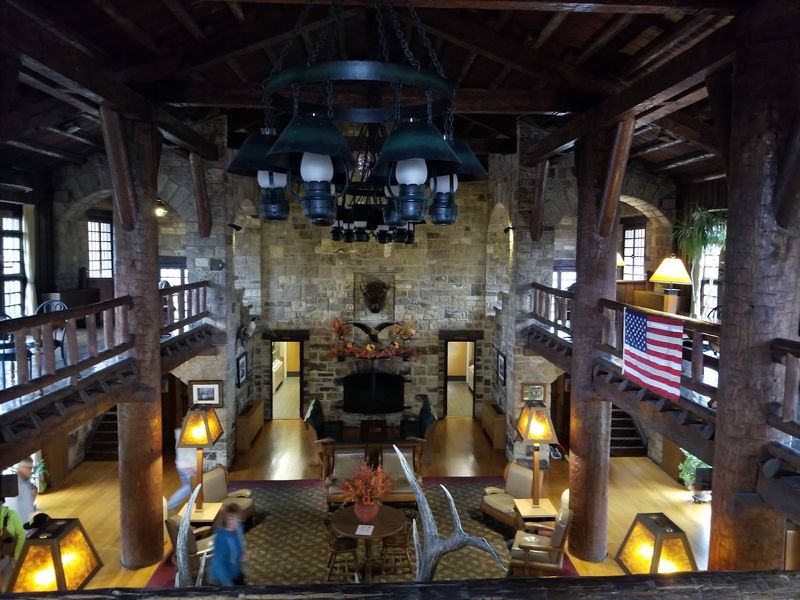
Drive up the hill and the Giant City Lodge appears like something from a different era, because it is. Crews from the Civilian Conservation Corps built it using local sandstone and white oak timber, and the craftsmanship still holds the room together.
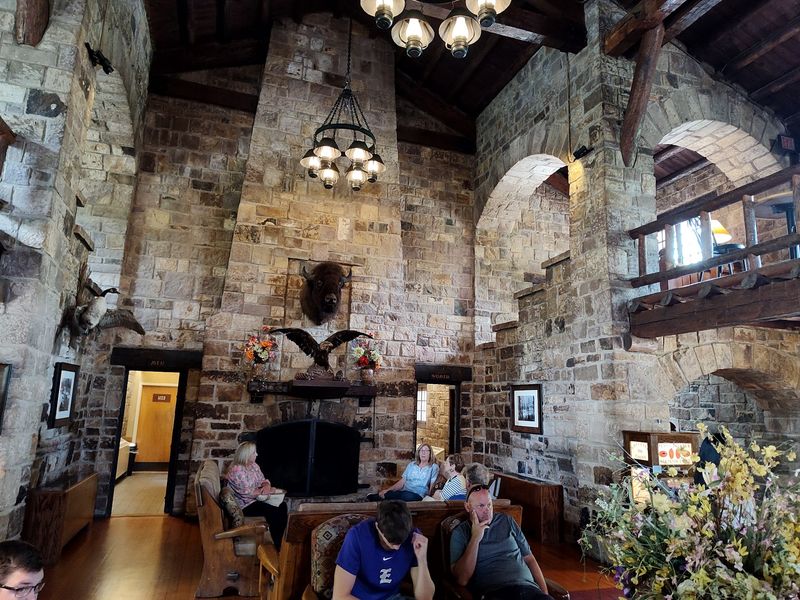
Inside the Great Room, a large stone fireplace anchors everything. Heavy beams cross overhead, the walls glow warm, and one visitor said the whole place reminded them of the ranch house from the television show Yellowstone.
History is part of the experience here. Displays and staff explain how the lodge came to be, so families waiting for a table have something to do besides watch the clock.
Rental cabins sit nearby, and guests describe them as a delight, with helpful, friendly staff running the operation. A few practical notes worth knowing: pets are not permitted in the cabins, and the units do not include microwaves or stoves.
Ice comes from the lodge itself. Parking near the cabins can be tight, and signage on the approach road could be clearer.
Platters That Keep Coming in the Bald Knob Dining Room
Order the all-you-can-eat family-style fried chicken dinner in the Bald Knob Dining Room and the table starts filling up fast. Golden brown chicken arrives with both light and dark pieces, and refills come without a fuss.
The sides do the heavy lifting alongside it: mashed potatoes, country milk gravy, scratch dumplings, homestyle green beans, buttered corn, creamy coleslaw, and homemade biscuits served with butter and apple butter.
Regulars mention two things consistently. The quantity is genuinely hard to finish, and the staff are unusually friendly about keeping everything topped off.
Chicken is not the only draw. The dining room serves breakfast and lunch, plus a Friday Fish Fry with all-you-can-eat fried fish and a Thursday BBQ Feast built around smoked chicken.
Timing matters for hikers. Doing the nature trail loop first and eating afterward is the standard approach, and it is hard to argue with the logic once the biscuits land.
Some visitors call the food great homestyle cooking, others find it solid rather than spectacular. The setting, though, wins nearly everyone over.
Trails for Every Ability, From Strolls to Serious Climbs
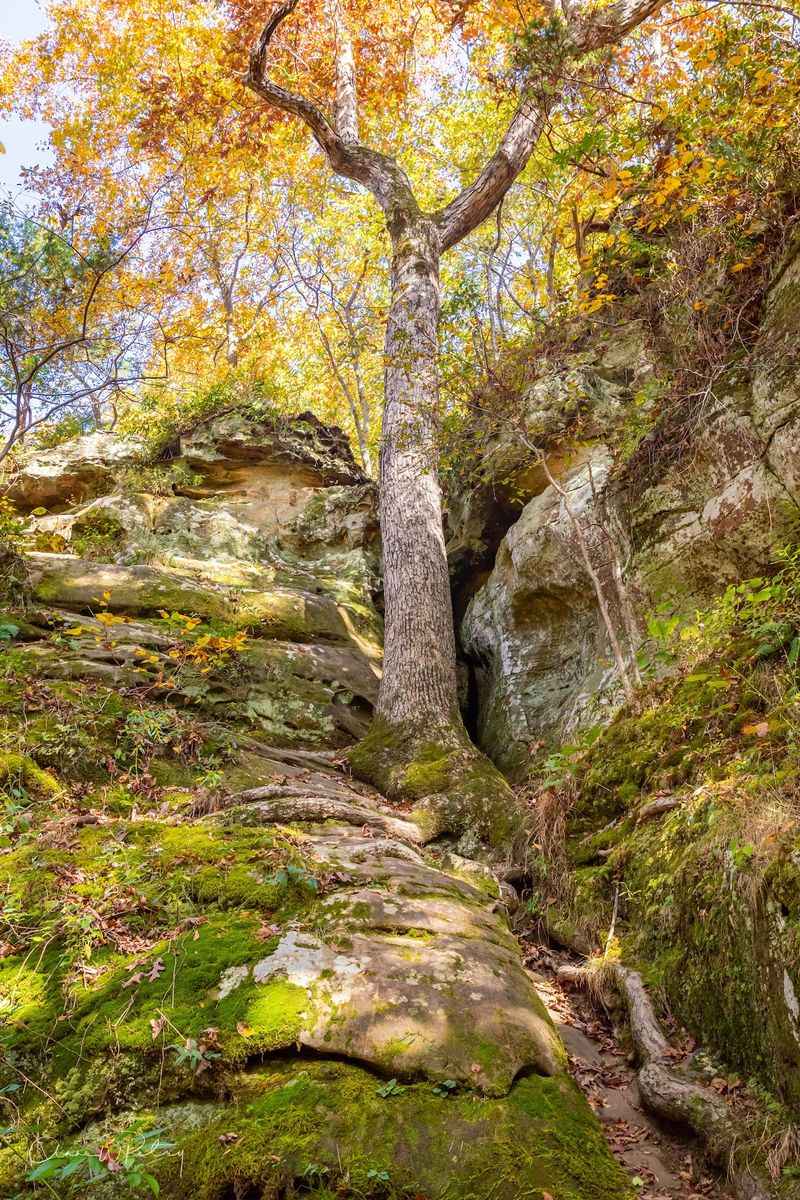
Variety is the real strength of the trail network here. Options run from short and easy to steep and demanding, and one visitor summed up the range as everything from easy to OMG.
Trillium Trail and the Giant City Nature Trail come up often among the gentler picks. Red Cedar offers a much longer outing for people who want distance, and cyclists use the park roads for serious mileage.
The Arrowwood Trail earns praise for its maze-like formations and narrow tunnels, including a small cave passage that runs underneath a hill. Amateur spelunkers find that stretch especially fun.
Maintenance gets steady compliments. Paths are clear, easy to follow, and simple to access, with parking areas and restrooms scattered throughout, though some facilities are basic portable units.
Leashed pets are welcome on the trails. Even on busy weekends, hikers report that the paths rarely feel crowded, partly because visitors spread out across so many separate trailheads.
Seeing everything takes more than a day, which is why some families book a cabin and stretch the trip out.
Who Fits Right In Here
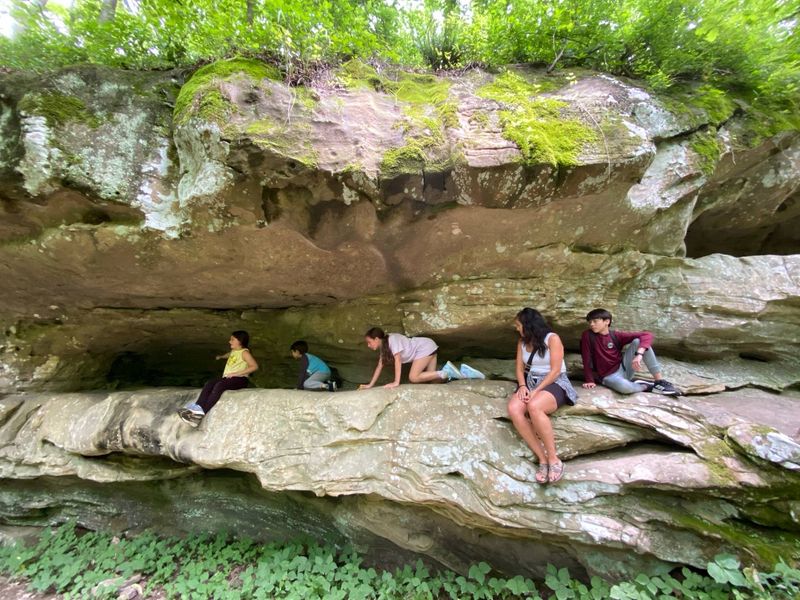
Families with elementary-age kids may get the best return on the drive. Squeezing through stone gaps feels like an adventure to a nine-year-old, and one group ranging from age nine to forty-three reported everyone having a good time on the same hike.
Geology and history enthusiasts also do well. Between the sandstone formations, the CCC-built lodge, and the visitor center displays, there is real substance behind the scenery.
Photographers should plan for late fall and winter, when bare branches open up sightlines to the rock and the ridges. Mid-March visits tend to be quiet, with birdsong and very few people around toward evening.
Anyone with mobility limits should choose carefully. Several trails involve steep grades, stairs, and uneven footing, though patient hikers using canes have completed the nature trail loop successfully.
Campers get a heads-up worth taking seriously. Campground noise after midnight has been an issue for some, and shower house cleanliness has drawn complaints, even if the hot water works.
Cell service can be unreliable inside the park despite bars showing on your phone, so download maps ahead of time.
Hours, Seasons, and the Fine Print
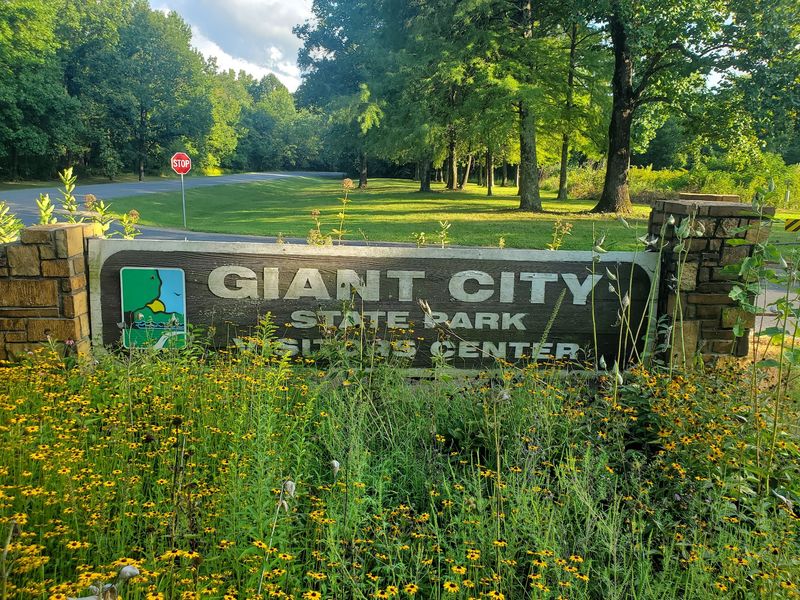
Gates open at 7 AM and the park stays accessible until 10 PM, seven days a week, which leaves generous room for sunrise hikes and evening picnics. The main phone line is 618-457-4836 for questions about conditions or closures.
Lodge and restaurant schedules follow a different calendar. Both typically shut down from mid-December through the first weekend of February, so a winter trip during that window means hiking without the fried chicken finale.
Reservations for the family-style dinner are a smart move on weekends, and the Thursday BBQ and Friday fish specials draw their own crowds. Checking the lodge directly before driving out is the safest approach.
Entry to Illinois state parks does not require a gate fee, though camping and cabin stays carry their own costs and booking rules.
The visitor center deserves a stop, whether before or after your hike. Staff there are described as genuinely helpful, and the shop carries maps, information, and souvenirs including collectible patches.
Summer visitors should watch for copperhead snakes on rocky ground and keep an eye on where kids put their hands.
Getting There and What the Drive Looks Like
Makanda sits just south of Carbondale, and the park address is 235 Giant City Road, roughly a dozen miles from the Southern Illinois University campus. Coordinates land near 37.6061, -89.1859 if your navigation app gets confused.
Approach roads twist through wooded hills, which is pleasant but does mean slower going than the mileage suggests. A few visitors have noted that signage on the final stretch could be more obvious, so watch for turns.
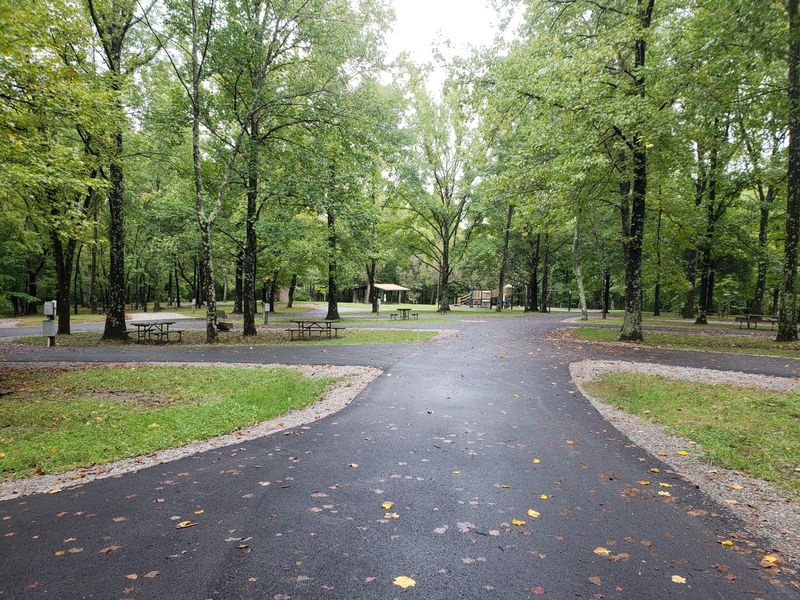
Once inside, driving between trailheads is the norm. Each major trail has its own lot, and parking is described as plentiful across the park, with the exception of the areas closest to the cabins.
Day trippers from St. Louis, Paducah, or Cape Girardeau can reasonably manage a round trip, and some travelers stop overnight while heading toward Memphis.
Bring water, snacks, and a paper map or downloaded route. The lodge covers food, but trail parking areas are basic, and the nearest full services are back toward Carbondale.
Cyclists take note: the park roads themselves make for a rewarding ride if you have the legs for hills.