
This Flat Tennessee Trail Ends At A Waterfall 10 Minutes In, No Climbing Required
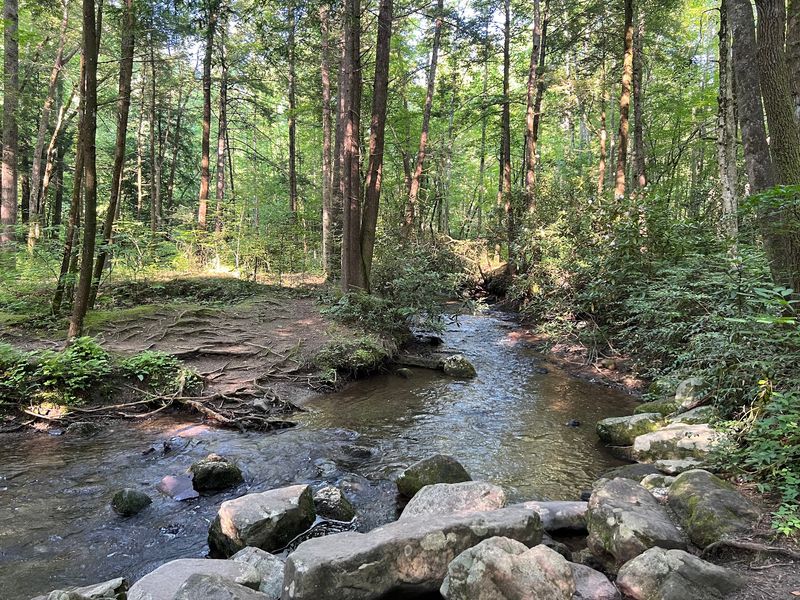
Most Tennessee waterfall hikes ask something of you: switchbacks, burning calves, a long drive up a gravel road. Then there’s the one that starts behind a visitor center parking lot, runs almost dead flat through the trees, and hands over a waterfall in about ten minutes.
Kids can wade the creek the whole way there, grandparents can keep up without stopping, and nobody has to scramble over rocks at the end. It costs almost nothing, it sits inside the most visited national park in the country, and plenty of people drive right past the trailhead without knowing it’s there.
Where the Trail Starts and What Waits at the End
Behind the Sugarlands Visitor Center, just past the restrooms and the parking lot, a wide dirt path slips into the trees and heads for Cataract Falls. The address on the map reads Cove Mountain Trail, Gatlinburg, TN 37738, but the practical answer is simpler: park at Sugarlands, walk around the building, follow the signs.
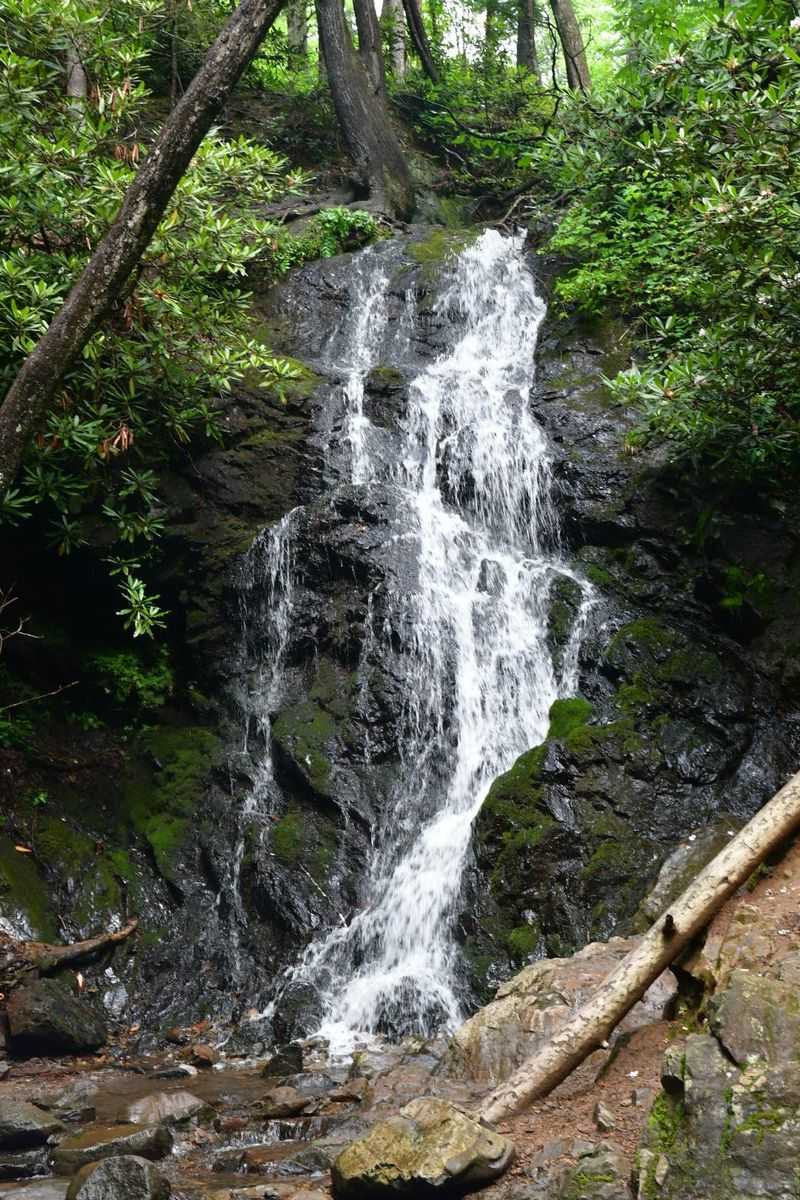
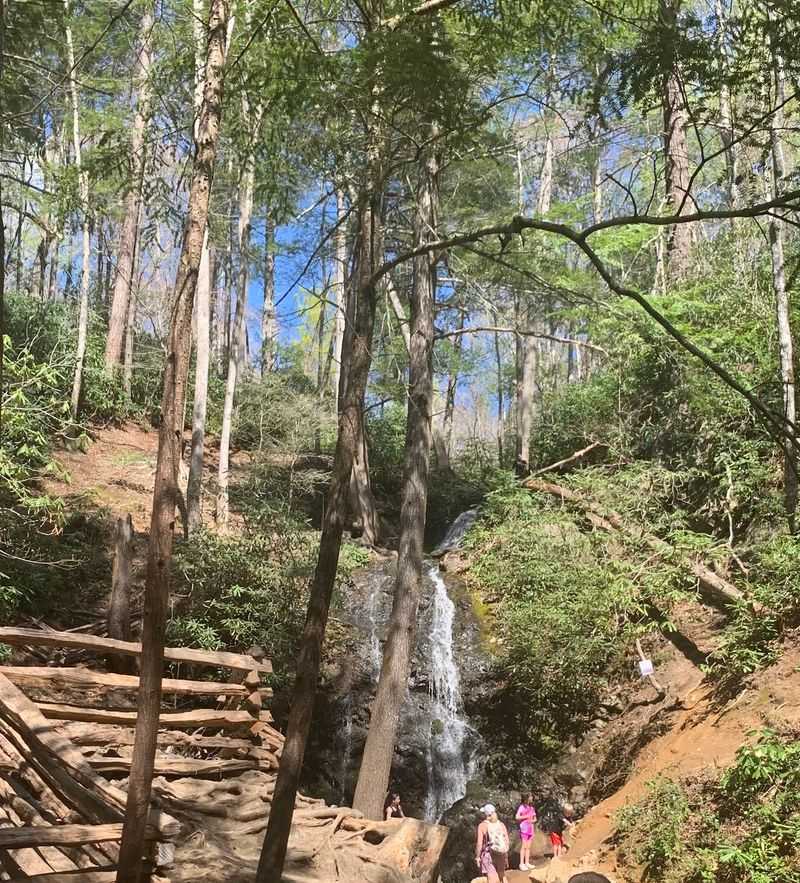
Roughly ten minutes later, the trail delivers a modest waterfall spilling over a rock face into a shallow pool. It is not a towering cascade, and regulars are honest about that.
What it offers instead is a payoff that arrives before anyone in the group starts complaining.
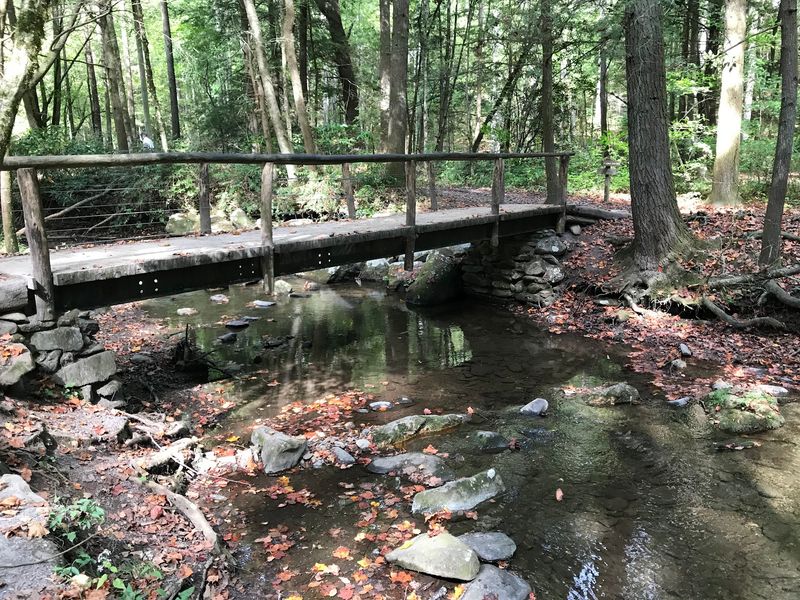
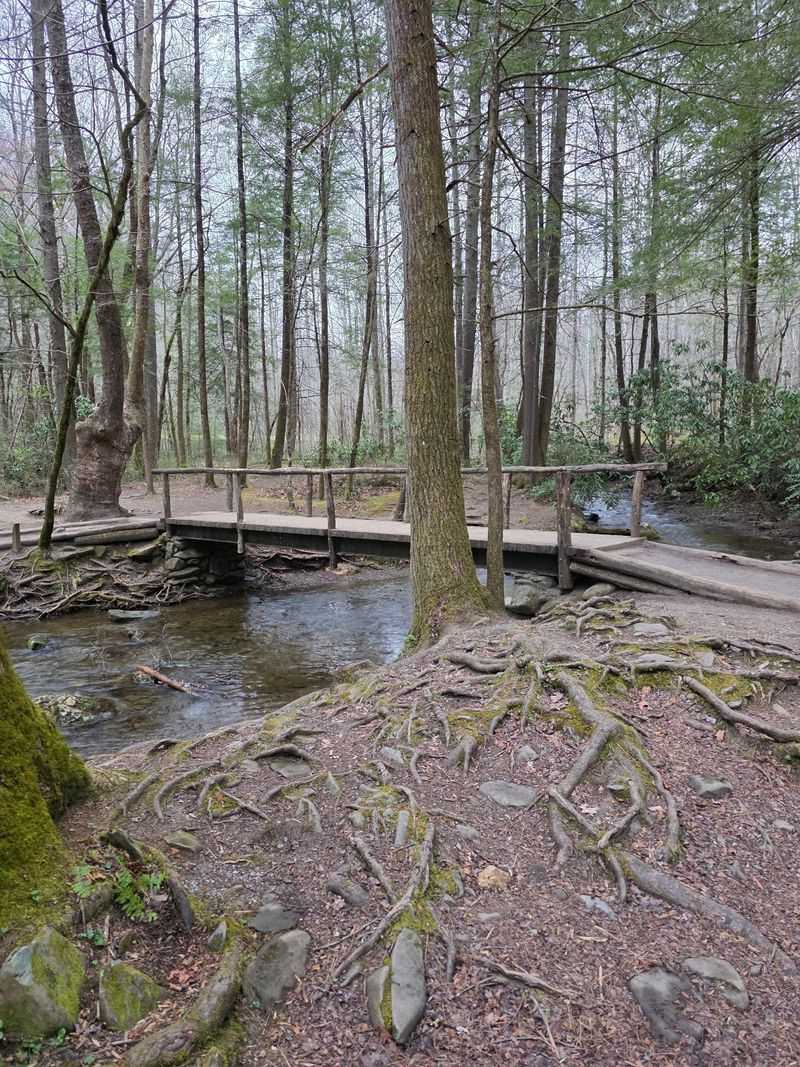
The route runs mostly level, with a few gentle rises and several wooden footbridges crossing the creek. Visitors describe it as one of the most well-traveled paths in the park, and the flat, compacted surface is why.
Cataract Falls sits inside Great Smoky Mountains National Park, holding a 4.6-star average across more than 2,300 reviews. That is a lot of goodwill for a small waterfall, and it says everything about how much Tennessee families value a short walk with a real reward at the end.
A National Park Address Without the National Park Effort
Great Smoky Mountains National Park has a reputation for big, demanding days out: Alum Cave, Chimney Tops, Rainbow Falls, all of them earned with sweat. Cataract Falls quietly breaks that pattern.
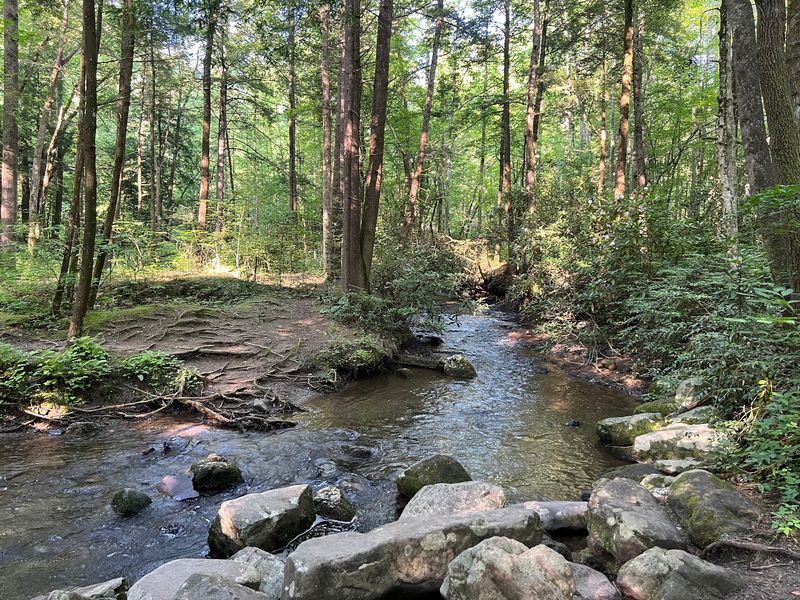
Sitting near the Gatlinburg entrance, the falls fall inside the same protected forest as those famous climbs, which means the scenery around the trail is genuine Smokies country. Old hardwoods, rhododendron thickets, a stream that never leaves your side.
Hikers describe interesting vegetation along the walk, including the occasional ghost pipe pushing up through the leaf litter.
What makes the location so useful for a Tennessee day trip is the pairing. Families arriving from Nashville, Knoxville or Chattanooga can start here as a warm-up, then decide whether anyone has the energy for something steeper.
Several visitors treat it exactly that way, calling it a solid easing-in stop for people new to the Smokies or just passing through. Others use it as the cool-down after a harder hike earlier in the day.
Either approach works, because the trail asks so little and still feels like real mountain scenery rather than a paved overlook.
The Ten-Minute Walk, Step by Step
Ten minutes sounds like marketing until you actually walk it. The path leaves the back of the visitor center, runs along a mowed strip, then ducks into the woods and follows Fighting Creek toward the falls.
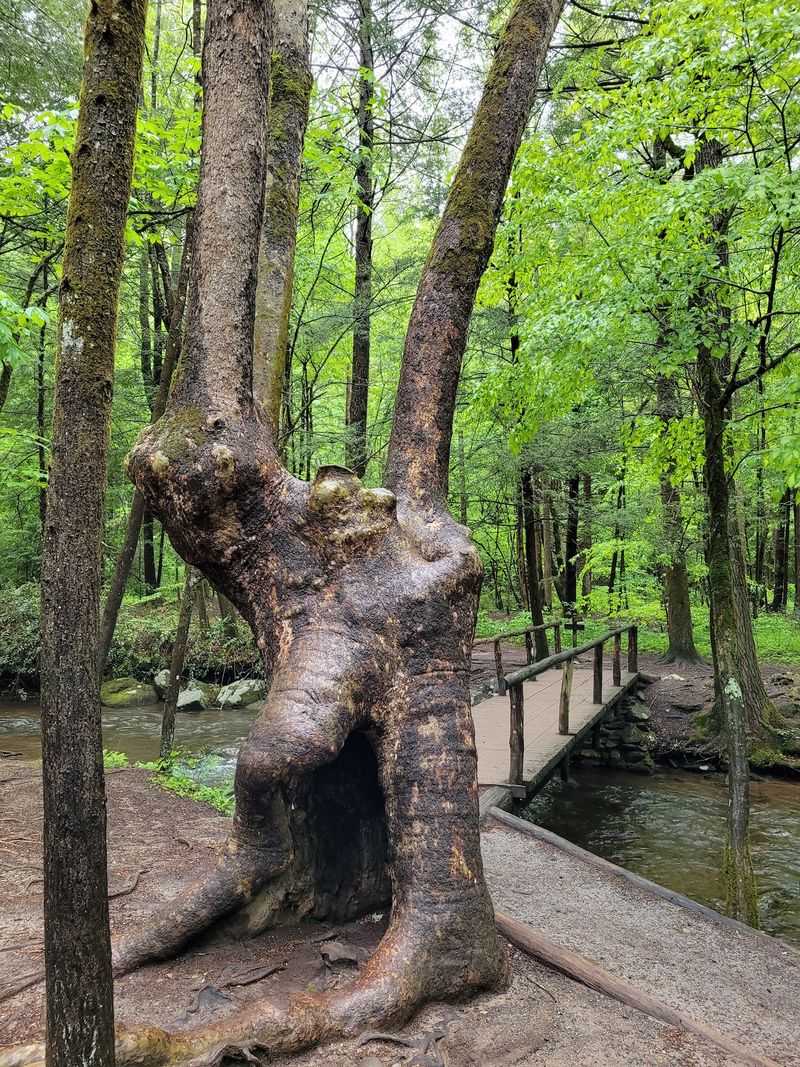
Wooden bridges cross the water a few times, and there are sign posts along the way labeling tree species, which turns the walk into a low-key nature lesson for kids. Visitors consistently clock the one-way trip at about ten minutes, with a there-and-back total of roughly 45 minutes if you stop, take pictures and let children poke at the creek.
Trail surface deserves a mention. Most of it is smooth and compacted, though some stretches run rooted and a few sections can turn muddy after rain.
Nobody has to climb anything to reach the base of the falls, and park staff have blocked off the route up the waterfall itself to keep people from scrambling on wet rock. That barrier is one of the reasons this walk works so well for mixed-age groups, since it removes the temptation that usually makes parents nervous.
Strollers, Walkers and Wheelchairs on the Path
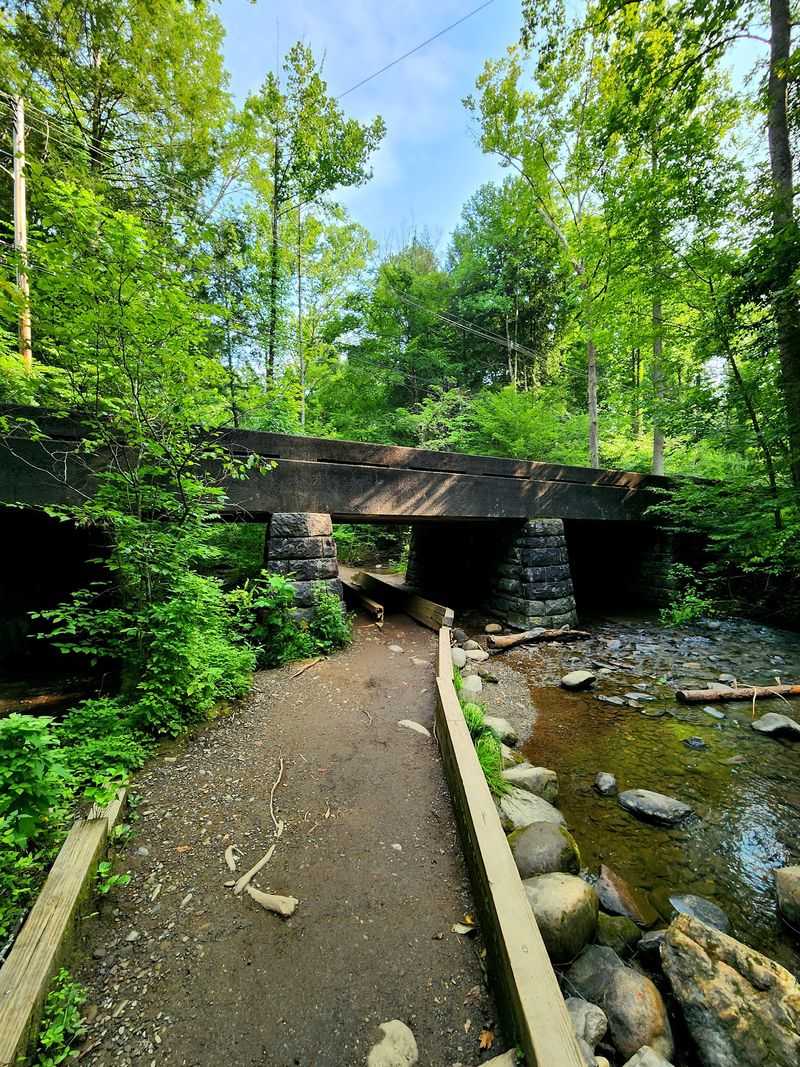
Accessibility gets talked about a lot and delivered rarely, which is why this trail comes up so often in conversations about wheeled travel in the Smokies. Visitors regularly describe pushing strollers, using walkers, and rolling wheelchairs to the falls without drama, and more than a few have said they were impressed the park made a waterfall reachable for everyone.
A fair warning belongs here too. Not every report is glowing on this point: at least one visitor found stroller pushing awkward in spots, and mud after rain can complicate small wheels.
Root-crossed sections are real, so a jogging stroller with bigger tires handles the trail more comfortably than an umbrella model. Conditions also shift with weather and any ongoing trail work, so checking recent park updates before you drive is smart.
Grandparents in particular seem to do well here. Several groups mention older relatives who struggle with steep ground managing the whole route at their own pace, then sitting near the water while the grandkids splash.
For families juggling three generations in one car, that combination is genuinely hard to find in mountain country.
Creek Play That Steals the Show
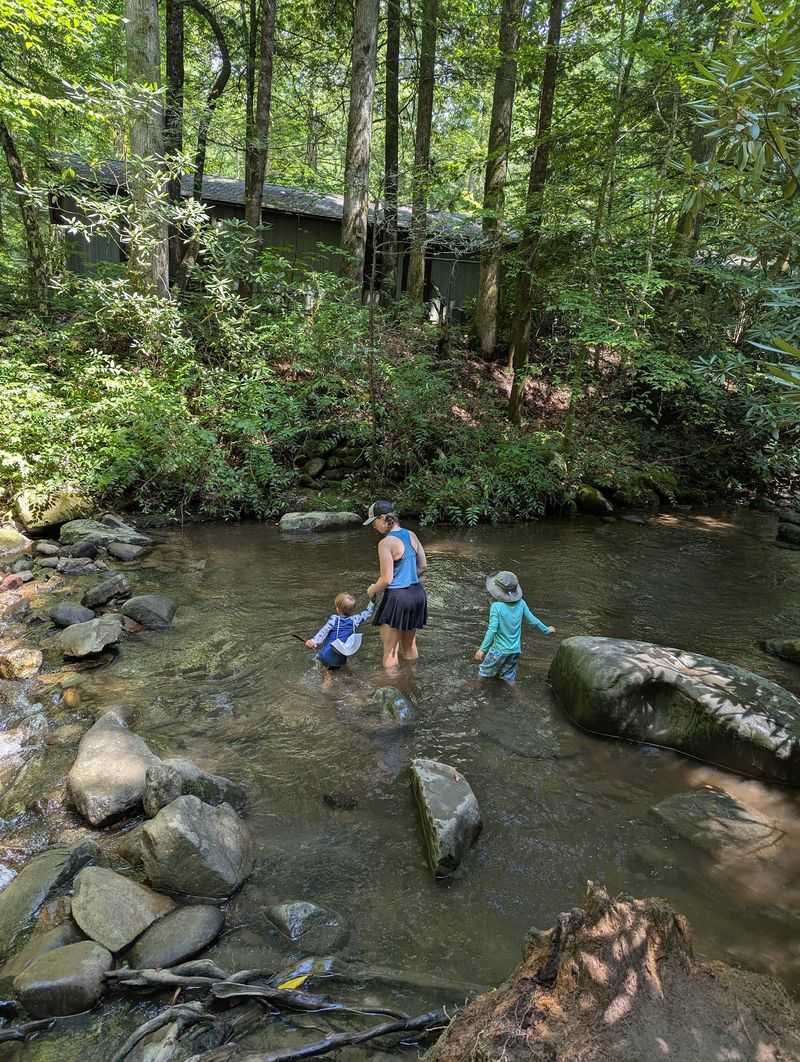
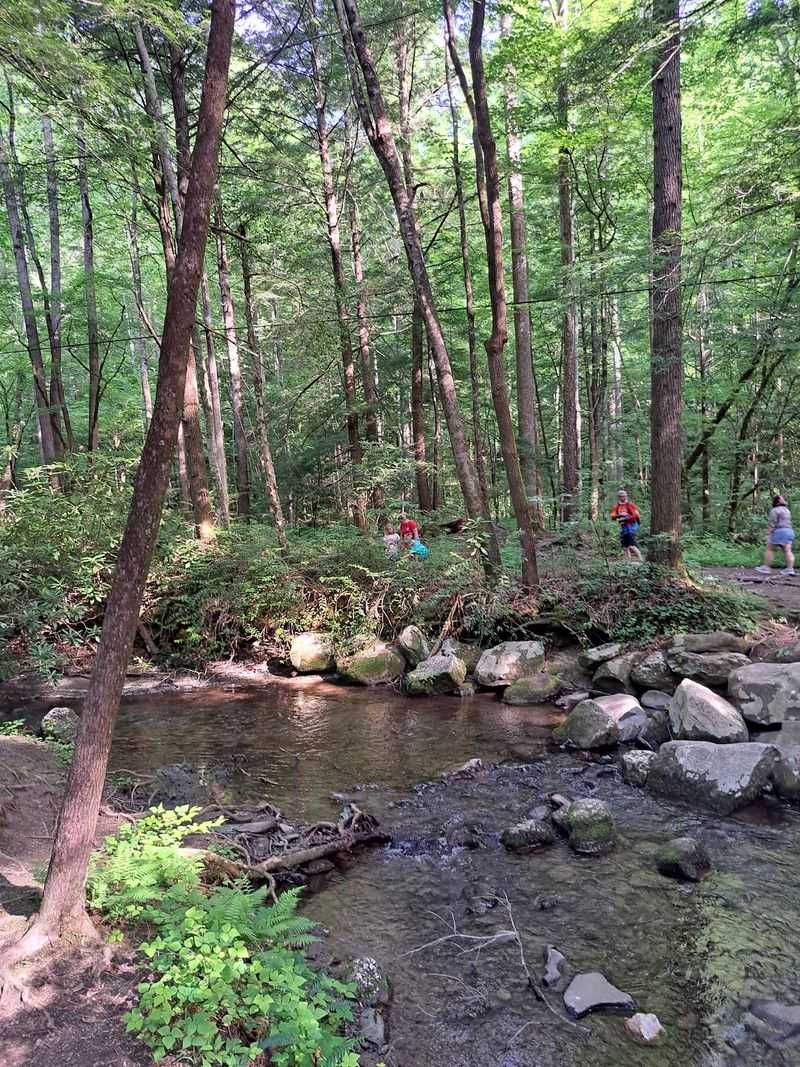
Ask a seven-year-old what they liked about Cataract Falls and the answer probably won’t be the waterfall. Fighting Creek runs alongside the trail nearly the whole way, shallow and clear, and kids hop in and out of it repeatedly on the walk.
Parents describe children splashing to cool off in summer heat, wading right up near the base of the falls, and in one case reaching out to touch the water spilling down. A garter snake sighting thrilled another family’s crew more than the scenery did.
Footwear is the practical lesson everyone repeats. Bring walking shoes for the trail and water shoes for the creek, because the rocks in the streambed are sharp enough to spoil the fun for bare feet.
A change of clothes in the car is not a bad idea either, since nobody stays dry once permission is granted. That creek is arguably the real attraction, transforming a short walk into an hour or two of unstructured play, which is exactly the kind of memory that outlasts the drive home.
The Falls Themselves: Manage Your Expectations
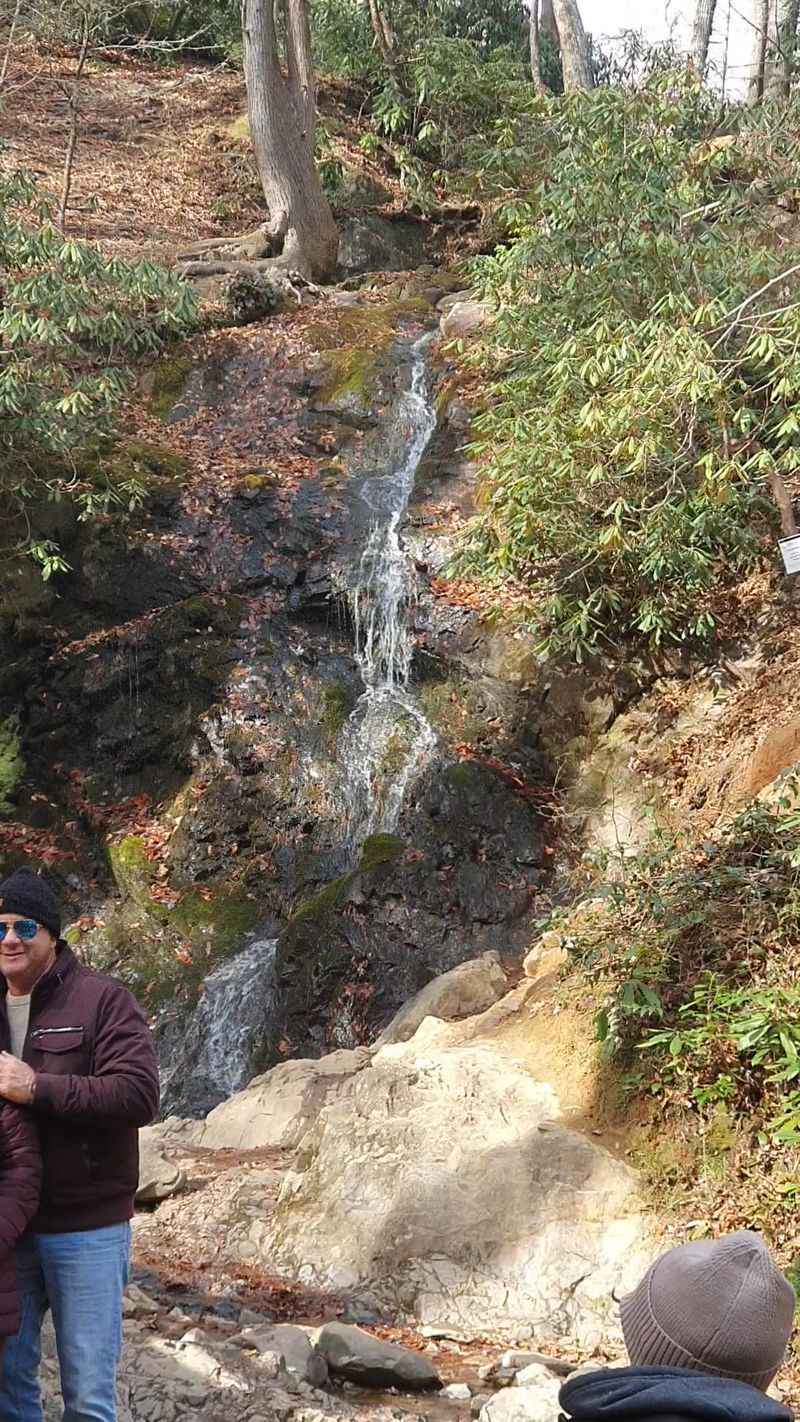
Honesty first: the waterfall is small. Visitor after visitor says so, often in the same breath as a five-star rating, which tells you something about how the payoff actually lands.
Water slides down a broad, mossy rock face into a shallow basin, framed by hemlock and rhododendron. People who arrive expecting a thundering drop leave slightly deflated.
People who arrive expecting a pretty, photogenic cascade at the end of a flat walk tend to linger longer than they planned.
Flow makes a big difference. After recent rain the falls pick up noticeably, and spring runoff is when it looks strongest.
Late summer can thin it out. One visitor put it well by saying the falls are not a bucket-list destination but a quick, satisfying reward, and that framing is the right one to carry in.
Photographers do fine here. The waterfall sits in shade most of the day, which suits long exposures, and the barrier keeping people off the rock face means you often get a clean shot without someone standing mid-frame.
Crowds, Timing and the Parking Lot Scramble
By 11:30 on a Wednesday morning, one family found the trail extremely crowded. Another arrived at 8:30 and watched the parking lot fill fast around them.
Popularity is the price of an easy trail beside a major visitor center. Expect chatter, friendly hellos from strangers, and children shrieking in the creek.
If silence in the woods is what you came for, this is the wrong path in the park, and several regulars say as much with good humor.
Timing helps enormously. Early morning, before the visitor center opens, is the sweet spot, and one group used the wait for opening hours as their hiking window.
Late afternoon thins out too. Weekdays outside peak summer and leaf season are calmer than Saturdays, and shoulder months in general ease the pressure.
Traffic here also rises and falls with nearby attractions, since closures elsewhere in the park push visitors toward the shortest accessible waterfall walk. Conditions change week to week, so check park alerts before you commit a Saturday to the drive.
What a Day Here Actually Costs
Five dollars. That is the number that matters most for budgeting, because Great Smoky Mountains National Park charges no entrance fee but does require a parking pass to leave a vehicle anywhere in the park, and visitors here report the daily tag at $5.
The trail itself costs nothing. The waterfall costs nothing.
No tickets are needed in advance, and visitors arriving on weekdays report walking straight in with no wait to enter.
One tip repeated by people who have fumbled at the kiosk: know your license plate number before you buy the pass, since you have to enter it. Passes are available near the visitor center, and fee structures can change, so a quick check of current rates before you leave home is worth the minute.
Add it up for a Tennessee family and the math is friendly. Five dollars for parking, a packed cooler, gas, and you have filled a morning in a national park.
Even with lunch in Gatlinburg afterward, the whole outing lands well under the cost of a night at the movies for four.
Sugarlands Visitor Center as Your Basecamp
Restrooms. For families and retirees planning any outing, that single amenity often decides where the car stops, and Sugarlands Visitor Center has them right by the trailhead.
Beyond the plumbing, the center gives you rangers to ask about trail conditions, exhibits about the park, maps, and a place to buy your parking tag. Visitors mention it constantly in the same breath as the falls, since the two are effectively one stop.
Hours shift by season, generally opening in the morning and closing in the late afternoon, so anyone planning to browse inside should confirm the day’s schedule ahead of time. The trail, being outdoors in the park, does not depend on those hours.
Practical sequencing works nicely here. Arrive early, walk to the falls while the woods are quiet, then explore the visitor center once it opens and the crowds are heading out onto the trail you just finished.
That order also solves parking, because the lot that fills by mid-morning is far easier at eight o’clock.
Longer Trails Branching From the Waterfall
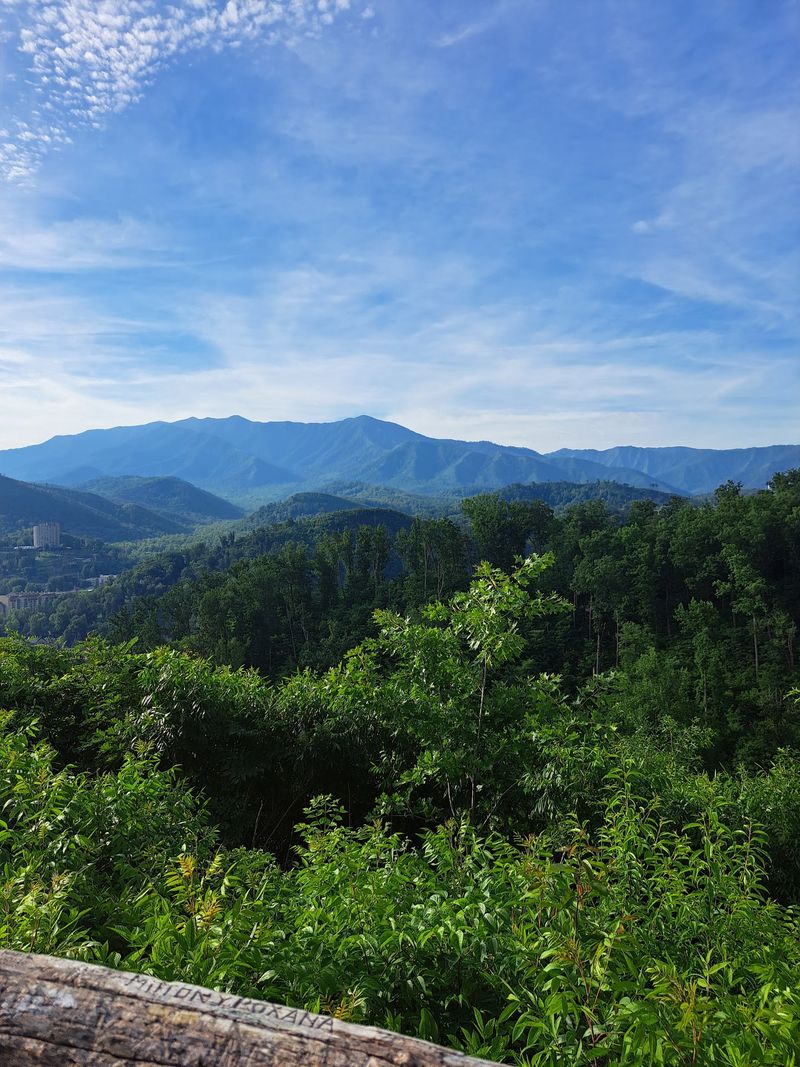
Right at the falls, an opening leads onto Cove Mountain Trail, and the character of the day changes completely. Where the walk in is broad and flat, this route turns rugged and mountainous, climbing into the ridges above.
Visitors note two more waterfall destinations along that corridor, one of them roughly eight miles out and another near eleven. Those are serious commitments, not casual detours, and worth attempting only with proper planning and daylight to spare.
A gentler option sits closer in. One family reported following the trail up about a mile and a half to reach a clearing that looks like an old homesite, a pleasant spot for a picnic or photographs.
Another curiosity draws attention nearby: a small, tucked-away historic graveyard that hikers stumble across and find quietly atmospheric.
So the design of this place is layered. Everyone gets the waterfall in ten minutes, and whoever still has energy can peel off for more while the rest of the group sits by the water and waits.
Few Tennessee trailheads accommodate different fitness levels that neatly.
Wildlife, Wildflowers and Woodland Details
Bears live here. That is not a scare line, just the reality of hiking in the Smokies, and one family returning to the parking lot spotted one and calmly walked to their car.
Sightings near this trail come up occasionally in visitor accounts, which is reason enough to keep food packed away, keep children close, and know the standard advice about giving animals plenty of distance. Rangers at the visitor center can tell you what has been active lately.
Smaller finds are far more common and often more fun. Garter snakes in the leaves, salamanders in the creek, and unusual plants like ghost pipe pushing pale stems through the forest floor.
Interpretive posts along the route identify tree species, turning the walk into an easy lesson for curious kids.
One visitor made a gentle point about noise, wishing groups moved a bit more quietly so wildlife might stick around. Given how busy the path gets, that request is a tall order, but early mornings genuinely improve your odds of seeing something move in the underbrush.
Packing List and Trail Etiquette
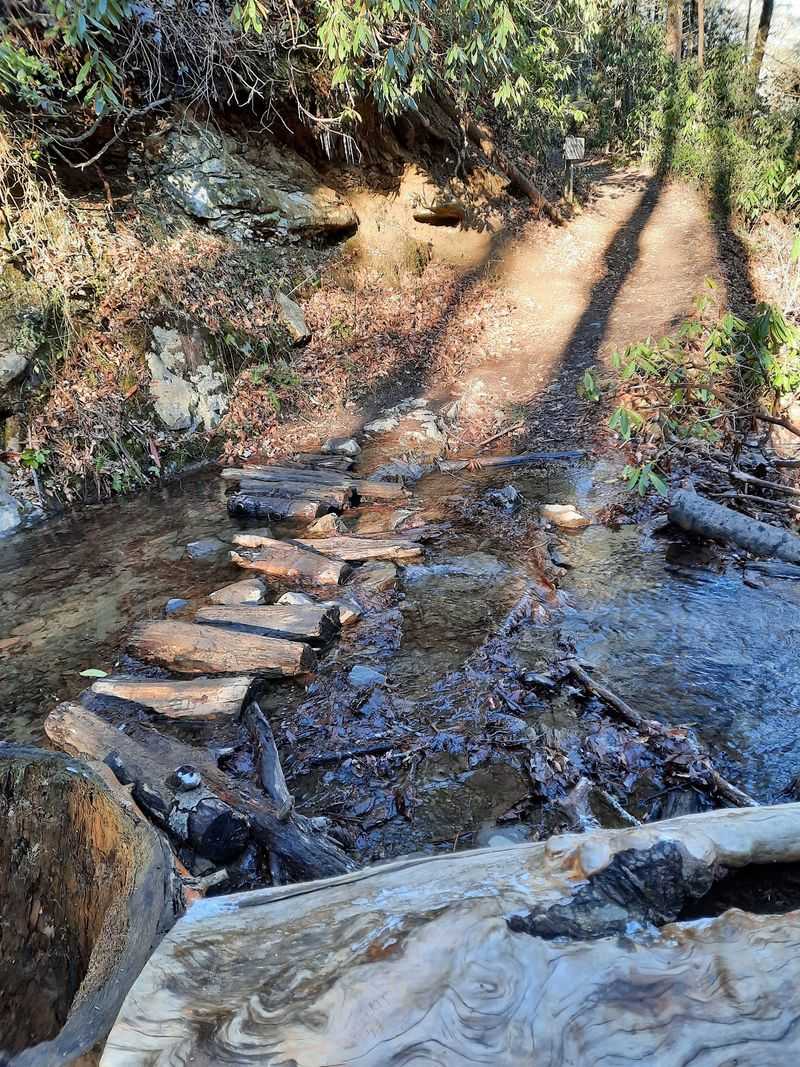
Two pairs of shoes per kid is the single best piece of advice from people who have done this walk. Sturdy shoes for the rooted, sometimes muddy trail, and water shoes for the rocky creek bed that punishes bare feet.
Beyond footwear, keep it simple: water bottles, a rain layer since Smokies weather turns fast, sunscreen for the open stretch near the visitor center, and snacks or a picnic lunch. Boulders and grassy patches make decent eating spots, and the visitor center area gives you a proper base.
Trash is a sore subject here. Visitors have complained about litter left along the path, including diapers, which is a rough thing to encounter in a national park.
Carry a plastic bag, pack out everything you bring, and the trail stays pleasant for the family walking behind you.
Other courtesies go a long way on a narrow, busy path: step aside for strollers and wheelchairs, keep voices moderate, stay off the closed area at the falls, and skip stacking rocks in the creek. Small habits, big difference.
Who Should Put This on the Calendar
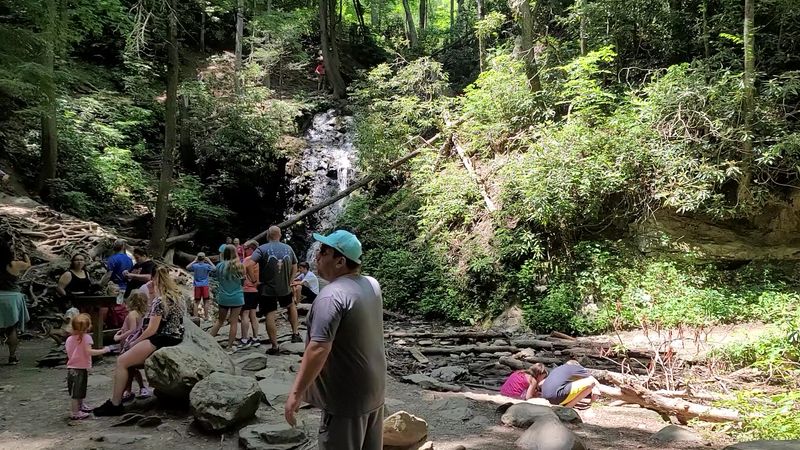
Small waterfall, big usefulness. Cataract Falls will not top anyone’s list of the most dramatic cascades in Tennessee, and the people who love it most are the first to say so.
What it does better than almost anywhere else in the Smokies is remove the barriers. Ten flat minutes, five dollars to park, restrooms at the trailhead, a creek that entertains children for hours, and no climbing at any point.
Families with toddlers, grandparents pacing themselves, anyone easing back into walking after an injury, and out-of-state visitors wanting a taste of the park without a half-day commitment all get real value here. Serious hikers looking for solitude and a thundering drop should keep driving, or use the falls as a warm-up before heading up Cove Mountain Trail.
Go early, go on a weekday if your schedule allows, and check park alerts for trail work or closures before the drive. Then let the ten-minute walk do its job.
Some of the best Tennessee outings are the ones nobody has to be talked into finishing.