
This Tennessee Nature Sanctuary Has Wooded Trails And Up-Close Encounters With Owls
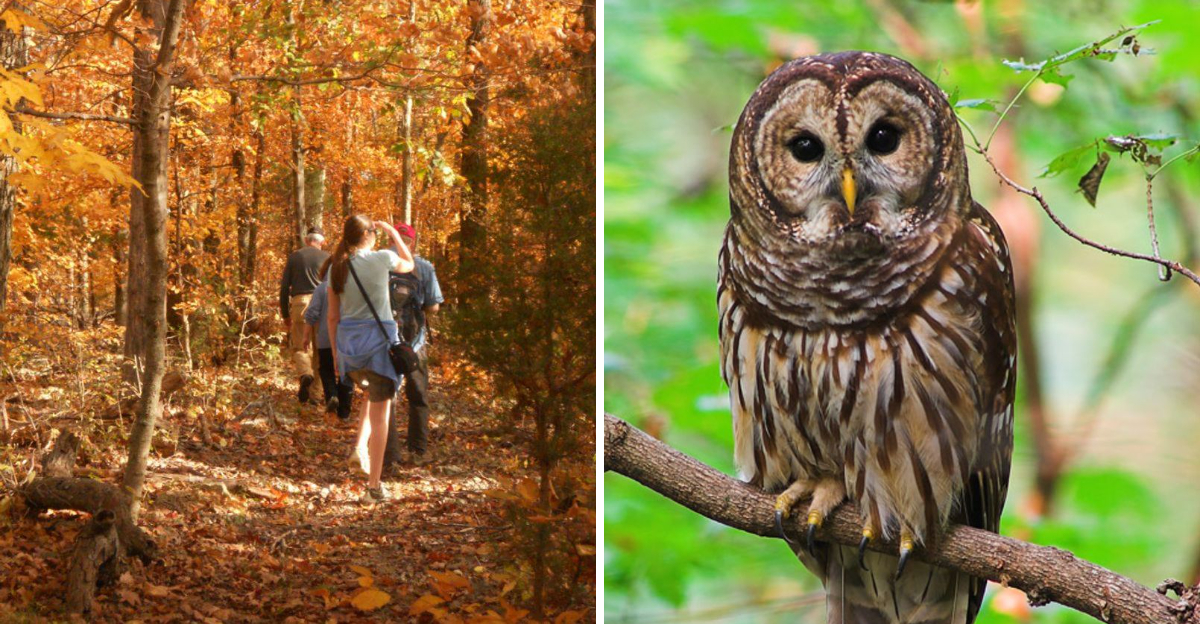
Most hikes do not end with an owl staring straight back at you.
At one Tennessee nature sanctuary, a walk through the woods can lead to something much more memorable than a pretty trail. Forest paths pass through rolling hills, meadows, ponds, and quiet stretches where birds and other wildlife are part of the experience.
The real highlight comes when visitors get the chance to meet the sanctuary’s owl ambassadors up close.
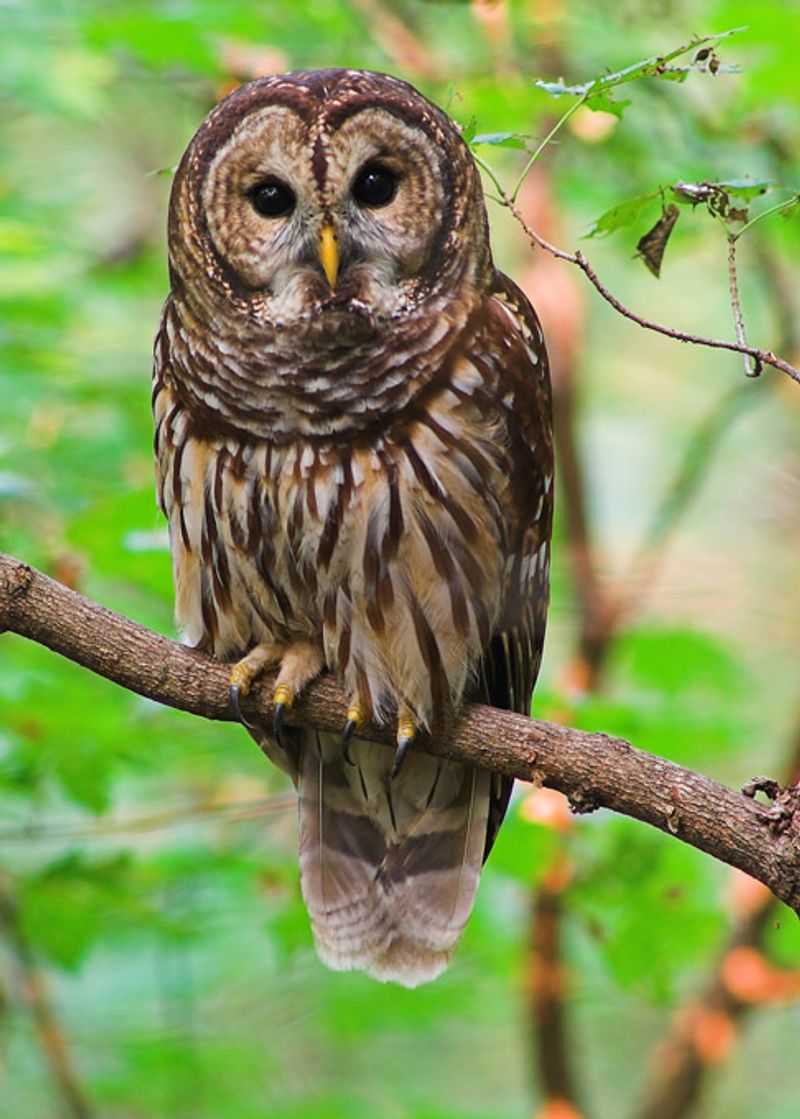
Seeing one nearby makes it easier to notice the details you would normally miss, including powerful talons, sharp eyes, and feathers built for silent flight.
That mix of hiking and wildlife education gives this place a different feel than a typical park.
You can spend part of the day wandering under the trees, then learn about birds that usually stay far out of sight.
It is peaceful, interesting, and just unusual enough to make the visit stick with you.
Three Hundred Acres Of Protected Middle Tennessee Wilderness
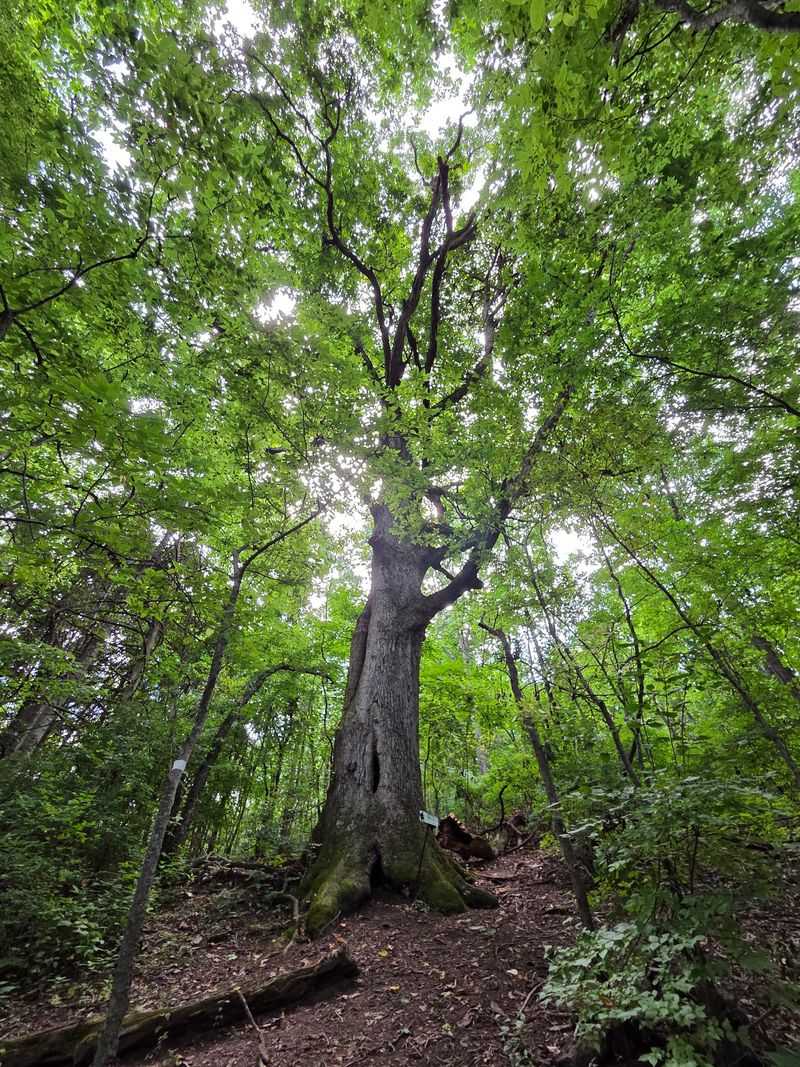
Three hundred acres sounds like a number until you are standing in the middle of it.
Owl’s Hill Nature Sanctuary spreads across northwestern Williamson County with hills, forests, creeks, ponds, and open meadows all stitched together.
More than 2,000 species of local plants and animals live inside those boundaries. That includes 125 recorded bird species and over a dozen kinds of amphibians.
Nearly every mammal native to Middle Tennessee calls this land home. Wild turkeys wander the ridges, woodpeckers hammer away overhead, and bobcats have been spotted along the creek route.
The mission here goes beyond opening a gate and selling passes. Staff and volunteers work on restoring fragile habitats and pulling out invasive plants that crowd native species.
The sanctuary also supports national aviary research and monarch butterfly studies. So your five-dollar day pass helps fund actual conservation work, not just trail upkeep.
What makes the acreage feel special is how untouched it stays. Nothing is over-groomed or paved into submission.
Ancient trees stand scattered through the property, some estimated at 300 to 350 years old. Limestone fossils sit in the creek beds, waiting for anyone patient enough to look down.
Recently donated land means the sanctuary plans to grow even larger. Tennessee gains more protected forest, and hikers gain more places to wander quietly.
Meet The Wildlife Ambassadors Living Near The Entrance
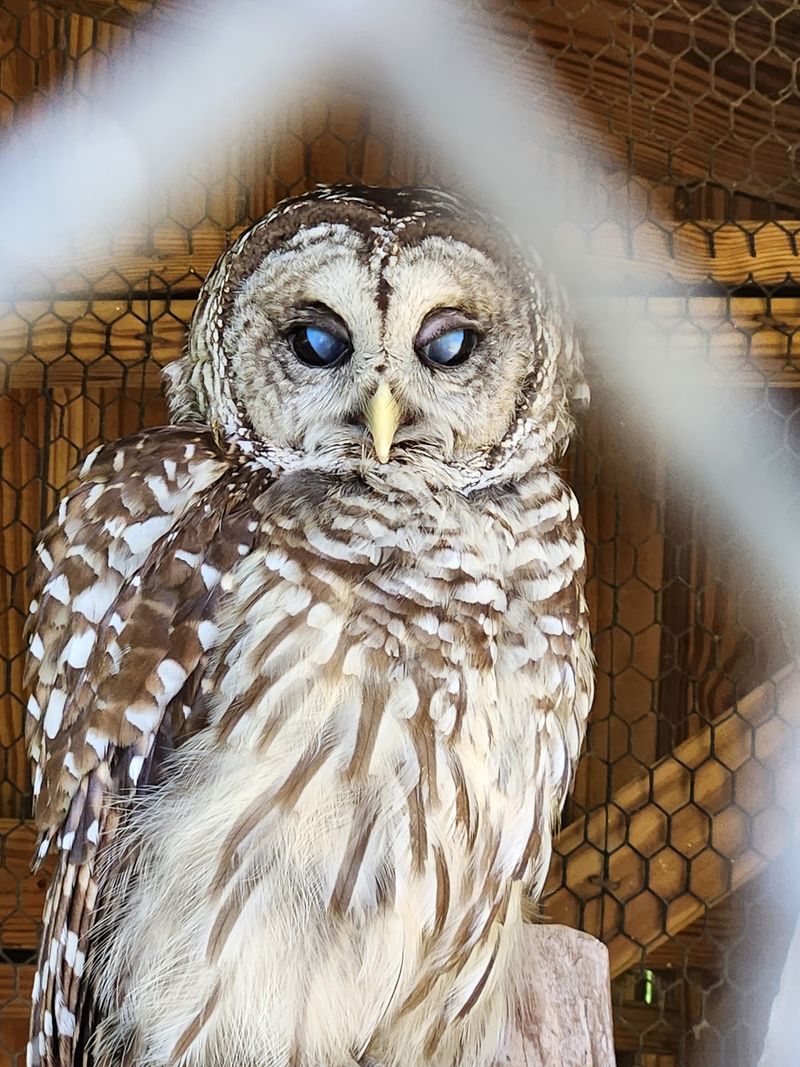
Owls are the headliners, and they hold that title honestly. A select group of non-releasable owls and other animals live at Owl’s Hill Nature Sanctuary as Wildlife Ambassadors.
Each one arrived for a reason. Some carry injuries that make survival in the wild impossible, while others were raised in captivity and never learned to hunt.
Their habitats sit right near the entrance and the visitor center. That placement is smart, because children can see the birds within moments of arriving.
Barred owls and barn owls have both been part of the resident group over the years. Standing close to one, you notice how silent they are and how much their eyes seem to track you.
The enclosures are built to keep the birds comfortable rather than photogenic. Viewing distances are set with the animals’ stress levels in mind, so telephoto lenses help more than crowding does.
Staff members know each bird’s backstory in detail. Ask a question at the reception desk and you may get a full history of how a particular owl arrived.
That personal knowledge changes the whole experience. You stop seeing generic birds and start seeing individuals with names, quirks, and rescue stories worth remembering.
Wooded Trails That Range From Easy Strolls To Steep Climbs
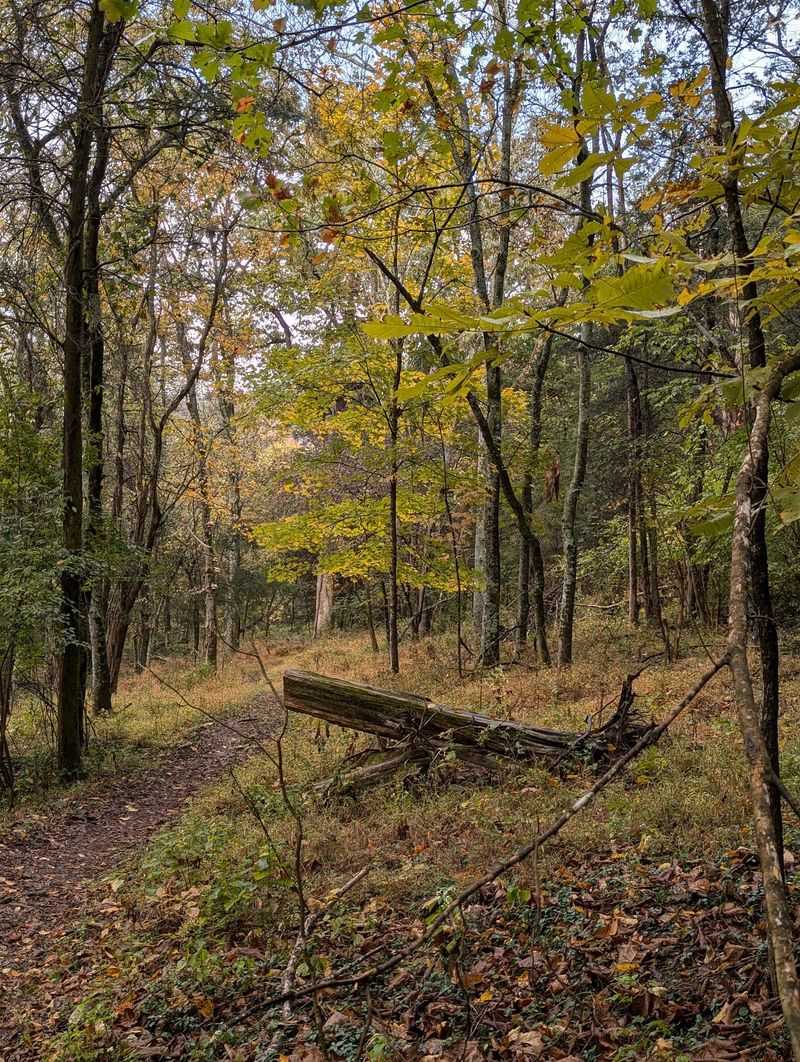
Forty-two trail mentions in the sanctuary’s popular topics tell you where people spend their time. The paths at Owl’s Hill Nature Sanctuary are well maintained but deliberately rustic.
The yellow route, called the Sharp Creek Trail, runs about a mile alongside a winding creek. It passes through a rich deciduous forest of ash, oak, hickory, and tulip poplar.
Butterflies and dragonflies gather in the sunnier openings along the water. A quarter-mile incline shows up partway through, though it stays manageable for most people.
The red route, the South Ridge Trail, covers roughly 1.2 miles through hardwood forest. It climbs noticeably, and the reward at the top is breeze, sunlight, and the steady sound of crickets.
Trail markers are often just a painted line on a tree trunk. Keep your eyes open, because the low-tech approach makes route-finding part of the fun.
Some trees carry small markers with QR codes for extra information. Scanning one turns a walk into a self-guided botany lesson.
Surfaces are natural, with uneven ground and moderate inclines in places. Sturdy shoes beat sneakers here every single time.
Pets are not permitted on the trails, since the ecosystems are genuinely fragile. Service animals are the one exception to that rule.
Guided Hikes With Lanterns, Wildflowers, And Fall Color
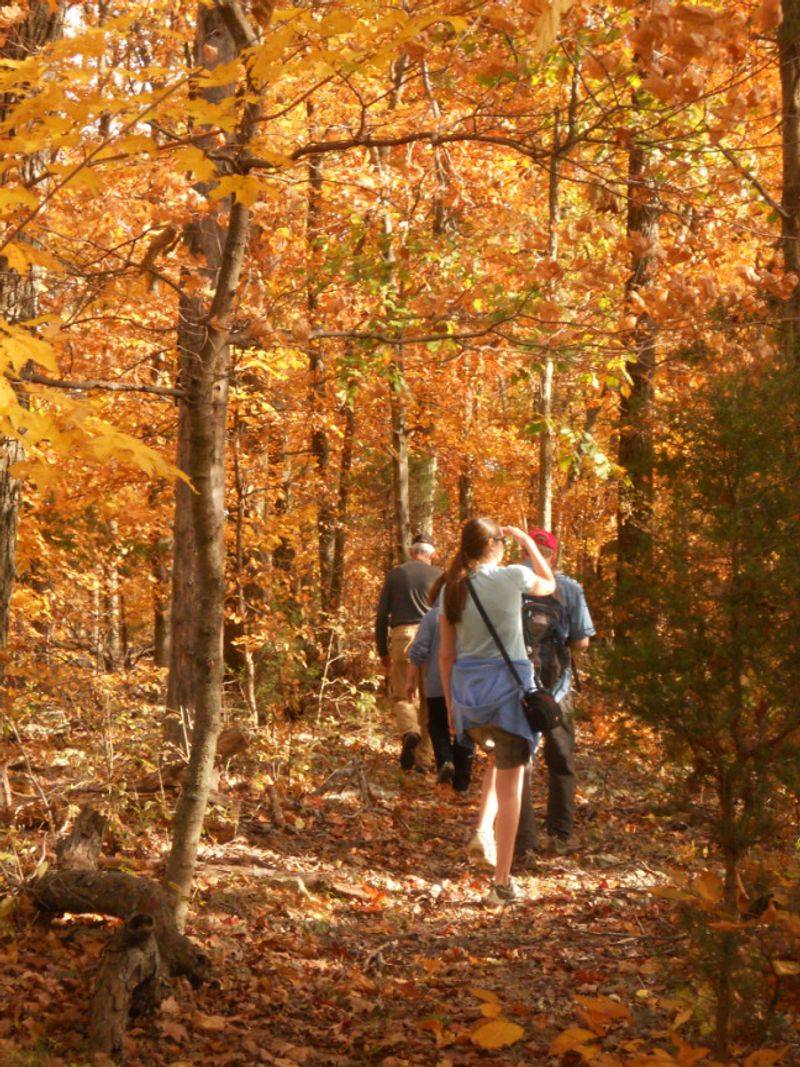
Walking a forest path by lantern light changes everything you think you know about the woods. The sanctuary schedules lantern hikes so people can explore after the sun drops behind the ridge.
Spring brings wildflower hikes, timed for when the forest floor puts on its best show. Trilliums, violets, and other seasonal blooms appear along the shaded slopes.
Autumn shifts the focus to fall color hikes through the hardwood canopy. Tulip poplars and hickories turn the ridgelines gold and copper.
Marshmallow hikes have also appeared on the calendar, with easier and moderate options offered. The pace stays slow and the guides build in rest stops, which makes them friendly for mixed-ability groups.
Guides at Owl’s Hill Nature Sanctuary do more than lead the way. They point out fossils, explain tree species, and share how the land has changed over decades.
Programming rotates through the year, so the schedule is worth checking before you plan a trip. The sanctuary posts upcoming events on its website.
Costs for these guided outings stay reasonable. You get real instruction from knowledgeable people without paying a premium price.
For anyone who finds solo hiking a little quiet, a guided walk fills the silence with useful information instead of small talk.
Animal Ambassador Meet And Greets For Closer Looks
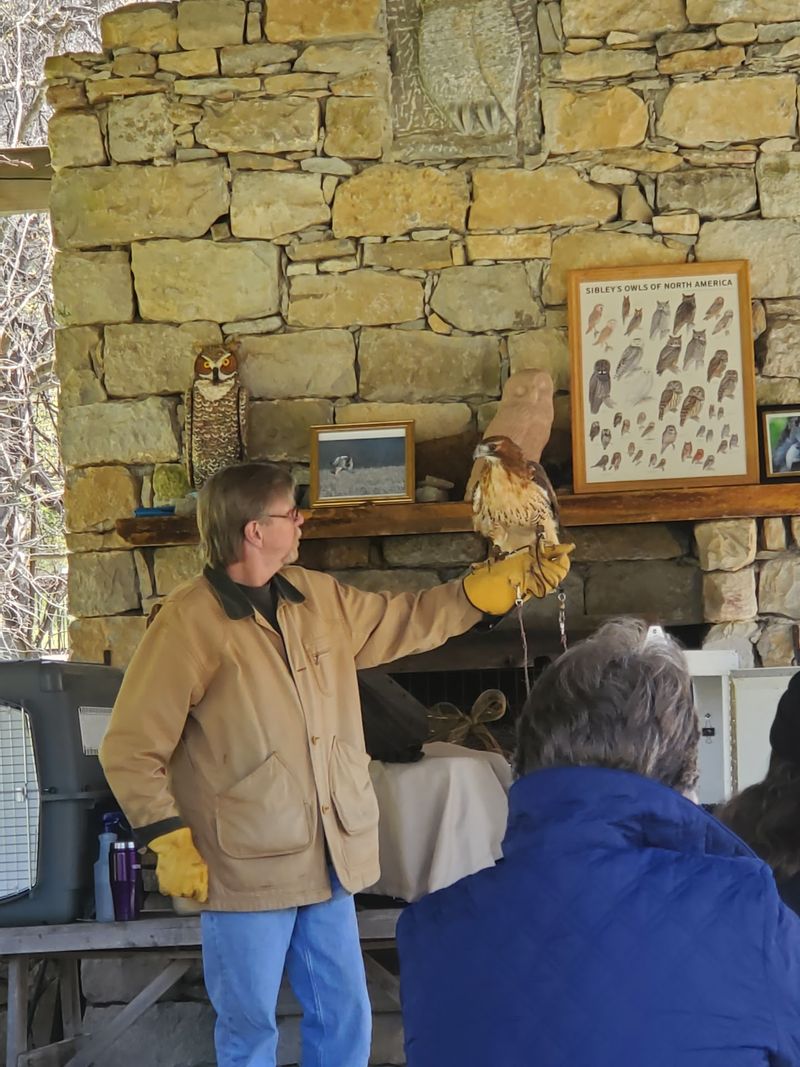
There is close, and then there is close enough to count feather patterns. Private tours at the sanctuary include an introduction to the owls on exhibit, which already puts you nearer than most people ever get.
For an extra step, an Animal Ambassador Meet and Greet can be added to a private tour. That session pairs your group with an owl and an educator who explains everything.
One scheduling detail matters here. These meet and greets are not available during June, July, and August.
Summer heat and animal welfare drive that decision, which fits the sanctuary’s whole approach. The birds come first, always.
School field trips and educational programs also bring groups face to face with the Wildlife Ambassadors. Teachers get a curriculum-friendly outing that students actually remember.
Special event days have featured owl presentations with up-close viewings of multiple resident birds. Activities like dissecting owl pellets often follow the talk.
Pellet dissection sounds odd until you try it. Inside those compact bundles you find tiny bones that reveal exactly what an owl ate.
Booking ahead is essential for private tours and programs.
Wild Explorer Packs Turn Kids Into Field Scientists
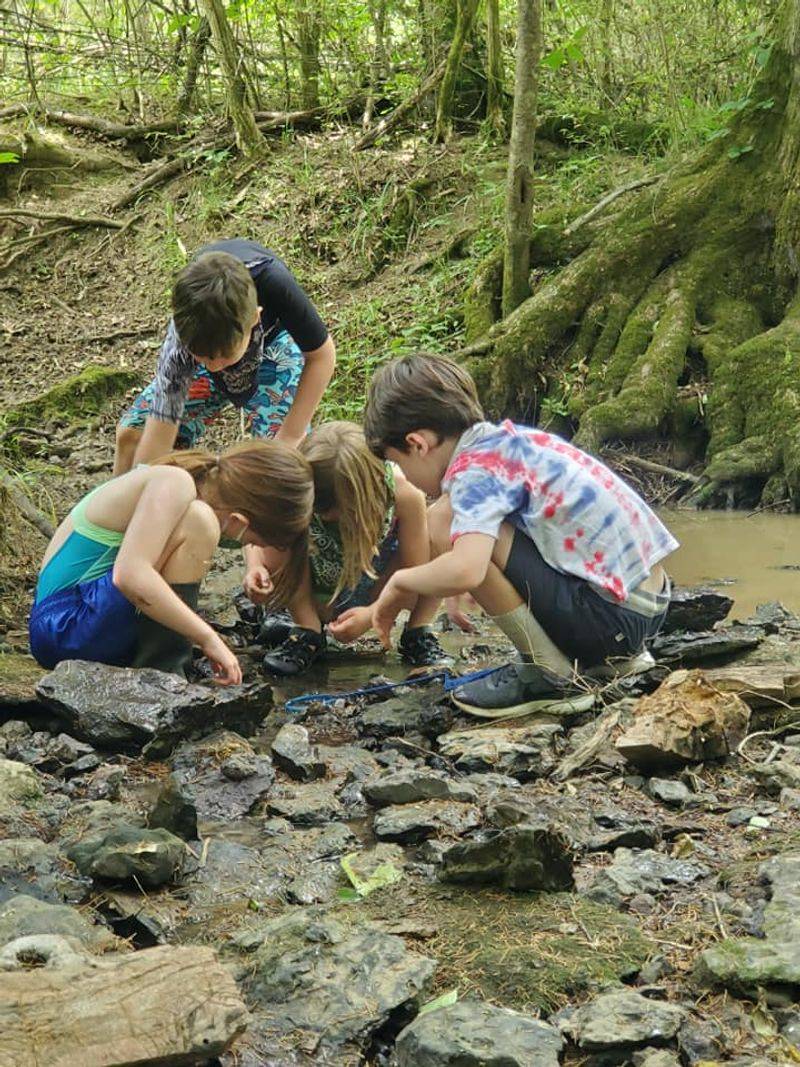
Hand a kid a magnifying glass in the woods and watch the whole day transform. Wild Explorer Packs are themed, interactive backpacks the sanctuary offers so young explorers can investigate instead of just walking.
Inside, the gear does the heavy lifting. Packs have included a microscope, field guides, an animal book, a magnifying glass, and a notebook for sketching discoveries.
Children using them have turned up trilobite fossils, owl pellets, and salamanders along the trails. Wild turkeys and hawks show up overhead if the timing works out.
The design encourages slow looking, which is the opposite of how most kids move outdoors. Suddenly a rotting log becomes a research site.
Ages three and up need a day pass, priced at five dollars per person. Children two and under enter free, which keeps family trips affordable.
Day passes are purchased online or at the visitor center on the day you arrive. Advance reservations are not offered for day passes, so plan accordingly.
Parking at Owl’s Hill Nature Sanctuary is free and easy to manage. That removes one more headache from a family outing.
Older kids and curious adults get just as much from the packs. Nobody outgrows the urge to look at pond water under a microscope.
Ancient Trees, Fossils, And Seasonal Wildflowers Along The Way
Some trees on this property were already standing before Tennessee became a state. Estimates put the oldest at 300 to 350 years, which makes them older than nearly everything else nearby.
Pioneer trees also grow throughout the sanctuary, marking how the land regenerated over time. Reading a forest this way is a skill, and the property makes it easier.
Limestone fossils appear in creek beds and exposed rock. Look carefully and you may spot the ridged spiral of something that lived in an ancient sea.
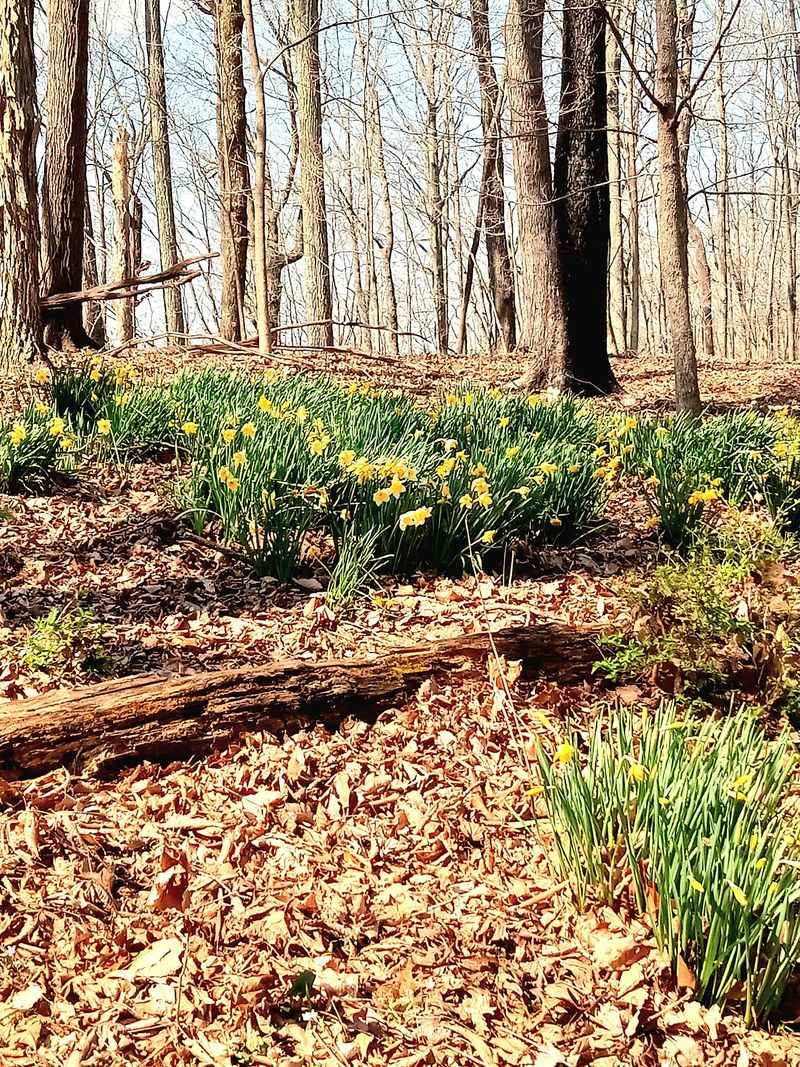
Seasonal wildflowers keep the ground level interesting from early spring onward. Each month brings a slightly different palette to the shaded slopes.
Sharp Creek runs through the yellow trail and supports dragonflies, butterflies, and amphibians. Water always concentrates wildlife, and this creek proves the point.
Ponds and meadows add habitat variety that pure forest cannot provide. That mix explains how 2,000 species share one property.
The land was protected because founders Walter and Huldah Sharp cared about it deeply. Their choice preserved habitat that could easily have become subdivisions.
Walking here rewards patience more than speed. Slow down, look at bark and rock and petal, and the sanctuary opens up considerably.
Before You Go, Here Are A Few Helpful Details
A little preparation makes this trip far more enjoyable. The address is 545 Beech Creek Road South, Brentwood, TN 37027, and the final approach involves narrow country roads.
Hours run Monday through Saturday, generally 8:30 AM to 4:00 PM, with Monday opening at 8:00 AM. The gate closes promptly at 4 PM, so do not cut your hike close.
Sunday is a closed day. Check the website before driving out, since programming and access can shift.
Long pants, socks, and closed shoes are strongly recommended on the trails. Ticks and chiggers are part of Tennessee woods, and insect repellent solves most of the problem.
Spider webs across the path are normal in late summer. Carrying a light stick to clear them feels silly and works perfectly.
Bring water, especially if you plan the red trail with its steady climb. There is no snack bar waiting at the summit.
Staff at the visitor center are genuinely helpful with trail conditions and wildlife tips. A two-minute conversation before you start improves the whole outing.
Owl’s Hill Nature Sanctuary sits close enough to Nashville for a half-day trip. Pack a picnic, arrive early, and let the morning stretch out.