
One Ticket In Union City Covers A Grist Mill, An Aquarium And A 120-Foot Tower
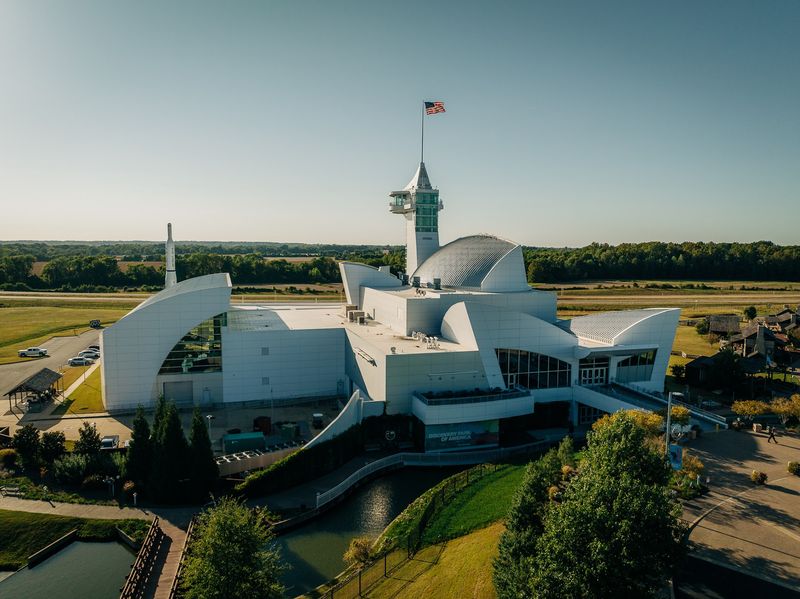
Driving the flat farm roads of northwest Tennessee, you would never guess a three-story museum and a 50-acre heritage park sit behind the soybean fields. But there it is, with dinosaur fossils inside and a replica frontier village outside, all reachable on one ticket.
A working grist mill from 1816 grinds away a short walk from a 20,000-gallon aquarium stocked with local lake fish. It is the kind of place families plan a whole Saturday around, then leave realizing they missed half of it.
A 50-Acre Surprise On The Edge Of Union City
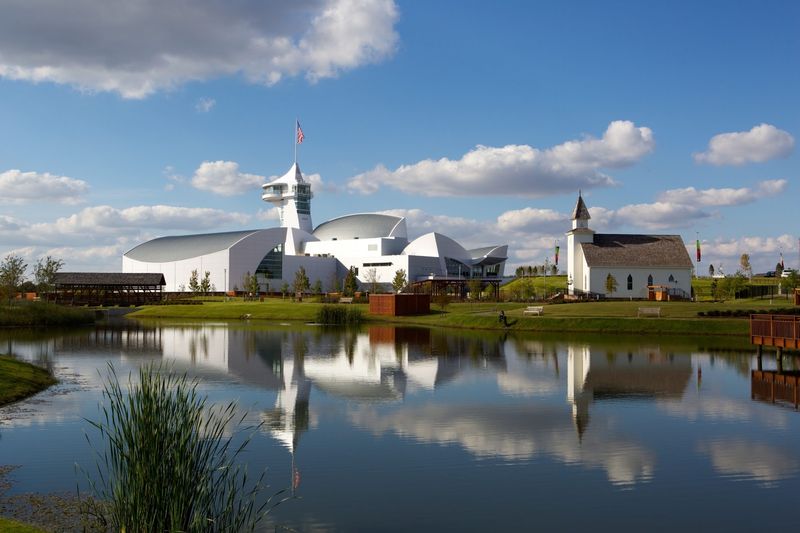
Union City sits up in the far northwest corner of Tennessee, closer to Kentucky than to any big Tennessee city, and Discovery Park of America occupies 830 Everett Blvd on the town’s edge.
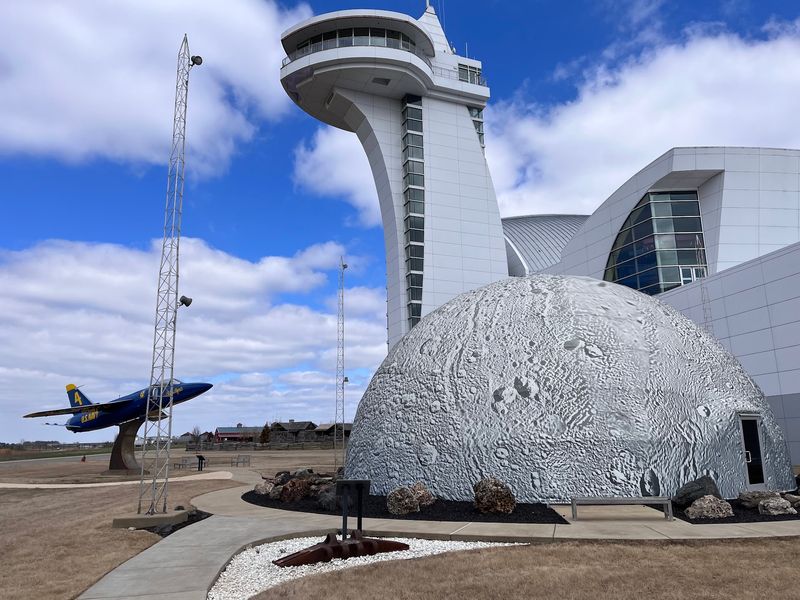
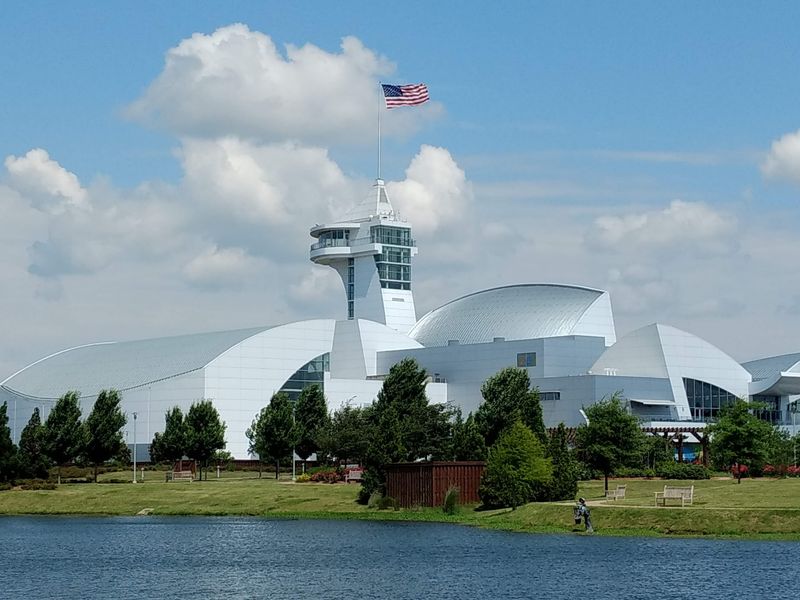
The scale catches most first-timers off guard. You get a 100,000-square-foot museum with ten exhibit galleries, plus a 50-acre outdoor heritage park, and one general admission ticket opens both halves.
Inside, the galleries run through science, space, technology, military history, natural history, regional history, art and transportation. Outside, paved paths wind past a replica early-1900s town, a man-made river with waterfalls, and a rebuilt frontier settlement.
Google Maps files it under Museum, which undersells things considerably. Visitors regularly describe it as an all-day outing rather than a two-hour stop, and several mention spending three-plus hours without seeing everything.
Drive times are the honest part of the pitch: roughly 2 hours 45 minutes from Nashville, about 2 hours from Memphis, and around 1 hour 23 minutes from Jackson. That puts it within reach of a single Saturday for most of West and Middle Tennessee, though it is a real drive, not a quick errand.
The Brewer-Austin Mill And Its 1816 Machinery
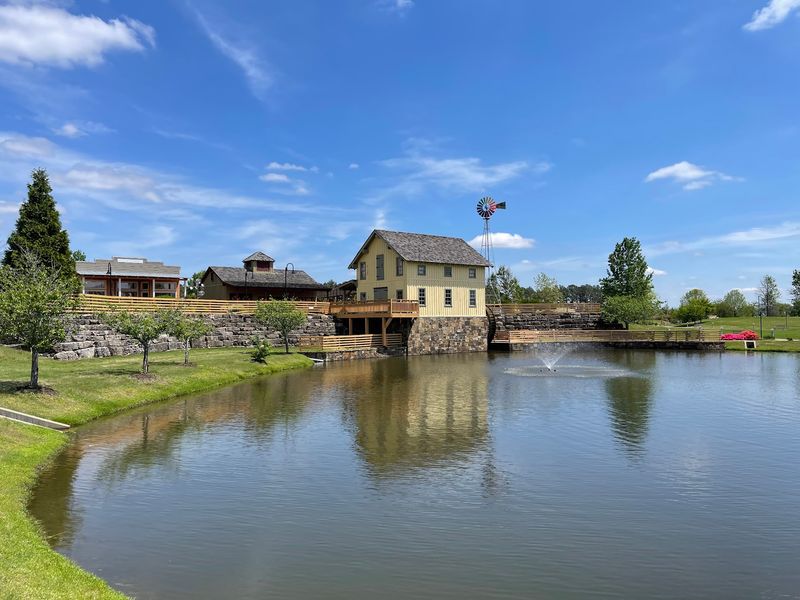
Two hundred years of Tennessee milling history sit quietly in the heritage park, and plenty of guests walk right past it on their way to the dinosaurs.
The grist mill here is known as the Brewer-Austin Mill, and its machinery was originally installed in 1816 as part of the Massengill Mill near Knoxville. That makes it older than most standing structures in the state, and it was moved across Tennessee to grind again in Union City.
It functions, which is the whole point. A working mill turns a display case into a demonstration, and watching stone grind grain is one of those simple mechanical processes that holds a kid’s attention longer than a screen does.
The mill area is not paved like the rest of the grounds. A family who visited with a wheelchair user noted the fine-grain surfacing there was packed well enough to navigate, though it takes a bit more effort than the main walkways.
Access is included with standard admission, no separate ticket needed. If milling and pioneer trades are your thing, budget extra time in this corner.
Twenty Thousand Gallons Of Local Lake Life

Most aquariums in the South go straight for sharks and stingrays. The tank here takes a different angle entirely.
Holding 20,000 gallons, the aquarium spotlights aquatic life from the region’s own lakes, which in this part of Tennessee means the waters around Reelfoot. Freshwater fish rarely get top billing anywhere, so seeing them at scale, in clear water and good light, reframes species most people only encounter on the end of a fishing line.
For families, the tank earns its keep as a pacing tool. After a stretch of reading placards and pressing buttons, a big glass wall of moving fish gives everyone a quiet minute to just watch.
The aquarium is part of the museum’s ten galleries, so it is covered by general admission with no add-on. It also pairs neatly with the earthquake exhibit, since the same seismic event that shaped Reelfoot Lake gets told a few rooms away.
Anglers and grandparents who fished these lakes decades ago tend to linger longest, naming species out loud for whoever will listen.
Climbing The Cooper Tower For Two-State Views
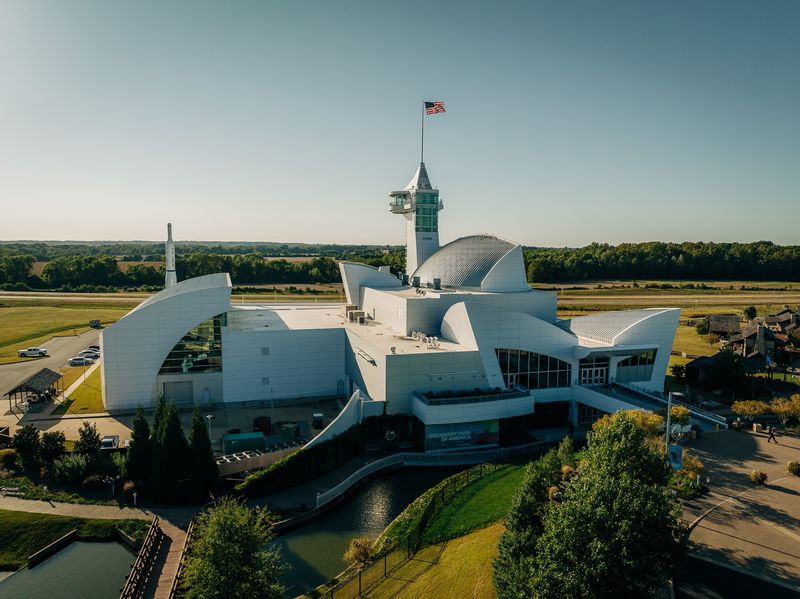
Flat country has one advantage: put anything tall on it and you can see forever.
The Cooper Tower rises 120 feet above the grounds, and from the top the view reaches across farmland and into Kentucky. On a clear day the horizon does most of the work, and the tower gives you the only high vantage point for miles.
Here is the fine print worth knowing before you arrive. While the grist mill and aquarium come with standard entry, the tower typically requires an add-on or a package.
Tower access runs about $6.99 per person if purchased separately, and admission details can shift seasonally, so confirm before you drive.
Two bundles solve it. The Explorer Plus Package and VIP Passes both include unlimited tower access, plus discounts at the gift shop and on-site dining.
One family mentioned choosing a pick-two option that covered the tower and a 3D show without stretching the budget. Guests who make the climb list it among the day’s highlights, right beside the dinosaurs and the simulator.
Dinosaur Fossils And The Earthquake Simulator
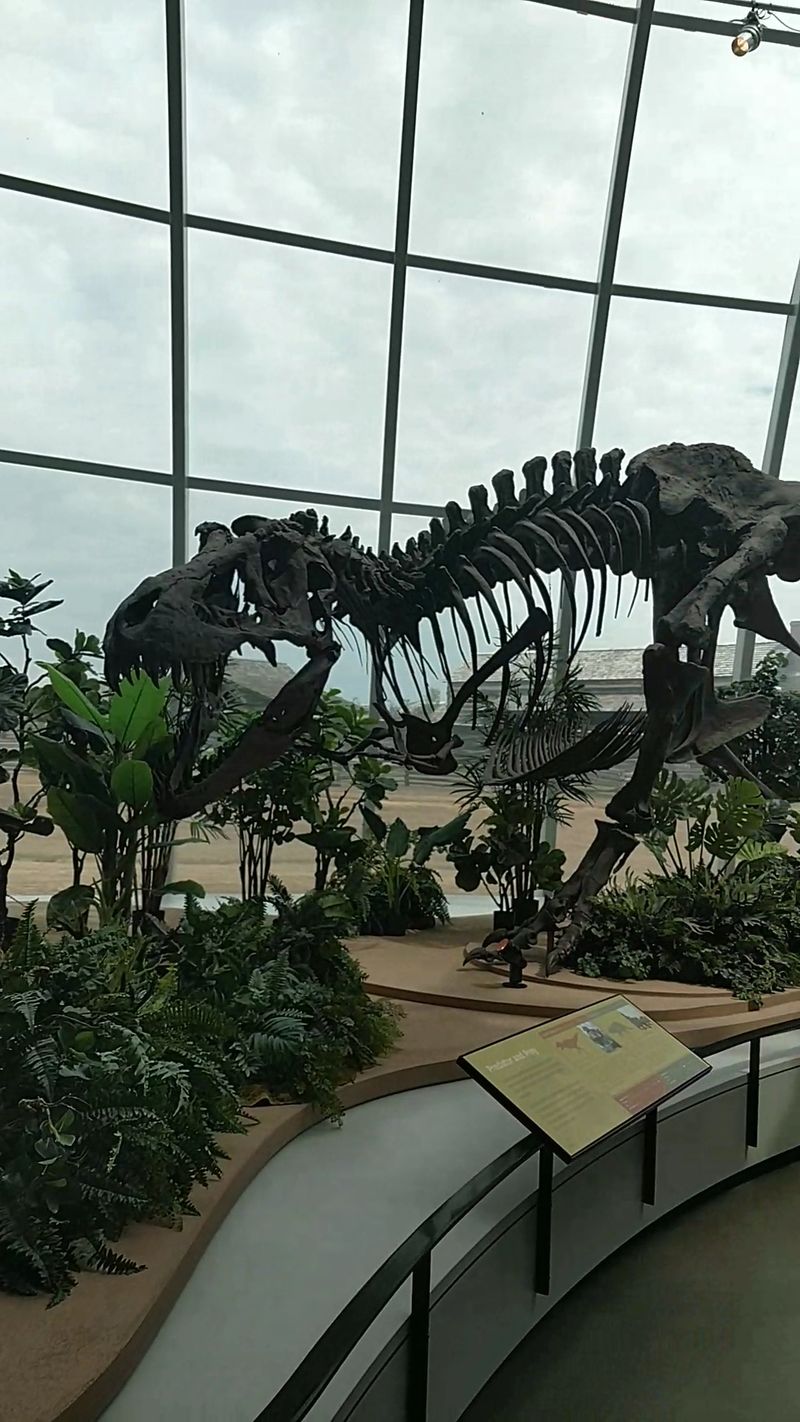
Ask what people remember from a visit and two answers dominate: the dinosaurs and the shaking room.
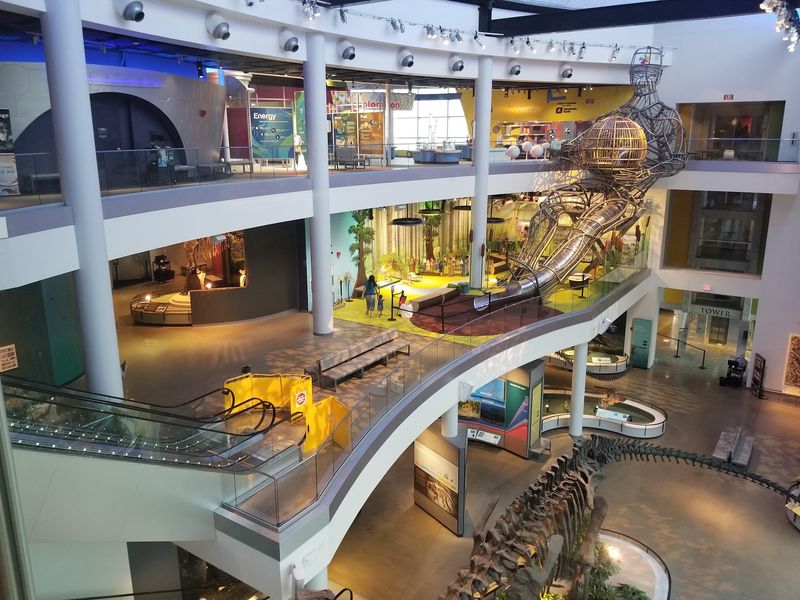
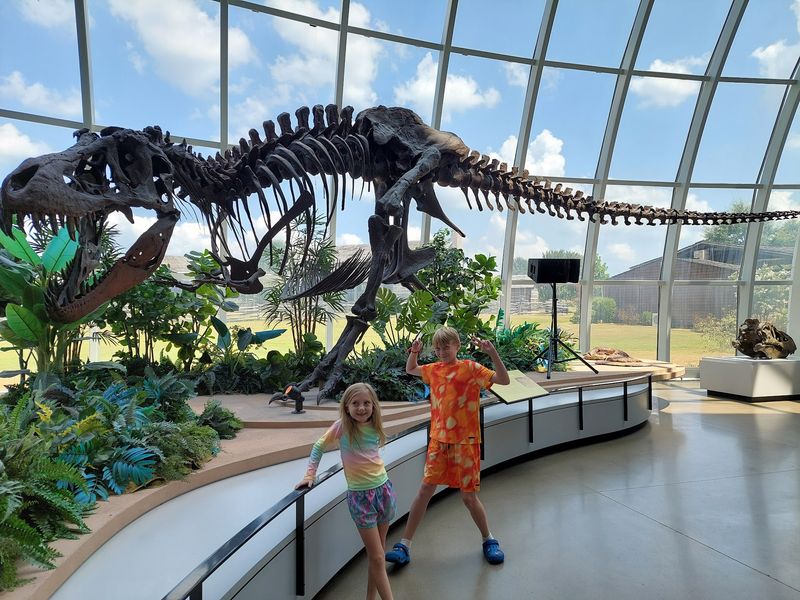
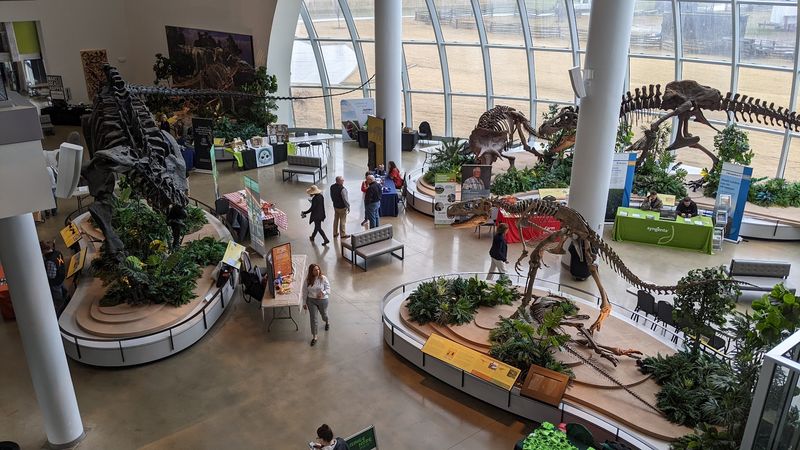
Full-scale dinosaur fossils anchor the natural history side of the museum, and they are easily the single most-mentioned feature among visitors. Kids who arrive skeptical about a museum day tend to change their minds standing under a skeleton.
The 4-D earthquake simulator does the other half of the job. It recreates the seismic force that formed Reelfoot Lake, and guests describe genuinely feeling the ground move.
Adults report enjoying it as much as their children do, which is the mark of an exhibit built properly.
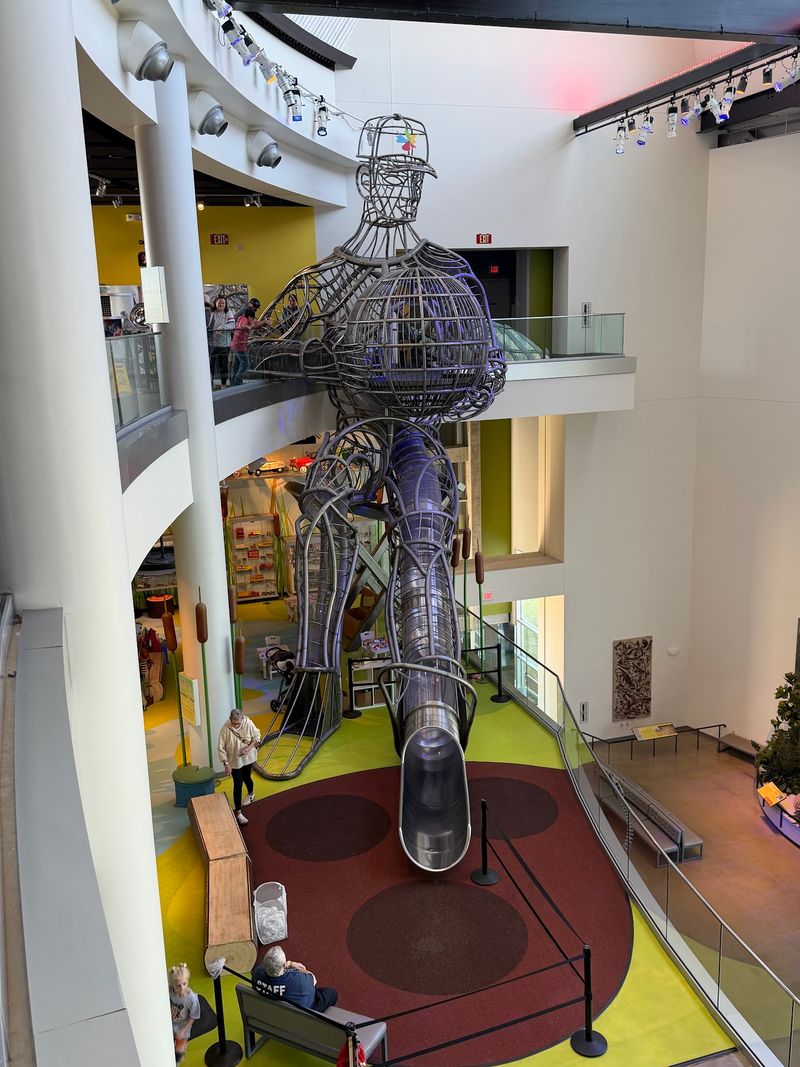
A giant human body slide in the main atrium adds a third memory-maker, the kind of thing children beg to repeat before leaving.
Fair warning from a few visitors: some displays are light on dates and interpretive detail, and one guest wished for more audio explanation aimed at older kids rather than little ones. The hands-on pieces carry the experience more than the signage does, so let curious kids push buttons and ask questions.
Vintage Cars, Military Vehicles And A Blue Angel Jet
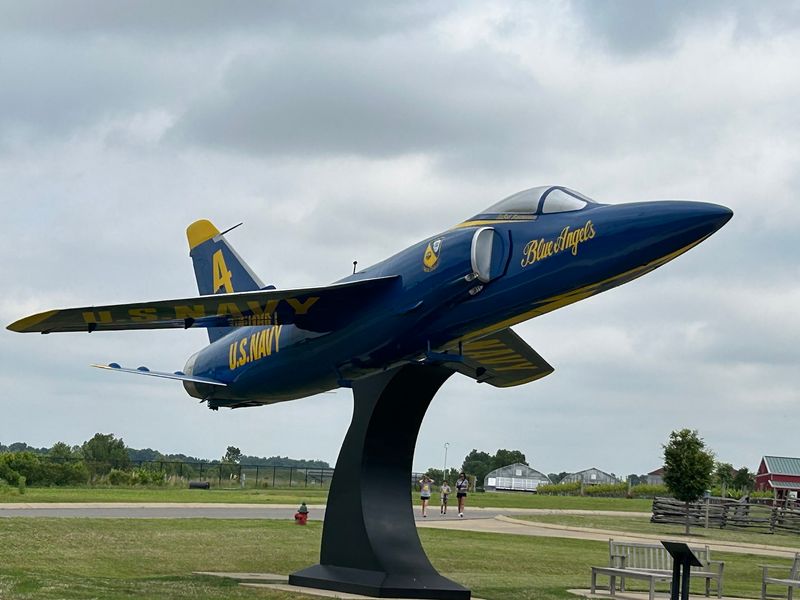
Car people come here and forget about the rest of the building.
The transportation galleries hold an extensive collection of vintage automobiles, and they are among the most praised parts of the museum for grown-up visitors. Military vehicles and aircraft round out the display, giving the space a garage-museum feel that rewards slow walking.
Outdoors, a static Blue Angels jet sits on the grounds alongside other aircraft. It photographs beautifully and gives kids a sense of scale that no model can match.
Military history gets its own treatment inside, covered as equipment, engineering and the story of American service, with vehicles and aircraft doing the explaining.
What makes this section work for mixed groups is that it appeals across generations at once. A grandparent recognizes the car they learned to drive in, a teenager studies the engineering, and a six-year-old just likes that everything is enormous.
Antique tractor shows also turn up on the calendar occasionally, drawing a different crowd entirely. If machinery interests anyone in your car, this is the gallery to hit while energy levels are still high.
The Replica Early-1900s Town And Frontier Settlement
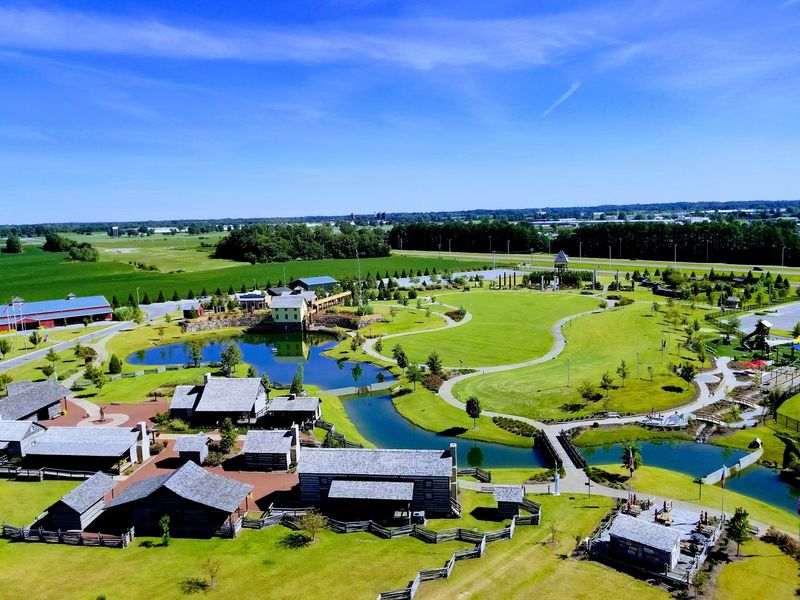
Step out the museum’s back doors and the century flips backward.
Spread across the heritage park is a reproduction of an early 20th-century town, complete with storefronts, plus a separate replica 19th-century frontier settlement of log cabins. Several cabins have ramps, and the walking loops connect the whole scene into one continuous stroll.
A restored 120-year-old church stands among the buildings and draws steady admiration from visitors, who often call it the most striking structure on the grounds. It is the sort of building people step into and lower their voices without being asked.
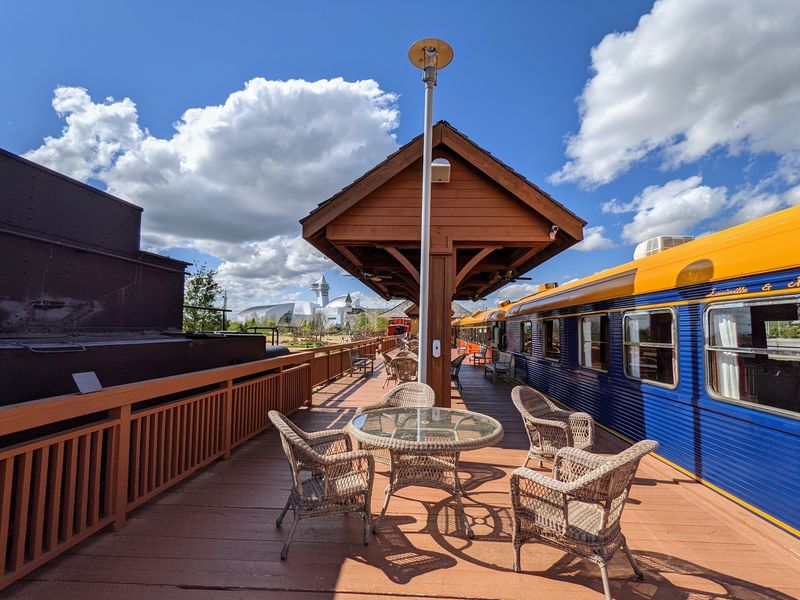
Nearby, a turn-of-the-century train station displays a restored steam locomotive along with historic cars and a caboose. Train-minded kids will want that stop on the list early.
A man-made river with waterfalls threads through the acreage, and Japanese gardens offer benches for a breather. One couple got caught in rain near the gardens, sat it out, and described the pause as unexpectedly peaceful.
Landscaping quality varies with the season, and some winter visitors found the gardens less lively than in warmer months.
Playground, Zip Line And The PlayOdyssey Tower
Somewhere around hour three, kids stop reading and start needing to run. The park planned for exactly that.
A nature-inspired playground sits on the grounds, built around a PlayOdyssey Tower for climbing, with a mini zip line for kids who want a little airtime. It is the pressure valve of the whole visit.
Smart parents save it for the back half of the day rather than the beginning. Burn that energy first and the museum galleries become a hard sell.
The playground also gives families with a wide age spread somewhere to regroup. Older kids can chase the zip line while adults watch from a bench, and nobody has to hurry anyone along.
Paved paths lead to most outdoor areas, which helps with strollers and wheelchairs alike. One parent visiting with a teenager who uses a wheelchair found nearly all outdoor areas reachable, with only the settlement and mill zones on unpaved but well-packed surfacing.
Birthday groups turn up here too. One family celebrated an eighth birthday at the park and singled out how many hands-on options kept everyone included.
What The Day Actually Costs In 2026
Numbers first, because that is what decides whether a Tennessee family loads the car.
For 2026, general admission runs $29.99 for adults 18 and up and $16.99 for children ages 4 to 17. Buying online knocks 10 percent off, and children three and under get in free.
Cooper Tower access adds about $6.99 per person unless it is bundled into the Explorer Plus Package or a VIP Pass, both of which include unlimited tower trips plus gift shop and dining discounts.
Promotions show up periodically and can change the math sharply. Kids 17 and under enter free throughout January 2026, which turns a family outing into two adult tickets and nothing more.
Straight talk on value: some visitors feel the base adult price sits high for what is included, particularly since several experiences carry extra fees. Others counter that a full day of exhibits, outdoor acreage and playground time justifies it easily.
The fairest read is that this works best as a full-day commitment, not a quick stop. Prices and offers may shift seasonally, so check before driving.
Hours, Closed Days And Seasonal Schedules
Mondays will ruin an unplanned trip, so start there.
From August 2026 through February 2027, the park is closed Mondays, open Tuesday through Saturday from 10 a.m. to 4 p.m., and Sunday from 11 a.m. to 4 p.m. Current listed hours match that pattern.
Warm-season hours stretch longer. March through July 2026, doors open 10 a.m. to 5 p.m.
Monday through Saturday and 11 a.m. to 5 p.m. Sunday, giving you an extra hour to work with.
Arriving at opening is the advice repeat visitors give most often. With a 100,000-square-foot museum and 50 acres outside, a 10 a.m. start and a 4 p.m. close leaves six hours, and plenty of people still leave with sections unseen.
Holiday schedules can vary, and the winter holiday light season brings both drive-through and walk-through options that operate on their own timetable. Confirm the calendar before committing, especially if you are driving three hours from Nashville.
Shops and outdoor food stands do not always run on quieter days, which a few guests discovered mid-visit.
Lunch On Site And Burgers Or Barbecue In Town
Food is the one spot where visitors consistently want more, and knowing that in advance saves frustration.
Sabin’s Cafe sits near the main entrance and handles most meals, with a range of options for families who do not want to leave and come back. An outdoor stand called Eats and Treats sells hot dogs, chips and similar quick bites on select days.
Opinions on the cafe vary. Some guests found lunch genuinely good, while others thought the menu could use expansion and a quality bump, and a few arrived on days when the outdoor stand was closed.
Union City has options a few minutes away if you would rather eat in town. Scott’s Grill does burgers and pizzas, and Vaughn’s Corner Bar-B-Que serves traditional pulled pork sandwiches, both easy detours before or after the park.
The smart play for budget-conscious families is deciding your food plan before you buy tickets. Eating in town generally costs less than on-site dining, though leaving mid-visit eats into your limited hours.
Explorer Plus and VIP holders get dining discounts, which shifts that calculation somewhat.
Accessibility, Strollers And Room To Maneuver
Families who plan around mobility needs often have to guess. Here, other visitors have already mapped it out.
Outdoor areas are largely paved, which means strollers and wheelchairs roll easily across the bulk of the 50 acres. The settlement and grist mill zones use fine-grain surfacing instead, packed firmly enough to navigate with some effort.
Ramps serve several of the log cabins, so the historic buildings are not off-limits. A parent visiting with a teenager who uses a wheelchair and an older sibling reported reaching nearly everywhere they wanted to go, indoors and out.
Inside, the three levels offer generous space between exhibits. Room to maneuver came up specifically, along with the fact that many displays can be touched and operated rather than just viewed from a distance.
Accessibility shows up repeatedly in visitor comments, and staff friendliness is mentioned nearly as often. One group praised an educator who got a batch of kids genuinely excited about rocks.
Restrooms and paved loops make the outdoor half manageable with young children, though shade varies, so summer visits call for hats and water.
Who Gets The Most Out Of A Visit
Grandparents without kids in tow report having a fine time here, which tells you something about the range.
Families with elementary-age children are the core audience, and the combination of fossils, simulator, slide and playground practically guarantees a good day for four- to ten-year-olds. Several parents describe hours passing without complaint.
Retirees and car enthusiasts find their own track through the building. The vintage automobile gallery, the train depot with its restored steam locomotive, and the military vehicle collection reward patient looking, and the Japanese gardens provide somewhere to sit.
Homeschool groups and field trips fit naturally, especially with STEM exhibits and staff educators on hand. One couple visiting alone enjoyed themselves enough that they immediately planned a return trip with grandchildren.
Teenagers are the trickier crowd. A few visitors noted that interpretive material leans young in places, so older kids may want the tower, the 3D theater or the transportation galleries to stay engaged.
Special events sweeten certain dates. Historical reenactments, antique tractor shows and the seasonal holiday light displays each pull their own audience beyond the standard exhibits.
Worth The Drive From Nashville Or Memphis
Roughly 2 hours from Memphis, 2 hours 45 minutes from Nashville, and about an hour and 23 minutes from Jackson. That is the commitment, and it is the fairest way to judge the whole proposition.
For a two-hour drive and a couple of adult tickets, you get a 100,000-square-foot museum with ten galleries, 50 acres of outdoor grounds, an 1816 grist mill, a 20,000-gallon aquarium and a 120-foot tower if you spring for the add-on. Few single-stop attractions in Tennessee pack that much variety into one gate.
The honest caveats: base admission feels steep to some visitors, several experiences cost extra, and cafe food draws mixed opinions. Pack accordingly or plan a barbecue stop in town.
Go early, go on a day the park is not closed, and treat it as a full Saturday rather than an afternoon detour. Buy online for the 10 percent discount and watch for promotions like January’s free kids admission.
Plenty of Tennesseans have never made the drive to this corner of the state. The ones who do tend to come back with more family members.