
9 Nevada Gorges And Canyons Where Families Find Waterfalls Most Visitors Never Reach
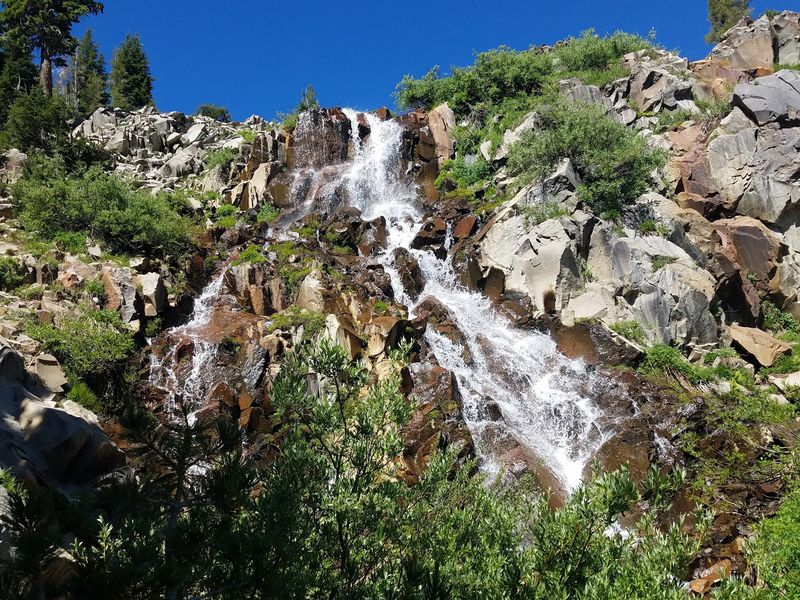
Nevada gets described as dry so often that most people never think to look for falling water here. Yet tucked into the state’s box canyons, glacial valleys, and red sandstone cracks are creeks that spill over ledges, sometimes only for a few months a year.
A tank of gas and a pair of sneakers is usually the whole budget, since almost every trailhead on this list charges nothing to park. Here are nine canyons where the water shows up, the hikes stay short enough for kids, and the crowds somehow never arrive.
1. Kings Canyon Waterfalls, Carson City
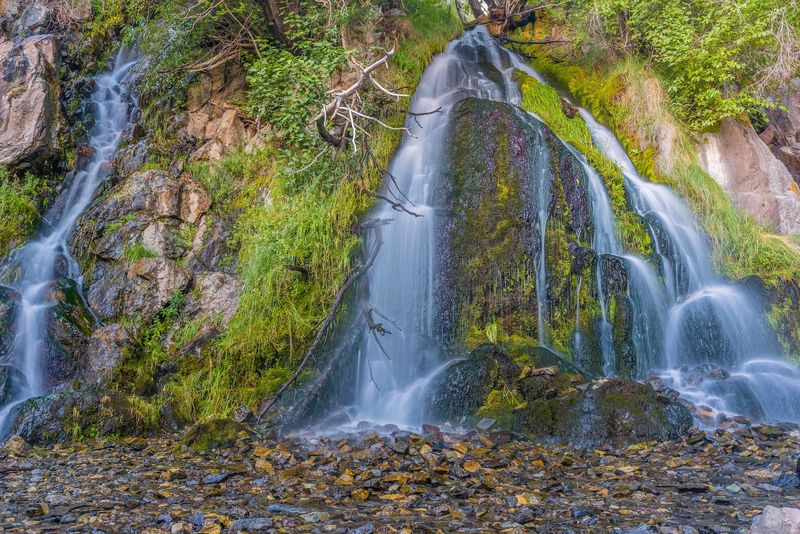
Five minutes from downtown Carson City, the pavement of King Street simply ends and a canyon trail begins. The walk in runs about three-tenths of a mile of zig-zag path before the canyon narrows and the waterfall appears, tucked under a canopy of trees.
Temperature is the first thing families notice. Air near the water sits noticeably cooler than the parking area, which makes this a smart July stop when the valley is baking.
Flow peaks during spring snowmelt, when the falls break into several thin ribbons down the rock. The creek here is clean enough to feed Carson City’s municipal water supply, which is also why dogs are not allowed on the trail.
Parking is free and plentiful, and there is a public restroom at the trailhead. Gates open at 8 AM daily, closing at 5 PM Monday and Tuesday and 8 PM Wednesday through Sunday, so confirm hours before a late-afternoon drive.
Sunday afternoons draw the most people. Mid-week mornings feel practically private, and an ambitious family can scramble farther up the creek to smaller cascades above the main drop.
2. Hunter Creek Falls, Reno
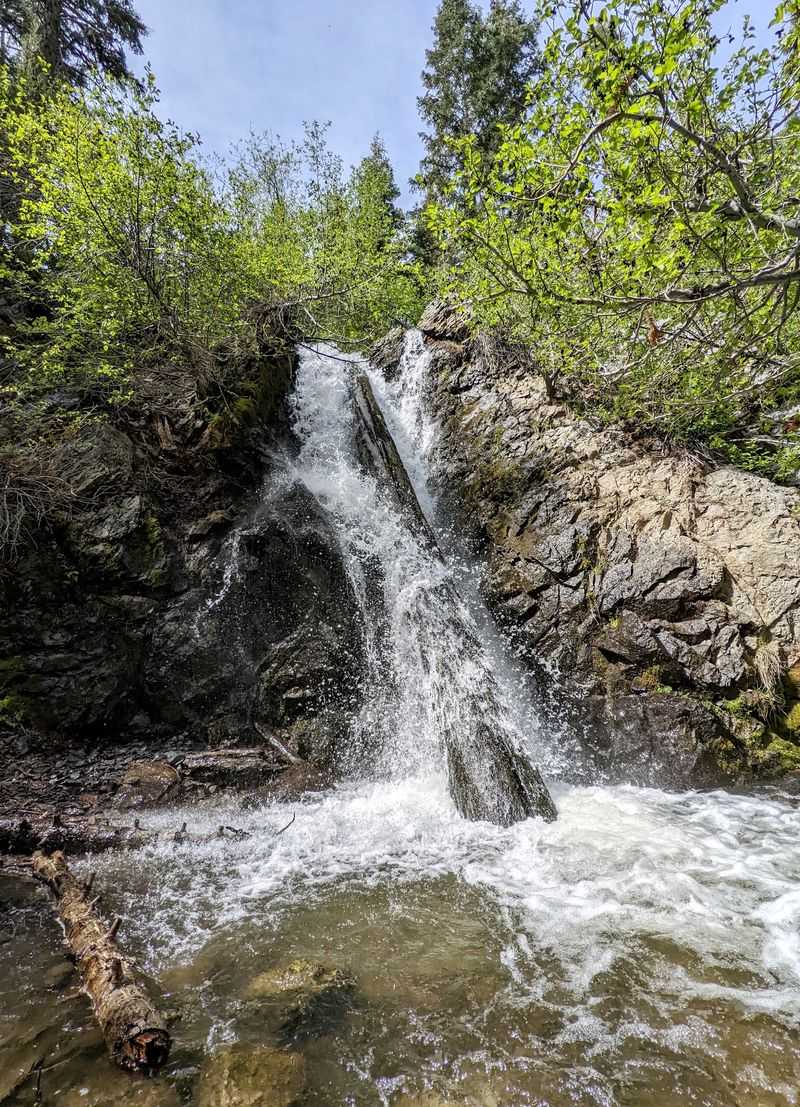
Reno residents have a serious waterfall inside city limits, and plenty of them have never walked to it. The Hunter Creek trailhead sits at the western edge of town, with free street parking and no gate to beat.
Be honest with the kids about distance. Round trip runs a little over six miles, climbing steadily up a rocky, steep-walled canyon before the grade eases into forest near the top.
What waits at the end is worth the effort: a tall cascade almost completely shaded by trees, where the air stays cold even in August. Natural seating on rocks near the base makes it an easy lunch spot.
The trail stays open 24 hours, and dogs are welcome outside. Sturdy shoes matter more than anything else here, because several long stretches are loose rock rather than smooth dirt.
Start early. Friday mornings and Sunday evenings see the heaviest foot traffic, while Monday afternoons and Tuesday nights thin out considerably.
Bring more water than seems necessary, since the lower canyon offers almost no shade.
3. Genoa Canyon Trailhead, Minden
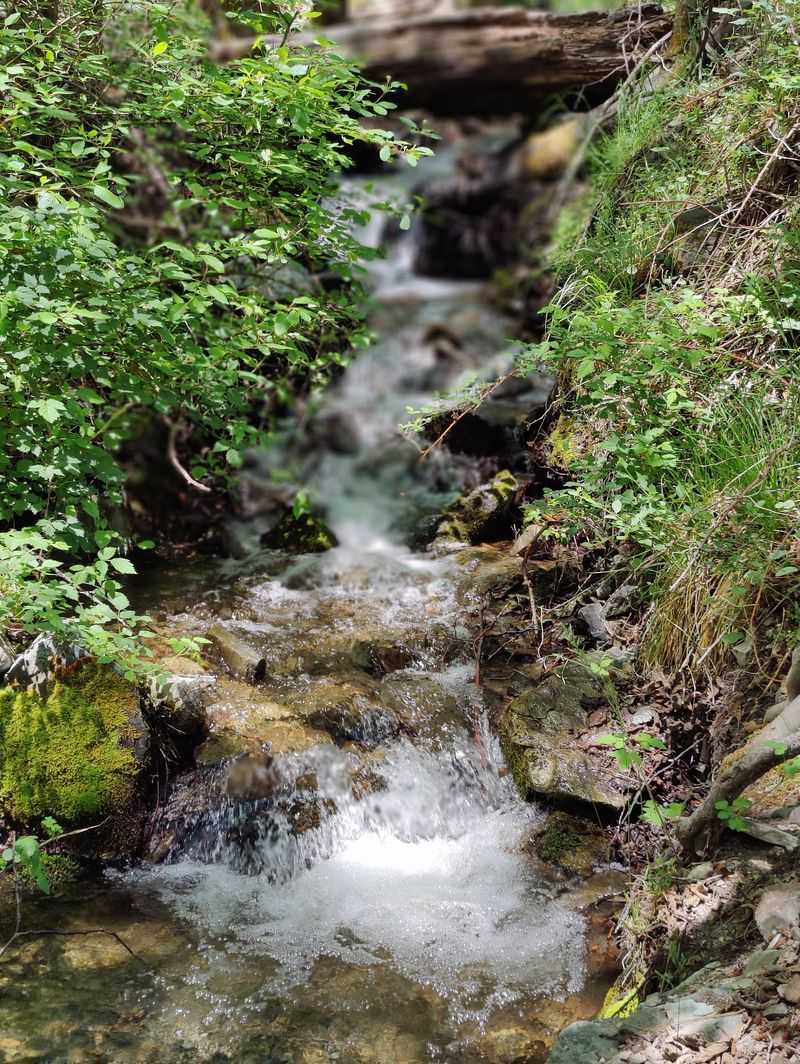
Carson Valley spreads out below like a relief map as you climb, which makes Genoa Canyon unusual among Nevada waterfall hikes: the view starts paying off long before the water does.
The trail system leaves from Genoa Canyon Road outside Minden and offers several difficulty levels, with steep inclines threaded through shaded forest. More than one waterfall hides up here, including a smaller cascade along the route and the larger Genoa Falls higher up.
Budget roughly two hours round trip to reach the waterfall and return. Grade is the main challenge rather than distance, so trekking poles help older knees on the descent.
Practical notes worth knowing before you leave the house: parking is limited, there is no restroom at the trailhead, and the access stays open around the clock. Leashed dogs are fine outside.
Solitude comes easily on weekday evenings. Saturday mornings and midday bring the biggest groups, while Monday afternoons through Tuesday mornings tend to feel secluded enough that the forest noise is all you hear.
4. Lost Creek Canyon, Las Vegas
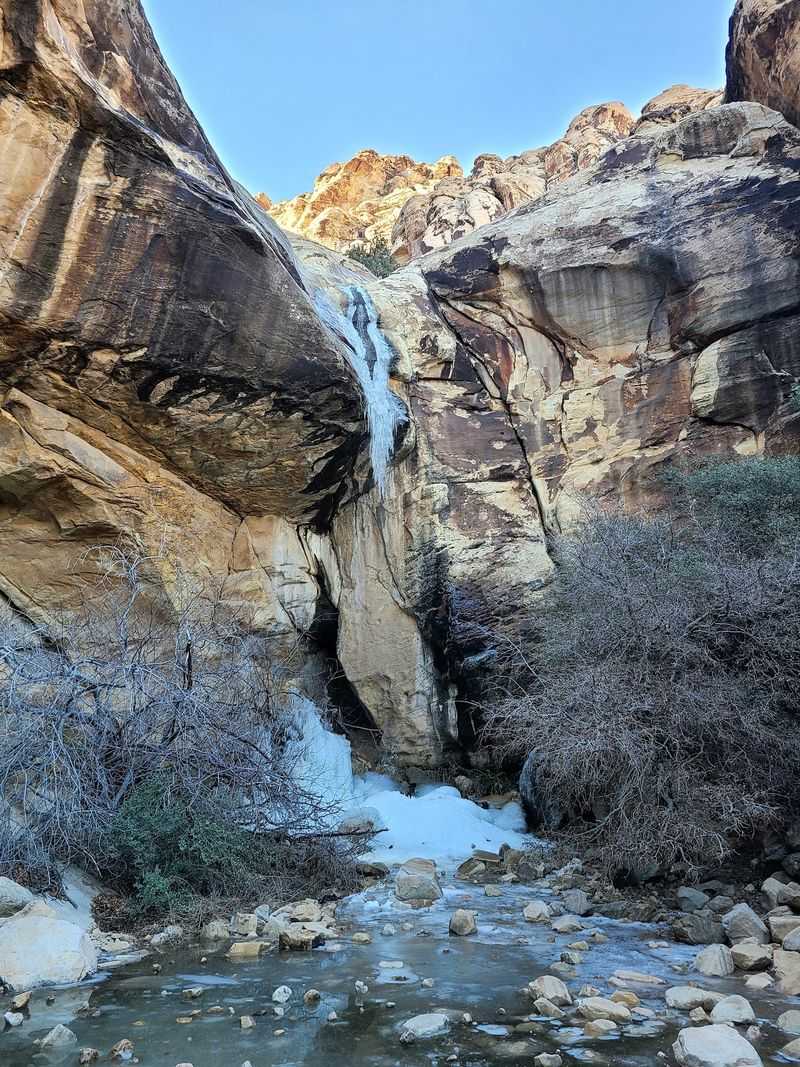
Water in the middle of the Mojave feels like a trick of the eyes, and Lost Creek Canyon delivers exactly that surprise a short drive west of Las Vegas.
The Children’s Discovery Trail makes a one-mile loop with around 200 feet of climbing, which most kids handle without complaint. Boardwalk sections protect the riparian ground, and interpretive plaques explain the canyon’s geology and history along the way.
Look for the petroglyphs as the path passes boulders and rock walls, then watch for a rock-covered archway. Just beyond it, a clearing opens at the base of the falls, fed by snowmelt or monsoon runoff depending on the season.
Timing decides everything. Winter through early spring gives the best odds of flowing water, while late summer often leaves nothing but a dry chute and a shady grove.
Rangers sometimes lead walks here, which turns the outing into a free nature lesson. Weekday mornings midweek are quietest; Mondays and Saturdays fill up fastest.
Adventurous families can explore the rougher canyon above the falls.
5. Ice Box Canyon Trailhead, Las Vegas
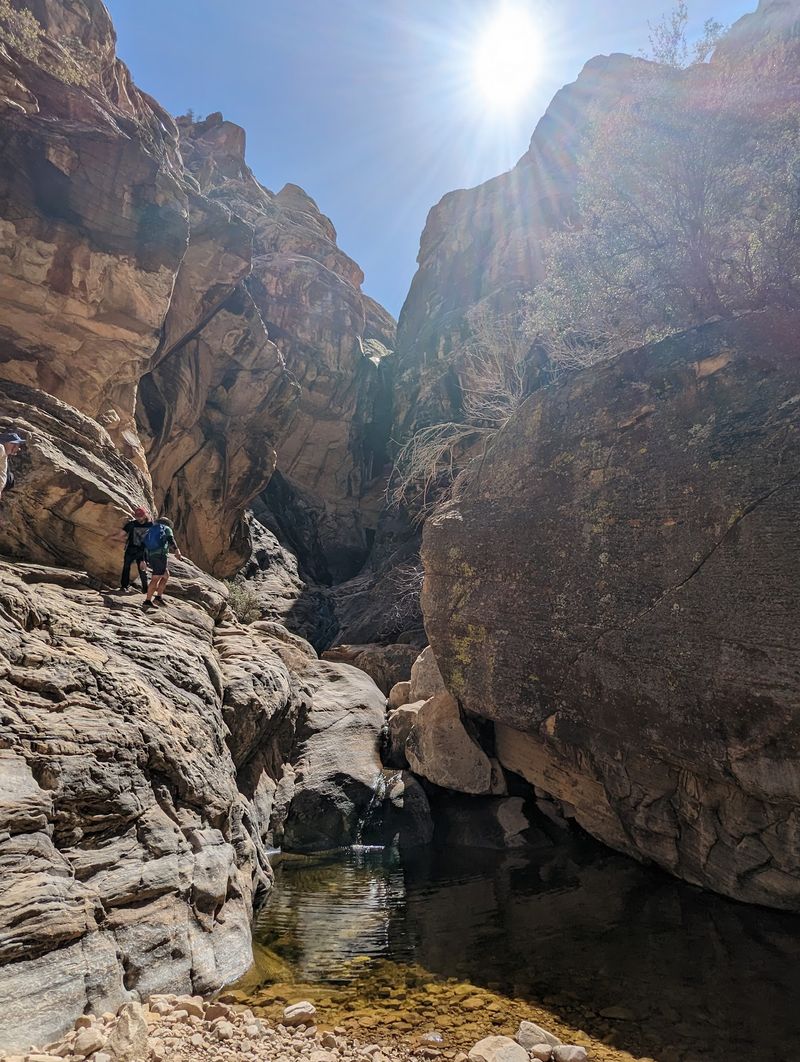
The name is not marketing. Deep inside this narrow slot on the Red Rock Canyon scenic drive, shaded walls keep temperatures dramatically lower than the desert outside, and ice can linger while the valley sits at 70 degrees.
Round trip covers about 2.2 miles, though the boulder-hopping in the upper canyon stretches that into a solid two-hour outing. Rate it moderate to strenuous and pack layers even on a warm morning.
Reward for the scramble is a seasonal waterfall pouring off sandstone cliffs, with smaller cascades along the drainage. Rain is the trigger, so plan a visit within a few days of a storm or during late winter runoff.
Gates run 6 AM to 7 PM, and parking is free at the trailhead lot. Because the scenic drive uses timed entry during busy months, check requirements before making the drive from town.
Tuesdays and Wednesday mornings are the calmest windows. Sundays, Mondays, and early Friday hours draw steady traffic, though the short trail keeps people moving in and out.
6. First Creek Trail, Las Vegas
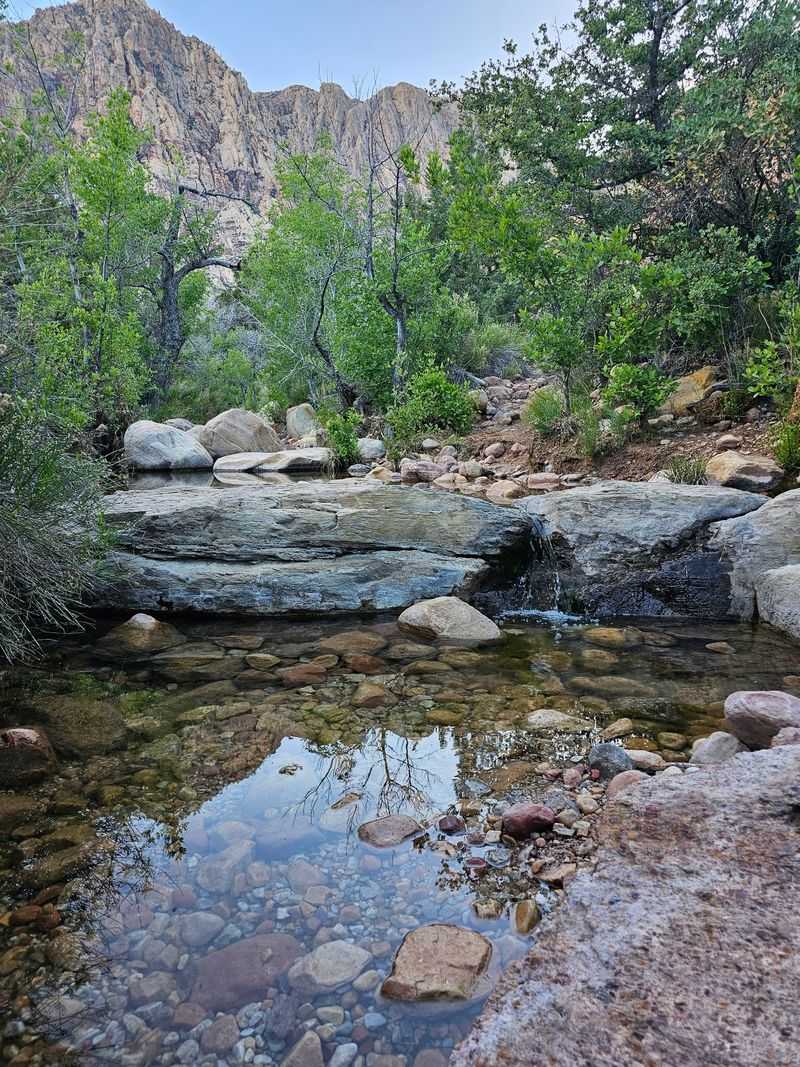
Beginners get the friendliest introduction to Red Rock waterfalls on this route, which starts right off the highway with free roadside parking and no entrance gate to navigate.
Distance depends on how far you wander. Some families turn around at a small waterfall about a mile and a half in, while the fuller out-and-back runs closer to four miles through a desert canyon at the base of the mountains.
Tread is mostly smooth with scattered small rocks, gentle enough that parents with two young kids commonly finish in about two hours. Cottonwoods and willows shade parts of the creek corridor, which helps on warm days.
Clear pools collect below the falls when water is running, and May often brings wildflowers after spring rains. Winter and spring are the reliable seasons; by summer the creek bed may be bare.
Official hours run 8 AM to 4:30 PM, and leashed dogs are welcome outside. Evening light on the sandstone makes the walk out especially pretty, so an afternoon start is not wasted.
7. Lamoille Canyon Scenic Byway, Spring Creek
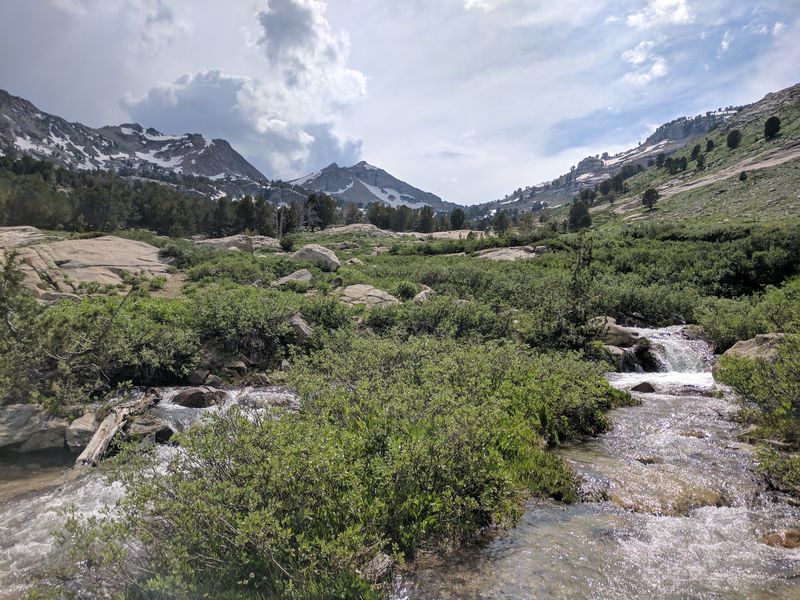
Nevada’s Ruby Mountains earned the nickname Alps of Nevada, and the paved byway up Lamoille Canyon is how families see them without a backpacking trip. Granite walls carved by glaciers rise on both sides, with waterfalls spilling down them during snowmelt.
You can enjoy the whole canyon from the car, pulling over at overlooks and picnic tables as cascades come into view. Temperatures often run 20 degrees cooler than the valley near Elko, which makes summer afternoons genuinely comfortable.
Trails branch off for those who want more. Thomas Canyon and the Right Fork both climb toward hanging valleys, with several distinct waterfalls along the way and a campground at the Thomas Canyon trailhead.
Restrooms, picnic sites, and free parking areas are spread along the route, and dogs are allowed. Access is open 24 hours in season, but snow closes the upper road in winter, so verify conditions before heading out.
Sunday mornings see the most cars. Tuesday afternoons feel like you rented the canyon outright.
8. Galena Creek Falls, Reno
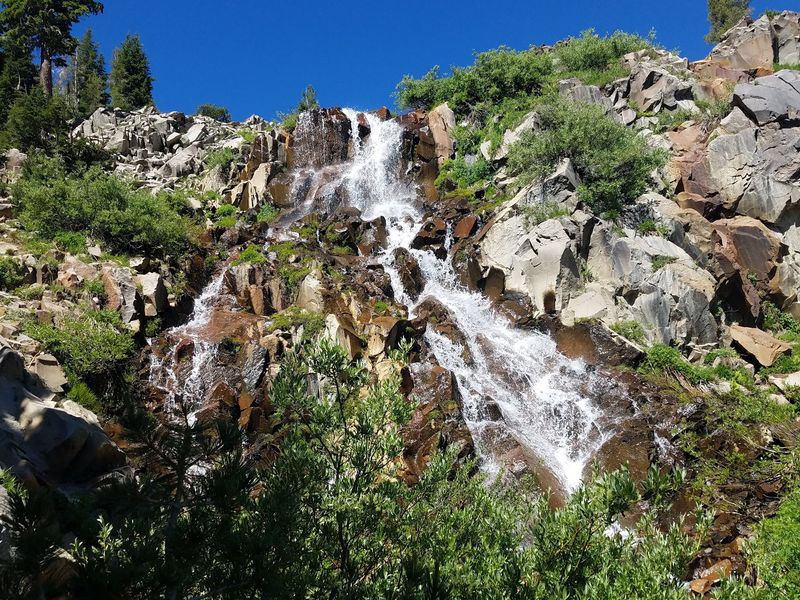
Fifteen to twenty minutes up the Mount Rose Highway from Reno, a well-graded trail leaves the parking area and heads for one of the prettiest alpine scenes in northern Nevada.
The falls drop roughly 60 to 80 feet over a granite ledge into a high-elevation meadow at the foot of Mount Rose. Water runs loud in early summer, and natural rock seating around the base invites a long snack break.
Route-finding is simple once you know the trick: from the near end of the lot, go behind the restrooms, up a short hill, then immediately right up stone steps beside the signage.
Round trip to the falls and back is about 2.5 miles with little elevation change, though continuing to the top of the falls stretches it closer to six. Families with young kids do the shorter version easily.
Mid-July often brings wildflowers across the meadow, and the falls flow much of the year. Parking is free, dogs are welcome outside, and Wednesday evenings or Thursday mornings are the quietest slots.
9. Little Falls
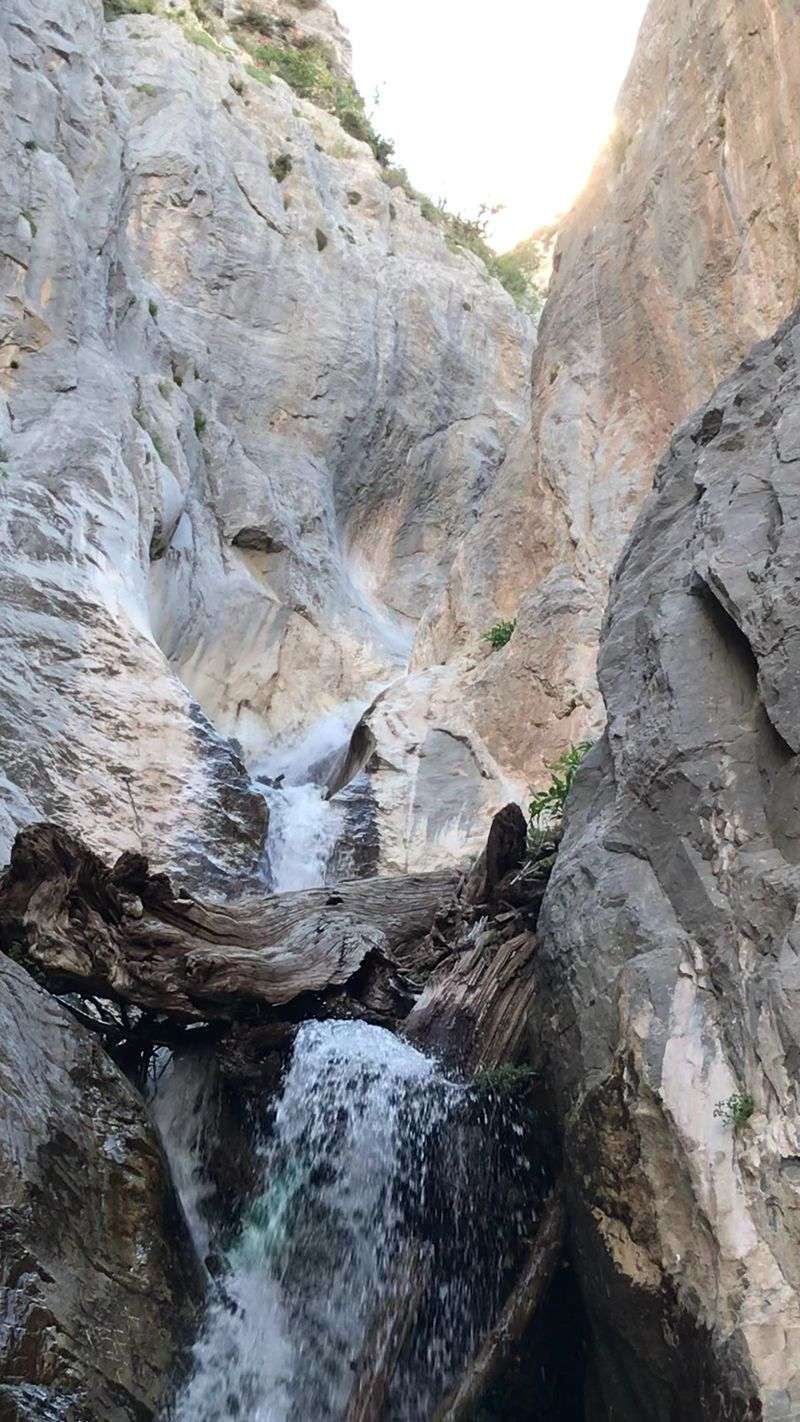
Thirty degrees cooler than the Las Vegas valley, and the drive takes under an hour. Mount Charleston is the escape hatch southern Nevada families lean on all summer, and Little Falls is its shortest waterfall payoff.
Half a mile each way gets you there, branching off the Echo Trail in Kyle Canyon. Some inclines are steeper than the mileage suggests, so call it moderate rather than flat.
At the end sits a compact waterfall tucked into a rocky pocket, with icy-cool water and enough space to sit for a while. Views open up along the way toward the surrounding pine and aspen slopes.
Trail signage is thin, which trips up newcomers. Downloading a map before losing cell service saves a lot of back-and-forth wandering at junctions.
Late afternoon works beautifully for sunset light, particularly if you are already staying up on the mountain. Bring a jacket regardless of the forecast in town, since the elevation change alone shifts conditions sharply.
Spring runoff gives the strongest flow, so aim for April or May when the snowpack starts to let go.