
This Ohio Space Museum Keeps A Gemini Capsule And A Moon Rock Under One Dome
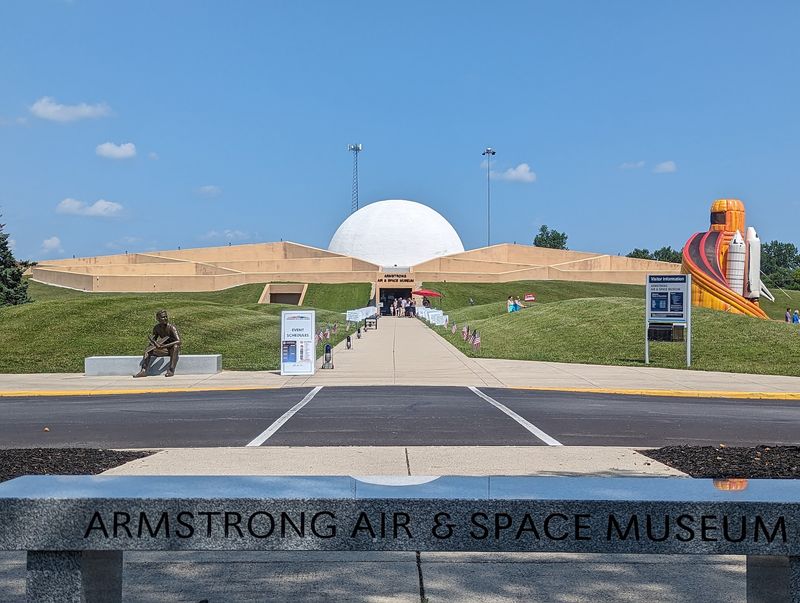
Driving north on a flat stretch of western Ohio highway, you might notice a low white mound rising out of a field like something dropped there from orbit. It looks too small and too strange to hold much, which is exactly why so many families blow past it on their way to somewhere else.
Inside that earth-covered building sits a spacecraft that actually flew, a piece of the moon you can stand inches away from, and the story of a quiet farm-town kid who ended up walking on another world. Stopping takes about two hours, and most people leave wishing they had done it years earlier.
A Moon Base Parked Off Interstate 75
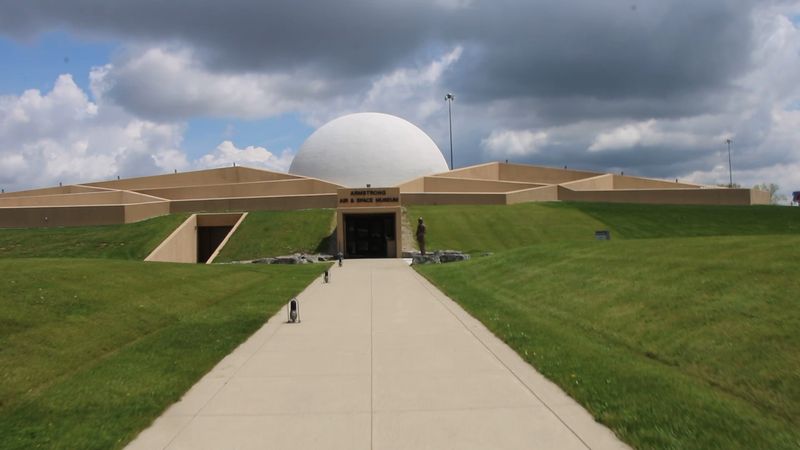
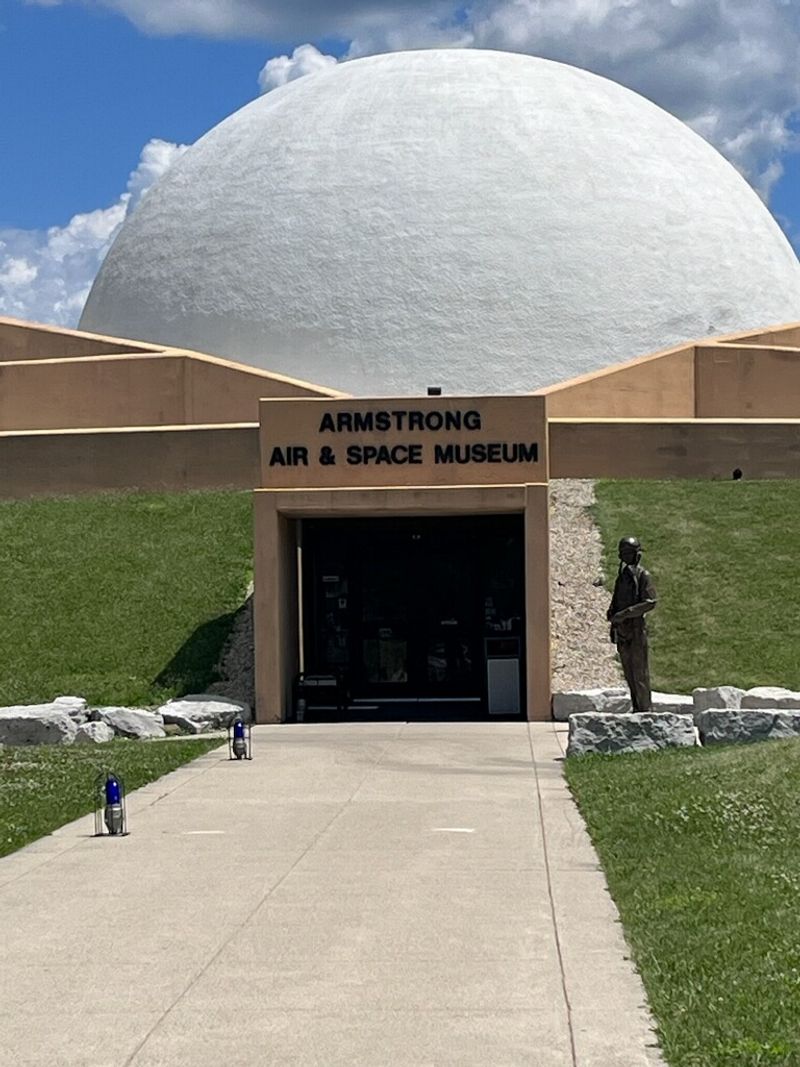
Wapakoneta sits in Auglaize County, western Ohio, right where Interstate 75 runs its long straight line between Dayton and Toledo. The Armstrong Air & Space Museum stands at 500 Apollo Drive, close enough to the interstate that you can spot the white dome from your car window.
Architects designed the place to resemble a lunar outpost. Much of the structure is pressed into earthen mounds, so from the parking lot you mostly see grass berms and a 56-foot dome poking up like something a crew assembled on another planet.
Neil Armstrong grew up here, and the museum is built around that fact rather than pretending to be a general aerospace collection. It is operated as part of the Ohio History Connection system.
Drive time works out to roughly an hour and twenty minutes from Columbus by way of US-33, and it is a straightforward run up or down I-75 from Dayton, Toledo, or Cincinnati.
Visitors regularly mention passing the exit dozens of times before finally pulling off. The building reads small from the road, which turns out to be misleading once you are inside.
The Gemini VIII Spacecraft, Scorch Marks And All
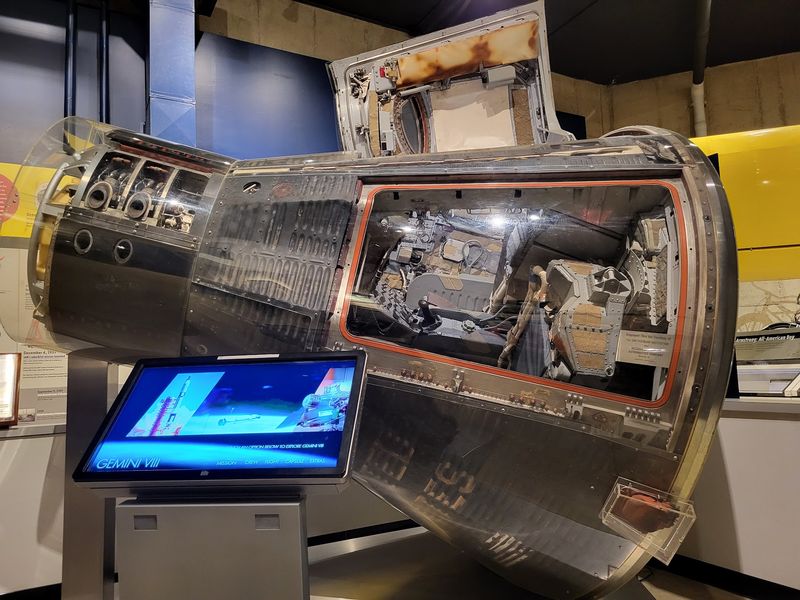
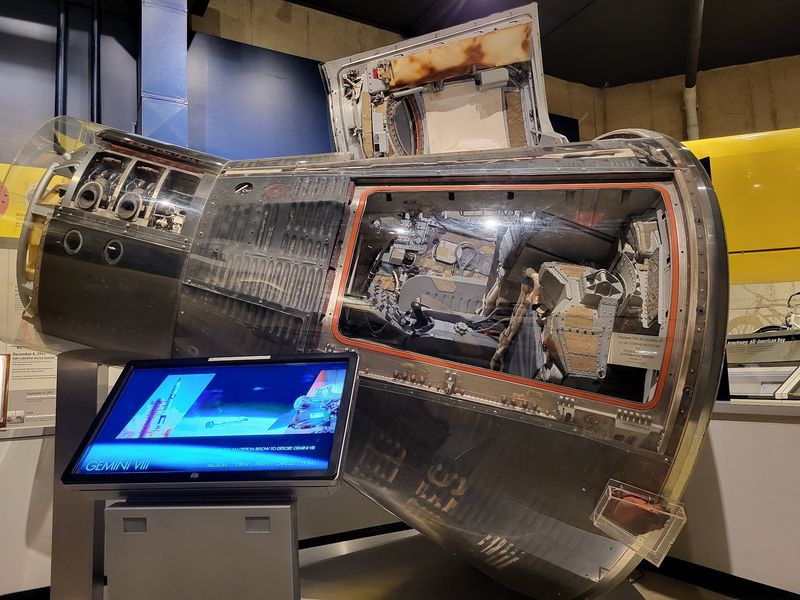
Front and center is the actual Gemini VIII capsule, not a replica. Neil Armstrong and David Scott rode this two-seat craft on March 16, 1966, and pulled off the first successful docking of two vehicles in space.
The flight did not go smoothly after that docking, and the crew brought the spacecraft home early. Standing beside it, the thing that registers first is how cramped it looks, and how rough the outer surface is after coming back through the atmosphere.
Kids tend to press close to the glass and go quiet for a second. Adults do the same thing, usually while doing math about how two grown men fit inside something roughly the size of the front seat of a pickup.
Guests often say the capsule alone justifies the stop, and several note that seeing a flown spacecraft in a small Ohio town feels slightly unreal.
Placards around the display walk through the mission timeline, so you can follow what happened without any prior knowledge of the program. Give yourself a few minutes here rather than rushing to the next case.
A Genuine Piece Of The Moon Behind Glass
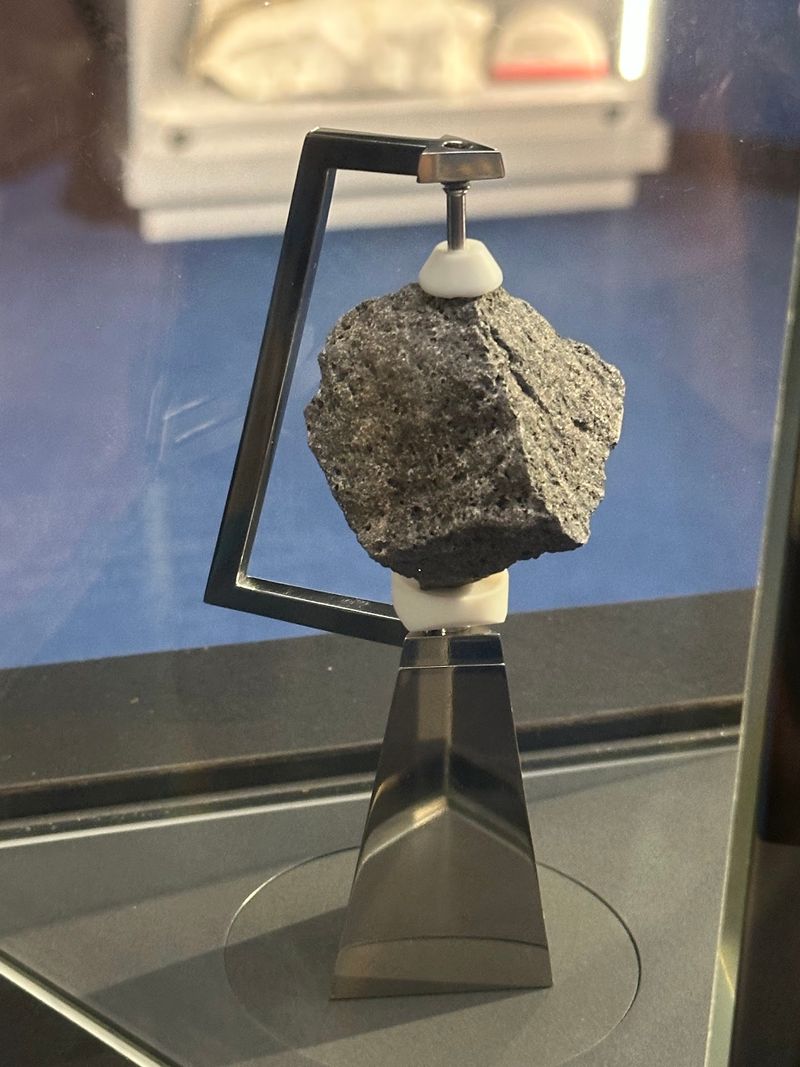
Thirty separate visitor comments single out the moon rock, which says something about its pull. The sample is a sizable chunk of vesicular basalt, brought back by Armstrong and Buzz Aldrin during Apollo 11 in July 1969, and it sits at the museum on permanent loan.
Vesicular basalt means volcanic rock full of tiny gas bubbles. Up close it looks gray, pitted, and honestly a little plain, which is part of the fun when you explain to a child that this ordinary-looking lump spent billions of years somewhere else entirely.
There is no touching it, and the sealed case keeps it protected, but the viewing distance is close enough for young eyes.
Parents traveling with elementary schoolers often use this stop as the anchor of the whole visit. Everything else in the building builds toward the moment someone fetched that rock and carried it home.
Consider pairing it with the newspaper clippings from July 1969 displayed nearby. Reading actual front pages from the landing, then turning to look at the rock, ties the story together better than any narration could.
Spacesuits, Patches, And The Soviet Side Of The Story
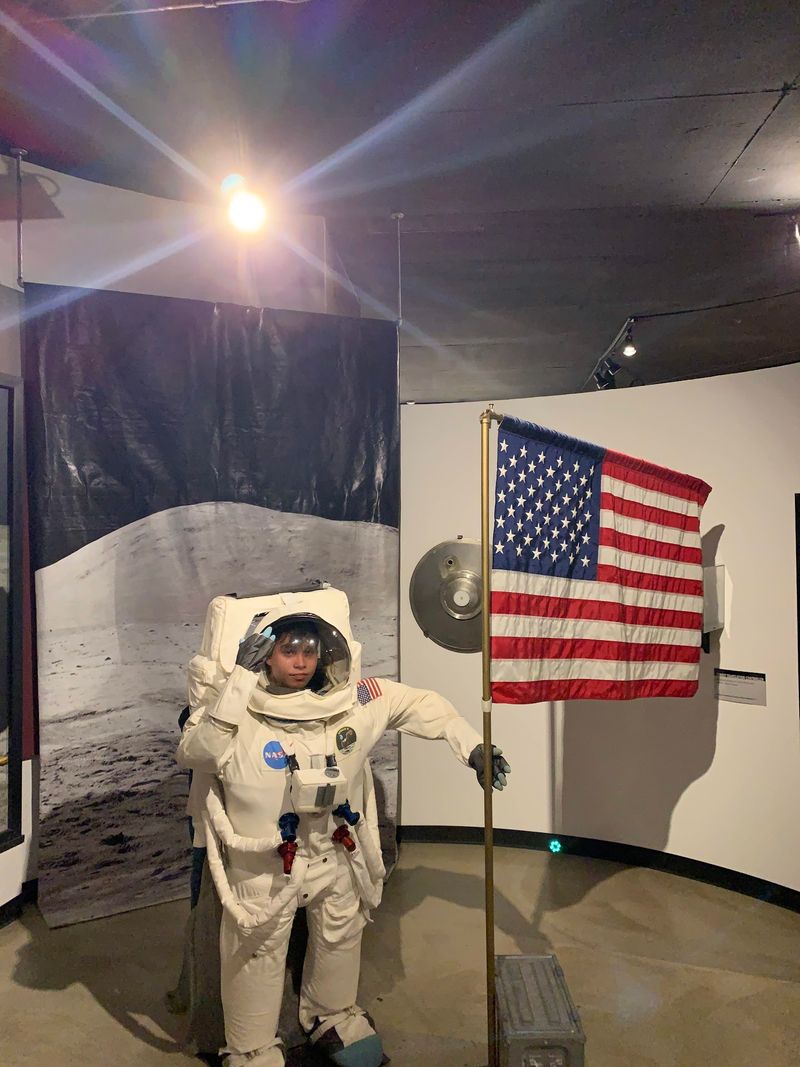
Armstrong’s Gemini suit is here, along with an Apollo suit that serves as the backup version, since the flown one lives at the Smithsonian. Seeing the layered fabric, the metal fittings, and the scuffs at close range explains more about the job than a textbook chapter would.
What surprises a lot of people is how much attention goes to the other half of the space race. Displays cover the Soviet program, including their own lunar ambitions, rather than treating the 1960s as a one-sided story.
Patch collectors have a field day. Several guests have remarked that the variety of mission patches on display rivals what they have seen at much larger space centers.
A portrait wall honors Ohio astronauts, and the count is higher than most residents expect. The state has sent a remarkable number of people into orbit for a place better known for corn and steel.
The timeline running through the Space Race galleries is one of the clearest sequential displays around, walking chronologically from early rockets through the landings. Read it in order if you have the patience.
Aircraft From Armstrong’s Flying Life
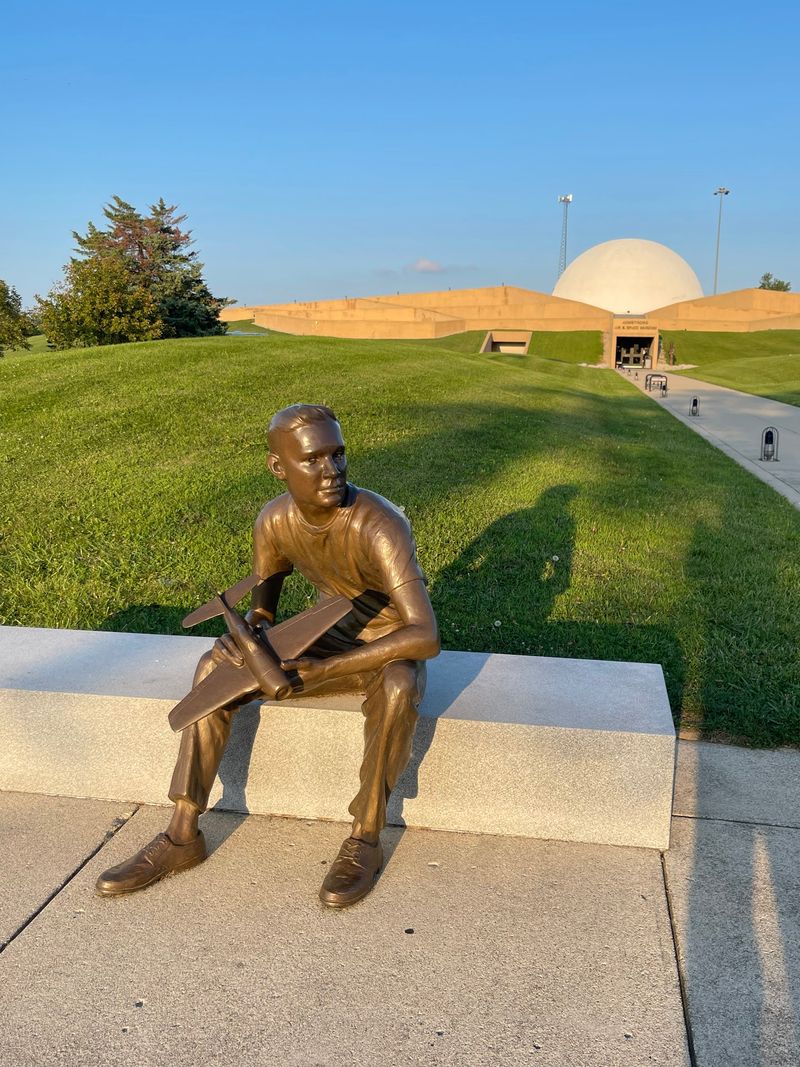
Before the moon, there was a teenage boy from Auglaize County learning to handle a small yellow airplane. The Aeronca Champion he trained in is preserved here, and it is a humbling little machine: fabric-covered, simple, nothing remotely futuristic about it.
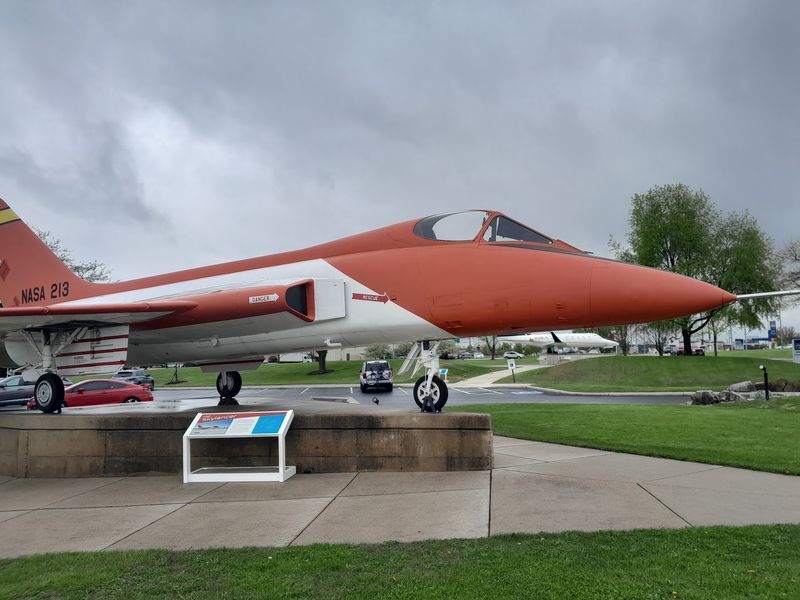
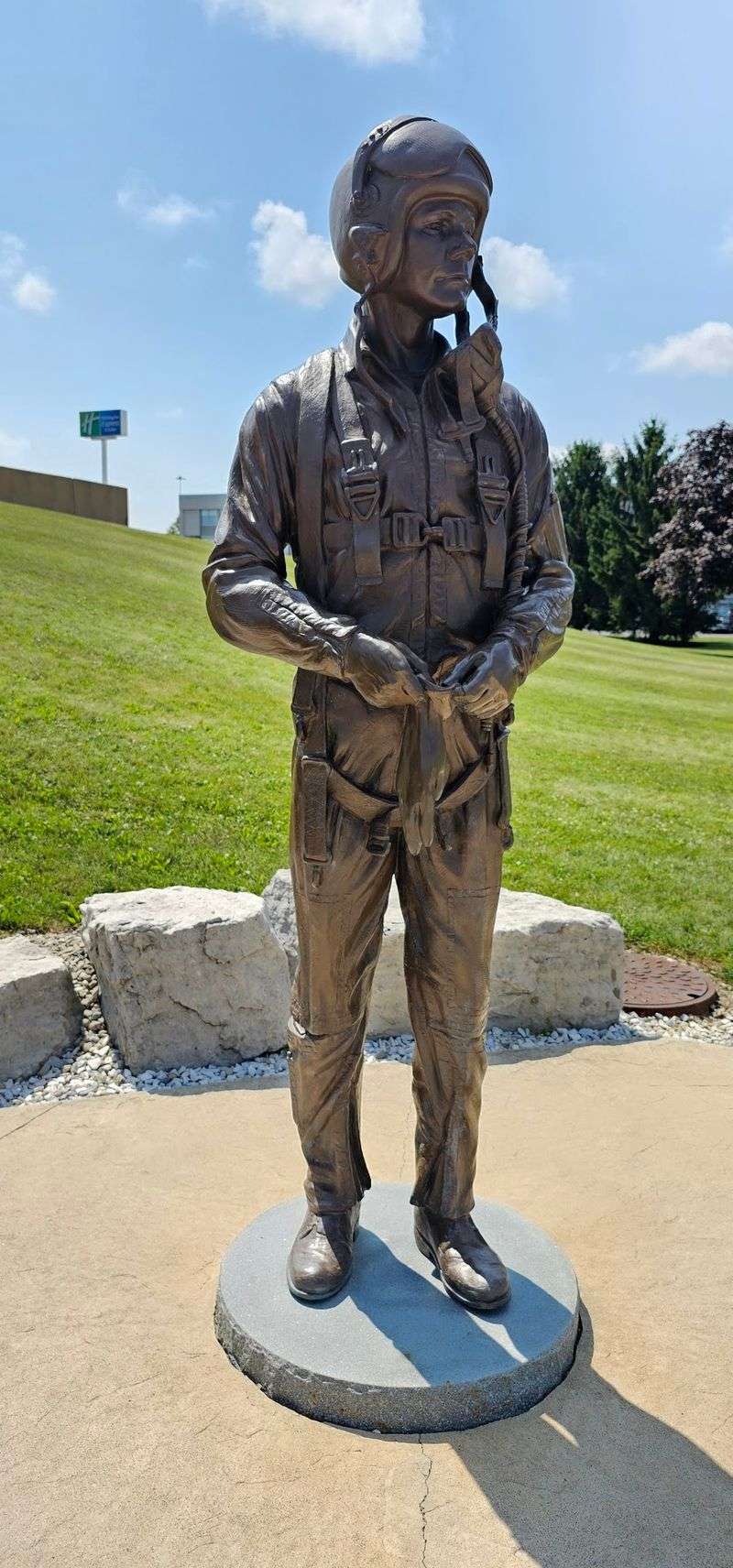
Nearby sits the F5D Skylancer, a delta-winged research jet Armstrong flew during his test pilot years. The contrast between the two aircraft in one building tells his career arc without a word of explanation.
A Learjet 28 Longhorn rounds out the set, another aircraft he flew personally. Aviation buffs in the family will linger over these longer than the kids will.
Fun detail worth passing along at the dinner table afterward: Armstrong earned his pilot certificate before he ever got a driver’s license.
The aircraft displays also help younger visitors grasp that astronauts were pilots first. Somebody had to fly experimental machines over dry lakebeds for years before anyone strapped into a rocket.
Outside, full-scale Gemini and Apollo capsule mock-ups sit on the grounds, and you can climb into the Gemini one for a photo.
Simulators And Hands-On Stations For Restless Kids
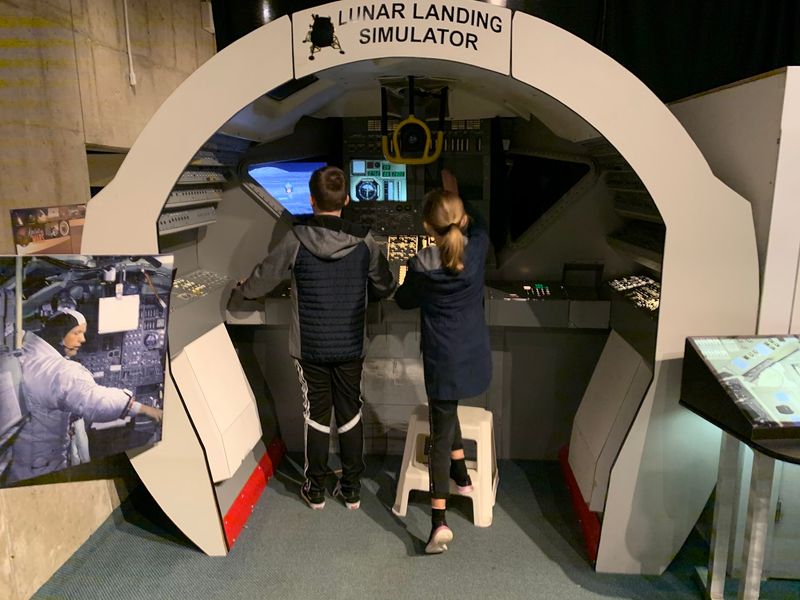
Restless seven-year-olds have somewhere to put their energy here. Simulators let visitors attempt a lunar landing, bring a space shuttle down, or line up a Gemini docking, which is exactly the kind of thing that turns a passive walk-through into a competition between siblings.
Landing the lunar module without crashing is harder than it looks. Adults who assume they will breeze through it usually need a second try.
Families with preschoolers report that the interactive stations held the attention of children as young as three and five, which is a real accomplishment for a history museum.
On the first Saturday of each month, staff run hands-on STEM activities with a rotating educational theme. Those dates are useful to know if you are building a day around the stop, though programming can change, so a quick check before driving is sensible.
There is also an Infinity Room, a mirrored corridor lit to mimic a field of stars. Kids walk in, look up, and immediately want to walk through again.
Guided tours are available for groups that prefer structure over wandering.
Thirty Minutes Under The Astro Theater Dome
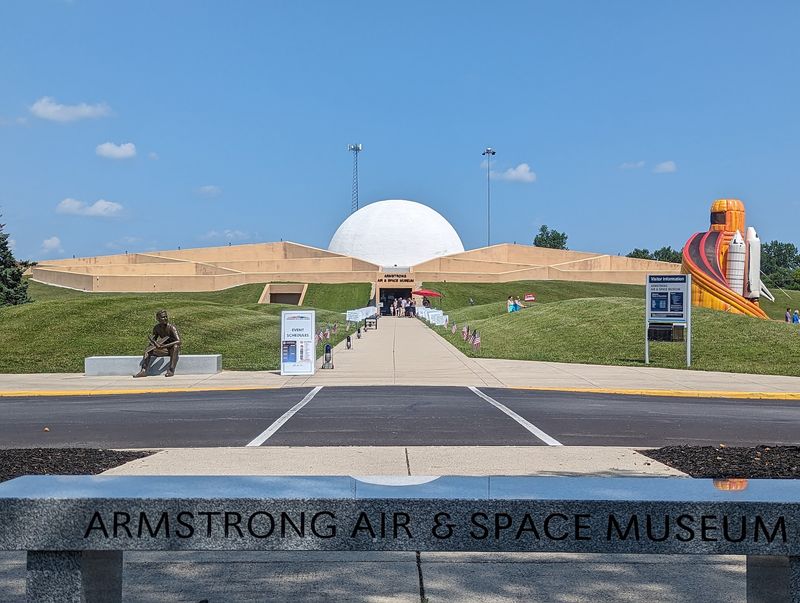
That 56-foot dome at the center of the building is not decoration. Underneath it sits the Astro Theater, where a 30-minute documentary about Apollo 11 runs throughout the day.
Skipping the film is the most common regret people mention. Repeat visitors specifically advise newcomers to sit down for it, and several describe it as the best part of the whole stop.
Timing-wise, the theater usually falls around the midpoint of the self-guided route. That works out nicely, since a half hour off your feet in a dark room resets everyone before the second half of the galleries.
Footage covers the mission from launch through the landing and return, with the Armstrong connection running through it. Younger children who were skimming the display cases often lock in once the countdown starts.
Total visit time including the film generally lands between one and two hours. Fast walkers manage forty-five minutes; anyone who reads every placard should budget the full two.
Showtimes are posted at the desk when you arrive, so ask on the way in and plan your loop around them.
Who Gets The Most Out Of A Stop Here
Grade-schoolers through grandparents all find footing in this building, which is not something every museum manages. The collection is compact enough that nobody hits exhaustion, and dense enough that adults who grew up watching the launches get real substance.
Space enthusiasts should know upfront that the scale is modest compared to the big national collections. A few guests mention wishing it were larger, though most frame the size as an advantage rather than a shortfall.
Staff get consistent praise for being knowledgeable and genuinely glad you came. A floor guide often circulates through the galleries adding context to items, which is the sort of thing you cannot get from a placard.
Homeschool families and scout groups fit well here, especially on STEM activity Saturdays.
Anyone using a cane, walker, or wheelchair should find the route manageable. Ramps connect the galleries, seating areas are scattered throughout, and the layout avoids stairs.
Road-trippers coming home from Lake Erie or Cedar Point frequently discover the place by accident from the nearby rest area, which may be the single most common origin story for a visit.
Admission Prices, Parking, And Accessibility Notes
Ticket prices run $14.00 for adults, $13.00 for seniors 65 and older, $12.00 for veterans, and $8.00 for children ages 6 through 12. Kids under 6 get in free, as do Ohio History Connection members, so a family of four with young children spends less than a movie night.
Parking costs nothing and includes spaces sized for RVs and larger trucks. The catch is distance: the main lot sits several hundred feet from the entrance, which matters on a January morning or with a toddler in tow.
Handicap parking is positioned much closer to the doors.
One wheelchair is available for public use, offered first-come, first-served. Strollers are welcome inside, and the ramped galleries handle them without trouble.
Restrooms are easy to locate, and front desk staff typically point them out as part of the arrival rundown.
The gift shop at the exit stocks space-themed merchandise, including freeze-dried astronaut ice cream and a pressed penny machine with a rocket design. Prices vary, and admission or hours can shift, so confirming details before a long drive is a fair precaution.
Seasons, Hours, And Holiday Light Displays
Hours split into two seasons. From March 29 through Labor Day, doors open daily, Monday through Sunday, 10:00 am to 5:00 pm.
After Labor Day through March 28, the schedule shifts to Tuesday through Sunday with Mondays closed.
Closures fall on Thanksgiving, Christmas Day, and Easter Sunday. The museum stays open on New Year’s Eve and New Year’s Day, MLK Day, Presidents’ Day, Memorial Day, Juneteenth, Independence Day, Black Friday, and Christmas Eve, which makes it a useful option on those odd holidays when most attractions go dark.
December brings light displays to the grounds, a genuine reason to plan an evening drive through Auglaize County when the galleries alone might not pull you off the interstate.
Winter is arguably prime time. Everything meaningful happens indoors, and western Ohio has little else going on between the harvest and spring thaw.
Summer weekends draw interstate traffic, so mornings tend to be calmer than afternoons.
Seasonal hours can change, and special events occasionally affect access, so a quick confirmation before loading the car saves disappointment.
Why The Detour Earns Its Exit Ramp
Two hours, roughly fourteen dollars, and an exit off I-75. Against that, you get a spacecraft that flew in 1966, a fragment of the moon, the suits Armstrong wore, and the little fabric airplane where the whole thing started.
Nobody would call it sprawling. The building is intentionally compact, and people who arrive expecting a Smithsonian-scale campus will need to adjust expectations before walking in.
What the museum does well is focus. One life, one town, one enormous achievement, told with objects that actually participated in the story rather than stand-ins.
For Ohio families, the practical case is strong: free parking, reasonable admission, accessible galleries, restrooms clearly marked, a film that gives everyone a sit-down, and a gift shop with astronaut ice cream to close the loop.
Pair it with a meal in Wapakoneta or fold it into a longer I-75 run, and the day fills itself out easily.
The drivers who finally pull off after years of passing the sign almost always say the same thing afterward. They should have stopped sooner.