
Water Powers A Grist Mill Beside A Waterfall And A Suspension Bridge In Ohio
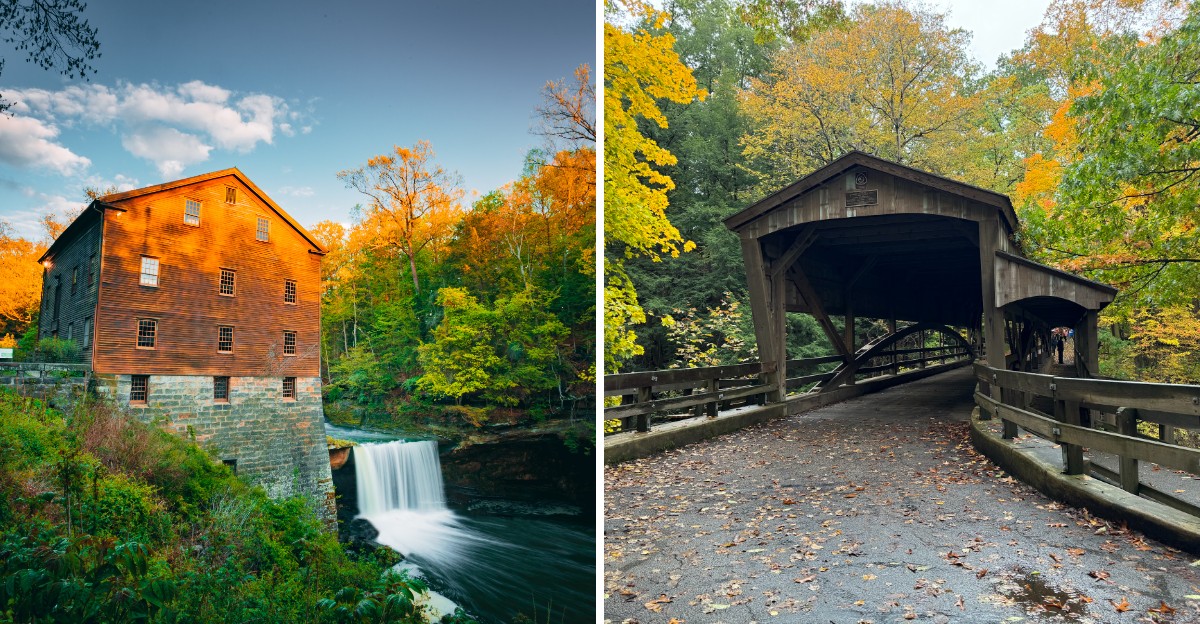
A wrong turn down a park road in Ohio once led me to the sound of rushing water and the low groan of wooden gears turning somewhere below my feet. Inside a thick stone building, grain was actually being ground the same way it was in the 1840s, powered by nothing but a creek and gravity.
Just outside, a waterfall dropped over layered rock, and a covered bridge sat a couple hundred feet away like it had always been there. For families who want history, hiking, and a little scenery in one stop, this corner of the state delivers more than its quiet entrance suggests.
A Stone Mill In The Mill Creek Gorge
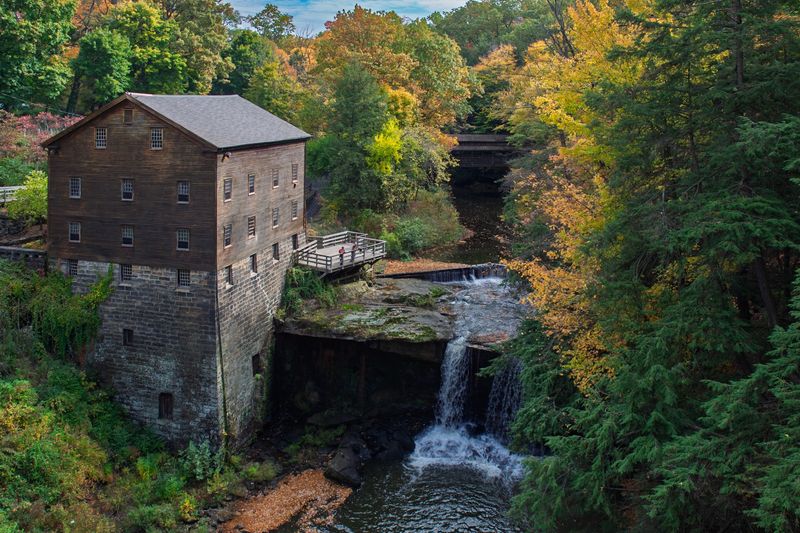
Mahoning County holds a park most of Ohio drives past without realizing what sits inside it. Lanterman’s Mill stands at 1001 Canfield Road in Youngstown, tucked into the Mill Creek Gorge within Mill Creek MetroParks.
The building itself is a working 19th-century grist mill, not a replica or a static display case. Water from Mill Creek still turns the wheel, and the millstones still grind corn and wheat into flour that visitors can carry home.
Founded in 1891 by Volney Rogers, the surrounding MetroParks system covers more than 2,658 acres of trails, picnic areas, playgrounds, and creek frontage. The mill anchors the whole thing, sitting at the point where the gorge narrows and sandstone walls rise up on both sides.
What makes the stop unusual is the density of it. Within a short walk you get a functioning mill, a waterfall, a covered bridge, and access to miles of trail.
Youngstown sits roughly an hour from Cleveland and puts the mill within easy reach of anyone traveling the I-80 corridor across northeast Ohio.
Three Mills, One Stubborn Site
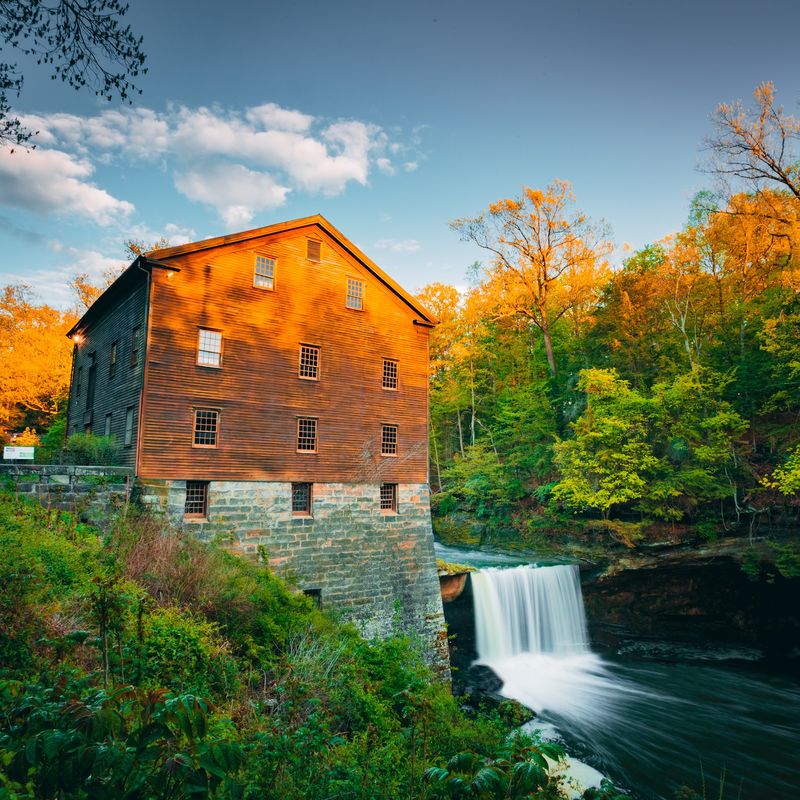
Two earlier mills tried to make a go of this exact spot before the current one succeeded. The first operated from 1799 to 1822, the second from 1823 to 1843, and a flood took the second one out entirely.
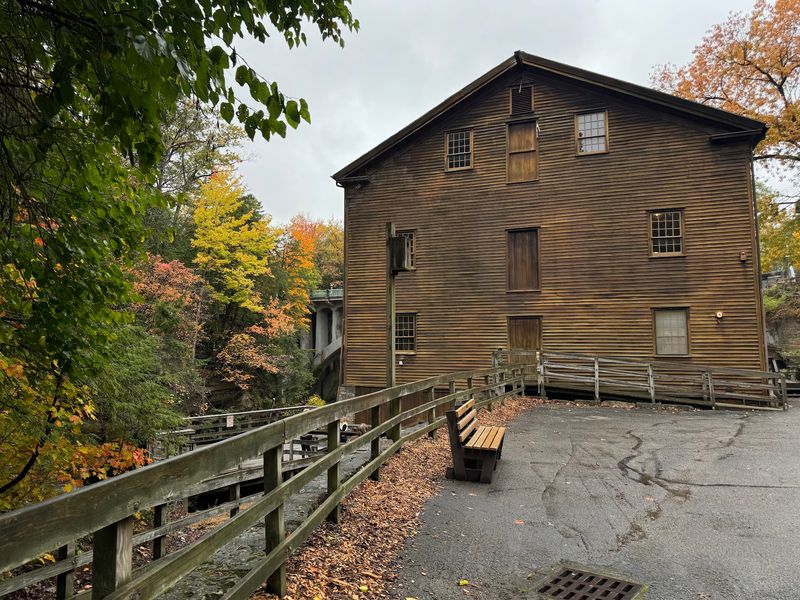
German Lanterman and his brother-in-law Samuel Kimberly built the replacement between 1845 and 1846, and they clearly learned something. They used thick sandstone and limestone walls, a deliberate answer to the water that had swept away what came before.
Milling operations here stopped in 1888. Mill Creek Park acquired the property in 1892, which is a big part of why the building is still standing rather than gone the way of most small Ohio mills.
A restoration project ran from 1982 to 1985 and brought the machinery back into working order. Today staff run it much as it ran in the 1800s.
There is one leftover detail worth hunting for: a grinding stone from that 1843 flood still sits in the creekbed roughly 500 feet downstream of the falls, half-buried in the rock.
Watching The Water Wheel Do Its Work
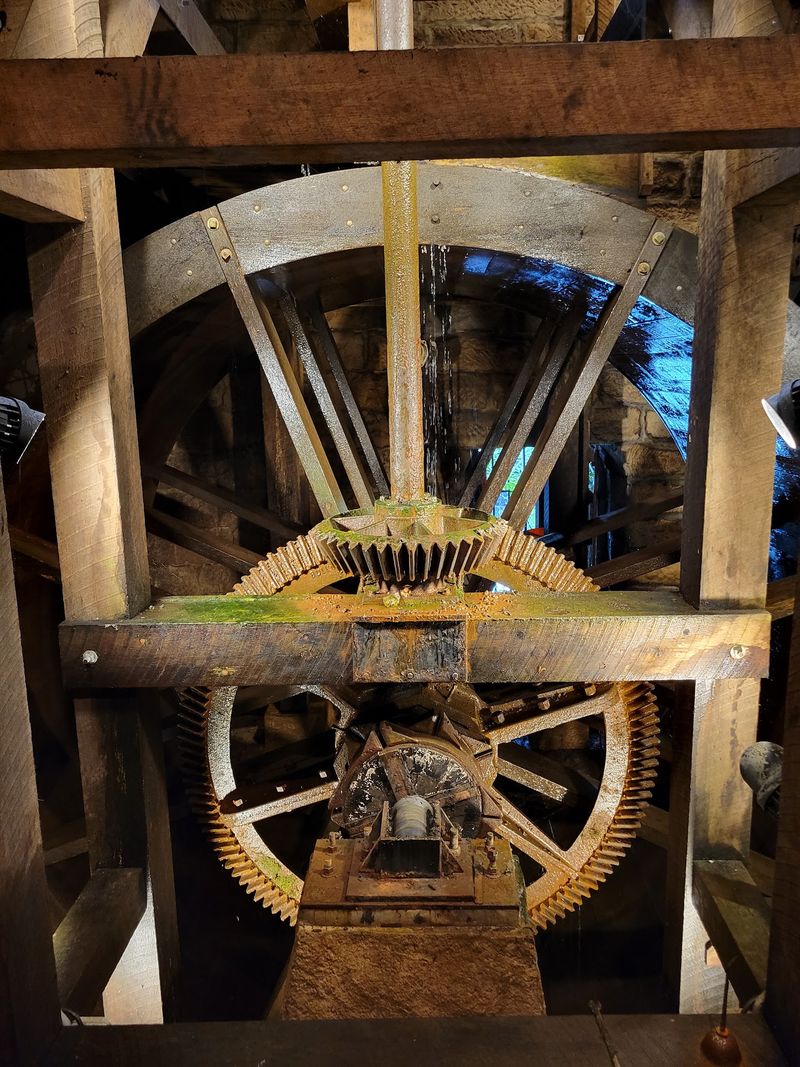
Down on the bottom floor, the whole reason for the building becomes obvious. Water pours through, the wheel turns, and a chain of shafts and gears carries that motion up through the structure to the millstones.
Visitors frequently point to this lower level as the highlight, and it earns the attention. Being able to stand near a turning wheel while it drives real machinery is a different experience from reading about it.
Upstairs, the millstones grind corn and wheat, and you can feel the vibration through the floorboards. Guests often mention the hum and the faint smell of ground grain as much as anything they saw.
The first floor also holds a small museum with 19th-century milling tools and displays on how the trade worked. A few visitors have wished more of the equipment were labeled, so it helps to ask staff questions as you go.
Employees are widely described as friendly and knowledgeable, which fills in the gaps a plaque cannot. The self-guided route covers multiple floors and moves at whatever pace you set.
Lanterman’s Falls And The Observation Deck
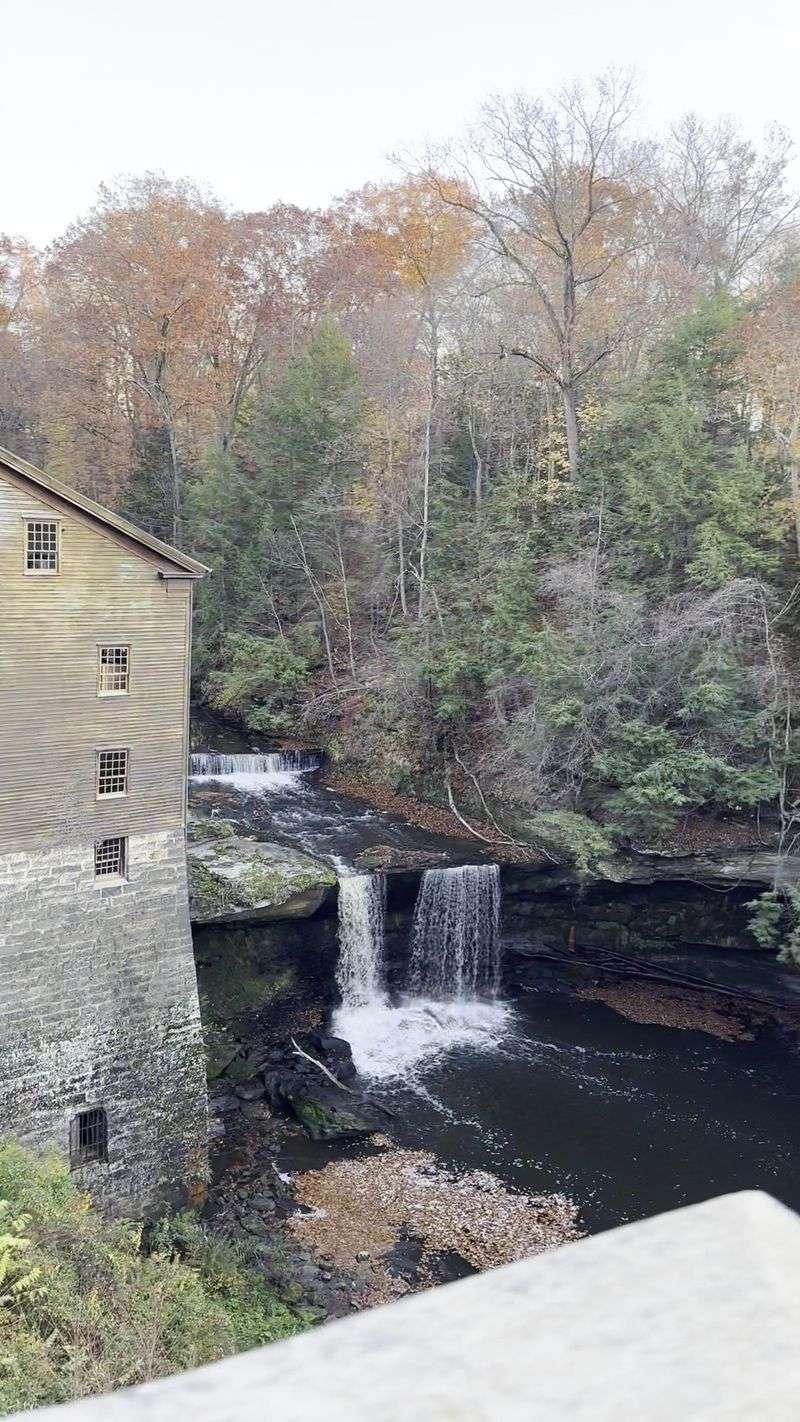
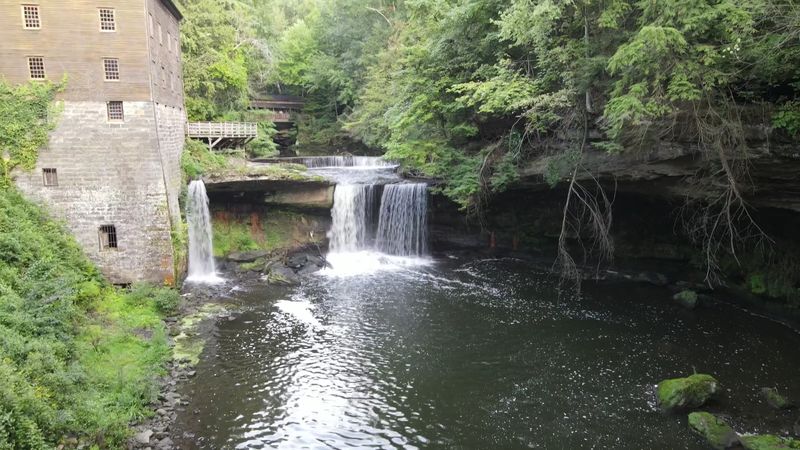
Just beside the mill, Mill Creek drops 20 to 23 feet over layered rock in a broad sheet. Lanterman’s Falls is the kind of waterfall that changes character with the weather, thin and lacy in dry spells, loud and full after Ohio rain.
An observation deck gives you a clear view without any scrambling, and it is the spot most people aim their cameras from. Waterfall mentions show up constantly in visitor comments, often paired with photography.
Each season rewrites the scene. Spring and summer bring heavy green over the gorge walls, fall turns the slopes gold and rust, and winter builds ice formations along the rock ledges.
The falls sit within the Mill Creek Gorge, a place shaped by glacial meltwater and exposed sandstone. Standing at the deck, you get the geology and the industry in a single frame, which is rare anywhere in the state.
Morning light tends to work best for photos, and the deck is an easy walk from the parking area for anyone not up for trails.
The Covered Bridge Two Hundred Feet Away
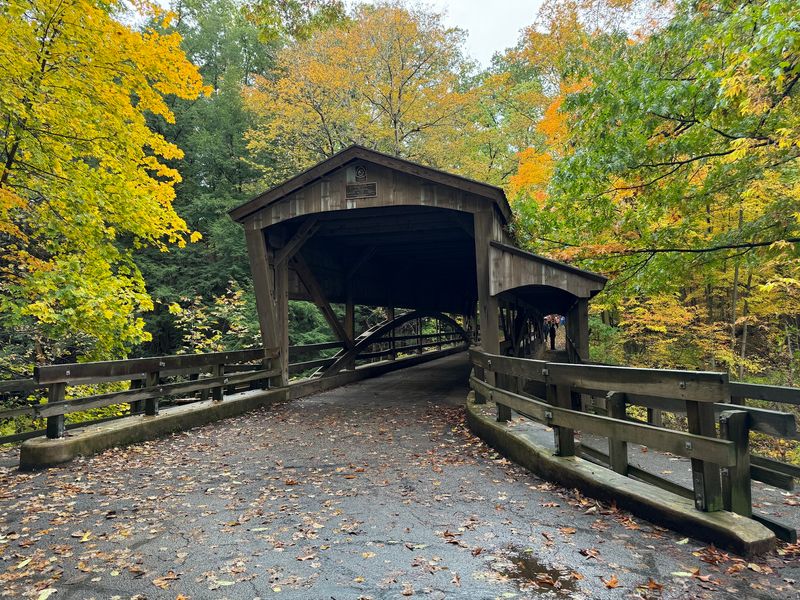
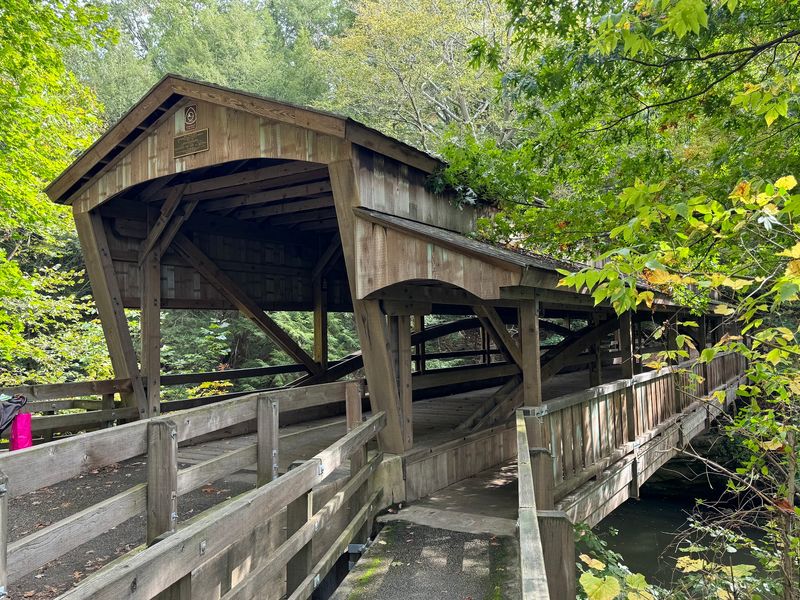
Cross behind the mill and a wooden covered bridge spans the stream, looking every bit like it belongs to the 1800s. It was actually built in 1989, designed to resemble the structures farmers once used hauling grain to the mill.
Visitors regularly describe the walk over as one of the easiest wins of the whole stop. It sits roughly 200 feet from the mill door, flat and quick, well within range of short legs and short attention spans.
Photographers love the angle where the bridge, the creek, and the mill all line up. It is probably the most photographed composition in the park.
Families with small children often make this their whole outing: park, see the falls, walk the bridge, head back. Nearly twenty separate visitor comments single out the covered bridge by name.
Standing inside it, the timber frame cuts the noise of the water down to a murmur, which makes the short crossing feel longer than it is.
The 1895 Suspension Bridge Locals Call Cinderella
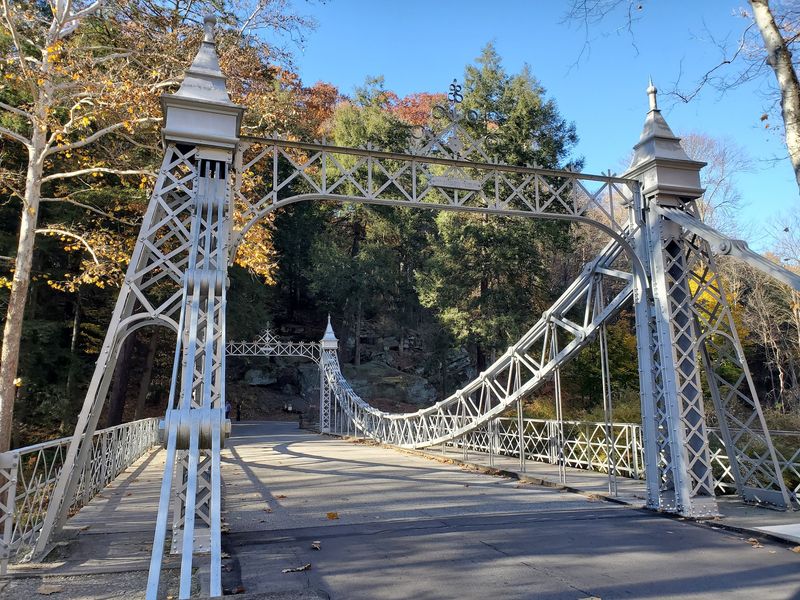
Castle spires in an Ohio park sound made up until you see them. The Mill Creek Park Suspension Bridge carries Valley Drive over Mill Creek, and its ornate towers and arches have picked up nicknames over the decades: Silver Bridge, Cinderella Bridge, Castle Bridge, even Walt Disney Bridge.
Charles Fowler of the Youngstown Bridge Company designed it in 1895, working from Volney Rogers’ idea that park entrances should be something worth looking at. At 86 feet long and 32 feet wide, it is the oldest of six bridges inside the park.
The National Register of Historic Places added it in 1976, and a major rehabilitation followed in 2007.
One visitor arrived for the mill and was surprised to learn the bridge they had been wanting to see was right there in the same park. That happens a lot.
If you are already at the mill, it is a short drive along Valley Drive to reach it, and the two together make a better story than either one alone.
Gorge Trails, Boardwalks And Sandstone Walls
Trails get mentioned more than anything else here, nearly ninety times over in visitor comments. The East Gorge Walk and West Gorge Trail both start near the mill, and the Gorge Trail forms a two-mile loop with stretches of boardwalk.
Creek on one side, tall sandstone walls on the other. The boardwalk sections make part of the route smooth enough for slower walkers and tired dogs.
Hikers have stitched together longer routes from here, four to five miles running down toward Shields Road and back, mixing paved paths, dirt trail, and short stair climbs. Some report mud after rain and exposed roots in places, so trail shoes earn their keep.
Flooding has washed out sections in the past, which is worth checking before a long walk. Paved and unpaved options both exist, along with bike lanes elsewhere in the park.
Dogs are welcome on the trails and in the gift shop, though not inside the museum itself. Caves, bridges, and creek overlooks break up the distance nicely.
Stone-Ground Flour And The Gift Shop Counter
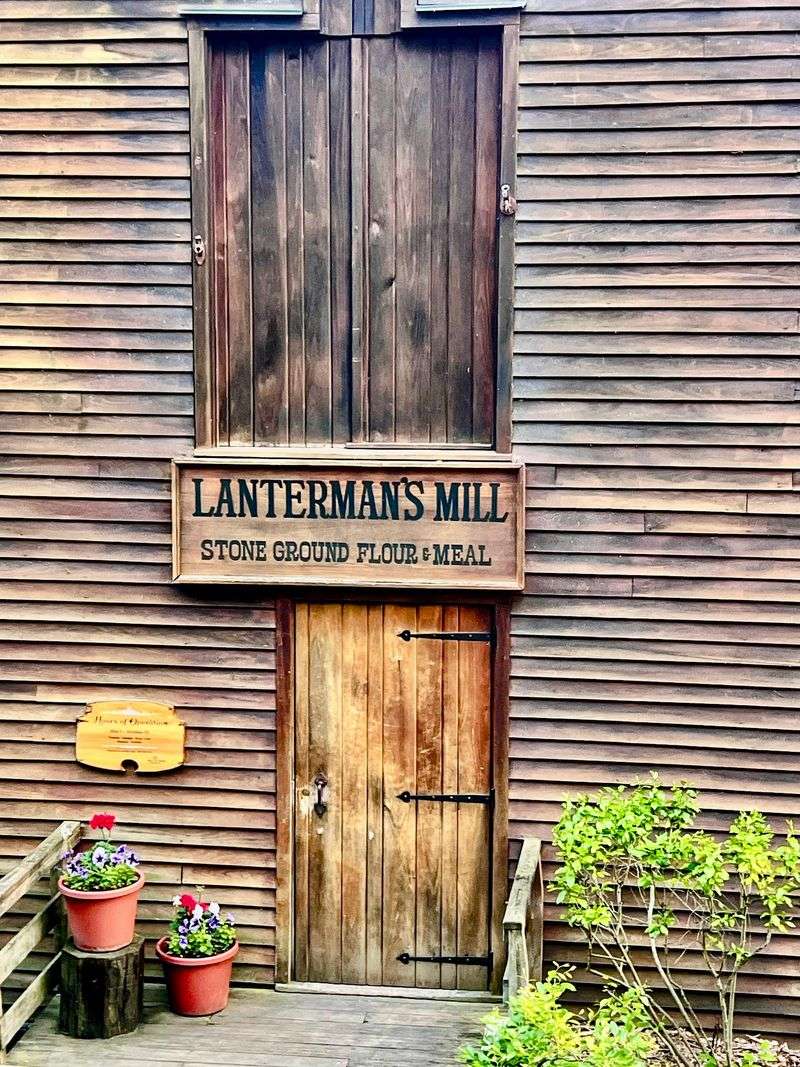
Buckwheat flour is not something you find in most Ohio grocery aisles, and it turns up on the shelves here regularly. The gift shop inside the mill sells preservative-free stone-ground cornmeal, whole wheat flour, buckwheat, plus snacks and cold drinks.
Local crafts share the space. Several visitors mention leaving with a bag of freshly milled flour, which makes a better souvenir than most gift shop finds because you actually use it.
Cornbread made from cornmeal ground in the building you just toured hits a little different at the dinner table. That connection is the whole appeal.
The shop also stocks trail maps, which has rescued more than one hiker who left theirs in the car. One visitor noted the map kiosk in the parking lot was empty, so grabbing a paper copy inside is a smart move.
Shop hours follow the mill’s seasonal schedule, and it can be closed when the mill is, so plan around that if flour is the goal. Staff behind the counter are consistently described as welcoming.
Who Gets The Most Out Of A Visit
Four- and six-year-olds have toured this mill and come away thrilled, according to parents who brought them. The moving machinery does the heavy lifting, since watching a wheel turn and stones grind holds attention better than reading panels.
History-minded adults get plenty too. A fully operational piece of American industry from the 1840s is not something you stumble across often in the Midwest.
Photographers treat the whole area as a workout, with the falls, the covered bridge, the gorge walls, and the suspension bridge all within a short radius. Hikers use the mill parking lot as a trailhead and build their own loops.
Dog owners do fine on the trails and in the shop, just not in the museum. Anyone who needs a flat, short outing can stick to the deck and the covered bridge and skip the climbs.
The mill holds an annual Christmas event that some families have folded into their December traditions. Restrooms in the area are described as plentiful and clean, though they can close when the mill does.
Hours, Admission And Finding The Parking Lot
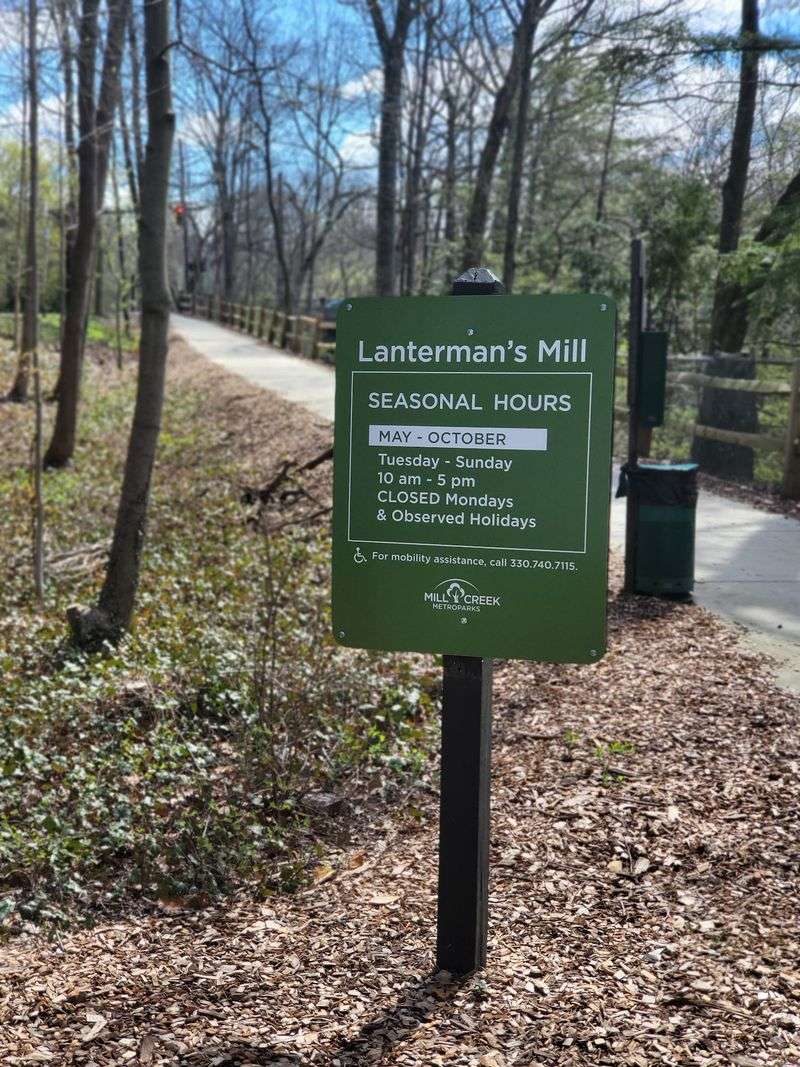
Season matters here. The mill runs May through October, Tuesday through Sunday from 10 a.m. to 5 p.m., closed Mondays and observed holidays, and hours can shift, so confirming before a long drive saves disappointment.
Admission stays cheap. Children under six are free, students six to eighteen and college students with ID pay $2, seniors 60 and older pay $2, Mahoning County adult residents pay $3, and non-resident adults pay $4.
An informational tour costs $3 on top of admission.
Parking sits off East Park Drive, reached from Canfield Road, which is State Route 62. Spaces are plentiful and all within a short walk of the mill.
Signage from the lot to the building has been called thin by first-timers, so follow the sound of water if you are unsure.
Youngstown is about an hour from Cleveland and reachable off I-80 or the Ohio Turnpike. One visitor arrived on a holiday and found the mill and restrooms closed, which is a reminder to check the calendar.
Why This Stop Sticks With People
One longtime local put it plainly: thousands of people live a short drive away and have never come, yet would happily travel hundreds of miles to see something similar in another state. Hard to argue with that.
What you get for a few dollars is genuinely unusual. A mill from 1846 still grinding grain, a waterfall next door, a covered bridge a short stroll away, and a 130-year-old suspension bridge with castle spires in the same park.
Add a couple of miles of gorge trail and you have filled an afternoon without much planning or expense. Visitors hold it in very high regard, with a 4.8-star average across more than 560 reviews on Google.
The urban setting surprises people. You are inside a city, yet the gorge feels a long way from any street.
If you are routing through northeast Ohio between May and October, the detour off Route 62 costs you maybe two hours and returns a whole lot more than that.