
Chores Come First At This 1880s Farm In Ohio, Where Kids Gather Eggs
A wrong turn on a two-lane Ohio road once landed me beside a wooden fence where a pair of enormous draft horses were being harnessed for the morning’s work. No ticket booth, no gift shop jingle, just the sound of hooves on gravel and someone in a long apron calling about eggs that still needed collecting.
It turned out to be a working farm frozen in the 1880s, where visitors are handed real chores instead of souvenirs. Kids who show up curious usually leave with dirt on their shoes and a story about the hen that did not want to give up her egg.
A Working 1880s Farm Off State Route 674
Drive southeast out of Columbus, past the subdivisions and into Fairfield County farmland, and State Route 674 eventually delivers you to 1375 OH-674 in Canal Winchester. That address belongs to Slate Run Living Historical Farm, a functioning farmstead operated as a living history museum inside the 1,705-acre Slate Run Metro Park.
The concept is simple and unusually strict. Instead of displaying antique tools behind glass, the staff actually use them, running the place the way an Ohio family would have in the 1880s, without electricity or engines.
Chores drive the schedule. Animals get fed, fields get plowed with horses, wood stoves get stoked, and whatever needs doing that particular morning is what visitors happen to witness.
Because the work rotates with the calendar, no two trips look alike. Longtime visitors mention that spring planting, summer haying, and autumn harvest each feel like separate outings.
Drive time runs roughly 30 to 40 minutes from downtown Columbus and under two hours from Dayton or Cincinnati. Admission is free, which makes it an easy add-on to a day already spent wandering Ohio back roads.
How A Fairfield County Farmstead Became A Time Capsule
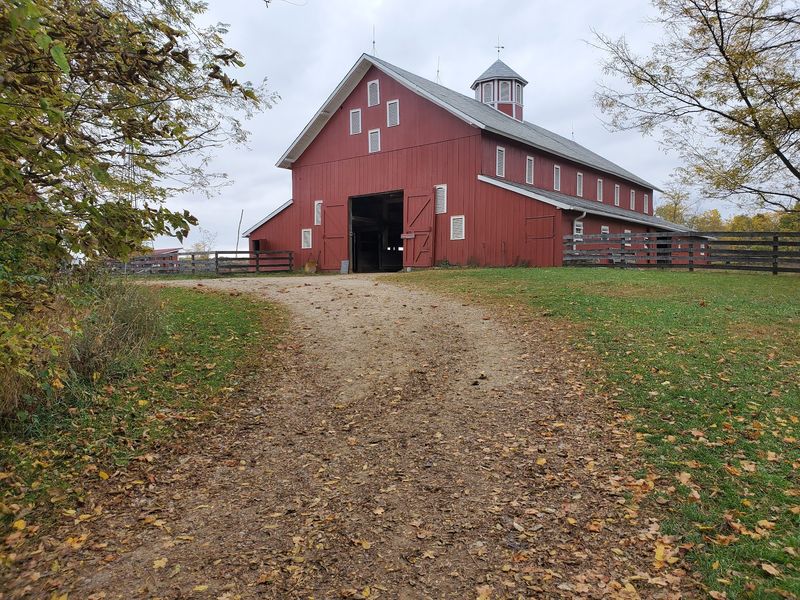
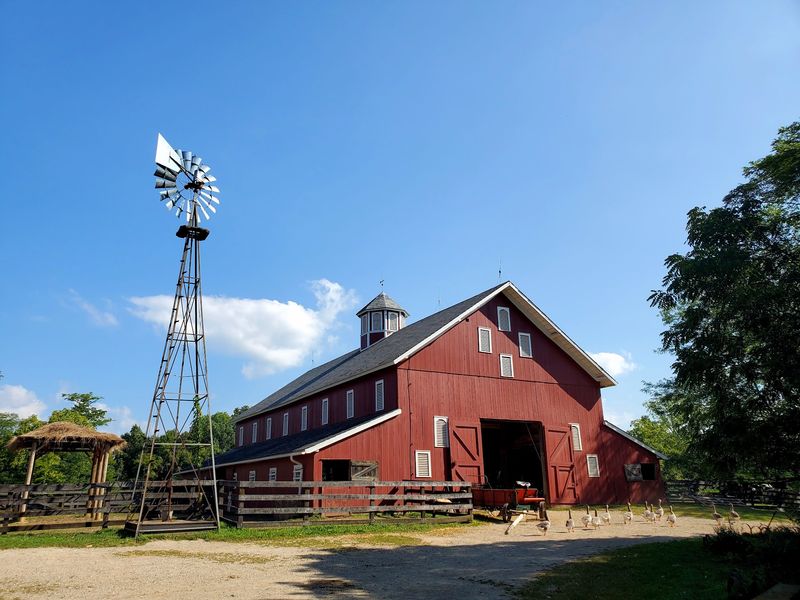
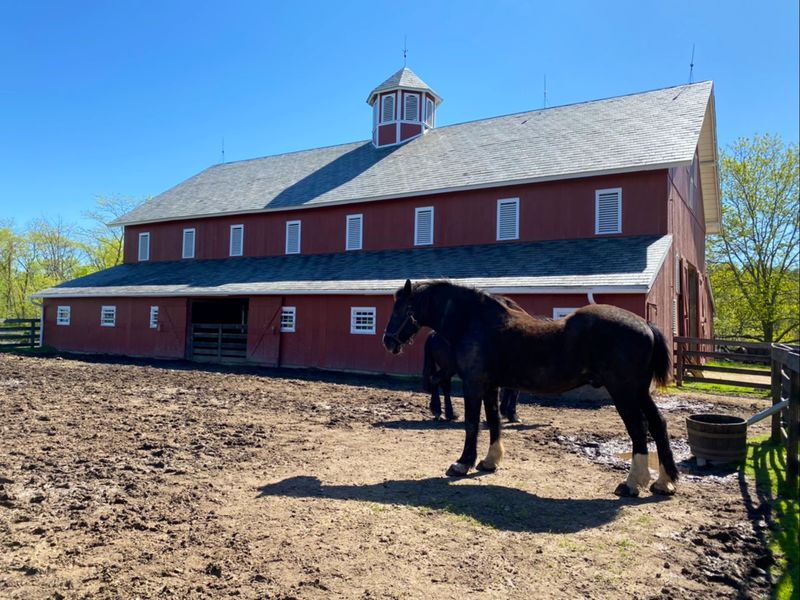
Two dates anchor everything here: 1856, when the Gothic Revival farmhouse went up, and 1881, when the towering multi-bay barn followed. Both buildings still stand on their original ground, restored rather than reproduced.
Columbus and Franklin County Metro Parks chose the 1880s as the interpretive target for a reason. That decade sat right on the hinge between hand labor and mechanization, when horses still pulled the plow but factory-made implements were starting to reach Ohio farm catalogs.
Visitors who remember grandparents’ farms often say the place jogs something loose in their memory. One family described recognizing the kitchen layout from childhood summers spent on a relative’s land.
Restoration work extended well beyond the two headline structures. Smokehouse, root cellar, orchard, granary, and assorted outbuildings all play working roles rather than decorative ones.
Guests have been coming back for decades, some tracing their first visit to the late 1980s. That kind of continuity says something about a place that never chased trends, never added a thrill ride, and simply kept doing chores on schedule year after year.
Egg Gathering And Other Real Chores For Kids
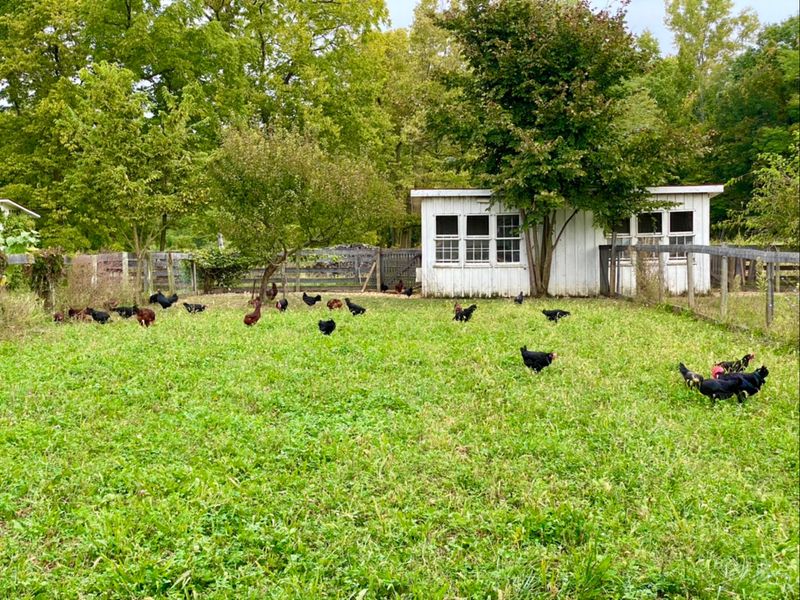
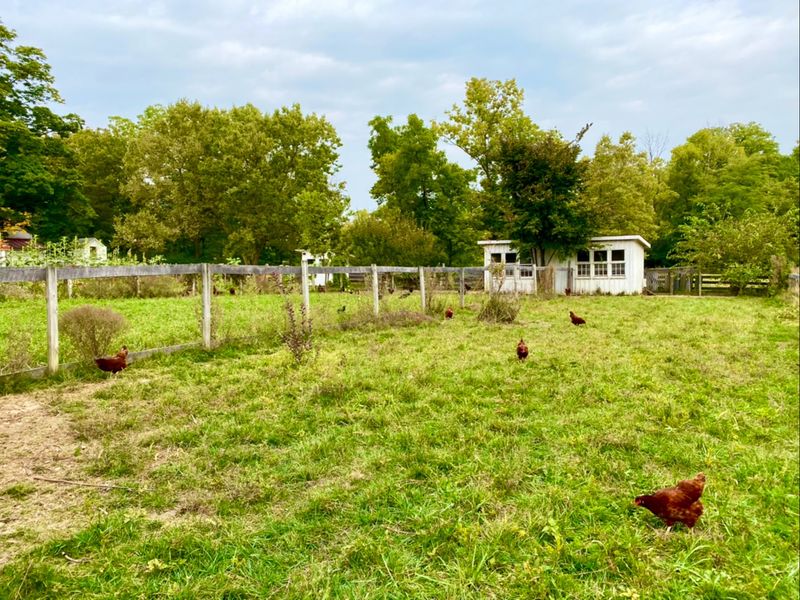
Handing a kid a basket and pointing them toward the nest boxes turns out to be more effective than any interactive screen ever built. Collecting eggs is the chore children ask about most, and on many days staff or volunteers will let willing helpers do exactly that.
Availability depends on the day, the season, and who is working. Chores are assigned as the farm needs them, not on a fixed performance schedule, so it helps to ask at the barn when you arrive.
Other tasks rotate through the morning and afternoon. Carrying feed, helping with garden work, or watching the wood cookstove get loaded all count as part of the routine.
Parents tend to notice the shift in their children’s attention. Work with a visible purpose holds a six-year-old far longer than a display case does.
Hands-on areas exist throughout the site, and families with toddlers report success too, since animals alone can carry an entire visit. Bring patience along with closed-toe shoes, because the best moments usually arrive unannounced.
Percherons, Pigs, And A Barnyard Full Of Heritage Breeds
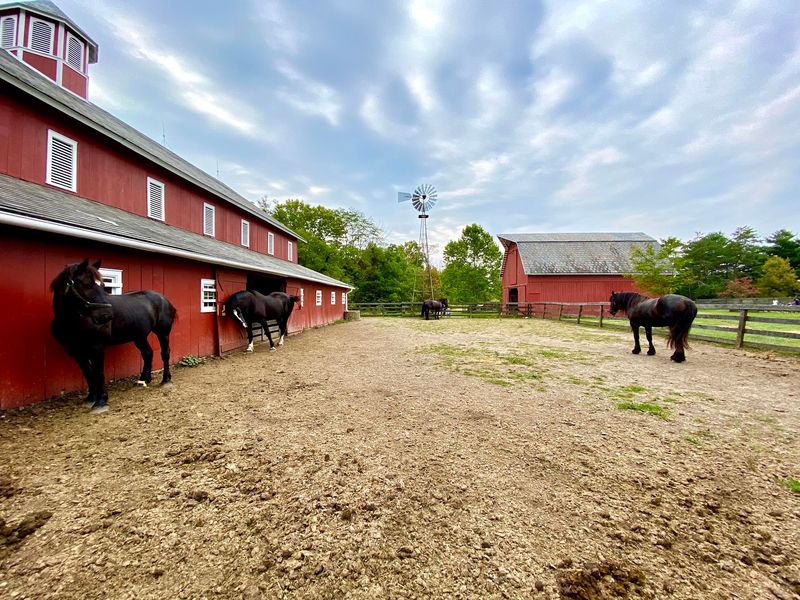
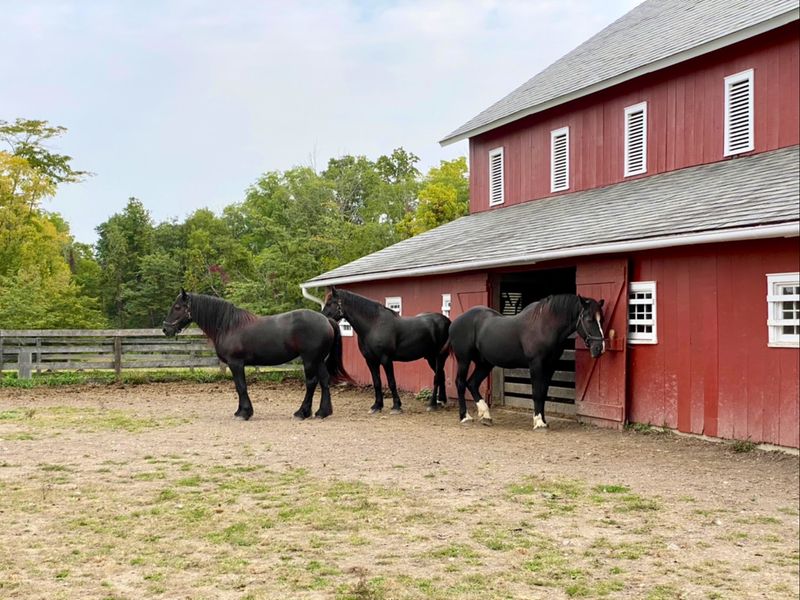
Animals are the reason most families end up staying twice as long as planned. The barnyard holds heritage breeds chosen for historical accuracy: chickens, pigs, sheep, cattle, turkeys, geese, and the massive Percheron draft horses that do the field work.
Turkeys get a surprising amount of love from the smallest visitors, who find them enormous and loud and endlessly fascinating. The horses draw the biggest crowds when they are harnessed and led out toward the fields.
Spring is the season regulars circle on the calendar. Baby animals arrive and the whole place takes on a different energy, with lambs and piglets pulling families back weekend after weekend.
Fences separate visitors from most livestock, though staff often step over to explain what a particular breed was raised for. Occasionally a pen closes off temporarily for practical reasons, so an area you saw last visit might be roped off this time.
Watching a working animal earn its keep, rather than pose for photos, lands differently with kids raised on cartoon barnyards.
Inside The Gothic Revival Farmhouse
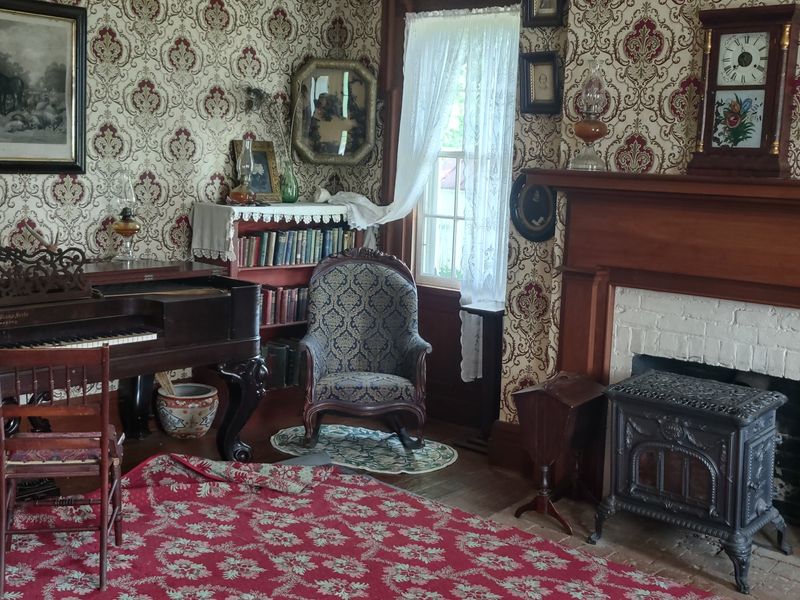
Step through the farmhouse door and the temperature tells the story first, especially in cooler months when the cookstove is running. The first floor stays open for self-guided touring, including the parlor, kitchen, and living room.
Furnishings are period pieces arranged as a working household would have used them, not as a showroom. Oil lamps, dishware, textiles, and kitchen tools all sit where hands would reach for them.
Cooking happens on the wood-burning stove, and the heat coming off cast iron surprises nearly everyone. Families describe standing back a few feet and still feeling it, which makes for a memorable lesson about summer baking in 1885.
Staff dressed in period clothing often work in the kitchen, shelling, chopping, or tending whatever is on the stovetop. They are generally happy to answer questions, though they are genuinely working rather than performing scripted roles.
Some upstairs spaces stay closed, and during the winter stretch certain buildings may not be accessible at all. Check what is open when you arrive so nobody in your group leaves disappointed.
Outbuildings, Antique Implements, And A Map Built For Kids
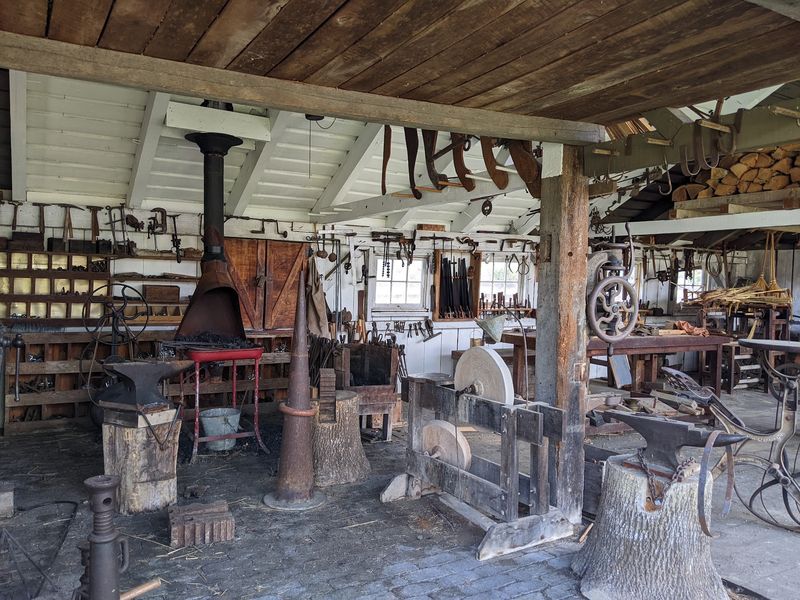
Count the buildings and you lose track around a dozen. Smokehouse, root cellar, granary, corn crib, equipment sheds, and the barn itself each get labeled signage explaining their purpose, which means you can navigate without a guide.
Antique implements sit in the open, plows and cultivators and harrows that once broke central Ohio clay. Several still see use during planting and harvest.
Metro Parks provides a site map, and there is an alphabetized version aimed at children that turns exploration into a checklist. A seasonal scavenger hunt sometimes runs alongside it, sending families hunting for specific crops or objects.
One visitor cheerfully admitted finding everything on the hunt except the asparagus, which feels like the right kind of small defeat.
Everything is maintained carefully, and the interpretive signs do real work for parents who would rather read a placard than guess. Wooden toys from the 1800s are scattered in a few spots too, simple enough that kids figure them out in seconds and play for twenty minutes.
Seasonal Rhythms From Maple Syrup To Harvest
Nothing about the calendar here is decorative. Late winter brings maple syrup demonstrations, spring brings plowing and planting and newborn animals, summer brings haying and garden work, and autumn brings harvest activity and seasonal festivals.
Programming ramps up in April and holds strong through the warm months. January through March is the quiet stretch, when grounds and barn stay open but some buildings close and activities scale back considerably.
Fall might be the sweet spot for families combining stops, since the surrounding Fairfield County countryside puts on a show and the farm work is at its most visual.
Weather rarely cancels a visit outright. One family made the trip in steady rain and still saw pigs, sheep, chickens, and horses, plus a chance to handle those old wooden toys indoors.
Special events appear throughout the year, so checking the Metro Parks schedule before driving out is a reasonable move. Hours and programming can shift seasonally, and a mid-week winter visit will feel very different from a June Saturday.
The Pace Of The Place And Who Fits It Best
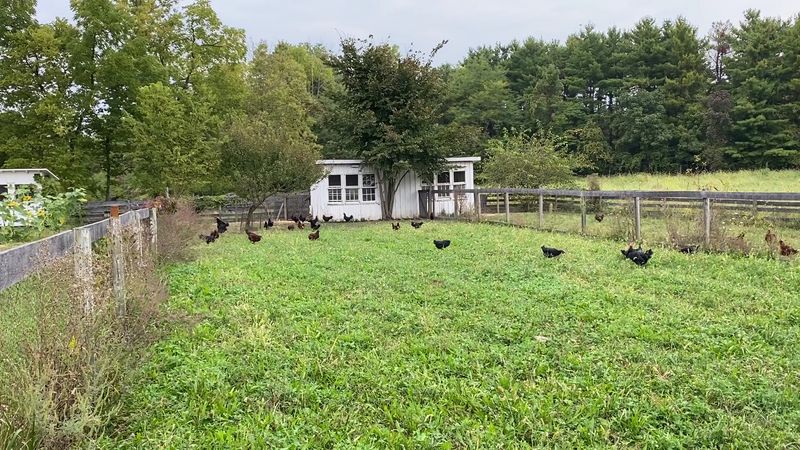
Quiet is the dominant feature. There is no soundtrack, no announcer, no timed show, just the ambient noise of livestock and whatever work is underway.
Families with preschoolers do especially well, since animals require no explanation and the walking distances stay manageable. Grandparents bringing grandkids report the same thing from the other direction, finding plenty of hands-on activity for little ones and plenty of memory triggers for themselves.
Self-guided touring is the norm, and many visitors consider that a feature. You set your own pace, skip what bores you, and linger where something catches.
Staff interaction varies. Some days a worker will stop and explain their job in detail, other days folks are busy cleaning or prepping for school groups and engage less, so treating the farm as a place to observe rather than be entertained sets expectations correctly.
Photographers find good material year-round, from horses in harness to weathered barn siding. Anyone hoping for costumed theater should know these are working staff in period dress, not scripted actors.
Hours, Free Admission, And Seasonal Closures
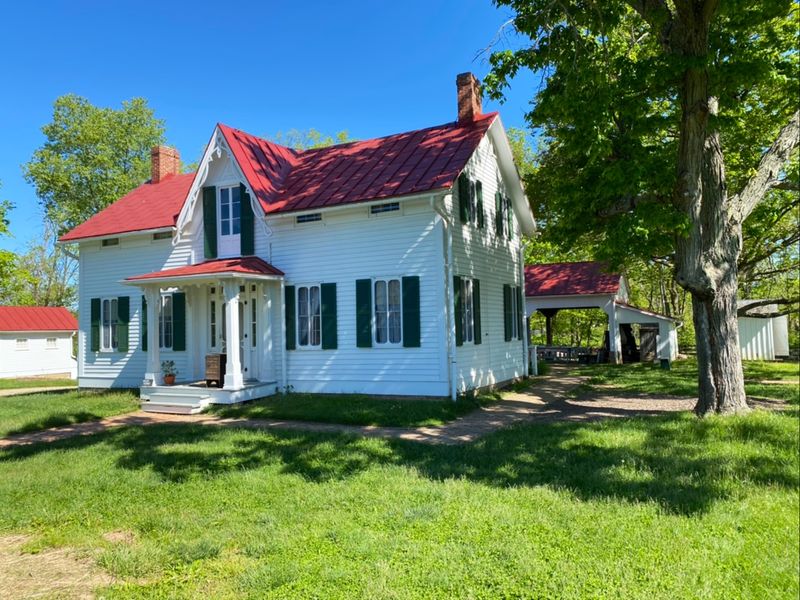
Free admission is the headline, and it holds year-round with no parking fee attached. Families mention that repeat visits become easy when there is no ticket cost weighing on the decision.
Warm-season hours, from April 1 through September 30, run 9 AM to 6 PM Tuesday through Thursday and Sunday, with Friday and Saturday extending to 7 PM.
From October 1 through March 31, the schedule shifts to 9 AM to 5 PM Tuesday through Thursday and Sunday, while Friday and Saturday stay open until sunset.
Mondays are closed all year, which catches people off guard more than anything else. Plan around it.
Winter visits still work if expectations adjust. The grounds and barn remain accessible January through March, but certain buildings close and demonstrations thin out until full programs resume in April.
Hours can change seasonally or for special events, so a quick check against the Metro Parks schedule before loading the car is sensible. Morning arrivals tend to catch more chore activity than late afternoons, particularly during hot Ohio summers.
Parking, Restrooms, And What To Wear On Your Feet
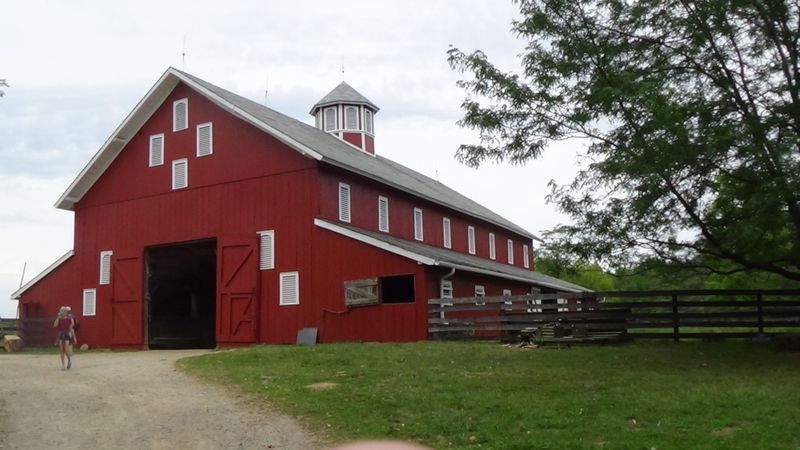
Footwear matters more here than at most attractions. Paths are gravelly, and the farmyard can turn genuinely muddy after Ohio rain, so closed-toe shoes save the day.
Free paved parking sits near the farm entrance, with an overflow lot available for busier weekends. Rangers at the park entrance can point you toward the farm area if the turn is not obvious.
Restrooms on the Metro Park side are clean pit toilets, and visitors have noted newer facilities in the farm vicinity. Strollers roll fine on the main paths, though soft ground after storms will slow the smaller wheels.
No concessions exist anywhere on site, which trips up unprepared families. Pack water and snacks, especially in July and August.
Picnicking is encouraged, and shaded picnic areas and shelters sit within the larger park. Several visitors describe bringing a full lunch and making an afternoon of it.
Weekday visits in the off season can feel nearly private, with only a handful of other people around. Summer Saturdays draw bigger crowds, and school groups often fill weekday mornings in spring and fall.
Trails, Buzzard’s Roost Lake, And The Rest Of Slate Run Metro Park
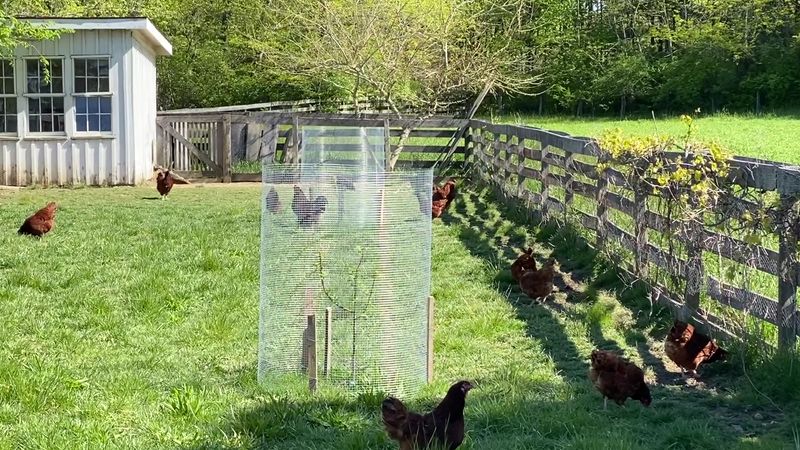
Beyond the fence lines, 1,705 acres of Metro Park wait with more than seven miles of hiking and horseback riding trails. The farm is only one district within it.
Buzzard’s Roost Lake anchors the recreation side, with fishing access and docks sized for children. Wetland areas along the trails draw birds, and visitors frequently comment on the marshy, reedy character of the landscape.
Playgrounds and natural play areas give kids somewhere to burn off remaining energy after the barn tour ends. A covered bridge adds a photo stop that costs nothing to reach.
Stacking the farm and the park into one outing makes the drive from Columbus, Lancaster, or Circleville pay off properly. Two hours at the farm plus a trail loop fills a solid half-day.
Trails can stay muddy well into Ohio spring, so the same closed-toe advice applies. Fall foliage along the wooded sections makes October a rewarding month for combining both halves of the property into a single unhurried afternoon.
Why This One Earns The Drive Out Of Columbus
Free, quiet, animal-filled, and genuinely educational is a rare combination for an Ohio family outing, and the farm delivers all four without asking much in return. The trade-off is that you bring your own lunch and your own curiosity.
Kids who gather eggs, feel the heat off a cookstove, and watch a Percheron pull a plow walk away with a working understanding of where food came from before refrigeration existed.
Adults tend to get something different out of it, a slower tempo that several visitors describe as a reminder to stop rushing. The absence of gift shops and snack bars turns out to help.
Go in spring for the baby animals, autumn for the harvest work, or a weekday in the off season if solitude appeals more than programming.
Check the schedule, dress for mud, skip Mondays, and pack a picnic. Then let the chore list decide what your family sees, because that unpredictability is exactly what keeps central Ohio families coming back season after season.