
A Hand-Whittled Locomotive And Thousands Of Buttons Fill Ohio, Museum
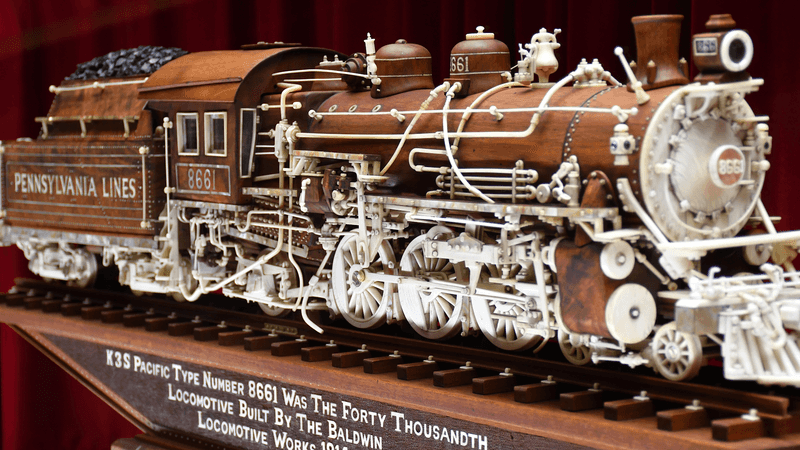
A gravel-shouldered exit off an eastern Ohio interstate doesn’t promise much, and that’s exactly why this stop lands so hard. Behind an ordinary brick entrance sits a lifetime of whittling so precise that the Smithsonian called it priceless, plus a second building packed wall to wall with buttons sorted into patterns you’ll want to photograph.
It’s the kind of place you wander into with low expectations and leave talking about for the whole ride home. If you like trains, tiny moving parts, or stories about people who never quit on an idea, clear a couple of hours.
An Unassuming Address Off Exit 83
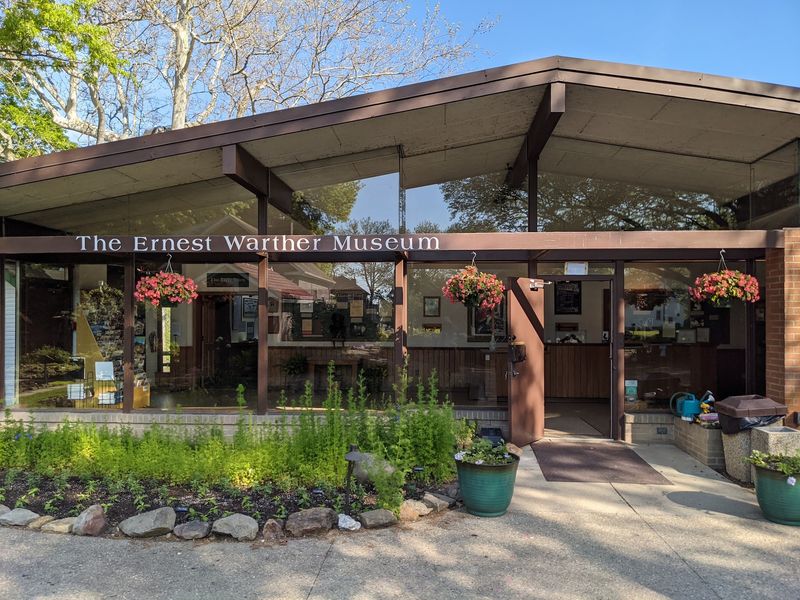
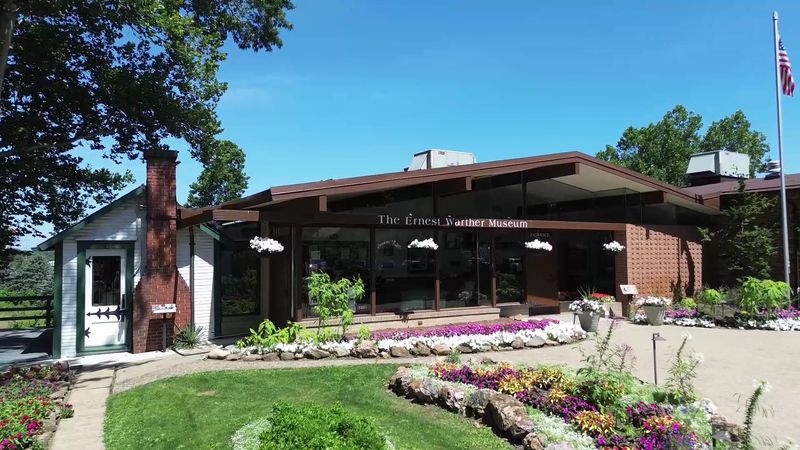
Dover sits in Tuscarawas County, and the Ernest Warther Museum & Gardens occupies a quiet residential corner at 331 Karl Avenue, close enough to Interstate 77 that you can be parked within two minutes of leaving Exit 83. Route 39 also runs nearby, which matters if you’re stitching this together with an Amish Country loop.
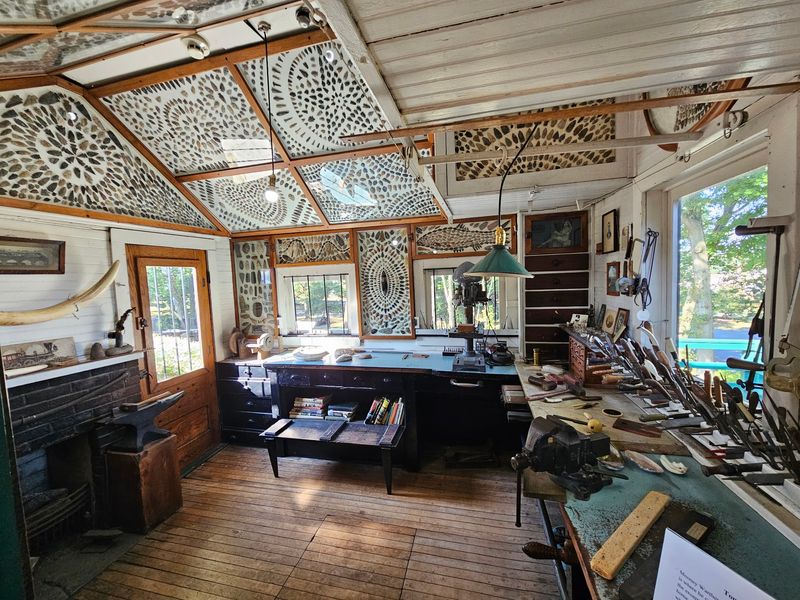
The property is a compact campus rather than a single hall. There’s the main museum building, a separate Button House, the original Warther family home, gardens, and a knife shop next door where kitchen cutlery is still made.
Google lists the place simply as a museum devoted to a famous wood carver, which undersells things considerably. What you actually find is a family archive: carvings, arrowheads, coins, buttons, and the workshop bench where most of it happened.
Parking is free and on-site, with handicap-accessible spaces near the entrance. That combination of easy highway access and no parking hassle makes it an unusually low-friction stop for families driving in from Akron or Cleveland for the day.
Small footprint, enormous amount to look at. Plan accordingly.
The Man They Called Mooney
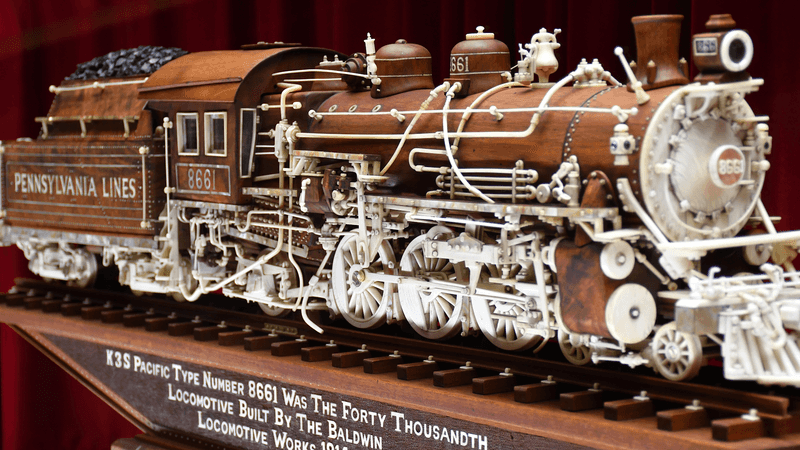
Ernest Warther went by Mooney, and the title that stuck to him was World’s Master Carver. He came from humble beginnings in this very town, worked blue-collar jobs, and spent his spare hours turning blocks of wood into steam engines.
What makes the story land isn’t just skill. Visitors who arrive knowing nothing about him tend to leave repeating the same observation: a man with ordinary means and an extraordinary imagination built something historians took seriously.
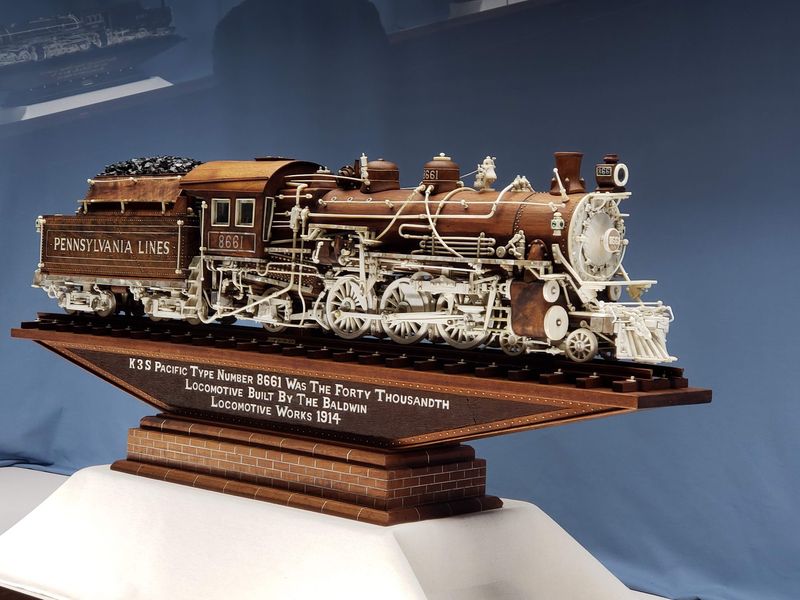
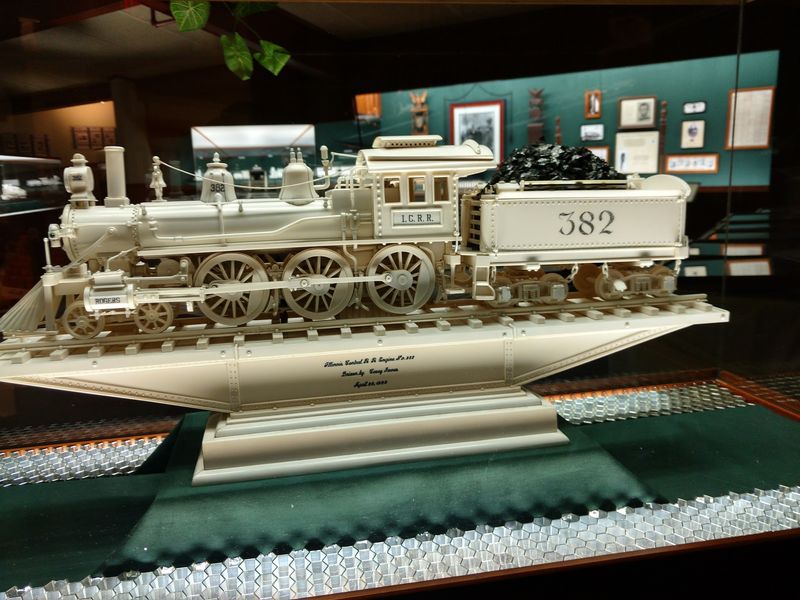
His subject was the evolution of the steam locomotive, carved in sequence, essentially a three-dimensional history lesson in ebony, ivory, and walnut. He produced more than 60 engine models, and by some counts well over 100 pieces overall.
The museum does real work telling his biography alongside the objects. Guides walk you through his childhood, his marriage to Frieda, his relationship with the community, and the persistence that kept him carving for decades.
Longtime regulars who met him in person still describe feeling humbled by the talent. Guests who never heard of him beforehand often say the visit shifted how they think about what one determined person can finish in a lifetime.
Steam Engines Carved One Sliver At A Time
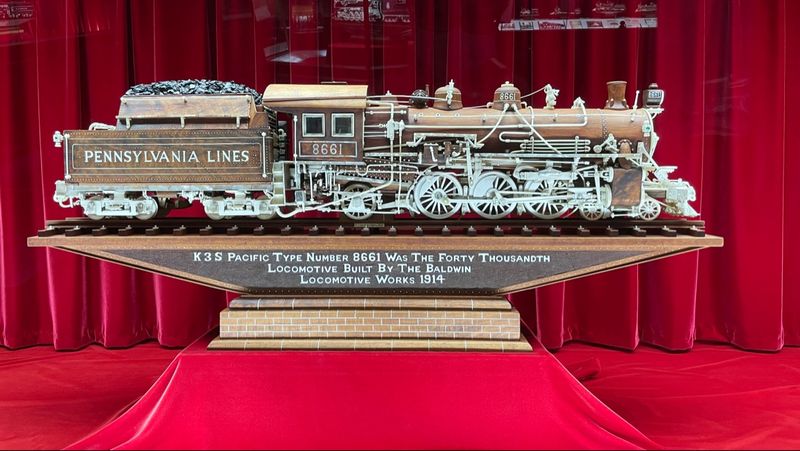
Sixty-plus locomotives line the exhibit rooms, and the shock isn’t the quantity. It’s that many of them move.
Wheels turn, rods pump, and the mechanical linkages function the way the full-size originals did, all of it cut by hand without power tools.
Some models contain as many as 7,500 individual pieces. Read that number, then look at a piston the size of a grain of rice, and the math starts feeling impossible.
The Smithsonian Institution declared these scaled working representations of locomotive history priceless. That’s a heavy word for an institution to use, and standing in front of the cases, it doesn’t feel like an exaggeration.
Carvings draw by far the most comments from visitors, with trains a close second. People who came in with only a mild interest in railroading tend to slow down here and start counting rivets.
Photographs genuinely don’t translate the precision. The depth, the polish, the hair-thin spacing between parts, those register only when your nose is a foot from the glass and you realize a pocketknife did all of it.
The Eight-Foot Lincoln Funeral Train
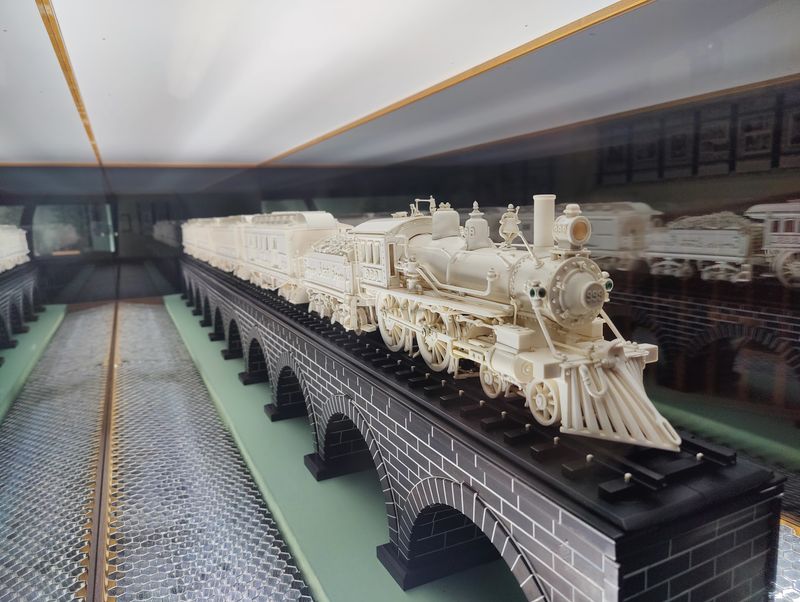
Eight feet long. Over 11,000 components.
Reportedly the largest ivory carving in the world.
The Lincoln Funeral Train is the centerpiece of the collection, and it earns the spot without needing a spotlight or a sign telling you it matters. The scale sneaks up on you as you walk the length of the case and keep finding new detail: window frames, railings, drapery folds, undercarriage hardware.
Mooney carved it as part of his broader project documenting American railroad history, and it represents one of the most somber chapters in that story rendered with almost unreasonable delicacy.
Guides usually pause here longest, and for good reason. The explanation of how the piece was planned, sourced, and assembled adds a layer that a placard can’t deliver.
Kids who’ve been marching past cases at full speed often stop cold at this one, mostly because of its length. It reads less like a model and more like a very small train parked indoors.
If you only remember one object from the visit, odds are strong this is it.
Frieda’s Button House And Its 73,000 Treasures
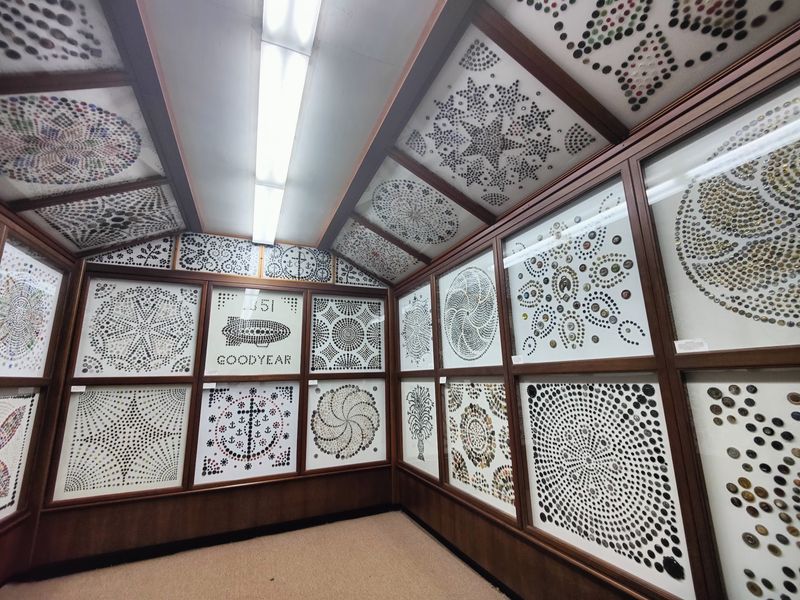
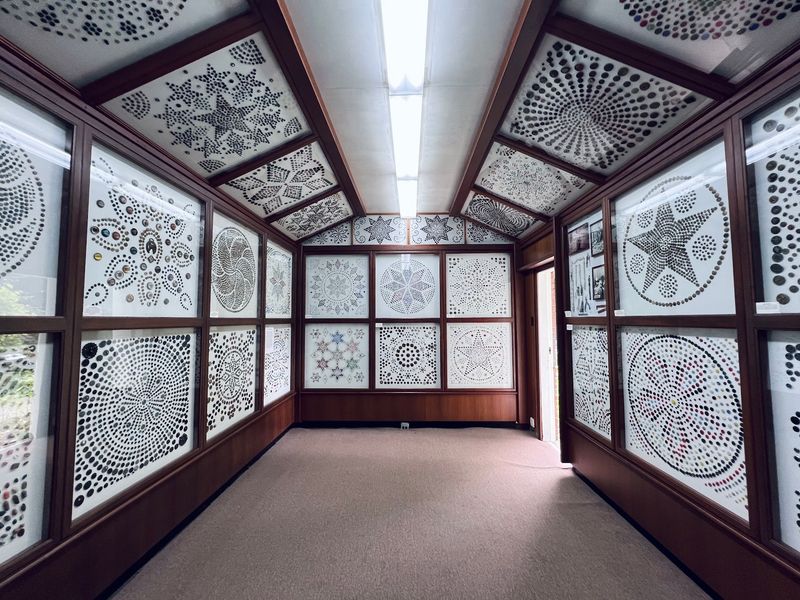
Step into the separate building on the grounds and the walls light up with color. Frieda Warther collected buttons for decades, more than 73,000 of them, and she didn’t just store them in jars.
She arranged them into starbursts, spirals, and symmetrical patterns mounted on panels that cover the ceiling and walls.
The effect is closer to folk art installation than to a collection display. You crane your neck, spot a shape, then notice the same motif repeating twelve feet away in a different palette.
Some buttons date back centuries and carry their own small histories, sorted by material, era, and origin. Guests frequently mention the Button House as the surprise of the trip, especially those who arrived strictly for the trains.
It also balances the story. Mooney gets the master carver title, but the museum makes clear this was a shared life, two people with obsessive patience and complementary talents working under the same roof.
Bring a phone with battery left. People photograph this room more than they expect to.
511 Interlocking Pliers From One Block Of Wood
Here’s the trick that made Mooney famous at fairs and demonstrations: he could carve ten working pliers from a single piece of wood in about ten seconds, all hinged and functional.
He took that idea and pushed it absurdly far. The plier tree on display contains 511 interlocking pliers, every one of them cut from one solid block, branching outward like a fan that keeps unfolding.
It’s the exhibit that makes engineers quiet down. There’s no glue, no assembly, no fasteners, just a series of cuts planned so carefully that the whole structure holds together and articulates.
Family members still carry on the demonstration. One visitor described a great-granddaughter showing a nine-year-old how the famous pliers are made, and the kid was genuinely awestruck.
Little moments like that happen because the Warther family still operates the place.
Of everything on the property, this is the piece most likely to convince a skeptical teenager that woodworking is cooler than it sounds.
Ask about it if your guide doesn’t bring it up. The explanation is half the fun.
Arrowheads, Pennies, And Other Family Obsessions
Collecting clearly ran in the blood. Alongside the carvings sits an arrowhead collection numbering around 5,500 pieces, many of them found in the fields and creek beds of Tuscarawas County and mounted in careful decorative arrangements.
Guests often say those cases tell a story of their own, hinting at who lived in this river valley long before European settlers arrived. It’s a genuine local-history detour tucked inside an art museum.
Coin people get their moment too. A penny collection spans 1773 to 1909, laid out in sequence so you can watch the design shift across more than a century of American minting.
None of these displays announce themselves loudly, which is part of the charm. You walk in for locomotives and end up leaning over a tray of flint points asking your kid to spot the smallest one.
Visitors regularly note how neat and well organized the whole place feels, cases clean and clearly laid out. That tidiness helps here, because collections this dense could easily turn into visual noise and never do.
Swiss Gardens And The Original Family Home
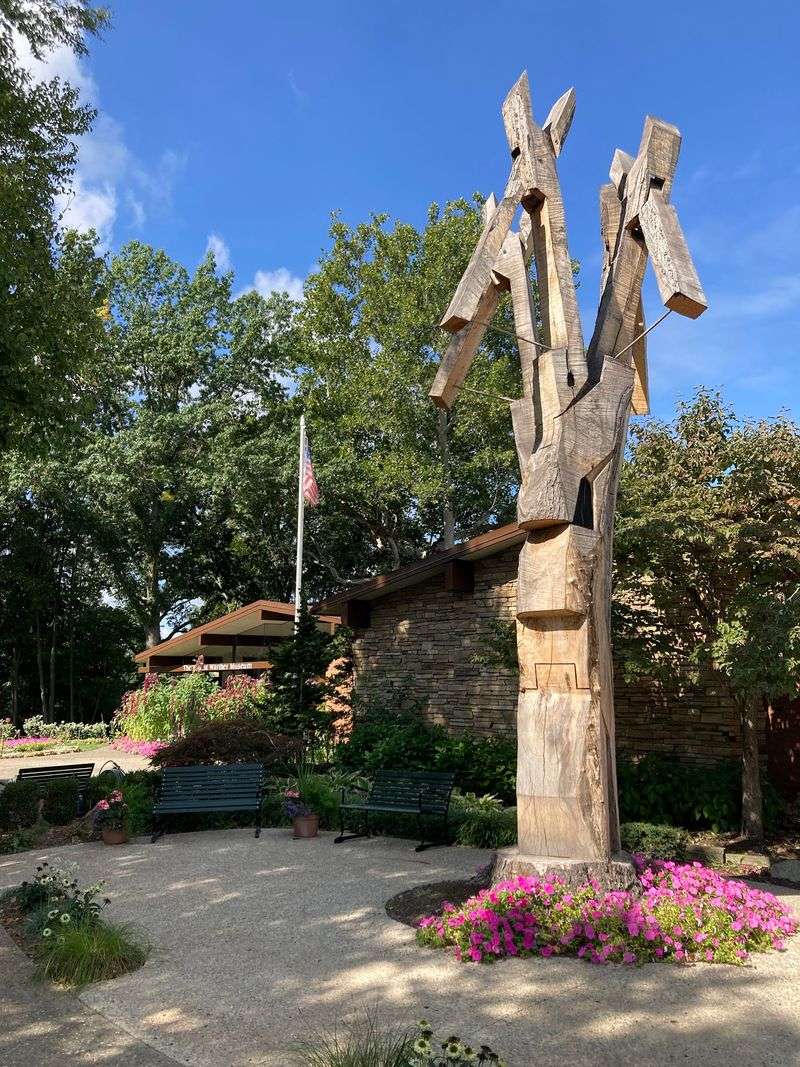
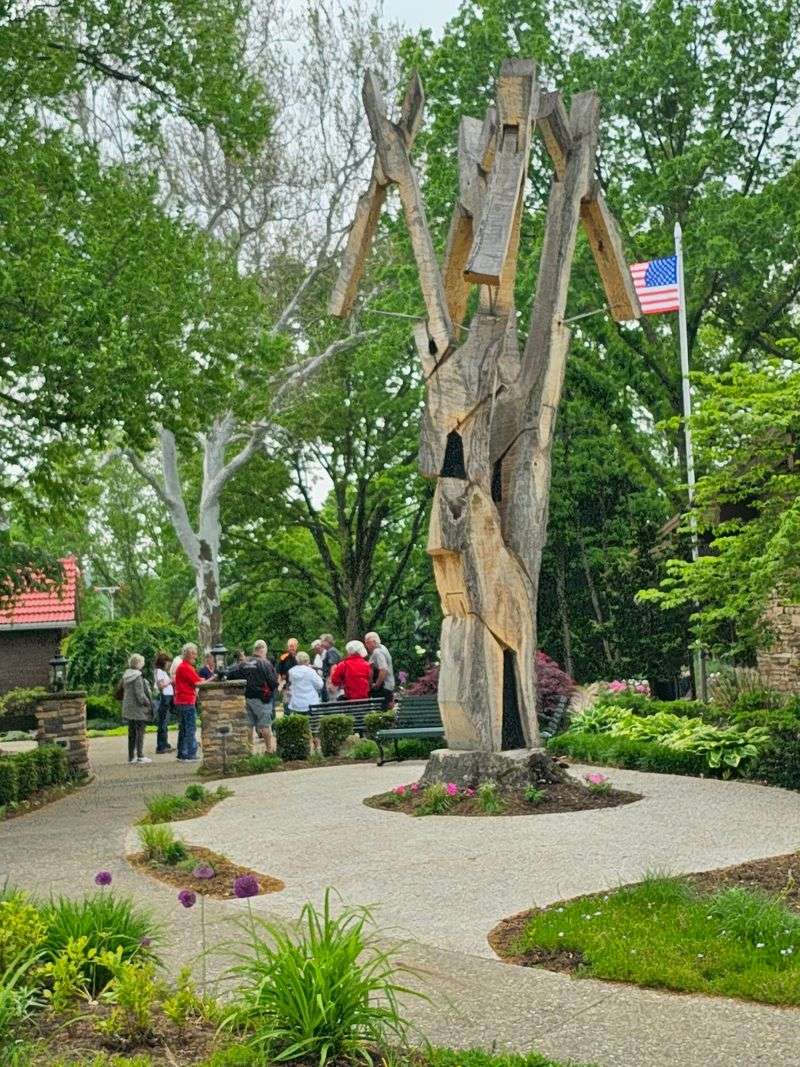
Outside, the grounds nod to the family’s Swiss heritage with terraced beds, stone paths, and plantings that peak in late spring and early summer. The gardens aren’t large, but they’re tended with obvious care and make a nice breather between buildings.
Visit in February and you’ll see structure instead of blooms, which is honest enough. Repeat guests say the difference between a winter walk and a June walk is dramatic.
The original Warther home is open as part of the visit, and stepping through it shifts the mood. Modest rooms, period furnishings, and the sense that all those masterpieces came out of a normal working household on a normal Ohio street.
One practical caution: some walkways are narrow or a bit steep, which can be tricky with a wheelchair or a stroller. Indoors the facility is designed for accessibility, with benches in the exhibit rooms and baby changing stations in all restrooms, so you can plan around the outdoor sections.
Give yourself ten or fifteen minutes out here. It rounds out the story nicely.
The Knife Shop Next Door
Plenty of people walk out of the museum, wander into the cutlery shop, and leave with a paring knife they hadn’t planned on buying. Warther kitchen knives have been made on this site for generations, and the factory building sits right beside the exhibits.
There’s a real family-tradition thread here. One visitor mentioned buying knives because her grandmother always did and she trusted her grandmother’s judgment, which is about as Midwestern a reason as exists.
The third building is where the knife-making happens, and guests who run short on time often name it as the thing they missed. Worth sequencing your visit so you don’t skip it.
Shop staff and museum folks alike get described as friendly and helpful, the sort who’ll explain a blade profile without pushing a sale.
Fair warning for anyone on a budget: the knives have a way of moving from curiosity to shopping list fast. Several guests admit they arrived for carvings and left plotting a full set for the kitchen.
Hours for the shop can vary, so check before you count on it.
Guided Tour Versus Going At Your Own Pace
Two ways to do this, and the choice changes the visit considerably. Guided tours run about an hour and fifteen minutes and walk you through the carvings with context you simply won’t get from reading labels.
Guests overwhelmingly push newcomers toward the guided option. Docents get described as deeply knowledgeable and genuinely warm, and the stories they tell about Mooney’s life and methods are what people remember weeks later.
Self-guided tours are available throughout the day, which suits families who want to linger, read everything, and let a restless kid set the pace. One group with a small child appreciated having room for her to move while the adults browsed.
Most people end up spending around two hours on the full site even though the tour itself is shorter. Between the Button House, the home, the gardens, and the knife shop, the time disappears.
Off-season visits can be remarkably quiet. A winter guest described having a docent essentially to himself and his father, which turned a museum walk into a conversation.
Hours, Admission, And Drive Times From Ohio Cities
March through December the museum runs daily from 9:00 a.m. to 5:00 p.m., with last admission at 4:30. January and February shift to 10:00 a.m. until 4:00 p.m., last admission 3:30.
Closures include New Year’s Day, Easter, Thanksgiving, and Christmas, and seasonal hours can change.
Admission sits at $20.00 for adults, $19.00 for seniors 65 and up, $9.00 for students ages 12 to 17, and $8.00 for youth 4 to 11. Children 3 and under get in free.
Discounts for veterans, AAA members, and seniors have been offered, so ask at the desk.
Drive times make this a comfortable day trip for much of the state. Roughly 49 minutes from Akron, about an hour and a half from Cleveland and Youngstown, and somewhere between 1 hour 50 minutes and 2 hours 12 minutes from Columbus.
Farther corners take commitment: around 3 hours 9 minutes from Toledo, 3 hours 20 minutes from Dayton, and close to 3 hours 55 minutes from Cincinnati.
Casual restaurants and pizza spots in Dover and neighboring New Philadelphia handle lunch, including plain options for picky eaters.
Why This Stop Sticks With People
Ask around and the same pattern repeats: people arrive knowing nothing about Mooney Warther and leave describing the visit as one of the most memorable they’ve had. That’s a lot to expect from a small museum on a side street in Tuscarawas County.
The appeal splits neatly. Train fans and anyone who likes mechanical things get precision to study for hours.
Everyone else gets a story about two people who turned patience into something permanent.
It rates 4.9 stars across more than 1,300 reviews, and the recurring themes are the carvings, the guided tours, the button collection, and the holiday tree display that draws its own crowd in December.
Some guests call the admission price steep for a compact site, then immediately add that they’d pay it again. That tension shows up often enough to be worth mentioning honestly.
For Ohio families pairing it with Amish Country, Exit 83 makes the detour easy. Just budget more time than you think you need, because nearly everyone who rushes it says they wish they’d planned better.