
This Remote Tennessee State Park Has Hundreds Of Cascades, Mountain Cliffs, And Wild Fall Scenery
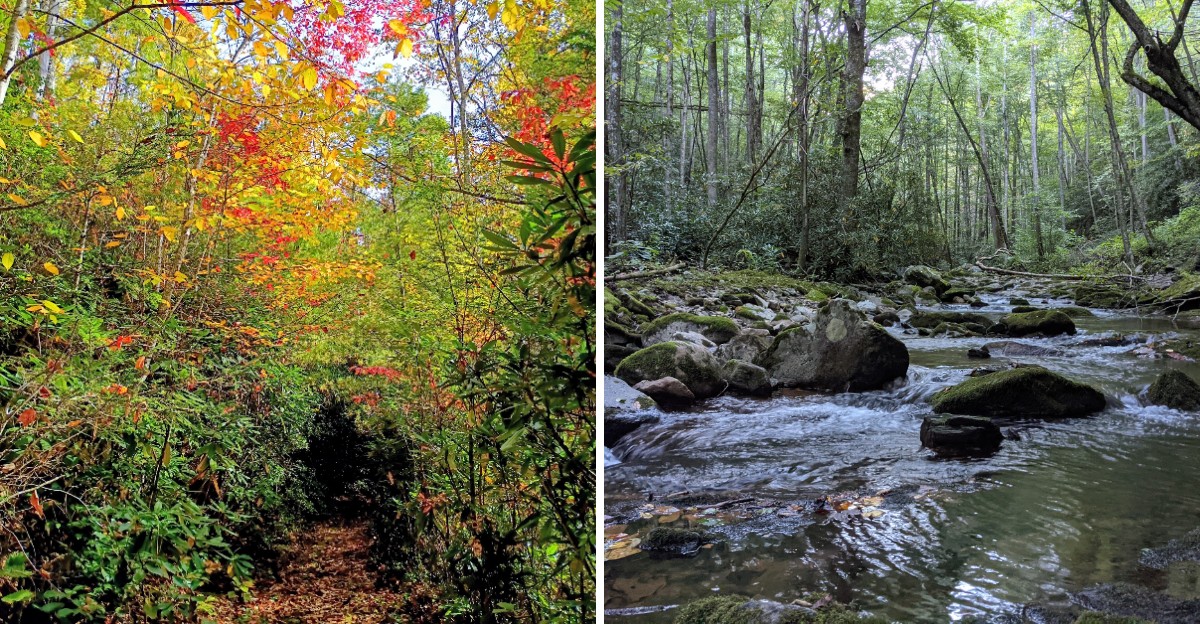
How many waterfalls can one mountain park possibly hide among its ridges and forests?
This remote corner of Tennessee answers that question with rushing creeks, countless cascades, steep cliffs, and trails that feel far removed from busy roads. Autumn makes the scenery even more dramatic, as the mountains trade summer green for deep reds, oranges, and golds.
The landscape changes quickly as you walk. One stretch follows clear water through the woods, while another climbs toward rocky overlooks and narrow valleys.
Small cascades appear around bends, and larger drops give hikers plenty of reasons to stop for a closer look.
It is rugged without feeling impossible to enjoy. Quiet trails, cold mountain streams, and wide views make the trip feel like a real escape.
When fall color reaches the higher slopes, this Tennessee park becomes the kind of place that can make an ordinary hike feel like a full day of discovery.
The Creekside Drive Makes The Approach Feel Like Part Of The Trip
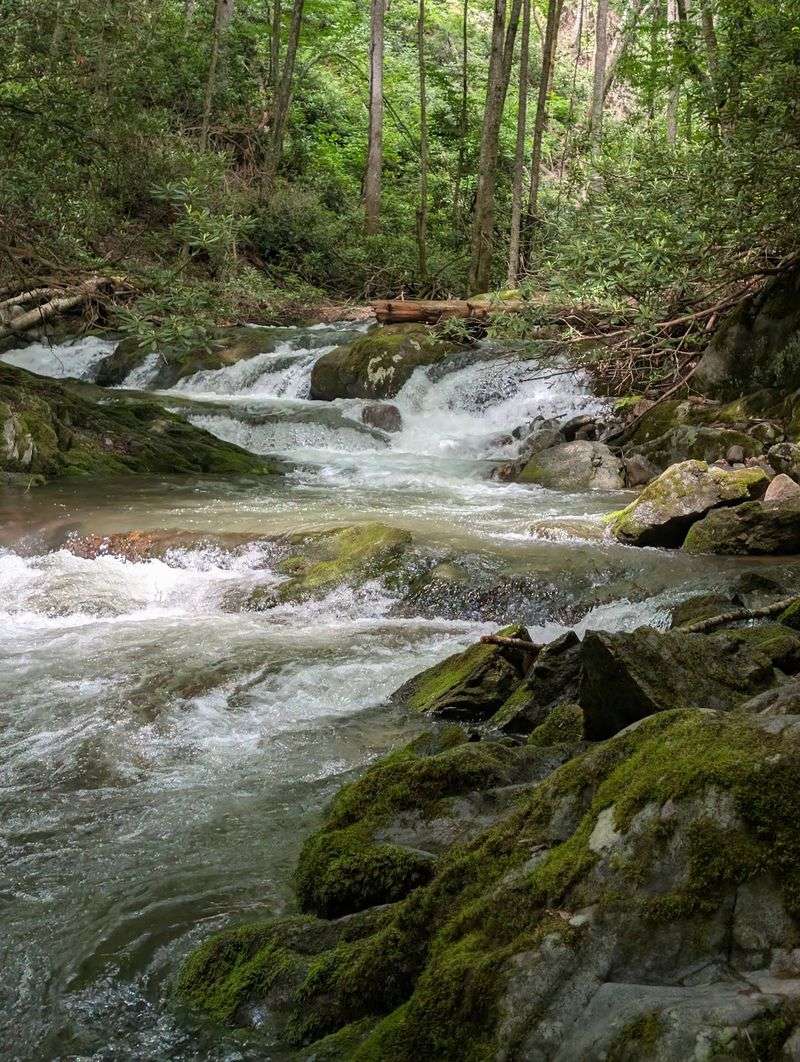
Most parks make you earn the scenery. Here, the entrance road hands it to you for free. Rocky Fork Road traces the creek the entire way in, and the water never leaves your side.
Roll the windows down. You will hear the creek before you see it, and the temperature drops a few degrees under the tree canopy.
Several small cascades appear right along the roadway, close enough to photograph without much of a walk.
Pull-offs are scattered along the route, which is the real trick to enjoying this place. Instead of racing to the main lot, stop at one or two and stand at the water’s edge.
The creek runs clear over pale stones, and crayfish scuttle in the shallows.
The address is 501 Rocky Fork Rd, Flag Pond, TN 37657, in Unicoi County, close to the North Carolina state line. GPS can get confused out here, so follow the brown road signs once you leave the interstate.
Gates open at 8 a.m. and close at 4:30 p.m. daily, so plan your arrival with daylight in mind. Autumn mornings bring mist rising off the water, which makes the drive worth doing twice. Go slow. That is the whole point.
Rocky Fork Falls And Its Many Nicknames
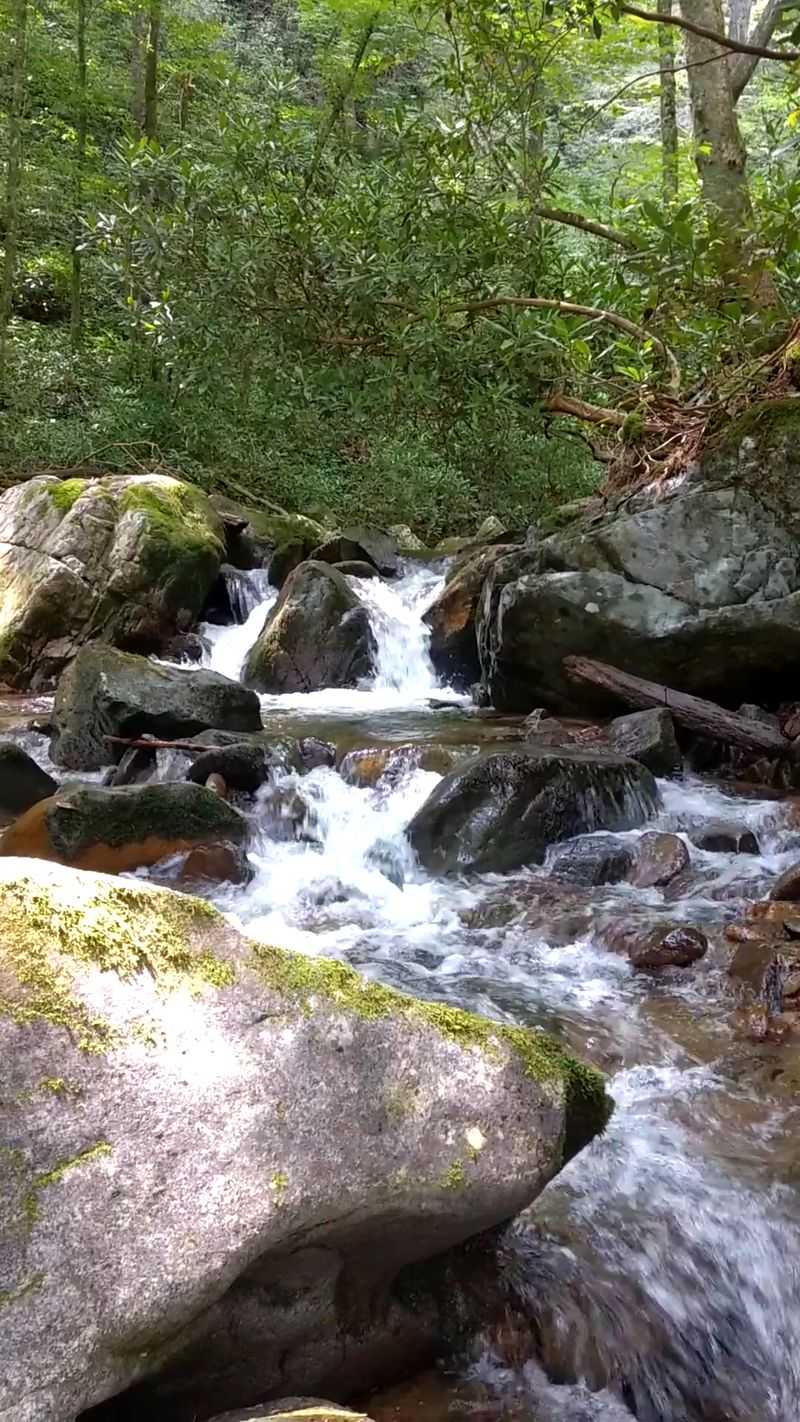
A waterfall with four names has to be worth the walk. Rocky Fork Falls goes by Rainbow Falls, Rattlesnake Falls, and Falls of the Scenic Spur depending on who is telling the story.
The drop measures about 20 feet, which makes it more of a graceful cascade than a thundering plunge. Water slides over layered rock in wide sheets, catching light in a way that explains the Rainbow nickname.
What makes it memorable is the setting rather than the size. The falls sit deep in a narrow valley where the forest closes in overhead and sound carries strangely.
Moss coats the surrounding boulders year round.
Fall is arguably the best season here. Leaves collect in the pool below, and the lower water levels reveal more of the rock structure underneath the flow.
Spring brings stronger volume if you prefer power over detail.
Footing near any waterfall in this park demands attention. Wet stone plus slick leaves equals a bad combination, so keep to established paths and resist scrambling for a closer angle.
Bring a lens cloth if you carry a camera. Spray drifts further than you expect in cool weather, and nothing ruins a photo faster than an unnoticed water droplet on the glass.
Whitehouse Cliffs, Where 200 Feet Of Quartzite Rules The Skyline
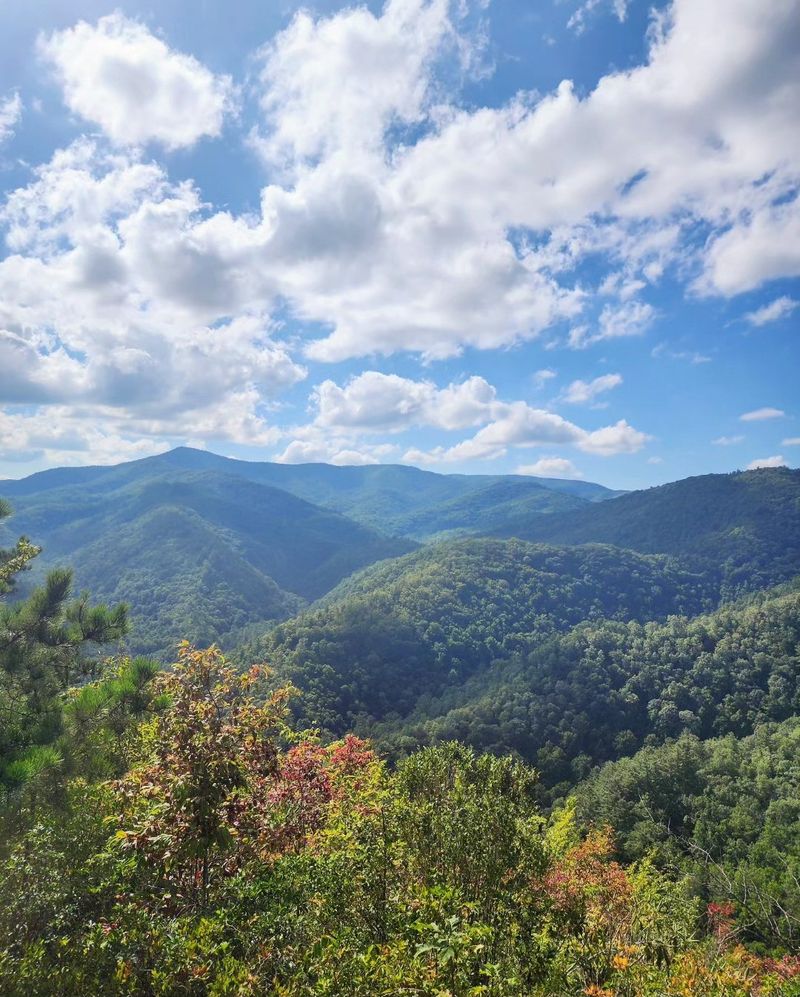
Two hundred feet of bare quartzite does not blend into the landscape. Whitehouse Cliffs juts from the forest like a wall someone forgot to finish, pale gray against a hillside of color.
Geology nerds will appreciate what they are looking at. Quartzite is metamorphosed sandstone, tough enough to resist the erosion that wore the softer rock around it down into valleys.
The cliff face supports nearly 40 climbing routes across a range of difficulties, and climbing is permitted in approved areas. Loose rock and plant matter are common, so this is terrain for climbers who already know their gear.
Not a climber? The view of the cliffs is arguably better than the view from them.
Whiteoak Flats Overlook frames Whitehouse Cliffs alongside Blackstack Cliffs, with Big Bald Mountain filling the background.
Above the cliffs, Whitehouse Cliffs Knob rises to roughly 3,340 feet. From the top you get almost 360 degrees of mountain country, taking in the Rocky Fork watershed and Sam’s Gap.
Give yourself time. The trail up is steep and rocky, a genuine leg burner that rewards patience over speed. Pack water, wear real shoes, and take the climb in sections rather than pushing straight through.
The Blue Hole, A Swimming Spot Perched Above A Waterfall
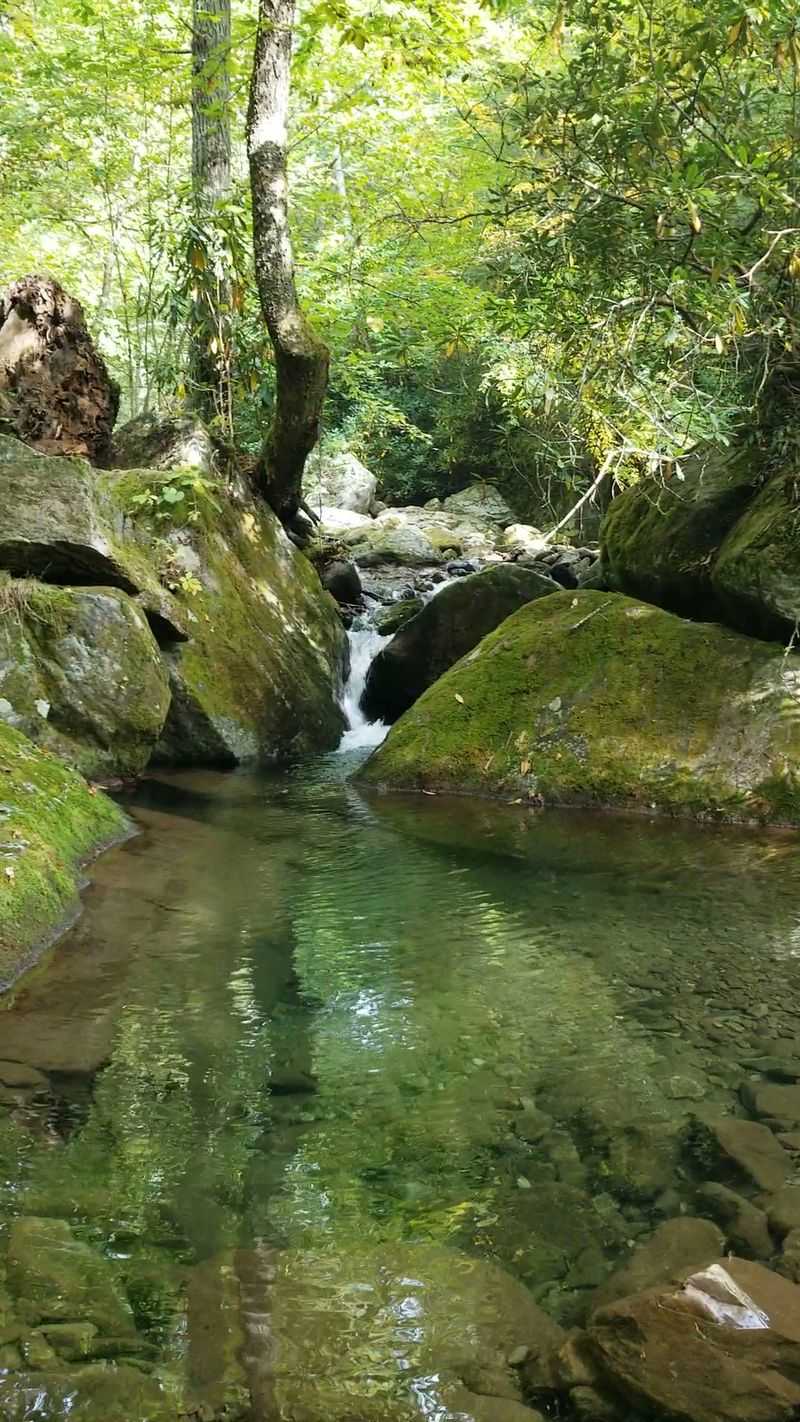
Clear water has a way of fooling your depth perception. The Blue Hole looks knee deep until you wade in and discover otherwise, which is part of its charm.
Its position is what makes it unusual. The pool sits just above a waterfall, so you are essentially swimming at the top of a drop with the sound of falling water right below you.
Swimming and wading are permitted in both Rocky Fork Creek and Flint Creek, and the Blue Hole gets the most attention of any spot in the park. Other smaller pools sit beside various cascades if you want quieter water.
Water shoes are not optional advice, they are essential. The creek bottom is all rounded stone, some of it slick with algae, and bare feet lose the argument every time.
Expect the temperature to be bracing even in August. These are spring-fed mountain streams, and they stay cold regardless of what the thermometer says in the parking lot.
Children tend to love the shallow edges, where crayfish and small fish are easy to spot. Keep an eye on the current after heavy rain, though, because creek levels rise quickly in this steep watershed and calm pools can turn pushy fast.
Nearly Twenty Miles Of Trails With Something For Every Pair Of Legs
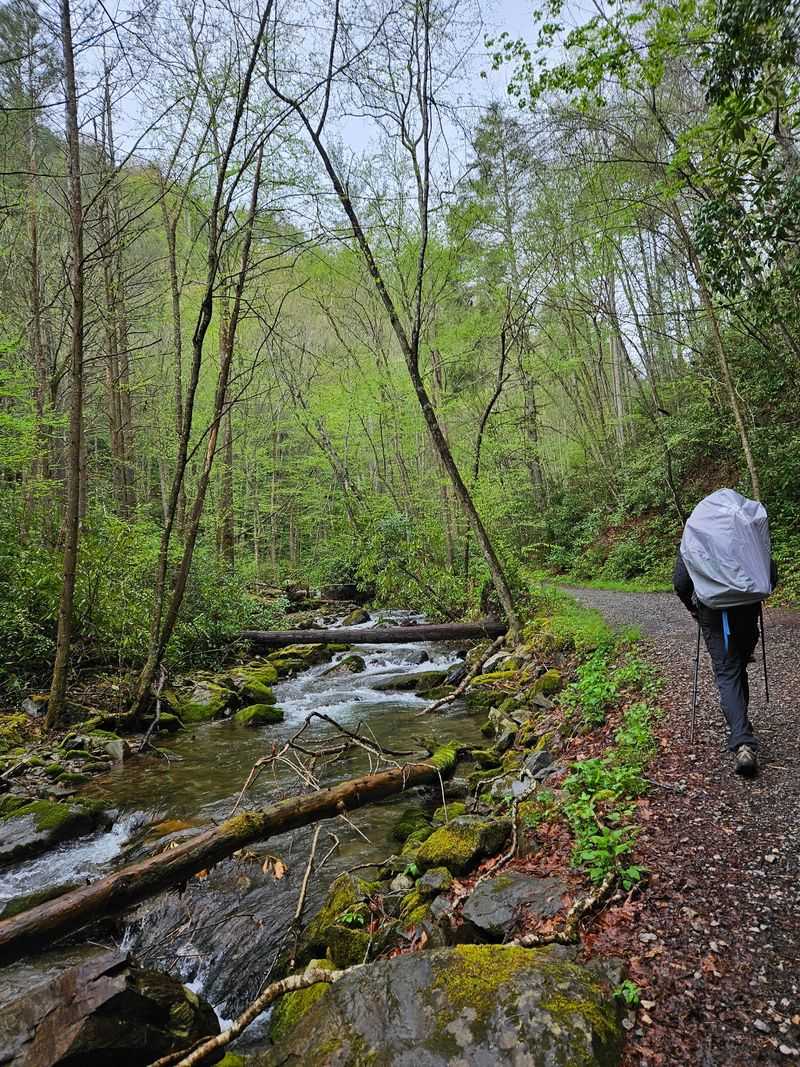
Trail variety is this park’s quiet superpower. Roughly 20 miles of marked paths run through the watershed, and they range from flat creekside strolls to climbs that will humble a marathon runner.
Rocky Fork Trail is the gentle one. It follows the creek on a wide, road-like surface with footbridges over the crossings, making it friendly for families and anyone pushing a stroller partway.
Flint Creek Trail offers a similar easygoing feel with a steady parade of small waterfalls along the way. It is the sort of walk where you cover less ground than planned because you keep stopping.
Whitehouse Cliffs Trail is the opposite experience entirely. Steep, relentless, and roughly a mile of serious climbing, it trades comfort for one of the finest viewpoints in upper East Tennessee.
Longer loops of around seven miles let you string sections together for a full day out. Trail junctions are signed, but carrying a downloaded map is smart since cell service is unreliable here.
The trail system also links directly to the Appalachian Trail, which runs along the ridgeline nearby. Rangers lead guided hikes throughout the year, including fall color walks, and they know exactly which coves are peaking that week.
Wild Trout Streams Rated Among Tennessee’s Finest
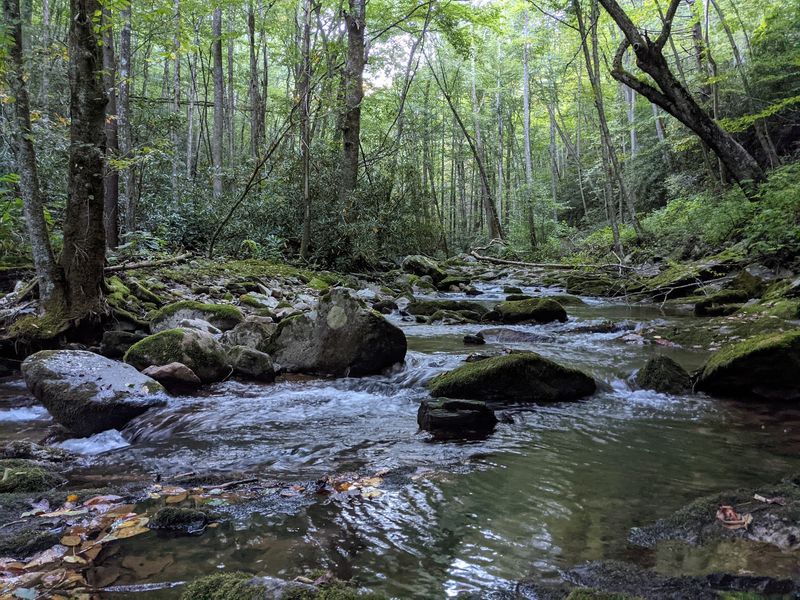
Ask an angler about brook trout and watch their expression change. Tennessee’s native brookie is a small, brilliantly colored fish that only survives in cold, clean, well-oxygenated water.
Rocky Fork and Flint Creeks both carry wild trout stream designations, meaning the fish here reproduce naturally rather than arriving by stocking truck. That distinction matters enormously to serious fishermen.
Lamar Alexander Rocky Fork State Park ranks among the top three brook trout waters in the entire state. For a stream you can step across in places, that is a remarkable reputation.
Fishing these creeks is a game of stealth and short casts. Rhododendron crowds the banks, the pools are small, and a heavy footfall sends every fish under a rock.
A valid Tennessee fishing license is required, and specific regulations apply to wild trout streams, so check the current rules before you go. Barbless hooks and careful handling help these populations hold steady.
Early fall is a fine time to try. Water runs cool, the crowds thin out, and the surrounding color makes even a fishless afternoon feel productive.
One practical note from the trail: hooks occasionally get left behind near popular pools. Pack out your line and tackle, and pick up any you happen to spot.
Fall Color That Rolls Down The Mountainsides In Waves
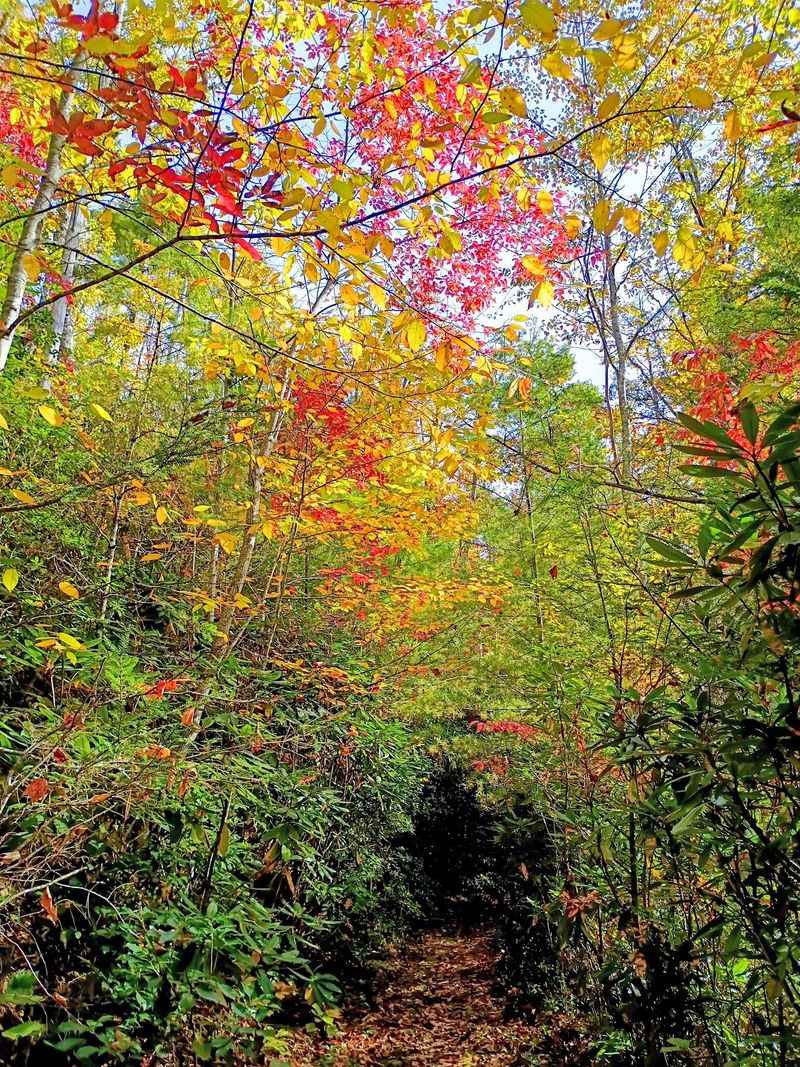
Elevation is the secret ingredient in a great fall display. Because this park climbs from creek bottoms to ridges above 3,300 feet, the color arrives in stages rather than all at once.
High ground turns first. Then the change works its way downhill over several weeks, which means a mediocre timing guess can still land you in peak color somewhere in the watershed.
The cove forests hold the richest palette. Sheltered valleys here support a wide mix of hardwoods, and mixed species produce the reds, oranges, yellows, and deep bronzes that single-species stands cannot.
From Whiteoak Flats Overlook and the cliff knob, the effect is layered, with ridge after ridge fading toward North Carolina. Morning light tends to be softer and mist often lingers in the hollows.
Weekends in October draw the most people, though this remains a quiet park by Tennessee standards. A weekday trip means creek sounds instead of car doors.
Dress in layers, because the ridgetops run noticeably cooler and windier than the valley floor. Temperatures can swing 15 degrees between the parking area and the summit.
Ranger-led fall color hikes are offered during the season, and joining one saves you the guesswork of finding the best-looking coves.
Backcountry Campsites And The Art Of Packing It All Out
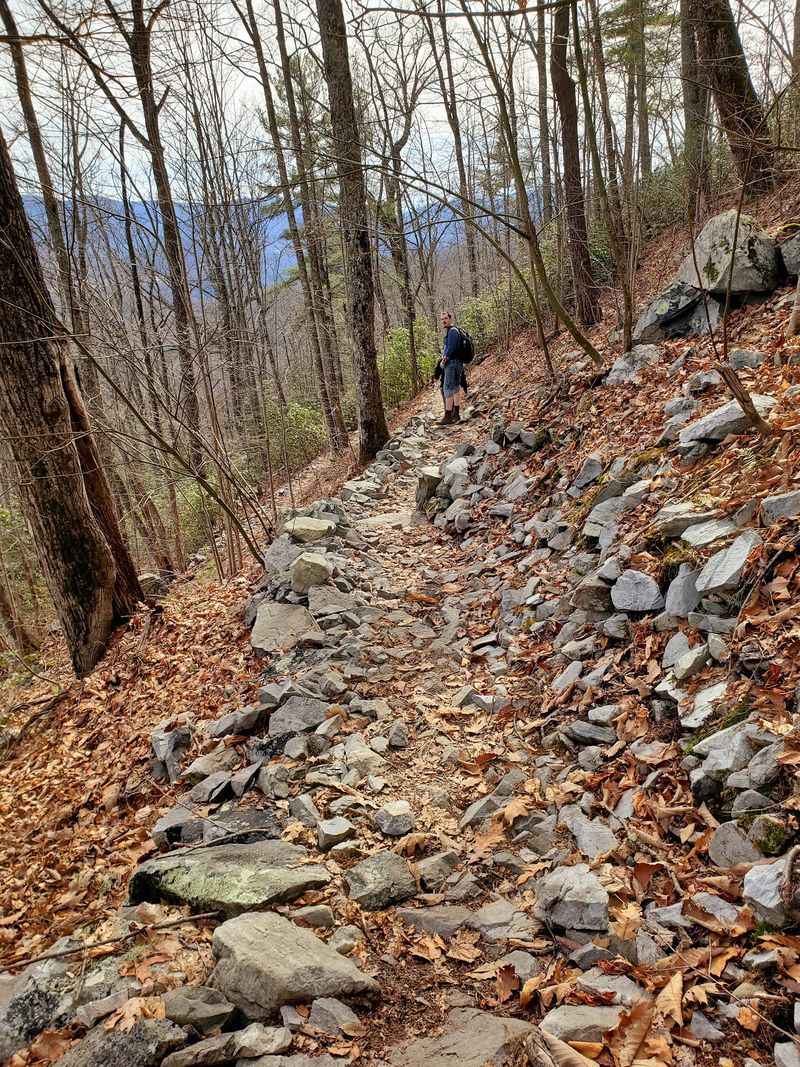
Three campsites in more than 2,000 acres. That ratio tells you everything about the kind of night you can expect at Lamar Alexander Rocky Fork State Park.
The primitive backcountry sites require reservations and operate on a pack-in, pack-out basis. Each one provides a tent pad, a fire ring, and a bear-resistant food storage container.
That last item is not decoration. Black bears live throughout this watershed and the adjoining Cherokee National Forest, so every scrap of food and scented item belongs in the container overnight.
Hatchery Flatts is the accessible option among the three, which makes it a good starting point for anyone new to backcountry camping. Headwaters is another of the sites, set further into the drainage.
Bring everything, including water treatment. There is no potable water at the sites and no restrooms in the park, so plan your logistics before you leave the trailhead.
Night here is genuinely dark. In early summer, fireflies and glow worms light up sections of the forest floor, a display that draws people back year after year. Reserve early for autumn weekends, since three sites fill quickly.