
This Abandoned West Virginia Amusement Park Still Stands Behind Rusted Gates
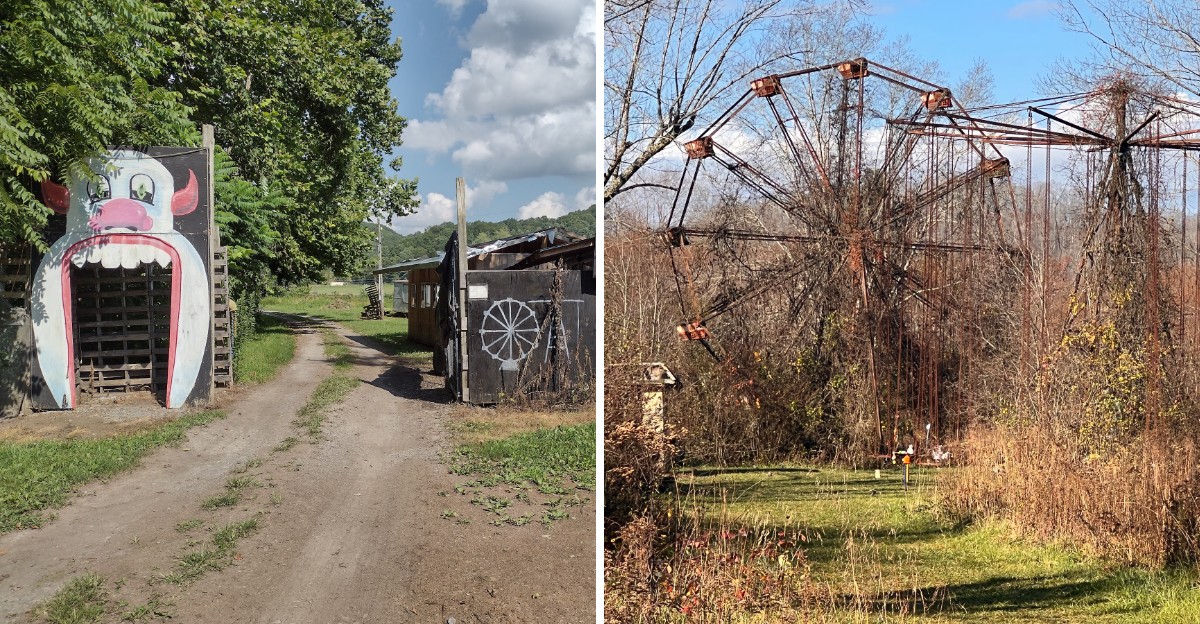
Rusted metal doesn’t usually pull people off the highway, but this one does every week. West Virginia hides an amusement park frozen mid-collapse, gates locked and vines climbing straight through the rides.
Nobody built it to look like this, yet somehow it fits.
A Ferris wheel still stands tall behind the fence line, streaked orange and wrapped in green. Old cabins, a swing ride, and scattered vehicles sit exactly where they were left decades ago.
Silence has replaced whatever noise once filled this valley.
West Virginia keeps a few places like this hidden in its hills, but few carry a reputation quite this loud. Behind those rusted gates sits a story stretching back centuries longer than the rides themselves.
That layered history rarely fits into a quick roadside stop.
Ground That Remembers Thousands Of Years
Before any ride turned, people lived here. Archaeologists working the site uncovered artifacts and the remains of thirteen individuals, many of them children.
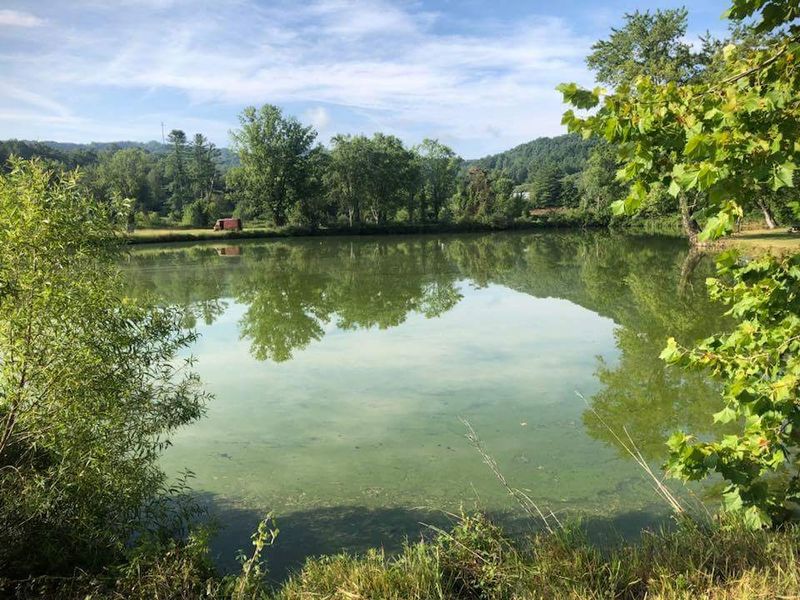
Indigenous groups reportedly used this fertile bottomland for roughly two thousand years. A clear river ran nearby, and a cliff called Indian Lookout gave a wide view of the valley.
Those details matter, because they explain why Lake Shawnee Abandoned Amusement Park feels different from other ruins. Visitors are standing on a burial site, not simply an old fairground.
The address is 470 Matoaka Rd, Rock, WV 24747, in Mercer County, West Virginia. Tours are private property visits, so booking ahead is required.
Guides open most walks with this ancient chapter rather than the carnival years. That order sets the tone for everything that follows.
Some guests bring loose tobacco as a respectful offering, a practice encouraged by staff. Others simply stay quiet and listen.
Treating the ground carefully is the unspoken rule here. Nobody polices it harshly, but the expectation is clear.
Come for the rusted rides if you want. Most people leave thinking about the centuries underneath them instead.
A Frontier Story That Still Echoes
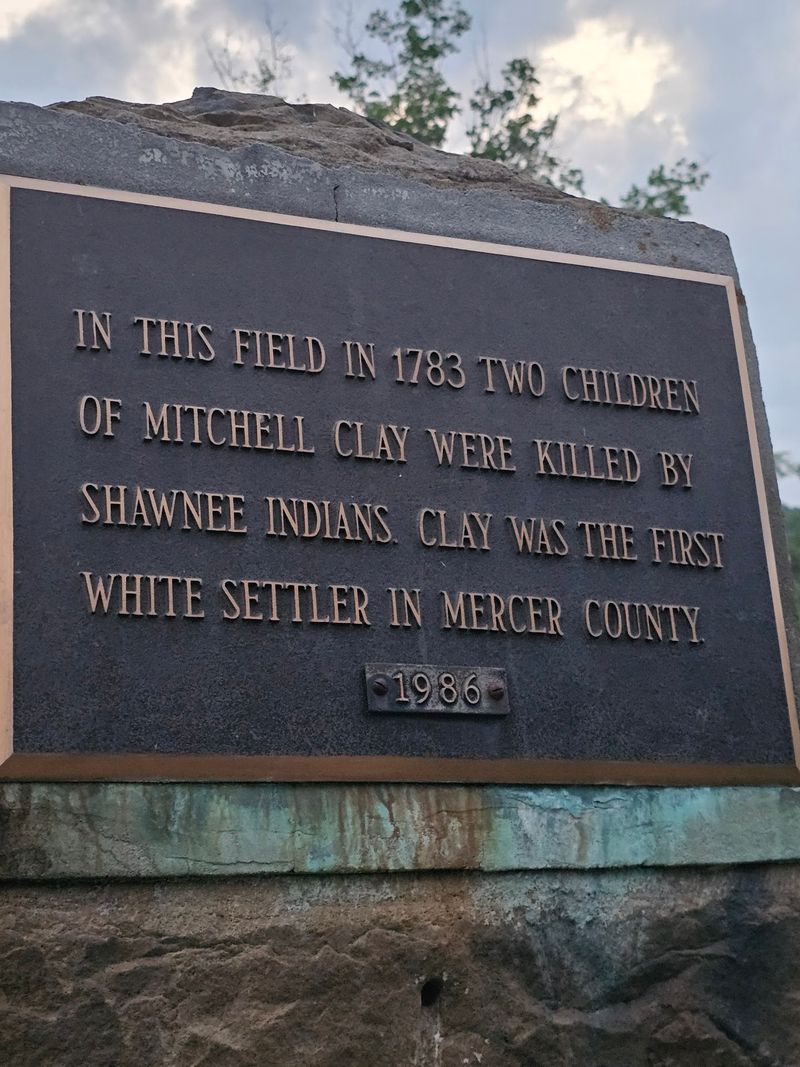
History here turns grim long before ticket booths existed. In the late 1700s, a frontier family settled roughly 800 acres of this valley.
In 1783, three of the children from the family that settled here disappeared during a documented frontier-era conflict. Local accounts refer to the event by the name of the settlement, Clover Bottom.
Guides at Lake Shawnee retell this chapter carefully, since written records and oral tradition do not always line up perfectly. That honesty is part of the tour’s appeal.
Many believers connect the reported activity on the property to this event. Skeptics point out that heavy history makes any quiet field feel heavier.
Either way, the story gives the West Virginia site a weight that pure decay never could. You are not just looking at peeling paint.
Historical markers and family names appear throughout the region, so the account is not isolated folklore. It is woven into Mercer County memory.
Listening to it changes how the swings look afterward. Suddenly the rust reads like a timeline instead of neglect.
Bring patience for the storytelling portion. The park’s meaning lives in these older chapters more than the carnival ones.
When Coal Country Got Its Carnival
Picture Saturday crowds instead of silence. An entrepreneur bought the land in 1926 and built a modest amusement park for local families.
Coal mining households across Mercer County finally had somewhere to spend a day off. That mattered in an area built on hard, dusty work.
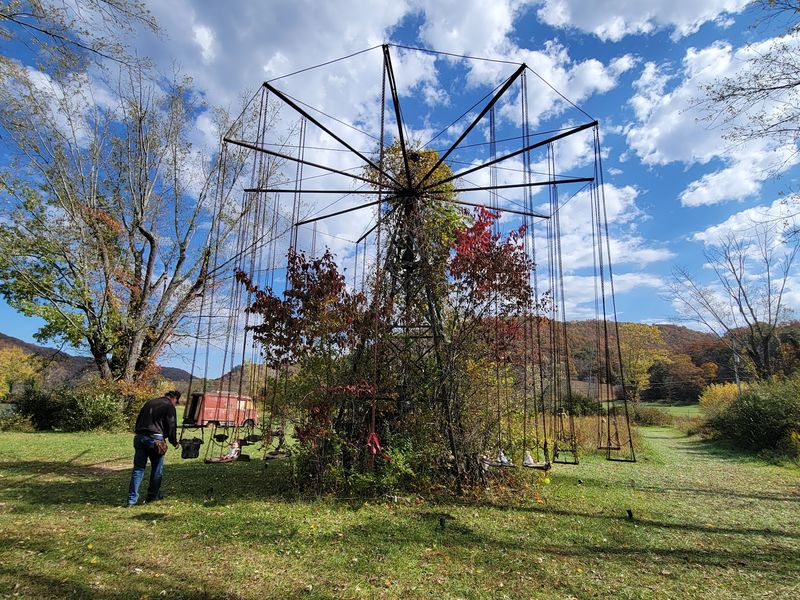
The park offered a Ferris wheel, a swing ride, a swimming pool, and a racetrack. A dance hall handled evenings, and concession stands handled everything else.
Cabins let guests stretch a visit into an overnight stay. For a rural valley, that counted as a full resort.
Lake Shawnee operated through decades that reshaped the region, offering ordinary fun in an extraordinary setting. Nobody thought much about the ground underneath.
Old photographs shown during tours make the contrast sharp. Laughing crowds once filled the spot where vines now climb steel.
Understanding this cheerful stretch is what makes the abandonment land emotionally. Without it, the ruins are just scrap metal.
The carnival years ended in 1966, and the valley went quiet again. What stayed behind became the attraction people drive hours to see.
Accidents That Closed The Gates
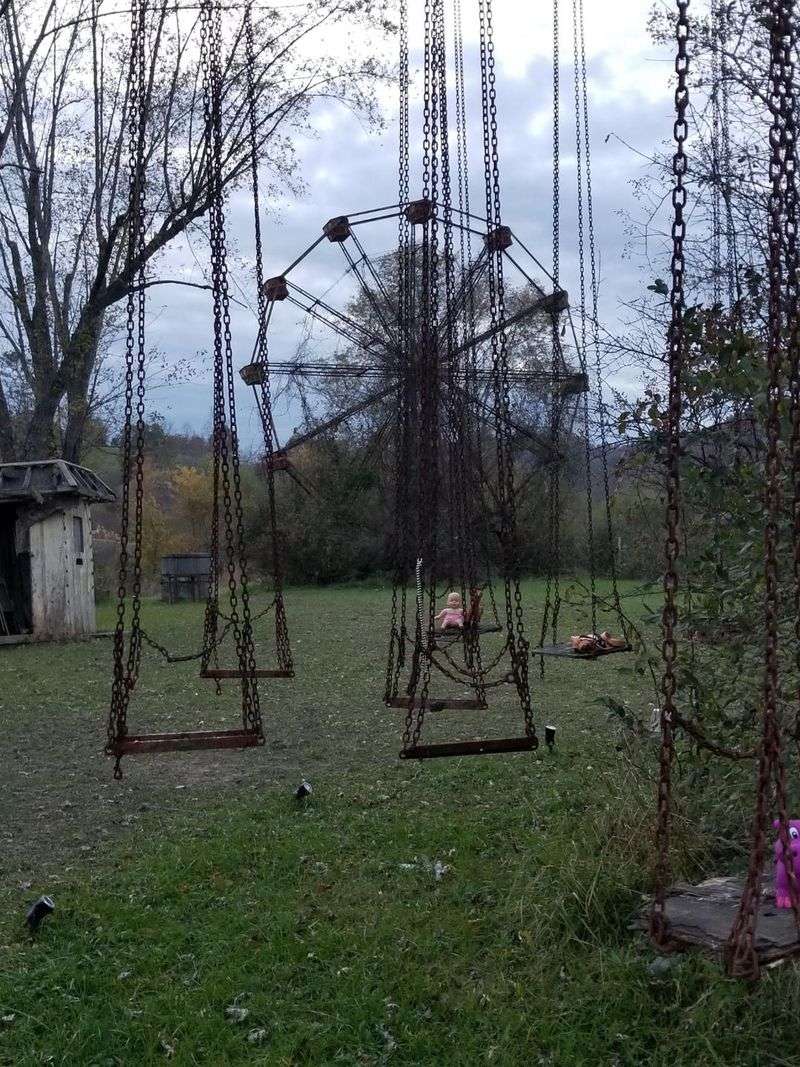
Joy and misfortune shared the same fairground. Several accidents occurred during the park’s operating years, and locals never forgot them.
A young girl was seriously injured in an accident involving the swing ride and a delivery truck, and a separate incident at the swimming pool also became part of the park’s somber history.
Small communities feel losses like these deeply. Attendance and enthusiasm reportedly faded afterward.
By 1966, the owner shut Lake Shawnee down, and the rides stopped for good. Grass crept over the midway within a few years.
Tour guides handle these stories with more care than a typical haunted attraction would. They frame them as community history, not entertainment.
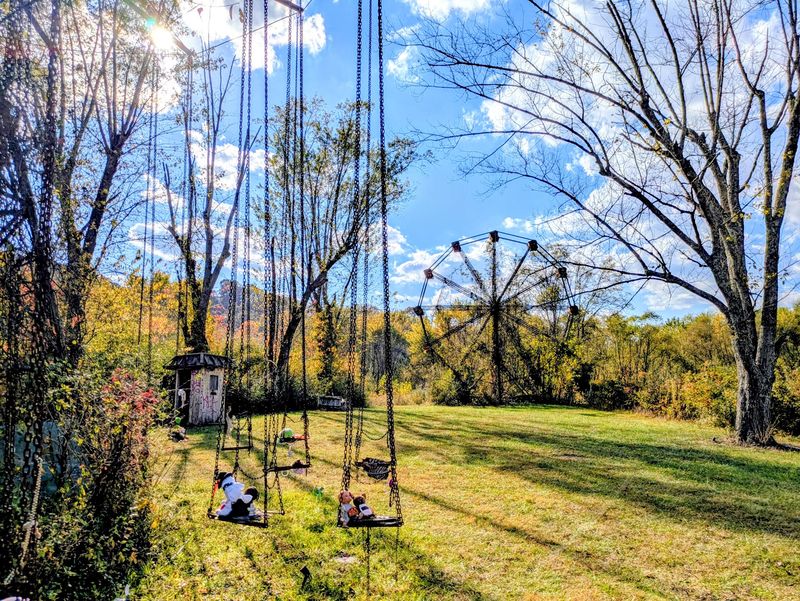
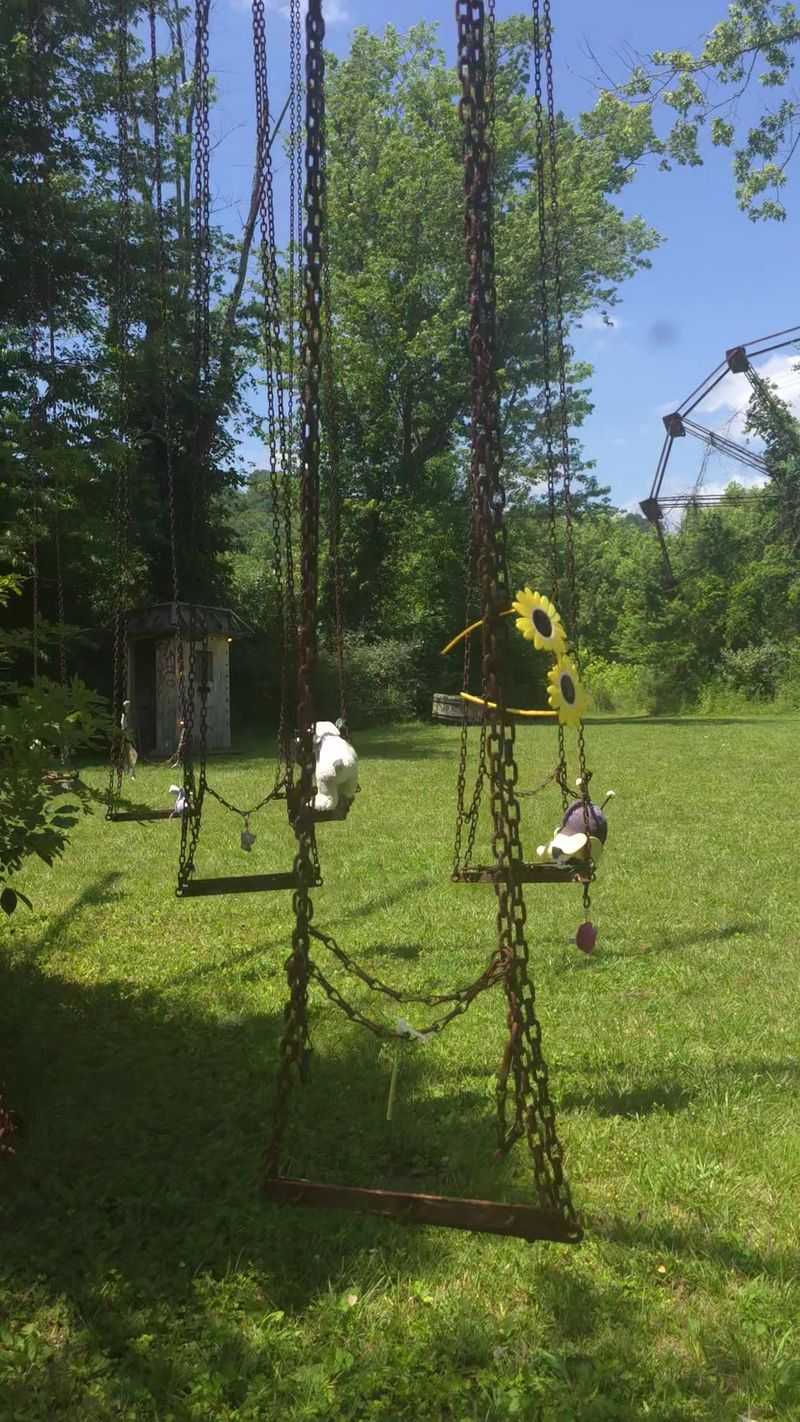
Visitors often leave toys, pinwheels, and dolls near the swing set as small tributes. The pile has grown large enough to become its own landmark.
Photographers find the collection striking and slightly unsettling at the same time. It photographs better in soft, cloudy light.
Respect goes a long way at this West Virginia site. Take pictures, ask questions, and leave the offerings where they sit.
The Reopening That Barely Lasted
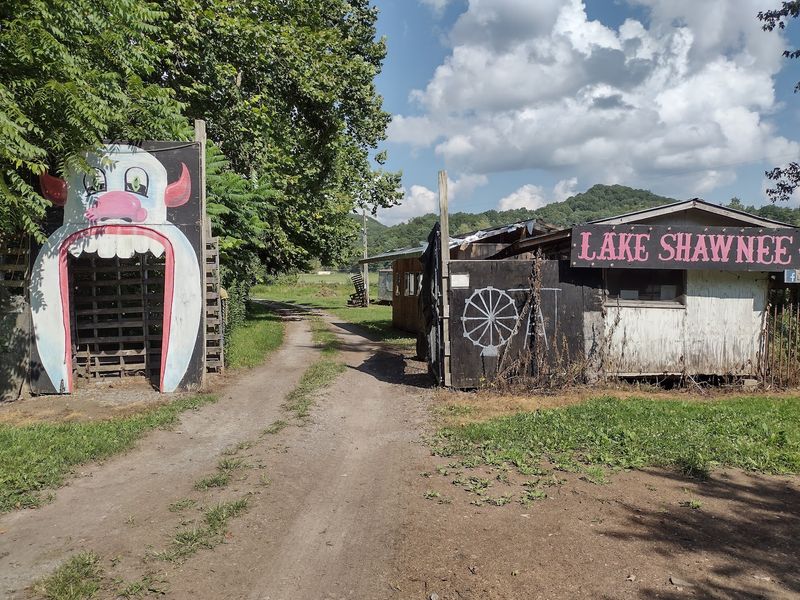
Second chances do not always stick. A former employee purchased the abandoned grounds in 1985, hoping to divide the land for homes.
Excavation work changed those plans fast. Crews uncovered Native American burial sites and artifacts across the property.
Instead of building houses, the owner briefly reopened the amusement park in the late 1980s. The revival closed again by 1988.
Short as it was, that chapter shaped what Lake Shawnee is today. The land got protected rather than paved over.
Mud bog events also ran on the property during that era, and an old dump truck from those days still sits outside the main park area. Sharp-eyed visitors spot it.
Later years brought guided tours instead of rides. The focus shifted from thrills to history and curiosity.
That transition explains the current setup: appointment-only access, a guide who walks you through the timeline, then free time to roam.
Some guests find the structure surprising at first. Most agree the context makes the wandering far more interesting.
Rust, Vines, And A Ferris Wheel That Waits
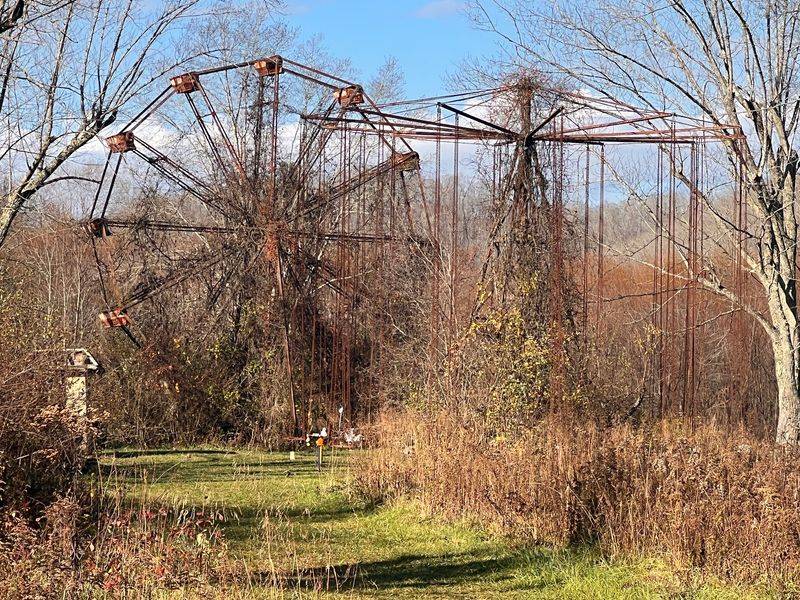
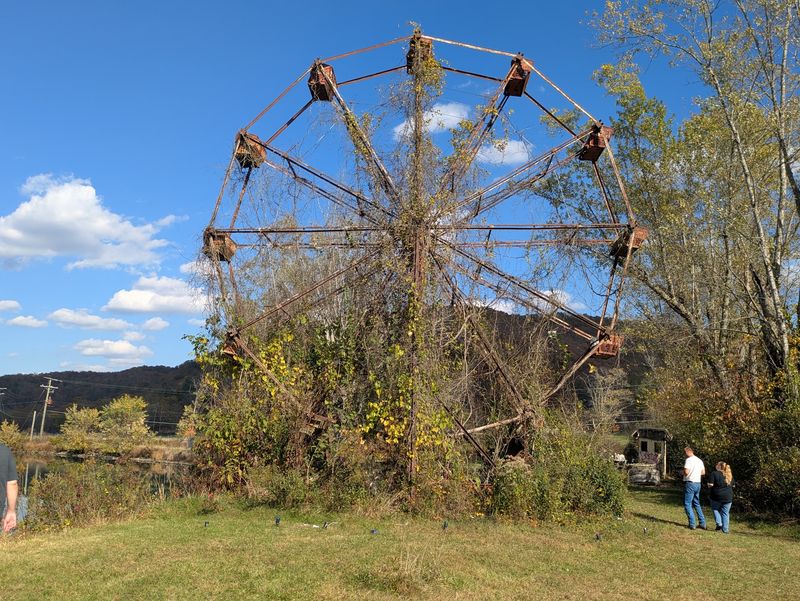
The Ferris wheel is the star and it knows it. Its skeleton stands tall, streaked orange with rust and laced with climbing vines.
Only two original rides remain, the wheel and the swings, since others were sold long ago. That surprises visitors expecting a sprawling ghost fairground.
Scattered around the grounds you will also find abandoned buses, old vehicles, and weathered playground equipment. The lake itself is quietly pretty.
Photographers who plan ahead do well here. Autumn and winter strip the greenery back, revealing more structure and better sightlines.
Summer growth hides plenty, so late September onward tends to deliver stronger images at Lake Shawnee. Overcast days suit the mood too.
Footing varies between gravel, packed dirt, and grass. Sturdy shoes beat sneakers, and rain can turn parking areas soft.
Give yourself two to three hours minimum. Rushing through defeats the purpose of coming this far into rural West Virginia.
Nature keeps reclaiming the place, slowly and steadily. Every season the vines win a little more ground.
Reports Of Things Nobody Can Explain
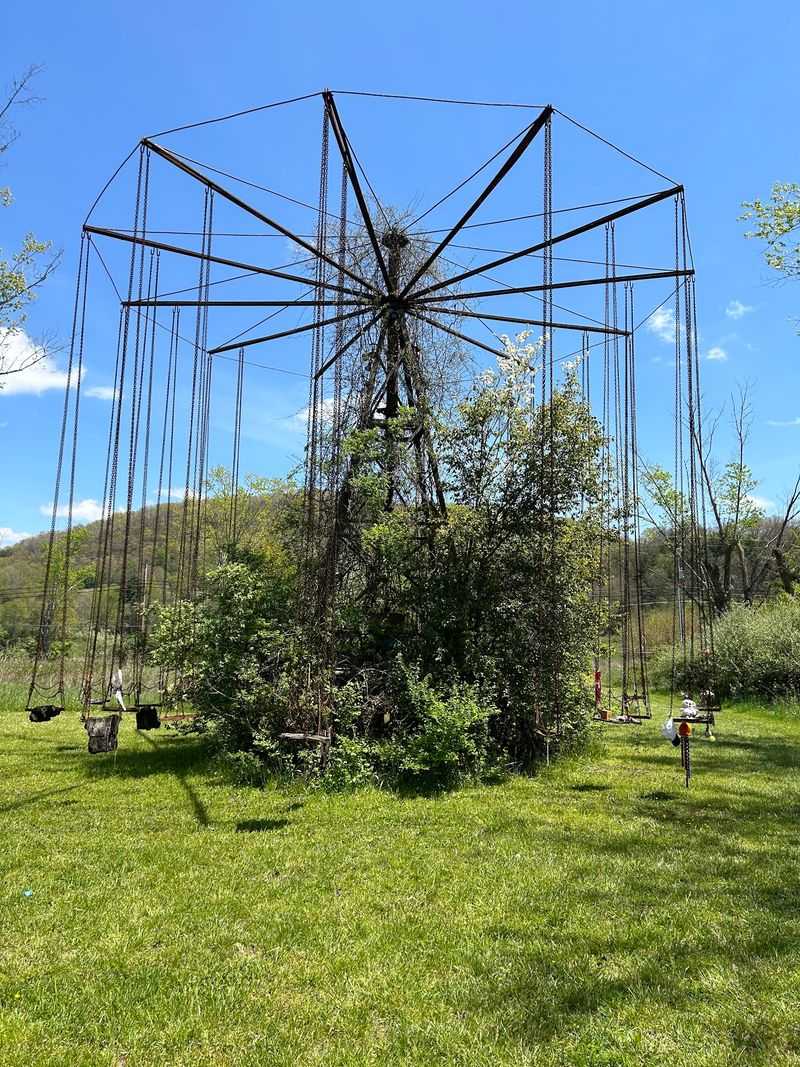
Swings that move in still air. That is the claim guests repeat most often at this Mercer County property.
Others describe faint laughter, unexplained footsteps, cold spots, and shadowy shapes near the tree line. Reports of an apparition resembling a young girl come up regularly.
None of it is proven, and plenty of visitors experience absolutely nothing unusual. Honest reviews say exactly that.
Lake Shawnee has earned a spot on many lists of reportedly haunted locations worldwide. Paranormal groups travel long distances to investigate.
Guides encourage respectful behavior rather than dramatic thrill seeking. Offerings like pinwheels, balloons, or loose tobacco are common gestures.
Skeptics still enjoy the visit, mostly for the decay and the layered backstory. Nobody needs to believe anything to appreciate the setting.
Managing expectations is the smartest approach. Treat any strange moment as a bonus, not the point of the trip.
The atmosphere alone does most of the work. Wind through empty metal frames sounds unlike anything at a normal park.
Booking A Tour Without Guesswork
Showing up unannounced will not work. The site is private property, and access runs strictly by appointment through guided tours.
Most visits begin with a walk-through covering the land’s history, the frontier chapter, and the carnival years. Guides then release guests to explore independently.
That free roaming time is what regulars praise most. You can photograph, sit by the lake, or wander the tree line at your own pace.
Daytime tours suit families, photographers, and history fans. Overnight stays exist for groups wanting the full after-dark experience.
Seasonal weather matters more than you would think in this corner of West Virginia. Heavy rain can make vehicle access tricky on soft ground.
Bring water, bug spray, and a charged camera battery. Cell service in rural Mercer County can be spotty.
Expect a group rather than a private session unless arranged otherwise. Patience during the storytelling portion pays off later.
Plan Lake Shawnee as a destination, not a quick roadside stop. The drive out there deserves a proper block of time.
Autumn Turns The Park Into A Stage
October changes everything here. The park hosts an annual Dark Carnival event that leans hard into its reputation.
Past programs have featured haunted attractions, campfire storytelling, and haunted hide-and-seek across the grounds. Offerings vary year to year.
Guests stroll near the lake after dark, take moody photos, and soak up the legends. It is theatrical, and it knows that.
Purists who want quiet history sometimes prefer a regular daytime visit instead. Both versions of Lake Shawnee have their fans.
Fall also happens to be the best photography window, since the foliage thins out. Two good reasons to aim for autumn.
Tickets for seasonal events typically require advance booking, and popular dates fill early. Checking ahead saves disappointment.
Dress warmly, because valley nights in this part of the state get cold fast. Layers beat regret.
The contrast is what sticks with people. A place built for summer fun now draws its biggest crowds when the leaves fall.
Screen Fame And A Future Being Rebuilt
Television found this place years ago. Programs on Discovery, Travel Channel, and History have all filmed among the rusted rides.
A 2021 episode of a popular paranormal series added another layer of attention. A hidden QR code in a Netflix film later pointed viewers toward the park as well.
Exposure like that brings travelers from hundreds of miles away. Lake Shawnee has become a genuine tourism driver for southern West Virginia.
Challenges continue, though. A fire damaged a building used for media production and tour operations, and rebuilding takes time and donations.
No ancient artifacts were lost in that blaze, which caretakers considered the crucial detail. Restoration efforts rely heavily on community help.
Tour fees reportedly go back into maintaining the property. Visitors effectively fund its preservation by showing up.
That gives a trip here a purpose beyond curiosity. You are helping keep a fragile piece of history standing.
Behind those rusted gates, the stories keep getting told. And someone is working hard to make sure they still can be.