
This Free Nevada Wildlife Refuge Near Las Vegas Puts Spring-Fed Ponds And Desert Birds Within An Easy Morning
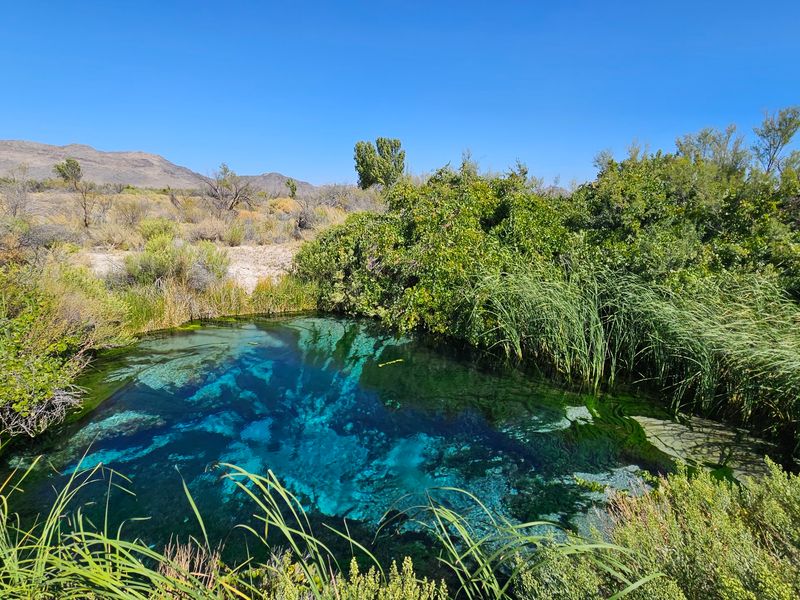
Nevada hides water where you least expect it. Out past the last gas station, where the map goes mostly blank and the horizon shimmers, there are pools so blue they look painted on, fed by water that fell as rain thousands of years ago.
Tiny fish live in them that exist nowhere else on the planet, and you can walk a flat boardwalk right up to the edge without paying a cent. I pulled off for what I figured would be twenty minutes and ended up staying most of the morning.
A Desert Oasis Sitting Just Off The Amargosa Valley
Head northwest out of Las Vegas and the strip malls thin out fast. Roughly ninety minutes later, past Pahrump and into the wide bowl of the Amargosa Valley, a brown federal sign points toward 8757 Spring Meadows Road and something that makes very little sense in this landscape: water, and lots of it.
Ash Meadows National Wildlife Refuge protects more than 24,000 acres of spring-fed wetlands, alkaline meadows, and dry upland desert. It is managed by the U.S.
Fish and Wildlife Service, and it exists because of what bubbles up from underground rather than anything that falls from the sky.
The refuge sits at the edge of the driest country in the United States, just over a ridge from Death Valley. Visitors often arrive as an afterthought on a longer drive and leave surprised it is not better known.
What makes the place unusual is concentration. Dozens of seeps and springs push warm, clear groundwater to the surface here, creating habitat found nowhere else.
For a day trip that costs nothing at the gate, the density of odd, specialized life packed into one valley is hard to match anywhere in Nevada.
Water That Traveled Underground For Thousands Of Years
Where does water come from in a place that gets almost no rain? That question is the whole story of this refuge.
The springs here are fed by an aquifer that collects precipitation far to the north and east, then moves slowly through rock for a very long time before surfacing in the Amargosa Valley.
The result is remarkably steady. Flow does not spike after a storm or vanish in a dry summer, which is exactly why specialized creatures managed to survive here while the surrounding country dried out over millennia.
Regulars who return year after year mention the longevity of these springs as the thing that keeps pulling them back. Water arriving at the surface in the hottest, driest corner of the country feels like a small mechanical miracle, and the interpretive signs explain the plumbing in plain language.
Temperature matters too. Several of the pools stay warm and stable all year, holding roughly the same conditions in January as in July.
That consistency created isolated little worlds, each spring functioning like an island, which is how one valley ended up with so many species living in one place and nowhere else.
The Boardwalk Loop Behind The Visitor Center
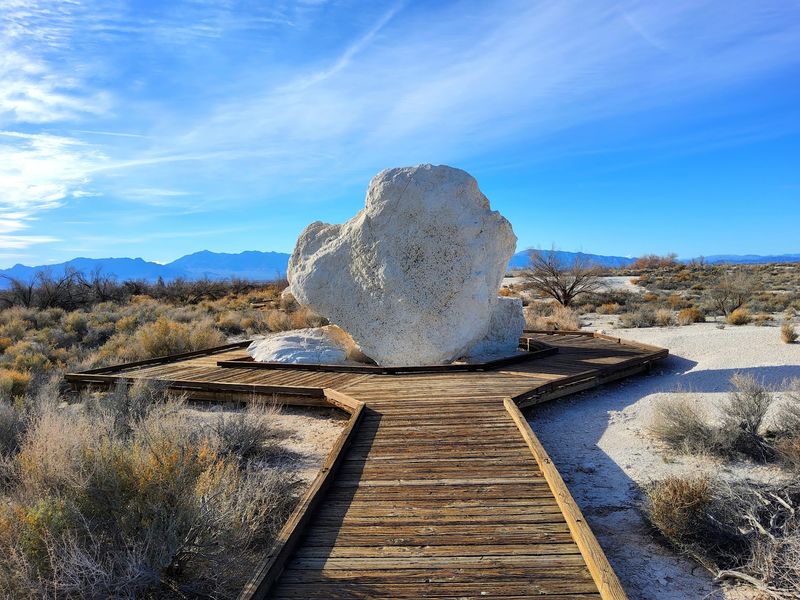
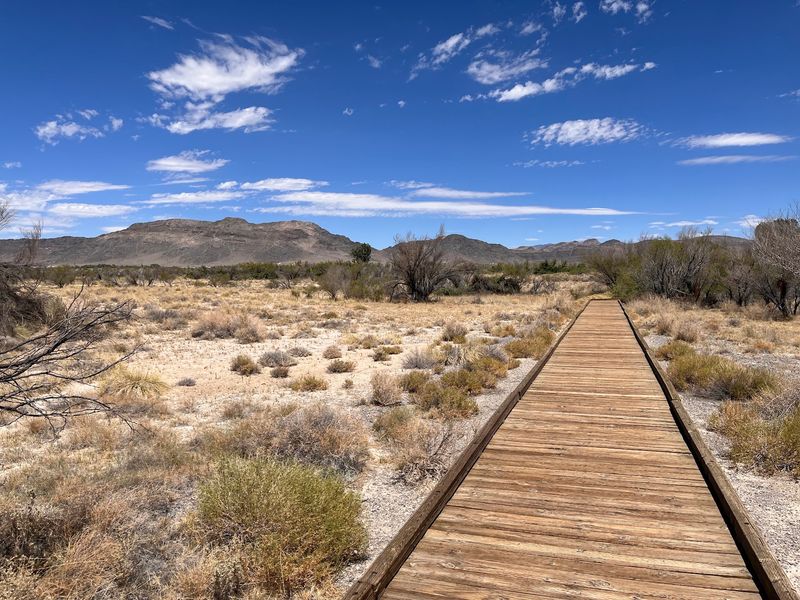
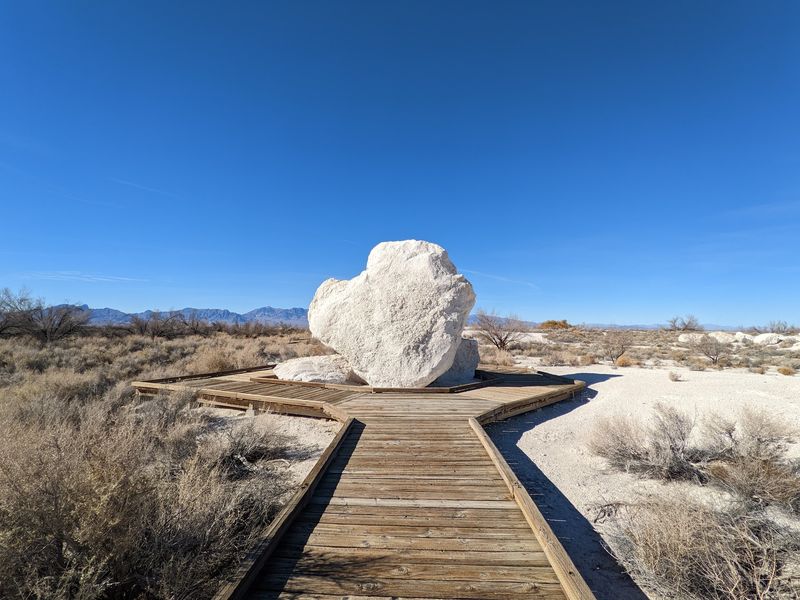
Flat, wide, and made of planks, the boardwalk behind the visitor center is the reason so many families manage this refuge without complaint. It is the single most mentioned feature by visitors, and for good reason: it carries you out over sensitive wetland to Crystal Spring without anyone needing to scramble over rocks or guess at a route.
Signage indicates the raised trails are wheelchair accessible, and there are two accessible paths within the refuge. Strollers roll fine.
Grandparents who would skip a dirt hike can do this one comfortably.
Along the way, the vegetation shifts from dry scrub to reeds and green growth within a few steps, which is the kind of contrast you rarely get to watch happen in real time. Small fish flicker in the shallow water below, and birds work the brush on either side.
Plan on twenty to forty minutes if you walk it slowly, longer if you stop to watch the ponds. Several visitors say they lingered at the pools far past their planned departure, simply standing still and watching the water move.
Pupfish, The Refuge’s Most Famous Residents
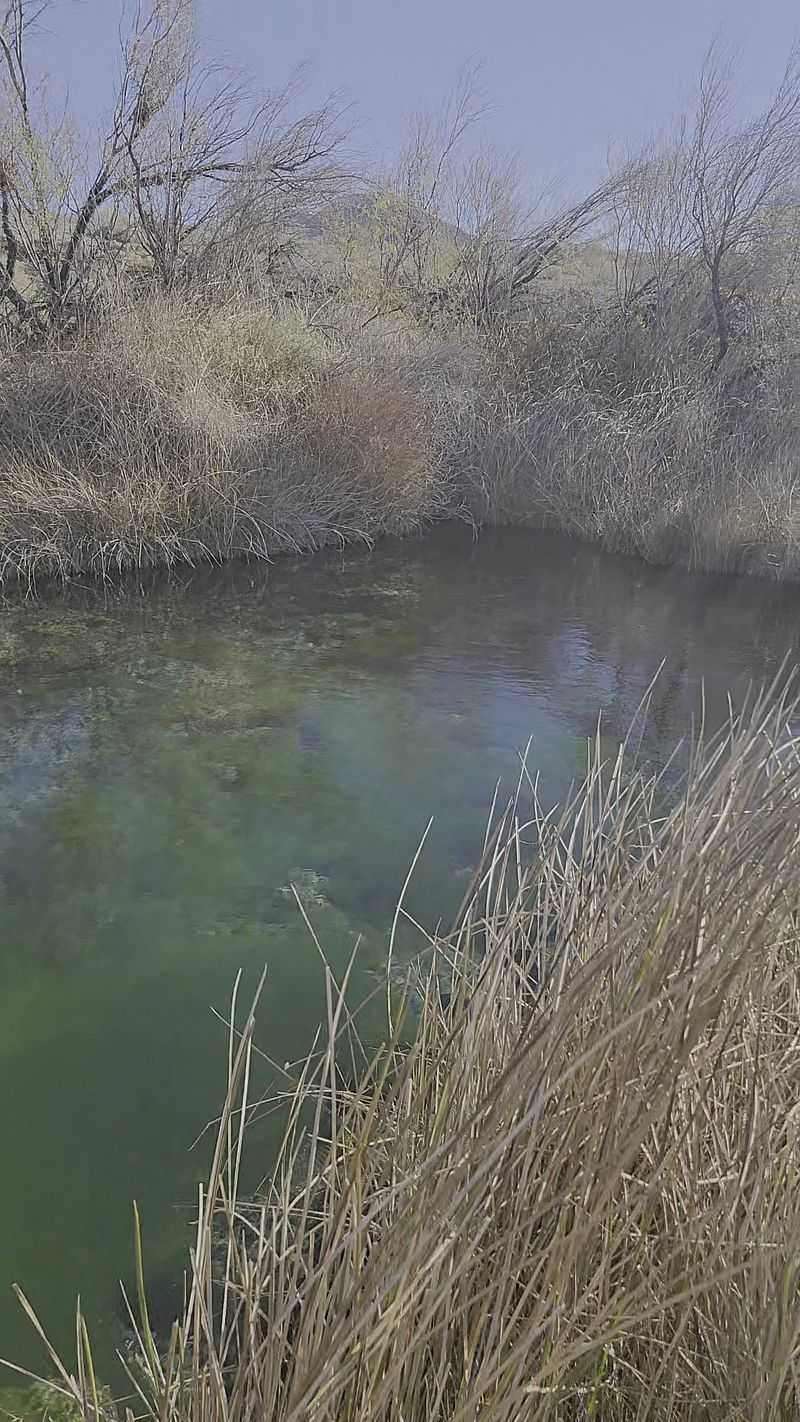
Barely as long as your thumb, the pupfish here are the smallest celebrities in Nevada. Amargosa and Devils Hole pupfish both turn up in refuge conversation, and staff at the visitor center can tell you which springs hold which.
Devils Hole pupfish are the headline act. They live in a single warm water-filled cavern that sits around 92 degrees Fahrenheit, and nowhere else on Earth.
That is the entire global range for the species, which makes the little cistern one of the most restricted habitats anywhere.
Spotting them takes patience and, honestly, help. Visitors repeatedly recommend bringing binoculars, since the viewing platform at Devils Hole keeps you a long way back from the water.
Several people described the distance as multiple football fields, so expectations should be set accordingly.
The easier win is the ponds near the visitor center boardwalk, where pupfish often swim close to the surface in clear water. Families report standing at the rail for a long stretch, watching the flickers of movement.
Bring polarized sunglasses if you have them, since glare is the main obstacle.
Birdwatching Across The Wetlands And Uplands
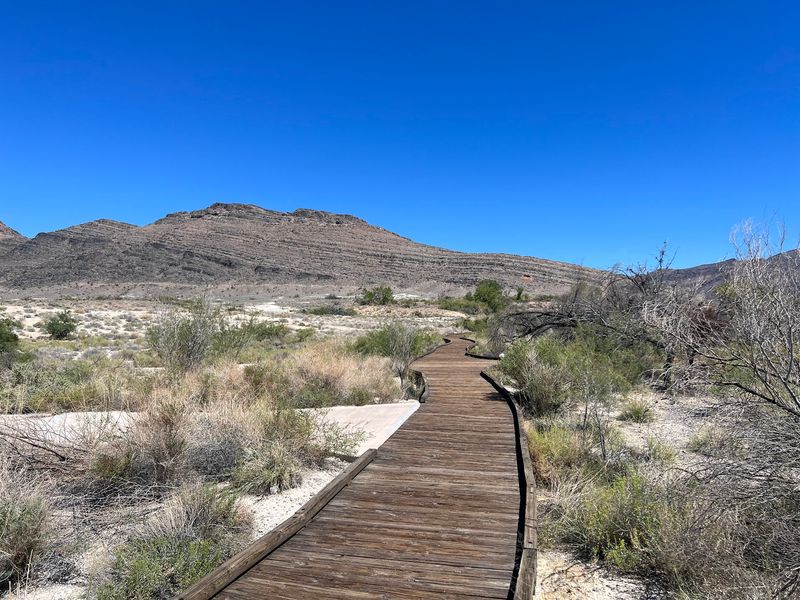
Water in the desert acts like a magnet, and the bird list here reflects that. Visitors describe hearing constant birdsong along the trails even when other wildlife stays out of sight, and some report seeing large numbers of species in a single morning.
Wetland edges, open meadows, and dry upland brush sit close together, which means several habitat types are reachable in one short outing. Warblers and songbirds work the reeds while raptors and shrikes hunt the open ground.
One visitor mentioned finally spotting a loggerhead shrike, a bird that had eluded them elsewhere.
Early morning delivers the best results. Since the refuge opens at 9 a.m., plan your arrival right at opening and work the boardwalk before heat pushes activity down.
Bring binoculars regardless of your interest level. Even people who do not identify as birders tend to end up watching something.
Spring and fall bring migration movement through the valley, and cooler months generally make for more comfortable standing around, which is half of what birdwatching actually involves.
Devils Hole And Its Roadside Washboard
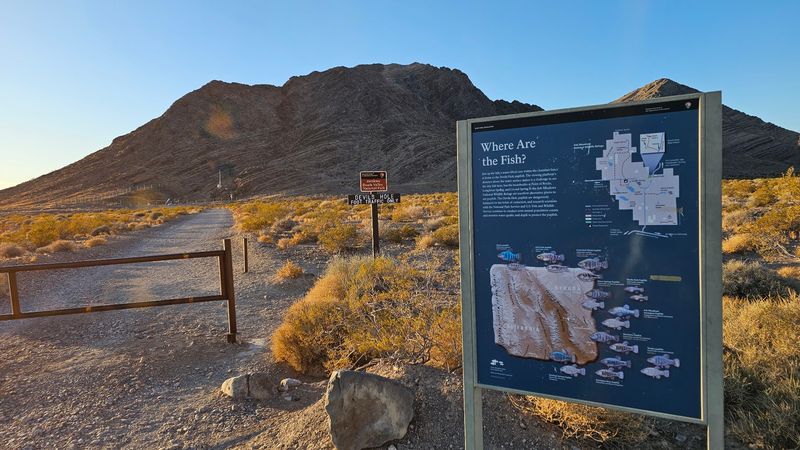
Not every stop here delivers a postcard, and Devils Hole is the honest example. The site is a narrow, water-filled limestone opening protected by fencing and a raised viewing platform, and the water sits far below where you stand.
Some visitors come away disappointed, saying you would need extraordinary eyesight or serious binoculars to see anything living in there. Others find the geology itself worth the detour, describing it as genuinely unique.
Getting there involves a rough ride. The access road is described as pretty washboard, so slow down and expect rattling.
Low-clearance cars can make it in dry conditions, but the ride is not smooth.
What helps is context. Read the panels, or ask at the visitor center first, so you understand that you are looking at the entire known habitat of a single fish species.
The hole connects to the same deep aquifer feeding the springs, and water levels inside have been monitored for decades.
Go with realistic expectations and it becomes a fascinating five minutes rather than a letdown.
Crystal Spring And The Point Of Rocks Trail
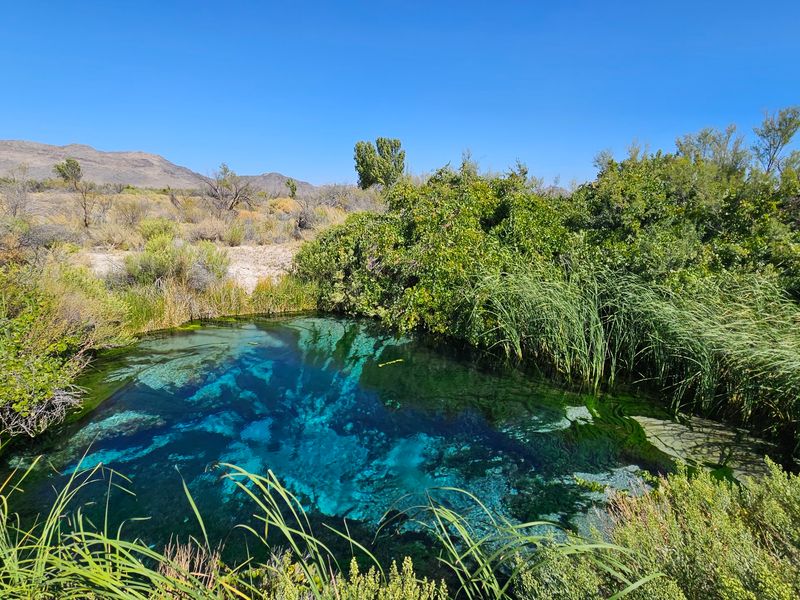
Blue. That is the word that comes up over and over about Crystal Spring, and photographs do not entirely explain it.
The pools take on a color visitors describe as amazing and hard to believe until you are standing there.
Point of Rocks is the other main destination, and it has its own boardwalk that makes reaching the springs straightforward. Together with the visitor center loop, those two boardwalks cover the easiest and most rewarding walking in the refuge.
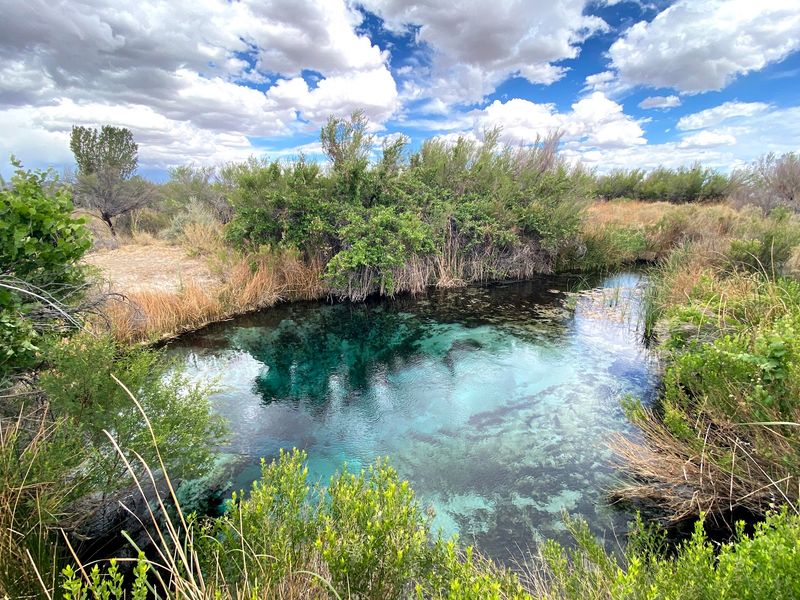
Fair warning: conditions change. A few visitors have found Crystal Spring murky rather than clear, with brush grown in thickly and the path to the stream harder to follow.
Seasonal water levels, algae, and maintenance cycles all play a part, so the spring you see may not match the brochure photo.
Ask at the visitor center which springs are looking their best on the day you arrive. Staff track this closely and will steer you toward the clearest water, including the spring near Jack Longstreet’s cabin, another spot longtime visitors recommend seeking out.
The Visitor Center, Movie, And Gift Shop
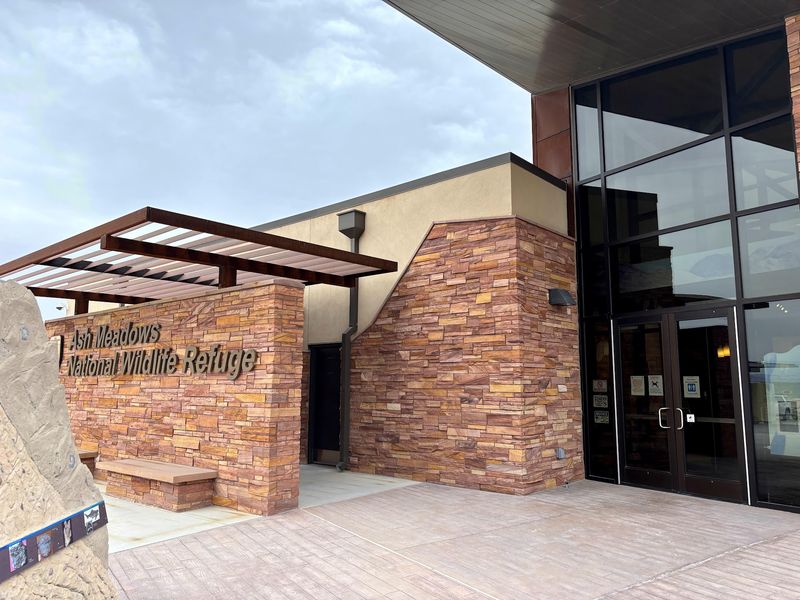
Modern, cool inside, and stocked with far more information than you would expect this far out, the visitor center earns more mentions from visitors than almost anything else at the refuge. It works as a small museum, with exhibits on the springs, the endemic species, and the human history of the valley.
There is a short film that visitors call informative, and it is a good way to make sense of the aquifer before you walk out to see it. Restrooms are on site and repeatedly described as very clean, which matters when the nearest alternative is a long drive away.
A gift shop rounds it out. Staff and rangers come up constantly in visitor comments as friendly, knowledgeable, and happy to answer questions or point people toward less-visited springs.
Stop here first, always. Ten minutes of conversation at the desk can reshape your whole morning, telling you which roads are passable, where the water is clearest, and what wildlife has been showing up lately.
It is the single most useful thing you can do on arrival.
Dirt Roads, Mud, And What Your Car Can Handle
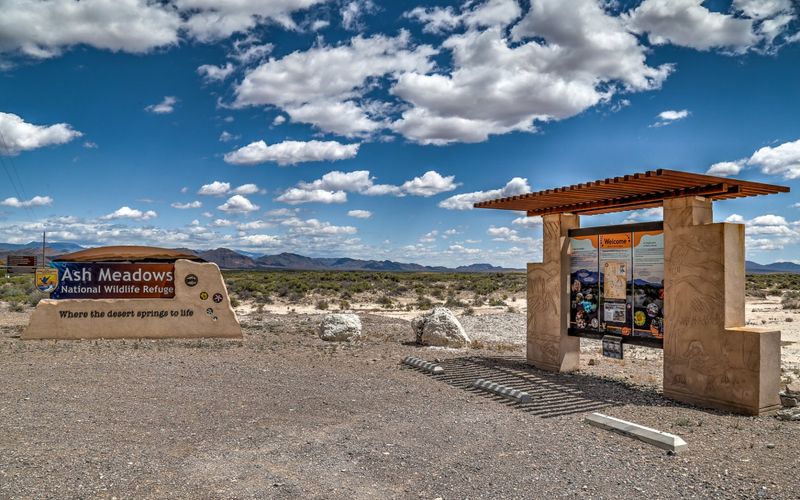
Here is the practical detail that trips up the most people: all the roads inside the refuge are unpaved. Gravel and dirt, washboard in places, dust in dry weather.
In normal dry conditions, a standard passenger car handles the main route to the visitor center fine. Plenty of visitors describe it as a fairly long dirt road but nothing alarming, just slow going.
After rain or a wet winter stretch, the picture changes. One traveler turned back five miles short of the visitor center in early January because the road was too muddy for a two-wheel-drive vehicle, and finished the trip with an eleven dollar car wash.
That is a real risk worth planning around.
Call ahead or check road conditions before you commit to the drive, especially between December and March. Higher clearance helps.
So does patience and a light foot on the accelerator.
Accept that your vehicle will come home dusty either way. Most visitors decide that trade is more than fair for what waits at the end of the road.
Hours, Cost, And Getting There From Las Vegas
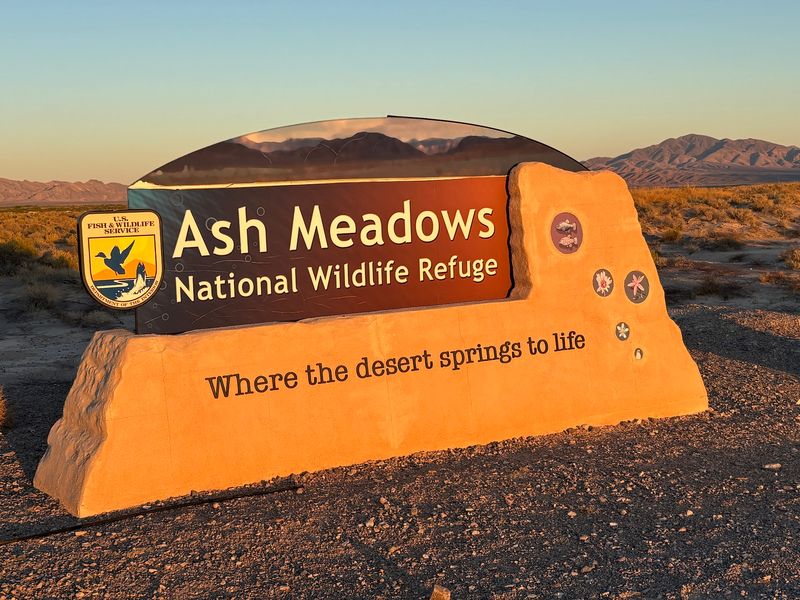
Nine to four, seven days a week. That is the visitor center schedule, and it matters because at least one visitor noted online listings showing 6 p.m., which is wrong.
Confirm before driving, since federal facilities occasionally adjust hours or close for maintenance.
Admission is free. No entrance fee, no parking fee, nothing at the gate, which makes this one of the better value outings in southern Nevada for anyone watching a fixed budget.
From Las Vegas, figure roughly two hours by way of Pahrump, then north on Highway 160 and west toward the Amargosa Valley. The address is 8757 Spring Meadows Road, Amargosa Valley.
Travelers heading between Las Vegas and Reno sometimes stop here just to stretch their legs and end up staying.
Death Valley visitors can reach the refuge easily, since it sits just over the ridge from the park. Combining the two makes a full day.
Budget two to four hours for a proper look. One family spent four hours and still felt they missed things, which is a reasonable benchmark.
Packing Smart For A Shadeless Morning
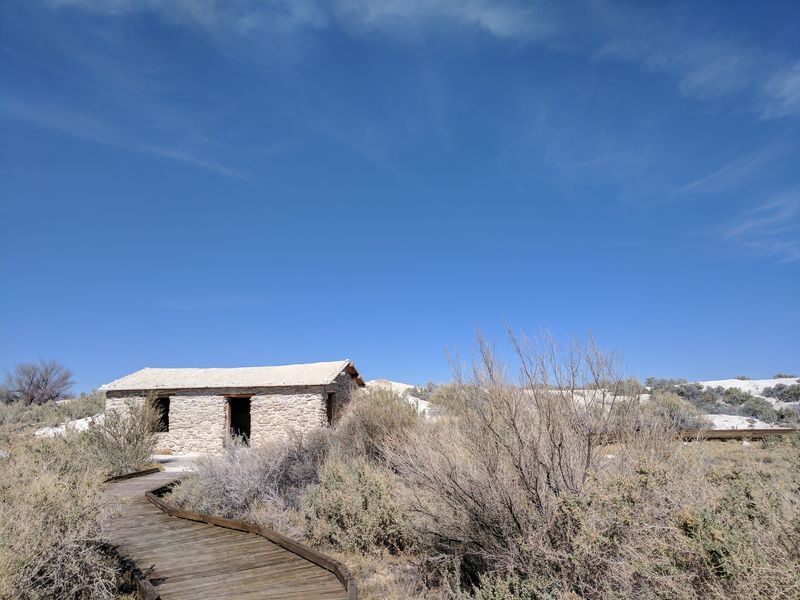
Shade is the one thing this refuge does not provide. Visitors consistently advise bringing your own, along with more water than you think you need, because the open boardwalks sit fully exposed to the sun.
Good walking shoes come up often too. The boardwalks are easy, but side paths can be uneven, brushy, or muddy depending on season and recent weather.
Binoculars belong in the bag. They are the difference between seeing pupfish and squinting at glare, and they make the birdlife far more rewarding.
A hat, sunscreen, and sunglasses round out the basics.
Timing helps more than gear. Most experienced visitors suggest any season except summer, when Amargosa Valley heat turns serious, though a few insist the place is worth seeing even in July if you arrive at opening and keep water handy.
Pack a cooler with lunch as well. Dining options out this way are limited, so a picnic keeps the trip cheap and lets you stay longer without driving back toward town for food.
Who Should Make The Drive, And Why It Sticks With People
Families with young kids, retirees who want scenery without a strenuous hike, biology enthusiasts, photographers, and anyone curious about how life survives in hard country all find something here. The flat boardwalks make it workable for a wide range of mobility levels, and the free admission removes the usual hesitation about whether a two-hour drive will pay off.
Expectations shape the experience. People who arrive hoping for dramatic close-up wildlife encounters sometimes leave underwhelmed, particularly at Devils Hole.
Those who come to look closely at water, plants, tiny endemic fish, and the odd history of a valley where a whole city was once proposed tend to describe the stop as the highlight of a longer trip.
Several visitors have called it the best part of a Death Valley vacation, which is quite a claim given the competition next door. Others have been coming back for decades and still bring every out-of-town guest.
Go early, talk to the staff, walk slowly, and let the morning stretch. A place this improbable rewards people who are not in a hurry.