
This Connecticut Candy Factory Lets You See The Candy Making Process Without Stepping Onto The Production Floor
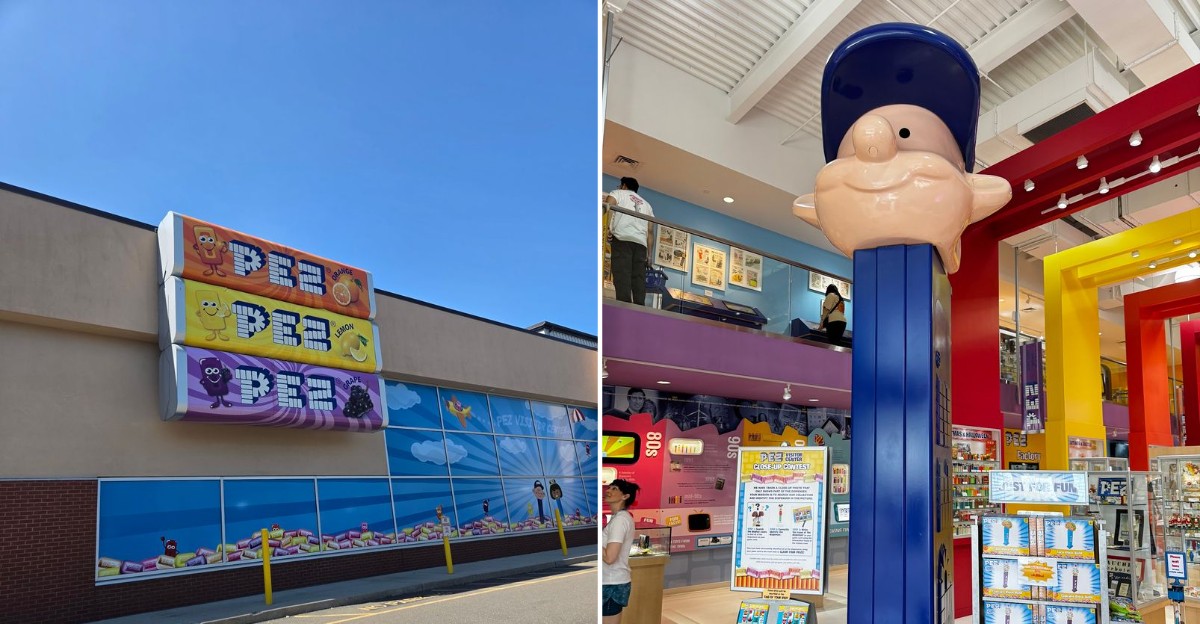
Candy shaped the childhood of so many of us. There’s no better gift for a kid than something sweet, and here you can actually watch how it all gets made.
This Connecticut factory lets visitors see the entire candy making process without ever stepping onto the production floor. Large windows let visitors watch machines mix, pour, and shape candy in real time without any barrier blocking the view.
Nothing about the process gets hidden away for the sake of trade secrets or efficiency. Workers go about their normal pace, unbothered by the crowd watching just a few feet away.
Regulars time their visits around specific candies, hoping to catch a favorite batch in progress. This factory proved that a good product gets even better once people see exactly how it comes together.
A Candy Factory Hiding In A Quiet Connecticut Town
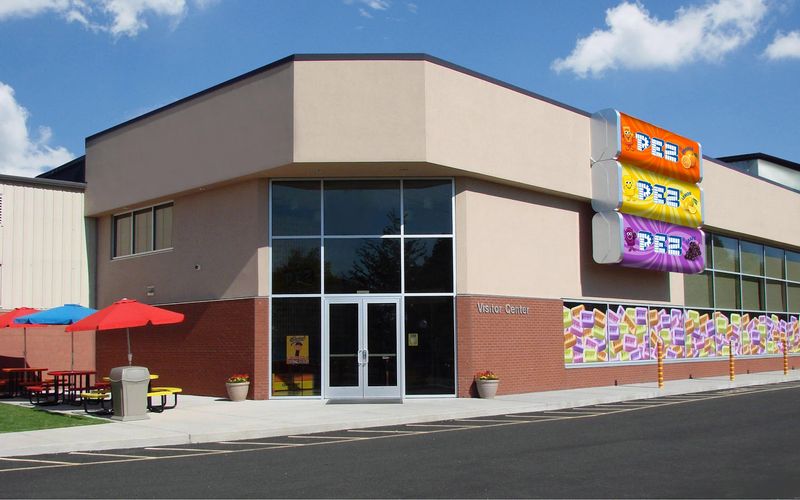
Picture a peaceful suburban road in Orange, Connecticut, and then picture a building wearing three giant candy packs like a hat. That combo is real, and it belongs to the PEZ Visitor Center.
Most folks have no clue that the little brick candies in their childhood dispensers are made right here. Orange has been home to PEZ headquarters and manufacturing since 1973.
That makes this building the only PEZ factory in the United States and Canada.
Every candy sold across both countries gets pressed, wrapped, and packaged on this site. I think that is a wild fact for such a calm neighborhood.
Your mailbox could be closer to a candy factory than you ever realized.
The visitor center opened in 2011 and celebrated its tenth birthday in 2021. It covers more than 4,000 square feet, which is roomy without being tiring.
Most families can see everything in an hour or two.
A second level looks down over the main floor, so the space never feels cramped. There are restrooms in the lobby and an elevator for anyone who needs it.
Seating on both levels makes it easy to rest tired legs.
My favorite tip is to treat it like a road trip reward. It sits close to I-95, so it makes a far better break than a gas station snack aisle.
Plug in 35 Prindle Hill Rd, Orange, CT 06477 and follow the candy colors.
Viewing Windows Into The Packaging Line
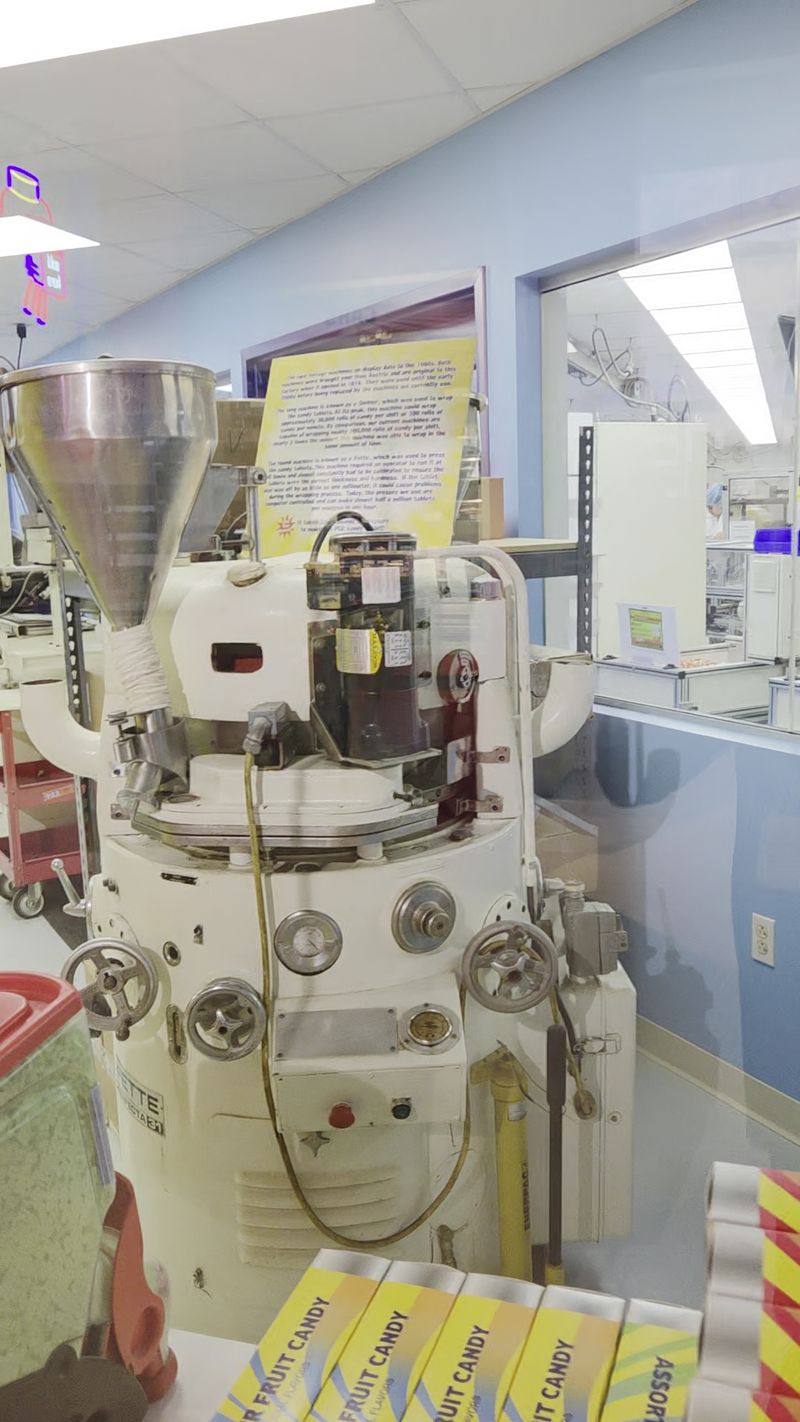
Health codes are strict about who wanders near food machines, and honestly, that is a good thing. Nobody wants a stray sneaker lace in their lemon PEZ, after all.
So the center solves the problem with big viewing windows. They look straight into the packaging production area, where the real work happens.
Visitors get a front-row view while staying safely on the other side of the glass.
On production days, the machines are busy pressing, wrapping, and packing candy. Tiny bricks zip along like they are late for school.
Watching the rhythm of it all is oddly relaxing, even for grown-ups.
Video monitors hang above the windows to explain what is going on. They walk through how the candy is made and how the dispensers are built.
That helps a lot, because watching machines without a guide can feel like reading a book with no words.
One practical heads-up matters here. The factory does not run every single day, and holidays or scheduled breaks can pause the line.
Checking ahead on the PEZ website before a trip is a smart move if the machines are the main goal.
Even when the floor is quiet, the videos still tell the full story. Kids can match what they see on screen with the equipment behind the glass.
It turns a simple window into a mini science lesson with a very sweet ending.
From Austrian Peppermint To American Icon
Here is a fun fact to spring on friends at dinner. The name PEZ comes from Pfefferminz, the German word for peppermint.
The candy was born in Vienna, Austria, in 1927. It started as a peppermint breath mint for adults.
It was even pitched as something to use instead of smoking, which feels very far from today’s cartoon heads.
The first dispenser showed up in 1948. It looked like a cigarette lighter, sleek and grown-up, with no silly characters.
Imagine trying to sell that to a second grader today.
Everything changed when PEZ crossed the ocean in the 1950s. American kids wanted fruit flavors, and the company listened.
Character heads started popping onto the tops of dispensers, and collectors began hunting them almost right away.
By 1973, the company had moved its American headquarters and factory to Orange. That decision is the reason a small Connecticut town now holds such a big spot in candy history.
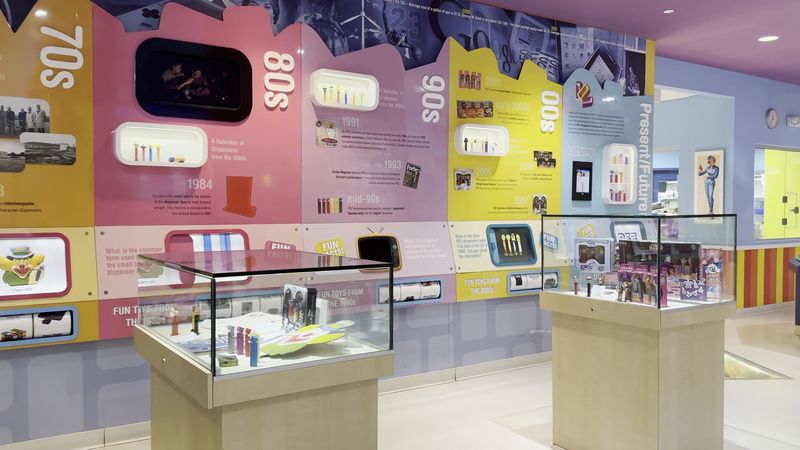
The center tells this whole journey through an interactive timeline. It lays out each era in bright, simple steps that are easy for young readers to follow.
I love how it makes history feel like flipping through a family photo album.
A good tip is to read the timeline first, before exploring the rest. Knowing the backstory makes the dispenser displays way more fun later.
Suddenly that old lighter-shaped model looks less like a weird gadget and more like a great-grandparent.
Thousands Of Dispensers From Every Era
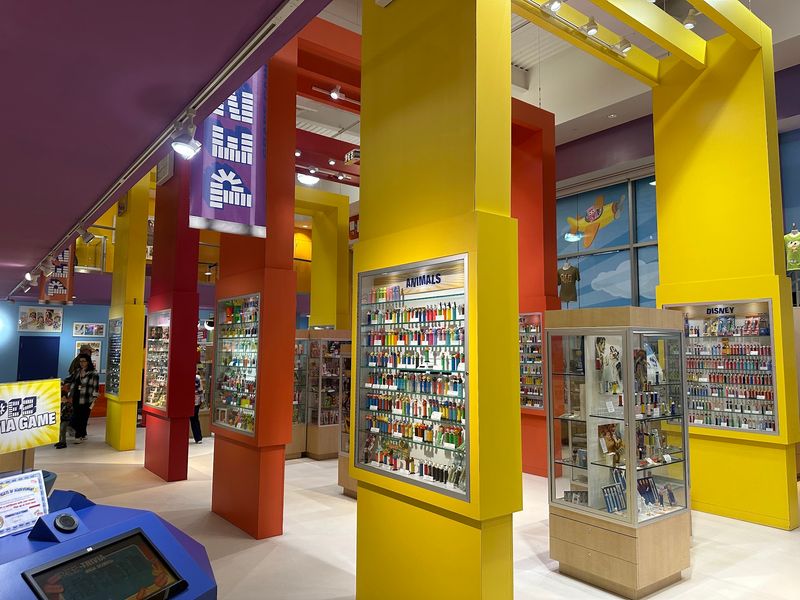
Somewhere in this building, there is probably a dispenser from your childhood staring right back at you. With thousands on display, the odds are very good.
The center holds the largest collection of PEZ memorabilia open to the public anywhere in the world. Cases are packed with vintage pieces, rare finds, and brand-new characters.
Many are grouped by theme, which makes the hunt for favorites a lot easier.
Pop culture fans get a real treat here. Star Wars, Marvel, Pokémon, and Disney characters all show up in plastic form.
There are also U.S. presidents and famous national landmarks, because apparently nothing is safe from becoming a candy topper.
Seeing the designs side by side shows how much they changed over the decades. Early heads look simple and a little stiff.
Newer ones have tiny details, sharp colors, and faces with way more personality.
Then come the showstoppers. One is billed as the world’s largest PEZ dispenser, and it towers over everyone nearby.
Another is a PEZ motorcycle custom built by Orange County Choppers, parked upstairs like a rock star.
My advice is to slow down and actually read the labels. Some of the quirkiest stories hide in the smallest cases.
A quick glance might miss a rare piece that collectors dream about.
Parents might try a game of spot your childhood with the kids. Expect some friendly arguing over who had the coolest one.
The Scavenger Hunt Worth Doing At Any Age
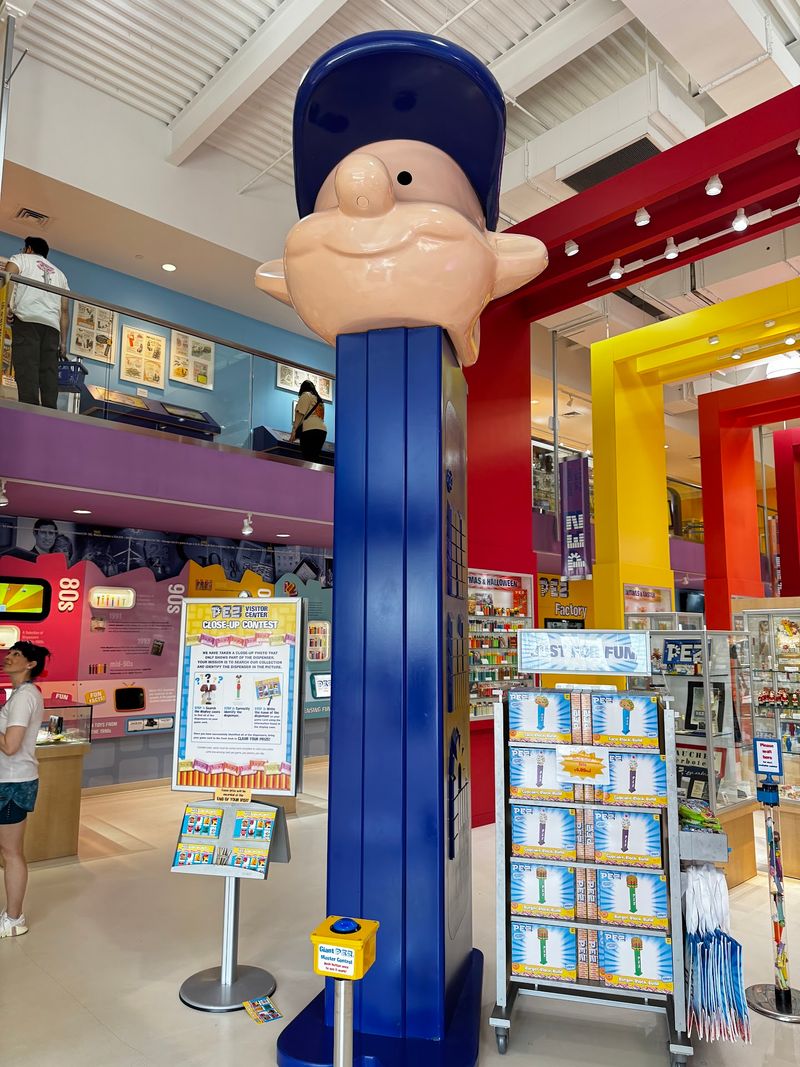
Nothing turns a room full of glass cases into an adventure faster than a secret mission. The scavenger hunt here does exactly that, and it might be the smartest idea in the whole building.
The hunt changes themes, often monthly. One round might send players looking for presidents.
Another might ask them to find hidden characters to crack a coded message.
The trick is simple. Clues are scattered around the displays, so players must actually study each case instead of speeding past.
It is sneaky learning, and kids rarely notice they are reading history labels on purpose.
Finishing the hunt earns a prize, usually with a spin of a prize wheel. That little spin creates more suspense than a game show finale.
A free dispenser at the end makes the effort feel totally worth it.
Grown-ups should not skip this, either. Some puzzles are tricky enough to stump adults, which is both humbling and hilarious.
Teaming up as a family works well, since younger eyes are great at spotting tiny details.
Here is a helpful plan. Grab the hunt sheet right away, then explore the museum while solving clues.
Save the trivia games for later, since the answers make more sense after seeing everything.
A pencil and a little patience go a long way. So does a sense of humor when a clue sends the whole group circling the same case three times.
Hands On Games And A Photo Op Worth Framing
Buttons, doors, screens, and quizzes are everywhere, and they all beg to be touched. For once, a museum wants little hands on the exhibits.
The visit is self-guided, so families can move at their own speed. Some displays have doors to open or buttons to press.
Others toss out quick quizzes that reward anyone who has been paying attention.
Upstairs, tables with tablets hold PEZ games for all ages. Matching games test memory, while trivia challenges come in levels that range from easy to expert.
The expert round is no joke, so confidence should be kept in check.
Touch screens also offer a virtual tour of the factory. This part shows areas that the viewing windows cannot reach.
It feels like getting a backstage pass without needing a hairnet.
Bingo is another option, and it comes with a prize. Between bingo, trivia, and the scavenger hunt, there are plenty of chances to walk away with a little something.
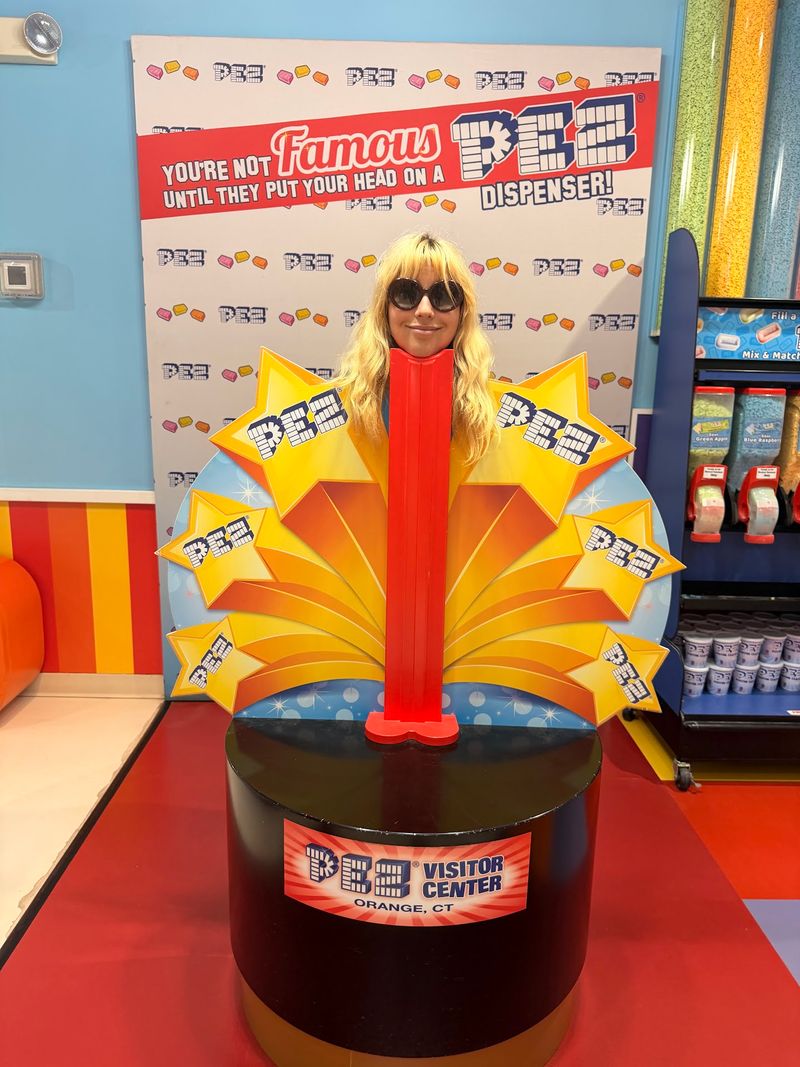
Then there is the photo op that nobody can resist. Visitors can pose so their own head appears as the top of a giant PEZ dispenser.
It is silly, it is perfect for a holiday card, and it is guaranteed to make grandma laugh.
A quick tip for parents is to split up the fun. Let the kids play the screen games while adults read the history walls.
Then swap, and everyone gets their favorite part without waiting around.
Giant Candy Packs And A Wall Of Color
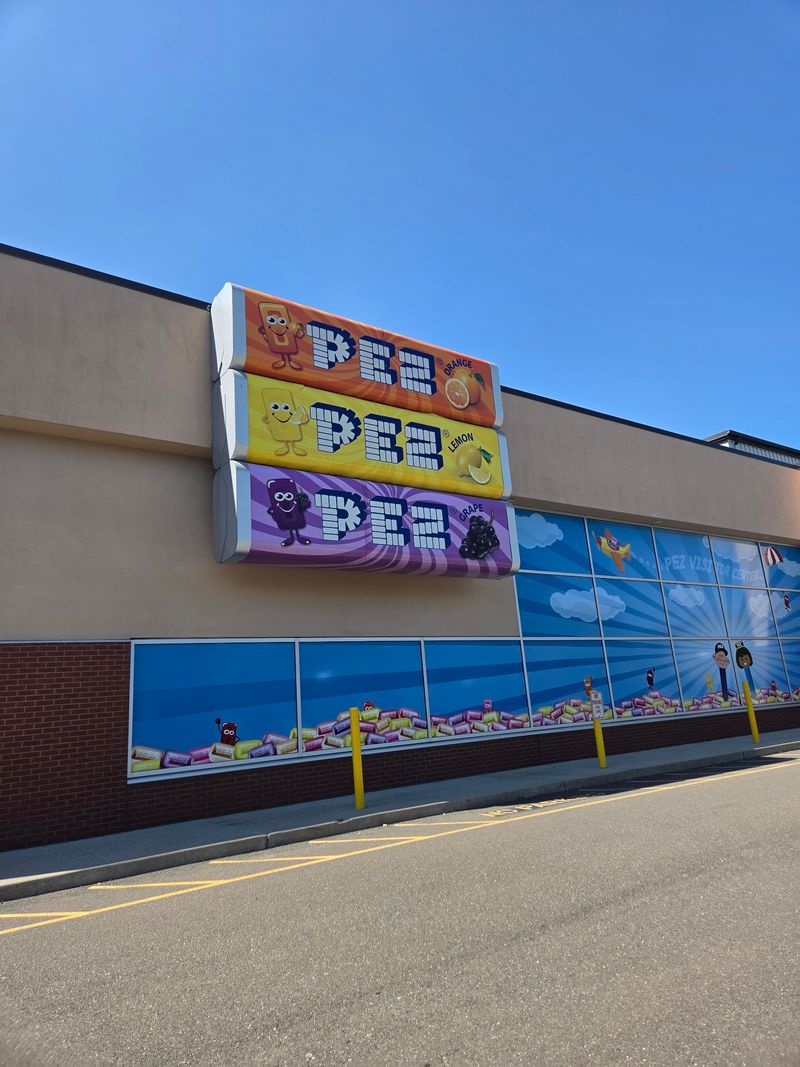
Long before anyone buys a ticket, the building starts showing off. Three oversized PEZ candy packs are stacked on the front in red, purple, and yellow.
They look like someone left a snack for a hungry giant.
That stacked trio has become the unofficial welcome sign. Cars slow down, phones come out, and grown adults start pointing like kids at a parade.
It is a great spot for a first photo.
The lobby keeps the color going. One wall is covered with hundreds of PEZ dispensers lined up in neat rows.
From a distance it looks like a rainbow made of tiny plastic heads.
Nearby sits a large PEZ art mosaic. Up close, the pieces are just small shapes and colors.
Stepping back reveals the full picture, which is a neat trick to show kids who love art class.
The design came from the architecture firm RGLA Solutions. They clearly understood the assignment, which was to make a factory feel like a candy-colored wonderland.
Even the benches get in on the joke, shaped like giant PEZ pieces.
A PEZ vault adds a little mystery too. It hints at treasures kept safe, which is fitting for a brand that collectors treat like gold.
For the best photos, bring charged phones and a little patience. The mural, the dispenser wall, and the benches make three easy backdrops.
Nobody will judge a dramatic pose next to a giant candy pack.
The Factory Store And Its Sweet Souvenirs
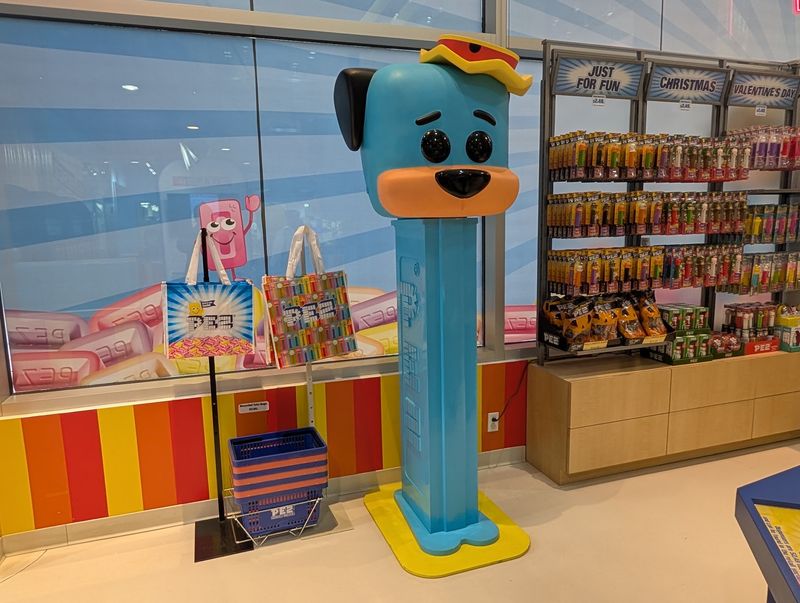
Every good adventure ends with a treasure chest, and here it is a factory store stocked with PEZ goodies. The shop is where the plan to buy just one thing quietly falls apart.
Shelves hold limited edition dispensers, collector’s items, and the newest releases. Some dispensers are exclusive to the visitor center, so they are hard to find anywhere else.
Collectors should look closely before leaving.
Candy fans get their own fun. Flavors that rarely show up in regular stores sit right on the shelves, from fruity picks to sour ones.
It is a great chance to try something new beyond the classic lemon and cherry.
The coolest option might be the custom candy buckets. Visitors fill a small pail with their favorite flavors, mixing and matching however they like.
Kids treat this job with the seriousness of a science experiment.
Admission tickets usually include store credit for purchases made the same day. That makes it easy to grab a dispenser or two without much guilt.
Each visitor usually gets a free lanyard too, which makes a fun keepsake.
Shoppers can also browse the store without buying a museum ticket. Still, the full experience is worth it, since the exhibits make every souvenir feel more meaningful.
My last tip is to shop after the museum, not before. Seeing the history first makes picking a favorite dispenser a lot more personal.