
This Knoxville, Tennessee Cemetery Has Victorian Beauty And A Seriously Spooky Reputation
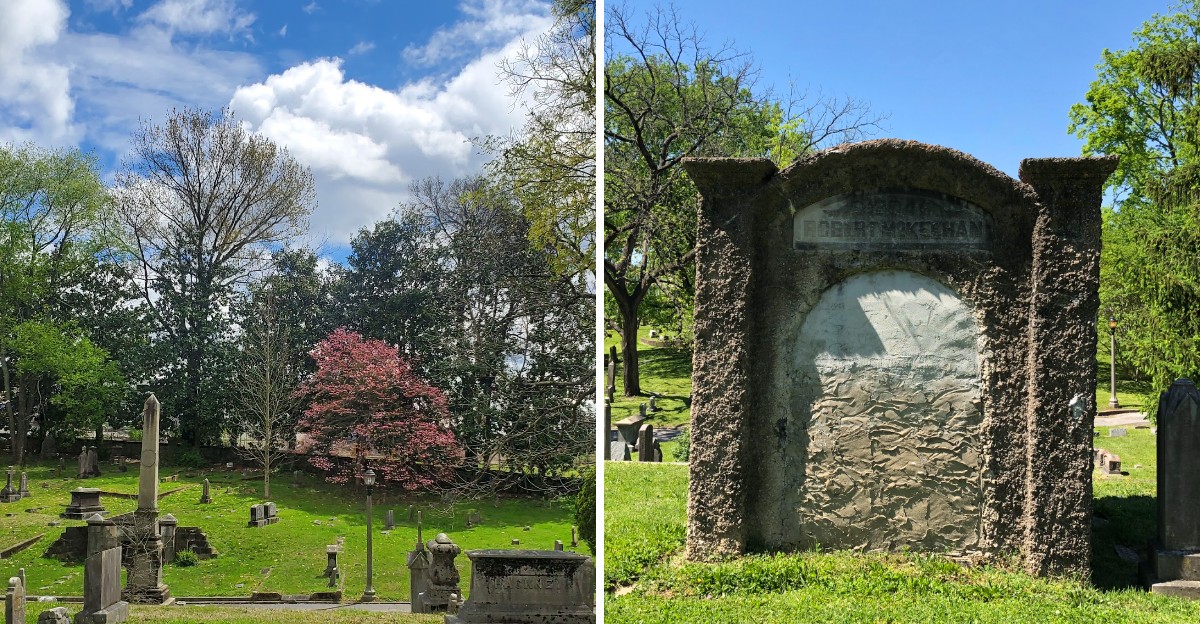
What makes a cemetery beautiful enough to admire in daylight and unsettling enough to rethink after dark?
This Knoxville burial ground has been part of Tennessee history for generations, and its Victorian monuments give the property an atmosphere that feels almost frozen in time.
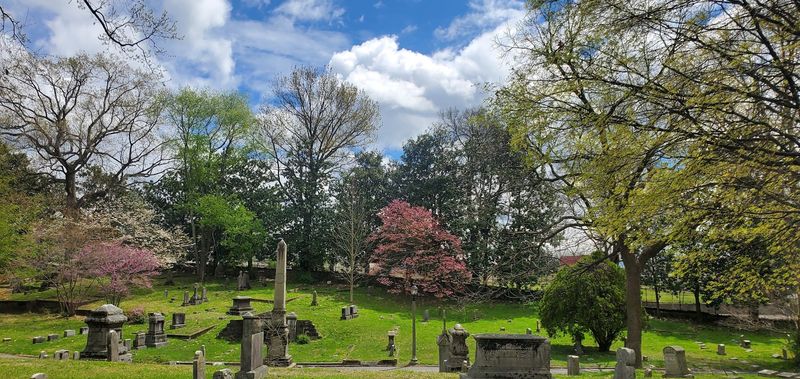
Tall obelisks rise above winding paths, elaborate stonework covers family plots, and mature trees cast long shadows across the grounds.
The beauty is easy to notice. The spooky reputation takes a little longer to sink in.
Stories tied to the cemetery have circulated for years, adding an eerie layer to a place already filled with history. Visitors come to study the architecture, trace names connected to Knoxville’s past, and experience a setting that feels unusually quiet even with the city close by.
Tennessee has many historic cemeteries, but few balance elegance and unease quite like this one.
A Garden Cemetery Born In 1850
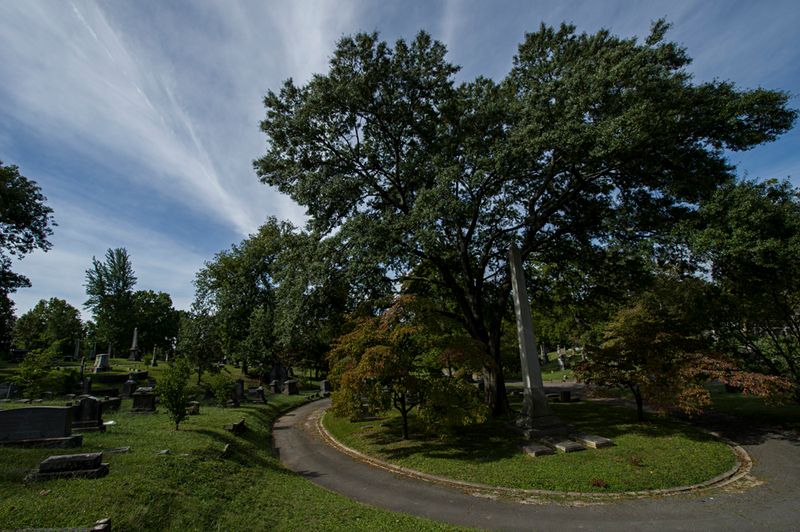
Back in 1850, a group of Knoxville leaders had a fresh idea. They wanted a memorial ground that felt more like a garden than a crowded churchyard.
Two years later, in 1852, Old Gray Cemetery was officially dedicated.
The name comes with a literary twist. It honors Thomas Gray, the English poet who wrote the famous “Elegy Written in a Country Churchyard.” That is a pretty poetic way to start a neighborhood of stone.
Old Gray followed the rural garden cemetery movement. That trend began with places like Mount Auburn near Boston and spread across America.
The goal was simple: winding lanes, big trees, and plenty of room to breathe.
For years, families treated the grounds like a public park. People strolled, chatted, and even packed picnic lunches under the oaks.
Back then, cities had few green spaces, so this was a real treat.
Today it holds the title of the second-oldest cemetery in Knoxville. Only the First Presbyterian Church graveyard downtown is older.
You will find the gates at 543 N Broadway, Knoxville, TN 37917, just north of the city center.
A dedicated nonprofit still cares for the grounds. Its steady work keeps this slice of Tennessee history tidy and welcoming. Anyone curious about the past can enjoy it, one shady lane at a time.
Thirteen Acres Of Trees And Winding Lanes
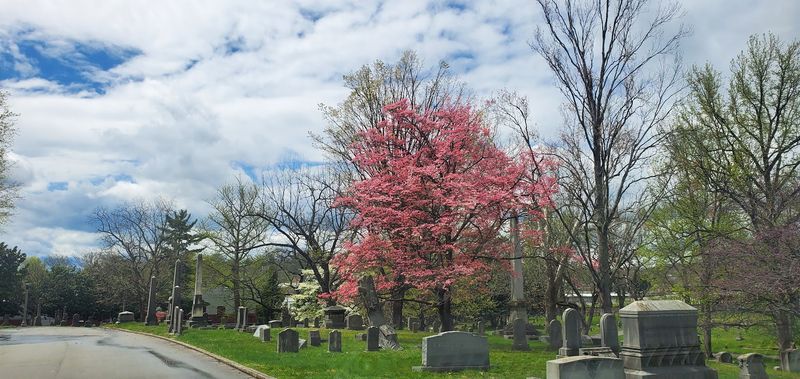
Tree lovers, get ready to tilt your head back. Old Gray Cemetery is a certified arboretum, with more than 40 different kinds of trees growing across the property. That is a lot of shade in one spot.
Massive oaks stand like wise grandparents over the family plots. Hackberry trees add their knobby, bumpy bark to the mix.
In spring, pink flowering dogwoods burst into color and steal the whole show.
The grounds cover about 13 to 14 acres. That is enough space to wander for an hour without seeing the same monument twice.
Narrow lanes curve over gentle rises, so every turn opens a new view.
A classic stone wall wraps around the edges. It gives the whole place a private, peaceful feeling, even with the city humming nearby.
Inside, traffic noise seems to fade into birdsong and rustling leaves.
Bring a tree guide or a plant app on your phone. Matching leaves to names turns an ordinary stroll into a fun scavenger hunt. Kids especially love spotting the oldest and widest trunks.
Good walking shoes help too. Some paths are uneven, and the little hills can sneak up on you. Take your time, though. Rushing through a garden this lovely would be a real shame.
Marble Angels And Towering Obelisks
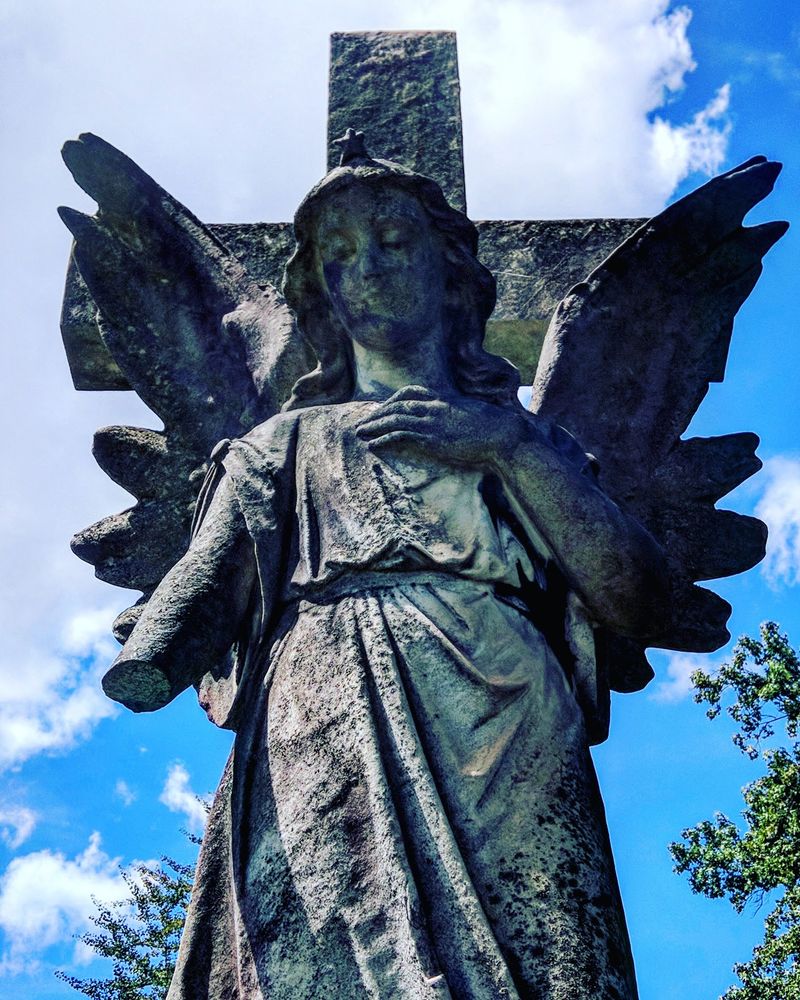
Victorian artists never met a plain slab they liked. At Old Gray, they carved marble into flowing robes, folded wings, and faces full of calm.
The result feels like an outdoor art museum with no ticket booth.
Marble was the favorite stone of the era for a smart reason. It is softer than granite, so carvers could add tiny details.
Think curled fingers, lacy edges, and flower petals thin enough to seem real.
Graceful angels appear all over the grounds. Some gaze upward, while others bow their heads as if lost in thought.
Early morning light makes their marble glow a soft, warm white.
Then come the obelisks. These tall, pointed pillars borrow their shape from ancient Egypt, where they stood for lasting life and memory.
Victorians adored them, and plenty of families wanted one taller than the neighbors.
Look closely and you will spot old vaults and elegant family monuments too. Weather has softened some carvings over the past 170 years.
That gentle wear only adds to their charm.
Photographers, this is your playground. Cloudy days work best because harsh sun can wash out marble details.
Try shooting angels from a low angle against the treetops for a truly dreamy picture.
Secret Symbols Carved In Stone
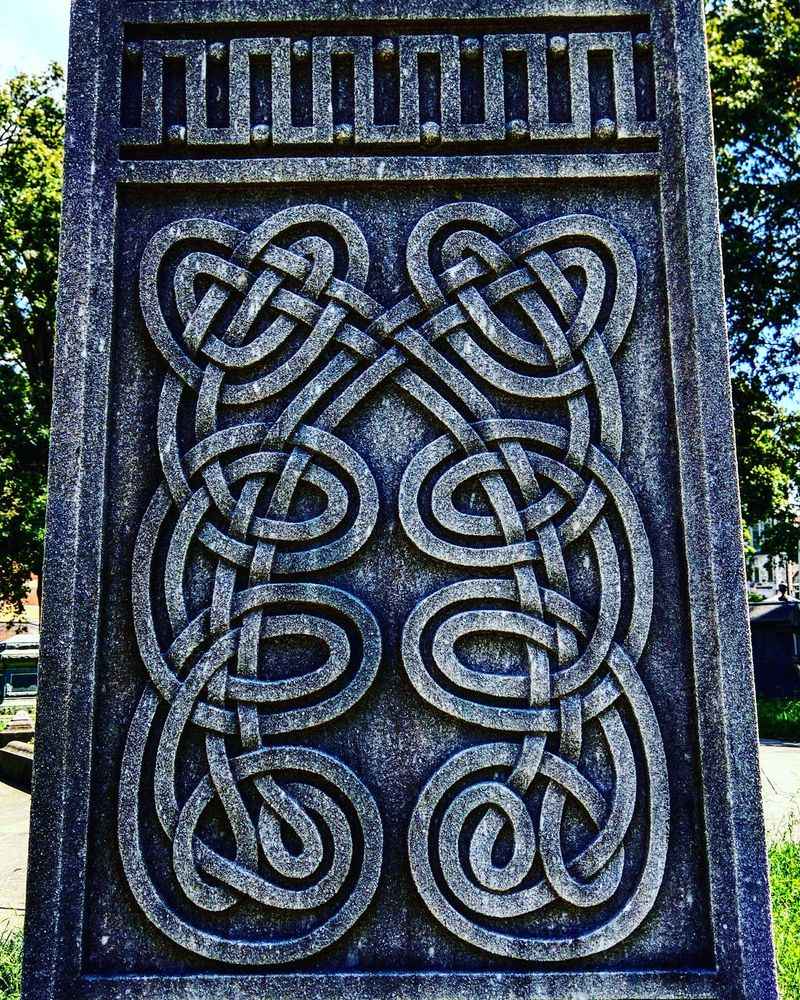
Did you know old headstones speak in code? Every carving at Old Gray Cemetery was picked on purpose. Once you learn the language, the whole place starts talking.
Start with the stones shaped like tree stumps or rough logs. They mark members of the Woodmen of the World, a fraternal society. The rugged bark and cut branches look surprisingly lifelike.
Weeping willows stand for sorrow and remembrance. Urns were a Victorian favorite, borrowed from ancient Greek and Roman style. Roses show love, while lilies suggest purity and peace.
Keep an eye out for a hand with one finger pointing up. It points toward heaven, a hopeful message frozen in stone.
Open Bibles, doves, and garlands carry similar notes of faith and comfort.
Bundles of wheat often honor a long, full life. Tiny sleeping lambs appear on many children’s markers. Those little carvings are some of the most tender art on the grounds.
Here is a fun game for your stroll. Make a checklist of symbols before you go and tick them off as you find them.
You may be surprised how quickly an hour flies by while you hunt for hidden meanings across the hillside.
Famous Names From Knoxville History
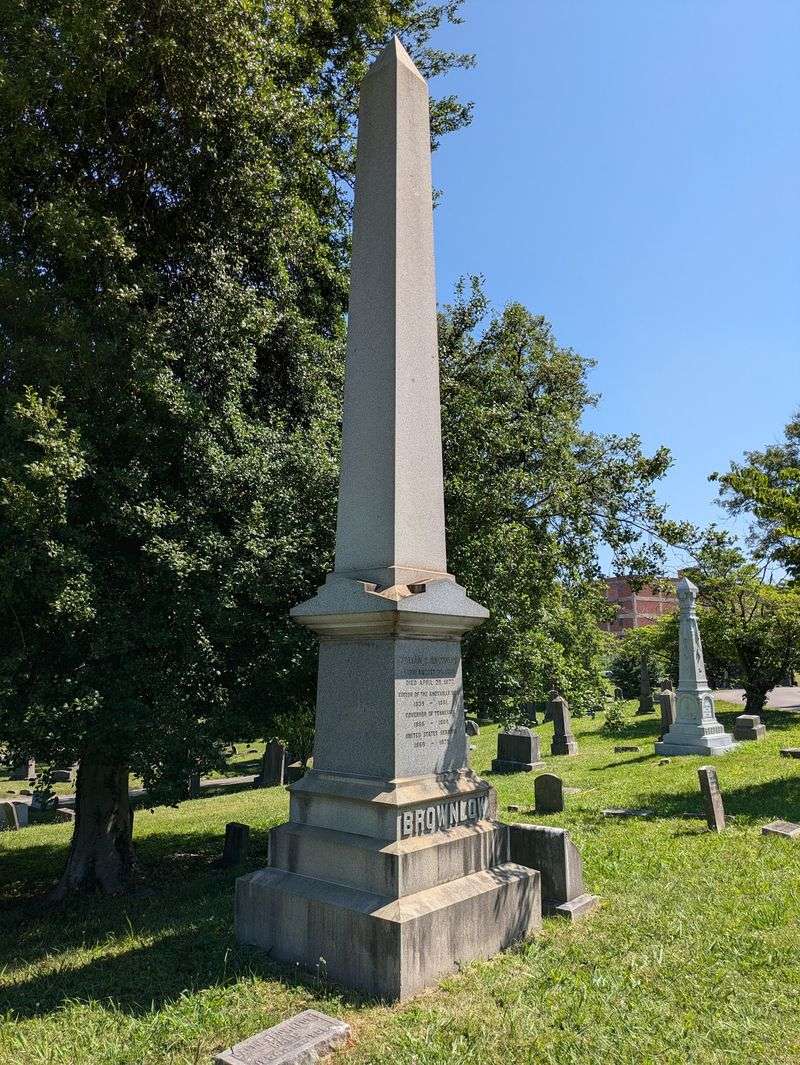
Reading the headstones here is like flipping through a Knoxville history book. Mayors, governors, senators, and artists all rest on these grounds.
Many local street names suddenly make more sense.
Thomas William Humes is one standout. He served as president of East Tennessee University, the school that later became the University of Tennessee. Campus life owes a lot to leaders like him.
Then there is Peter Kern, a former Knoxville mayor. He also founded Kern’s Bakery, a name longtime residents still link with fresh bread and sweet treats. Now that is a tasty legacy.
Aviation fans should look for Charles McGhee Tyson. He was a World War I Navy pilot, and the Knoxville airport carries his name. That is why the airport code today is TYS.
Literature lovers get a surprise too. Members of the family of famous playwright Tennessee Williams, including his father, are buried here. Williams had deep family roots in Knoxville.
Want to find these names quickly? The cemetery website shares helpful details about notable burials. A little homework turns a pretty walk into a treasure hunt through history.
Civil War Neighbors And A Gay Street Showdown
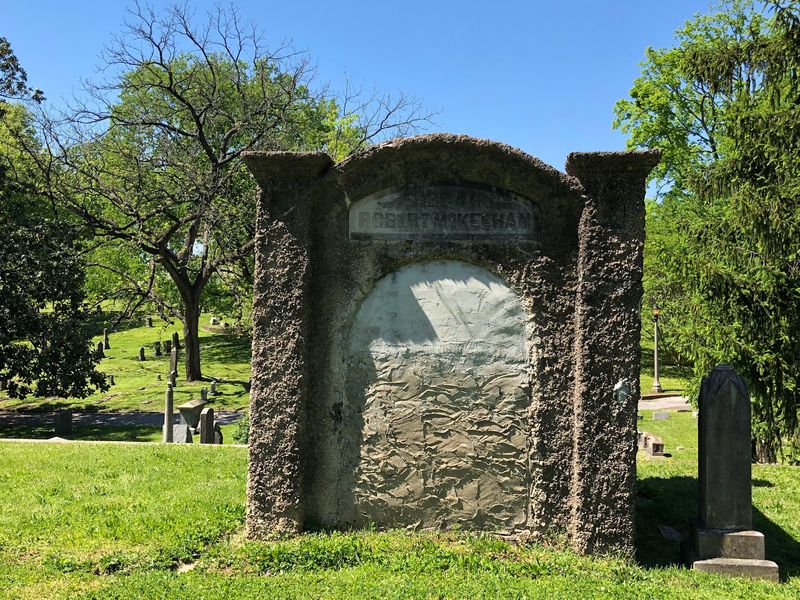
Some neighbors never got along, and Old Gray keeps them side by side anyway. Union and Confederate veterans rest here, sometimes surprisingly close.
East Tennessee was deeply split during the Civil War, and these grounds reflect that.
The best example is William “Parson” Brownlow. He was a fiery Unionist newspaper editor who later became governor of Tennessee.
Not far away lies Confederate Colonel Henry Ashby, who stood on the opposite side of that bitter fight.
Picture the arguments those two might have had. Today they share the same quiet hillside, which feels like a lesson in itself. History has a funny sense of humor sometimes.
Then comes the drama of 1882. The Mabry-O’Connor shootout on Gay Street became one of the most talked-about events in Knoxville history. It grew out of a heated feud between powerful men.
Joseph Alexander Mabry Jr., his son Joseph Alexander Mabry III, and bank president Thomas O’Connor were all caught up in it. All three now rest within Old Gray Cemetery.
Their story still sparks lively talk among history buffs.
Even Mark Twain wrote about the feud in his book “Life on the Mississippi.” When a famous author notices your local squabble, you know it was big news.
The Legend Of Black Aggie
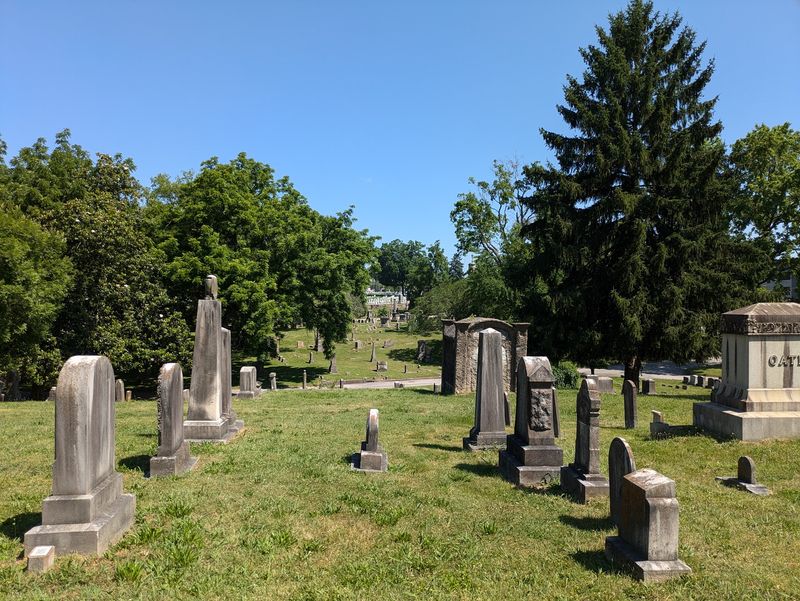
Every great old cemetery needs a good ghost story, and Old Gray delivers. Beyond the angels and oaks, the grounds carry a spooky reputation. Knoxville storytellers have passed these tales around for years.
The most famous figure is Black Aggie. According to legend, she appears as a shadowy shape in a dark robe. She is said to watch quietly from among the monuments, especially as dusk settles in.
The name may ring a bell for ghost fans. A famous Black Aggie statue in Maryland sparked its own legends long ago. Whether the two tales are connected is anyone’s guess.
Some folks also say they hear their names whispered softly when no one else is around. Others describe a sudden, prickly feeling of being watched.
Is it the wind in the trees, or something more? Of course, none of this is proven. These are legends, shared for fun and a good shiver. Still, the stories add a layer of mystery that makes the Victorian carvings feel even more dramatic.
If you love a little spooky fun, plan your stroll for late afternoon. The long shadows and golden light set the mood perfectly. Just remember the gates close at 7 PM, so keep an eye on the clock.
Twilight Tales And Tips For A Perfect Stroll
Black Aggie is not the only legend drifting through the lore. A “Woman in White” is said to float through the oldest Victorian sections.
Storytellers say she glides between monuments, perhaps searching for an unmarked grave.
Near the children’s section, another tale takes shape. Some people describe a “Weeping Child,” a small figure heard crying softly in the evening air.
It is a bittersweet story more than a frightening one.
Ready to explore for yourself? Old Gray Cemetery is open daily from 10 AM to 7 PM. Walking beats driving here, since the narrow lanes and little hills are best enjoyed on foot.
Here is a handy tip. Knoxville National Cemetery sits right next door with its own separate entrance. Double-check your map so you reach the main Old Gray gate on Broadway.
Pack water, a camera, and comfy shoes. Some driveways are worn, so watch your step. Going with a friend makes the outing more fun and lets you swap theories about the legends.
Keep things respectful, too. Stay on paths, avoid leaning on fragile stones, and leave everything as you found it.
These monuments are true Tennessee treasures, and a little care helps them last another 170 years.