
This Massachusetts Grist Mill Was Built By Henry Ford And Still Mills Corn And Wheat Today
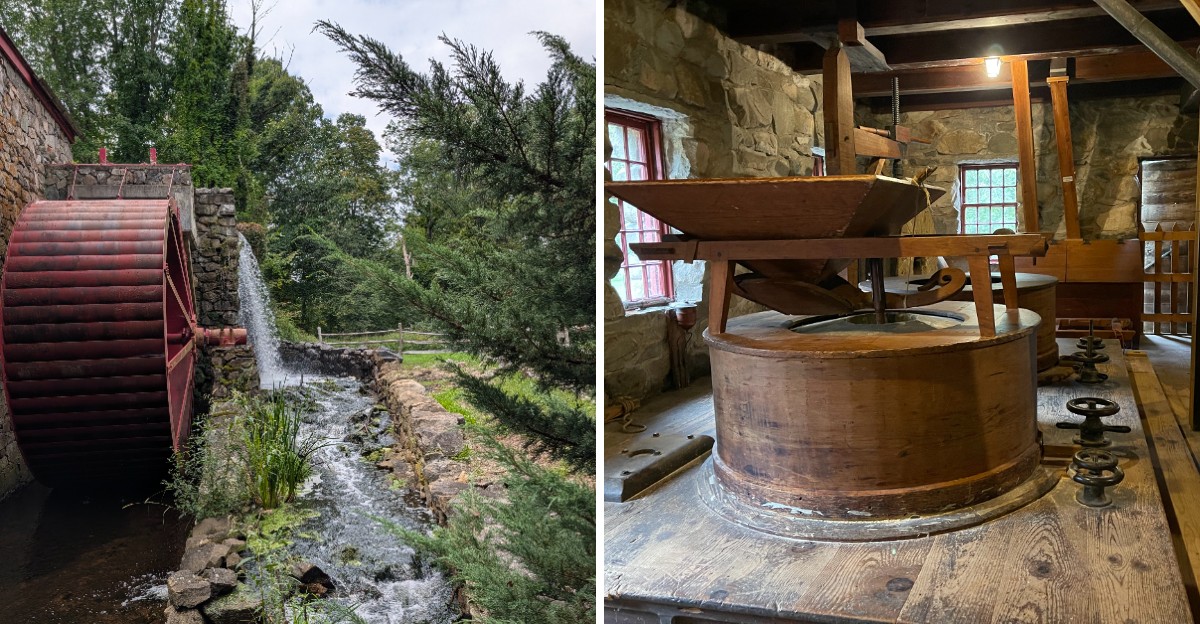
Henry Ford is usually linked to automobiles, not stone mills turning grain beside a quiet pond.
Yet this Massachusetts landmark tells a much different story. Built under Ford’s direction, the mill looks far older than its actual age, with stone walls, a working waterwheel, and a setting that feels pulled straight out of early New England.
The most interesting part is that it still has a job to do. Corn and wheat continue to be milled here, keeping an old process alive long after most places like it stopped operating.
Visitors can admire the craftsmanship, watch the water move past the building, and enjoy one of those places where history feels practical instead of frozen behind glass.
The Henry Ford connection makes the story even more surprising. What looks like a centuries old New England mill is actually a carefully built piece of 20th century history that still works today.
A Car Legend Who Fell For Old-Fashioned Flour
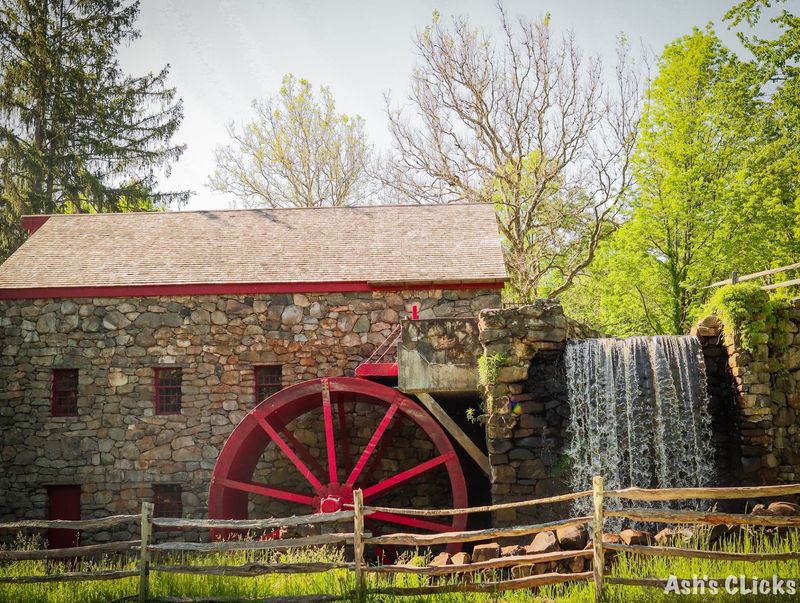
Most people link Henry Ford with engines, not grinding stones. Yet the man who put America on wheels had a soft spot for the past. He loved old tools, old buildings, and the skills that went with them.
In 1923, Ford bought Longfellow’s Wayside Inn in Sudbury, Massachusetts. He did not stop with one building.
His plan was to shape about 3,000 acres into a history-themed village, a kind of living museum of Americana.
Money was no problem for this dream. Ford poured funds into the property and even started the Wayside Inn Boys School.
A working mill fit right into his picture of early American life. So in 1929, he built the Wayside Inn Grist Mill. His goal was simple.
He wanted to copy the kind of mills colonial families once relied on, and keep the old way of milling alive.
Think about how wild that is for a moment. The same person who helped build fast assembly lines chose to celebrate a slow, careful craft.
Grain here moves at the pace of a turning wheel, not a factory belt.
That mix of modern genius and old-time charm is part of the fun. Knowing the backstory makes the building feel less like a pretty photo spot.
It becomes a clue to how one famous inventor saw the country’s roots.
A Thanksgiving Day Debut Worth Remembering
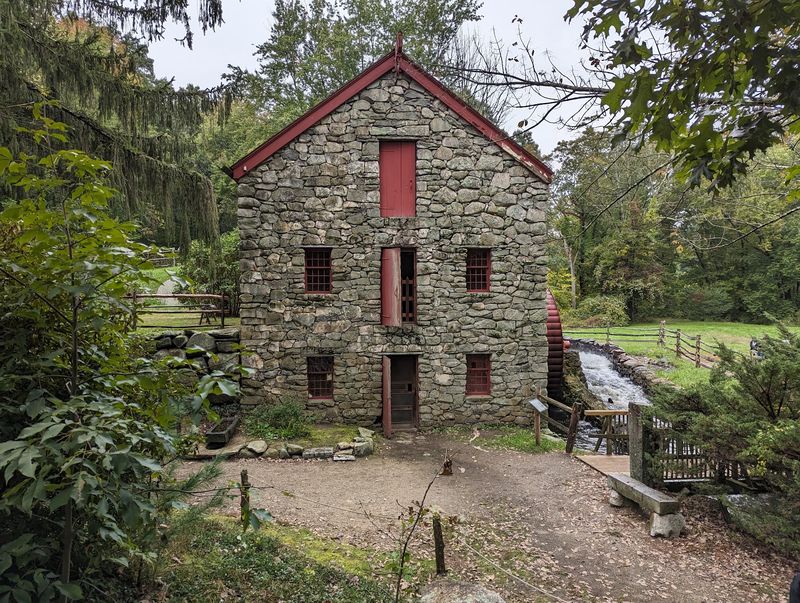
Some buildings open with ribbon cuttings and speeches. The mill in Sudbury started with something far more fitting. It ground its very first grist on Thanksgiving Day in 1929.
Grist is simply grain that has been brought to be ground. The word sounds old because it is.
Farmers once carted their corn and wheat to local mills and waited for it to come back as meal or flour.
Picking a holiday built around harvest and bread feels almost too perfect. It tied the new mill to one of America’s oldest food traditions.
Fresh cornmeal and a day of giving thanks go together nicely.
You can find the mill today at 72 Wayside Inn Rd, Sudbury, MA 01776. The site sits a short drive west of Boston, in a quiet part of eastern Massachusetts.
Nearly a century has passed since that first grind. The stones are still turning, and the wheel still spins when the season is right. Few places can claim that kind of staying power.
Here is a fun thought for your next holiday dinner. Somewhere in the long story of American bread, a mill in Sudbury traces its start to the same holiday.
That makes a great conversation starter at the table. Kids love that kind of trivia too.
Built Philadelphia-Style For Extra Muscle
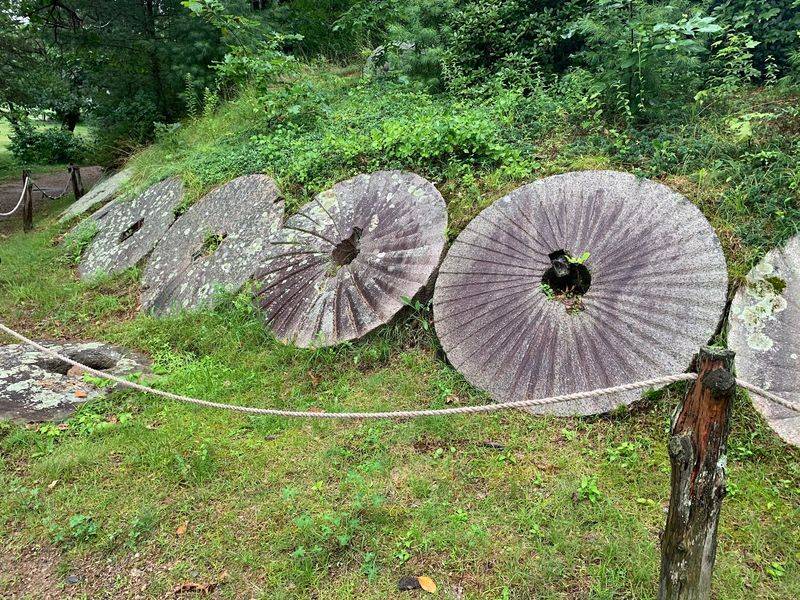
Here is a twist most people miss. The Wayside Inn Grist Mill is a New England landmark, but its design comes from farther south. It is built in the Philadelphia style.
Why borrow a style from Pennsylvania? The answer comes down to power.
Ford chose an overshot water wheel, which gets more push than the undershot wheels common in New England.
The difference is easy to picture. With an overshot wheel, water pours over the top and fills buckets along the rim. Gravity pulls the heavy buckets down, and the wheel turns with real strength.
An undershot wheel works another way. Water rushes past the bottom and shoves the paddles along. It gets the job done, but it cannot match the force of all that falling water.
Inside, the mill uses two separate grinding stones. They are heavy, sturdy, and made for slow, steady work. Ford clearly thought hard about every detail.
If you enjoy knowing how things work, this detail is gold. Look at the wheel and notice where the water lands.
Once you spot it hitting the top, you will understand why the mill has so much muscle.
Engineering fans and curious kids tend to love this part of the story. It proves that old machines were often very clever. Simple ideas, used well, can last a long time.
Water Does All The Heavy Lifting
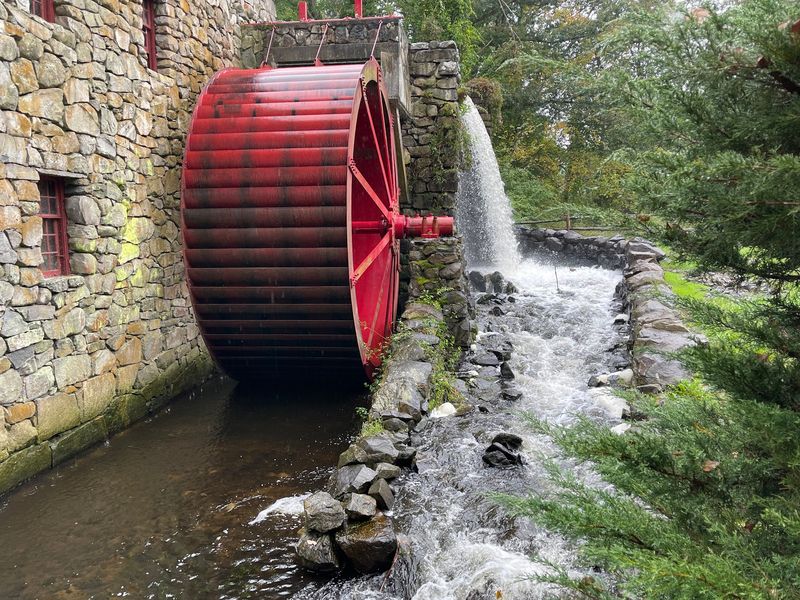
Forget electric motors and noisy engines. At this Sudbury mill, the power source is a pond. Water is the only worker that never asks for a lunch break.
The mill sits right beside a pretty millpond. Water from the pond is guided to the wheel, where it spills over the top. As the wheel turns, it drives gears inside the building.
Those gears pass the motion along to the grinding stones. One stone turns while grain feeds in between. Slowly, whole corn or wheat is crushed into meal or flour.
Stone grinding is gentle compared with fast modern machines. The process keeps things simple and old-fashioned.
It is the same basic idea people used for hundreds of years.
During scheduled hours, the mill really does run on water power. It is not just a display piece with a still wheel.
You can watch the whole system in motion and see how each part connects. Want to get the most out of it? Stand near the wheel first, then look at the gears and stones. Following the path of the water from start to finish makes the process click.
Teachers and parents will like this one. It is a real science lesson about energy, gravity, and motion.
Best of all, nobody needs a textbook to understand it once they see the wheel turn.
A Red Wheel That Inspired A Famous Bread Brand
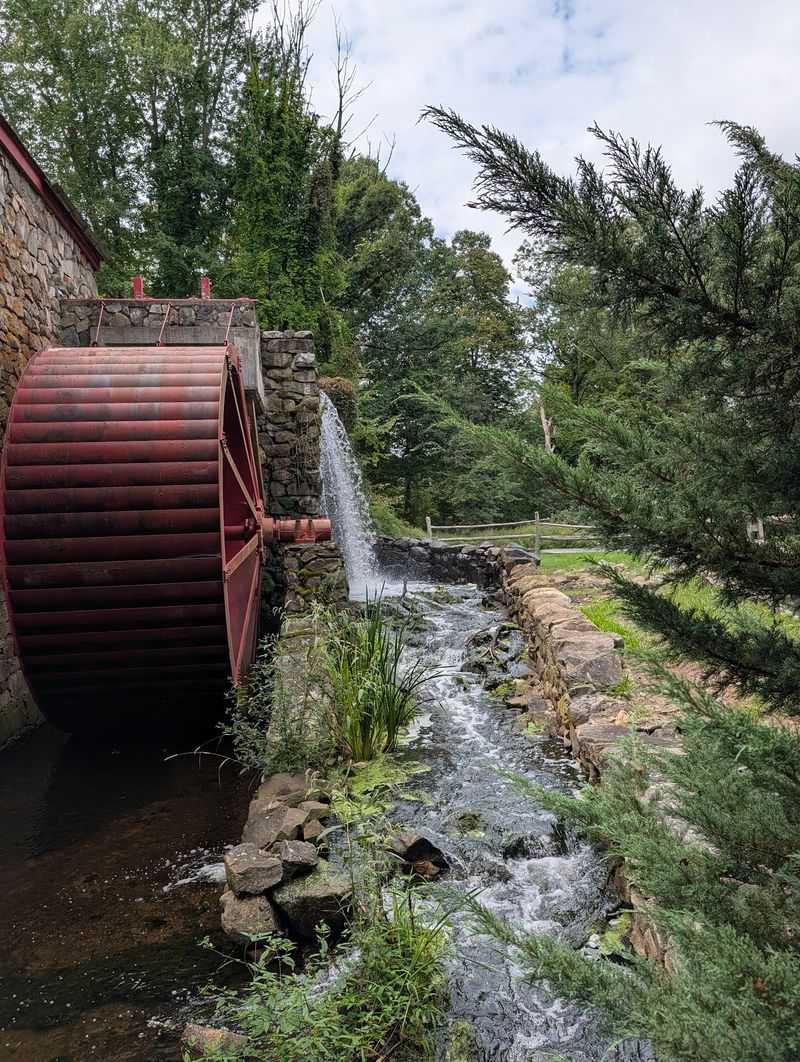
Take a peek in your kitchen pantry. If you spot a Pepperidge Farm bag, you may be looking at a piece of this mill’s story.
The brand’s logo was inspired by the mill’s red water wheel.
That is right, the bright wheel in Sudbury helped shape one of the best-known bread logos in the country. Few mills can say they have been on grocery shelves nationwide.
Most just grind quietly and call it a day.
The connection went deeper than a picture. From 1952 to 1967, the Wayside Inn Grist Mill supplied stone-ground whole wheat flour to Pepperidge Farm. That is fifteen years of real flour heading out the door.
Surprise is the usual reaction to this fact. A small, water-powered mill in Massachusetts helped feed a big bread company. It shows how old methods can still matter in a modern world.
Here is a tip for fans of photos. Stand across the millpond and frame the wheel with the building behind it. Then hold up a bread bag and compare the two images side by side.
It is a fun way to link history with something you use every week. Kids especially get a kick out of seeing a logo come to life.
Suddenly, a sandwich feels a little more interesting. Grown-ups do too, if they are honest.
Stone-Ground Goodness You Can Carry Home
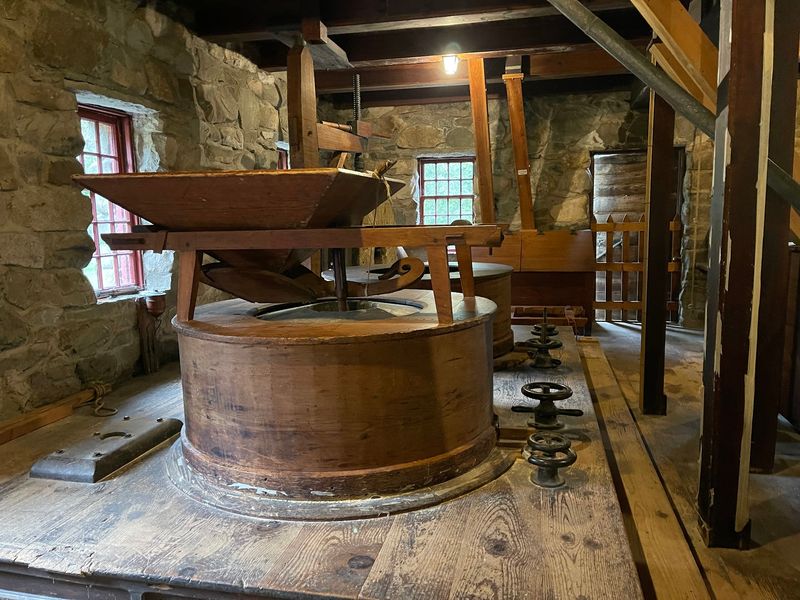
Souvenirs usually end up in a drawer. The ones from this mill end up in your muffins. The cornmeal and wheat flour ground here are sold in the gift shop.
Nothing here is just for show. The same products are used in the baked goods at Longfellow’s Wayside Inn. So the flour on the shelf has already proven itself in a real kitchen.
Another nice detail is that the grist mill products are non-GMO. Home bakers who care about that will be happy. It is simple grain, ground the slow way by stone and water.
Wondering what to make? Cornmeal is great for cornbread, pancakes, or a crispy coating on baked chicken.
Whole wheat flour works well in breads, cookies, and muffins with a hearty flavor.
A quick storage tip helps too. Whole grain flour and meal contain natural oils, so they are best stored somewhere cool.
Many bakers keep them in the fridge or freezer to stay fresh longer.
A bag of mill-fresh flour also makes a thoughtful gift. It is useful, it tells a story, and it does not collect dust.
Pair it with a favorite family recipe card for an extra personal touch.
Every loaf you bake becomes a small link to the wheel in Sudbury. That is a pretty sweet way to keep a trip going after you get home. Your kitchen will smell great, too.
Good Company Next Door: An Inn, A Chapel, And A Schoolhouse
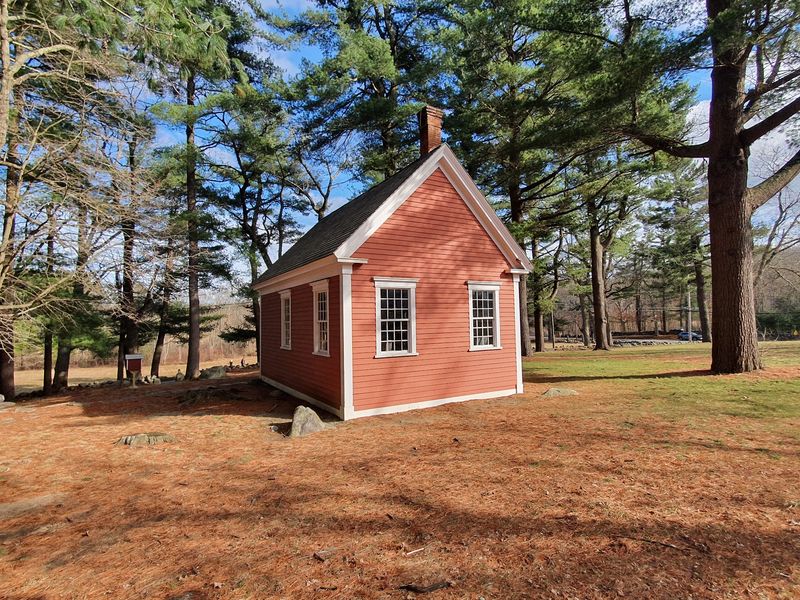
Mary had a little lamb, and it may have followed her to a schoolhouse on these very grounds. The Redstone Schoolhouse is believed to be the one from that famous rhyme.
It is one of the mill’s historic neighbors.
The grist mill is one of four main historic buildings at The Wayside Inn Historic Site. The others are Longfellow’s Wayside Inn, the Martha-Mary Chapel, and the Redstone Schoolhouse.
Together, they make a complete step back in time.
The inn is the oldest of the bunch. It dates back to 1702 and is one of the oldest continuously operating inns in the United States. That is a lot of years of welcoming travelers.
Poetry fans have extra reason to smile. Henry Wadsworth Longfellow stopped by in 1862. He later set his collection of poems, Tales of a Wayside Inn, right here.
The Martha-Mary Chapel adds a peaceful, graceful touch to the grounds. It rounds out the village feel Ford hoped to create. Each building tells a different part of the story.
Plan to see more than just the mill if you can. Walking between these spots gives a fuller picture of early American life.
You get milling, poetry, schooling, and faith all in one outing.
It is a bit like reading a history book where every chapter is a building. Start at the wheel, then let curiosity lead the way.
Timing Your Trip Around The Grinding Season
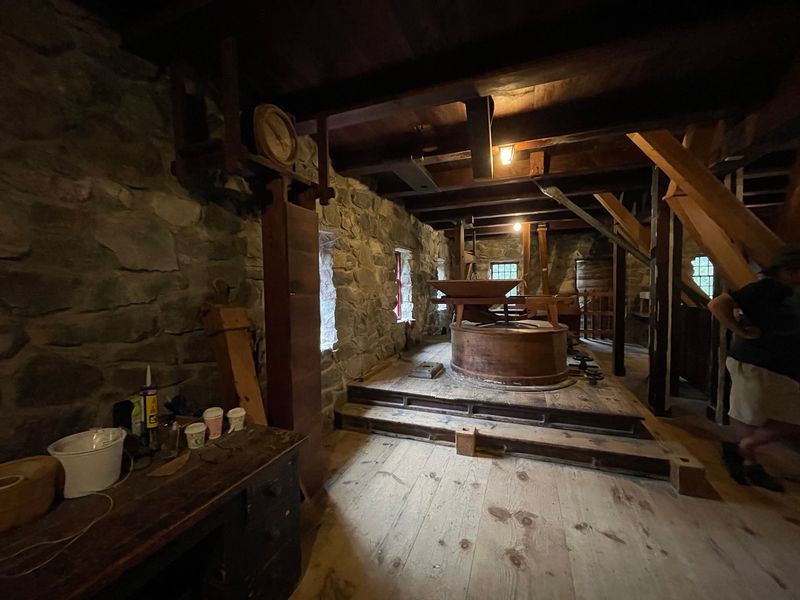
A mill with a still wheel is like a piano nobody plays. To see the real show, timing matters. The mill runs during scheduled hours, usually from late spring through early fall.
During that season, live milling demonstrations bring the building to life. You can watch corn being ground with water power, just as Ford intended.
Checking the schedule ahead of time is a smart move. Hours can shift with the season, so a quick look online saves guesswork. The Wayside Inn website is a good place to start.
Even when the wheel rests, the setting is worth the drive. The Wayside Inn Grist Mill sits beside a lovely millpond.
More than 100 acres of meadows, fields, forests, and brooks spread out around it.
Better yet, the site is free to access and enjoy. That makes it an easy pick for families, walkers, and anyone who loves a pretty view. Pack a camera and take your time.
Fall is a lovely choice in New England, with bright leaves reflecting in the water. Late spring brings fresh green fields instead. Either way, the red wheel pops against the scenery.
Photographers often aim for morning or late afternoon light. The soft glow makes the wheel and the old building look warm and rich. It is an easy way to get a picture worth framing.