
Behind The Glass At This Chicago, Illinois Aquarium, Belugas Swim At Toddler Eye Level

Nobody warned me the best seat in the house would belong to a three-year-old. We had ducked inside to escape a gusty lakefront afternoon in Illinois, expecting a quick look at some fish, and ended up parked at a window while a pale white whale drifted past at exactly my daughter’s nose height.
Big-city attractions can feel rushed, but this one slowed all of us down. Here is what makes that underwater window, and the building around it, so easy to love with little kids in tow.
A Lakefront Landmark on Chicago’s Museum Campus

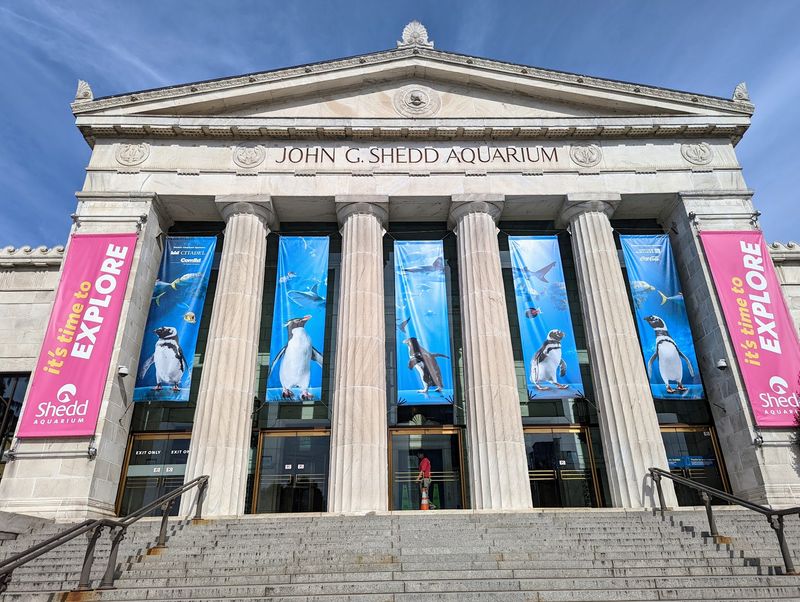
Picture a grand old building sitting almost on top of Lake Michigan, with water on nearly every side and the downtown skyline stacked up behind it. That is the Shedd Aquarium, found at 1200 S.
DuSable Lake Shore Drive on Chicago’s Museum Campus. It sits right across from the Field Museum, so some families pair the two in a single day.
Inside, the aquarium gathers aquatic animals from around the world into a state-of-the-art indoor space. Sharks, sea turtles, penguins, otters, jellyfish, octopus and electric eels all share the roster.
Still, the animal that comes up again and again among visitors is the beluga whale, and for good reason.
How close is it for suburban families? From DuPage or Will County, the trip usually means heading toward the lakefront on I-55 or I-290, then a short hop along Lake Shore Drive.
Travelers from Rockford, Peoria or Champaign-Urbana often fold it into a longer Chicago weekend.
The building earns attention on its own. Sea-themed architectural details show up throughout, and a deck area overlooks the lake and the city.
Updates are underway as the aquarium approaches its 100-year anniversary, with modernized ramps and pathways planned to make getting around easier.
Three Million Gallons of Pacific Northwest Coast
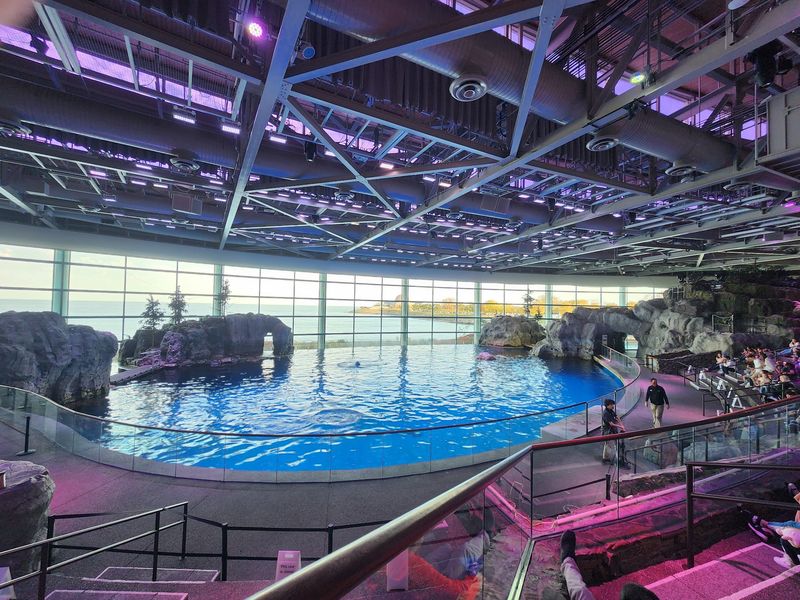
Cold, salty and shaped like a rocky shoreline, the Abbott Oceanarium is where the belugas live. The habitat holds roughly 3 million gallons of chilled saltwater, designed to echo the coast of the Pacific Northwest.
Standing on the main level, you get the sense of looking out over a quiet northern cove rather than a tank.
Behind the scenes, the space is more flexible than it looks. Belugas have access to six connected habitat areas within the Oceanarium.
That setup lets the whales shift into different social groupings throughout the year, which matters for animals that naturally live in pods.
Here is a detail that surprises many parents: the Shedd is one of only six accredited institutions in the United States that cares for beluga whales. The team contributes to research on beluga biology, behavior and conservation, so the animals are part of a bigger learning effort, not just a display.
Pacific white-sided dolphins share the Oceanarium, and sea lions and otters round out the coastal theme. Big windows let daylight pour in, and on a clear day the lake beyond the glass seems to blend right into the habitat.
Kids may not notice the design choices, but they tend to feel them, settling in instead of racing to the next stop.
Toddler-Height Windows on Lower Level 2
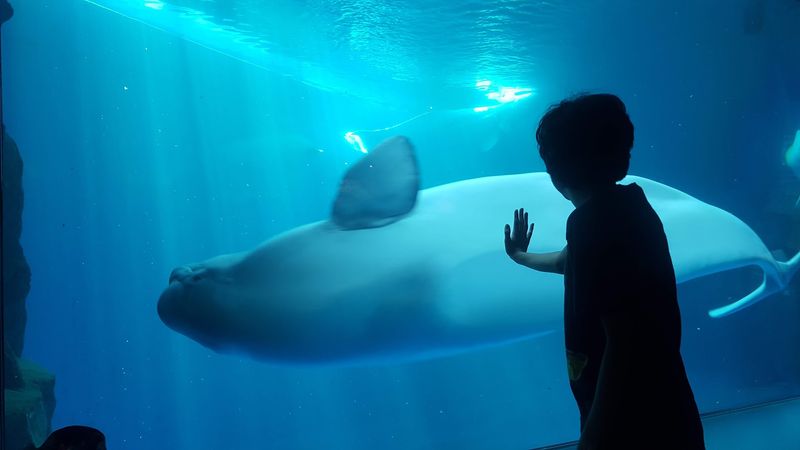
Ask any parent what makes a crowded exhibit hard, and the answer is usually the view. Little ones end up staring at the backs of adult legs.
The underwater viewing area on lower level 2 of the Abbott Oceanarium flips that problem around.
Here, the glass reaches low, and the belugas glide by beneath the surface at a height where a toddler can stand close and watch them pass. Visitors often remark on how deep the habitat goes, and from down here you really sense that depth.
A curious whale may drift right past a small face, pale body turning slowly in the blue.
Belugas are nicknamed the canaries of the sea because of their wide range of sounds. Their rounded forehead, called a melon, is flexible and helps them make and change those noises.
Kids often love learning that the bump on a beluga’s head can actually change shape.
Pacific white-sided dolphins swim through the same underwater view, so there is usually movement to follow. Plan for a few minutes of patience if the area is busy, since families tend to linger.
A gentle reminder to keep hands still and avoid tapping the glass helps everyone, whales included, enjoy the moment.
Bella, Annik, Atlas and Little Opus

Every pod has personalities, and the belugas here are no exception. The group includes whales named Bella, Annik and Atlas, along with the youngest member, Opus, who was born in July 2024.
Staff and signage can help you tell them apart, which turns a quick look into a game of spot-the-whale.
Opus offers a fun science lesson for school-age kids. Beluga calves are born dark gray, not white, and they slowly lighten as they mature.
Adult belugas earn their famous snowy color over time, so a younger whale may look noticeably darker than its podmates.
Why does the lineup seem to change? Because the whales can move among six connected spaces, the groupings you see on one visit may differ from the next.
Regulars say that is part of the appeal, since each trip can feel a little different.
Visitors often describe the belugas as expressive and active, and watching them swim tends to be a highlight of the day. In-water beluga encounters, which once let guests get even closer, are temporarily unavailable, so check ahead if that program interests you.
For now, the windows and viewing areas are the best way to meet the pod.
Dolphin Presentations and the Overlook Deck
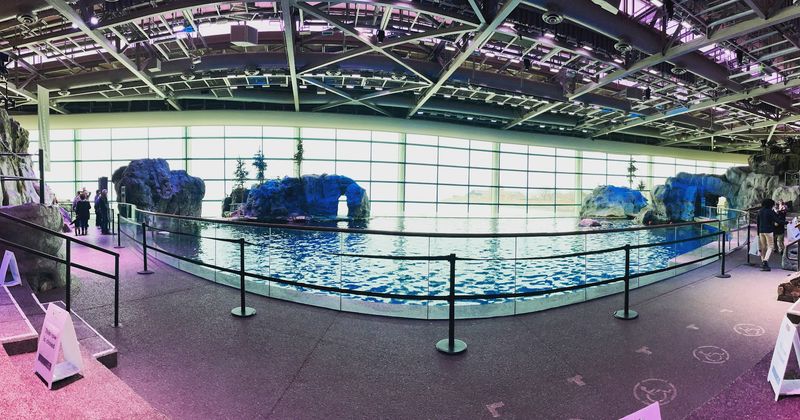
A splash, a leap, then a wave of cheers from the stands. The Pacific white-sided dolphin presentation is one of the most talked-about parts of a visit here.
Guests mention the clear bond between the trainers and the dolphins, and kids tend to stay glued to the action.
Shows run at set times throughout the day. Boards posted around the aquarium list the schedule, and checking it early lets you plan snack breaks and bathroom stops around the moments your crew wants to catch.
Some guests find the presentation a bit shorter than expected, which can actually suit younger children with short attention spans.
For a different angle, head upstairs. An observation deck overlooks the Oceanarium, where families can watch dolphin shows and whale feedings from above.
Beyond the windows, Lake Michigan stretches toward the horizon, and the view alone may help restless kids reset.
Contrast that with the hush of the underwater level, and you get two very different ways to see the same animals. Starting upstairs for a show and then heading down to lower level 2 afterward often works well.
The dolphins are usually still energized, and the belugas keep cruising by at eye level.
Stingrays, Sturgeon and the Wild Reef
Squishy is how one parent described a stingray’s back, and that sums up the surprise on most kids’ faces. Touch opportunities are scattered through the building, letting guests gently feel stingrays, sea stars and even Great Lakes sturgeon.
Some fans call the sturgeon living fossils, and a few claim these fish seem to enjoy a light tickle.
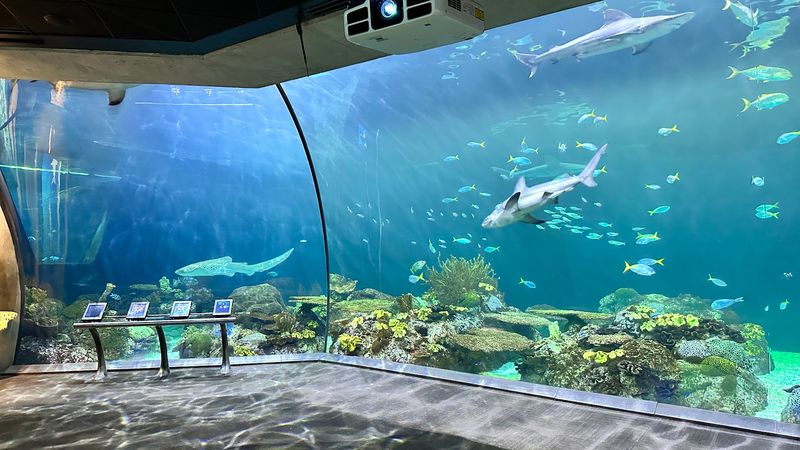
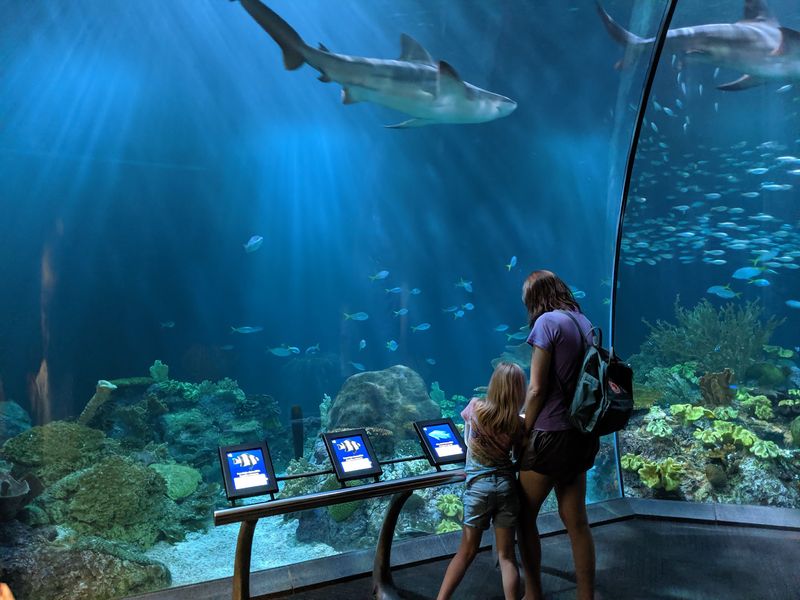
Don’t skip Wild Reef. It sits in a separate part of the building, and its large shark tank tends to wow visitors, including a striking bowmouth guitarfish.
Guests report no additional fee to explore it.
What about the quieter corners? The Amazon area uses live plants above and below the water to create lifelike habitats.
The Great Lakes exhibit shows off species found right here in the Midwest, like brook trout, reminding Illinois kids that remarkable wildlife lives close to home.
Jellyfish, seahorses, anemones and a cuttlefish tank draw slower, calmer attention. Electric eels, frogs, snakes and a colorful macaw add surprises for kids who want something beyond fish.
Reef tanks bright with coral fill in the gaps between the bigger showstoppers.
Many visitors describe the whole place as oddly peaceful, even on busy days.
Stroller Routes, Play Zones and Kid-Friendly Food
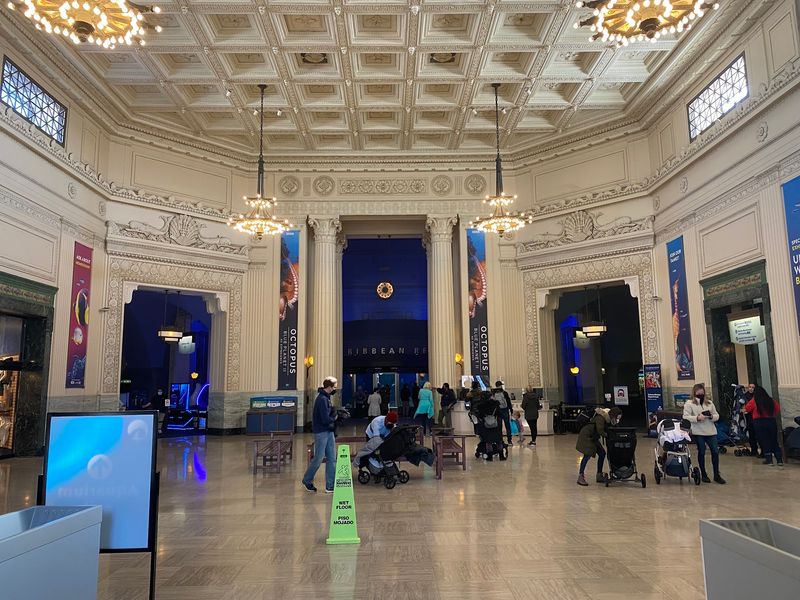
Strollers are welcome throughout the aquarium, though there are no rentals, so bring your own. Stroller parking is available near the Polar Play Zone, a penguin-themed play area that gives little legs a chance to stretch.
A yellow submarine play spot is another favorite with younger kids.
Here is a realistic heads-up: on busy days, pushing a stroller can get tricky, especially while waiting for elevators in the Oceanarium. Ramps, elevators and accessible restrooms make the building fully accessible, but patience helps.
Family restrooms and baby changing stations are located throughout, including near the Polar Play Zone and on the Oceanarium’s lower level, close to the beluga windows.
Hungry kids? The Bubble Net Food Court, also on the Oceanarium’s lower level, serves family-friendly meals with kid-specific options.
Soundings Café and Deep Ocean Café offer more choices, and families can bring their own food to eat in designated areas, which may help keep costs down.
Plenty of seating appears throughout the galleries. Toddlers, school-age kids, grandparents and even adults visiting without children all seem to find their pace here.
One tip: there are no paper maps, so snap a photo of a posted map to navigate the three levels.
Hours, Tickets and Getting There
Timing can make or break a day here. Posted hours generally start at 9 a.m., closing at 5 p.m.
Monday, Wednesday, Thursday and Friday, 9 p.m. on Tuesday, 6 p.m. on Sunday and 2 p.m. on Saturday. Hours shift by season and for special events, so check ahead before you go.
Timed tickets can sell out, so buying in advance is smart. One visitor paid around $50 per person on a Thursday, while Illinois residents often get lower prices, so bring an ID.
Guests also suggest browsing the discounts page, and CityPASS holders can include the aquarium. Add-ons like the 4D experiences, featuring penguins, octopus or sharks, may cost extra.
Parking on the Museum Campus is run by the Chicago Park District, with choices like the Soldier Field North Garage, East Museum Lot and Adler Lot. Some guests paid $32 to $35, and rates can climb during events.
Reserving ahead through an app like SpotHero is recommended, valet is typically offered on most weekends, and the walk from some lots is long.
For thinner crowds, aim for a Tuesday or Wednesday morning. Even Mondays can fill up after 11 a.m.
Plan on spending three to four hours inside.
A Soft Verdict From the Beluga Window
Long after the drive home, what kids tend to remember isn’t the ticket line or the parking hunt. It’s the moment a white whale slid past the glass, close enough to share a stare.
For families with toddlers, that eye-level encounter on lower level 2 sets this aquarium apart.
No outing is perfect. Prices run high, especially for visitors from outside the city, weekends get crowded, and navigating three levels with a stroller takes some planning.
Some guests wished for more shark variety, while others felt the layout required backtracking.
Balance that against what’s included, though. Belugas, dolphins, a penguin play area, touch tanks, a massive shark habitat and a lake view that looks especially dramatic in winter all fit under one roof.
When lake-effect snow or sticky July humidity makes outdoor plans tough, an indoor day like this can rescue a weekend.
Would it suit your family? If your kids light up around animals, and you’re willing to arrive early and pack some patience, the answer is likely yes.
Start with the belugas while crowds are thin, circle back before you leave, and let the little ones take the front row, since the whales seem happy to meet them halfway.